
society
No, it is not just a bus stop! By Muyiwa Kayode

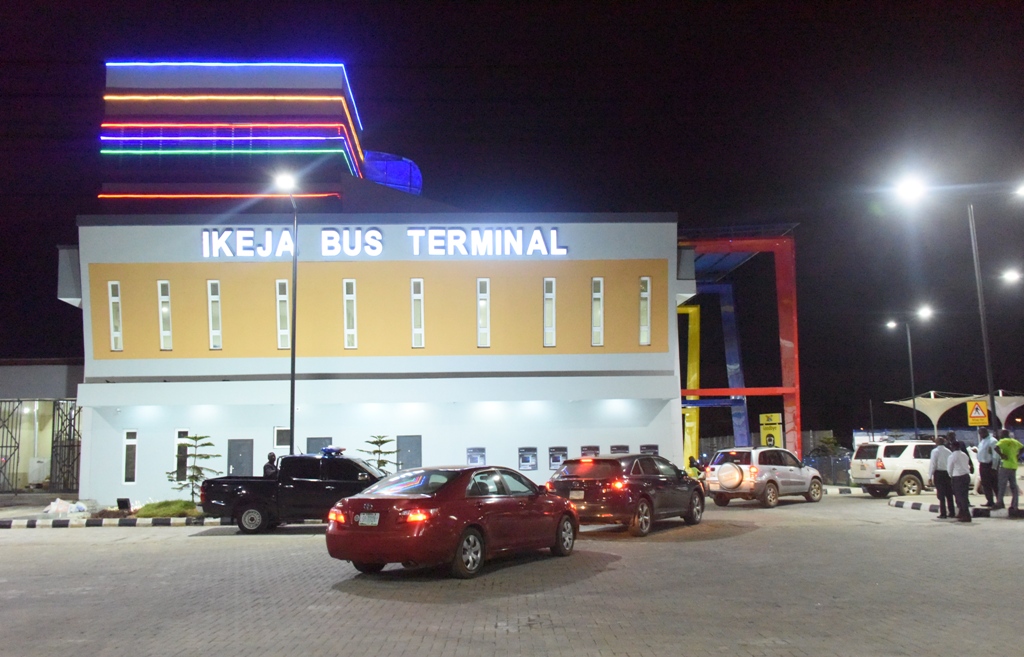
This is no ordinary Bus Stop. It is an iconic development which marks another milestone in the development of Lagos and another evidence of the visionary leadership that is so sorely missing in the rest of the country. Instead of asking other governors to take a cue from Lagos and launch their states into an era of 21st century development, Nigerians were broadcasting silly messages on Whatsapp, berating President Buhari for coming to Lagos ‘to commission a bus stop’. Meanwhile, there is no such standard in other parts of the country. This is not just a bus stop, but an important milestone in the State Bus Reform Project.
According to Governor Ambode, the first phase of the program will see the unveiling of 13 new terminals including major terminals at several strategic locations across the state. 5,000 new buses will be introduced over the next three years including 820 eco-friendly high capacity buses by September 2018. There will be 300 new bus stops, bus depots and Intelligent Transport System which will help commuters plan their journeys on the public transport system. It’s a transformational vision. I wish Mr President had brought the FCT Minister, Muhammad Bello with him. Under Bello’s watch, our Federal Capital City has continued a progressive decay and rapidly becoming an embarrassment to the nation. I do not think Bello understands he is presiding over the capital city of the world’s largest black nation and Africa’s most populous country. It is indeed Abuja that should be leading the way in terms of iconic projects. Our FCT should be setting the pace. But sadly, this is not the case. No, it is not just a bus stop.
Our people are suffering from chronic scepticism and incurable pessimism. If they see this same kind of bus terminal in Dubai, they will say ‘go to Dubai and see what the bus stops look like’. But do something similar in Lagos and it is ‘just a bus stop’. What is wrong with us? Success is not a destination but a journey. It has no end but only new beginnings. We must therefore learn to celebrate every step we take in this success journey. We must accentuate those things that tell us there is hope for our country to attain the heights we dream of. No, it is not just a bus stop.
This bus terminal looks far more beautiful than some airport terminals in this country. They are neither iconic nor do they justify the humongous amounts of money spent to build them. I have seen multi billion naira airports in this country whose terminal buildings look like community town halls in the village square. We need more developments like the Ikeja Bus Terminal, to give us the belief that it is possible to build our nation into something we can all be proud of. I understand that many decades of failed promises and false dawns have created a pervasive atmosphere of hopelessness and despair. But that should not kill our hopes altogether. No, it is not just a bus stop.
It is a sign of greater things to come. It is also a call to the other governors in this country to wake up and give their people something to be proud of. Every governor should do at least one or two things that had never been done in their states before. If we had our governors thinking this way, I believe our country will develop more rapidly than what we are witnessing today. We should look beyond putting functional projects in place and actually make those projects and structures iconic. They should be landmarks. This is what makes great cities. If you go to Dubai and see their air conditioned bus stops, it will certainly make a positive impression on you and add to the unique status of that city. The city of London derives some of its beauty and uniqueness from its double decker buses. Our leaders are some of the most widely travelled people on this planet. They know and see these things. Why is it impossible for them to use that knowledge and exposure for the improvement of our nation and our people? You don’t have to copy what you see abroad but seeing it should tell you there is so much you can do to give your cities their own unique identities. No, it is not just a bus stop.
It is destination branding. We must put structures in place to build our cities into tourist destinations. This means upgrading and elevating our facilities to the standards international travellers are familiar with. Many of our people travel frequently and are well aware of the standards available at major cities in other parts of the world. Why must we continue to be different? If at any time we see any of our leaders doing something that points in the right direction, we should acknowledge and celebrate it. We may not be making the rapid progress we all desire for our country but we must encourage those trying to move us forward. The drive to diversify our economy must give priority to tourism in those cities where the viability for tourism development is high. Lagos is top of that list. With tens of kilometres of beaches, islands and world class hotels, the state offers a great variety of entertainment for tourists within a safe and very vibrant and energetic environment. No, it is not just a bus stop.
It is an indication that other state governors need to step up their game. In each state, the leadership must take a strategic look at developing competitive advantage. While some have such advantage in agriculture, for others, it lies in tourism. Some may build theirs on industrialisation based on the abundance of raw materials for certain industries, while others may consider solid minerals. One thing however has become absolutely necessary. States must begin to develop their respective economic advantages, based on their unique resources. This will gradually stimulate the economy and create wealth. It will reduce our currently suffocating poverty levels as well as urban migration. It is not just a bus stop.
It is for me a beacon of hope. A bright ray, just as the bright colours of the terminal indicate, that the days of people oriented development initiatives are here. It is a sign that we must no longer treat our people with disdain and disrespect, but must elevate and empower them. Because you can only judge the progress of a nation by the quality of life of the poor. And if a state is providing such facilities for regular commuters, I am happy that the days of making okada and keke (motorcycles and tricycles) our major means of mass transit, are numbered. Let other states take a cue. Every man on the street deserves to ride in safe, comfortable air conditioned buses. It is not a privilege. Good leadership is about elevating the status of your people because their well-being is the measure of your success or failure. Of course, it is not just a bus stop.
• Muyiwa Kayode is CEO at USP Brand Management and author, The Seven Dimensions of Branding. Brand Nation is a platform for promoting national development based on the universal principles of branding.
@Guardian





UKA Gears Up for Final ATC Exchangeability Test Run as June Preparations Begin.
May 30, 2026 – As the month of June gathers momentum, the *United Kingdom of Atlantis, UKA*, a sovereign nation has unveiled a series of vital guidelines and preparatory packages to ensure citizens and stakeholders run the *ATC Exchangeability* process effectively.
In an official update, the *President of Atlantic Crown Limited, Empress of Attica Empire UKA*, confirmed that the *Final Test Run of ATC Exchangeability* is scheduled for the month of June 2026. The exercise marks a key phase ahead of the *Official Exchangeability Window, set to run from July 2026 to February 2027*.
### Key Highlights from the Presidential Briefing
1. *Final Test Run – June 2026*
The test run is designed to validate systems, procedures, and user readiness before full activation. Citizens, partners, and designated participants are urged to follow all official advisories released by UKA authorities during this period.
2. *Official Exchangeability Period*
Following the successful completion of the June test run, the Official Exchangeability will commence in july 2026 and we are Expecting Full Exchange ability between July Ending, 2026 to February 2026.
UKA stated that detailed schedules, eligibility requirements, and step-by-step instructions will be communicated progressively through verified UKA channels.
3. *Benefiting Packages for June*
In line with UKA’s commitment to citizen empowerment, the month of June will feature “benefiting packages” aimed at education, preparation, and seamless onboarding. These packages are intended to equip the people of UKA with the knowledge and tools needed for effective participation.
4. *Commitment to Transparency*
Addressing the nation, the Empress of Attica Empire UKA emphasized:
_“Final Test Run of ATC Comes up in The Month of June, As We Prepare For The Official Exchangeability, Between July 2026 To Feb 2027. All Information Will Be Communicated.”_
UKA reaffirmed that only information released through official UKA platforms should be regarded as authoritative.
The United Kingdom of Atlantis is encouraging all citizens, representatives, and interested parties to remain alert to official communications, attend designated orientation sessions, and avoid unofficial sources. UKA’s dedication to order, clarity, and the collective benefit of its people as the nation moves into this significant phase.
For updates, advisories, and participation guidelines, citizens are advised to monitor official UKA communication channels.
United Kingdom of Atlantis, UKA, is a sovereign nation, committed to national development, citizen welfare, and structured economic participation through initiatives such as ATC Exchangeability.
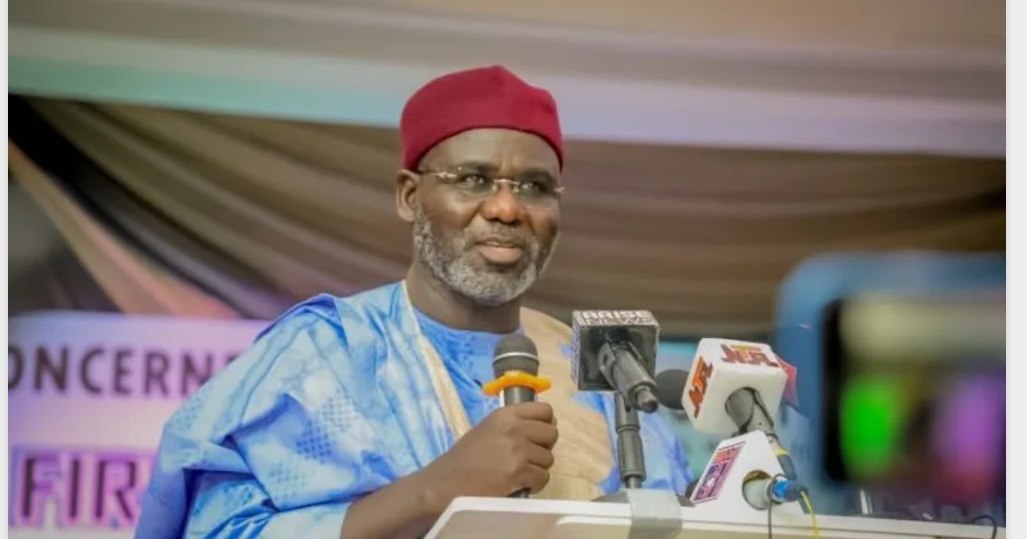
Three Years On, General Buratai Hails Tinubu’s Economic, Security Achievements
Former Chief of Army Staff, Lt. Gen. Tukur Buratai (retd.), has commended President Bola Ahmed Tinubu for what he described as bold economic reforms and improved security efforts as the President marks three years in office.
In a goodwill message on Thursday to commemorate Tinubu’s third anniversary as President and Commander-in-Chief of the Armed Forces, Buratai said the administration had taken courageous decisions that would leave a lasting impact on Nigeria’s development.

According to him, President Tinubu broke a long-standing cycle that had hindered national growth by removing fuel subsidy and implementing foreign exchange reforms aimed at stabilising the naira and strengthening the economy.
He noted that the reforms were beginning to yield positive results, citing the global acceptance of Nigerian debit cards, the gradual revival of local refineries, access to student loans, and ongoing road and infrastructure projects across the country.
“The FCT Administration has also recorded remarkable progress, completing major road projects that remained unfinished for over 16 years,” Buratai stated.
The former army chief also praised the administration’s security efforts, saying renewed military offensives against insurgents, terrorists and bandits had led to notable successes across various parts of the country.
He specifically lauded recent joint operations involving Nigerian and United States forces against Boko Haram and ISWAP in the North-East, as well as intensified counter-banditry operations in the North-West.
“We have seen notorious ISWAP commanders being neutralised. I congratulate the Commander-in-Chief, the Minister of Defence, the Chief of Defence Staff, the Service Chiefs, the Inspector-General of Police and heads of intelligence agencies for their efforts,” he said.
Buratai, however, acknowledged that challenges remained, stressing the need for more aggressive military operations and intelligence-driven strategies in the coming year.
While urging Nigerians to remain hopeful, he said celebrating the President’s achievements did not amount to ignoring the difficulties facing the nation.
“Because you truly care, you have shown the courage to trade short-term comfort for long-term hope. Nigerians need your reassurances, and that is why we remain optimistic and full of confidence,” he added.
The retired military officer reaffirmed his support for the Tinubu administration and expressed confidence that the foundation being laid by the government would deliver a brighter future for the country.
He also prayed for God’s guidance, wisdom, strength and good health for the President as he continues to lead Nigeria.
NUT Raises Alarm Over Continued Captivity of Abducted Oyo Pupils, Teachers
The Nigeria Union of Teachers has expressed deep concern over the continued captivity of pupils and teachers abducted during an attack on schools in the Ahoro-Esinle and Yawota communities in Oriire Local Government Area of Oyo State.
In a statement issued on Saturday, the Oyo State wing of the union described the situation as increasingly distressing, particularly following the emergence of a video allegedly released by the abductors showing the victims pleading for their freedom.
The union said the footage had heightened fears over the welfare of the abducted pupils and teachers, describing their ordeal as heartbreaking and unacceptable.

According to the NUT, no child or teacher deserves to be subjected to such traumatic experiences, adding that the prolonged captivity of the victims has continued to inflict psychological pain on their families, colleagues and the wider education community.
The union called on the Federal Government, Oyo State Government and relevant security agencies to intensify efforts towards securing the immediate and safe release of the victims.
“This is not a moment for hesitation. It is a moment for coordinated, intelligence-driven efforts to ensure the immediate and safe release of all abducted pupils and teachers,” the statement read.
While acknowledging ongoing interventions by security agencies and government authorities, the union stressed that time was of the essence, warning that every additional day in captivity deepens the trauma suffered by the victims.
The NUT urged security operatives to strengthen surveillance, improve community intelligence gathering and deploy all necessary operational and diplomatic measures to facilitate the rescue of the abductees.
It also appealed to traditional rulers, community leaders and residents to support rescue efforts by providing credible information that could assist security agencies.
“The safety of our children and teachers must remain a collective priority,” the union stated.
Reaffirming its support for the families of the victims, the NUT pledged continued solidarity and prayers while advocating safer learning environments across the country.
The statement was jointly signed by the Chairman of the Oyo State NUT, Comrade Hassan Ajibola Fatai, and the Secretary, Comrade Salami Olukayode.


- Africa Centres for Disease Control and Prevention (Africa CDC) Statement on Attacks Against Health Facilities During the Bundibugyo Virus Disease Response in the Democratic Republic of the Congo June 1, 2026
- Putting consumers at the centre of Africa’s dairy transformation June 1, 2026
- International Rescue Committee (IRC) warns Democratic Republic of the Congo (DRC) Ebola outbreak likely far larger than official figures suggest June 1, 2026
- South Africa: Portfolio Committee on Health Marks National Cancer Survivor Day and Reaffirms Importance of Early Detection and Public Awareness June 1, 2026
- Rwanda’s RSSB Tigers Crowned 2026 Basketball Africa League Champions June 1, 2026
- Uganda: Appointments Committee Begins Vetting of Ministerial Nominees June 1, 2026
- Sudan braces for worsening child malnutrition as pre-harvest season starts June 1, 2026
- Etu Energias Strengthens Angolan Footprint, Returns to Angola Oil & Gas (AOG) 2026 as Champion Sponsor June 1, 2026
- PayAngel Expands Global Payout Capabilities Through Collaboration with Visa and Currencycloud June 1, 2026
- From Commitment to Classrooms: Advancing Refugee Education through the United Nations High Commissioner for Refugees (UNHCR)–TECNO’s Global Partnership June 1, 2026
- Africa Centres for Disease Control and Prevention (Africa CDC) Statement on Attacks Against Health Facilities During the Bundibugyo Virus Disease Response in the Democratic Republic of the Congo June 1, 2026
- Putting consumers at the centre of Africa’s dairy transformation June 1, 2026
- International Rescue Committee (IRC) warns Democratic Republic of the Congo (DRC) Ebola outbreak likely far larger than official figures suggest June 1, 2026
- South Africa: Portfolio Committee on Health Marks National Cancer Survivor Day and Reaffirms Importance of Early Detection and Public Awareness June 1, 2026
- Rwanda’s RSSB Tigers Crowned 2026 Basketball Africa League Champions June 1, 2026
- Uganda: Appointments Committee Begins Vetting of Ministerial Nominees June 1, 2026
- Sudan braces for worsening child malnutrition as pre-harvest season starts June 1, 2026
-

 news6 months ago
WHO REALLY OWNS MONIEPOINT? The $290 Million Deal That Sold Nigeria’s Top Fintech to Foreign Interests
-

 society4 weeks ago
SOCIAL MEDIA IS NOT A BATTLEFIELD COMMAND – WHY THE NIGERIAN ARMY’S ACTION AGAINST JUSTICE CRACK IS A NATIONAL SECURITY IMPERATIVE
-

 celebrity radar - gossips4 months ago
Dr. Chris Okafor Returns with Power and Fire of the Spirit -Mounts Grace Nation Altar with Fresh Anointing and Restoration Grace on February 1, 2026
-

 celebrity radar - gossips6 months ago
Prophet Kingsley Aitafo Releases 2026 Prophecy: ‘Nigeria Will Rise, but the World Must Prepare for Turbulence’
You must be logged in to post a comment Login
You must log in to post a comment.