
news
‘No woman wants to stay with my disabled condition’ + How Nigerian doctors made me unable to walk again – Gani Fawehinmi’s son, Mohammed laments

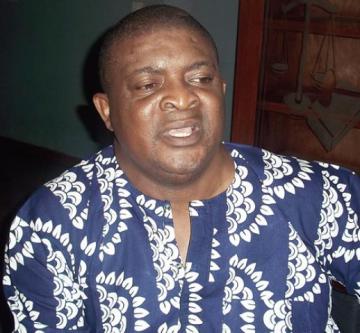

Mohammed Fawehinmi is the first child of late legal luminary, Chief Gani Fawehinmi. After a car accident in 2003, the 47-year-old lost his ability to walk. He told Eric Dumo how the incident changed his life and how he has managed to keep hope alive.
What was it like growing up under the roof of Gani Fawehinmi?
It was like growing up in a military camp. He gave the order and you must comply. You failed to do so and you got thoroughly punished. I particularly have been displaced with any sort of rod that you can imagine. Until the anger in him calmed, he would not stop punishing you. The only time you would offend my father and he let you walk away was whenever he sighted his mother. No matter your offence, he would not punish you once she was there.
Being the first child, my father made sure he disciplined me the most.
Did he groom you differently from the others being the first child and son?
Yes, he did. He’d always tell me that once he was gone, the mantle would fall on me. For the fact that I was very young then, I would always wonder what he was saying. But he never allowed me to rest; he ensured that I did more than the others in every aspect just because I was the first born. He groomed me like a man even as a boy.
What dreams did you nurse as a child?
I wanted to become an army general. I had three uncles in the army. Two of them were captains while one was a major. I loved the uniform and personality of military men, being like them was just what I wanted for myself.
When I was 14, we were given forms in school for the Nigerian Defence Academy. I hurriedly filled mine and took it to my father for him to sign; I never knew I had courted trouble. Till he died, I don’t think he had ever been that angry. He said I wanted to go and join the people that were throwing him in jail all the time. He said I wanted to join those who wanted to kill him. He said that it was better he killed me before I joined his enemies.
It took four senior lawyers to hold him down that day. One of them was OAR Ogunde, a senior advocate, Mr. Tayo Oyetibo, Mike Philips and one other person. I had to run away from the scene as fast as I could and managed to jump the fence before tearing the form. I thought he had forgotten about everything but I was surprised when he woke me up with the cane at about 2:30am the next morning. He dealt with me thoroughly that day.
Later in life, I wanted to become a business administrator even though the desire to become a military man never left me. When I went to England to study law after my first degree in Business Administration from the University of Lagos, I met a military general who further aroused my interest in the profession.
But immediately I finished my studies, my father was on my neck to return to Nigeria to attend law school. For a while, that interest waned in me but whenever I come across a military cantonment and I see the way the officers move, I feel like being a part of them.
You were not born with disability; at what point did this challenge occur?
I was coming from the chambers at night on the evening of September 23, 2003. The accident happened around 9:48pm. I used to stay at Ajao Estate then and I usually took the airport route to connect Ikeja. It was a Mercedes E320. By the time I got to the toll gate, I bought call card and prayed, something I had never done before because when I was at that place, I didn’t usually stop. I thereafter turned to link the express, as I approached a popular filling station on the axis, my car skidded off the road and leaped into the place. As the car landed, I tried to apply the brakes but it wasn’t responding. Eventually, the outlet where they used to check for petrol gauge stopped the vehicle. The airbag from the front came out and pinned me to the seat while the one from the side shifted me and broke my neck. After about one-and-a-half minute of struggle to burst the airbag, my entire body went numb. It was a naval officer who stopped to rescue me from the car, otherwise I could have been burnt alive in it because petrol was already spilling from it.
The first hospital I was rushed to at Ajao Estate said they could not handle my case, so I was taken to Maryland Specialist Hospital where we were advised to go to the National Orthopaedic Hospital, Igbobi. It was while I was there that my parents were informed that I had been involved in an accident. I was there for about two days before my father secured a visa and moved me to England for further treatment.
I underwent several scans and examinations over there but the specialist surgeon said he didn’t see anything. I had to be operated upon. After the operation, the surgeon said I could have been walking the following week after the accident if not for the way I was handled at the hospital in Nigeria. He said the particular spot where the injury occurred should have been frozen with a special spray after the accident rather than being handled anyhow. That spray cost about N8,000 when converted to our local currency. It is so common abroad but up till now, many hospitals don’t even have it in Nigeria.
However, I was told that by 2006 I should have been walking. That year, I went for check-up in Isreal where they removed my bone marrows to go and inject in Turkey. After that procedure, my legs and hands jerked as if they wanted to detach themselves from my body. But since that time, I have not seen any sign of walking. I have been to several places since then for solution but there has been no significant luck.
So, how tough was it for you adjusting to your new situation?
I look at my ordeal as part of life’s ‘buffet’, just like it served my late father on several occasions. I feel I’m in a mini detention centre at the moment, but then, I’m positive that one day, I’ll be free.
But I’m glad that I have been able to practise as a trained lawyer despite the tragedy that I’ve encountered in life.
Are you able to access all the courts your cases are assigned following your inability to walk?
This is where I am not happy with government in Nigeria. In all the courts in Lagos, there is nowhere that lifts are functioning. On several occasions, my cases are assigned to courts on top floors, so I have to be carried by at least two people to be able to attend such sessions. It shouldn’t be this way.
Personally, I have written several letters to the Lagos State Government to call their attention to this but nothing has been done. I am really saddened by this because it is really affecting people like me.
Apart from not being able to move around freely, what other areas would you say the accident of 2003 has changed your life?
I am a man who was trained to work through the night. This accident has affected me in this regard because I am not able to do that now. The pain I go through at night is too severe for me to even think of doing such.
Also, the number of cases I’m able to handle in a day and week has reduced. This is a very painful restraint for me because I am somebody who loves to multi-task.
The accident has also affected my social life. I am somebody who loves to go out and have great times with friends but since this restriction occurred, I have been forced to abandon that aspect. But once in a while, I go out to eat ‘isi ewu’ and ‘nkwobi’.
You are yet to marry, what is the reason behind this? Is it that you’ve not found the right woman or your taste is high?
I certainly wish to marry and have children but then, there are so many things responsible for why I’m yet to do so.
I was around 32 when I had that accident and I already had a lady I wanted to marry. She was a very beautiful Igbo lady I met close to my father’s chambers. Even after the accident happened, she still wanted to stay with me; I was the one who advised her to move on because she may not be able to cope with the demands of my new condition. I couldn’t do anything on my own but depended on the help of others to survive. I didn’t want that huge burden on her, so I told her to move on and get herself another man. I was just being considerate. The lady went away disappointed.
I just felt that I shouldn’t bother any woman with my condition. I didn’t want anybody to marry me out of pity. Even though I always have females around me, it is not every woman that can stay with a person with disability of my kind. Most of the women I have met in recent times are not the ones that can stay with a man, they are the type who would want to attend parties and keep all sorts of friends instead of looking after me. Of course, a few have come close to what I want but the temperament is nothing to write home about.
Is there no pressure on you to marry from family members?
In fact, words can’t describe the intensity of the pressure on me right now as far as marriage is concerned. My mother and uncles disturb me about this topic almost every day. But what they don’t understand is that most women I have met hardly want to commit themselves after the initial meeting because of my condition. As it is, I am just praying that there’ll be a miracle from God in this aspect.
I am very optimistic that one day, I am going to walk again but then I’ll be glad if it will be to walk down the aisle with my soulmate. I really want to marry and have children. I think about this every day.
As successful as you are as a lawyer and even coupled with your father’s name, do people still stigmatise you?
A lot of people treat me like a leper on many occasions as a result of my condition. People say all sorts of nasty things to me and call me all sorts of names. But because I know that those words cannot limit my progress in life, I just ignore such.
What are some of the biggest barriers you’ve had to break to get to where you are today?
At every point in my journey, I’ve had to convince people with my performance that I can still achieve a lot despite my disability. Getting my chamber registered and even handling big cases have been huge barriers I’ve had to surmount to get to this point in my career.
Would you say your father’s name has opened or closed more doors against you?
It’s a balance. Some people appreciate me for being his son, while others stylishly turn me down for being his child.
Are you sometimes under pressure to fill the vacuum left behind by your father being his first child?
I am perpetually under pressure to fill the void left by my father. As a result of who my father was, there are certain things I must not be involved in. In fact, there are things I must make my own business whether I like it or not. It is a huge role to play and sometimes, I feel the heat.
How do you think government can make life better for people living with disabilities in Nigeria?
They must first of all do an in-depth study on the needs of the people in this category. It is only through this means that a comprehensive policy that would cater for the needs of people with special needs can be addressed.





More than ₦3 billion was targeted, but about ₦677 million reached the culprits, with recovery and prosecutions underway, reflecting how banks are responding to more sophisticated fraud risks.
Nigeria’s expanding digital banking sector is facing increasingly sophisticated fraud attempts, as financial institutions adapt to faster transactions and broader online services.
A recent case involving First City Monument Bank (FCMB), linked to fraudulent activity detected in December 2025, has drawn attention to how banks are responding to such incidents, with a focus on limiting exposure, recovering funds and working with law enforcement.
According to findings referenced in proceedings before the Lagos State Special Offences Court, the incident involved unauthorised transactions tied to a digital product. Early reports erroneously suggested more than ₦3 billion was lost. Subsequent clarification shows that over ₦3 billion was targeted, ₦2.4 billion was blocked and recovered, while ₦677 million got into the possession of the culprits. This outcome reflects the bank’s cyber security and monitoring capabilities, as well as improved collaboration among regulated financial institutions and with law enforcement agencies. Several suspects and beneficiaries have been apprehended, while recovery and prosecution efforts are ongoing, led by the Economic and Financial Crimes Commission (EFCC).
Proceedings at the Lagos State Special Offences Court have resulted in convictions, including that of a repeat offender, with restitution orders issued. Related matters are also being handled at the Federal High Court in Lagos, where additional suspects are being tried in connection with the scheme. This process is aimed at ensuring that bad actors are identified and permanently blacklisted from the financial system.
Authorities say recovery efforts are continuing as additional funds are traced.
Analysts note that the pace of legal action reflects closer coordination between financial institutions and enforcement agencies in addressing cyber-related financial crime.
The case comes as banks contend with more complex fraud methods, including social engineering and automated exploitation of system processes.
As digital products and platforms expand, so too does the risk associated with cyber-crime and related fraud.
“The scale of digital banking means risks are evolving alongside the systems,” said a Lagos-based financial analyst. “Institutions are now judged by how they manage these events.”
Observers say the sector is moving toward a stronger focus on response and recovery, rather than prevention alone.
This includes improving monitoring capabilities, strengthening transaction controls and enhancing collaboration with regulators and law enforcement. The FCMB case, with limited exposure relative to the amount targeted and ongoing recovery, reflects that shift.
For customers, the primary concern is the safety of their funds. In this case, there has been no indication of losses affecting customer deposits. Maintaining that level of protection remains central to sustaining trust in the financial system.
Nigeria’s financial sector continues to grow, supported by digital innovation and expanding access to banking services.
However, analysts say fraud attempts are likely to persist as systems become more complex and interconnected.
They say institutions will increasingly be judged not only on their ability to prevent incidents, but on how effectively they respond and recover when they occur.
news
Ex-APC Deputy Guber flag bearer, Joshua MacIver backs Tinubu, express fears over implosion in Bayelsa APC
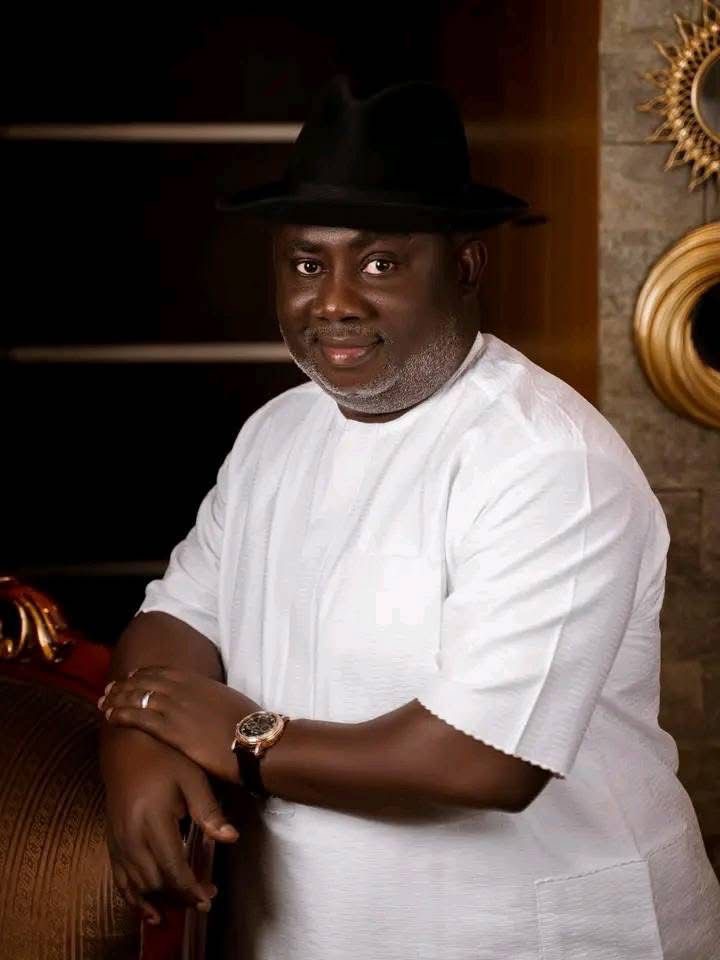
….congratulates new State Party Chairman, Warman Ogoriba
APC Deputy Governorship Candidate in the 2023 general elections in Bayelsa State, Great Joshua MacIver has declared his total commitment to the re-election of President Bola Tinubu come 2027, declaring that the Tinubu re-election project is non-negotiable.
Great Joshua MacIver, in his statement titled ” BAYELSA APC CONGRESSES: GOING FORWARD, A CALL TO LOOK INWARDS” and made available to newsmen in Yenagoa, warned APC leaders in the state to look Inward and take note of certain factors which may hinder or cut short our victory.
According to Great Joshua MacIver, such noticeable pitfalls include the imbalance in the united front being put up by the State Governor,Senator Douye Diri among various political blocs in the state.
In the statement issued at the weekend. Great Joshua MacIver stated that “First, before His Excellency, Senator Douye Diri, joined the APC in the state, there were clearly two political blocs that made up the party, with the approximate population ratios of the blocs standing at 95% to 5%.”
“After the entrance of His Excellency, Senator Douye Diri, ONLY THE SMALLER BLOC IS BEING CARRIED ALONG IN THE AFFAIRS OF THE PARTY, leaving the greater percentage to their fate, and this situation has the potential to build anger and dissatisfaction in our dear party.”
” The consequence of this has been the high level defection we have witnessed in the party recently and we believe more may likely follow, if we do not put our house in order.”
” If we do not pull together as a party, we may witness a situation where we will lose key stakeholders, especially after the State and National Assembly Primaries as well the Gubernatorial Primaries.”
“Finally, while it is very clear that we are the party to beat in the 2027 elections and that our loyalty to Mr. President IS NON-NEGOTIABLE, we must make haste to say that we cannot afford to create situations or loopholes in our unity which will be exploited by other political interests in the state. We cannot afford to under-rate anyone.”
“Our core interest remains the re-election of Mr. President, a project to which we have committed our all. We also pledge our total loyalty to the party as we have no alternative to the APC. However, our concern is that we must, as a party, look inwards and ensure that we do not create loopholes that can impede our common goal.”
Great Joshua MacIver, however congratulated the newly elected State Executives of the APC in Bayelsà State led by Hon. Warman Ogoriba, saying their emergence is welcomed at this critical time in our national history.
At least 23 people were killed in a series of suspected suicide bombings, police in Nigeria’s northeastern city of Maiduguri said on Tuesday.

https://www.stanbicibtcbank.com/nigeriabank/personal/products-and-services/all-loans/stanbic-ibtc-mreif-home-loans
More than 100 other people were injured in the blasts that took place on Monday evening in the capital of Nigeria’s restive Borno state.
No group has claimed responsibility for the suspected attacks.
The deadly blasts come after a military post was attacked overnight Sunday to Monday, which authorities blamed on suspected Islamist militants.
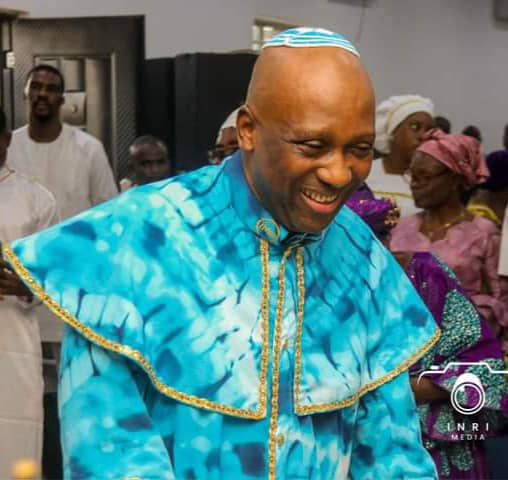
This sad incident is coming barely two weeks after Primate Elijah Ayodele, the Leader of INRI Evangelical Spiritual Church specifically warned against attacks in some states. He mentioned these states while calling on security operatives to pay close attention to them.
These were his words:
“Another attack is coming up in these following states where the military must watch carefully and intelligently; Kano, Kaduna, Zamfara, Kebbi, Niger, Borno, Kwara and Kogi state. They want to do a deadly attack, it’s preventable but it depends on how they will handle it. I have told you about the danger coming up.”
@primateayodele
Unfortunately, some of our military agencies don’t believe spiritual intelligence can save the country from so much danger hence, their neglect of this prophetic warning but now, it has been fulfilled with the miliary losing credibility by the day while Primate Ayodele continues to gain momentum.
Likewise, At least 26 passengers and crew sustained varying degrees of injuries on Monday following an accident involving the Kaduna–Abuja train, according to the Nigerian Railway Corporation (NRC).
Opeifa explained that the train departed Rigasa in Kaduna at 7:15 a.m. and was approaching Asham station around 9:16 a.m. when a loud bang was heard after the power car and trailing locomotive collided with one of the passenger coaches.
In July 2025, Primate Ayodele asked nigerians to pray not to see train mishap on the Kaduna-Abuja route.
@primateayodele #nigeriantiktok🇳🇬 #fulfillment #train #abuja #primateayodele
“Let’s pray not to see train mishap in Abuja-Kaduna, Kaduna-Abuja route.”
This has also been fulfilled.


-

 society6 months ago
Religion: Africa’s Oldest Weapon of Enslavement and the Forgotten Truth
-

 news4 months ago
WHO REALLY OWNS MONIEPOINT? The $290 Million Deal That Sold Nigeria’s Top Fintech to Foreign Interests
-

 society6 months ago
“You Are Never Without Help” – Pastor Gebhardt Berndt Inspires Hope Through Empower Church (Video)
-

 celebrity radar - gossips2 months ago
Dr. Chris Okafor Returns with Power and Fire of the Spirit -Mounts Grace Nation Altar with Fresh Anointing and Restoration Grace on February 1, 2026
You must be logged in to post a comment Login
You must log in to post a comment.