
society
NUPRC AT 4 AND TRIBUTES TO MODEL OF EXCELLENCE By Nnoli Okojie

*NUPRC AT 4 AND TRIBUTES TO MODEL OF EXCELLENCE
By Nnoli Okojie
Four years ago, a quiet ceremony in Abuja marked the birth of a new institution. The Nigerian Upstream Petroleum Regulatory Commission (NUPRC) was not launched with fanfare or fireworks—just a signed document, a handshake, and a promise to fix what had long been broken.
From that modest beginning, under the steady hand of Engr. Gbenga Komolafe, appointed Chief Executive in October 2021, a regulator once seen as a mere successor to legacy bodies has emerged as the architect of Nigeria’s upstream renaissance. This is not a tale of slogans, but of systems rebuilt, revenues reclaimed, and a nation’s energy future reclaimed—one bold decision at a time.
The Nigerian Upstream Petroleum Regulatory Commission (NUPRC) stands as the apex regulatory agency established to oversee and supervise upstream petroleum operations in Nigeria, ensuring compliance, efficiency, and sustainable growth.
Its broad Regulatory Action Plan (RAP) is meticulously focused on enhancing regulatory certainty and predictability, advancing future licensing rounds through robust policy and seamless implementation, optimizing the unit cost of production for greater competitiveness, automating processes and improving business workflows for heightened operational efficiency, promoting ease of entry and retention of investments, vacating burdensome entry barriers such as exorbitant asset acquisition fees, deepening transparency, accountability, and the elimination of discriminatory regulatory practices, implementing a comprehensive carbon credit earnings framework for upstream operations, accelerating the execution of oil and gas development and production projects, and enforcing the Drill or Drop provisions of the Petroleum Industry Act (2021).
It also emphasizes the optimization of federation revenues, decarbonization and greenhouse gas (GHG) emissions management in production environments, incorporating green sustainability narratives into Field Development Plans (FDPs), diligent monitoring and implementation of the Nigerian Gas Flare Commercialization Programme (NGFCP) awarded sites for optimal flare-out monetization, Host Community Trust Fund implementation and guiding trust fund activities to minimize agitations in operational areas, achieving 100% hydrocarbon accounting, implementing the new production curtailment regime and domestic crude supply obligations, conducting annual asset performance assessments and reviews, enforcing Domestic Crude Supply Obligation (DCSO) and Domestic Gas Distribution Obligation (DGDO) to bolster domestic refining capacity, maintaining zero tolerance for defaults in royalty payments, creating value through rigorous approval of annual work programmes/budgets and monitoring financial viability, addressing crude oil and gas pricing in contemporary terms, and pursuing revenue generation with a zero-default strategy on royalty payments.
These are by no means exhaustive, as the mandate of the Commission encompasses its general objectives and functions as outlined in the PIA and, by extension, all other laws governing upstream petroleum operations in Nigeria. This includes rapidly actualizing the transformative vision of the PIA (2021) and elevating the efficiency and performance of the sector, with a strategic agenda tailored for Nigeria, Africa, and other resource-rich developing economies. This agenda navigates the evolving energy dynamics, calibrated against geography, history, and politics, while advocating for energy justice, equity, inclusivity, and long-term sustainability.
Today, the commission marks its fourth anniversary, birthed as a child of necessity to reclaim and restore our nation’s lost glory in the global energy arena. Instructively, a major challenge with such special purpose vehicles is the critical question of leadership, which can make or break their effectiveness.
It is against this backdrop that Engr. Gbenga Komolafe was appointed the Commission Chief Executive in October 2021, armed with a clear vision and mandate to drive systemic change. In this role, the mission was known and clearly defined from the outset by the leadership.
Since then, he has been instrumental in shaping the direction of the Nigerian Upstream Petroleum Regulatory Commission (NUPRC) through proactive, visionary, and significant leadership, transforming Nigeria’s oil and gas industry into a model of excellence in Africa’s energy sector. This has significantly boosted revenue generation, with the commission consistently surpassing its budgeted revenue target by 84%, demonstrating its unparalleled effectiveness in managing the nation’s hydrocarbon resources.
Engr. Gbenga’s institutionalization of positive reforms that promote transparency and accountability in the industry has led to enhanced oil production, with Nigeria’s output increasing to 1.7 million barrels per day, a significant reduction in oil theft from 200,000 barrels per day to 5,000 barrels per day, and driving Nigeria’s gas development agenda through initiatives like the National Gas Policy and the Gas Flare Commercialization Program. Additionally, the development of 25 priority regulations, with 17 already gazetted, provides a clear, structured framework for the industry, earning several awards and nominations, including the SERVICOM Outstanding Leadership Award and the Africa Energy Sector Regulator of the Year award.
Indeed, Engr. Gbenga has convincingly demonstrated his commitment to excellence, transparency, and sustainability in regulating Nigeria’s oil and gas industry through various frameworks that aid the autonomization of NUPRC’s operations, allowing it to make balanced decisions that foster investor confidence while safeguarding national interests. He has showcased competence and expertise in regulating the upstream petroleum industry, with reforms that promote transparency, efficiency, and professionalism, coupled with a data transparency model that publishes clearer data on production, investment flows, and environmental performance, ensuring accountability and informed decision-making.
He has also implemented the most ambitious Host Communities Development Trust (HCDT), an innovation that grants oil-producing communities a direct voice in project planning and environmental management, and introduced automated regulatory processes which have positively reduced inefficiencies, time wastages, and improved data accuracy and reliability in monitoring upstream activities.
Engr. Gbenga’s pursuit of excellence and verifiable results has led to the promotion of sustainable value creation from Nigeria’s petroleum resources for shared prosperity. With his various intentionally driven efforts to increase transparency and accountability in the oil and gas sector, he has favourably aligned the Commission with the provisions of the Petroleum Industry Act (PIA), leading to the development of 25 priority high-impact regulations, with 17 gazetted, to provide clarity and structure to the industry. This regulatory framework is expected to boost investor confidence and promote sustainable development in the upstream petroleum sector, while the automated regulatory processes have greatly reduced inefficiencies, time wastage, and improved precision and data accuracy in monitoring upstream activities, substantially improving oil production and increasing it to over 1.6 million barrels per day, with efforts to reach 1.8 million barrels per day and beyond.
Engr. Gbenga’s enhanced positive efforts to reduce emissions and promote sustainable energy development have aligned the Commission with global best practices. The several reforms introduced by him are taking shape, increasing Nigeria’s oil production to over 1.6 million barrels per day, with efforts to reach 1.8 million barrels per day and beyond.
The commission aims to retain existing investments, encourage additional investments, and attract fresh investments by eliminating identified barriers. Presently, Engr. Gbenga is driving Nigeria’s gas development agenda through initiatives like the National Gas Policy and the Gas Flare Commercialization Program.
Through this pragmatic problem-solving approach, the commission has also approved 28 new Field Development Plans, which are expected to unlock an additional 600,000 barrels of oil per day and more than 2 billion standard cubic feet of gas daily. His prioritization of transparency and accountability in the operations of the Commission, with a focus on regulatory compliance and stakeholder engagement, has led to the implementation of measures to deepen transparency, accountability, and eliminate discriminatory regulatory practices.
These actions amplify his commitment to forging strategies aimed at reducing emissions and promoting sustainable energy development, driving efforts towards reducing greenhouse gas emissions and promoting the use of cleaner energy sources, while aggressively working to promote investment in the upstream petroleum sector by providing a conducive business environment and streamlining regulatory processes that position Nigeria as a prime destination for foreign direct investment in the sector.
Already, NUPRC has developed a comprehensive strategic plan that outlines its goals, strategies, and actions for the next decade. This plan focuses on optimizing value creation, diversifying revenue resources, enhancing stakeholder relationships, ensuring regulatory compliance, attracting investors, and improving operational efficiency in the nearest future, and is anchored on the dynamic and people-oriented leadership of Engr. Gbenga Komolafe. The plan is to implement its Regulatory Action Plan, which focuses on regulatory certainty and predictability, future licensing rounds policy and implementation, unit cost of production optimization, and automation and business process improvements for operational efficiency.
This will surely attract fresh investments in the upstream petroleum sector by providing a conducive business environment and streamlining regulatory processes, and increase revenue generation for the government through increased oil and gas production, improved regulatory compliance, and effective management of the nation’s petroleum resources, while also promoting sustainable development in the upstream petroleum sector by ensuring that operations are carried out in an environmentally friendly and socially responsible manner.
The Commission will also evolve plans for the actualization of the Project 1 Million Barrels of Oil Per Day, an initiative which aims to ramp up oil production and create solutions for production growth, coupled with driving a stronger commitment to reducing emissions and promoting sustainable energy development while holistically digitizing regulatory processes to enhance efficiency and service delivery.
Today, four candles burn bright on NUPRC’s anniversary cake—not just symbols of survival, but emblems of transformation. What began as a regulatory reset has become a national success story, powered by a leader who turned policy into progress and potential into performance.
Engr. Gbenga Komolafe didn’t just inherit a mandate; he redefined it. And in doing so, he has given Nigeria more than oil—he has given it ownership of its future.
As the next chapter unfolds, one thing is certain: with Komolafe at the helm, NUPRC is not just keeping pace with global energy shifts—it is setting the rhythm. From the Niger Delta to the world stage, the message is clear: Nigeria’s upstream sector is open, accountable, and unstoppable. The journey of excellence continues—and the best, without question, is yet to come.
Okojie is an oil and gas expert writing from Abu Dhabi, UAE.


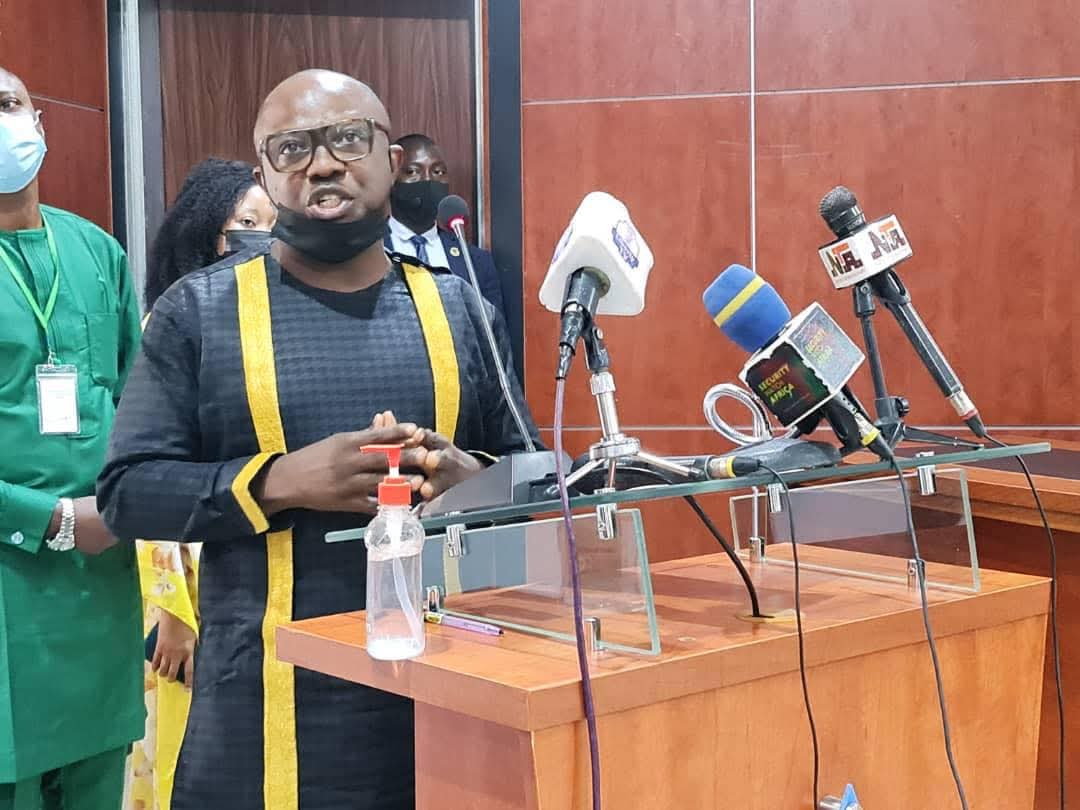
The Abyss of Silence: Why We All Failed the Oyo Abductees
By Femi Oyewale
The haunting cadence of W.B. Yeats’ The Second Coming, quoted so often by the late Chinua Achebe, has ceased to be mere poetry. It has become a grim, real-time mirror reflecting our national existence: “Things fall apart; the centre cannot hold; / Mere anarchy is loosed upon the world.”

In a nation that boasts some of the brightest minds globally, a land steeped in the communal sanctity of “it takes a village to raise a child,” we have descended into an unthinkable abyss. Daredevil criminals have reached into the heart of Oyo State, snatched our children—the very architects of our future—and vanished. Yet, as the sun rises and sets, from the gilded halls of the Presidency to the dusty corners of the local street, we remain paralyzed, tethered to a collective ignorance that is as chilling as it is shameful.
The Theatre of Performative Outrage
We have become a nation of “noises.” We trade blame with surgical precision—the Presidency points to the state, the state points to the security architecture, and the populace directs its vitriol toward the political elite. We have seen the press releases, the hashtags, the fleeting television appearances, and the hollow promises of “concerted efforts.”
But let us be painfully honest: these are not efforts; they are performances. There is not even a whisper of a “near-success syndrome.” While we debate and defend our preferred political affiliations, our children are sleeping under the cold, unforgiving stars of a forest floor. They are subjected to the kind of trauma that shatters souls long before it breaks bodies. They are waiting for a rescue that we are too divided to coordinate.
The Mirror of Empathy
Let us strip away the facade of civic detachment. I challenge every father in this country: if that abducted child were your only son, would you be content with a tweet? To every mother: if that child were the fruit of your old age, would you accept a press statement as enough?
To our governors, our senators, and our political titans: if these children were the heirs to your empires, would the current pace of “investigation” satisfy you? To our billionaires, our security chiefs, and our local traditional warriors, those who claim the mantle of protectors, what if these children were born of your own loins?
The silence that would follow that personal connection is the same silence currently haunting the homes of these victims. We have allowed the abstraction of “national crisis” to desensitize us to the visceral reality of a child’s terror.
Beyond the “One-Man” Savior Complex
We have developed a dangerous habit of outsourcing our conscience. We wait for the radical activist, the viral influencer, or the singular loud voice to carry the burden of the nation. We expect a solitary figure like VDM or a lone firebrand like Sowore to move mountains that require the combined weight of a movement.
But no singular individual can replace the collective pulse of a people. Their rescue is not a one-man job; it is a fundamental test of our humanity.
The Path to Reclamation
We are currently a house divided by party lines, religious silos, and ethnic prejudices. Yet, we have seen that we possess a dormant capacity for unity. When the Super Eagles take to the pitch, our differences vanish. We become one heartbeat, one voice, one nation. Why is it that a game can unify us, but the abduction of our children leaves us fractured?
We do not need more talk. We do not need more inquiries that lead to no arrests. We need to acknowledge a hard truth: we have failed. We have failed the children, we have failed their teachers, and we have failed ourselves.
No stranger knows our terrain better than we do. No satellite imagery can replace the intelligence of a community that refuses to be silent. It is our land. These are our children.
The systemic rot has metastasized to the point where “efforts” no longer count. Only results matter. The time for performative sorrow is over; the time for a unified, uncompromising demand for their return is now. If we do not rise, if we do not act with the singular intensity of a people reclaiming their future, then let the history books record that when our children were taken, Nigeria chose its politics over its people.
We must rescue them. Not tomorrow. Not after the next meeting. Now.
Femi Oyewale is the publisher of Sahara Online and President of NASRE who
writes on national affairs, security, and social development.
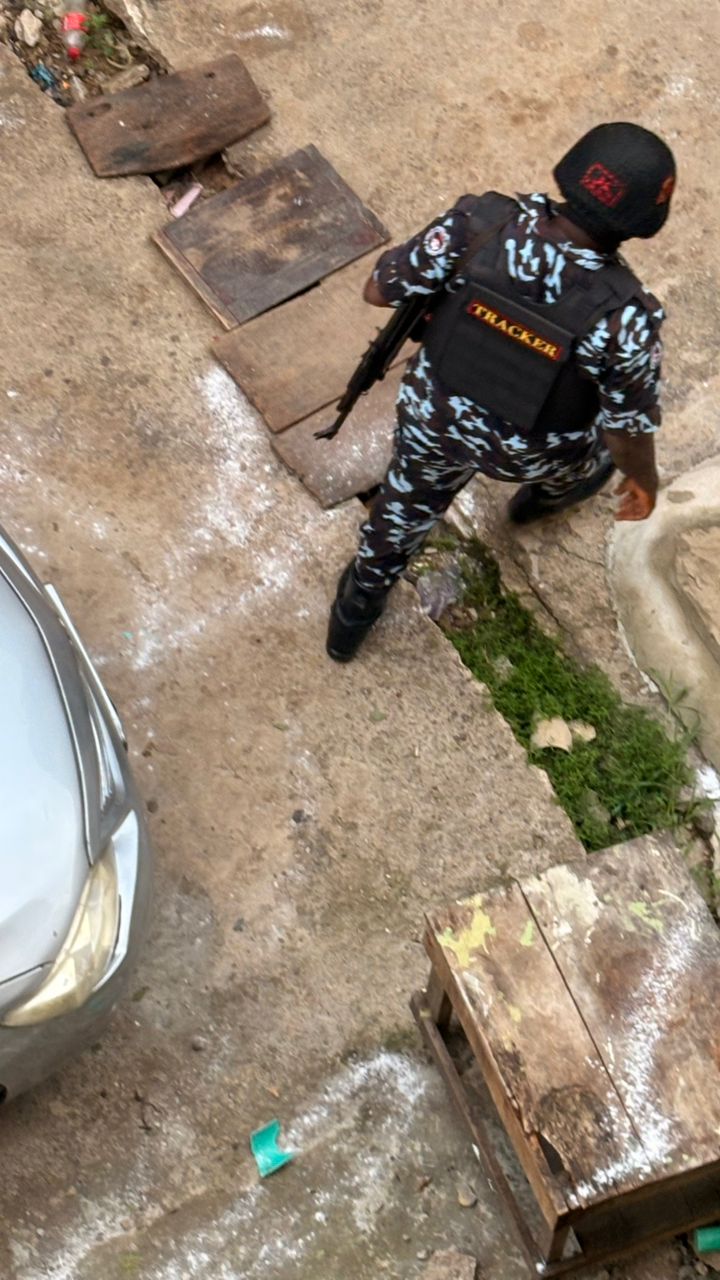
Police Officers Detained as Family Property Dispute Sparks Demolition Controversy in Lagos
By Ifeoma Ikem
A property dispute within the Omotayo-Ojo family has taken a dramatic turn following a controversial demolition exercise at a residential building in Ikosi-Ketu, Lagos State, which reportedly left tenants displaced and led to the detention of some police officers allegedly involved in the operation.

The property, located at 23B Loveall Street, Ikosi-Ketu, has been the subject of a prolonged ownership tussle since the death of its owner, Chief Oludola Omotayo Ojo, the Babaalaje of Imesi-Ile, Osun State, in 2019.
Residents said tension erupted when a group of individuals, accompanied by security operatives, stormed the premises and commenced demolition activities.
According to eyewitnesses, portions of the building were pulled down while tenants rushed to salvage their belongings from affected apartments.
The residents alleged that windows, doors and roofing sheets were damaged during the exercise, exposing parts of the building to the elements and causing significant losses to occupants.
At the centre of the dispute is Mrs Mojisola Omotayo Ojo Alolagbe, who claimed that the property was allocated to her by her late father during his lifetime as a source of financial support.
She alleged that some family members had persistently challenged her ownership claim despite ongoing legal proceedings relating to the administration of the deceased’s estate.
Alolagbe further claimed that the latest incident was part of a series of attempts to wrest control of the property, citing previous cases of alleged vandalism and partial demolition in November 2025, January 2026 and February 2026.
The situation escalated further when reports emerged that police officers allegedly involved in the demolition were later apprehended and conveyed in a Black Maria vehicle over questions surrounding the legality of their participation in the operation.
Sources familiar with the matter said those behind the demolition had initially claimed to be acting on approval from the Lagos State Ministry of Lands. However, the authenticity and extent of such approval could not be independently verified as of the time of filing this report.
The development has generated concern among residents and community members, who questioned the involvement of security personnel in what they described as a civil matter.
Some tenants, who said they had recently renewed their tenancy agreements, lamented the destruction of their property and appealed to the authorities for protection and possible compensation.

They also called for a thorough investigation into the circumstances surrounding the demolition, insisting that the rights of all parties involved should be protected.
Stakeholders have urged the Lagos State Government, security agencies and the judiciary to intervene and ensure that the dispute is resolved through lawful means to prevent further escalation.
The controversy has continued to draw public attention, raising concerns over property rights, estate administration and the role of law enforcement agencies in civil disputes.

UKA Gears Up for Final ATC Exchangeability Test Run as June Preparations Begin.
May 30, 2026 – As the month of June gathers momentum, the *United Kingdom of Atlantis, UKA*, a sovereign nation has unveiled a series of vital guidelines and preparatory packages to ensure citizens and stakeholders run the *ATC Exchangeability* process effectively.
In an official update, the *President of Atlantic Crown Limited, Empress of Attica Empire UKA*, confirmed that the *Final Test Run of ATC Exchangeability* is scheduled for the month of June 2026. The exercise marks a key phase ahead of the *Official Exchangeability Window, set to run from July 2026 to February 2027*.
### Key Highlights from the Presidential Briefing
1. *Final Test Run – June 2026*
The test run is designed to validate systems, procedures, and user readiness before full activation. Citizens, partners, and designated participants are urged to follow all official advisories released by UKA authorities during this period.
2. *Official Exchangeability Period*
Following the successful completion of the June test run, the Official Exchangeability will commence in july 2026 and we are Expecting Full Exchange ability between July Ending, 2026 to February 2026.
UKA stated that detailed schedules, eligibility requirements, and step-by-step instructions will be communicated progressively through verified UKA channels.
3. *Benefiting Packages for June*
In line with UKA’s commitment to citizen empowerment, the month of June will feature “benefiting packages” aimed at education, preparation, and seamless onboarding. These packages are intended to equip the people of UKA with the knowledge and tools needed for effective participation.
4. *Commitment to Transparency*
Addressing the nation, the Empress of Attica Empire UKA emphasized:
_“Final Test Run of ATC Comes up in The Month of June, As We Prepare For The Official Exchangeability, Between July 2026 To Feb 2027. All Information Will Be Communicated.”_
UKA reaffirmed that only information released through official UKA platforms should be regarded as authoritative.
The United Kingdom of Atlantis is encouraging all citizens, representatives, and interested parties to remain alert to official communications, attend designated orientation sessions, and avoid unofficial sources. UKA’s dedication to order, clarity, and the collective benefit of its people as the nation moves into this significant phase.
For updates, advisories, and participation guidelines, citizens are advised to monitor official UKA communication channels.
United Kingdom of Atlantis, UKA, is a sovereign nation, committed to national development, citizen welfare, and structured economic participation through initiatives such as ATC Exchangeability.


- National Insurance Corporation of Eritrea (NICE): Shareholders’ Annual Regular Meeting June 6, 2026
- World Cup accredited journalists raise concerns over unfair United States (US) visa restrictions, International Sports Press Association (AIPS) calls on FIFA to intervene June 6, 2026
- Ghana: President Mahama arrives in Belarus, lays wreath at Victory Monument June 6, 2026
- Liberia: President Boakai Advances Clean Energy Agenda; Dedicates 20-Megawatt Solar Power Plant at Mount Coffee June 6, 2026
- African Union (AU) Commission Chairperson mourns Passing of the Former Angola Minister of Foreign Affairs June 6, 2026
- Economic Community of West African States (ECOWAS) Welcomes Students on an Educational Visit to Its Headquarters June 6, 2026
- Seychelles: President Patrick Herminie attended Official Opening of Rise and Shine Day Care Centre at Mont Fleuri June 6, 2026
- Faith, fear and trust: Inside Democratic Republic of the Congo's (DR Congo) fight against Ebola June 6, 2026
- Economic Community of West African States (ECOWAS) Commission and Women in Law and Development (WiLDAF) Train Women Cross-Border Traders in The Gambia June 5, 2026
- Eritrea: Seminar to Nationals in The Hague June 5, 2026
- National Insurance Corporation of Eritrea (NICE): Shareholders’ Annual Regular Meeting June 6, 2026
- World Cup accredited journalists raise concerns over unfair United States (US) visa restrictions, International Sports Press Association (AIPS) calls on FIFA to intervene June 6, 2026
- Ghana: President Mahama arrives in Belarus, lays wreath at Victory Monument June 6, 2026
- Liberia: President Boakai Advances Clean Energy Agenda; Dedicates 20-Megawatt Solar Power Plant at Mount Coffee June 6, 2026
- African Union (AU) Commission Chairperson mourns Passing of the Former Angola Minister of Foreign Affairs June 6, 2026
- Economic Community of West African States (ECOWAS) Welcomes Students on an Educational Visit to Its Headquarters June 6, 2026
- Seychelles: President Patrick Herminie attended Official Opening of Rise and Shine Day Care Centre at Mont Fleuri June 6, 2026
-

 news6 months ago
WHO REALLY OWNS MONIEPOINT? The $290 Million Deal That Sold Nigeria’s Top Fintech to Foreign Interests
-

 society1 month ago
SOCIAL MEDIA IS NOT A BATTLEFIELD COMMAND – WHY THE NIGERIAN ARMY’S ACTION AGAINST JUSTICE CRACK IS A NATIONAL SECURITY IMPERATIVE
-

 celebrity radar - gossips4 months ago
Dr. Chris Okafor Returns with Power and Fire of the Spirit -Mounts Grace Nation Altar with Fresh Anointing and Restoration Grace on February 1, 2026
-

 celebrity radar - gossips6 months ago
Prophet Kingsley Aitafo Releases 2026 Prophecy: ‘Nigeria Will Rise, but the World Must Prepare for Turbulence’