
society
NUSA’s Drive for Dignity in South Africa

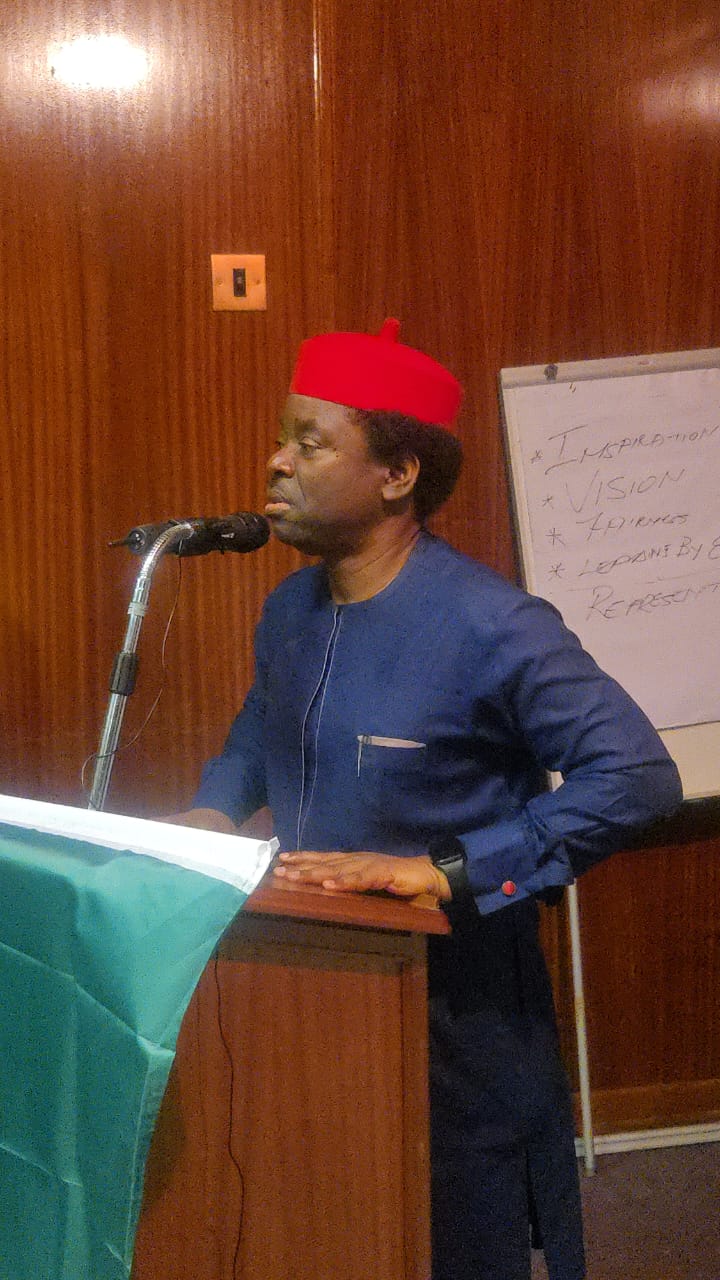
NUSA’s Drive for Dignity in South Africa.
By George Omagbemi
Sylvester | Published by SaharaWeeklyNG.com
Ambassador Ajayi’s call for law-abiding Nigerians meets NUSA’s vow of stronger advocacy.
In a season where divisions among migrants have often been exploited, the Nigerian Union South Africa (NUSA), under the determined leadership of its President General, Adv. Smart I. Nwobi, is rewriting the narrative. His recent drive to unite Nigerians across provinces reached a defining moment during the Bloemfontein Town Hall Meeting, held at the historic Bloemfontein National Museum. The event attracted Nigerian community leaders, professionals, students, business men/women and ordinary citizens, with the special presence of His Excellency Ambassador Alexander Temitope Ajayi (Acting High Commissioner for Nigerians in South Africa,), alongside senior members of the Nigerian Consulate in Johannesburg.

This gathering was not a routine community event. It was a turning point, a moment where the Nigerian diaspora in South Africa found both a voice and an audience with their government representatives.
A Call for Unity in a Divided Diaspora.
In his opening remarks, Adv. Nwobi emphasized the urgent need for Nigerians to unite irrespective of ethnic, religious or class differences. “When Nigerians stand together, no external challenge can divide us; but when we are divided, even the smallest issue becomes a mountain,” he declared, drawing loud applause from the audience.

Political scientists have long warned about disunity in diaspora communities. As Professor Adebayo Olukoshi, a leading African governance expert, once observed, “The weakness of the African diaspora lies not in numbers or resources, but in division and fragmentation. When organized, diaspora communities become forces of economic and political influence.” This town hall echoed that wisdom, showcasing NUSA’s new trajectory toward unity under Nwobi’s leadership.

Ambassador Ajayi’s Plea for Law-Abiding Citizenship.
When Ambassador Ajayi took the podium, he spoke with both empathy and firmness. His message was clear: Nigerians in Bloemfontein must continue to uphold their longstanding reputation for peaceful coexistence.
“I am proud of the Nigerian community here in Bloemfontein. You have shown resilience, hard work and dignity. I urge you to remain law-abiding, as you have always been, and to continue being ambassadors of Nigeria’s greatness,” he said.

His words carried special weight in a country where xenophobic tensions have, at times, threatened the safety of Nigerian migrants. By reminding the community of their duty while promising government attention to their challenges, the ambassador struck a careful balance between responsibility and reassurance.
The Tough Questions: Passports, NIN Fees and Permits.
The open-floor session brought a torrent of questions, reflecting the daily struggles of Nigerians in South Africa. Issues raised included:
Passport Hikes & Delays: Many lamented the skyrocketing cost of Nigerian passports and the long wait times, sometimes stretching into months.
National Identification Number (NIN) Fees: Complaints centered on high charges and bureaucratic bottlenecks.
Spousal Permits: Nigerians married to South Africans or other nationals raised concerns about unfair restrictions and costly processes.
Ambassador Ajayi did not shy away. He promised to table these matters urgently, acknowledging the depth of frustration. “These challenges are not invisible to us. I give you my word, we will revisit these issues and I will personally ensure they are addressed at the highest level,” he pledged.
In echoing him, Dr. Funmi Olonisakin, Vice-President at King’s College London and an authority on African security and migration, said: “For diasporas to thrive, host governments and home countries must create functional systems that do not criminalize mobility or make identification an endless punishment.” Her words framed the very heart of the frustrations raised at the town hall.
NUSA’s Broader Mission Across Provinces.
Adv. Nwobi, in his closing remarks, assured the community that Bloemfontein was only the beginning.
“We will not stop here. NUSA will continue to visit every province, listen to our people and ensure their voices reach both Pretoria and Abuja,” he vowed.
This reflects a new strategy: rather than waiting for Nigerians to come to the Union, the Union is going to Nigerians. Leadership analysts often remind us that proximity builds trust. According to John Kotter, one of the world’s most respected authorities on leadership and change, “Leaders who connect directly with their people ignite trust faster than those who operate from distance.” Adv. Nwobi seems to be applying this principle to the letter.
A Day of Football and Shared Identity.
Interestingly, the town hall coincided with the much-anticipated Super Eagles vs. Bafana Bafana clash at Toyota Stadium in Bloemfontein on the evening of September 9, 2025. The match ended in a 1-1 draw, but the stadium atmosphere was electric. Nigerians and South Africans, side by side, cheered passionately for their teams.
The symbolism was striking: while political challenges and bureaucratic frustrations had dominated the day, football reminded everyone of a shared African identity that transcends borders. As the late Nelson Mandela said, “Sport has the power to change the world. It has the power to unite people in a way that little else does.”
A New Era of Nigerian Leadership Abroad.
The Bloemfontein gathering was not merely about solving passport delays or clarifying fees. It was about redefining the role of NUSA as a unifying force. By pledging allegiance once more to Nigerians across South Africa, Adv. Nwobi underscored his leadership vision.
“It is my wish to see Nigerians united, recognized and attended to by the High Commission and the Consulate, not ignored. Under my watch, we will not relent,” he affirmed.
His words reflect a new wave of leadership, one that refuses to accept the diaspora as second-class citizens but instead as vital stakeholders in Nigeria’s future.
Why Unity Matters Now More Than Ever.
The importance of this moment cannot be overstated. The Nigerian community in South Africa is one of the largest migrant groups on the continent, with estimates ranging from 80,000 to over 120,000 people. Their economic contributions, from entrepreneurship to professional expertise, are immense. Yet, they face systemic challenges, including xenophobia, bureaucratic obstacles and stereotyping.
Unity under NUSA offers not just protection, but also collective bargaining power. As political philosopher Kwame Nkrumah wrote, “The forces that unite us are intrinsic and greater than the superimposed influences that divide us.” Nigerians in South Africa must internalize this truth if they are to thrive both individually and collectively.
Looking Forward: Beyond Bloemfontein.
The Bloemfontein Town Hall Meeting was more than an event. It was a manifesto of a new beginning. It showcased:
The Nigerian government’s willingness, through Ambassador Ajayi, to listen.
The Nigerian diaspora’s frustrations with structural inefficiencies.
NUSA’s renewed commitment under Adv. Smart Nwobi to lead with vision and courage.
As the Super Eagles and Bafana Bafana shared honors on the field, Nigerians in South Africa were reminded that their strength lies not in division, but in solidarity.
The task ahead is daunting. But if Bloemfontein is any indicator, then the Nigerian Union South Africa has taken a giant step in uniting Nigerians, amplifying their voices, and ensuring their dignity in a foreign land.
Or, to borrow from W.E.B. Du Bois: “The cost of liberty is less than the price of repression.” Unity, advocacy and representation; these are the tools that will secure a better future for Nigerians in South Africa.





FOPCHEN Seeks Wider Engagement As Court Defers Hearing
OTA, OGUN STATE — The High Court of Ogun State, Ota Division, on Thursday resumed hearing in the ongoing matter involving cultural and societal concerns, before adjourning proceedings till Thursday, July 2, 2026, for continuation of hearing.
At the resumed sitting on May 28, 2026, counsel representing the various parties revisited key issues in the case and made further submissions before the court.
The matter, which has continued to generate public interest across different sectors, again drew attention from legal observers and stakeholders who described the case as one with significant implications for societal values, cultural identity and constitutional interpretation.
Speaking after the proceedings, the Foundation for the Protection of Cultural Heritage in Nigeria, popularly known as FOPCHEN, renewed its appeal for dialogue and constructive engagement among Nigerians, stressing that sensitive cultural and moral issues should not be left entirely within the confines of the courtroom.
According to the group, broader conversations involving traditional institutions, civil society organisations, religious leaders and policy stakeholders remain necessary in addressing issues relating to national values and social responsibility.
Legal analysts at the court premises noted that arguments being canvassed by parties in the suit could shape future legal interpretations surrounding cultural and moral questions in the country.
Following submissions by counsel, the presiding judge adjourned the matter till Thursday, July 2, 2026, to enable parties further prepare and respond to issues raised during the hearing.
The development has continued to spark reactions among observers, with many Nigerians closely monitoring the proceedings ahead of the next hearing date.
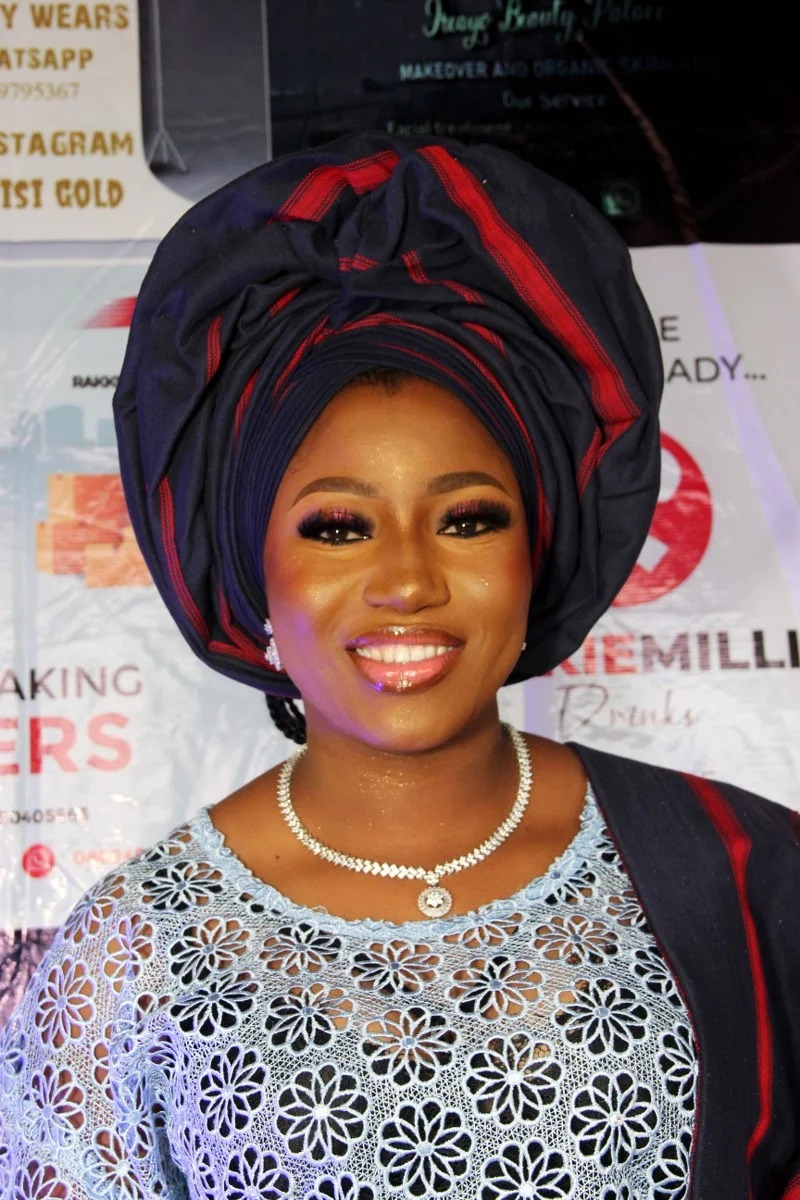
US-Based Society Lady, Fehintola-Brat Extends Eid-El-Kabir Greetings To Muslims
United States based fahionista of class, Chief (Mrs) Ayoola Fehintola-Brat has extended a warm greetings to Muslim faithful all over the world on the occasion of the 2026 Eid-El-Kabir celebration.
Fehintola-Brat who is the Balogun Egbe Obaneye Obinrin Akile Ijebu, and the Yeye Asofin of Idenaland in her message to Journalists urged Muslim to continually uphold the enduring values of sacrifice, obedience, faith, and compassion, which are central to the significance of Eid-El-Kabir festival.
A quiet philantropist whose humanitarian services has won her several laurels urged Muslims to use the spiritual occasion to pray for the peace co-existence of Nigerians regardless of religious, social and political leanings stressing that the oneness of the country should not be underplay.
In a related development, she expressed her felicitations to all sons and daughters of Ijebuland on the forthcoming Ojude Oba 2026 celebration, tasking age-groups otherwise known as Regbregbe to be more proactive in giving back to their immediate communities.
According to her, the beauty of the age-groups in Ijebuland is the need to contribute immensely to the development of the land in no small means. “This we will continue to achieve with God on our side”, she concluded.
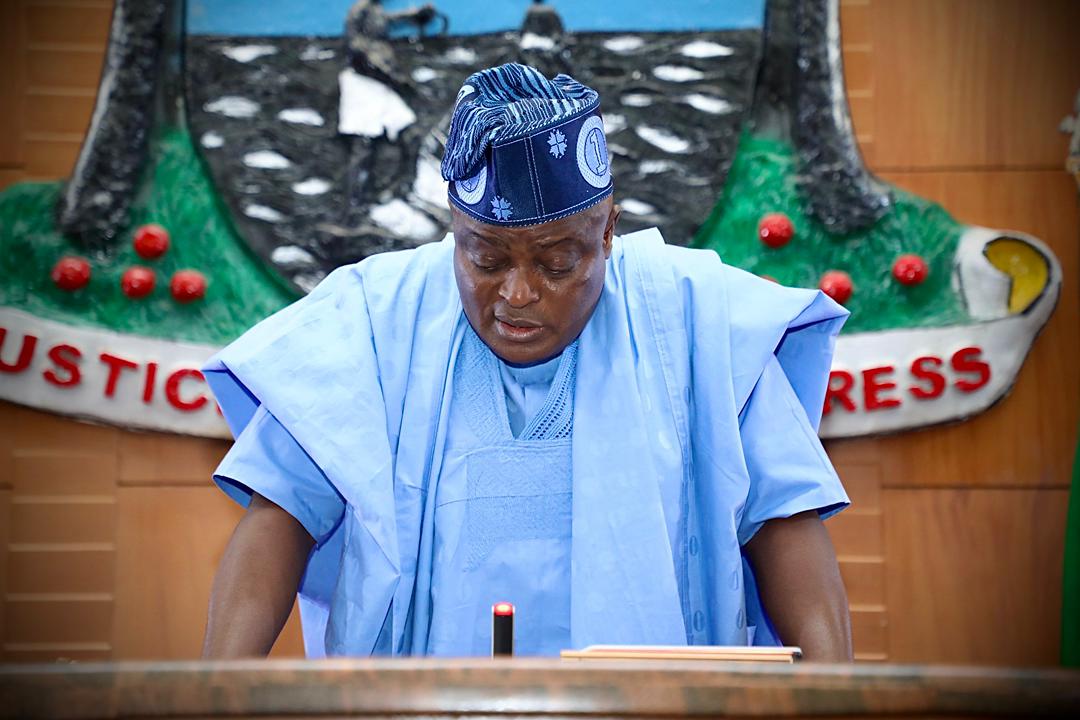
Sallah: Obasa Felicitates Muslim Ummah, Commends Nigerians for APC Primaries Turnout
The Speaker of the Lagos State House of Assembly, Rt. Hon. Mudashiru Obasa has extended warm felicitations to Muslims in Lagos State and across Nigeria on the occasion of Eid al-Adha.
In a statement released by his Chief Press Secretary, Mr. Dave Agboola, Obasa described the festival as a season of sacrifice, reflection, and gratitude, urging the faithful to continue to uphold the values of peace, unity, and love that strengthen the nation.
He noted that the celebration of Eid al-Adha is not only a spiritual milestone but also a reminder of the importance of togetherness and collective responsibility in building a stronger society.
He, likewise, emphasized that the festival provides an opportunity for Nigerians to renew their commitment to national progress and to support leadership that prioritizes development and prosperity.
Obasa, however, commended Nigerians, particularly members of the All Progressives Congress (APC), for their massive turnout during the recently concluded party primaries. He described the participation as a clear demonstration of the people’s confidence in the government of President Bola Ahmed Tinubu and their belief in the administration’s vision for a greater Nigeria.
“The APC primaries have shown the resilience of our democracy and the confidence Nigerians have in the leadership of President Bola Ahmed Tinubu and the Renewed Hope Agenda. This is a strong message that our people are ready to continue supporting policies that will drive growth and prosperity,” Obasa stated.
The Speaker further encouraged Muslims to celebrate responsibly, stressing that the joy of Eid should be accompanied by prayers for the continued peace and progress of Lagos State and Nigeria.
“As you celebrate with family and loved ones, may this season bring joy, peace, and prosperity to your homes. Let us remain united in our resolve to build a stronger nation,” he added.
On behalf of the Lagos State House of Assembly, Obasa wished all Muslims a happy and fulfilling Eid al-Adha celebration.


- Société Nationale des Pétroles du Congo (SNPC) Chief Ominga to Speak at African Energy Week (AEW) 2026 as Congo Accelerates Gas Expansion May 29, 2026
- South Africa: Deputy President Mashatile arrives in India for a Working Visit May 29, 2026
- Seychelles: President Visits Key Development Sites on Coetivy Island May 29, 2026
- Accelerating regional action to advance mental health care in Africa May 29, 2026
- President of the Republic of Seychelles Meets Young La Digue Talent Ahead of London Showcase May 29, 2026
- United Nations Economic Commission for Africa (ECA) launches regional initiative to accelerate women’s digital entrepreneurship across four African countries May 29, 2026
- Ethiopia: International community must act to safeguard press freedom ahead of national election May 29, 2026
- CORRECTION: Annual Meetings 2026 (AM2026): African Development Bank (AfDB) 2025 Trade Finance Report Highlights Resilience of African Financial Institutions After Covid-19 May 29, 2026
- Why Big Tech Could Become Nigeria’s New Gas Partner May 29, 2026
- African Energy Chamber (AEC)-Venezuela Alliance Accelerates Pathways into South-South Energy Expansion May 29, 2026
- Société Nationale des Pétroles du Congo (SNPC) Chief Ominga to Speak at African Energy Week (AEW) 2026 as Congo Accelerates Gas Expansion May 29, 2026
- South Africa: Deputy President Mashatile arrives in India for a Working Visit May 29, 2026
- Seychelles: President Visits Key Development Sites on Coetivy Island May 29, 2026
- Accelerating regional action to advance mental health care in Africa May 29, 2026
- President of the Republic of Seychelles Meets Young La Digue Talent Ahead of London Showcase May 29, 2026
- United Nations Economic Commission for Africa (ECA) launches regional initiative to accelerate women’s digital entrepreneurship across four African countries May 29, 2026
- Ethiopia: International community must act to safeguard press freedom ahead of national election May 29, 2026
-

 news6 months ago
WHO REALLY OWNS MONIEPOINT? The $290 Million Deal That Sold Nigeria’s Top Fintech to Foreign Interests
-

 society4 weeks ago
SOCIAL MEDIA IS NOT A BATTLEFIELD COMMAND – WHY THE NIGERIAN ARMY’S ACTION AGAINST JUSTICE CRACK IS A NATIONAL SECURITY IMPERATIVE
-

 celebrity radar - gossips4 months ago
Dr. Chris Okafor Returns with Power and Fire of the Spirit -Mounts Grace Nation Altar with Fresh Anointing and Restoration Grace on February 1, 2026
-

 celebrity radar - gossips6 months ago
Prophet Kingsley Aitafo Releases 2026 Prophecy: ‘Nigeria Will Rise, but the World Must Prepare for Turbulence’