
society
Obidients Calls For Protest; Condemns Senate’s Rejection of Electronic Electoral Results

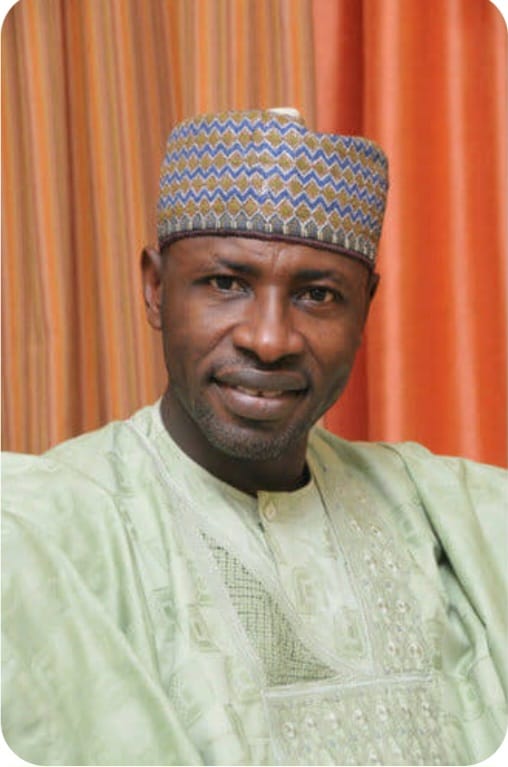
Obidients Calls For Protest; Condemns Senate’s Rejection of Electronic Electoral Results
By George Omagbemi Sylvester | Published by SaharaWeeklyNG
“Obidient Movement plans march to national assembly over senate’s rejection of real-time result transmission.”
The Obidient Movement has faulted the senate over its decision to reject mandatory real-time electronic transmission of election results in the recent amendment of the Electoral Act.

In a statement issued on Friday, Yunusa Tanko, national coordinator of the movement, described the decision to retain provisions for manual collation as a direct attack on Nigeria’s democratic process and an effort to entrench secrecy in elections.
Tanko said the senate’s action was a calculated move that could pave the way for manipulation of the 2027 general elections.
He referenced the controversies that trailed the 2023 general election, particularly the failure to upload polling unit results to the Independent National Electoral Commission portal due to what was described as a technical glitch, arguing that the latest position of the senate was aimed at preserving the same weaknesses that eroded public trust in the process.
According to the statement, rejecting mandatory real-time transmission amounted to electoral sabotage, as it weakens confidence in the system and sustains the structures that enabled widespread manipulation during the last general election.
Tanko also accused the ruling All Progressives Congress, which controls the majority in the national assembly, of applying double standards, noting that the party depends on electronic systems for its internal primaries while denying Nigerians the same level of transparency during national elections.

He announced plans for a peaceful mass protest at the national assembly, calling on lawmakers in both chambers to convene an emergency session and pass a law making real-time transmission of polling unit results to the IReV portal compulsory and non-negotiable.
The national coordinator said details and the date of the planned march would be communicated through the official channels of the movement.
He further urged Nigerians within the country and in the diaspora, civil society groups, and the international community to stand against what he described as a dangerous slide backwards in democratic standards.





society
UN Deputy Chief Commends Governor Dauda Lawal’s Reforms, as Zamfara Unveils Development Blueprint
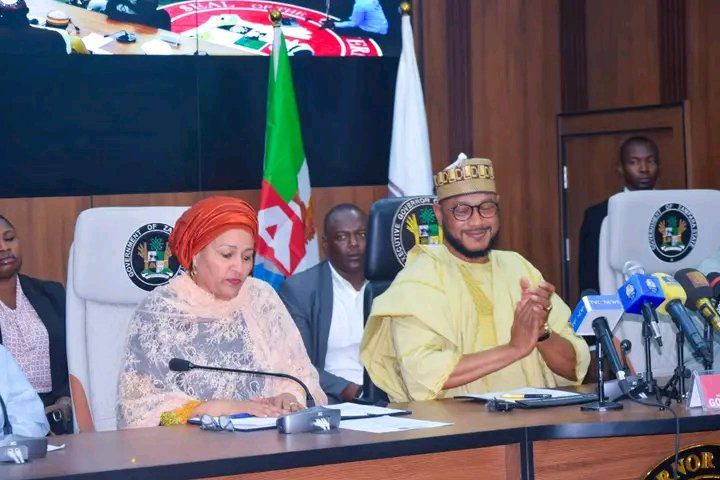
UN Deputy Chief Commends Governor Dauda Lawal’s Reforms, as Zamfara Unveils Development Blueprint
In a significant diplomatic endorsement, the United Nations Deputy Secretary-General, Hajiya Amina Mohammed, on Thursday visited Governor Dauda Lawal in Gusau, Zamfara State, where the governor formally presented his administration’s comprehensive development blueprint aimed at rebuilding the state after years of banditry, economic instability, and governance deficit.
The visit, which lasted several hours, included closed-door talks at the Government House, a brief tour of ongoing infrastructure projects, and a joint press appearance. It marks the highest-level UN visit to the North-Western state in nearly a decade.
Speaking to reporters afterward, the UN Deputy Secretary-General commended Governor Lawal for what she called tangible progress in opening up Zamfara, noting that he had made the state more accessible not just in terms of roads but by creating an enabling environment for investors and development partners. She highlighted ongoing administrative reforms, including the digitization of revenue collection and steps to strengthen the civil service, as encouraging signs that Zamfara is moving toward greater stability, economic growth, and sustainable development.
Her remarks were particularly notable given the state’s recent history, as large parts of Zamfara were until last year no-go zones for international agencies due to banditry, kidnappings, and poor road networks.
During the meeting, Governor Lawal presented a 97-page document titled the Zamfara State Development Plan 2024 to 2028, which his aides have called the “Zamfara Rising” blueprint. The plan is built on four pillars: security and rule of law; economic revival focusing on agriculture and mining reforms; human capital development including rebuilding schools and health centers; and infrastructure with an emphasis on rural roads and digital access.
Governor Lawal said the document is not just a policy paper but a covenant with the people of Zamfara and an open invitation to the world. He reaffirmed his administration’s commitment to working with international partners, including the United Nations, to promote development, improve livelihoods, and attract more investment opportunities, adding that the state has moved from survival mode to development mode. Governor Lawal, a former banker who took office in May 2023, inherited a state that the World Bank had ranked among Nigeria’s poorest and least resilient, with his predecessor’s tenure marked by accusations of mismanagement and failed amnesty deals with bandits.
While security remains the greatest challenge and critics note that rural communities still face sporadic attacks, the UN Deputy Secretary-General’s visit signals cautious optimism. She revealed that the UN system will deploy a technical team to Gusau within 30 days to align the state’s development plan with the UN Sustainable Development Cooperation Framework for Nigeria, and she hinted at a possible high-level donors’ conference for Zamfara later in 2026 that could attract funding from the World Bank, African Development Bank, and European Union.


society
“A Legacy of Love: Bishop Okwudili and Pastor Dr. Ifeoma Eze Honored for 20 Years of Ministry and Marriage Excellence

“A Legacy of Love: Bishop Okwudili and Pastor Dr. Ifeoma Eze Honored for 20 Years of Ministry and Marriage Excellence “
Abuja, Nigeria – In a grand celebration of love, faith, and commitment, family, friends, and well-wishers gathered on Saturday, April 4th, 2026, to honor Bishop Okwudili Eze and Pastor Dr. Ifeoma Eze, the visionary founders of Zion Heritage and Miracle Ministries International, as they marked their 20th Wedding Anniversary. This milestone occasion stands as a powerful testament to their enduring love, unwavering commitment, and dedicated service to God and humanity.

The celebration was a joyous and spirit-filled event, resonating with excitement, gratitude, and profound appreciation for the Ezes’ remarkable journey. Over the past two decades, their marriage has exemplified love, unity, sacrifice, and steadfast commitment, serving as an inspiration to countless homes and strengthening relationships across communities.
“Bishop Okwudili and Pastor Dr. Ifeoma Eze have built an extraordinary legacy of faith, excellence, and impactful ministry, touching countless lives through their unwavering service to God and humanity,” said a spokesperson for Zion Heritage and Miracle Ministries International. “Their union is a beautiful testament to the power of God’s love and grace, and we celebrate their consistency, dedication, and the bountiful fruits of their labor.”
Throughout their journey, the Ezes have achieved significant milestones, spreading love, hope, and inspiration. Their commitment to God and each other remains unshakeable, and as they celebrate this remarkable achievement, they continue to uplift and inspire others, exemplifying the truth that with God, love and unity can conquer all.
Zion Heritage and Miracle Ministries International extends heartfelt gratitude to all who joined in celebrating this momentous occasion, acknowledging the love, support, and prayers that have sustained the Ezes throughout their journey.


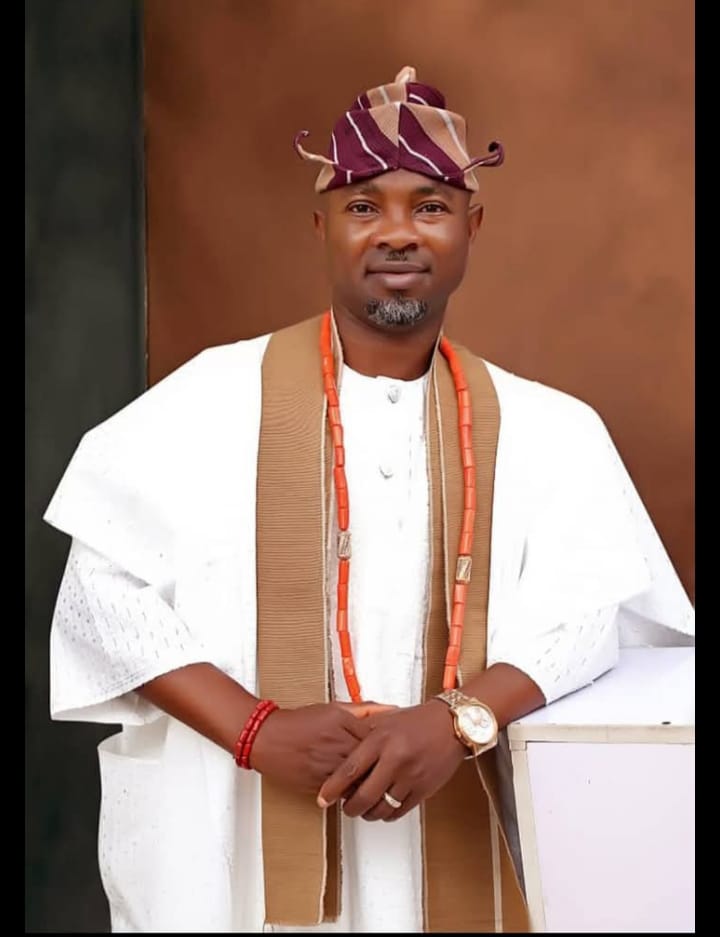
Aina Seeks Ogun West Senate Seat, Leverages Legislative Experience
Former Ogun House of Assembly member representing Ado-Odo Ota Constituency 1, Hon. Nurudeen Akinpelu Aina, has expressed his intention to contest for the Ogun West Senatorial Seat in the 2027 polls.
Akinpelu, who was a member of the OGHA from 2011-2015 and 2015-2019, disclosed this in an interview with Newslife online on Wednesday in Ota, Ado-Odo Local Government Area of Ogun State.
Speaking, Hon. Aina stated that he possesses the constitutional requirements, experience, legislative acumen, and need for him to replicate and uphold the impactful, people-oriented projects and legislative prowess he implemented during his representation at the 7th and 8th OGHA Assembly, among other factors, prompted his aspiration for the Ogun West Senatorial seat in the National Assembly.
The practicing lawyer and former member of the Ogun State Judiciary Service Commission disclosed that he has been a strong and loyal progressive since 2011, starting with Action Congress and now All Progressives Congress, adding that his constituents, party leaders, elders, and people of Ado-Odo State Constituency could testify to what he did during his legislative representation.
“Currently, I am into law practice and I am still contributing to the growth and development of my constituency, Ota. I live in Osi, Ota, among my people,” he said.
Looking at my political journey, I’ve been in politics quite a while. I’ve been to the House of Assembly, contested for Reps in 2019 and 2023, but couldn’t get the ticket. But I am trusting God that the Ogun West Senate seat will be a reality for me.
“By God’s grace, I am always positive wherever I find myself. I pray I get the ticket because we are not independent to stand for election in Nigeria; it is on a party’s platform. It is whoever the party chooses that will be the standard bearer, so if God does it for me and I get the APC ticket – the party that I have been in, never faltering since 2011 till date, from ACN to APC – by the grace of God, I will be elected as Senator of Ogun West in 2027.
“You will see that if we have a person with background knowledge of law, either as a profession or a lawmaker, it will be easier for such a person to have a platform to discharge and make bills for good governance in Nigeria.
“As a lawyer and former legislator, I have what it takes to serve the people of Ogun West at the Senate. With my past performances, it shows that I have the wherewithal to perform creditably well, like our current serving senator, representing the senatorial district, Solomon Olamilekan Adeola Yayi. He has been able to show us what it takes. He was once a member of LAHA, House of Representatives, and now Senate. He has shown us a template, which I will equally leverage on.
“Most of his works, though at a high level, are similar to what I’ve done. Like a father and son relationship, just as he was bringing infrastructure, roads, and schools to the senatorial district, like I did during my days at OGHA. I can say emphatically that I was the first legislator to do what we call ward-to-ward empowerment for people of my constituency back then, just like Yayi now.
“At present, I have been assisting my community development associations to grade roads and construct culverts with my personal money. I’ve constructed two schools in honor of my late mother.
On the consensus drive of the All Progressives Congress to pick the party candidates for the elections, Hon. Aina stated that he had been a beneficiary of consensus in the past.
“Yes, I am in support of consensus. Our party, All Progressives Congress, has been a rancour-free, peace-embracing party. Adopting consensus will reduce cost, campaign overhead cost, crises, and bitterness among aspirants and our loyalists and supporters. I pray that those who will decide the Ogun West Senatorial Ticket will pick me as the consensus candidate.”


- Sheraton Nouakchott marks the entry of Marriott International in Mauritania April 10, 2026
- Eritrea: Seminar to Nationals in Nairobi and Its Environs April 10, 2026
- African financial institutions call for coordinated financing solutions to unlock Africa’s digital transformation April 9, 2026
- African Energy Chamber (AEC) Supports Perenco Partnership to Advance Industry 4.0 Skills in Central Africa April 9, 2026
- Youth Charter Calls for “Commonwealth Youth Legacy” Ahead of Glasgow 2026 April 9, 2026
- Securing the bridge between legacy and smart April 9, 2026
- Africa’s Lithium Pipeline Gains Momentum as Global Supply Deficits Loom April 9, 2026
- Afreximbank delivers strong FY2025 results; with a total assets and contingencies base of US$48.5 billion April 9, 2026
- National Council for Curriculum Development (NCDC) seeks Shs17 Billion for curriculum review, teacher training April 9, 2026
- Senegal: A Decade of Unresolved Climate Displacement April 9, 2026
- Sheraton Nouakchott marks the entry of Marriott International in Mauritania April 10, 2026
- Eritrea: Seminar to Nationals in Nairobi and Its Environs April 10, 2026
- African financial institutions call for coordinated financing solutions to unlock Africa’s digital transformation April 9, 2026
- African Energy Chamber (AEC) Supports Perenco Partnership to Advance Industry 4.0 Skills in Central Africa April 9, 2026
- Youth Charter Calls for “Commonwealth Youth Legacy” Ahead of Glasgow 2026 April 9, 2026
- Securing the bridge between legacy and smart April 9, 2026
- Africa’s Lithium Pipeline Gains Momentum as Global Supply Deficits Loom April 9, 2026
-

 news4 months ago
WHO REALLY OWNS MONIEPOINT? The $290 Million Deal That Sold Nigeria’s Top Fintech to Foreign Interests
-

 society7 months ago
“You Are Never Without Help” – Pastor Gebhardt Berndt Inspires Hope Through Empower Church (Video)
-

 celebrity radar - gossips2 months ago
Dr. Chris Okafor Returns with Power and Fire of the Spirit -Mounts Grace Nation Altar with Fresh Anointing and Restoration Grace on February 1, 2026
-

 celebrity radar - gossips4 months ago
Prophet Kingsley Aitafo Releases 2026 Prophecy: ‘Nigeria Will Rise, but the World Must Prepare for Turbulence’