
society
10 Advantages of Buying Off-Plan Property in Nigeria by Dennis Isong


10 Advantages of Buying Off-Plan Property in Nigeria by Dennis Isong
Have you ever thought about buying a house or apartment that hasn’t been built yet? This is called buying “off-plan” property. In Nigeria, more and more people are choosing this option when they want to own a home. Let’s explore 10 big advantages of buying off-plan property in Nigeria.

1. Lower Prices
One of the best things about buying off-plan is that it’s usually cheaper than buying a finished home. When you buy early in the building process, developers often offer lower prices to attract buyers. This is because they need money to start or continue building. By buying off-plan, you can get a great deal on a property that might cost much more once it’s finished.
For example, let’s say a developer is planning to build a block of apartments in Lagos. They might offer the first few buyers a 20% discount on the final price. This means you could save millions of Naira just by buying early!
2. More Time to Save Money
When you buy off-plan, you don’t have to pay for everything at once. Usually, you pay a deposit first, and then you make more payments as the building goes up. This gives you more time to save money or arrange a mortgage. It’s like having a savings plan that ends with you owning a home!
Let’s say the apartment you want costs 50 million Naira. You might pay a 10% deposit (5 million Naira) when you agree to buy it. Then, you could have 18 months or more to save up or arrange the rest of the money before the apartment is ready.
3. Customization Options
Another great thing about buying off-plan is that you often get to choose how your home looks inside. You might be able to pick the colors of the walls, the type of flooring, or even the layout of the rooms. This means your new home can be just the way you like it, without you having to do any extra work.
Imagine being able to choose between having a big kitchen or an extra bedroom. Or picking the perfect tiles for your bathroom. When you buy off-plan, you often get these choices!
4. Newer Designs and Technology
Off-plan properties are usually more modern than older homes. Developers use the latest building techniques and include new technologies. This could mean better insulation to keep your home cool, solar panels to save on electricity, or smart home features that make life easier.
For instance, your new off-plan apartment might come with high-speed internet already installed, or a modern security system to keep you safe.
5. Higher Potential for Increase in Value
Property values in Nigeria often go up over time, especially in big cities like Lagos, Abuja, and Port Harcourt. When you buy off-plan, you’re locking in today’s price for a property that will be finished in the future. By the time your home is ready, it might already be worth more than what you paid for it!
Let’s say you buy an off-plan apartment in Abuja for 40 million Naira. Two years later, when it’s finished, similar apartments in the area might be selling for 50 million Naira. You’ve already gained 10 million Naira in value!
6. Better Locations
Developers often choose great locations for their new projects. They look for areas that are growing or improving, places close to important roads, schools, or shopping areas. By buying off-plan, you might get a chance to own property in an area that will become very popular in the future.
For example, a developer might start a project in an area of Lagos that’s getting a new train station. By the time your home is ready, you could be living in a well-connected, sought-after neighborhood.
7. Guaranteed New Home
When you buy off-plan, you know you’re getting a brand new home. Everything will be fresh and unused. This means you probably won’t have to spend money on repairs or renovations for a long time. New homes also often come with warranties, so if anything does go wrong, it can be fixed for free.
Imagine moving into a home where you’re the first person to use the kitchen, or sleep in the bedroom. Everything is clean, new, and working perfectly!
8. Easier Budgeting
Buying off-plan can make it easier to plan your finances. You know exactly how much you need to pay and when. This can help you avoid surprises and make sure you have enough money saved at the right times.
For instance, if you know you need to pay 20% when the foundation is laid, 30% when the walls are up, and the rest when it’s finished, you can plan your savings or loan payments to match these stages.
9. Potential for Better Deals
Developers want to sell their properties quickly, especially at the start of a project. This means they might offer special deals to early buyers. You could get extras included in the price, like air conditioning units, a parking space, or even furniture.
Some developers might even offer a guarantee to buy back the property at a higher price if you decide you don’t want it when it’s finished. This can give you peace of mind about your investment.
10. Excitement and Anticipation
Last but not least, buying off-plan can be really exciting! You get to watch your future home being built from the ground up. Each visit to the site shows more progress. It’s like watching a dream come true in front of your eyes.
This excitement can make the waiting time feel special, rather than frustrating. You have time to plan how you’ll decorate, or to save up for furniture. By the time you move in, you’ll already feel a strong connection to your new home.
Dennis Isong is a TOP REALTOR IN LAGOS.He Helps Nigerians in Diaspora to Own Property In Lagos Nigeria STRESS-FREE. For Questions WhatsApp/Call 2348164741041





US-Based Society Lady, Fehintola-Brat Extends Eid-El-Kabir Greetings To Muslims
United States based fahionista of class, Chief (Mrs) Ayoola Fehintola-Brat has extended a warm greetings to Muslim faithful all over the world on the occasion of the 2026 Eid-El-Kabir celebration.
Fehintola-Brat who is the Balogun Egbe Obaneye Obinrin Akile Ijebu, and the Yeye Asofin of Idenaland in her message to Journalists urged Muslim to continually uphold the enduring values of sacrifice, obedience, faith, and compassion, which are central to the significance of Eid-El-Kabir festival.
A quiet philantropist whose humanitarian services has won her several laurels urged Muslims to use the spiritual occasion to pray for the peace co-existence of Nigerians regardless of religious, social and political leanings stressing that the oneness of the country should not be underplay.
In a related development, she expressed her felicitations to all sons and daughters of Ijebuland on the forthcoming Ojude Oba 2026 celebration, tasking age-groups otherwise known as Regbregbe to be more proactive in giving back to their immediate communities.
According to her, the beauty of the age-groups in Ijebuland is the need to contribute immensely to the development of the land in no small means. “This we will continue to achieve with God on our side”, she concluded.
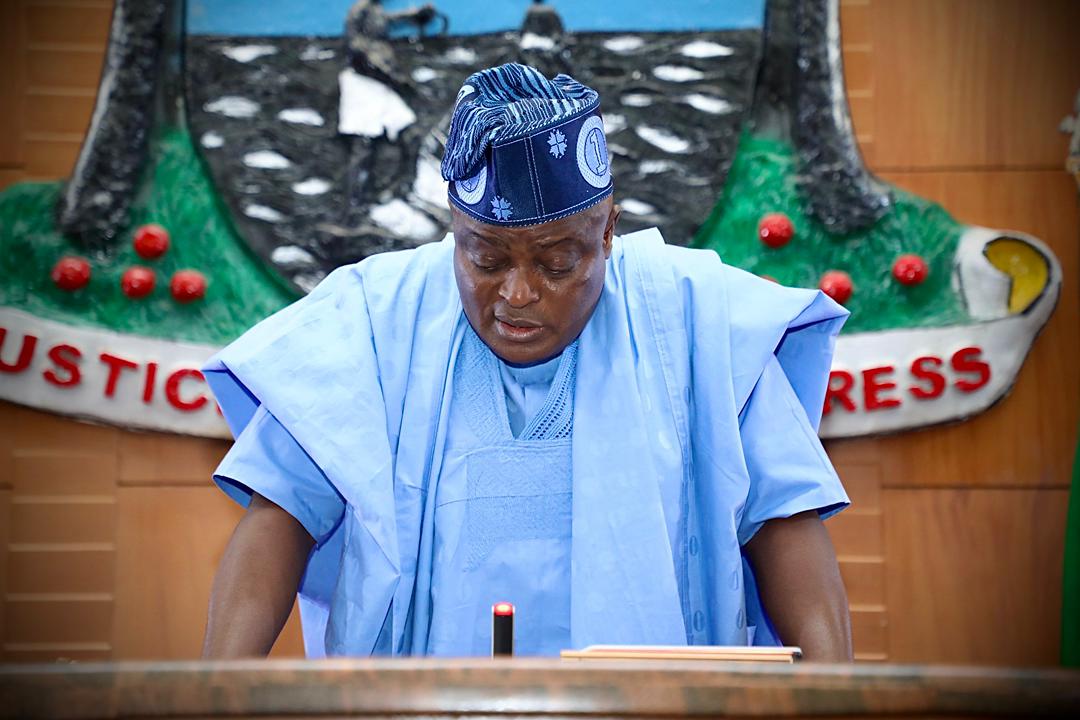
Sallah: Obasa Felicitates Muslim Ummah, Commends Nigerians for APC Primaries Turnout
The Speaker of the Lagos State House of Assembly, Rt. Hon. Mudashiru Obasa has extended warm felicitations to Muslims in Lagos State and across Nigeria on the occasion of Eid al-Adha.
In a statement released by his Chief Press Secretary, Mr. Dave Agboola, Obasa described the festival as a season of sacrifice, reflection, and gratitude, urging the faithful to continue to uphold the values of peace, unity, and love that strengthen the nation.
He noted that the celebration of Eid al-Adha is not only a spiritual milestone but also a reminder of the importance of togetherness and collective responsibility in building a stronger society.
He, likewise, emphasized that the festival provides an opportunity for Nigerians to renew their commitment to national progress and to support leadership that prioritizes development and prosperity.
Obasa, however, commended Nigerians, particularly members of the All Progressives Congress (APC), for their massive turnout during the recently concluded party primaries. He described the participation as a clear demonstration of the people’s confidence in the government of President Bola Ahmed Tinubu and their belief in the administration’s vision for a greater Nigeria.
“The APC primaries have shown the resilience of our democracy and the confidence Nigerians have in the leadership of President Bola Ahmed Tinubu and the Renewed Hope Agenda. This is a strong message that our people are ready to continue supporting policies that will drive growth and prosperity,” Obasa stated.
The Speaker further encouraged Muslims to celebrate responsibly, stressing that the joy of Eid should be accompanied by prayers for the continued peace and progress of Lagos State and Nigeria.
“As you celebrate with family and loved ones, may this season bring joy, peace, and prosperity to your homes. Let us remain united in our resolve to build a stronger nation,” he added.
On behalf of the Lagos State House of Assembly, Obasa wished all Muslims a happy and fulfilling Eid al-Adha celebration.

ABEOKUTA FILM FESTIVAL AT ILEYA
Kayshow Multimedia a filmmaking and Media organization this year 2026 holds its annual Abeokuta film festival at the Ake Palace in Abeokuta.
Alake of Egba land, Ọba Michael Adedotun Arẹmu Gbadebo has graciously endorsed the Free Training of Egba Youths on Film and Arts and the Entertainment of the the People with a FREE FILM SHOW at the AKE PAVILION. as part of the ABEOKUTA FILM FESTIVAL 2.0.
The Convener of the Film Festival Honorable Kehinde Soaga says this year’s event promises to be more exciting as distinguished personalities are sure to attend.
This includes the honorable Minister for Art Culture and Creative Economy in Nigeria, Barr. Hannatu Musa Musawa, Ààrẹ Lai Labode, Sen. Ibikunle Amosun and other special guests.
The event will feature Film, Cultural Dance Cultural foods and Award Ceremony.
The general public is hereby invited to the Free film show at the Abeokuta film festival at the Alake Palace Pavilion on Thursday 28th of May 2026 by 4:00 p.m.
Only well dressed is the Entry. The Abeokuta Film Festival is an annual event taking place in the capital city of Ogun State state.


- Qrent says delaying Information Technology (IT) refresh cycles may be increasing operational risk for businesses in Africa May 27, 2026
- Dentons’ Iyunola Adekanye Appointed to African Mining Week (AMW) Advisory Board May 27, 2026
- United Nations (UN) Women Liberia and Partners Convene for Spotlight Initiative 2.0 Women’s Economic Empowerment Inception Meeting May 27, 2026
- African Mining Week (AMW) to Host Central Bank Governors Roundtable as Monetary Authorities Deepen Role in Mining Sector Growth May 27, 2026
- Eritrea: Diaspora Nationals Celebrate Independence Day Anniversary May 27, 2026
- Africa Unveils Landmark Humanitarian Coordination Platform to Strengthen aligned Response to Humanitarian Crises May 27, 2026
- Seychelles: President Herminie Engages with Police and Fire Services on Praslin May 27, 2026
- Issue 3 of Mining Review Africa now available for free download May 27, 2026
- NOV Joins African Energy Week (AEW) 2026 as Gold Sponsor Amid Africa’s Offshore Expansion Push May 26, 2026
- African Union of Broadcasting (AUB) and United Nations University Institute for Water, Environment and Health (UNU-INWEH) Launch Landmark Webinar Series on Africa’s Water Crisis, Starting June 2, 2026 May 26, 2026
- Qrent says delaying Information Technology (IT) refresh cycles may be increasing operational risk for businesses in Africa May 27, 2026
- Dentons’ Iyunola Adekanye Appointed to African Mining Week (AMW) Advisory Board May 27, 2026
- United Nations (UN) Women Liberia and Partners Convene for Spotlight Initiative 2.0 Women’s Economic Empowerment Inception Meeting May 27, 2026
- African Mining Week (AMW) to Host Central Bank Governors Roundtable as Monetary Authorities Deepen Role in Mining Sector Growth May 27, 2026
- Eritrea: Diaspora Nationals Celebrate Independence Day Anniversary May 27, 2026
- Africa Unveils Landmark Humanitarian Coordination Platform to Strengthen aligned Response to Humanitarian Crises May 27, 2026
- Seychelles: President Herminie Engages with Police and Fire Services on Praslin May 27, 2026
-

 news5 months ago
WHO REALLY OWNS MONIEPOINT? The $290 Million Deal That Sold Nigeria’s Top Fintech to Foreign Interests
-

 society3 weeks ago
SOCIAL MEDIA IS NOT A BATTLEFIELD COMMAND – WHY THE NIGERIAN ARMY’S ACTION AGAINST JUSTICE CRACK IS A NATIONAL SECURITY IMPERATIVE
-

 celebrity radar - gossips4 months ago
Dr. Chris Okafor Returns with Power and Fire of the Spirit -Mounts Grace Nation Altar with Fresh Anointing and Restoration Grace on February 1, 2026
-

 celebrity radar - gossips6 months ago
Prophet Kingsley Aitafo Releases 2026 Prophecy: ‘Nigeria Will Rise, but the World Must Prepare for Turbulence’