
Politics
Ogun: Endorsements, emotional intelligence and oppositional defiant disorder

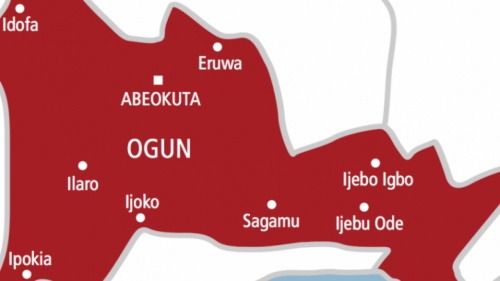
Ogun: Endorsements, emotional intelligence and oppositional defiant disorder
By Kunle Somorin

Many may wonder what has attracted a groundswell of goodwill, endorsement and accolades to Ogun State governor, Prince Dapo Abiodun lately. He is lucky to have a good upbringing and a mien uncommon in the pantheon of successful politicians and businessmen.
There is no gainsaying that the gale of endorsement for his second term ambition by traditional rulers, professional bodies, market men and women, artisan, transporters, youths, elder statesmen and the business community has more to do with aversion for the oppositional defiance disorder (ODD) inherent in his predecessor, Ibikunle Amosun, than anything else.
But the governor does not take the goodwill for granted. He has been a major promoter of accountable, open, just, fair, equitable, inclusive governance which he believs is fundamental to the building our future together agenda that would equally engender economic growth of the state and individual prosperity of the citizens.
Nothing reveals this more tellingly than the decampment of Amosun’s core loyalists and switching of allegiance to the poster boy for the 21st Ogun State. Ahead of the 2023, the rank of the former loyalists of Senator Amosun, who are members of the All Progressives Congress (APC) and the ill-fated vehicle, Allied Progressives Movement (APM) used as vehicles to undermine the ruling party, are back in the mainstream APC led by Gov. Abiodun.
They include the Senator representing Ogun East Senatorial District, Olalekan Mustapha, Amosun’s two-term commissioner for health, Dr. Babatunde Ipaye, his counterpart in the ministry of local government and chieftaincy affairs, Chief Olajide Ojuko. Others are one-time Party chairman in the State, Alhaji Tajudeen Lemboye and other chieftains like Chief Olu Odeyemi, Gbenga Adekanbi and Hon. Dotun Fasanya among other influential leaders across the three senatorial districts.
Before then, Governor Dapo Abiodun had used emotional intelligence couched in his inclusive approach to governance to deplete opposition elements by getting to his side former governor, Otunba Gbenga Daniel from the People’s Democratic Party (PDP), won the heart of Prince Gboyega Nasir Isiaka, who ran on the ticket of the African Democratic Congress (ADC) against him and a horder of other influential political giants in the state like the late Buruji Kashamu who not only collapsed his dominant group in the PDP into the APC.
Most of the decampees love Abiodun’s approach of spreading projects to all sections of the state at the expense of no other, in contrast to his predecessor’s style. Abiodun even-handedness in various projects seems to have eclipsed whatever differences they had against his emergence as governor.
Not sensing that he was swimming against the tide, former governor, Ibikunle Amosun while speaking after receiving an award from Abeokuta Club to commemorate the 50th anniversary of the club said the 2019 governorship election in the state was rigged to favour the incumbent, calling on his supporters – who are already on the other side – to be on the lookout for the next line of action.
“You know clearly my stand on this matter, just wait very soon, you will hear from us, my stand is where I stand, I am not in support of this administration, he must be removed”, Amosun said, passing “fatwa” on his successor’s second term bid.
Many found this apostasy distasteful. They recalled Governor Abiodun’s style of governance and how he has related with the leaders of the party and acquitted himself creditably as an administrator. One rhetorically asked: “How did we miss Governor Dapo Abiodun’s emotional intelligence?”
He cited the event, penultimate month, at the Presidential Lodge in Abeokuta, Ogun State, where the national leader and the presidential flag bearer of the All Progressives Party (APC), Asiwaju Bola Ahmed Tinubu, referred to Gov. Abiodun as “Eleyi” ((This one)!
While President Buhari was not physically present and also might require the help of a translator to make sense of what Asiwaju Tinubu said on that day, Governor Abiodun was right at the event and understands Yoruba very well – the language through which Asiwaju made those comments. The comments even managed to get a reaction from the Presidency and the APC leadership; to demonstrate how weighty they are.
“But the response of Governor Abiodun, was cool, calm and calculated. His (Abiodun’s) emotional intelligence practically saved the day. Amosun, the man said, would never take it. He would have unleashed mayhem like he did in February 2019 when his boys pelted party apparatchiks, including a sitting President Muhammadu Buhari with sachet water, not to talk of a would-be President,” the party man enthused
For the reflective politicians, while Asiwaju’s riposte can be explained away on the ground of being an elder and avuncular godfather and benefactor to the governor, what transpired at the Abeokuta Club and beyond with mobilization of sinister groups to oust the governor – fair or foul – would have set the state on fire if the shoe had been in the other foot. It is the the worst form of presumptuous rudeness, infra dignitatem and anti-partyism, they surmised.
It should be noted that Abiodun’s graceful node of emotional intelligence contrast to Amosun’s oppositional defiance disorder (ODD). For the uninitiated, ODD is generally associated with children. Patients afflicted by it exhibit signs and characteristics of belligerence, manifesting in hostile behavior to elders and antagonistic reactions to authority figures. Like an ODD patient, Abiodun’s predecessor has, in an attempt to control, engaged in negative mannerisms: defiant, disrespectful and conducted himself in acts designed to make the authority figure lose his temper.
With emotional intelligence, Abiodun has through a well-thought out action plan and careful monitoring, clipped the senator’s wings. The key element employed is not to get caught up in playing the person’s game, because with their rules it was meant to make him act equally rascally and irritably. Like a trained psychotherapist, Abiodun takes control of the situation and make the delinquent adult accountable for his shenanigans. Any keen observer or dye-in-the wool pundit and realist would have seen how his successor, Governor Dapo Abiodun is holding his own against the apparently irritable behavior of the outgoing senator dancing his last political dance in the market place, after failing in 2019.
As prescribed by doctors, dealing with an ODD requires making a list of specific instances where the adult exhibited oppositional defiance. An adult with oppositional defiance needs concrete examples of inappropriate behaviour rather than a general observation that can be dismissed. Amosun’s cup has overflown. The records are there. Instances abound of Amosun trespassing into the home of the leader of the party in the state, Chief Olusegun Osoba with drone, undermining him and keeping his former friend and predecessor, Otunba Gbenga Daniel in limbo for the eight years he held sway as the Gateway’s Number One Citizen.
The Omoluabi disposition and performance, however, set Abiodun apart from his predecessor. Across the state and different groups: professional class, youths, market women and men, elder statesmen and women, traditional rulers and workers, the gale of endorsement has been exciting. They all premised their endorsement on Dapo Abiodun’s people-oriented and inclusive leadership, love for the citizens, altruism and performance.
Indeed, Abiodun won the hearts of the people with his practise of politics without bitterness and by bringing down political tension and heat in Ogun State. He also located and spread projects across the three senatorial districts, unlike the lopsidedness of the immediate past.
At the height of Amosun’s open hosititilty, Abeokuta became a no-go area for his living predecessors. His shenanigans gave rise to Egbe Matagba mole (Society that frowns at disrespect for elders) and ouster of the Akinrogun Egba who unleashed the accountant as the candidate of APC on the party in 2011. Long story short, 2019 was Amosun’s albatross as he was shamelessly suspended by the party for working against its interest and the Ogun electorate resounding rejected his nominee who ran on the ticket of the Allied People’s Movement (APM).
Like the chameleon that would not keep changing his colours, 2023 has come and the exuberance remains unabated in the man who could not decipher that who the gods will kill, they first make made. Interestingly, sometimes it’s difficult to recognize the difference between a strong-willed or emotional child and one with oppositional defiant disorder. It’s normal to exhibit oppositional behaviour but with proper grooming and psychological maturity the symptoms can wane. Not for Amsoun.
Conversely, even in the face of provocation, Gov Abiodun ability to perceive, use, understand, manage and handle emotions is commendable. People with high emotional intelligence can recognise their own emotions and those of others, use emotional information to guide thinking and behavior, discern between different feelings and label them appropriately, and adjust emotions to adapt to environments.
Emotional intelligence is a core leadership quality and Prince Abiodun’s display of it throughout this season of pre-election madness tells a lot about his character and substance.
The last time a similar quality was displayed was during the 2015 presidential election, when then INEC Chairman Attahiru Jega handled Peter Godsday Orubebe’s outburst at the INEC headquarters with such calmness that it earned him national and international commendation.
In the case of Prince Abiodun, those who know him very well would attest to the fact that, either as a leader or as an individual, emotional intelligence has never been in short supply in his dealings with people.
The governor will never deny the good people do to him. As attested to by many when they reeled out their endorsement criteria, he remains grateful to people whose contributions have taken him thus far in life and believes that mentorship often succeeds where ‘godfatherism’ fails.
Abiodun has mentioned many times that the position of governor he holds is in trust for the people of Ogun State and that his social contract with the people is to be fair, just and equitable. He owes God, the good people of Ogun and himself the fulfillment of that solemn agreement.
Since power in a democracy belongs ultimately to the people through the ballot, Abiodun’s hope for a renewal of his mandate come 2023 – and the hope for a much better delivery of dividends of democracy – is rooted in his faith in God, the support of the people of Ogun and the numerous achievements his administration has recorded since he was first entrusted with the mandate in 2015.
Prince Dapo Abiodun’s investment, development and empowerment priorities, strategically embedded in his administration’s ISEYA mantra, have endeared him in the hearts of both critical stakeholders and ordinary people alike. Apart from being Yoruba for ‘Time to roll up the sleeves’, ISEYA is also Abiodun’s acronym for his administration’s developmental blueprint, which is: I – Infrastructure; S – Social Development and Wellbeing; E – Education; Y – Youth Development, and; A – Agriculture and Food Security.
His a vision to give Ogun State focused and qualitative governance and to create the enabling environment for a public private sector partnership, which is fundamental to the creation of an enduring economic development and individual prosperity of the people of Ogun has transformed the state within three years. His “Building Our Future Together” agenda has been diligently and dutifully pursued so much that even old adversaries have closed ranks and keyed into his vision
Not taking the decampees for granted, Gov. Abiodun reminisced: “You have got it right by taking this bold step in the sense that one cannot say because of sympathy you continue to stay with somebody and become useless. You should know what you want, where to get it and how to get it.
“I am one governor who is passionate about inclusiveness, just and fair. You can see that even if you join the party today, I take and recognize you as people who had been with the party from the inception. Politics is parochial; it is how to better your life and that of others. You cannot do politics with emotions. I want to welcome you back to the larger family and since you are not strangers, you will be promptly integrated”, during one of the harvest of returnee party stalwarts.
Somorin is chief press secretary to Gov. Dapo Abiodun




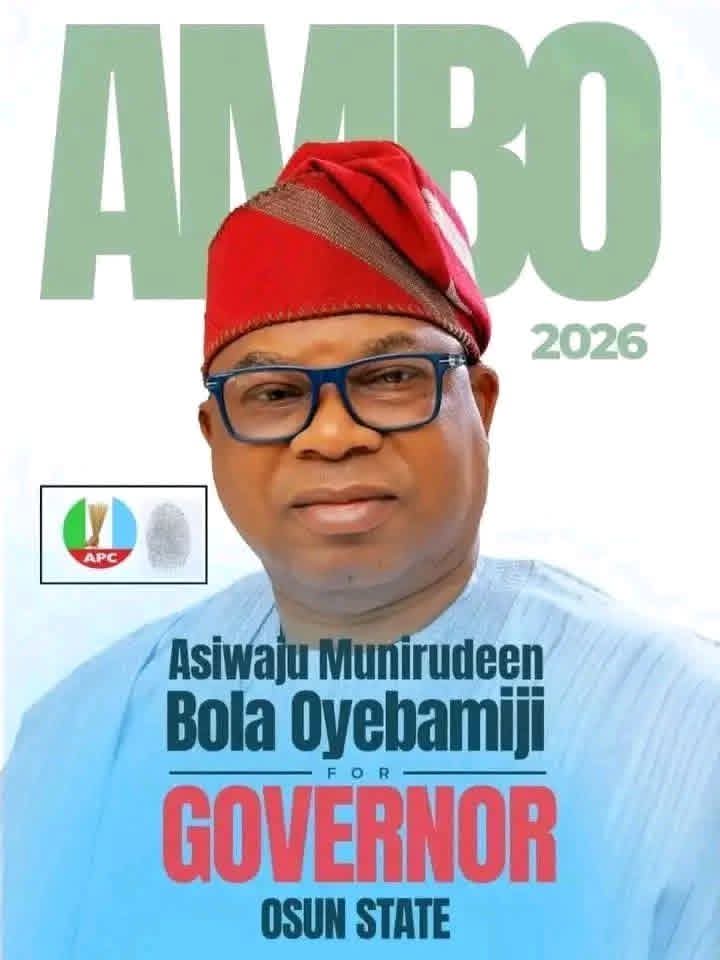
AMBO and the Osun Governorship Race: Assessing the Man, the Politics and the Vision
As political activities gather momentum ahead of the 2026 Osun State governorship election, a public affairs commentator, Oluseyi Olonade, has described the emergence of Asiwaju Munirudeen Bola Oyebamiji, popularly known as AMBO, as a significant development in the state’s political landscape.
In an article titled “Oyebamiji: The Man, The Politics and The Aspiration,” Olonade argued that the All Progressives Congress governorship hopeful possesses the character, experience and vision needed to reposition Osun State for sustainable growth.
According to the writer, Oyebamiji’s appeal stems from his extensive background in the banking sector, where he spent nearly three decades working with institutions including Wema Bank, Trans International Bank, Spring Bank and Enterprise Bank.
A native of Ikire in Irewole Local Government Area, Oyebamiji was described as a technocrat whose experience in corporate governance, finance and risk management has shaped his approach to public administration.
The article noted that his public service journey gained prominence in 2012 when he was appointed to oversee the then Osun State Investment Company Limited. Under his leadership, the organisation was reportedly restructured and transformed into Omoluabi Holdings Limited.
The writer further highlighted Oyebamiji’s tenure as Commissioner for Finance under successive APC administrations, where he was credited with managing the state’s finances during challenging economic periods.
Olonade also referenced Oyebamiji’s appointment as Managing Director of the National Inland Waterways Authority, describing it as further evidence of his administrative and leadership capabilities.
The article contrasted Oyebamiji’s governance philosophy with that of the current administration in Osun State, arguing that the APC aspirant favours institutional reforms, economic diversification and fiscal discipline.

According to the writer, Oyebamiji’s proposed agenda includes strengthening transparency in government spending, expanding internally generated revenue, attracting private-sector investments and promoting industrial and agricultural development.
The article also highlighted youth empowerment, entrepreneurship development and digital skills acquisition as key components of his vision for the state.
Olonade concluded that the forthcoming governorship election would present voters with a choice between different approaches to governance, expressing confidence that Oyebamiji’s experience and developmental agenda make him a strong contender in the race.
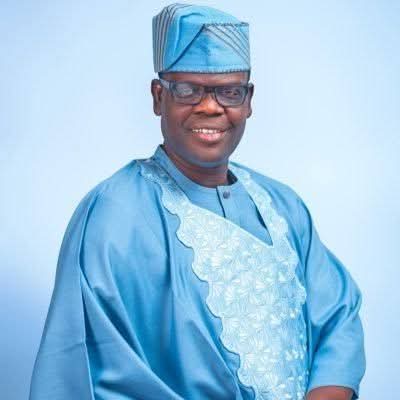
*Oselu Tiwa nTiwa Endorses Oriyomi Hamzat for Oyo Governorship*
A sociopolitical support group in Oyo State, Oselu Tiwa nTiwa, has declared its support for Alhaji Oriyomi Hamzat as the authentic governorship candidate of the Accord Party ahead of the forthcoming governorship election in the state.
The group made its position known in a statement jointly signed by its President, Mr. Adewale Oluwaseyi and Secretary, Alh. Adebayo Oyewole, on Thursday, describing Hamzat as a grassroots figure with strong connection to the people and a track record of humanitarian interventions across Oyo State.

According to the group, the endorsement followed what it described as careful observation of Hamzat’s leadership qualities, compassion and dedication to the welfare of ordinary citizens.
“Oriyomi Hamzat has consistently demonstrated empathy, courage and selfless commitment to humanity. Through his numerous interventions in the lives of ordinary citizens, he has become a symbol of hope to many families and communities,” the statement read.
Oselu Tiwa nTiwa also appealed to the national leadership of the Accord Party to prioritise the long-term future and electoral growth of the party in its decision-making process.
The group noted that Hamzat’s candidacy presents an opportunity for the party to strengthen its grassroots support base and expand its political relevance across Oyo State.
“We respectfully appeal to the National Leadership of the Accord Party to look beyond immediate political calculations and consider the bigger picture, the future growth, stability and electoral success of the party in Oyo State and beyond,” the statement added.
The group further expressed confidence in the leadership of the party, saying it believes the party’s national officers and stakeholders would take decisions that reflect fairness, inclusiveness and the collective interest of members.
While calling on party loyalists to remain calm and united, Oselu Tiwa nTiwa said continued consultations among stakeholders would help strengthen the Accord Party ahead of the election.
Signed:
Alh. Adebayo Oyewole,
Secretary.
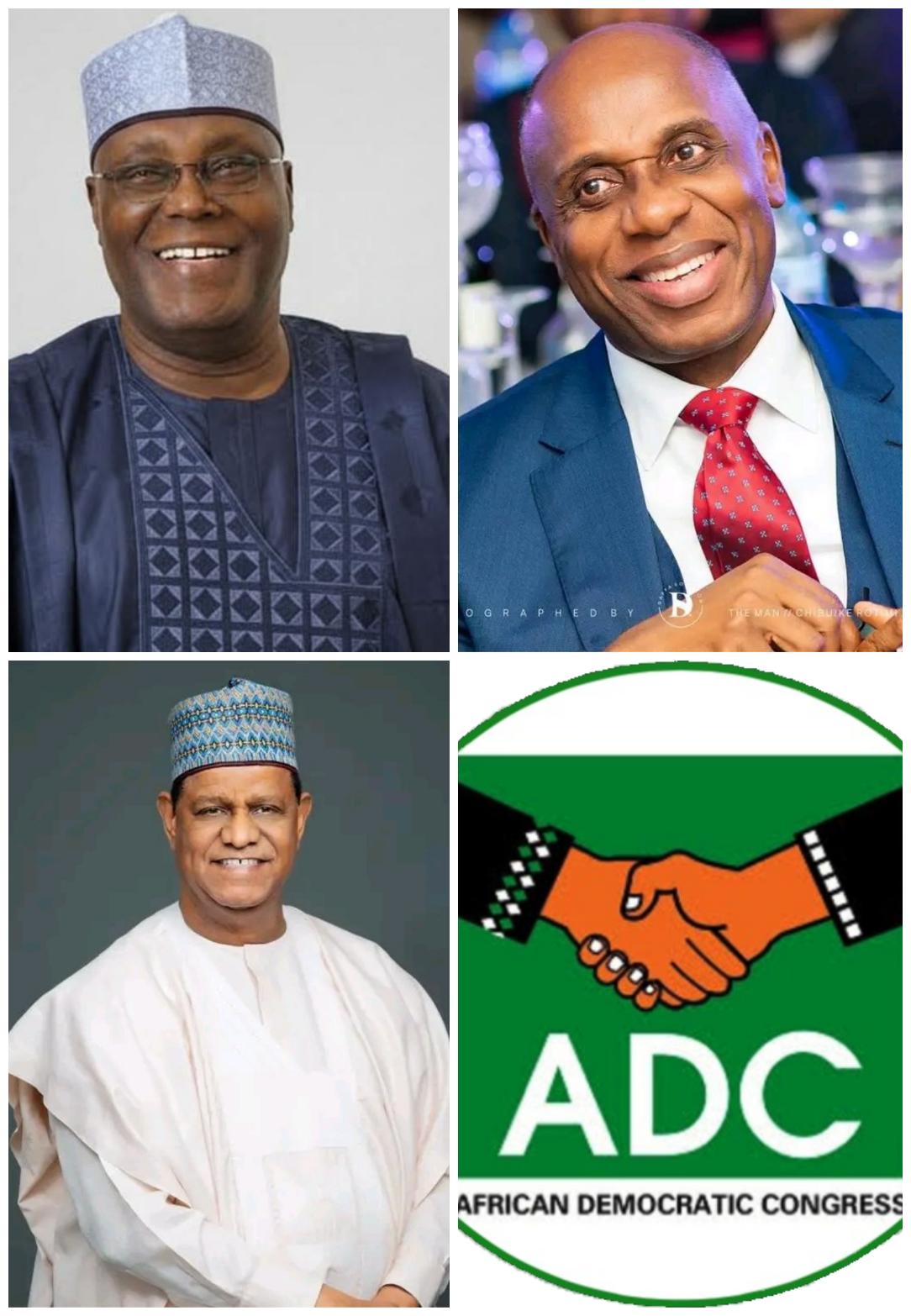
Atiku Set To Clinch ADC Presidential Ticket, Leads Amaechi, Hayatu-Deen In 34 States
Former Vice President of Nigeria and frontline presidential aspirant of the African Democratic Congress (ADC), Atiku Abubakar, is projected to emerge winner of the party’s presidential primaries, according to impeccable sources in Abuja.
The primaries, conducted across over 8,000 wards in the 36 states of the federation and the Federal Capital Territory, reportedly placed Atiku far ahead of his closest rivals — former Rivers State Governor, Rotimi Amaechi, and former Chairman of the Nigerian Economic Summit Group, Mohammed Hayatu-Deen.

Highly placed party insiders disclosed that Atiku is currently leading in 34 states, including the FCT, after securing dominance across the 19 Northern states, the five South-East states, and the six South-West states, while also maintaining a strong showing in at least three states in the South-South geopolitical zone.
The sources added that the outcome reflects what they described as “an overwhelming nationwide acceptance” of the former vice president within the opposition party ahead of the 2027 general election.
Meanwhile, the ADC leadership has invited members of the press to the official announcement of the final collated results scheduled for 11:00 a.m. on Tuesday, May 26, 2026, in Abuja.
The declaration of results is expected to be broadcast live on ARISE Television and two other major television stations, while also being livestreamed on the party’s official social media platforms on X and Facebook.
Speaking ahead of the announcement, the founding National Chairman of the ADC, Chief Ralph Nwosu, said the decision to televise the exercise live was aimed at promoting transparency and democratic accountability.
“We want millions of Nigerians at home and in the Diaspora to witness democracy in action,” Nwosu said.
He further revealed that the party leadership would encourage all three presidential aspirants to publicly embrace a peace accord and commit themselves to working together in unity for the party’s success.
According to him, the move is necessary to strengthen internal cohesion and position the ADC for victory in the presidential election scheduled for January 16, 2027.
Details later.


- World Cup accredited journalists raise concerns over unfair United States (US) visa restrictions, International Sports Press Association (AIPS) calls on FIFA to intervene June 6, 2026
- Ghana: President Mahama arrives in Belarus, lays wreath at Victory Monument June 6, 2026
- Liberia: President Boakai Advances Clean Energy Agenda; Dedicates 20-Megawatt Solar Power Plant at Mount Coffee June 6, 2026
- African Union (AU) Commission Chairperson mourns Passing of the Former Angola Minister of Foreign Affairs June 6, 2026
- Economic Community of West African States (ECOWAS) Welcomes Students on an Educational Visit to Its Headquarters June 6, 2026
- Seychelles: President Patrick Herminie attended Official Opening of Rise and Shine Day Care Centre at Mont Fleuri June 6, 2026
- Faith, fear and trust: Inside Democratic Republic of the Congo's (DR Congo) fight against Ebola June 6, 2026
- Economic Community of West African States (ECOWAS) Commission and Women in Law and Development (WiLDAF) Train Women Cross-Border Traders in The Gambia June 5, 2026
- Eritrea: Seminar to Nationals in The Hague June 5, 2026
- Eritrea: Training on Photography and Video Production June 5, 2026
- World Cup accredited journalists raise concerns over unfair United States (US) visa restrictions, International Sports Press Association (AIPS) calls on FIFA to intervene June 6, 2026
- Ghana: President Mahama arrives in Belarus, lays wreath at Victory Monument June 6, 2026
- Liberia: President Boakai Advances Clean Energy Agenda; Dedicates 20-Megawatt Solar Power Plant at Mount Coffee June 6, 2026
- African Union (AU) Commission Chairperson mourns Passing of the Former Angola Minister of Foreign Affairs June 6, 2026
- Economic Community of West African States (ECOWAS) Welcomes Students on an Educational Visit to Its Headquarters June 6, 2026
- Seychelles: President Patrick Herminie attended Official Opening of Rise and Shine Day Care Centre at Mont Fleuri June 6, 2026
- Faith, fear and trust: Inside Democratic Republic of the Congo's (DR Congo) fight against Ebola June 6, 2026
-

 news6 months ago
WHO REALLY OWNS MONIEPOINT? The $290 Million Deal That Sold Nigeria’s Top Fintech to Foreign Interests
-

 society1 month ago
SOCIAL MEDIA IS NOT A BATTLEFIELD COMMAND – WHY THE NIGERIAN ARMY’S ACTION AGAINST JUSTICE CRACK IS A NATIONAL SECURITY IMPERATIVE
-

 celebrity radar - gossips4 months ago
Dr. Chris Okafor Returns with Power and Fire of the Spirit -Mounts Grace Nation Altar with Fresh Anointing and Restoration Grace on February 1, 2026
-

 celebrity radar - gossips6 months ago
Prophet Kingsley Aitafo Releases 2026 Prophecy: ‘Nigeria Will Rise, but the World Must Prepare for Turbulence’