
society
Ogun State Government Debunks Senator Gbenga Daniel’s Barefaced Lie, Says Prince Abiodun Not after Former Governor


Ogun State Government Debunks Senator Gbenga Daniel’s Barefaced Lie, Says Prince Abiodun Not after Former Governor
The attention of the Ogun State Government has been drawn to a press statement issued by the Media Office of the Senator representing Ogun East and a former Governor of Ogun State, His Excellency, Otunba Gbenga Daniel, on Saturday, August 9 and titled “Political Persecution as Governor Abiodun Issues Quit, Demolition Notices on Daniel’s Properties in Ogun State.”
The statement written in extremely bad taste and with intent to cause disaffection and foment chaos in the state alleges that Governor Dapo Abiodun posted Notices of Contravention, Quit and threats of demolition on the Asoludero Court Sagamu private residence of Gbenga Daniel,the Conference Hotels Limited, Sagamu and the hotel Annex of the former Governor of Ogun State, with intent to illegally demolish those properties.
The statement framed the said notices purportedly received on Friday, August 8, as a clear demonstration of “malicious and vindictive abuse of power, hiding behind a newly-enacted law retroactively to target a political opponent.” Nothing can be further from the truth.
Of course, in what has become a familiar pattern, Senator Daniel and his Media Office have been ascribing political motives to a routine procedure, suggesting that they have something to hide and do not mind using underhand tactics to achieve their sinister objectives.
Contrary to the blatant distortions of facts and egregious purveyors of falsehood been propagated by the statement in question, the Ogun State Government is not engaged in any untoward move against Otunba Gbenga Daniel in anyway.
The fact of the matter, quite simply, is that in his holistic approach to development efforts across the length and breadth of Ogun State, His Excellency, Governor Dapo Abiodun, has embarked not only on building new communities as exemplified by the affordable housing estates and the yellow roof revolution but also on the redevelopment of Ogun State’s towns and cities through urban renewal. This, he started with Ibara GRA in Abeokuta, the state capital, and is being extended to Sagamu and Ijebu-Ode GRAs. This initiative involves the auditing of existing developments within these areas in order to determine the permit status of all types of developments, including houses, schools, hospitals and other commercial buildings. This is a statutory and due process requirement which will provide information for any government intervention. And this informed the development audit exercise currently being carried out simultaneously both in Ijebu-Ode and Sagamu GRAs.
Otunba Gbenga Daniel’s building happens to be within the Sagamu GRA and among those that were served notices as required under the Town Planning Law and Regulation of Ogun State. Many other structures were also similarly served. The exercise is a continuous one until the objective of government for the exercise is achieved. This process is not new. It had been in existence and operated even during his tenure as Governor of the State. The GRA is a government designed and allocated estate and it is subject to regulatory and oversight functions of governmet in perpetuity. All Otunba Gbenga Daniel needs to do, like every other person’s in similar situation that have been served with such notices in that neighbourhood, is to present his planning permit and land title to the relevant government Agency office for verification within the time specified in the notices rather than resorting to cheap blackmail. There are no exemptions under the law except as permitted by that Law.
Did the distinguished senator not conduct a check around the neighbourhood before hastily rushing to the media to demonise Governor Dapo Abiodun and his administration, as usual? The statement in question jumped the gun by saying that the Government is focusing on Senator Daniel. That is a barefaced lie. It is the duty of the Government to carry out audits and for someone who has been in office as Governor and who is now a Senator to be crying wolf is highly unfortunate. It seems that Senator Gbenga Daniel and his crew will do anything they can to drag the name of Governor Dapo Abiodun into every issue imaginable just to score cheap political points. This is not a hallmark of statesmanship, a topic that the distinguished senator likes to talk about with flourish; it is a dark tactic.
Nobody is bigger than the State. Senator Gbenga Daniel is distinguished no doubt, but he is not bigger than Ogun State. He should submit himself unreservedly to the same laws he once swore twice to uphold. He should refrain from elevating every issue of his contact with government institutions to a personal vendetta by Governor Abiodun, who obviously holds him in high esteem. Since his referenced buildings must have conformed with government regulations, there should not be any problem. The distinguished Senator knows the law and has presumably abided by it, so why is he crying foul instead of simply complying with lawful directive, supremely confident in the knowledge that he has done no wrong, and knowing the rights afforded him by the Constitution and the courts?

No one should assign impure motives to a routine procedure. If anyone is after Senator Gbenga Daniel, it is certainly not the Governor of Ogun State.
E signed
Kayode Akinmade
Special Adviser on Information and Strategy





UKA Gears Up for Final ATC Exchangeability Test Run as June Preparations Begin.
May 30, 2026 – As the month of June gathers momentum, the *United Kingdom of Atlantis, UKA*, a sovereign nation has unveiled a series of vital guidelines and preparatory packages to ensure citizens and stakeholders run the *ATC Exchangeability* process effectively.
In an official update, the *President of Atlantic Crown Limited, Empress of Attica Empire UKA*, confirmed that the *Final Test Run of ATC Exchangeability* is scheduled for the month of June 2026. The exercise marks a key phase ahead of the *Official Exchangeability Window, set to run from July 2026 to February 2027*.
### Key Highlights from the Presidential Briefing
1. *Final Test Run – June 2026*
The test run is designed to validate systems, procedures, and user readiness before full activation. Citizens, partners, and designated participants are urged to follow all official advisories released by UKA authorities during this period.
2. *Official Exchangeability Period*
Following the successful completion of the June test run, the Official Exchangeability will commence in july 2026 and we are Expecting Full Exchange ability between July Ending, 2026 to February 2026.
UKA stated that detailed schedules, eligibility requirements, and step-by-step instructions will be communicated progressively through verified UKA channels.
3. *Benefiting Packages for June*
In line with UKA’s commitment to citizen empowerment, the month of June will feature “benefiting packages” aimed at education, preparation, and seamless onboarding. These packages are intended to equip the people of UKA with the knowledge and tools needed for effective participation.
4. *Commitment to Transparency*
Addressing the nation, the Empress of Attica Empire UKA emphasized:
_“Final Test Run of ATC Comes up in The Month of June, As We Prepare For The Official Exchangeability, Between July 2026 To Feb 2027. All Information Will Be Communicated.”_
UKA reaffirmed that only information released through official UKA platforms should be regarded as authoritative.
The United Kingdom of Atlantis is encouraging all citizens, representatives, and interested parties to remain alert to official communications, attend designated orientation sessions, and avoid unofficial sources. UKA’s dedication to order, clarity, and the collective benefit of its people as the nation moves into this significant phase.
For updates, advisories, and participation guidelines, citizens are advised to monitor official UKA communication channels.
United Kingdom of Atlantis, UKA, is a sovereign nation, committed to national development, citizen welfare, and structured economic participation through initiatives such as ATC Exchangeability.
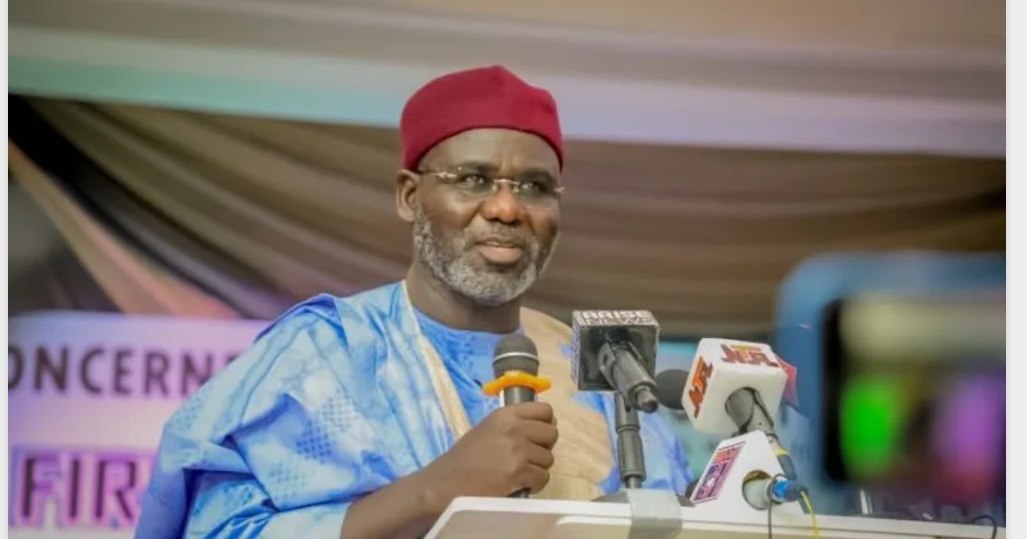
Three Years On, General Buratai Hails Tinubu’s Economic, Security Achievements
Former Chief of Army Staff, Lt. Gen. Tukur Buratai (retd.), has commended President Bola Ahmed Tinubu for what he described as bold economic reforms and improved security efforts as the President marks three years in office.
In a goodwill message on Thursday to commemorate Tinubu’s third anniversary as President and Commander-in-Chief of the Armed Forces, Buratai said the administration had taken courageous decisions that would leave a lasting impact on Nigeria’s development.

According to him, President Tinubu broke a long-standing cycle that had hindered national growth by removing fuel subsidy and implementing foreign exchange reforms aimed at stabilising the naira and strengthening the economy.
He noted that the reforms were beginning to yield positive results, citing the global acceptance of Nigerian debit cards, the gradual revival of local refineries, access to student loans, and ongoing road and infrastructure projects across the country.
“The FCT Administration has also recorded remarkable progress, completing major road projects that remained unfinished for over 16 years,” Buratai stated.
The former army chief also praised the administration’s security efforts, saying renewed military offensives against insurgents, terrorists and bandits had led to notable successes across various parts of the country.
He specifically lauded recent joint operations involving Nigerian and United States forces against Boko Haram and ISWAP in the North-East, as well as intensified counter-banditry operations in the North-West.
“We have seen notorious ISWAP commanders being neutralised. I congratulate the Commander-in-Chief, the Minister of Defence, the Chief of Defence Staff, the Service Chiefs, the Inspector-General of Police and heads of intelligence agencies for their efforts,” he said.
Buratai, however, acknowledged that challenges remained, stressing the need for more aggressive military operations and intelligence-driven strategies in the coming year.
While urging Nigerians to remain hopeful, he said celebrating the President’s achievements did not amount to ignoring the difficulties facing the nation.
“Because you truly care, you have shown the courage to trade short-term comfort for long-term hope. Nigerians need your reassurances, and that is why we remain optimistic and full of confidence,” he added.
The retired military officer reaffirmed his support for the Tinubu administration and expressed confidence that the foundation being laid by the government would deliver a brighter future for the country.
He also prayed for God’s guidance, wisdom, strength and good health for the President as he continues to lead Nigeria.
NUT Raises Alarm Over Continued Captivity of Abducted Oyo Pupils, Teachers
The Nigeria Union of Teachers has expressed deep concern over the continued captivity of pupils and teachers abducted during an attack on schools in the Ahoro-Esinle and Yawota communities in Oriire Local Government Area of Oyo State.
In a statement issued on Saturday, the Oyo State wing of the union described the situation as increasingly distressing, particularly following the emergence of a video allegedly released by the abductors showing the victims pleading for their freedom.
The union said the footage had heightened fears over the welfare of the abducted pupils and teachers, describing their ordeal as heartbreaking and unacceptable.

According to the NUT, no child or teacher deserves to be subjected to such traumatic experiences, adding that the prolonged captivity of the victims has continued to inflict psychological pain on their families, colleagues and the wider education community.
The union called on the Federal Government, Oyo State Government and relevant security agencies to intensify efforts towards securing the immediate and safe release of the victims.
“This is not a moment for hesitation. It is a moment for coordinated, intelligence-driven efforts to ensure the immediate and safe release of all abducted pupils and teachers,” the statement read.
While acknowledging ongoing interventions by security agencies and government authorities, the union stressed that time was of the essence, warning that every additional day in captivity deepens the trauma suffered by the victims.
The NUT urged security operatives to strengthen surveillance, improve community intelligence gathering and deploy all necessary operational and diplomatic measures to facilitate the rescue of the abductees.
It also appealed to traditional rulers, community leaders and residents to support rescue efforts by providing credible information that could assist security agencies.
“The safety of our children and teachers must remain a collective priority,” the union stated.
Reaffirming its support for the families of the victims, the NUT pledged continued solidarity and prayers while advocating safer learning environments across the country.
The statement was jointly signed by the Chairman of the Oyo State NUT, Comrade Hassan Ajibola Fatai, and the Secretary, Comrade Salami Olukayode.


- Afreximbank Deepens Commitment to Economic Progress in The Bahamas June 1, 2026
- African Electric Vehicle (EV) platform Spiro raises $215M in equity to scale electric mobility and energy infrastructure across Africa June 1, 2026
- Africa Centres for Disease Control and Prevention (Africa CDC) Statement on Attacks Against Health Facilities During the Bundibugyo Virus Disease Response in the Democratic Republic of the Congo June 1, 2026
- Putting consumers at the centre of Africa’s dairy transformation June 1, 2026
- International Rescue Committee (IRC) warns Democratic Republic of the Congo (DRC) Ebola outbreak likely far larger than official figures suggest June 1, 2026
- South Africa: Portfolio Committee on Health Marks National Cancer Survivor Day and Reaffirms Importance of Early Detection and Public Awareness June 1, 2026
- Rwanda’s RSSB Tigers Crowned 2026 Basketball Africa League Champions June 1, 2026
- Uganda: Appointments Committee Begins Vetting of Ministerial Nominees June 1, 2026
- Sudan braces for worsening child malnutrition as pre-harvest season starts June 1, 2026
- Etu Energias Strengthens Angolan Footprint, Returns to Angola Oil & Gas (AOG) 2026 as Champion Sponsor June 1, 2026
- Afreximbank Deepens Commitment to Economic Progress in The Bahamas June 1, 2026
- African Electric Vehicle (EV) platform Spiro raises $215M in equity to scale electric mobility and energy infrastructure across Africa June 1, 2026
- Africa Centres for Disease Control and Prevention (Africa CDC) Statement on Attacks Against Health Facilities During the Bundibugyo Virus Disease Response in the Democratic Republic of the Congo June 1, 2026
- Putting consumers at the centre of Africa’s dairy transformation June 1, 2026
- International Rescue Committee (IRC) warns Democratic Republic of the Congo (DRC) Ebola outbreak likely far larger than official figures suggest June 1, 2026
- South Africa: Portfolio Committee on Health Marks National Cancer Survivor Day and Reaffirms Importance of Early Detection and Public Awareness June 1, 2026
- Rwanda’s RSSB Tigers Crowned 2026 Basketball Africa League Champions June 1, 2026
-

 news6 months ago
WHO REALLY OWNS MONIEPOINT? The $290 Million Deal That Sold Nigeria’s Top Fintech to Foreign Interests
-

 society4 weeks ago
SOCIAL MEDIA IS NOT A BATTLEFIELD COMMAND – WHY THE NIGERIAN ARMY’S ACTION AGAINST JUSTICE CRACK IS A NATIONAL SECURITY IMPERATIVE
-

 celebrity radar - gossips4 months ago
Dr. Chris Okafor Returns with Power and Fire of the Spirit -Mounts Grace Nation Altar with Fresh Anointing and Restoration Grace on February 1, 2026
-

 celebrity radar - gossips6 months ago
Prophet Kingsley Aitafo Releases 2026 Prophecy: ‘Nigeria Will Rise, but the World Must Prepare for Turbulence’