
society
Old Lies, New Excuses: How the Nigerian Government Continues to Insult Public Intelligence”

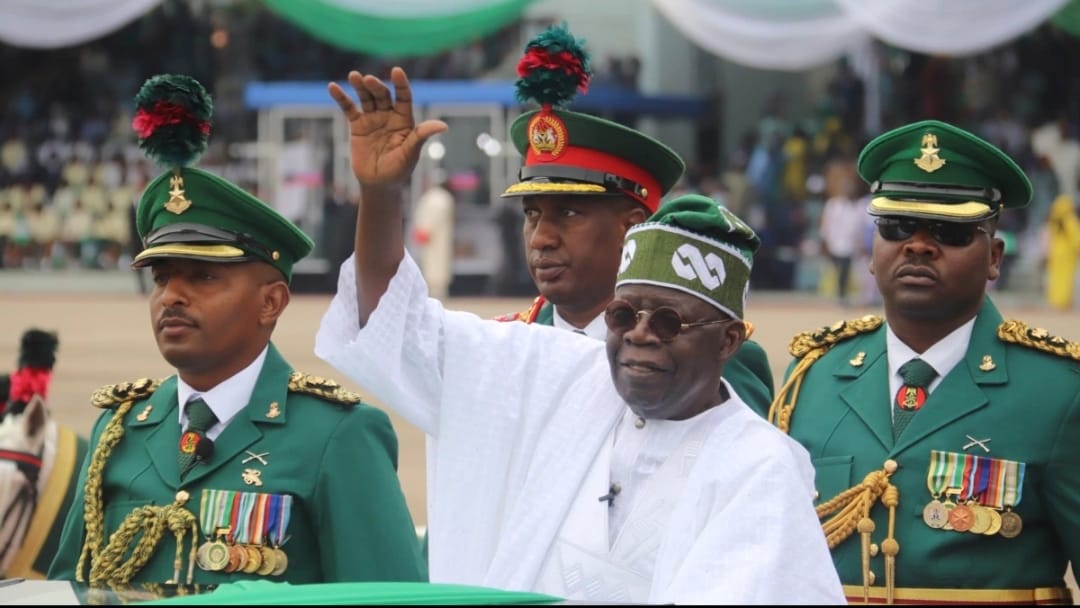
“Old Lies, New Excuses: How the Nigerian Government Continues to Insult Public Intelligence”
By George Omagbemi Sylvester
In a stunning yet all-too-familiar display of condescension toward the Nigerian people, the Nigerian Presidency has declared that “nothing new has been revealed” in the decades-old FBI and DEA reports implicating certain high-profile individuals in drug trafficking and money laundering. According to their recent statement, the information “has been public for over 30 years.” While this may be factually true, the real question is: does the age of a crime nullify its relevance or accountability? The answer, in any democracy with a shred of integrity, is a resounding no.

This is not just about dusty files or forgotten scandals. It is about integrity, national image, and the dangerous precedent of shielding political elites from scrutiny while expecting ordinary citizens to abide by the law. When governments trivialize criminal histories under the guise of “old news,” they mock the very foundations of justice and accountability.
1. The Facts: Public but Never Prosecuted
Let us begin with the basics. The U.S. Federal Bureau of Investigation (FBI) and the Drug Enforcement Administration (DEA) released reports in the 1990s implicating several individuals—including now-prominent Nigerian political figures—in drug-related activities. Among these, the most infamous is the case involving Bola Ahmed Tinubu, the current president of Nigeria. According to court documents from the Northern District of Illinois (Case No. 93C4483), U.S. authorities confiscated over $460,000 linked to Tinubu as part of a drug trafficking investigation.
While Tinubu was never formally indicted in the U.S., the forfeiture of such a staggering amount, without any legal contest, is not a minor issue. In the U.S. legal system, civil asset forfeiture—especially of such magnitude—almost always suggests deep suspicion and probable cause. No ordinary citizen could forfeit nearly half a million dollars to the U.S. government without triggering career-ending investigations, but in Nigeria, it earns you the presidency.
2. If It’s “Old News,” Why Is It Still Relevant?
The Presidency’s attempt to dismiss the scandal by calling it “nothing new” is intellectually insulting. Crimes do not expire simply because time has passed. If anything, they become more pressing when perpetrators ascend to greater positions of power. Consider the case of Augusto Pinochet in Chile. His crimes against humanity were decades old by the time he was arrested in London in 1998. Yet, democratic nations supported his prosecution because the rule of law demands that no one is above accountability.
The same logic applies to Nigeria. The relevance of Tinubu’s past is not diminished by the passage of time; it is amplified by his current position. If someone once linked to drug money can become Commander-in-Chief without explanation or legal exoneration, what message does that send to the youth of Nigeria? That crime pays—especially if you’re politically connected?
3. The Global Impact: Nigeria’s Image in Tatters
The world is watching. International investors, diplomats, and foreign governments have access to these same reports. While Nigerian officials downplay the severity, external stakeholders are not fooled. The 2023 Corruption Perceptions Index (CPI) by Transparency International ranked Nigeria 145 out of 180 countries. The World Bank’s Governance Indicators show a steady decline in Nigeria’s control of corruption since 2015. These metrics are not coincidental—they reflect a system that promotes impunity and suppresses transparency.
When the President of a country is associated—even by forfeiture—with narcotics and financial impropriety, global trust in that nation’s governance plummets. Foreign direct investment dries up. Credit ratings drop. Diaspora professionals become hesitant to return. Tourists and scholars think twice before visiting. The long-term economic and diplomatic damage is incalculable.
4. Weaponizing Ignorance: An Assault on Intelligence
Let us not overlook the arrogance embedded in the Presidency’s statement. It assumes the Nigerian public is too ignorant or apathetic to care. It dismisses educated critics, legal scholars, and concerned citizens with the wave of a hand. “Nothing new,” they say, as if moral decay becomes acceptable with time.
But the Nigerian people are not fools. A new generation of politically aware youth, empowered by the internet, is beginning to ask hard questions. Why was this man not investigated locally? Why do we have an EFCC that cannot probe elite politicians but enthusiastically arrests poor youths for internet fraud? Why are pastors, professors, and professionals expected to maintain ethical standards, but politicians are allowed to skate through history with blood on their hands and cocaine in their past?
5. Silence from the Legislature: Complicity in Cowardice
Perhaps even more alarming than the Presidency’s defense is the deafening silence from Nigeria’s National Assembly. The job of any legislature in a democracy is oversight. Yet, our lawmakers have chosen to be quiet spectators, perhaps fearful of implicating their own skeletons in the process.
Contrast this with the United States, where congressional hearings have investigated presidents and vice presidents for far less serious allegations. In South Korea, two former presidents have been imprisoned for corruption. In Brazil, Luiz Inácio Lula da Silva was jailed, released, and had to go through rigorous legal review before being re-elected. But in Nigeria, once you reach a certain echelon, your past is magically erased, sanitized, and glorified.
6. The Judiciary’s Abdication of Duty
The courts have also failed Nigerians. When activist lawyers attempted to bring these issues to court during the 2023 election, the Nigerian judiciary found clever procedural ways to sidestep the real questions. Technicalities were prioritized over substance. Evidence was deemed “inadmissible.” And so, justice was not denied, it was simply postponed indefinitely.
A nation where the courts fear the political elite is a nation on the brink of democratic collapse. The judiciary must regain its spine and remember that its allegiance is to the Constitution, not the cabals who occupy Aso Rock.
7. Public Reaction: Indifference or Boiling Rage?
It is true that many Nigerians have grown numb to scandal. From fuel subsidy fraud to missing billions in defense budgets, corruption fatigue is real. But apathy is a slow poison. It turns citizens into spectators and societies into graveyards of hope.
We must resist this inertia. Every university lecturer, journalist, religious leader, and civil society advocate must keep this issue alive. Not because we enjoy the drama, but because the moral health of our republic depends on it.
8. Furthermore: Accountability Has No Expiry Date
The Presidency’s statement that the reports are “over 30 years old” is not a defense—it’s an indictment of the failure of Nigeria’s justice system. Time does not absolve wrongdoers; it only reveals the depth of institutional rot.
If we allow this to slide, we are telling future leaders that no matter what crimes they commit, power will wash them clean. That is not democracy. That is a kleptocracy wrapped in stolen garments of legitimacy.
To those in power: history is watching. The world is watching. And more importantly, Nigerians are awakening. You may dismiss the truth for now, but the pursuit of justice, no matter how delayed, remains relentless. Accountability may be slow in coming, but it is inevitable.





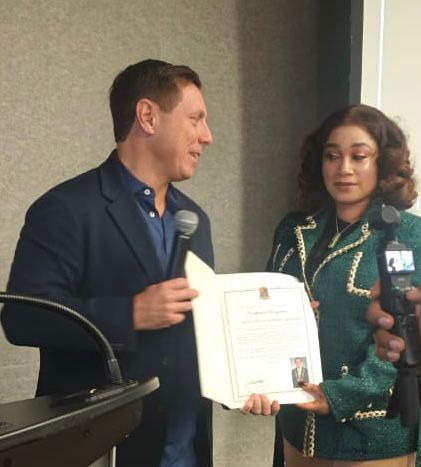
Mayor of Brampton Honours Olajumoke Abegunde For Charitable Works
…Foundation Touches Over 8,000 Women, Widows, and Youth in Ondo State…..
…Collaborates with International Partners for Free Skill Acquisition in Canada…
For Chief Mrs. Olajumoke Abegunde, the act of touching lives positively and contributing meaningfully to societal development is not merely a pastime but a deeply ingrained existential mandate. With unwavering gusto, she has remained faithful to this noble vision, championing the esoteric principle that cheerful giving and advocacy for the downtrodden are responsibilities too sacred to be left exclusively in the hands of the government.
This resolute philosophy has not only engendered transformative impact within her immediate locality but has also catapulted her onto the global stage. Recently, her passionate charitable exertions—executed both within and outside the shores of Nigeria—earned her prestigious international recognition.
A Legacy of Grassroots Transformation
As the visionary founder of the Jummy I Care Foundation, Chief Mrs. Abegunde has systematically dismantled barriers of vulnerability across Ondo State. Through sustained philanthropic gestures, she has disbursed extensive humanitarian relief and social assistance to over 3,000 indigent widows and elderly persons. In parallel, her foundation has galvanized robust support for orphaned and vulnerable children while orchestrating an ambitious women’s empowerment programme. To date, over 5,000 women have benefited from skills acquisition and income-generating activities designed to cultivate self-reliance and entrepreneurial audacity. Many of these beneficiaries have also received start-up seed capital to establish their own enterprises.
A proud alumna of Criminology and Security Studies from the National Open University of Nigeria, Chief Mrs. Abegunde has also distinguished herself as a patron of youth development. She has sponsored numerous essay writing and entrepreneurship competitions across Ondo State, in addition to funding medical outreaches, orphanage interventions, Iftar and Easter entrepreneurship programmes, and sustained feeding initiatives for the less privileged.
Her core philosophy remains immutable: when those who are well-to-do invest strategically in their immediate society, the collective becomes safer, more stable, and poised for greater heights.
International Collaboration and Brampton Honour
In a decisive move to intensify her developmental footprint, the Jummy I Care Foundation recently entered into a strategic tripartite collaboration with the Habeeb Okunola Foundation and the MakeMee Elegant Foundation. Together, they delivered a gratuitous, high-impact skill acquisition training programme to residents of Brampton, Canada.
Participants were immersed in an array of artisan crafts, including the production of resin bags, photo books, picture otters, resin key holders and frame holders, ornamental flower vases, rhinestone embellishment, and the advanced technique of printing images on fabrics.
In a ceremonial recognition of her sustained benevolence, the Mayor of Brampton formally hosted Chief Mrs. Abegunde and her delegation at the mayor’s office. The mayor personally expressed profound gratitude for her unwavering support of community development and entrepreneurship. As a tangible emblem of this appreciation, she was presented with a personally signed certificate of appreciation and commendation.
Unwavering Commitment to the Future
While accepting the honour, Chief Mrs. Olajumoke Abegunde reaffirmed her immutable resolve. She declared that her commitment to touching lives remains absolute and non-negotiable. According to her, she will not relent in ensuring that more lives are touched, more support is channeled to the people, and greater stability is secured for communities. She further emphasized her dedication to cultivating the spirit of entrepreneurship among women and youths as a cornerstone for sustainable development.
With over 8,000 direct beneficiaries in Nigeria alone and an expanding international footprint, Chief Mrs. Abegunde stands as a formidable testament to the profound change one determined philanthropist can effectuate when passion meets purpose.


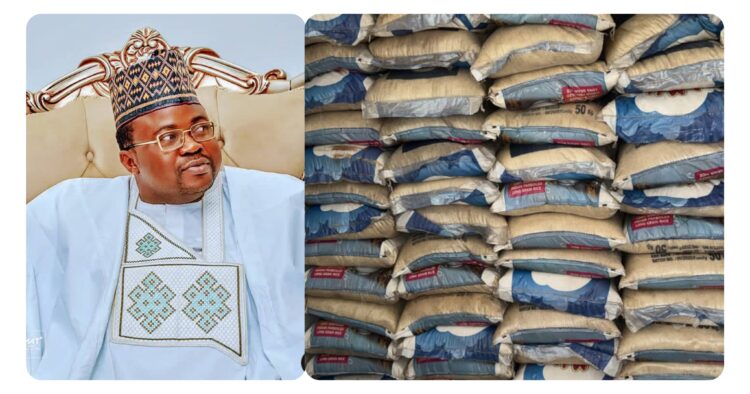
APM Senatorial Candidate Ajadi Distributes Over 500 Bags of Rice
The Senatorial candidate of Oyo Central Senatorial District under the Allied Peoples Movement (APM), Ambassador Olufemi Ajadi Oguntoyinbo, has distributed over 500 bags of rice to residents, party members, state executives, and key stakeholders across Oyo State ahead of the forthcoming Eid al-Adha celebration.
The gesture, which forms part of his annual humanitarian outreach, was aimed at easing economic hardship and strengthening unity among party executives, party members, and residents within the senatorial district during the festive period.
Ajadi said the distribution was a continuation of his commitment to supporting vulnerable households and fostering community solidarity, especially at a time when many families are facing rising food prices and economic pressure.
He explained that Eid al-Adha is rooted in sacrifice, sharing, and compassion, adding that political leadership must consistently reflect empathy for the people, regardless of political affiliation or election cycles.
According to him, the intervention was extended to party executives, grassroots mobilizers, youth groups, and key stakeholders across the senatorial district to ensure equitable distribution across different segments of the political structure in Oyo State.
Ajadi further noted that the initiative was designed to complement household food needs during the festive season, stressing that small acts of support can significantly ease the burden on families affected by economic challenges.
He urged political leaders at all levels to prioritize welfare-driven initiatives that have direct impact on citizens, emphasizing that leadership should go beyond campaigns to sustained service delivery and humanitarian engagement.
Beneficiaries of the rice distribution expressed appreciation for the gesture, describing it as timely and thoughtful amid rising food costs across the country.
They commended Ajadi for maintaining close contact with grassroots members and consistently demonstrating what they described as people-oriented leadership.
The distribution exercise was carried out across selected locations within Oyo Central Senatorial District and coordinated through local party structures to ensure fairness and orderly sharing.
Political observers in the state noted that such interventions have become a key feature of political engagement in Nigeria, particularly during festive seasons, as politicians seek to connect with constituents beyond electoral promises.
As the Eid al-Adha celebration approaches, Ajadi reaffirmed his commitment to continuing similar initiatives aimed at supporting families and promoting unity among residents of Oyo State.
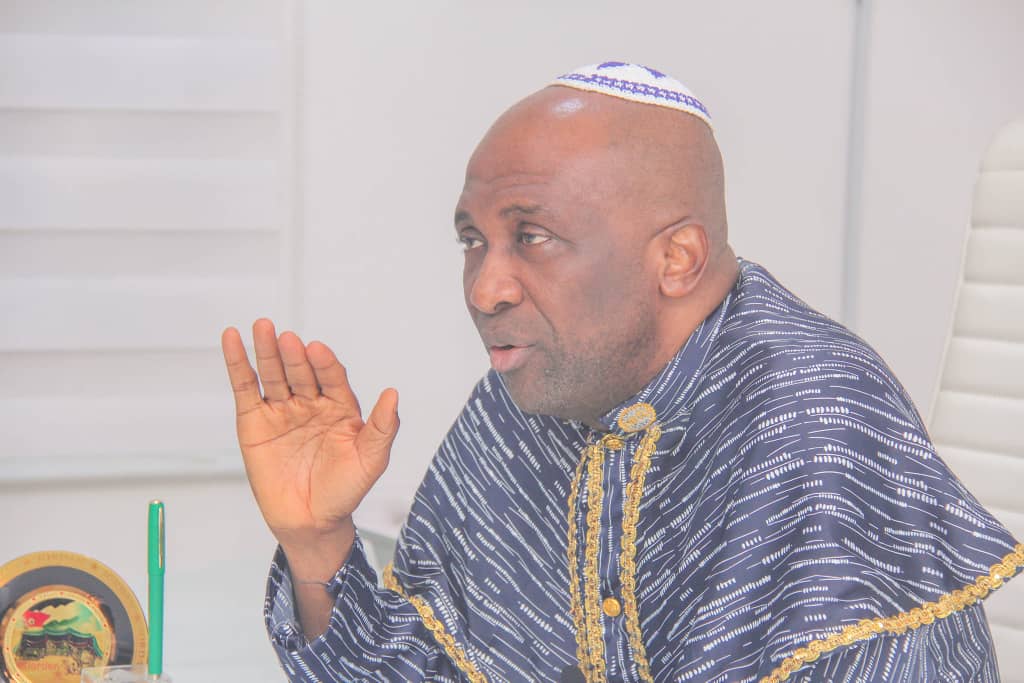
How Primate Ayodele Foretold Sack Of Ousmane Sonko As Senegal’s PM Months Ago (VIDEO)
Before the election that saw the end of Macky Sall’s reign in Senegal, Nigerian prophet, Primate Elijah Ayodele, revealed that there would be a revolution in Senegal and that the opposition would defeat the ruling party.
Despite the fact that the opposition leader, Ousmane Sonko, was in prison, the prophet made it known that if the opposition leader had a way out of prison, he would defeat the candidate of the ruling party.
Even though it looked impossible, at the end of the day, Sonko-backed candidate Diomaye Faye won the election in the first round by a landslide.
While the people of Senegal were celebrating in the euphoria of the victory, Primate Ayodele warned again that the president and Ousmane Sonko, who was later appointed Prime Minister, would have a political crisis that would collapse their relationship.
It was unbelievable at that time because Sonko singlehandedly won the election for Faye, and as he was seen as Sonko’s little brother, it was impossible for them to have issues, but subsequently, Primate Ayodele made it known that both of them would have a political crisis.
These were his words:
“In Senegal, Sonko and Faye, I see a sort of disagreement and separation. Something is about to happen. Watch out. You will have differences that will separate you; watch out for this.”… this was just a few months after the government came to power.
As he warned, the political crisis happened suddenly to the surprise of many and unexpectedly, it has taken a different turn with the sack of Ousmane Sonko as the Prime Minister of the nation.
The shock announcement was made on state television in a decree read out by presidential aide Oumar Samba Ba, who said Faye “has ended the duties of Ousmane Sonko… and consequently those of the ministers and secretaries of state who are members of the government”.
No details were provided on the appointment of a new prime minister.
Meanwhile, Primate Ayodele had weeks ago made it known that he sees that Sonko will be sacked as the Prime Minister of the country.
These were his words:
“Faye will sack Sonko as the Prime Minister of Senegal. In a couple of months, he will be removed from office, that is the message of the Lord.”
@primateayodele Before the crisis became public… before the tension turned into open confrontation… the prophecy had already gone forth. Primate Babatunde Elijah Ayodele warned that there would be serious disagreement and political conflict involving Senegal’s President, Bassirou Diomaye Faye, and former Prime Minister, Ousmane Sonko. At that time, many doubted the prophecy. Many questioned the warning… but today, events have begun to unfold exactly as spoken. The conflict became visible. The division became clear. And now, President Bassirou Diomaye Faye has officially sacked Prime Minister Ousmane Sonko. Prophecy is not noise. Prophecy is not politics. When God reveals, time confirms. This is another reminder that divine warnings should never be ignored. The voice of prophecy speaks ahead, so nations and leaders can be guided with wisdom, caution, and prayer. May God continue to reveal hidden things and preserve nations from confusion and crisis. #senegalaise_tik_tok #ousmanesonko #senegalaise #faye #senegaltiktok
With the new development, this has been fulfilled already.


- Statement of the International Contact Group for the Great Lakes (ICG) on the situation in the eastern Democratic Republic of the Congo (DRC) May 24, 2026
- Eritrea: Messages of Congratulations May 24, 2026
- African Development Bank (AfDB) – 2026 Annual Meeting: Full live coverage on Africa 24 May 24, 2026
- Countries in the Horn of Africa and Yemen recommit to ending variant poliovirus May 23, 2026
- Seychelles: President Visits Police and Fire Services in Final Stop on La Digue Tour May 23, 2026
- United Nations World Food Programme (WFP) scales up emergency Ebola response in eastern Democratic Republic of the Congo (DRC) to contain risk of regional crisis May 23, 2026
- Economic Community of West African States (ECOWAS) Inspection Team Visits ECOWAS Stabilisation Support Mission in Guinea Bissau May 23, 2026
- Member States advance regional coordination on Bundibugyo Ebola response May 23, 2026
- World Health Organization (WHO) Supports Zambia to Strengthen Access to Mental Health Medicines and Services May 23, 2026
- Brazzaville 2026 African Development Bank Group (AfDB) Annual Meetings to focus on mobilising Africa’s development financing at scale May 22, 2026
- Statement of the International Contact Group for the Great Lakes (ICG) on the situation in the eastern Democratic Republic of the Congo (DRC) May 24, 2026
- Eritrea: Messages of Congratulations May 24, 2026
- African Development Bank (AfDB) – 2026 Annual Meeting: Full live coverage on Africa 24 May 24, 2026
- Countries in the Horn of Africa and Yemen recommit to ending variant poliovirus May 23, 2026
- Seychelles: President Visits Police and Fire Services in Final Stop on La Digue Tour May 23, 2026
- United Nations World Food Programme (WFP) scales up emergency Ebola response in eastern Democratic Republic of the Congo (DRC) to contain risk of regional crisis May 23, 2026
- Economic Community of West African States (ECOWAS) Inspection Team Visits ECOWAS Stabilisation Support Mission in Guinea Bissau May 23, 2026
-

 news5 months ago
WHO REALLY OWNS MONIEPOINT? The $290 Million Deal That Sold Nigeria’s Top Fintech to Foreign Interests
-

 society3 weeks ago
SOCIAL MEDIA IS NOT A BATTLEFIELD COMMAND – WHY THE NIGERIAN ARMY’S ACTION AGAINST JUSTICE CRACK IS A NATIONAL SECURITY IMPERATIVE
-

 celebrity radar - gossips4 months ago
Dr. Chris Okafor Returns with Power and Fire of the Spirit -Mounts Grace Nation Altar with Fresh Anointing and Restoration Grace on February 1, 2026
-

 celebrity radar - gossips5 months ago
Prophet Kingsley Aitafo Releases 2026 Prophecy: ‘Nigeria Will Rise, but the World Must Prepare for Turbulence’