
society
Olowu Kuta To Yoruba Obas: Uplift Culture And Tradition Of Our Forebears

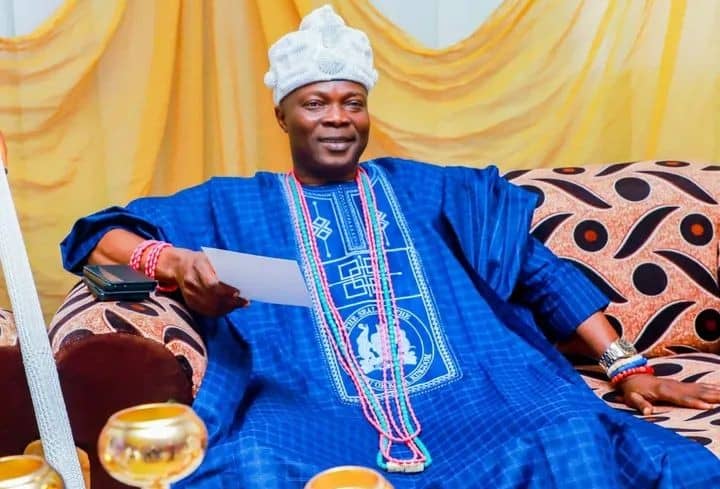
Olowu Kuta To Yoruba Obas: Uplift Culture And Tradition Of Our Forebears
Olowu of Kuta, HRM Oba Dr Hammed Adekunle Makama Oyelude, CON, Tegbosun lll, has urged traditional rulers in Yorubaland to respect the oath of their office.
According to the statement issued by his media office on Friday in Kuta, Olowu Makama enjoined Yoruba Obas to uplift the culture and traditions of our forebears.
Oba Makama was reacting to a statement credited to Justice Phillips Akinside of the Ogun State High Court, that traditional rulers must accept the burial rites and customs of the institutions they voluntarily joined, arguing that once a person becomes an Oba through cultural processes, they relinquish the right to reject those traditions, even after death.
Oba Makama appreciated the judge for his boldness and validation of what he has always emphasized that the primary focus of a Yoruba Oba should be to the dictate of the instrument of his office.
The monarch, who is also a custodian of culture and tradition, has said times without numbers that the primary focus of an Oba, according to the letter of their installation, should be solely their role as custodians of culture and tradition. However , the revered monarch stressed, some Obas have jettisoned their primary duty for religion.
Oba Makama remarked that “those Obas who are not ready to abide by the dictate of their offices should rather withdraw from Obaship and stop causing chaos through unguarded utterances capable of rubbishing Obaship stool they represent.
He, however, explained that Obas in Yorubaland are not crowned in mosque nor church but according to the dictate of the tradition and culture which they swore to uphold after their installation and coronation.
Oba Makama noted: “There’s a dictum in law, which says ‘Violenti non fit injuria’ which simply translates to the fact that you cannot complain once the details of what you’re subscribing to has been spelt to you beforehand.”
Justice Akinside, who was the keynote speaker at the fifth Chief Kehinde Sofola Memorial Bar Lecture, organised by the Nigerian Bar Association, Sagamu branch on Wednesday declared that; “Obas have no right, not even legal right, to change the tradition they have voluntarily come into.”
He explained that the same customs that guide the selection, nomination, and installation of an Oba should equally apply in their burial.
According to him, “One cannot become a traditional ruler in accordance with the customs of the land and later reject the same customs. Religious freedom exists under the 1999 constitution, but once an individual chooses to enter a traditional institution, they cannot claim an infringement of that freedom when the rites of that institution apply.”
Justice Akinside argued that, accepting the role of an Oba is a voluntary act, and by so doing, the individual implicitly agrees to uphold and be governed by the associated traditions, including burial rituals.
He said that rejecting those customs is akin to attempting to “change the goalpost in the middle of the match.”

It would be recalled that some Obas in Yorubaland have been campaigning against burying traditional rulers according to the customs and rites, while some have deviated from the tradition and culture which they swore to uphold.




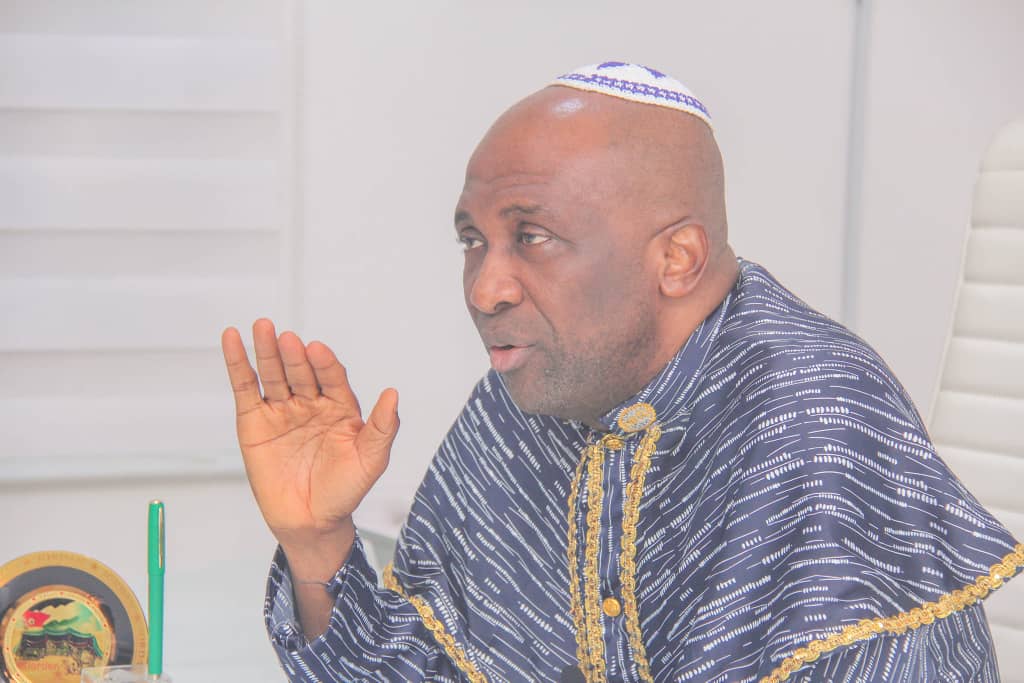
How Primate Ayodele Foretold Sack Of Ousmane Sonko As Senegal’s PM Months Ago (VIDEO)
Before the election that saw the end of Macky Sall’s reign in Senegal, Nigerian prophet, Primate Elijah Ayodele, revealed that there would be a revolution in Senegal and that the opposition would defeat the ruling party.
Despite the fact that the opposition leader, Ousmane Sonko, was in prison, the prophet made it known that if the opposition leader had a way out of prison, he would defeat the candidate of the ruling party.
Even though it looked impossible, at the end of the day, Sonko-backed candidate Diomaye Faye won the election in the first round by a landslide.
While the people of Senegal were celebrating in the euphoria of the victory, Primate Ayodele warned again that the president and Ousmane Sonko, who was later appointed Prime Minister, would have a political crisis that would collapse their relationship.
It was unbelievable at that time because Sonko singlehandedly won the election for Faye, and as he was seen as Sonko’s little brother, it was impossible for them to have issues, but subsequently, Primate Ayodele made it known that both of them would have a political crisis.
These were his words:
“In Senegal, Sonko and Faye, I see a sort of disagreement and separation. Something is about to happen. Watch out. You will have differences that will separate you; watch out for this.”… this was just a few months after the government came to power.
As he warned, the political crisis happened suddenly to the surprise of many and unexpectedly, it has taken a different turn with the sack of Ousmane Sonko as the Prime Minister of the nation.
The shock announcement was made on state television in a decree read out by presidential aide Oumar Samba Ba, who said Faye “has ended the duties of Ousmane Sonko… and consequently those of the ministers and secretaries of state who are members of the government”.
No details were provided on the appointment of a new prime minister.
Meanwhile, Primate Ayodele had weeks ago made it known that he sees that Sonko will be sacked as the Prime Minister of the country.
These were his words:
“Faye will sack Sonko as the Prime Minister of Senegal. In a couple of months, he will be removed from office, that is the message of the Lord.”
@primateayodele Before the crisis became public… before the tension turned into open confrontation… the prophecy had already gone forth. Primate Babatunde Elijah Ayodele warned that there would be serious disagreement and political conflict involving Senegal’s President, Bassirou Diomaye Faye, and former Prime Minister, Ousmane Sonko. At that time, many doubted the prophecy. Many questioned the warning… but today, events have begun to unfold exactly as spoken. The conflict became visible. The division became clear. And now, President Bassirou Diomaye Faye has officially sacked Prime Minister Ousmane Sonko. Prophecy is not noise. Prophecy is not politics. When God reveals, time confirms. This is another reminder that divine warnings should never be ignored. The voice of prophecy speaks ahead, so nations and leaders can be guided with wisdom, caution, and prayer. May God continue to reveal hidden things and preserve nations from confusion and crisis. #senegalaise_tik_tok #ousmanesonko #senegalaise #faye #senegaltiktok
With the new development, this has been fulfilled already.
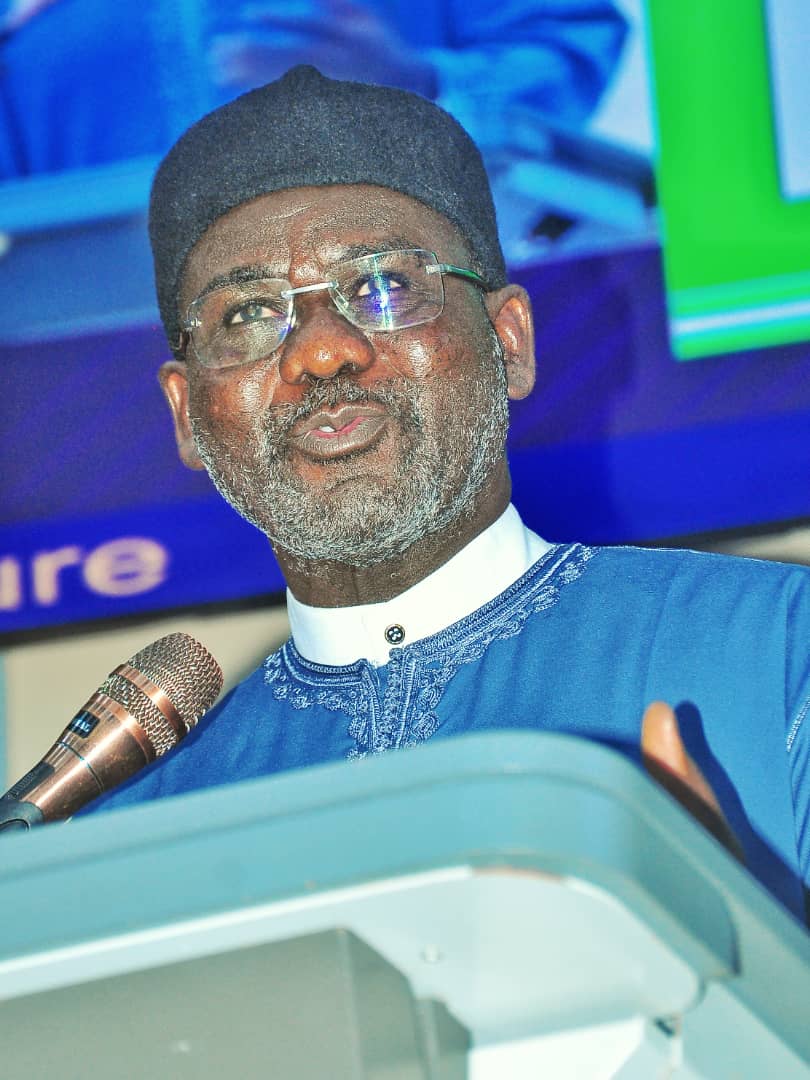
Insecurity: General Buratai Advocates Youth-Driven National Security Strategy
Former Chief of Army Staff, Tukur Yusuf Buratai, has stressed the need for increased youth participation in Nigeria’s security architecture, warning that failure to engage young people meaningfully could further aggravate insecurity across the country.
Buratai made the assertion while delivering a lecture titled, “The Armed Forces of Nigeria and National Security: The Youth and National Security Aspirations,” at the University of Ilorin.
The retired military officer described Nigerian youths as the nation’s greatest strength, noting that their creativity, patriotism, and innovation must be effectively channelled towards combating terrorism, banditry, cybercrime, separatist agitations, and other security threats confronting the country.
According to him, the Armed Forces of Nigeria had transformed from a colonial constabulary institution into a formidable force responsible for protecting the nation’s sovereignty and territorial integrity.
He observed that persistent insecurity across the North-East, North-West, Middle Belt, and South-East remained a major threat to national unity, adding that meaningful youth engagement in security initiatives would play a decisive role in ensuring stability and sustainable development.
Buratai further outlined the constitutional responsibilities of the Armed Forces, including defending Nigeria against external aggression, suppressing insurrection, and supporting civil authorities in maintaining law and order.
The former army chief also reviewed Nigeria’s security landscape, identifying Boko Haram insurgency, ISWAP activities, banditry, oil theft, separatist violence, and transnational organised crimes as some of the major challenges confronting the country.
Drawing comparisons with counter-insurgency operations in Colombia and Sri Lanka, he urged Nigeria to adopt a combination of military operations and socio-economic reforms in addressing insecurity.
He also encouraged Nigerian youths to embrace careers in the Armed Forces, noting that the military offers opportunities for leadership development, discipline, skills acquisition, career advancement, and national integration.
Buratai proposed the recruitment of 50,000 youths annually into the Armed Forces over the next five years, alongside the establishment of state intelligence fusion centres and a national civic security training programme for graduates.


He concluded by urging Nigerian youths to actively support efforts aimed at promoting peace and national security, stressing that enduring peace could only be achieved through justice, inclusion, and development.
society
Court Warns Police: Your Role in Debt Recovery is Illegal; Awards N50m in Favour of Man Detained for 6 Months Over Failed Forex Deal
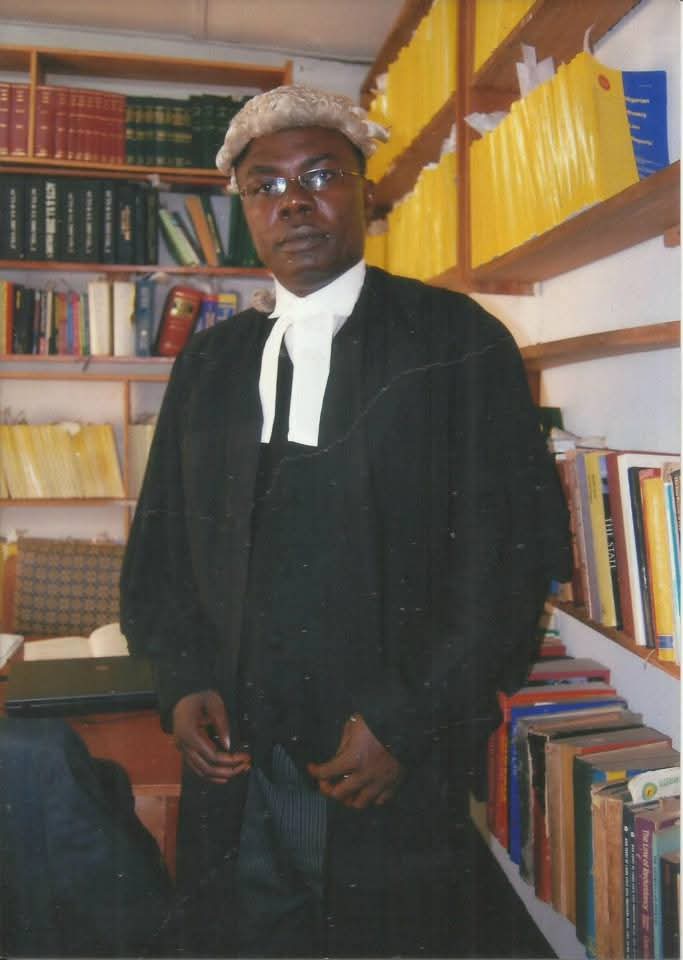
Court Warns Police: Your Role in Debt Recovery is Illegal; Awards N50m in Favour of Man Detained for 6 Months Over Failed Forex Deal
The Lagos State High Court has declared the six-month detention of businessman Bassey Ikpi Ubi over a failed foreign exchange transaction illegal and unconstitutional, ordering the police and private respondents to pay N50 million in damages for torture and unlawful detention.
Justice O. O. Adewunmi-Oshin held that the Nigeria Police Force has no legal authority to act as a debt recovery agency or to mediate private civil disputes.
The ruling was delivered on Monday, 11 May 2026, at the Lagos Judicial Division, High Court No. 49, in Suit No. LD/18019MFHR/2024.
Mr. Ubi, Managing Director of MC COY IKPI BUSINESS INTERNATIONAL LIMITED, had sued the Inspector General of Police, the Assistant Inspector General Zone 2, the DSS, the EFCC, and 11 private individuals and corporate entities.
He alleged that he was arrested and detained on Friday,16 February 2024, tortured almost to death in custody, denied bail, and had his Samsung Galaxy Z Flip 4 and Tecno phones forcibly taken and hacked.
The applicant told the court that the dispute arose from a failed foreign exchange transaction and that the police were being used by private respondents to recover civil debts.
Justice Adewunmi-Oshin stated unequivocally that “the police are not debt collectors and the detention cell is not a venue for settling private disputes.”
The court observed with concern what it called a recurring trend whereby officers of the Nigeria Police Force arrest and detain citizens under the pretext of criminality while the underlying dispute amounts to nothing more than a breach of contract or a failed commercial transaction.
“This Court observes with concern the recurring trend whereby officers of the Nigeria Police Force arrest and detain Citizens under the pretext of Criminality, while the underlying dispute amounts to nothing more than a breach of contract or a failed commercial transaction,” the judge said.
“Such conduct finds no warrant in law. Sections 4 of the Police Act 2020 above cited does not confer any power to act as debt collectors or to mediate private civil disputes.”
Citing _Fawehimi V Inspector General of Police_ (2002) 7 NWLR pt 767 pg 606, the court reiterated that
“the Police must not allow themselves to be used as tools for the enforcement of Civil obligations.”
The judge also referenced Section 6 of the Administration of Criminal Justice Act 2015, which makes clear that arrest shall only be made for a reasonable suspicion of a criminal offence, not for the recovery of debts or enforcement of contractual obligations.
On the applicant’s detention, the court found that holding him for six months without bringing him before a court violated Sections 33, 34, 35, 36, 37 and 41 of the 1999 Constitution, as well as Articles 4, 5, 6 and 7 of the African Charter on Human and Peoples’ Rights.
The judge further declared that the seizure and hacking of the applicant’s phones by the 4th respondent infringed his right to privacy and personal liberty guaranteed under Sections 35 and 37 of the Constitution.
Consequently, the court granted 11 orders. It restrained the 1st to 5th respondents from acting as recovery agents or from further arresting and detaining the applicant and officers of his company.
It ordered the 4th respondent to unconditionally release the seized phones. The court awarded N50,000,000 jointly and severally against all respondents for general, aggravated and exemplary damages, to be paid within 30 days.
It also directed the respondents to publish a public apology to the applicant in a full-page advertorial in a national daily newspaper within 14 days, in line with Section 35(6) of the Constitution.
“The practice is condemned in the strongest terms and the leadership of the Nigeria Police Force is expected to take immediate disciplinary and administrative steps to eradicate it,” Justice Adewunmi-Oshin ruled.
The applicant was represented by Kennedy Osunwa with J. Akor, while M. O. Bajela appeared for the 4th respondent. The 18th and 24th respondents had earlier been struck out of the suit.


- Statement of the International Contact Group for the Great Lakes (ICG) on the situation in the eastern Democratic Republic of the Congo (DRC) May 24, 2026
- Eritrea: Messages of Congratulations May 24, 2026
- African Development Bank (AfDB) – 2026 Annual Meeting: Full live coverage on Africa 24 May 24, 2026
- Countries in the Horn of Africa and Yemen recommit to ending variant poliovirus May 23, 2026
- Seychelles: President Visits Police and Fire Services in Final Stop on La Digue Tour May 23, 2026
- United Nations World Food Programme (WFP) scales up emergency Ebola response in eastern Democratic Republic of the Congo (DRC) to contain risk of regional crisis May 23, 2026
- Economic Community of West African States (ECOWAS) Inspection Team Visits ECOWAS Stabilisation Support Mission in Guinea Bissau May 23, 2026
- Member States advance regional coordination on Bundibugyo Ebola response May 23, 2026
- World Health Organization (WHO) Supports Zambia to Strengthen Access to Mental Health Medicines and Services May 23, 2026
- Brazzaville 2026 African Development Bank Group (AfDB) Annual Meetings to focus on mobilising Africa’s development financing at scale May 22, 2026
- Statement of the International Contact Group for the Great Lakes (ICG) on the situation in the eastern Democratic Republic of the Congo (DRC) May 24, 2026
- Eritrea: Messages of Congratulations May 24, 2026
- African Development Bank (AfDB) – 2026 Annual Meeting: Full live coverage on Africa 24 May 24, 2026
- Countries in the Horn of Africa and Yemen recommit to ending variant poliovirus May 23, 2026
- Seychelles: President Visits Police and Fire Services in Final Stop on La Digue Tour May 23, 2026
- United Nations World Food Programme (WFP) scales up emergency Ebola response in eastern Democratic Republic of the Congo (DRC) to contain risk of regional crisis May 23, 2026
- Economic Community of West African States (ECOWAS) Inspection Team Visits ECOWAS Stabilisation Support Mission in Guinea Bissau May 23, 2026
-

 news5 months ago
WHO REALLY OWNS MONIEPOINT? The $290 Million Deal That Sold Nigeria’s Top Fintech to Foreign Interests
-

 society3 weeks ago
SOCIAL MEDIA IS NOT A BATTLEFIELD COMMAND – WHY THE NIGERIAN ARMY’S ACTION AGAINST JUSTICE CRACK IS A NATIONAL SECURITY IMPERATIVE
-

 celebrity radar - gossips4 months ago
Dr. Chris Okafor Returns with Power and Fire of the Spirit -Mounts Grace Nation Altar with Fresh Anointing and Restoration Grace on February 1, 2026
-

 celebrity radar - gossips5 months ago
Prophet Kingsley Aitafo Releases 2026 Prophecy: ‘Nigeria Will Rise, but the World Must Prepare for Turbulence’