
celebrity radar - gossips
One SA Bank Equals Nigeria’s Entire Banking Sector – Why Recapitalisation Is Critical for Global Competitiveness

One SA Bank Equals Nigeria’s Entire Banking Sector – Why Recapitalisation Is Critical for Global Competitiveness
BY BLAISE UDUNZE
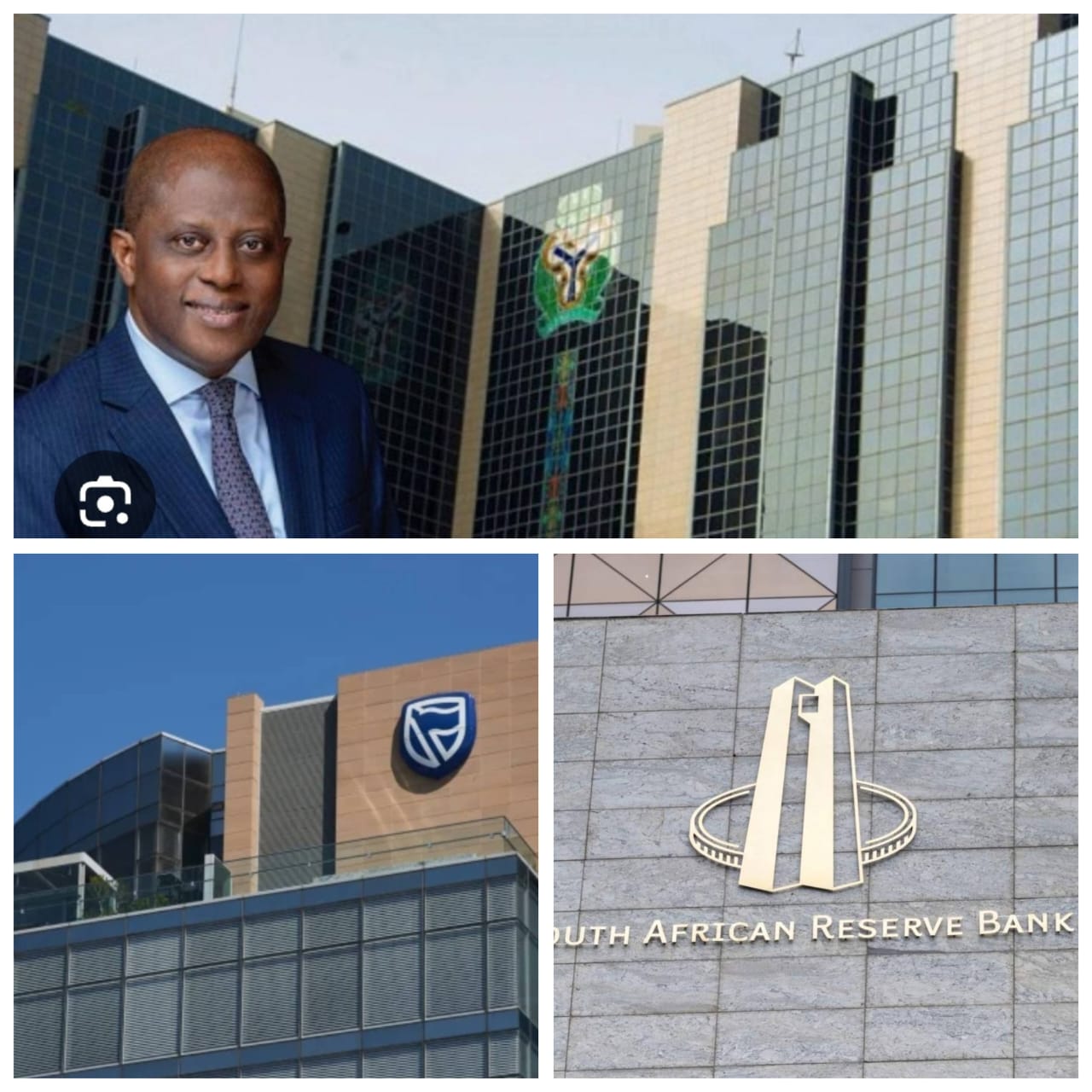
Nigeria has always prided itself as Africa’s largest economy and most populous nation. Currently, its banking sector is confronting a moment of truth that should send shockwaves. Today, a single South African bank, Standard Bank Group, commands a market value at roughly $21-22 billion that rivals and, in some comparisons, exceeds the entire Nigerian banking industry. Though it may seem to be unbelievable, it is real. This striking imbalance is not merely about market valuations for individuals who are perturbed by this alarming revelation. Hence, it must be known that this reflects deeper structural challenges in Nigeria’s financial system and underscores why the Central Bank of Nigeria’s recapitalisation drive has become essential for restoring competitiveness, resilience, and global relevance.
Without any iota of doubt, for a nation of over 200 million people and Africa’s largest economy by several metrics, this reality is more than an uncomfortable statistic. This is truly a reflection of deeper structural weaknesses within the financial system. It highlights the urgent need for reform and explains why the ongoing recapitalisation drive by the Central Bank of Nigeria has become one of the most consequential policy interventions in the country’s banking industry in two decades.
Recapitalisation is not merely a regulatory exercise. If, genuinely, the key stakeholders consider this exercise as an attempt to reposition Nigerian banks to compete with global peers, strengthen financial stability, restore investor confidence, and enable the banking sector to support economic transformation, they must not handle this report with bias.
The disparity between Nigerian and South African banks illustrates the scale of the challenge.
While Standard Bank Group, the largest by assets, has a market capitalization of roughly R372 billion ($21-22 billion = N32.66 trillion). Similar whooping amounts valued in the multi-billion-dollar range as of 2025 apply to several other South African banks, including FirstRand, Absa Group, and Nedbank. For apt juxtaposition from what is obtainable with the South African bank, the combined market capitalisation of 13 Nigerian banks listed on the Nigerian Exchange (NGX) stood at about N16.14 trillion ($10.87 billion) as of 2025-2026. However, the earlier benchmarks show that around May 2025, it was about N11.07 trillion. The current valuation of N16.14 trillion is a result of the funds tapped by some banks from the capital market through rights issues and public offerings.
Nigeria’s largest banks tell a different story. Guaranty Trust Holding Company, widely regarded as one of Nigeria’s most efficient banks, is valued at less than $2 billion (N3.3 trillion). Access Holdings, despite managing assets exceeding $70 billion, carries a market capitalisation of under $1 billion.
To further buttress Africa’s largest financial institution’s position, as of June 30, 2025, Standard Bank Group of South Africa reported total assets of R3.4 trillion. This amount is equivalent to $191.8 billion, and it points to the fact that it is at the top in Africa’s financial space. The equivalent in naira at Nigeria’s exchange rate of N1,484.50 to $1. Hence, $191.8 billion translates to approximately N284,983 trillion, or roughly N285 trillion. This means a single South African bank now outvalues the entire Nigerian banking industry, when compared to the 10 largest lenders collectively holding N218.99 trillion in assets. Though Nigerian banking industry assets were projected to reach N242.3 trillion ($151.4 billion) by 2025-2026.
The obvious and alarming disconnect between asset size and market value signals a deeper crisis of confidence as enumerated thus far. One underlying mistake is to understand that investors are not merely assessing balance sheets; they are evaluating governance standards, currency stability, regulatory predictability, and long-term growth prospects, as these remain their focal interests. The market’s verdict is clear: Nigerian banks remain undervalued because investors perceive higher systemic risks.
It would be recalled that Nigeria has travelled this road before, in 2004-2006, which didn’t end as planned. The then-governor of the Central Bank, Charles Soludo, launched a bold consolidation reform that reshaped the banking industry. Also, it would be recalled that Nigeria, in numbers, had 89 banks, which were more than what is in operation today, and many of them were small, fragile, and undercapitalised.
Similar steps are being witnessed today, as Soludo then raised the minimum capital base from N2 billion to N25 billion, triggering a wave of mergers and acquisitions that reduced the number of banks to 25. The industry witnessed the emergence of champions as the reform produced stronger institutions, such as Zenith Bank, United Bank for Africa, Guaranty Trust Bank, and Access Bank.
For a period, the experience was that Nigerian banks expanded aggressively across Africa and emerged as formidable competitors on the continent, but unfortunately, the momentum gradually faded because of certain missing pieces, and this must be addressed if the industry is ready for economic relevance.
The global financial crisis of 2008 exposed weaknesses in risk management and regulatory oversight. With the industry reacting, several banks were heavily exposed to the stock market and the oil sector. This led to another wave of reforms under former CBN governor Sanusi Lamido Sanusi in 2009.
Although one would say that those interventions stabilised the system. But more harm than good, they also ushered in a more conservative banking culture, as witnessed in the system, where many institutions prioritised survival over innovation.
Two decades after the Soludo reforms, Nigeria’s financial landscape has changed dramatically.
The size of the economy has expanded, inflation has eroded the real value of bank capital, and global regulatory standards have become more demanding. Banks that once appeared adequately capitalised now find themselves operating with limited buffers against economic shocks.
Recognising these vulnerabilities, the CBN introduced a new recapitalisation framework requiring banks to raise their capital bases to the following thresholds: N500 billion for international banks, N200 billion for national banks, and N50 billion for regional banks.
As has always been the case, these requirements are designed to ensure that Nigerian banks possess the financial strength required to compete with institutions in advanced economies.
The Nigerian banking sector should take a new leaf as the recapitalization exercise comes to an end, with the understanding that capital adequacy is not merely a regulatory metric; it determines how much risk banks can absorb, how much they can lend, and how resilient they remain during economic crises, which must be accompanied by innovation.
In developed financial systems, banks operate with deep capital buffers, which is common with South African banks that allow them to finance infrastructure, industrial projects, and large corporate investments. Without similar capital strength, Nigerian banks cannot effectively support large-scale economic development.
One of the most persistent obstacles facing Nigeria’s banking sector is currency volatility. The Nigerian naira has experienced repeated devaluations in recent years, eroding investor returns and weakening confidence in local financial assets.
When the currency depreciates sharply, equity valuations expressed in dollars decline even if banks report strong profits in local currency. This dynamic partly explains why Nigerian banks appear profitable domestically yet remain undervalued in international markets.
In contrast, South Africa’s financial system benefits from a more stable currency environment and deeper capital markets.
The strength of the Johannesburg Stock Exchange allows South African banks to attract large pools of institutional capital from pension funds, asset managers, and international investors. Nigeria’s financial markets, though improving, remain comparatively shallow.
Another irony in Nigeria’s banking sector is the difference between reported profits and genuine productivity within the economy, and the contradiction is glaring. Though it is known that many Nigerian banks recorded extraordinary profit growth in recent years, partly driven by foreign-exchange revaluation gains following the depreciation of the naira but the contradiction is that such gains do not necessarily reflect improvements in efficiency, innovation, or lending performance.
One measure the apex bank adopted was recognising the risks and restricting banks from paying dividends derived from these gains, insisting they be retained as capital buffers.
This intervention revealed how much of the apparent profitability was linked to currency fluctuations rather than sustainable business growth.
True banking strength lies not in accounting windfalls but in the ability to finance real economic activity, and this should be one of the ongoing recapitalisation targets.
The core function of banks in any economy is to channel savings into productive investment. Yet Nigerian banks have increasingly shifted toward safer and more profitable activities, such as investing in government securities, which has continued to weigh negatively on the growth of the real economy.
Other mitigating headwinds, such as high interest rates, regulatory uncertainty, and credit risks, discourage lending to manufacturing firms and small businesses. The result is a financial system that often prioritises short-term returns over long-term economic development.
By contrast, South African banks play a more significant role in financing infrastructure projects, corporate expansion, and consumer credit.
Recapitalisation aims to address this imbalance by strengthening banks’ capacity to support the real economy. The fact is that stronger balance sheets will allow Nigerian banks to finance large projects in sectors such as energy, transportation, agriculture, and manufacturing; alas, the narrative is totally different, going by what is obtainable in the Nigerian finance sector when compared to others.
Investor perception is shaped not only by financial performance but also by governance standards. International investors place significant emphasis on transparency, regulatory stability, and corporate accountability.
While Nigerian banks have made relative progress in improving governance frameworks, concerns remain about insider lending, regulatory inconsistencies and complex ownership structures, as these issues have continued to weigh on the industry, while some of these obvious factors may have contributed to the challenges observed in the operations of institutions such as First Bank Plc and another example is the liquidation of Heritage Bank.
Recapitalisation provides an opportunity to strengthen governance by attracting new institutional investors and enforcing stricter disclosure requirements and not mainly dwelling on the pursuit of bigger capital because capital alone does not guarantee resilience, as it would be recalled that Nigeria has travelled this road before.
Larger, better-capitalised banks tend to operate with more robust governance systems because they face greater scrutiny from regulators and shareholders.
The global banking industry has become increasingly competitive, which should be a wake-up call for the Nigerian banking industry.
Technological innovation, cross-border expansion, and regulatory harmonisation have transformed how financial institutions operate and this means that African banks, especially Nigeria known as the economic giant of Africa, must therefore compete not only with regional peers but also with global players.
Recapitalisation is essential if Nigerian banks are to participate meaningfully in this evolving landscape. On this aspect, it must be emphasised that stronger capital bases will enable banks to invest in digital infrastructure, expand internationally, and develop sophisticated financial products.
Besides, they will also enhance the ability of Nigerian banks to participate in large syndicated loans and international trade financing.
Without adequate capital strength, Nigerian banks risk being marginalised in the global financial system and for this reason, the CBN must ensure that every dime injected or raised for recapitalisation is genuinely devoid of any form of irregularities.
At the same time, traditional banks face increasing competition from financial technology companies. Nigeria has emerged as one of Africa’s leading fintech hubs, attracting billions of dollars in venture capital investment. These companies are reshaping payments, lending, and digital banking services.
While fintech innovation presents opportunities for collaboration, it also poses a competitive threat to traditional banks. To remain relevant, banks must invest heavily in technology and digital transformation.
The CBN must ensure that the ongoing recapitalisation provides the financial capacity needed to support such investments, just like its counterpart in South Africa’s banking sector, which operates with a large pool of capital.
The success of Nigeria’s recapitalisation programme will depend on more than regulatory mandates, which is a fact that must be taken into cognizance. Since banks must demonstrate a genuine commitment to transparency, innovation, and long-term economic development.
Policymakers must also address the broader macroeconomic environment. Of a truth, the moment Nigeria maintains a stable exchange rate, lower inflation, and predictable regulatory policies, it will be essential to restoring investor confidence and if aptly implemented effectively, recapitalisation could usher in a new era for Nigeria’s banking sector.
The country does not necessarily need dozens of weak banks competing for limited opportunities. What Nigeria truly needs are just fewer, stronger institutions capable of financing industrialisation, supporting entrepreneurs, and competing globally.
Nigeria often describes itself as the giant of Africa. But size alone does not determine financial strength. The comparison with South Africa’s banking sector serves as a sobering reminder that institutional quality matters far more than population size.
The ongoing recapitalisation exercise which is due March 31, 2026, represents an opportunity to rebuild Nigeria’s financial architecture and position its banks for global competitiveness.
If the reforms succeed, Nigerian banks could once again emerge as powerful players on the African stage. If they fail, the uncomfortable reality will persist, one South African bank standing taller than an entire Nigerian banking industry.
Blaise, a journalist and PR professional, writes from Lagos and can be reached via: [email protected]




BURATAI URGES ECOWAS UNITY, CALLS FOR RETURN OF SAHEL STATES AT VON FORUM
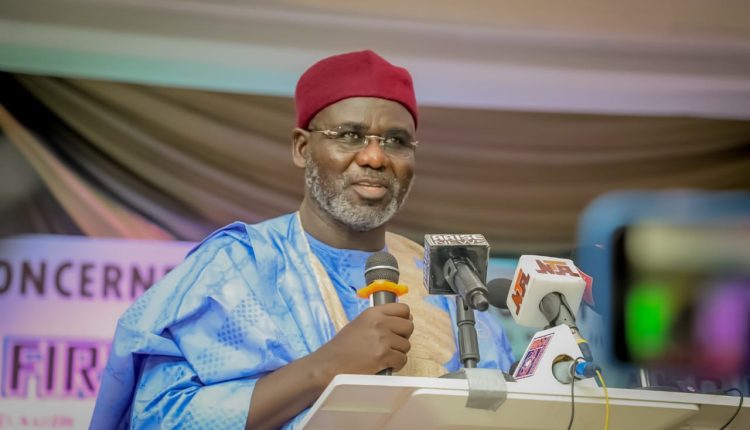
ABUJA – In a powerful appeal for regional stability, former Chief of Army Staff, Lt. Gen. TY Buratai (rtd), has called on ECOWAS and the African Union (AU) to prioritize the return of the Association of Sahel States (AES) to ensure the survival of West African integration.
Speaking Thursday at the Voice of Nigeria (VON) Forum 2026 in Abuja, Buratai warned that the region’s progress could become a “mirage” without the inclusion of Mali, Burkina Faso, and Niger Republic.
A Legacy of Sacrifice

Buratai highlighted Nigeria’s historic role as the “unshakable anchor” of the sub-region. He pointed to Nigeria’s decades of leadership in ECOMOG missions across Liberia, Sierra Leone, The Gambia, and Guinea-Bissau as evidence of the nation’s commitment.
”Nigeria has sacrificed and invested in blood, treasure, and diplomacy to defend democracy,” Buratai stated. “Our stability is inseparable from the security of our neighbours.”
The Path to Unity
The General urged ECOWAS to deepen its engagement with the African Union to bridge the current diplomatic rift with the AES nations. He emphasized that the collective security of West Africa depends on a unified front, noting that democracy and regional safety are “two sides of the same coin.”
”The unity of ECOWAS cannot be complete without Mali, Burkina Faso, and Niger Republic. Without unity, progress in the region may be a mirage,” Buratai cautioned.
Celebrating 51 Years of VON
The forum also served as a celebration of Voice of Nigeria’s 51st anniversary. Buratai lauded the broadcaster as a “Nigerian voice with an African heart,” praising its professionalism and pan-African vision.
He paid tribute to veteran journalists, including the late Mohammed Okorejor and retired director Ben Shamang, while commending the current Director General for revitalizing the agency.
The retired General concluded his message with a call to strengthen regional institutions, urging leaders to honor the legacy of ECOWAS through renewed cooperation and institutional integrity.

GOV. LAWAL WINS BON GOVERNOR OF THE YEAR FOR ZAMFARA’S INFRASTRUCTURE
The Broadcasting Organisations of Nigeria (BON) has awarded Governor Dauda Lawal the Infrastructure Governor of the Year honour for his administration’s giant strides in the Urban Renewal project across Zamfara.
The governor received the award at the second edition of the Broadcasting Organisations of Nigeria (BON) held at the NAF conference centre, Abuja.
A statement by the governor’s spokesperson, Sulaiman Bala Idris, revealed that the BON acknowledged Zamfara state’s unprecedented and transformative achievements in infrastructure, recognising excellence beyond the broadcasting industry.
He added that Governors Bassey Otu of Cross River and Uba Sani of Kaduna, the minister of information and national orientation, Mohammed Idris, along with John Momoh, Shyngle Wigwe, Abubakar Jijiwa, and Sa’a Ibrahim, were among the prominent Nigerians honoured at the 2026 Nigeria Broadcasting Awards.
The statement read in parts, “The Broadcasting Organisation of Nigeria, an umbrella body for public and private broadcasters in Nigeria, was established in 1973 to promote the interests of the broadcasting industry and ensure high standards in media practices.
“The organisation conducted a thorough months-long selection process aimed at recognising professional excellence and raising standards for media practice across Nigeria.
“The Awards Selection Committee was chaired by Dr Danladi Bako, former Director-General of the National Broadcasting Commission (NBC). The awards panel included veterans and representatives from the Advertising Regulatory Council of Nigeria (ARCON) and the NBC..

“The selection committee cited numerous reasons for awarding Governor Dauda Lawal, notably his significant progress across sectors, particularly for transforming Gusau into a modern State Capital.
“Zamfara has witnessed unprecedented achievements under Governor Dauda Lawal, including the historic construction of a modern International Airport in the State.
“Apart from urban renewal projects, as well as the construction and outfitting of General Hospitals, Governor Dauda Lawal’s administration has built, refurbished, and equipped over 800 schools across the 14 local government areas of the State.

“This recognition by the highest broadcasting authority in Nigeria will motivate the governor to dedicate more effort to his mission to serve and rebuild Zamfara state.”
Beauty Meets Glamour as Olaide Ogunyemi Opens New Studio in Mushin
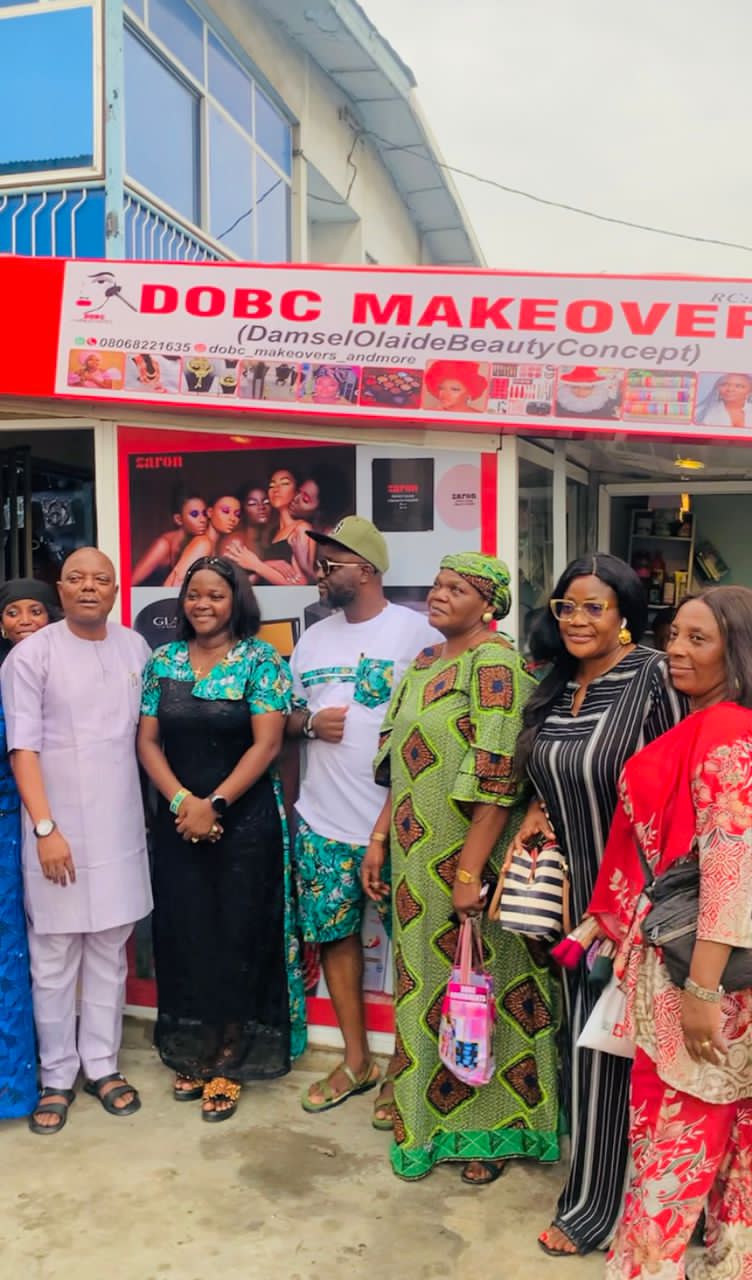
Popular Nollywood actress and professional makeup artiste, Olaide Ogunyemi Oluwayemisi aka Damilola, has expanded her footprint in the beauty industry with the grand opening of her new makeup studio in Lagos.
The talented thespian, who is also the Chief Executive Officer of @Dobc_makeovers_andmore, officially unveiled the ultra-modern beauty space last Thursday, April 2, 2026, in a colourful ceremony filled with glamour, fashion, and pageantry.
Strategically located at 101 Palm Avenue, right beside FitPlus and Sparklight Hospital in Mushin area of Lagos, the new studio is designed to offer top-notch beauty services, reflecting Ogunyemi’s commitment to excellence and professionalism in the ever-growing makeup industry.
The opening ceremony attracted friends, colleagues from the Nollywood industry, beauty enthusiasts, and well-wishers who came out in large numbers to celebrate the entrepreneur’s latest milestone. Guests were treated to a vibrant atmosphere that showcased creativity, style, and the evolving standards of the beauty business in Lagos.
Speaking at the event, Ogunyemi expressed her excitement and gratitude, noting that the new studio represents years of hard work, dedication, and passion for her craft. She reaffirmed her commitment to delivering premium beauty services while empowering aspiring makeup artistes.
The launch of the studio further cements her reputation as a dynamic force, successfully blending her career in Nollywood with a thriving beauty brand.
With this latest development, Olaide Damilola Ogunyemi continues to inspire many young entrepreneurs, proving that talent, consistency, and vision remain key drivers of success in Nigeria’s creative and business landscape.


- Sheraton Nouakchott marks the entry of Marriott International in Mauritania April 10, 2026
- Eritrea: Seminar to Nationals in Nairobi and Its Environs April 10, 2026
- African financial institutions call for coordinated financing solutions to unlock Africa’s digital transformation April 9, 2026
- African Energy Chamber (AEC) Supports Perenco Partnership to Advance Industry 4.0 Skills in Central Africa April 9, 2026
- Youth Charter Calls for “Commonwealth Youth Legacy” Ahead of Glasgow 2026 April 9, 2026
- Securing the bridge between legacy and smart April 9, 2026
- Africa’s Lithium Pipeline Gains Momentum as Global Supply Deficits Loom April 9, 2026
- Afreximbank delivers strong FY2025 results; with a total assets and contingencies base of US$48.5 billion April 9, 2026
- National Council for Curriculum Development (NCDC) seeks Shs17 Billion for curriculum review, teacher training April 9, 2026
- Senegal: A Decade of Unresolved Climate Displacement April 9, 2026
- Sheraton Nouakchott marks the entry of Marriott International in Mauritania April 10, 2026
- Eritrea: Seminar to Nationals in Nairobi and Its Environs April 10, 2026
- African financial institutions call for coordinated financing solutions to unlock Africa’s digital transformation April 9, 2026
- African Energy Chamber (AEC) Supports Perenco Partnership to Advance Industry 4.0 Skills in Central Africa April 9, 2026
- Youth Charter Calls for “Commonwealth Youth Legacy” Ahead of Glasgow 2026 April 9, 2026
- Securing the bridge between legacy and smart April 9, 2026
- Africa’s Lithium Pipeline Gains Momentum as Global Supply Deficits Loom April 9, 2026
-

 news4 months ago
WHO REALLY OWNS MONIEPOINT? The $290 Million Deal That Sold Nigeria’s Top Fintech to Foreign Interests
-

 society7 months ago
“You Are Never Without Help” – Pastor Gebhardt Berndt Inspires Hope Through Empower Church (Video)
-

 celebrity radar - gossips2 months ago
Dr. Chris Okafor Returns with Power and Fire of the Spirit -Mounts Grace Nation Altar with Fresh Anointing and Restoration Grace on February 1, 2026
-

 celebrity radar - gossips4 months ago
Prophet Kingsley Aitafo Releases 2026 Prophecy: ‘Nigeria Will Rise, but the World Must Prepare for Turbulence’