
celebrity radar - gossips
PEOPLE I TAUGHT HOW TO MAKE MONEY DON’T WANT TO TOUCH ME NOW- One time Billionaire, Goddy Anabor shares his filthy rich to broke story


Want to know how to be rich and lose it all? Ask one time city billionaire, Chief Goddy Anabor how he went from rich to broke. For Anabor, then in his 40s, the world was full of gold and diamonds and he splurged on them. It was his money so he went on a binge, cavorting with women, partied in the moon with alcohol, fine food and cars. But like Kanye West said, ‘having money isn’t everything, not having it is.’ Sadly, that is the story of one time, Ikeja Lord, Chief Goddy Anabor. How did the cookies crumble? How did Anabor who went full throttle on his riches, burn it all, ended up crashing and broke?
At the height of his wealth and fame, Anabor lived in the same neighborhood with one of the richest Nigerians ever, Chief Moshood Kashimawo Abiola at the highbrow Abiola Crescent, off Toyin Street, Ikeja, Lagos. Without a trace to the source of his wealth, he was worth billions of naira. Anabor liked cars, women, booze and his cigar. His parties were usually raunchy, wild, colorful and theatrical with foreign envoys from Europe and America in attendance. Anabor reasoned that he trusted the wrong people to manage his business and fortune. Everything, he said, has gone, including his posh home in Lagos and his town, Fugar, Edo State. He claimed he was so susceptible that many people including acquaintances took advantage of his generosity and largesse.
He believed he went through a horrible bad luck that every single business he invested failed. There was also the issue of his involvement in drug and fraud, but he denied it saying, ”I’ve never been on trial; or jailed for any offence. I don’t have such a record,” he claimed.
Though he has lost nearly all his worldly possessions, the good news from Anabor who lamented how he has been abandoned by those who have gained from his benevolence, is that he believes a second chance exists. He’s confident he will bounce back again, richer, bigger and better. Learn a lesson from the guy that used to be a billionaire and lost it all in this interview with E24-7 MAGAZINE’S EDITOR-IN-CHIEF, BIODUN KUPOLUYI, at a lounge on Allen Avenue, Ikeja, Lagos, penultimate Tuesday midnight. Bet you are currently richer than this one-time billionaire that bestrode the social scene like a colossus and musicians sang his praise to high heavens.
What happened to Chief Goddy Anabor, how did you find yourself here?
You know God said, when you help, they will help you. I made a lot of money from working with breweries, and different companies before I traveled abroad. I relocated to make money through one Mr. Ben at Top Breweries owned by Chief Lawsonknow a lot people in country, I’m Nigerian. I knew one Sogunro who we used to call Agbemo; whenever he traveled to London, I always went him. I knew all his children who were half-caste. That was how I brought Fatai Sogunro who is also known as Chris Sogunro; he was a carpenter and bricklayer in London. I made him. I taught him what I was doing, and he is a big man today; he even used to borrow money from me. In fact, in Lagos Sheraton Hotel, I spent 86million Naira in hosting people from London for one year and three months. I have the receipts, and you can go and ask them there. Today, things are very rough for me and my family; in fact, I don’t even know what to say anymore. I see my name in all the newspapers, and I don’t know why.
I trained people like Chris Sogunro, Tokunbo Sodunke, Dare Babayemi, Wale Awesu, and many of them like that. I made them what they are, and today, they are Billionaires. I’m surprised that they see me in this condition; some of them say I’m pushing drugs, but they can’t help me out. I don’t why they are such ingrates. It is only one man called Mike Biggy who lives somewhere in Akowonjo that has helped me. He rented a house for me and really takes care of me. I wonder why this people decided to treat me this way considering the amount of money I spent on them. There was a time I had N3bn in Equity Bank at Allen Avenue, Ikeja, which I spent on people. Anyway, I thank God for my life. I started colour printing in Nigeria, and I was printing for Thisday Newspaper, Punch, and many others. I also registered a security company which was approved and I had a license. They gave three of us the license. We had Vanni, Gordon and another one. I was even guarding the airport.
You were quite big then; didn’t you invest your money wisely then?
I invested a lot of my money, but because of corruption, mismanagement of the people handling the businesses ran them down. When you have a business, it’s very good to employ people who are reliable and give them some percentage of the investment or profits to get their commitments. That lesson I learnt greatly. I was putting my wife and my family, they ran the business down. My wife, Anthonia was even sharing money with people on purchases and supplies. My workers were building houses from the money they were making from the companies without letting me know.
How did you meet Anthonia?
I met her at a Police Station when I was having a problem then. She was a Sergeant then, very beautiful woman. She was working with Dan Baba then and she was trying to assist me.
Was she your first wife?
No, my first wife is an Ijebu woman called Toyin, and she is still alive. I used to call her Toyin Tomato; she was always with Kolington, Tayelolu and the likes.
Why did you part with her?
I parted with her because she likes parties a lot.
But you were also going to parties then?
I went to parties, but I could not leave my family and go to parties. She used to leave our little son and go to parties. She had three children for me. My first daughter, Bose, is a Phd holder in London. I have another one who is a doctor, and Tunde who is in America.
Are they aware of your situation?
Yes. They’ve tried.
I knew you had properties on Isaac John and Alabi Crescent in Ikeja, what happened to them?
They took advantage of me because they knew I needed money. I was offered N80m by a man called Basorun A.K for a house of about N300m. He has been in jail for about 10 years now because he was a drug dealer.
What about your Guest House on Joel Ogunnaike, GRA, Ikeja?

I rented it, and I gave it to Shina Eddo, who also rented it from the family that owns it. Shina is a very good person to me.
What happened to your fleet of cars because you had a penchant for them?
I had more than 50 cars like Bentley, Rolls Royce and others. I usually bought cars that were newly manufactured. Household enemies are the problems of my life. God has made me to see that the people I trusted don’t even care about me.
Why do you think everyone neglected you?
It’s corruption, distrust. I gave at least 60 percent of all I had to people. I’m so happy on the street because people like Ade Balogun take care of me.
What about Dare Babs; who was he to you?
He was my driver. I brought him from Abeokuta to Lagos when I was working at the Breweries. We had a problem because of some little money of $5m, which was stolen by one Kenny, though we’ve settled it. He’s a very good person, but I haven’t heard from him for some years now.
What’s your relationship with Oghadiome?
He is my village brother; in fact, my compound brother from Fuga in Edo State. The late Admiral Akhigbe was the governor of Lagos State then; I think he was the one that made Oghadiome to become a deputy to Lucky Igbinedion of Edo State then. When he became the Chief of Staff to Jonathan, I went to Abuja to look for him. I was thinking he would call me for something important because when his mother died, I was there. Even when they were building the secretariat in Fugar, I was the one that contributed the most and they named a hall there after me: Godwin Anabor Hall. Today, none of them recognises me, and it’s very funny.
Do you think what is happening to you is Karma because you used to ‘obtain’ people then?
In the Bible, God says ”if you believe him, he will give you joy. And for those that don’t believe him, he will give them power to acquire, but those who believe in Him will take it from you.” God gave me money; I did not obtain, it just came. If I obtained, they would have arrested me. I’ve never been on trial; or jailed for any offence. I don’t have such a record.
For your information, I know I will come back again; that’s why I’m speaking like this. I will come back again because you’re bound to go up and down seven times and still have the grace. I believe in God.
What is your greatest joy in life?
My joy is that I did not die and give people opportunity to say good things about me when I’m gone. I’m alive to see how people are treating me when I don’t have. In fact, people that I taught how to make money then and who are now rich don’t want to touch me.
oddy Anabor with girlfriend, Don Bocar
Ambassadors of foreign countries used to attend your parties, what was your connection with them?
It’s because I’m honest. If you’re honest, people will come to you.
Tell me about your background, where are you from?
I’m from Fugar, Auchi in Edo state, but I was born in Kano, and grew up in Osogbo.
What about Ade Bendel, I learnt he is your friend?
He is like my brother because he is from Owan in Edo State; I met him in Lagos. I heard that he had some problems and he’s in prison; that’s all I know about him so far.
If you come back again, what lessons have you learnt in life?
I want people to know that the friend you have now is not your best friend; in fact, your household enemy is your family. It’s just you and God, believe me. Always watch your back.
Who is left with you now?
It’s God, and He is working because I’m living and enjoying. I still believe in Philippians 4:13. ‘I can do everything through Him who gives me strength.’
There was a report that you are now driving cab, is that true?
People are just writing whatever they like. A lot of people want to give me cars and other things. When God has blessed you, he has blessed you. Did you not see my driver, yes, he drives me in a Toyota call Pencil Light, but I’m not the one driving or doing kabukabu with it. I’ve learnt to live with my condition after all; I’m alive to see it all.
What is your greatest prayer to God now?
My prayer can be found in Psalm 1 which says, ‘Blessed is the man who does not walk in the midst of the wicked.’ He says he will bless them and make them like trees planted by the riverside. That’s what I prayed that I became a rich man. Forget about gossips.
How old are you chief?
I’m 55, and I was born on February 19.
Where is Anthonia and your children now?
They’re in London.
Tell me your last word?
My last word is that everybody should watch their back, because there are household enemies.
Source : E24-7mag.com




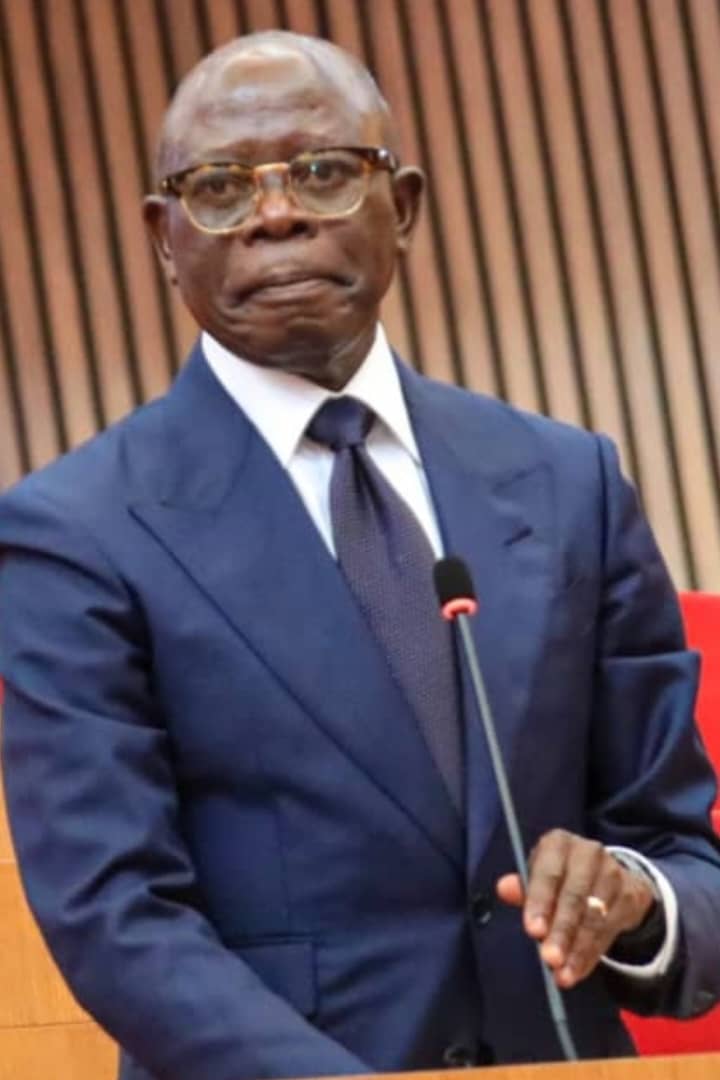
Daniel Eromosele Eulogize Adams Oshiomole as he turns 74 years
Today, I celebrate an exceptional leader, a fearless voice for the people, and a man whose life has remained a symbol of courage, sacrifice, and unwavering commitment to justice—Distinguished Comrade Senator Adams Aliu Oshiomhole.

Your journey has been nothing short of inspiring. From your days as a vibrant labour leader to your impactful tenure as the Executive Governor of Edo State, and now as a respected Senator of the Federal Republic, you have consistently demonstrated what it means to serve with integrity, strength, and purpose. Your contributions to the growth of our nation and the development of Edo State remain indelible and deeply appreciated.
You have not only built structures and institutions but have also built people. I am personally a beneficiary of your leadership, your guidance, and your belief in empowering others. Your influence in my life has been profound, and I remain grateful for the opportunities and inspiration you have given me.
On this special day, I celebrate not just your achievements, but the man you are—resilient, principled, and ever committed to the progress of Nigeria and her people.

May this new year bring you renewed strength, greater wisdom, good health, and more remarkable accomplishments. May your legacy continue to shine brighter with each passing year.
Happy Birthday, sir. Wishing you many more fruitful and impactful years ahead.
celebrity radar - gossips
Accolades to Empress Genevieve Wining as she Celebrate birthday in Grand style

Accolades to Empress Genevieve Wining as she Celebrate birthday in Grand style
Emmanuel Clement
Vilnius, Lithuania – The Grand Hotel Vilnius will host a grand birthday celebration in honor of Her Majesty The Empress Genevieve Wining of the United Kingdom of Atlantis (UKA) on April 4th, 2026.
The four-day event promises to be an extravagant affair, marking the special birthday of Empress Genevieve Wining. The celebration will take place at the prestigious Grand Hotel Vilnius, Lithuania, renowned for its luxurious ambiance and exceptional service.

According to the event flyer, the birthday celebration will be a spectacular occasion, fitting for an empress. Guests can expect an elegant setting adorned with golden accents, sparkling champagne, and festive decorations, creating a regal atmosphere befitting the occasion.
The Empress Genevieve Wining of UKA is expected to grace the event, which will include various festivities and celebrations in her honor. The occasion aims to bring together dignitaries, followers, and guests to commemorate the empress’s birthday with grandeur and joy.
For media inquiries, accreditation, or further information about the birthday celebration of The Empress Genevieve Wining of UKA, please contact the event organizers.
Courtesy of His Excellency Emperor Prof. Solomon Wining. UKA
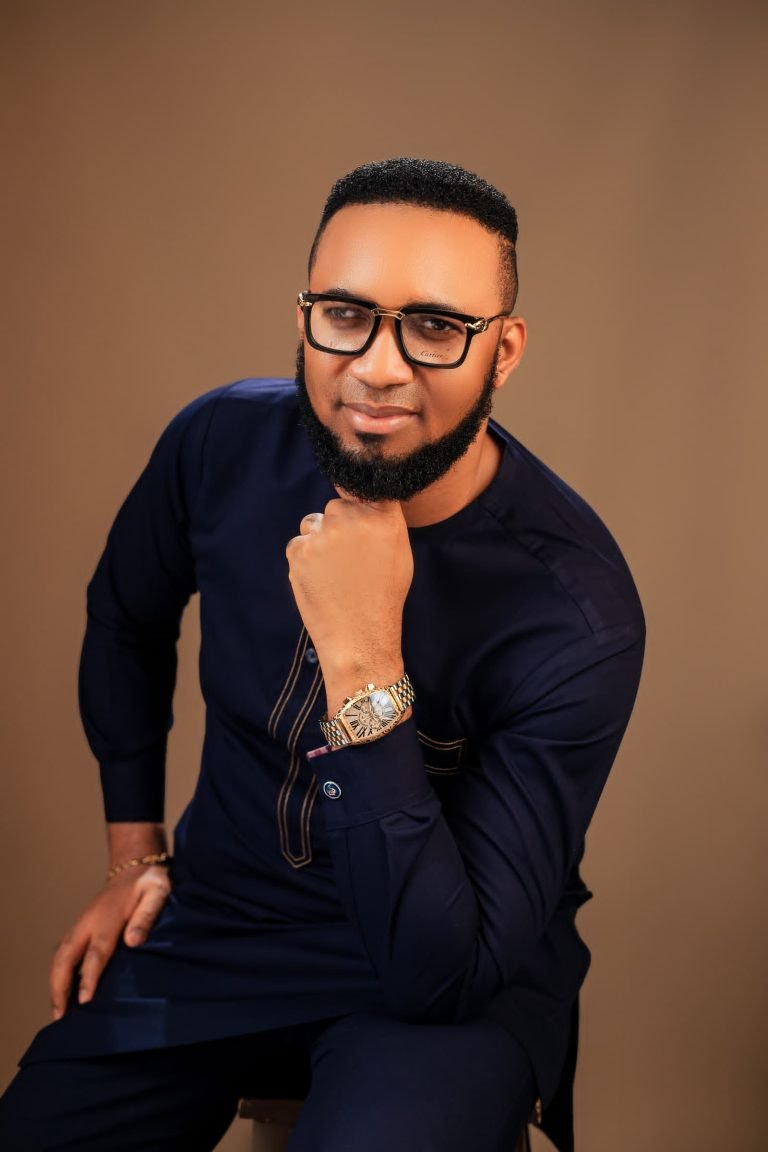
Today, Dr. Chris Okafor turns a year older
~By Sunday Adeyemi
It is widely acknowledged that the exceptional Dr. Chris Okafor, a man of great character, always celebrates his birthday on April 4th, and in recognition of this occasion, I am inspired to write this special tribute to honor him.
Today marks a momentous occasion as we commemorate the birthday anniversary of Dr. Chris Okafor, a rare gem, a perfect gentleman, and the revered founder of Grace Nation Church, aka Liberation City.
Without reservation, this versatile and dependable Oracle foundry has consistently proven itself worthy of the accolades bestowed upon it on this notable anniversary.
Let it be reiterated that Dr. Chris Okafor is a leader known for his generosity and commitment to humanity’s welfare and advancement. The special gifts donated recently to widows and widowers within and outside the church are a testament to his exceptional leadership.
Your reputation as an outstanding and authentic man of God is evident in your exceptional goodwill and philanthropic endeavors.
Your dedication and perseverance have yielded impressive results, and numerous people, including myself, are justifiably proud of the remarkable work you are doing.
You have consistently exemplified outstanding leadership in the Christian community, demonstrating the profound impact of your role as a gift from God to humanity. I firmly believe this to be true.
Here’s to a year of productivity, success, and happiness. Congratulations and warm wishes on your birthday, sir.
Sunday Adeyemi
Your Son


-

 society7 months ago
Religion: Africa’s Oldest Weapon of Enslavement and the Forgotten Truth
-

 news4 months ago
WHO REALLY OWNS MONIEPOINT? The $290 Million Deal That Sold Nigeria’s Top Fintech to Foreign Interests
-

 society6 months ago
“You Are Never Without Help” – Pastor Gebhardt Berndt Inspires Hope Through Empower Church (Video)
-

 celebrity radar - gossips2 months ago
Dr. Chris Okafor Returns with Power and Fire of the Spirit -Mounts Grace Nation Altar with Fresh Anointing and Restoration Grace on February 1, 2026
You must be logged in to post a comment Login
You must log in to post a comment.