
celebrity radar - gossips
Peter Obi’s Defection to ADC: A Defining Moment in Nigeria’s Struggle Against Poverty, Disunity, and Democratic Decay


Peter Obi’s Defection to ADC: A Defining Moment in Nigeria’s Struggle Against Poverty, Disunity, and Democratic Decay.
By George Omagbemi Sylvester | Published by saharaweeklyng.com
“Why Nigeria’s Former Presidential Candidate Chose a New Political Path, What It Means for National Unity, and the Battle for 2027.”
On December 31, 2025, Nigeria witnessed a politically seismic shift: Peter Obi, the former Labour Party (LP) presidential candidate in the 2023 general elections and former Governor of Anambra State, formally defected to the African Democratic Congress (ADC). In a stirring declaration made in Enugu, Obi not only changed his political affiliation but also articulated a powerful moral indictment of Nigeria’s leadership class, accusing it of economic mismanagement, corrosive division, and democratic erosion. His move calls for national unity, transcending ethnic and party boundaries, to confront what he described as the forces that have looted Nigeria into poverty and undermined its democratic promise.

Nigeria’s Existential Crisis: Poverty, Disunity and Democratic Decline
At the heart of Obi’s defection is a sobering diagnosis of Nigeria’s current socio-economic predicament. In his address, Obi described Nigeria as a nation “in deep distress,” where over 130 million Nigerians live in multidimensional poverty and more than 80 million youths remain unemployed—a human catastrophe that has cast a pall over the hopes of an entire generation.
These statistics, while staggering, reflect a deeper systemic failure. According to the World Bank, Nigeria has persistently battled high poverty rates and youth unemployment, even as it remains one of Africa’s most resource-rich nations. Structural challenges such as weak governance, corruption, and institutional paralysis have contributed to a reality where economic growth has not translated into broad-based prosperity. Obi’s critique resonates with leading development scholars like Professor Paul Collier, who has argued that poverty in Africa today is often rooted not in resource scarcity but in governance failures that stifle human potential.
Obi’s assessment aligns with this scholarship: “Nigeria is not poor; we are looted into poverty.” It is a deliberate moral indictment, asserting that Nigeria’s wealth has been systematically siphoned away by elites who prioritise self-enrichment over public service.
The Political Realignment: Beyond Party Loyalty to National Rescue. What makes Obi’s defection particularly significant is the context of his political journey. After his strong and unprecedented showing in the 2023 presidential election (where he galvanized millions of Nigerians, especially youths and urban professionals) Obi remained a symbolic figure in the country’s political landscape. Initially, he stayed within the Labour Party, even as defections and internal crises weakened its structure.
However, Obi’s engagement with the African Democratic Congress (ADC) began long before the formal defection. For months, he was part of a broader coalition of opposition forces that chose the ADC as their political platform for the 2027 general election. Political analysts noted that Obi’s approach was not conventional party-switching but a strategic alliance-building effort aimed at uniting disparate opposition voices against the ruling All Progressives Congress (APC).

In Enugu, Obi emphasised that this move is guided “solely by patriotism and national interest.” He called on his supporters, the Obidient Movement, and opposition leaders from across Nigeria to embrace a “broad national coalition” under ADC. This message is not simply electoral and it is ideological: that Nigeria must repair its broken political culture through unity rather than tribalism or tokenism.
Unity as a Strategic and Moral Imperative. Obi’s speech resonated with deep moral urgency. He did not frame his decision merely as a tactical manoeuvre but as a moral imperative. “ Nigeria is not collapsed, but severely betrayed,” he declared, emphasising that the nation’s problems are not intractable but stem from poor leadership and lack of consensus on national priorities.
His use of language (calling on Nigerians to dismantle entrenched systems of greed and division) reflects the broader intellectual traditions of African leaders who have championed unity against fragmentation. For instance, Kwame Nkrumah once stated, “We face neither East nor West; we face forward,” urging Africans to pursue unity in the face of external and internal pressures. Obi’s invocation of unity evokes this enduring legacy, challenging Nigerians to see beyond ethnic politics and short-term gain.
Moreover, Obi’s focus on electoral integrity as non-negotiable underscores the growing concern that Nigeria’s democratic process must be reformed to truly reflect the will of its people. His warning to those plotting to manipulate the 2027 elections aligns with global democratic norms emphasised by scholars like Larry Diamond, who identifies free and fair elections as essential to legitimate governance.
Reactions and Political Ripples. The implications of Obi’s defection have reverberated across Nigeria’s political terrain. The Labour Party, while publicly characterising Obi’s departure as a “blessing” and an opportunity for internal renewal, also apologised to Nigerians for its perceived failures after the 2023 election. The party’s statement suggests both introspection and a desire to rebuild its identity separate from Obi’s political magnetism.
On the other hand, critics from the ruling party view Obi’s move with scepticism. For example, the Lagos APC described the defection to ADC as “political promiscuity masquerading as principle,” implying that such alliances lack ideological coherence. Such pushback highlights the entrenched resistance within Nigeria’s political class to any realignment perceived as threatening to the status quo.
The Stakes for 2027 and Beyond. As Nigeria heads toward the 2027 general elections, Obi’s defection sets the stage for a dramatically reconfigured opposition landscape. The ADC, long a minor party, now finds itself at the centre of a coalition that could redefine political contestation in Nigeria. Scholars of African politics like Herbert Ekwe-Ekwe have argued that new political coalitions (when rooted in shared national purpose rather than personality cults) can serve as catalysts for democratic renewal.
Obi’s road ahead is not without challenges. Questions remain about the internal dynamics of the coalition, the balance between ideological cohesion and electoral pragmatism, and the capacity of the alliance to win over Nigeria’s diverse electorate.
Nevertheless, Obi’s message is clear: Nigeria’s salvation lies in unity, accountability, and visionary leadership. His defection to the ADC is not merely a change of party, it is an invitation to Nigerians to reclaim their nation from mediocrity and fragmentation.
In Summary: A New Chapter or Historic Turning Point? Peter Obi’s defection to the African Democratic Congress represents more than a personal political move—it is a declaration of national purpose. At a time when poverty, insecurity, and civic disillusionment threaten to erode Nigeria’s democratic fabric, Obi’s call for unity is a rallying cry with moral clarity and political urgency.
Whether this moment will mark the true beginning of a new national consensus or simply another chapter in Nigeria’s turbulent political saga remains to be seen. However, Obi’s defection undeniably reframes the discourse: Nigeria’s struggle is no longer just about elections, but it is about the soul of the nation. This is a story worth watching, worth engaging with, and worth defining the future of Nigeria itself.





celebrity radar - gossips
The Unfinished Conversation: Five Years of Missing T.B. Joshua BY FEMI OYEWALE
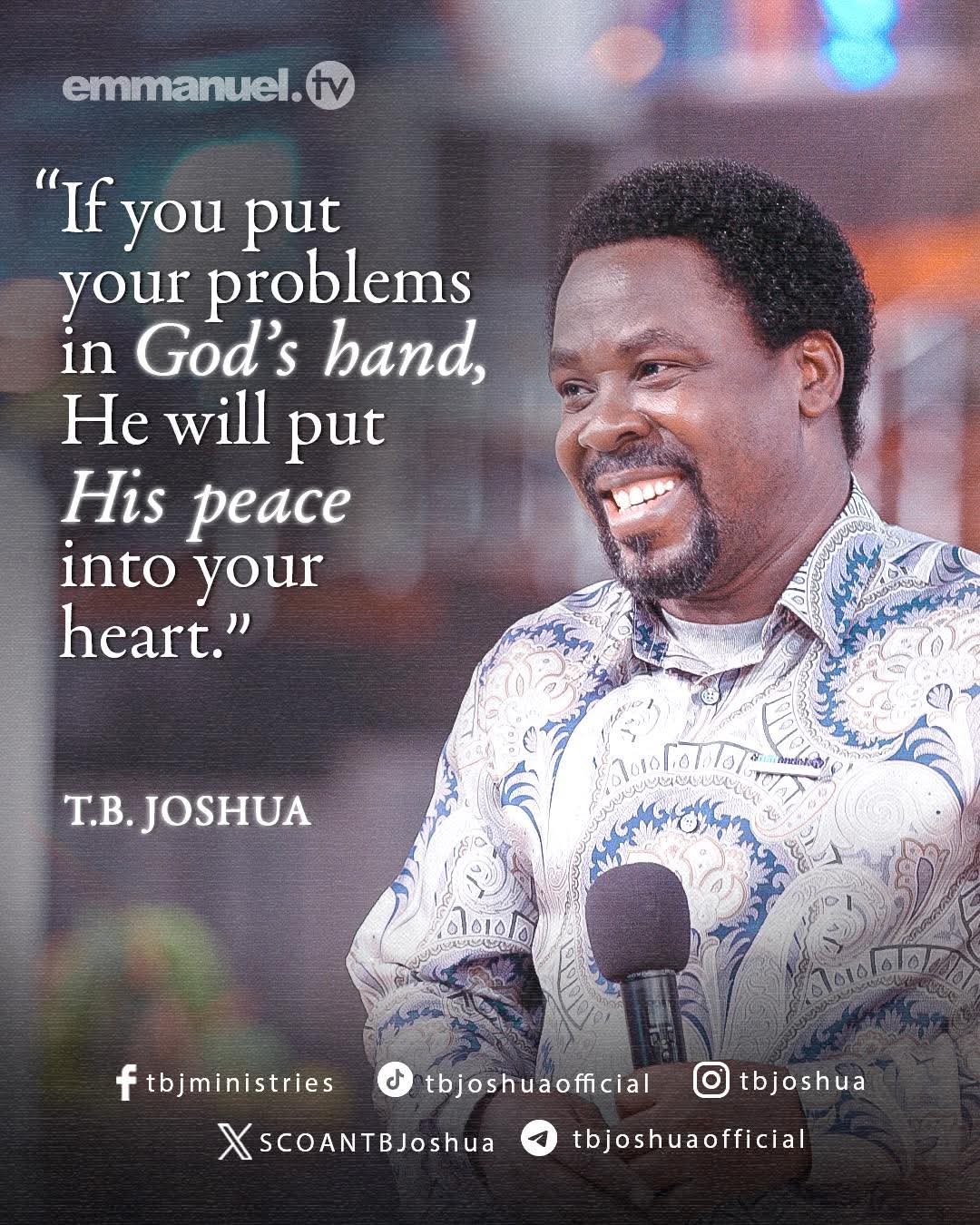
The Unfinished Conversation: Five Years of Missing T.B. Joshua BY FEMI OYEWALE
”In life we meet to part, we part to meet, but parting is the sweetest sorrow.”

Five years have vanished like a vapor, yet the echoes of his voice remain as vivid as a morning sunrise. June 5th marks the anniversary of the transition of a man who was not merely a global religious icon, but a father, a mentor, and a beacon of profound simplicity in a complex world. As I pen this, I find myself still navigating the shores of denial. How does one write a tribute to a man whose influence was as vast as the oceans, yet whose heart remained as humble as the desert sands?

The Last Assignment
Time truly flies, but some moments are frozen in the amber of memory. I recall with poignant nostalgia that I was among the final few with whom he spoke before stepping out for his last assignment on the pulpit on June 5,2021. Unknown to many, we shared an uncommon bond—a father-son relationship that stood the test of time.

Just an hour before that glorious, final ministration, my phone rang. We discussed the fulfillment of prophecies and my planned assignment to South Africa, an assignment he promised to single-handedly finance. By God’s grace, I have traveled the globe, and ninety percent of those journeys were bankrolled by him. Before ending the call, he spoke with finality: “Femi, go and watch it.” I never knew it was a parting shot. I never knew those words would be the threshold of eternity. Perhaps that is why, despite being part of his burial media committee, I lacked the courage to write until today.
From Fear to Faith: The Beginning
My journey to the Synagogue Church of All Nations (SCOAN) was written in the stars of fate. Then a reporter for Encomium Weekly, under the tutelage of the legendary Mr. Kunle Bakare, I was recommended to handle media work for a “prominent client.” When the name “T.B. Joshua” was mentioned, my heart sank.
Having cut my journalistic teeth under titans like Mr. Femi Adeshina and Mr. Dele Alake, I had heard the tales, stories of monsters, of shape-shifters, of dark magic. As I drove to Ikotun, I recited every Psalm I could muster and texted my parents my destination, unsure if I would return. I arrived expecting a beast; I was introduced to a brother. I met a man so profoundly simple, so devastatingly ordinary in his humility, that if not for his presence on Emmanuel TV, I would have sworn I was meeting an impostor. That was the day the fear died, and a lifelong relationship began.
The Man Behind the Mantle
I am not here to validate a legend; I am here to honor a human. I have been privileged to stand in his office, his personal room, his private altar, and his prayer house. What did I find? Not a demigod, but a man who lived for others.
A Heart of Forgiveness: Like the father in Luke 15, no matter the depth of the offense, a sincere “I am sorry” was all it took to be welcomed back into his fold.
The Weight of Misunderstanding: I remember the pain of the building collapse. He asked me, with tears that shattered my heart, “Femi, can you believe they said I used these people for rituals?” That was the first time I saw the iron man break.
A Channel of Healing: I recall a man brought to the prayer line who had previously declared, “Even if T.B. Joshua is the devil, if he can take this pain away, I am ready.” The moment those words left his lips, the Prophet walked over, touched him, and the healing was instantaneous.
He was a comedian, a teacher, a preacher, and above all, a man who loved his family and his ministry with every fiber of his being. If most clergy possessed even half the global influence he wielded, they would have long ago become arrogant demigods. T.B. Joshua remained, to his last breath, a servant.

A Legacy Enduring
It has been five years, yet it feels like yesterday. Many of those who cast stones in the shadows often came seeking his light in secret. Today, as we remember him, I see that legacy thriving. Prophetess Evelyn Joshua is truly holding the torch, preserving the foundation with grace and strength.
Good morning, Prophet T.B. Joshua. You live on in the lives you changed, the doors you opened, and the heart of your many disciples who will never forget the man who taught them that true greatness is found in the simplicity of love.
”He was a man globally misunderstood, yet a man whose name alone opened doors globally. He lived for others, and in doing so, he became immortal.”

celebrity radar - gossips
Let’s build a future where access to healthcare is strengthened…….Oba Odugbemi
Let’s build a future where access to healthcare is strengthened…….Oba Odugbemi
A call has gone to every stakeholder in the health sector to build a future where access to healthcare is guaranteed and strengthened.
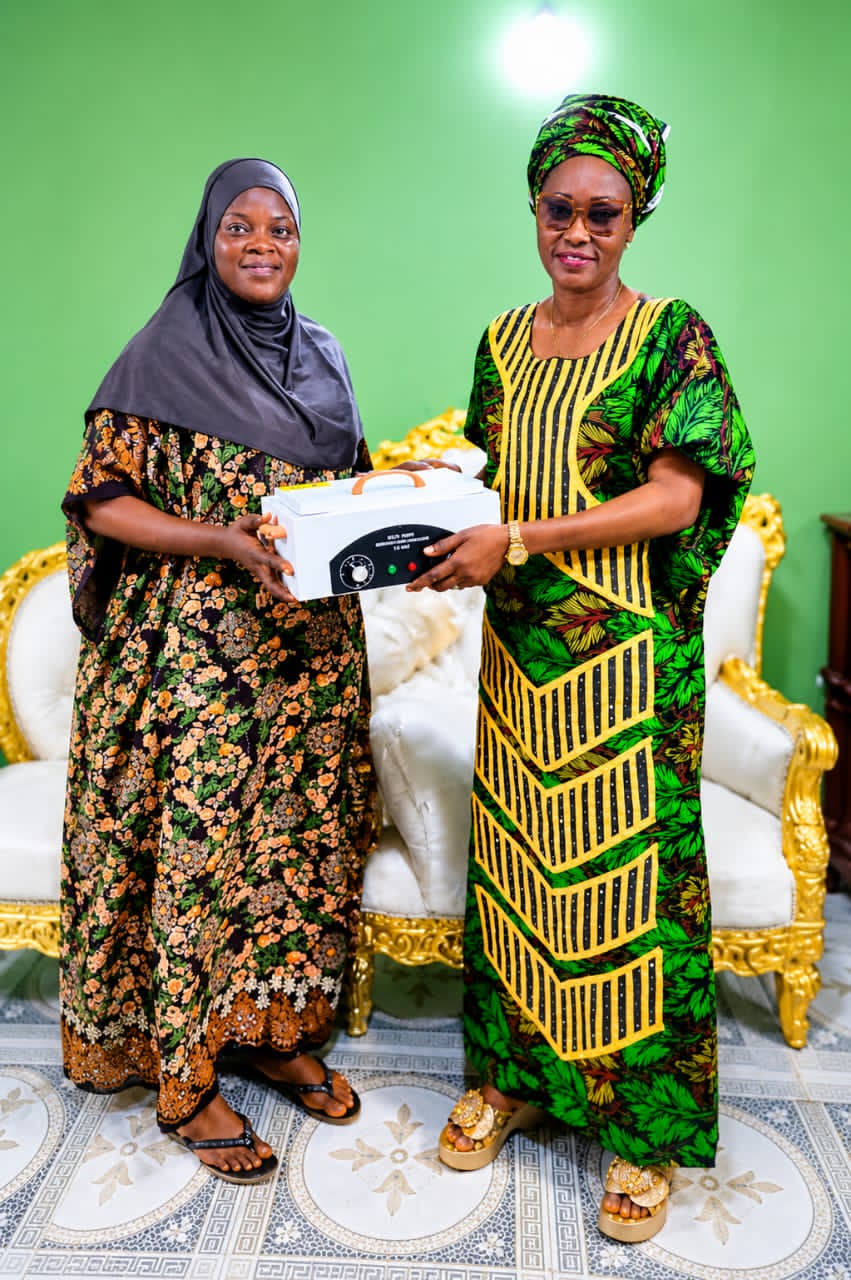
The Onilisa of Lisa Kingdom, Oba Oladele Odugbemi make the call in Lisa while donating a Sanitary Sterilisation Box to the Lisa health centre.
Oba Odugbemi said that the donation became necessary in order to further strengthen the capacity of the health centre for the benefits of the people.
The royal father stressed that his foundation, Oladele Odugbemi foundation would continue to make meaningful impacts in community healthcare aimed at complementing the efforts of government in healthcare delivery system.
He pointed out that the foundation reflects its unwavering commitment to promoting quality healthcare services, enhancing hygiene standards and supporting health institutions with essential tools that contribute to safer and healthier communities.
According to the monarch, all stakeholders in the health sector should work hand-in- hand with government to take healthcare to the doorsteps of the masses as government cannot do it alone, hence health is wealth.
Oba Odugbemi also charged the governments at all levels to declare a state of emergency in the health sector so that every Nigerian can have smooth access to healthcare delivery system in the interest of the country and for the benefits of the masses.
The monarch therefore said that the foundation would continue to care for the people through empowerment by ensuring that masses have good and quality health condition.
The Sanitary Sterilisation Box was presented by the Foundation Director, Hajia Suliat Odugbemi – Tinuosho to the Matron of Lisa Community Health Centre, Mrs Temitope Nofisat Sanni who received it on behalf of the health centre.
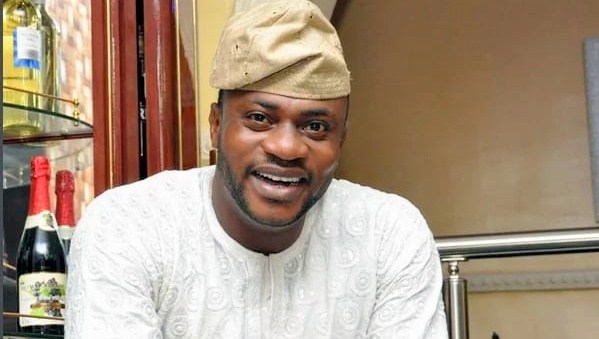
King of the Screen: Why Odunlade, Muyiwa, Femi Adebayo Remain Yoruba Movie Giants
The Yoruba movie industry has continued to produce legendary talents whose influence stretches beyond Nigeria to global audiences. Over the years, some actors have distinguished themselves through consistency, versatility, box office success, and cultural impact.
Among the numerous stars in Nollywood’s Yoruba sector, three actors have remained dominant figures whose names constantly resonate with fans and filmmakers alike — Odunlade Adekola, Muyiwa Ademola, and Femi Adebayo.

Odunlade Adekola: The Street King of Yoruba Cinema
Popularly regarded as one of the most entertaining actors in Nollywood, Odunlade Adekola has built a unique reputation through his energetic delivery, comic timing, emotional depth, and strong connection with grassroots audiences.
From comedy to action and emotional family dramas, the actor has consistently proven his versatility in blockbuster productions. His ability to interpret diverse roles effortlessly has made him a household name across Nigeria.
Industry observers believe his dominance on social media platforms, where his movie clips frequently go viral, has further strengthened his popularity among younger audiences.
Beyond acting, Odunlade has also contributed immensely to mentoring upcoming talents and expanding the commercial value of Yoruba films.
Muyiwa Ademola: The Master Storyteller

For many lovers of indigenous movies, Muyiwa Ademola remains one of the finest storytellers the Yoruba film industry has produced.
Widely respected for producing emotional and morally driven movies, the actor earned massive recognition through classic productions that focused on family values, culture, betrayal, perseverance, and societal lessons.
His calm delivery, deep scripts, and originality have kept him relevant despite changing trends in the entertainment industry.
Film critics often describe Muyiwa Ademola as one of the few actors whose productions combine entertainment with strong cultural education, making his movies timeless among older and younger viewers alike.
Femi Adebayo: The Modern-Day Box Office Force

Femi Adebayo has successfully combined traditional Yoruba storytelling with modern cinematic excellence, helping to project indigenous films to international audiences.
The actor, filmmaker, and producer has recorded major successes with high-budget productions that gained attention on streaming platforms and cinemas.
Known for his professionalism and attention to detail, Femi Adebayo has continued to push Yoruba movies beyond local boundaries while preserving cultural identity.
Entertainment analysts say his ability to blend culture, technology, and quality production has positioned him among the leading faces shaping the future of Yoruba cinema.
Growing Global Influence
The success of these actors reflects the increasing acceptance of indigenous Nigerian content globally. With streaming platforms creating wider access to local movies, Yoruba actors are now gaining international recognition and attracting new audiences.
Fans and stakeholders in the entertainment industry believe the contributions of Odunlade Adekola, Muyiwa Ademola, and Femi Adebayo have not only sustained Yoruba culture through film but have also elevated Nollywood’s global reputation.


- Africa: UNAIDS calls for renewed global solidarity as UN Secretary-General’s report warns that AIDS is not over and fragile gains are at risk June 4, 2026
- Eritrea: Vocational training provided to college students June 4, 2026
- World Bank Group Launches Ten-Year Strategy to Drive Jobs and Prosperity in Uganda June 4, 2026
- Prof Oramah’s appointments to the Royal African Society Patronage and Kenya’s National Infrastructure Fund herald continued recognition of his global leadership and pan-African impact June 4, 2026
- Africa Finance Corporation Raises Record US$2 Billion Syndicated Loan in Landmark Show of Confidence in Transformational Infrastructure Strategy June 4, 2026
- Libya Energy & Economic Summit (LEES) 2027 to Define Libya’s Next Phase of Energy Expansion in Tripoli June 4, 2026
- Uganda: President delivers State of the Nation Address today June 4, 2026
- United Nations High Commissioner for Refugees (UNHCR): Refugees in Eastern and Southern Africa remain in exile for nearly 16 years June 4, 2026
- 85% of Ministry of Food and Agriculture's (MoFA) 2026 Budget Released to Boost Food Production — Deputy Finance Minister June 4, 2026
- Deputy (Dep.) Finance Minister Courts Investors to Transform Ghana’s rice Economy June 4, 2026
- Africa: UNAIDS calls for renewed global solidarity as UN Secretary-General’s report warns that AIDS is not over and fragile gains are at risk June 4, 2026
- Eritrea: Vocational training provided to college students June 4, 2026
- World Bank Group Launches Ten-Year Strategy to Drive Jobs and Prosperity in Uganda June 4, 2026
- Prof Oramah’s appointments to the Royal African Society Patronage and Kenya’s National Infrastructure Fund herald continued recognition of his global leadership and pan-African impact June 4, 2026
- Africa Finance Corporation Raises Record US$2 Billion Syndicated Loan in Landmark Show of Confidence in Transformational Infrastructure Strategy June 4, 2026
- Libya Energy & Economic Summit (LEES) 2027 to Define Libya’s Next Phase of Energy Expansion in Tripoli June 4, 2026
- Uganda: President delivers State of the Nation Address today June 4, 2026
-

 news6 months ago
WHO REALLY OWNS MONIEPOINT? The $290 Million Deal That Sold Nigeria’s Top Fintech to Foreign Interests
-

 society1 month ago
SOCIAL MEDIA IS NOT A BATTLEFIELD COMMAND – WHY THE NIGERIAN ARMY’S ACTION AGAINST JUSTICE CRACK IS A NATIONAL SECURITY IMPERATIVE
-

 celebrity radar - gossips4 months ago
Dr. Chris Okafor Returns with Power and Fire of the Spirit -Mounts Grace Nation Altar with Fresh Anointing and Restoration Grace on February 1, 2026
-

 celebrity radar - gossips6 months ago
Prophet Kingsley Aitafo Releases 2026 Prophecy: ‘Nigeria Will Rise, but the World Must Prepare for Turbulence’