
news
‘Police lacks evidence against Saraki’ – Nigeria’s Attorney-General, Malami

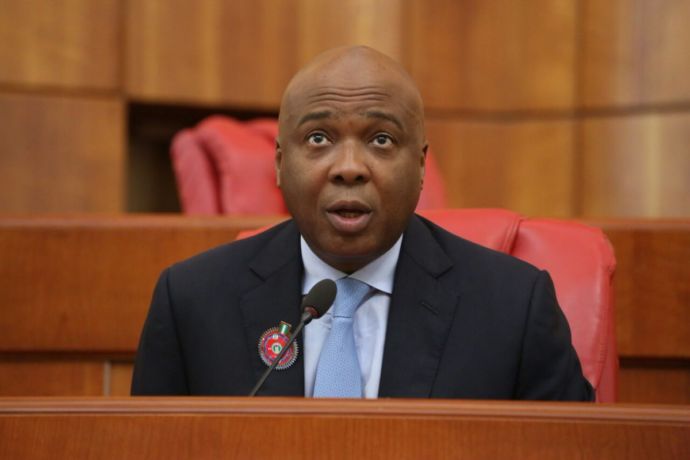

Nigeria’s Attorney-General, Abubakar Malami, has told the police that there was no evidence that linked Senate President Bukola Saraki and Kwara State Governor Abdulfattah Ahmed to the armed robbery attack that left 31 persons dead in Offa, Kwara State, in April, PREMIUM TIMES can now confirm.
Mr Malami advised in a June 22 letter to the Inspector-General of Police, Ibrahim Idris, that the police would need to ramp up their investigation and also painstakingly explore all critical areas before identifying the Senate President as a suspect in the carnage, much less filing charges against him.
Yusuf Abdulwahab, Mr Ahmed’s chief of staff who was amongst state officials arrested for allegedly conspiring with the prime suspects, was also cleared, with the prosecutor saying “no evidence is credible enough to sustain any charge based on any offence known to law against him.”
The attorney-general’s office said only six prime suspects should be charged to court for armed robbery and murder which could draw capital punishment upon conviction. Olalekan Alabi, a personal assistant to Mr Ahmed, was also recommended for trial, but only on lesser charges of illegal possession of arms.
Mr Saraki hinted at the existence of the letter on Monday night as part of a fierce response to Mr Idris’ latest summon to him. The Senate President said the invitation, which he was asked to honour by 8:00 a.m. today, was unnecessary because the Director of Public Prosecutions had already informed the police that there were no sufficient bases to keep dragging him into the armed robbery investigation.
“I am aware that following a request made by the Police on June 13, 2018 to the Director of Public Prosecution (DPP) of the Federation had written a legal advice dated June 22, 2018, in which he stated on page 5, paragraph (f) that “For the Senate President and the Kwara State Governor, this office is unable to establish from the evidence in the interim report a nexus between the alleged office and the suspects,” Mr Saraki said in the Monday night statement.
At least five banks were raided and substantial amount of cash carted away when armed robbers stormed the polytechnic town on April 5. The police initially said 17 people were killed in the attack, including nine police officers, but continued to revise the figure upwards, apparently as some of those receiving treatments for critical wounds were passing on.
PREMIUM TIMES obtained a copy of the letter on Tuesday, which was signed for Mr Malami by DPP Mohammed Umar and confirmed exactly what Mr Saraki disclosed.
Mr Umar examined the crime and the suspects the police lined up in their first information report submitted to the attorney-general’s office for prosecution, and came up with legal and technical suggestions about how to properly build a case that would not be discarded at a glance when the potential criminal trial gets underway.
“For the Senate President and the Kwara State Governor, this office is unable to establish from the evidence in the interim report a nexus between the alleged offence and the suspects,” the prosecutor said.
At least 12 suspects were arrested at multiple locations within the first week of the attack. Six weeks later, the police said they had taken two more suspects into custody, including the alleged mastermind Michael Adikwu, after a composite CCTV picture of the suspects was circulated by the police.
The police identified a picture one of the robbery suspects took with Mr Saraki at his daughter’s wedding last year as a key evidence that linked the Senate President to both the suspects and the crime.The police also said one of the vehicles used by the suspects had a dummy number plate with Mr Saraki’s name inscribed on it.
Also, some officials of Kwara State government were also arrested and one of the vehicles allegedly used in the robbery was found in the home of a commissioner. All the state officials denied allegations, and some were later released without charges.
Mr Saraki was initially invited for questioning in early June, but this approach was later abandoned by the police who asked him to turn in a written response to the allegations instead. The police had been largely mum about the matter, until the sudden invitation that was circulated.
In his statement Monday, Mr Saraki said he denied all allegations of involvement in the planning or execution of the robbery in his June 7 statement to the police. .
The Senate President said the police were a key actor in an elaborate, federal government-backed scheme aimed at railroading him into remaining at the ruling All Progressives Congress.
“This plot aimed at compelling me and my associates to stay in a party where members are criminalised without just cause, where injustice is perpetrated at the highest level and where there is no respect for constitutionalism is an exercise in futility and it will fail,” Mr Saraki said.
The scenes that played out throughout Tuesday largely confirmed Mr Saraki’s fears that the police were being used to executive a devious political gambit, PREMIUM TIMES found.
The Senate President had recently been freed of false and anticipatory assets declaration charges after a lengthy trial that lasted nearly three years..He insisted throughout his trial that the charges were politically-motivated and would not stand.
The first indication that the robbery investigation might have been politicised emerged when the Kwara State judiciary demanded that the suspects who were arrested and taken to Abuja over the case should be returned to the state. The institution said the state chief prosecutor had already concluded preliminary findings and had notified the court of a criminal proceeding into the case before the police abruptly seized the suspects.
While the suspects were being transferred to Abuja, Mr Saraki fired a preemptive short, alleging that the police wanted to use the suspects to implicate him. After spending days in police custody, the suspects allegedly confessed that Mr Saraki was their sponsor.
Mr Ahmed, whom the Senate President said tipped him off about the police ploy, also strongly denied all allegations he sponsored the suspects.
Authorities in Kwara contradicted the alleged confession, saying all the suspects wrote statements following their arrest in Ilorin and none of them mentioned Mr Saraki, much less incriminating him.
For the police to avoid a similar outcome with the latest allegations, they would need to work harder, the attorney-general’s office warned.
The three-pronged blanks that the police must sufficiently fill before bringing charges against Messrs Saraki and Ahmed include whether the planning and the execution of the robbery attack were carried out at their instance, knowledge or approval; whether the weapons used for the robbery attack were supplied by either of the top politicians; and any other areas that may assist in establishing that they were aiding and abetting criminal activities.
The prosecutor also said the police would need to conduct deeper investigation before any charges could be brought against Mr Abdulwahab.
Police spokesperson Jimoh Moshood did not return PREMIUM TIMES requests for comments between Tuesday and Wednesday. Mr Umar declined comments about whether the police have updated their findings since receiving his letter in June.
Fine-tuning Grey Areas
The attorney-general’s office used the larger parts of the letter to rubbish some of the facts submitted by the police and went on to offer tips on how to build a water-tight case against even the prime suspects.
The six suspects recommended for trial were: Ayoade Akinnibosun, Ibikunle Ogunleye, Adeola Ibrahim, Salawudeen Azeez, Niyi Ogundiran and Mr Adikwu. The prosecutor said they should be charged with the offences of criminal conspiracy, armed robbery and culpable homicide punishable with death.
The confession the suspects allegedly provided to the police could be used to build up evidence against them in court, the prosecutor said. He also suggested that items stolen by the robbers from the affected banks and other places would further aid in investigation, adding that ballistic tests and forensic examination should be conducted.
But in a damning rebuke of the manner with which the police handled the investigation, the prosecutor said the particulars of the crime submitted against the suspects were contradictory.
“The weapons used in the attack were different from those allegedly carted away from the police armory,” Mr Etsu said for instance.
In another case, “Michael Adikwu’s voluntary statement was not attached to the file and should not be so,” the prosecutor said.
Curiously, the prosecutor said the police should ensure that the suspects are available to face trial. This appears a subtle acknowledgement of the raging controversy around some of the suspects, especially Mr Adikwu who was alleged to have been killed in custody.
Mr Adikwu was reportedly dismissed as a police corporal following his arrest in 2012 on alleged criminal offences. He was charged to court in Kwara State for compromising police operations and releasing armed robbery suspects. He reportedly escaped from prisons in 2015 and joined armed robbery gangs.
It was not immediately clear whether he was found guilty and convicted by the court or whether he escaped from prison while still in remand as his trial was underway. PREMIUM TIMES could not immediately confirm whether he has a lawyer.
The police fiercely rejected claims that Mr Adikwu had been killed in custody to hush details that could expose potential anti-Saraki conspiracy within the police, but declined repeated demands to parade him once again for Nigerians to know he is still alive.




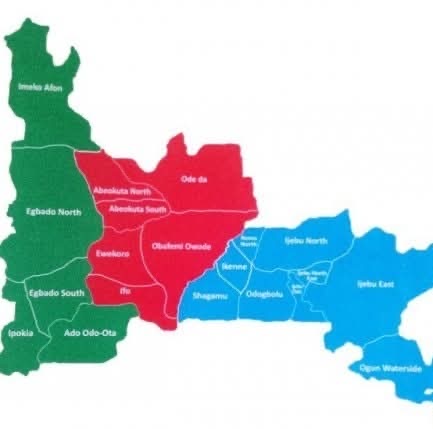
LAs the 2027 elections draw closer in Ogun State, discussions about who should represent Ogun Central in the Senate are gradually gaining momentum. Across Abeokuta South, Abeokuta North, Odeda, Obafemi-Owode, Ifo, and Ewekoro, the mood among the people appears largely the same. The people have made their preference clear. Not in anger or protest but in the quiet and wilful way that voters do when they still believe you can do better. The unifying thing in the people’s agitation is the call for credible, competent, and accessible representation.
This is not a new demand from the people of the district. The demand for a paradigm shift has been growing in recent times. Residents across the district are showing a preference for leaders who can demonstrate measurable capacity in healthcare, infrastructure, education, youth empowerment and constituency development. The calls for palpable development, responsive engagement, and effective legislative outcomes have become too obvious to dismiss.
We can all recall that in the last elections in 2023, the All Progressives Congress rallied behind Senator Shuaibu Salisu with considerable optimism. Party leaders and stakeholders presented his candidacy to the people as the strongest path to meaningful progress for the district. That mandate carried real expectations, and it is fair to say that, in several communities, those expectations have not been fully met.
Concerns have been raised across town hall meetings, community forums, and on social media about the speed of infrastructural projects, the reach of scholarship and empowerment programmes, and the overall visibility of senatorial intervention in major sectors. Whether one attributes these gaps to constraints of the Senate’s systems or individual legislative capacity, the perception of underdelivery is widespread enough to warrant serious attention from party leaders.
For now, this dissatisfaction has not translated into rejection of the APC. Instead, it has taken the form of an expectation to do better next time. Voters in Ogun Central are not asking for a fundamental change in the party structure or traditions. They are asking for the incorporation of wider grassroots inputs and candidates’ worthiness in the process.
This presents both a challenge and an opportunity. The challenge is that the culture of selecting candidates through elite consensus without genuine grassroots consultation is a risk that may worsen the growing disconnect between elected representatives and the communities they serve. Political observers across the nation have questioned this practice repeatedly, and Ogun Central may be feeling its effects most.
The opportunity lies in what the APC does with this feedback. The party’s senatorial selection is not a formality to be managed. It places a decisive moment for public trust at the feet of the party leaders. It is also an opportunity to reposition the district for future outcomes. That means looking beyond the financially powerful or politically connected aspirants and instead evaluating candidates on measurable criteria like competence, work experience, community engagement, and constituency presence.
There is also a broader shift worth noting. The era in which financial muscle alone could determine electoral outcomes is visibly passing. Many voters across southwestern Nigeria, especially our people, are increasingly attentive to antecedents, accountability, and impact. They want representatives who can speak with authority in the Red Chamber, secure federal projects, and translate legislative work into visible improvement in their daily lives.
None of these is to suggest that Senator Salisu’s tenure should be written off. A single term in the Senate, particularly within Nigeria’s complex federal system, does not allow for a complete verdict. But it is sufficient for the electorate to form impressions, and those impressions should shape how the APC approaches 2027.
The path forward does not require the party to bring down the house. It only requires discipline. The leaders of Ogun Central APC would do well to begin inclusive consultations with stakeholders, community leaders, youth groups, women’s organisations, and ordinary party members so that the candidate who eventually emerges carries not just the party’s endorsement but also the people’s confidence.
The 2027 senatorial election will be more than a contest. It will be a test of whether the APC in Ogun State can translate its dominance at the polls into dominance in governance. The people of Ogun Central are watching, and their expectations are high. The party’s consideration or dismissal of the concerns raised above will influence public confidence in Ogun State.
news
Alleged $1.5m Fraud: Court Dismisses Preliminary Objections, Bail Application of Intermediate Investment Holdings Boss, Ufoma Joseph Immanuel in Lagos
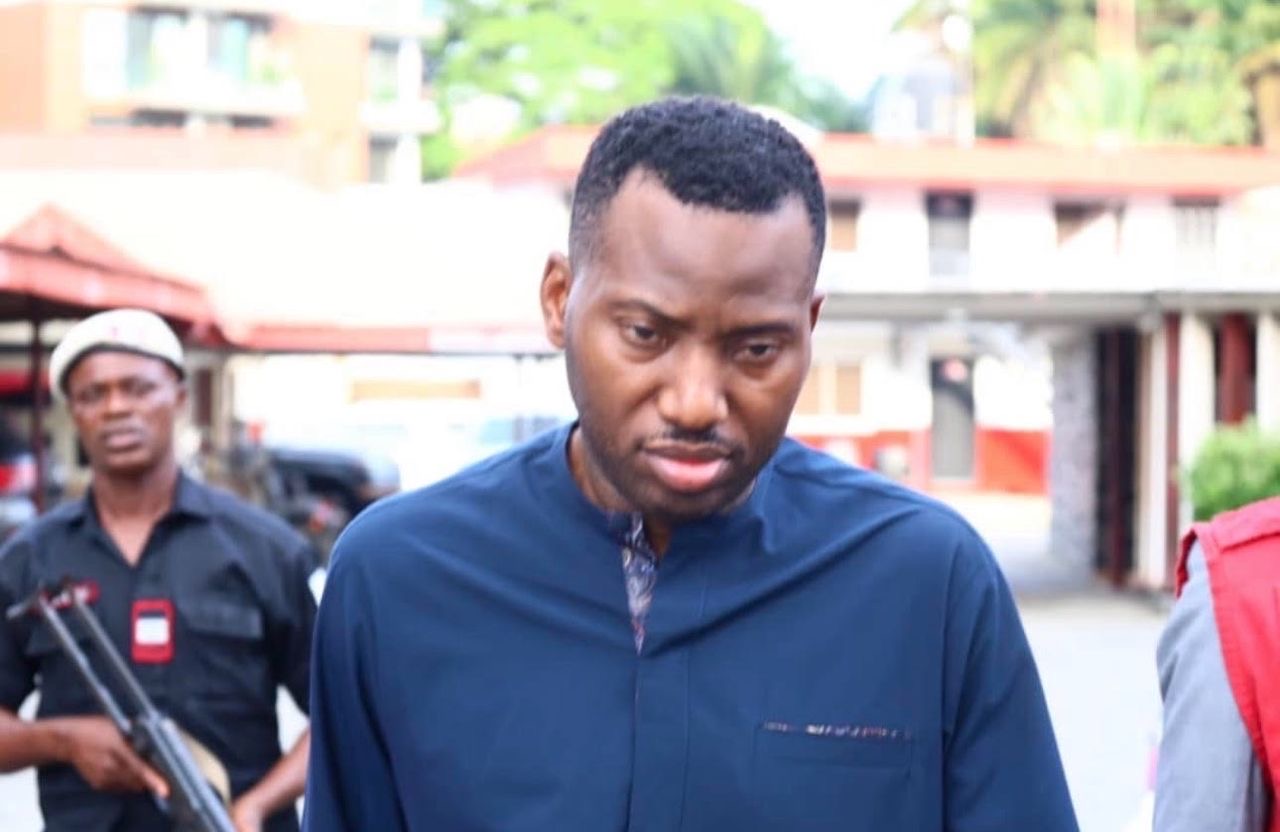
Justice Mojisola Dada of the Special Offences Court sitting in Ikeja, Lagos, on Thursday, May 7, 2026, dismissed the preliminary objections and bail application filed by the boss of Intermediate Investment Holdings Limited, Ufoma Joseph Immanuel, over an alleged $1.5 million fraud.
The Economic and Financial Crimes Commission, EFCC, on Wednesday, March 11, 2026, arraigned Immanuel, alongside his company, Intermediate Investment Holdings Ltd., on a two-count charge bordering on obtaining by false pretence and forgery to the tune of $1.5m.
Count one reads: “UFOMA JOSEPH IMMANUEL and INTERMEDIATE INVESTMENT HOLDINGS LIMITED between April 2022 and October 2023 in Lagos, within the jurisdiction of this Honourable Court, with intent to defraud, induced Adebisi Adebut of R28 Holdings Limited to deposit the total sum of S1, 500, 000.00 (One Million, five Hundred Thousand United States Dollars USD) as investment described as to wit: “Cash and or Capital Cost in Chappal Petroleum Development Company Limited; Business Development Cost in Intermediate Investment Holdings Limited: Capital and or Capital Call in Chappal Energies Mauritius Limited” on the understanding that R28 Holdings Limited will be; (a) reimbursed the investment amount (b) paid a Development Capital fee of $2 250,000.00. (Two Million, Two Hundred and Fifty Thousand Dollars) (c) 22.4% worth of shares in Intermediate Investment Holdings Limited which representation you knew to be false.”
Count two reads: “UFOMA JOSEPH IMMANUEL, sometime between April 2022 and April 2025 in Lagos, within the jurisdiction of this Honourable Court, with intent to defraud, forged a document to wit: TERM SHEET and purporting same to have been executed by Sherrif Oluwo and Olaniran Osotuyi in order to facilitate your obtaining money by inducement from Adebisi Adebutu of R28 Holdings Limited.”
The defendant pleaded “not guilty” to the charge preferred against him.
Following the defendant’s “not guilty” plea, the prosecution counsel, Babatunde Sonoiki, asked the court to fix a date for the commencement of trial and also prayed the court to remand the defendant in the custody of the International Criminal Police Organization, INTERPOL, pending the conclusion of its investigation.
Sonoiki also narrated how the defence counsel, Oluseun Awonuga, SAN, had physically assaulted his colleague, Emenike Mgbemele, at the sitting on March 2, 2026.
According to him, “My lord, the learned silk, physically assaulted my colleague on the staircase on his way to serve the defendant the charge as directed by the court.
“There is a video to that effect and we intend to tender it before the court.”
Though Awonuga did not respond to the allegation made against him by the prosecution counsel, he informed the court of a preliminary objection and a written address dated January 5, 2026, while urging the court to discountenance the counter-affidavit of the prosecution.
The prosecution, in a 21-paragraph counter-affidavit dated February 9, 2026, had urged the court to dismiss the notice of preliminary objections.
According to Awonuga, the Federal High Court, in a ruling, had ordered the EFCC not to arrest the defendant.
“EFCC has flouted the order by arresting the defendant and I hereby urge your lordship to discountenance their counter- affidavit,” he said.
Responding, the prosecution counsel, Babatunde Sonoiki, said that the ruling was part of the motion that had earlier been withdrawn by the defence and should not be before the court.
“ There is nowhere in the ruling that says the defendants cannot be arraigned in a court of competent jurisdiction.
“My lord, the ruling was delivered in a civil case; and according to the Supreme Court, a criminal case and civil case can go on at the same time.
“We urge the court to dismiss the application and order accelerated hearing in this case,” Sonoiki had said.
After listening to both parties, Justice Dada had, consequently, adjourned the case till May 7, 2026 ( today) for ruling.
Ruling on the application , Justice Dada held that: “The preliminary objection is baseless and the entire application is lacking in merit; and it is hereby dismissed.”
Also, Justice Dada, in her ruling on the bail application of the defendant, held that “On the basis of considering the antecedent of the defendant for not honouring the invitation of the applicant after he was granted administrative bail, I agree with the complainant that he is a flight risk; therefore, bail is refused.”
Justice Dada adjourned the case till June 24, 26, 29 and 30, 2026 for the commencement of trial.
By Solanke Ayomideji Taiwo
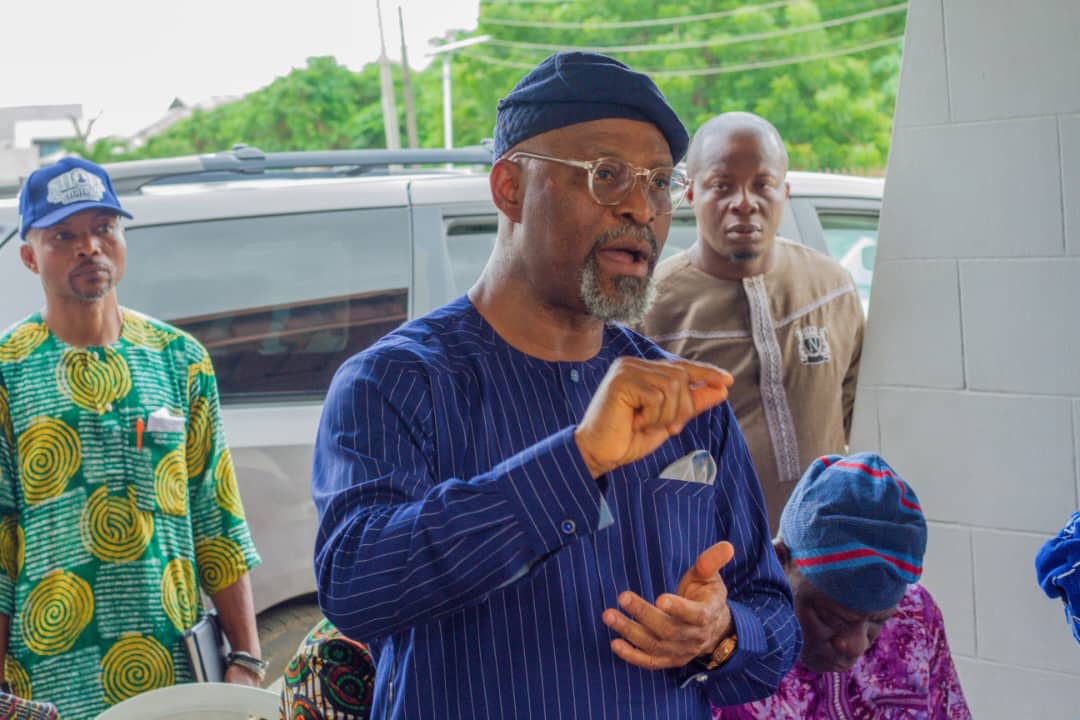
ABEOKUTA — A frontline aspirant for the Ogun Central Senatorial seat under the platform of the All Progressives Congress (APC), Emmanuel Adebola Sofela, popularly known as Shoffi, has dismissed widespread speculations that he has withdrawn from the race in favour of another aspirant .
Sofela described the reports making rounds in some political circles as “false, misleading and the handiwork of political detractors,” insisting that he remains fully committed to his ambition of representing Ogun Central Senatorial District at the National Assembly.
In a statement made available to journalists on Friday, the APC stalwart urged his supporters, political associates and loyalists across the six local government areas that make up Ogun Central to disregard the rumours and remain resolute in their support for his aspiration.
According to him, there has never been any agreement or arrangement for him to step down for any aspirant to emerge as a consensus candidate of the party.
“I want to categorically state that I have not stepped down for anyone in the Ogun Central Senatorial race. The rumours flying around are entirely false and should be ignored by all my supporters and members of the public,” he said.
Sofela expressed confidence in his chances of securing the APC ticket, stressing that his popularity, political experience and grassroots connection across the district place him in a strong position ahead of the party primaries.
The senatorial hopeful reiterated his determination to provide quality representation for the people of Abeokuta South, Abeokuta North, Odeda, Obafemi-Owode, Ifo and Ewekoro local government areas if elected into the Senate in 2027.
He noted that his aspiration is driven by a genuine desire to contribute meaningfully to the development of Ogun Central through effective legislation, empowerment programmes and people-oriented policies.
“My ambition is rooted in service to the people. I remain committed to the vision of giving Ogun Central a strong voice in the Senate and facilitating developmental initiatives that will positively impact our people,” Sofela added.
The APC chieftain further appealed to party members to remain united and avoid distractions capable of causing division within the party structure ahead of future political activities.
Political observers in the state believe the race for Ogun Central Senatorial seat is gradually gathering momentum as aspirants continue consultations and grassroots mobilization across the district ahead of the 2027 election cycle.


- African Energy Week (AEW) 2026 Renegade Intel Platform to Position Oil & Gas at the Center of the Global Artificial Intelligence (AI) Data Center Drive May 12, 2026
- 95th Periodic Meeting of Heads of Operations Arab Coordination Group: Advancing Progress and Enhancing Development Impact Virtual Meeting, 11–12 May 2026 May 12, 2026
- Africa Centres for Disease Control and Prevention (Africa CDC) Launches the African Strategic Advisory Group on Genomics May 12, 2026
- Updates on the 2026 Islamic Development Bank (IsDB) Prize for Impactful Achievement in Islamic Economics May 12, 2026
- Angola Oil & Gas (AOG) Pre-Conference to Set the Stage for $70B Investment Drive May 12, 2026
- DHL Express expands global portfolio with new Heavy Weight Express Service for shipments up to 3,000 kg May 12, 2026
- Artificial Intelligence (AI) Strengthens Angolan Oilfield Operations as Easy People Backs Angola Oil & Gas (AOG) 2026 as Sponsor May 12, 2026
- Verdant IMAP acts as financial advisor and arranger to Heath Goldfields on its USD 65 million debt financing and offtake May 12, 2026
- Amini, Foxconn and Bull Join Forces to Advance Sovereign Artificial Intelligence (AI) in the Global South May 12, 2026
- Africa Faces Growing Blind Spot in Financial Control as Information Technology (IT) Asset Visibility Gap Widens May 12, 2026
- African Energy Week (AEW) 2026 Renegade Intel Platform to Position Oil & Gas at the Center of the Global Artificial Intelligence (AI) Data Center Drive May 12, 2026
- 95th Periodic Meeting of Heads of Operations Arab Coordination Group: Advancing Progress and Enhancing Development Impact Virtual Meeting, 11–12 May 2026 May 12, 2026
- Africa Centres for Disease Control and Prevention (Africa CDC) Launches the African Strategic Advisory Group on Genomics May 12, 2026
- Updates on the 2026 Islamic Development Bank (IsDB) Prize for Impactful Achievement in Islamic Economics May 12, 2026
- Angola Oil & Gas (AOG) Pre-Conference to Set the Stage for $70B Investment Drive May 12, 2026
- DHL Express expands global portfolio with new Heavy Weight Express Service for shipments up to 3,000 kg May 12, 2026
- Artificial Intelligence (AI) Strengthens Angolan Oilfield Operations as Easy People Backs Angola Oil & Gas (AOG) 2026 as Sponsor May 12, 2026
-

 news5 months ago
WHO REALLY OWNS MONIEPOINT? The $290 Million Deal That Sold Nigeria’s Top Fintech to Foreign Interests
-

 society1 week ago
SOCIAL MEDIA IS NOT A BATTLEFIELD COMMAND – WHY THE NIGERIAN ARMY’S ACTION AGAINST JUSTICE CRACK IS A NATIONAL SECURITY IMPERATIVE
-

 celebrity radar - gossips4 months ago
Dr. Chris Okafor Returns with Power and Fire of the Spirit -Mounts Grace Nation Altar with Fresh Anointing and Restoration Grace on February 1, 2026
-

 celebrity radar - gossips5 months ago
Prophet Kingsley Aitafo Releases 2026 Prophecy: ‘Nigeria Will Rise, but the World Must Prepare for Turbulence’
You must be logged in to post a comment Login
You must log in to post a comment.