
society
Politics: The Art of Many Faces, One Story

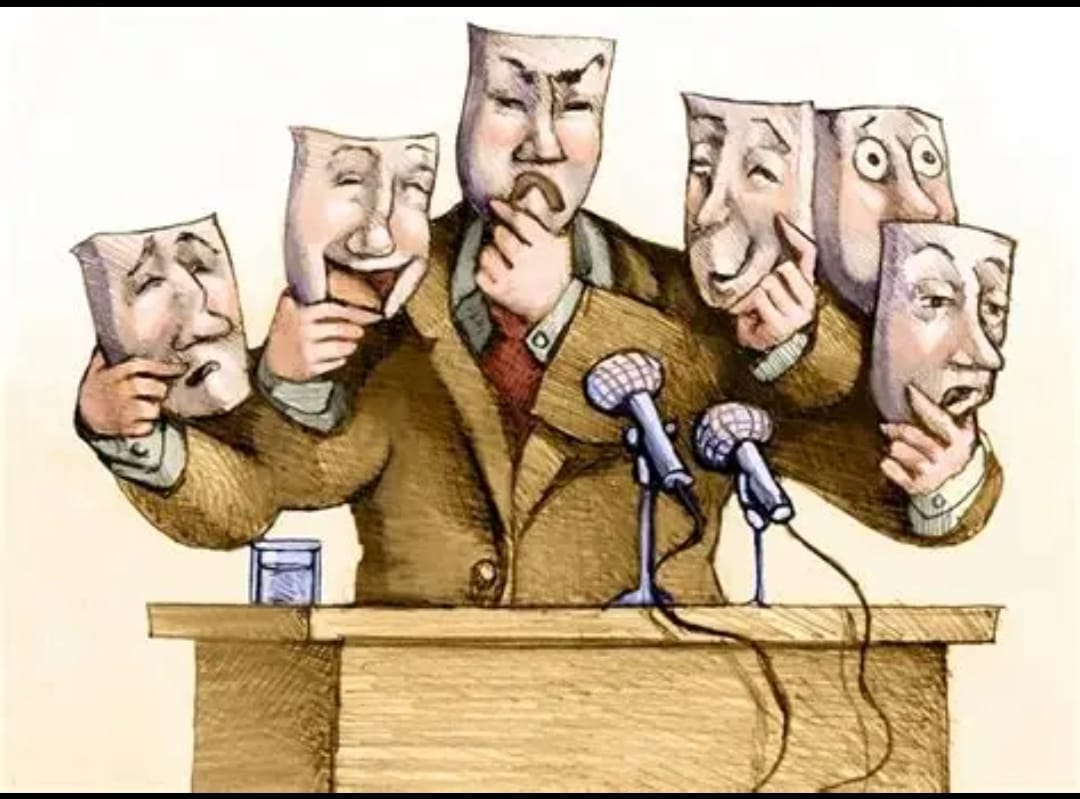
Politics: The Art of Many Faces, One Story.
By George Omagbemi Sylvester | Published by SaharaWeeklyNG.com
When Mr. Olamilekan, a close friend also known as Baba Elizabeth asked me, “What is politics and do you understand how it works?” my mind did not run to the classroom definitions from textbooks. Instead, I remembered a true life story about Jacob, a Russian Jew who emigrated to Israel. His experience captured politics in its purest form; ONE STORY, THREE AUDIENCES, THREE MEANINGS and ONE ULTIMATE ADVANTAGE.

At Moscow airport, Jacob was questioned about carrying a statue of Lenin. To the Russian customs officer, he described LENIN as a NATIONAL HERO who laid the FOUNDATION of SOCIALISM; an answer that FLATTERED SOVIET IDEOLOGY. At Tel Aviv airport, facing Israeli officers, Jacob described LENIN as the very man who PERSECUTED JEWS, forcing him to flee; a completely opposite narrative that RESONATED with ISRAEL’S POLITICAL HISTORY. Finally, in his new Tel Aviv home, Jacob revealed the true meaning: the STATUE was NOTHING but FIVE KILOGRAMS of SOLID GOLD, smuggled past CUSTOMS as POLITICAL THEATER.
That, in essence, is POLITICS. It is the art of telling the same story in different ways, to different audiences for different benefits. Politics is not always about TRUTH, but about PERCEPTION. It is not about CONSISTENCY, but about ADAPTABILITY. And as Machiavelli once wrote in The Prince (1532): “A wise ruler ought never to keep faith when by doing so it would be against his interests.”
This story is more than a CLEVER ANECDOTE. It is a mirror reflecting the contradictions, manipulations and strategies that define political life across the world.

Defining Politics Beyond the Textbook.
Aristotle called politics “the master science” because it determines how societies are organized, governed and directed. Max Weber, the German sociologist, famously defined politics as “the striving to share power or striving to influence the distribution of power, either among states or among groups within a state.”
In reality, politics is not only about institutions, constitutions or elections; it is about narratives. The power of storytelling, framing and persuasion often outweighs the power of policies or ideologies. A politician who can bend one story to fit three audiences, just as Jacob did, can control hearts, minds and eventually, resources.
The Power of Narratives in Politics.
From ancient Rome to modern-day democracies, the ability to tell stories that adapt to circumstances has defined great political figures. Julius Caesar was not just a general but also a master of propaganda, writing Commentarii de Bello Gallico not for military records but to sway Roman citizens and the Senate in his favor.

In the United States, Abraham Lincoln could speak of freedom and unity in the North while subtly assuring border states that emancipation was gradual; a political balancing act that kept the Union together. Barack Obama’s 2008 campaign slogan, “Yes, we can,” was not policy; it was narrative. It spoke differently to minorities, liberals, youth and even moderate conservatives, yet carried one story of hope.
Politics, therefore, is never just about ideology. It is about packaging ideology to suit different ears. ~ George O. Sylvester
The Nigerian Example: One Nation, Many Stories.
In Nigeria, politics is practiced as a theater of narratives, where politicians tell different stories depending on whether they are in Kano, Lagos, Port Harcourt or Enugu. A politician campaigning in the North may wrap his speeches with religious undertones, while in the South, the same politician may emphasize economic empowerment.

As Chinua Achebe warned in his classic The Trouble with Nigeria (1983): “The trouble with Nigeria is simply and squarely a failure of leadership.”
Leadership failure often comes not from incompetence alone, but from the dangerous art of tailoring narratives for political survival rather than national progress. Politicians, like Jacob, often present themselves as patriots in Abuja, tribal champions in their villages and reformers in foreign conferences; all while smuggling their “SOLID GOLD” in the form of power and wealth.
Politics as DECEPTION or DIPLOMACY?
One may ask: is politics merely deception? Not entirely. Politics is also Diplomacy, the art of managing conflicting interests without descending into chaos. Yet the line between DIPLOMACY and DECEPTION is thin.
Philosopher Hannah Arendt, in her book Truth and Politics (1967), wrote: “No one has ever doubted that truth and politics are on rather bad terms with each other.”
This tension is why politicians must shape-shift. To survive, they must speak the language their audience wants to hear, even if it contradicts what they said yesterday, survival does not always mean progress. A politics built on deception may buy short-term gains but risks long-term collapse.
The Global Stage: Politics Without Borders.
The Jacob story also reflects geopolitics. Nations, like individuals, tell different stories to different audiences.
Russia, for instance, presents itself domestically as a protector of traditional values, while abroad it claims to be resisting Western imperialism.
China promotes itself in Africa as a partner for development, but in the West, it markets itself as an emerging superpower advocating multipolarity.
The United States sells democracy abroad while tolerating political polarization at home.
The art is the same: one statue, many stories, hidden gold beneath.
When Politics Becomes Dangerous.
The danger of politics lies in its ability to manipulate people into believing what suits the political class, not society. In Jacob’s story, the customs officers in Moscow and Tel Aviv were both deceived. They allowed the statue to pass because each believed the narrative they wanted to hear.
This mirrors how citizens can be deceived. A politician promises jobs to the unemployed, subsidies to the poor, tax cuts to the rich and reforms to the international community. In reality, he carries only “GOLD” for himself.
George Orwell, in Politics and the English Language (1946), warned: “Political language is designed to make lies sound truthful and murder respectable and to give an appearance of solidity to pure wind.”
In Nigeria, promises of stable electricity, reduced corruption and food security have been recycled for decades. Yet power outages remain constant, corruption thrives and food insecurity deepens. The stories change, the gold remains hidden.
Politics and the Citizen: How Do We Respond?
If politics is storytelling, then citizens must become critical listeners. Blindly accepting political narratives without scrutiny is what allows politicians to smuggle their gold. Democracy thrives only when citizens interrogate leaders’ words with facts.
Nelson Mandela once said: “A critical, independent and investigative press is the lifeblood of any democracy.”
The media, civil society and the people must force leaders to reconcile their different stories into one consistent truth. Otherwise, politics will remain a circus where one man plays three characters while the audience applauds without realizing the trick.
Final Analysis: Politics as the Art of Many Faces.
Politics is not merely about governance, laws or elections. It is about narratives; crafted, bent and reshaped for survival and advantage. Like Jacob with his LENIN STATUE, politicians tell different stories to different audiences while concealing their real treasure.
The challenge of our time is to DEMAND AUTHENTICITY. Politics may always involve some degree of persuasion, but persuasion must not become deception. Nations collapse when politics becomes only about stories without substance. As Abraham Lincoln wisely declared: “You can fool all the people some of the time and some of the people all the time, but you cannot fool all the people all the time.”
Jacob fooled customs officers with his statue. Politicians may fool citizens with their narratives. In the end, truth has a way of emerging and when it does, history judges harshly.
Politics is, indeed, the art of many face; but citizens must insist that at least one of those faces is honest.




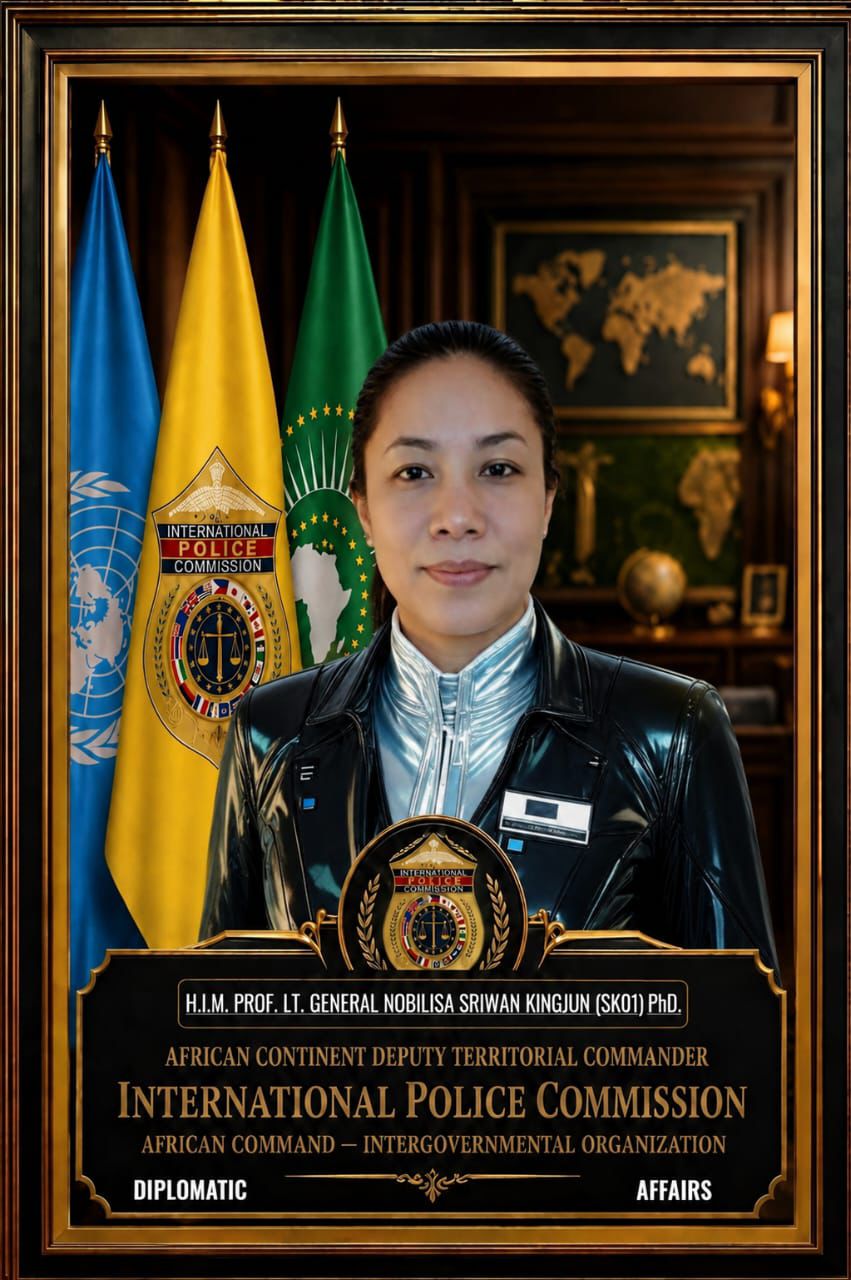
UKA Gears Up for Final ATC Exchangeability Test Run as June Preparations Begin.
May 30, 2026 – As the month of June gathers momentum, the *United Kingdom of Atlantis, UKA*, a sovereign nation has unveiled a series of vital guidelines and preparatory packages to ensure citizens and stakeholders run the *ATC Exchangeability* process effectively.
In an official update, the *President of Atlantic Crown Limited, Empress of Attica Empire UKA*, confirmed that the *Final Test Run of ATC Exchangeability* is scheduled for the month of June 2026. The exercise marks a key phase ahead of the *Official Exchangeability Window, set to run from July 2026 to February 2027*.
### Key Highlights from the Presidential Briefing
1. *Final Test Run – June 2026*
The test run is designed to validate systems, procedures, and user readiness before full activation. Citizens, partners, and designated participants are urged to follow all official advisories released by UKA authorities during this period.
2. *Official Exchangeability Period*
Following the successful completion of the June test run, the Official Exchangeability will commence in july 2026 and we are Expecting Full Exchange ability between July Ending, 2026 to February 2026.
UKA stated that detailed schedules, eligibility requirements, and step-by-step instructions will be communicated progressively through verified UKA channels.
3. *Benefiting Packages for June*
In line with UKA’s commitment to citizen empowerment, the month of June will feature “benefiting packages” aimed at education, preparation, and seamless onboarding. These packages are intended to equip the people of UKA with the knowledge and tools needed for effective participation.
4. *Commitment to Transparency*
Addressing the nation, the Empress of Attica Empire UKA emphasized:
_“Final Test Run of ATC Comes up in The Month of June, As We Prepare For The Official Exchangeability, Between July 2026 To Feb 2027. All Information Will Be Communicated.”_
UKA reaffirmed that only information released through official UKA platforms should be regarded as authoritative.
The United Kingdom of Atlantis is encouraging all citizens, representatives, and interested parties to remain alert to official communications, attend designated orientation sessions, and avoid unofficial sources. UKA’s dedication to order, clarity, and the collective benefit of its people as the nation moves into this significant phase.
For updates, advisories, and participation guidelines, citizens are advised to monitor official UKA communication channels.
United Kingdom of Atlantis, UKA, is a sovereign nation, committed to national development, citizen welfare, and structured economic participation through initiatives such as ATC Exchangeability.
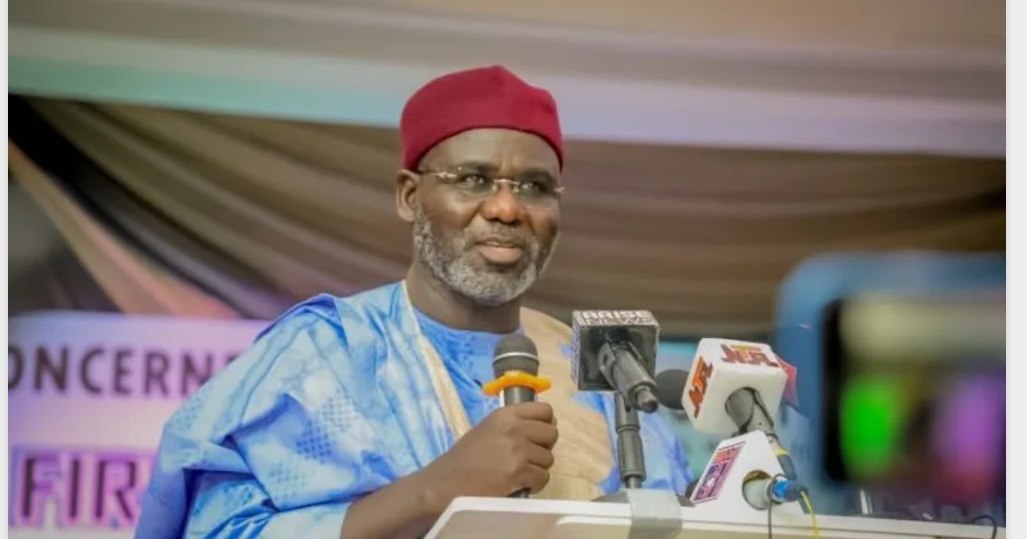
Three Years On, General Buratai Hails Tinubu’s Economic, Security Achievements
Former Chief of Army Staff, Lt. Gen. Tukur Buratai (retd.), has commended President Bola Ahmed Tinubu for what he described as bold economic reforms and improved security efforts as the President marks three years in office.
In a goodwill message on Thursday to commemorate Tinubu’s third anniversary as President and Commander-in-Chief of the Armed Forces, Buratai said the administration had taken courageous decisions that would leave a lasting impact on Nigeria’s development.

According to him, President Tinubu broke a long-standing cycle that had hindered national growth by removing fuel subsidy and implementing foreign exchange reforms aimed at stabilising the naira and strengthening the economy.
He noted that the reforms were beginning to yield positive results, citing the global acceptance of Nigerian debit cards, the gradual revival of local refineries, access to student loans, and ongoing road and infrastructure projects across the country.
“The FCT Administration has also recorded remarkable progress, completing major road projects that remained unfinished for over 16 years,” Buratai stated.
The former army chief also praised the administration’s security efforts, saying renewed military offensives against insurgents, terrorists and bandits had led to notable successes across various parts of the country.
He specifically lauded recent joint operations involving Nigerian and United States forces against Boko Haram and ISWAP in the North-East, as well as intensified counter-banditry operations in the North-West.
“We have seen notorious ISWAP commanders being neutralised. I congratulate the Commander-in-Chief, the Minister of Defence, the Chief of Defence Staff, the Service Chiefs, the Inspector-General of Police and heads of intelligence agencies for their efforts,” he said.
Buratai, however, acknowledged that challenges remained, stressing the need for more aggressive military operations and intelligence-driven strategies in the coming year.
While urging Nigerians to remain hopeful, he said celebrating the President’s achievements did not amount to ignoring the difficulties facing the nation.
“Because you truly care, you have shown the courage to trade short-term comfort for long-term hope. Nigerians need your reassurances, and that is why we remain optimistic and full of confidence,” he added.
The retired military officer reaffirmed his support for the Tinubu administration and expressed confidence that the foundation being laid by the government would deliver a brighter future for the country.
He also prayed for God’s guidance, wisdom, strength and good health for the President as he continues to lead Nigeria.
NUT Raises Alarm Over Continued Captivity of Abducted Oyo Pupils, Teachers
The Nigeria Union of Teachers has expressed deep concern over the continued captivity of pupils and teachers abducted during an attack on schools in the Ahoro-Esinle and Yawota communities in Oriire Local Government Area of Oyo State.
In a statement issued on Saturday, the Oyo State wing of the union described the situation as increasingly distressing, particularly following the emergence of a video allegedly released by the abductors showing the victims pleading for their freedom.
The union said the footage had heightened fears over the welfare of the abducted pupils and teachers, describing their ordeal as heartbreaking and unacceptable.

According to the NUT, no child or teacher deserves to be subjected to such traumatic experiences, adding that the prolonged captivity of the victims has continued to inflict psychological pain on their families, colleagues and the wider education community.
The union called on the Federal Government, Oyo State Government and relevant security agencies to intensify efforts towards securing the immediate and safe release of the victims.
“This is not a moment for hesitation. It is a moment for coordinated, intelligence-driven efforts to ensure the immediate and safe release of all abducted pupils and teachers,” the statement read.
While acknowledging ongoing interventions by security agencies and government authorities, the union stressed that time was of the essence, warning that every additional day in captivity deepens the trauma suffered by the victims.
The NUT urged security operatives to strengthen surveillance, improve community intelligence gathering and deploy all necessary operational and diplomatic measures to facilitate the rescue of the abductees.
It also appealed to traditional rulers, community leaders and residents to support rescue efforts by providing credible information that could assist security agencies.
“The safety of our children and teachers must remain a collective priority,” the union stated.
Reaffirming its support for the families of the victims, the NUT pledged continued solidarity and prayers while advocating safer learning environments across the country.
The statement was jointly signed by the Chairman of the Oyo State NUT, Comrade Hassan Ajibola Fatai, and the Secretary, Comrade Salami Olukayode.


- Afreximbank Deepens Commitment to Economic Progress in The Bahamas June 1, 2026
- African Electric Vehicle (EV) platform Spiro raises $215M in equity to scale electric mobility and energy infrastructure across Africa June 1, 2026
- Africa Centres for Disease Control and Prevention (Africa CDC) Statement on Attacks Against Health Facilities During the Bundibugyo Virus Disease Response in the Democratic Republic of the Congo June 1, 2026
- Putting consumers at the centre of Africa’s dairy transformation June 1, 2026
- International Rescue Committee (IRC) warns Democratic Republic of the Congo (DRC) Ebola outbreak likely far larger than official figures suggest June 1, 2026
- South Africa: Portfolio Committee on Health Marks National Cancer Survivor Day and Reaffirms Importance of Early Detection and Public Awareness June 1, 2026
- Rwanda’s RSSB Tigers Crowned 2026 Basketball Africa League Champions June 1, 2026
- Uganda: Appointments Committee Begins Vetting of Ministerial Nominees June 1, 2026
- Sudan braces for worsening child malnutrition as pre-harvest season starts June 1, 2026
- Etu Energias Strengthens Angolan Footprint, Returns to Angola Oil & Gas (AOG) 2026 as Champion Sponsor June 1, 2026
- Afreximbank Deepens Commitment to Economic Progress in The Bahamas June 1, 2026
- African Electric Vehicle (EV) platform Spiro raises $215M in equity to scale electric mobility and energy infrastructure across Africa June 1, 2026
- Africa Centres for Disease Control and Prevention (Africa CDC) Statement on Attacks Against Health Facilities During the Bundibugyo Virus Disease Response in the Democratic Republic of the Congo June 1, 2026
- Putting consumers at the centre of Africa’s dairy transformation June 1, 2026
- International Rescue Committee (IRC) warns Democratic Republic of the Congo (DRC) Ebola outbreak likely far larger than official figures suggest June 1, 2026
- South Africa: Portfolio Committee on Health Marks National Cancer Survivor Day and Reaffirms Importance of Early Detection and Public Awareness June 1, 2026
- Rwanda’s RSSB Tigers Crowned 2026 Basketball Africa League Champions June 1, 2026
-

 news6 months ago
WHO REALLY OWNS MONIEPOINT? The $290 Million Deal That Sold Nigeria’s Top Fintech to Foreign Interests
-

 society4 weeks ago
SOCIAL MEDIA IS NOT A BATTLEFIELD COMMAND – WHY THE NIGERIAN ARMY’S ACTION AGAINST JUSTICE CRACK IS A NATIONAL SECURITY IMPERATIVE
-

 celebrity radar - gossips4 months ago
Dr. Chris Okafor Returns with Power and Fire of the Spirit -Mounts Grace Nation Altar with Fresh Anointing and Restoration Grace on February 1, 2026
-

 celebrity radar - gossips6 months ago
Prophet Kingsley Aitafo Releases 2026 Prophecy: ‘Nigeria Will Rise, but the World Must Prepare for Turbulence’