
society
Presidential fleet: 200 families displaced as NAF demolishes houses

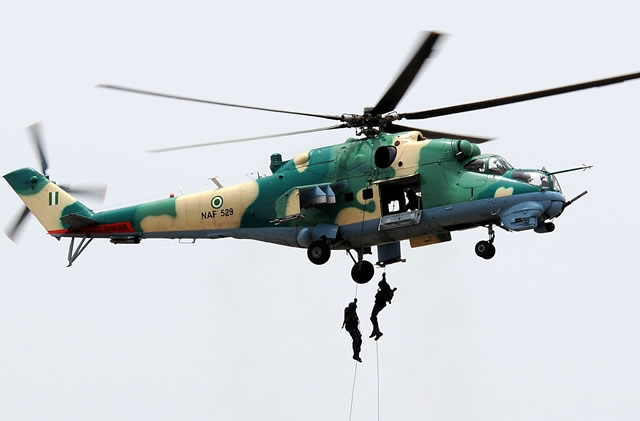
Presidential fleet: 200 families displaced as NAF demolishes houses
Landowners of Nuwalege, Abuja ejected by the Federal Government, have called on the government for compensation.
More than 200 families who resided in Nuwalege, a rural community along the Nnamdi Azikiwe International Airport Road in Abuja, have been reportedly rendered homeless, following the demolition of their homes to accommodate an extension of the Presidential Air Fleet.
The demolition was carried out by the Federal Capital Development Authority, at the request of the Nigerian Air Force, The PUNCH learnt.
Subsequently, the displaced residents were forced to seek shelter in nearby communities, including Zamani, Sauka, Giri, Iddo, Gwagwalada, and others.
Details of the PAF project and its funding were not available but there are indications the project would commence soon as NAF personnel had been mobilised to the project site ahead of construction activities.
However, the affected families said they had not received compensation from the Nyesom Wike-led Federal Capital Territory Administration, the Nigeria Air Force and the Ministry of Aviation.
On Wednesday, one of our correspondents, who visited Nuwalege, previously inhabited by Abuja natives and other Nigerians, was prevented from accessing the community by heavily armed Air Force personnel guarding the site.
Last December, during a citizens’ engagement with the community, the Director of the FCT Department of Development Control, Muktar Galadima, said the Air Force had written to the FCT minister giving notice of the plan to relocate the residents, noting, however, that the status of compensation for the people was uncertain.
“We will discuss with the Air Force because obviously, discussions behind the scenes indicate that some forms of compensation were paid. We are going to conduct further investigation by engaging the FCT Department of Resettlement and Compensation as well as the Nigerian Air Force and find out if compensation has been paid, to whom, and when,” Galadima said.
Addressing journalists after the demolition in January, the director claimed the residents were given a two-month notice before the exercise, adding that his office had informed the Air Force of the administration’s policy on relocating indigenous communities.
“We informed the residents residing on the Nigeria Air Force land about the impending action and granted them a two-month window to pack their belongings.
“When the Air Force approached us, we told them about the FCTA policy on relocation and resettlement of indigenous communities. However, other non-indigenes are to be moved out of the location so that the Air Force can take over their land.
“The structures belonging to indigenes were left out because statutorily they have to be relocated and compensated, that’s why we are not touching their properties,” he stated.
Displaced residents
However, residents of the community told The PUNCH on Thursday that they were not notified of the demolition beforehand or paid any form of compensation, adding that no house was spared in the community during the demolition exercise.
An artisan, Wisdom James, disclosed that the residents were earlier informed the demolition would take place in another two years. However, the authorities came not long after to clear the community, he claimed.
“I live in Zamani now, but I’m from Nuwalege. They demolished our house in January. There was no information (prior to the demolition). The place they marked for demolition is not the place they demolished. They didn’t tell us when they would be coming.
“At a time, they told us they had shifted the demolition until the next two years. But in two days, they were there with bulldozers and started work. They didn’t pay us anything,” she told The PUNCH.
Speaking on the legal action by the residents, James said they each contributed between N2,500 and N10,000 to seek justice, adding that nothing had come of it.
“We made some contributions to take the issue to court. I paid N2,500. We were meeting in Sauka. After meeting about six times, there was nothing like that again. The money we gathered, we don’t know where they took it to, and we weren’t paid back.”
An indigene of the community, Obadiah Tanko, said the natives had lived there long before the Air Force base was built next to it, pointing out that some of their ancestors were buried in the site that now belonged to the NAF.
“I’ve been living in Nuwalege for 15 years, though I am an indigene. When they (FCDA) first came, they used beacons to mark some places. That was years ago. So, we took the issue to court, because before the (Air Force) base was built, we used to farm there. But they shifted us towards the river. Some of our grandfathers were buried where the base is now.
“They did an initial demolition in 2007. When they came, they told us only part of the place would be demolished. Before we knew it, we were told it would be the whole thing, although they didn’t demolish mine because I’m an indigene. Some people who are Bassa and Gbagyi are still there. None of the victims were told they would be paid anything, and none of them has received any payment,” he added.
Another former resident of the community, Folashade Olatunde, recounted her ordeal, stating that she slept in a classroom for two weeks after her home was demolished.
She eventually found an apartment in the Zamani community.
The mother of five lamented that her family was no longer staying together since the forceful eviction and demolition, adding that the FCDA destroyed more than 200 houses in Nuwalege.
Olatunde stated, “We left the community on January 15, 2024. They didn’t pay us any compensation, nothing at all. They just pursued everybody. I found money to rent a one-room apartment in Zamani after two weeks of sleeping in a primary school in the harsh cold.
“My family and I are separated, and I had to take some of our property back home. I have been staying here since then. I stay here with my husband and my two youngest children. My oldest son and the one immediately after him sleep in a nearby church, while my daughter is in Ekiti with my family. They scattered my family.
“The houses demolished are more than 200, every house was demolished. None was left standing. The leader of those of us who are Yoruba also lives down the road here in a self-contained apartment.
“We paid N20,000 and at another time N15,000 for a petition against the way the houses were demolished. They gave us a receipt with the promise to pay some money into our accounts and since then, nothing has happened.”
Another victim, Mrs Elizabeth Olushola, said her home and a block of four classrooms she built were demolished in the exercise, also stating that she had not been compensated by the government.
“I lived in Nuwalege for seven years. They did not tell us that they were going to demolish our community. But we saw them in 2023 when the FCDA came to mark some houses there.
“They said that was the only part they would demolish. Eventually, we saw that they had gone beyond where they marked, and they started demolishing everywhere and people had to start rushing out.
“There was no information, we just saw their bulldozers on January 15, 2024, and they started demolishing. I had a school there, a block of four classrooms; I also had a shop and everything was cleared off. We opened the school on January 9 and by January 15, they had demolished it. We had our own house, a two-bedroom flat, and a shop. They were both demolished too,” Olushola stated.
Asked if she was paid compensation, she added, “They didn’t give us any money, nobody even approached us. They didn’t resettle us here (new residence) either, we moved here and we rented an apartment here.


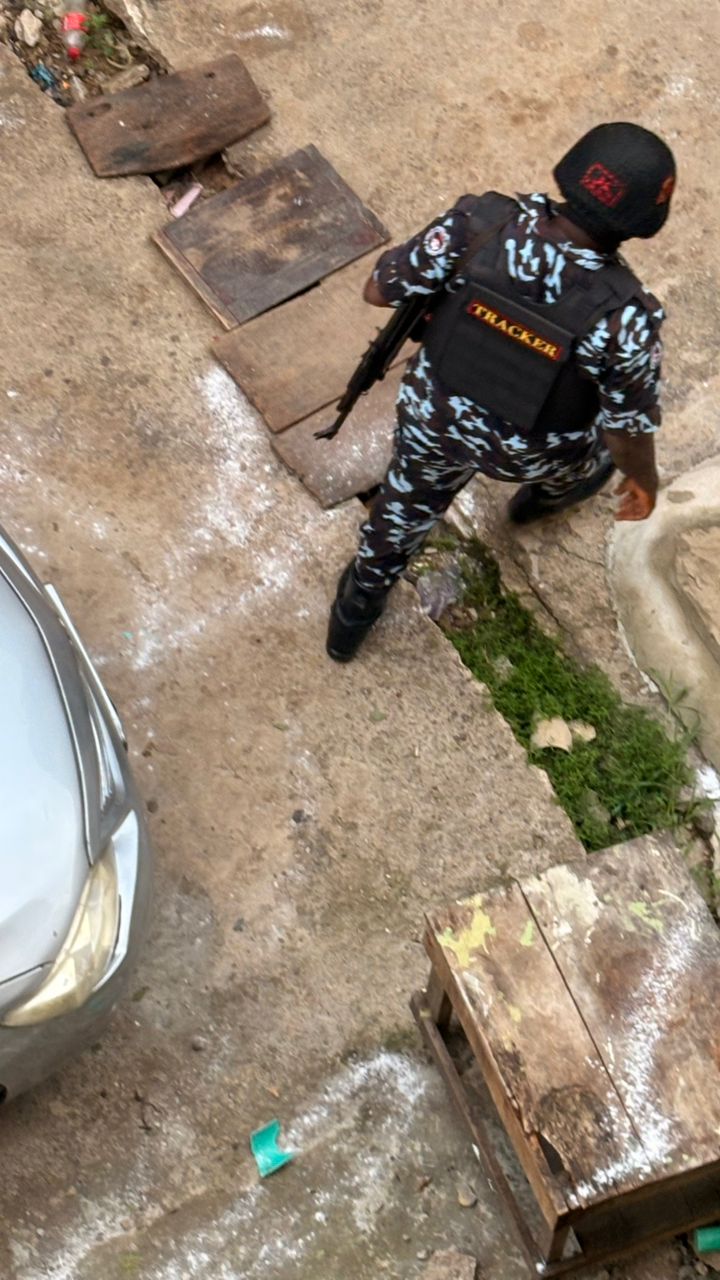
Police Officers Detained as Family Property Dispute Sparks Demolition Controversy in Lagos
By Ifeoma Ikem
A property dispute within the Omotayo-Ojo family has taken a dramatic turn following a controversial demolition exercise at a residential building in Ikosi-Ketu, Lagos State, which reportedly left tenants displaced and led to the detention of some police officers allegedly involved in the operation.

The property, located at 23B Loveall Street, Ikosi-Ketu, has been the subject of a prolonged ownership tussle since the death of its owner, Chief Oludola Omotayo Ojo, the Babaalaje of Imesi-Ile, Osun State, in 2019.
Residents said tension erupted when a group of individuals, accompanied by security operatives, stormed the premises and commenced demolition activities.
According to eyewitnesses, portions of the building were pulled down while tenants rushed to salvage their belongings from affected apartments.
The residents alleged that windows, doors and roofing sheets were damaged during the exercise, exposing parts of the building to the elements and causing significant losses to occupants.
At the centre of the dispute is Mrs Mojisola Omotayo Ojo Alolagbe, who claimed that the property was allocated to her by her late father during his lifetime as a source of financial support.
She alleged that some family members had persistently challenged her ownership claim despite ongoing legal proceedings relating to the administration of the deceased’s estate.
Alolagbe further claimed that the latest incident was part of a series of attempts to wrest control of the property, citing previous cases of alleged vandalism and partial demolition in November 2025, January 2026 and February 2026.
The situation escalated further when reports emerged that police officers allegedly involved in the demolition were later apprehended and conveyed in a Black Maria vehicle over questions surrounding the legality of their participation in the operation.
Sources familiar with the matter said those behind the demolition had initially claimed to be acting on approval from the Lagos State Ministry of Lands. However, the authenticity and extent of such approval could not be independently verified as of the time of filing this report.
The development has generated concern among residents and community members, who questioned the involvement of security personnel in what they described as a civil matter.
Some tenants, who said they had recently renewed their tenancy agreements, lamented the destruction of their property and appealed to the authorities for protection and possible compensation.

They also called for a thorough investigation into the circumstances surrounding the demolition, insisting that the rights of all parties involved should be protected.
Stakeholders have urged the Lagos State Government, security agencies and the judiciary to intervene and ensure that the dispute is resolved through lawful means to prevent further escalation.
The controversy has continued to draw public attention, raising concerns over property rights, estate administration and the role of law enforcement agencies in civil disputes.

UKA Gears Up for Final ATC Exchangeability Test Run as June Preparations Begin.
May 30, 2026 – As the month of June gathers momentum, the *United Kingdom of Atlantis, UKA*, a sovereign nation has unveiled a series of vital guidelines and preparatory packages to ensure citizens and stakeholders run the *ATC Exchangeability* process effectively.
In an official update, the *President of Atlantic Crown Limited, Empress of Attica Empire UKA*, confirmed that the *Final Test Run of ATC Exchangeability* is scheduled for the month of June 2026. The exercise marks a key phase ahead of the *Official Exchangeability Window, set to run from July 2026 to February 2027*.
### Key Highlights from the Presidential Briefing
1. *Final Test Run – June 2026*
The test run is designed to validate systems, procedures, and user readiness before full activation. Citizens, partners, and designated participants are urged to follow all official advisories released by UKA authorities during this period.
2. *Official Exchangeability Period*
Following the successful completion of the June test run, the Official Exchangeability will commence in july 2026 and we are Expecting Full Exchange ability between July Ending, 2026 to February 2026.
UKA stated that detailed schedules, eligibility requirements, and step-by-step instructions will be communicated progressively through verified UKA channels.
3. *Benefiting Packages for June*
In line with UKA’s commitment to citizen empowerment, the month of June will feature “benefiting packages” aimed at education, preparation, and seamless onboarding. These packages are intended to equip the people of UKA with the knowledge and tools needed for effective participation.
4. *Commitment to Transparency*
Addressing the nation, the Empress of Attica Empire UKA emphasized:
_“Final Test Run of ATC Comes up in The Month of June, As We Prepare For The Official Exchangeability, Between July 2026 To Feb 2027. All Information Will Be Communicated.”_
UKA reaffirmed that only information released through official UKA platforms should be regarded as authoritative.
The United Kingdom of Atlantis is encouraging all citizens, representatives, and interested parties to remain alert to official communications, attend designated orientation sessions, and avoid unofficial sources. UKA’s dedication to order, clarity, and the collective benefit of its people as the nation moves into this significant phase.
For updates, advisories, and participation guidelines, citizens are advised to monitor official UKA communication channels.
United Kingdom of Atlantis, UKA, is a sovereign nation, committed to national development, citizen welfare, and structured economic participation through initiatives such as ATC Exchangeability.
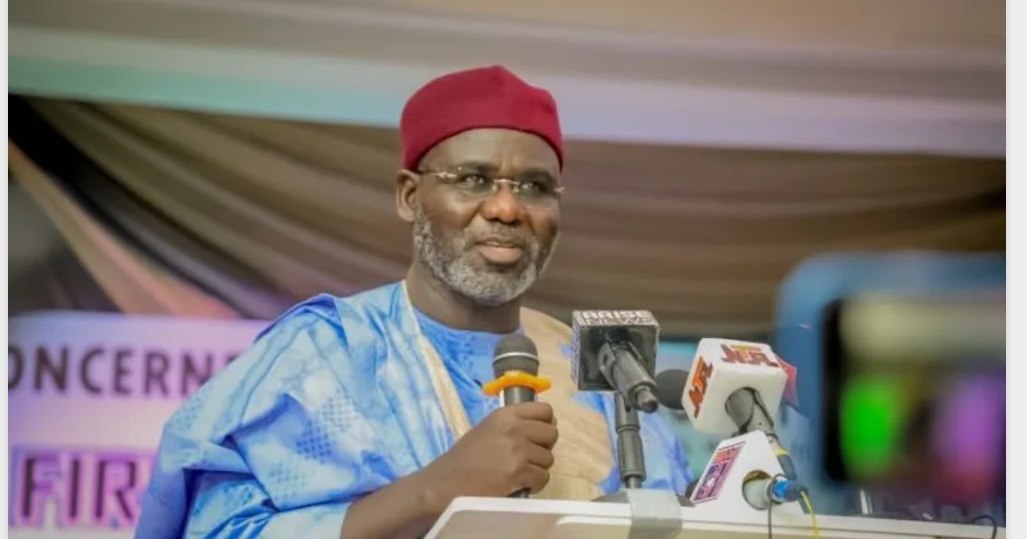
Three Years On, General Buratai Hails Tinubu’s Economic, Security Achievements
Former Chief of Army Staff, Lt. Gen. Tukur Buratai (retd.), has commended President Bola Ahmed Tinubu for what he described as bold economic reforms and improved security efforts as the President marks three years in office.
In a goodwill message on Thursday to commemorate Tinubu’s third anniversary as President and Commander-in-Chief of the Armed Forces, Buratai said the administration had taken courageous decisions that would leave a lasting impact on Nigeria’s development.

According to him, President Tinubu broke a long-standing cycle that had hindered national growth by removing fuel subsidy and implementing foreign exchange reforms aimed at stabilising the naira and strengthening the economy.
He noted that the reforms were beginning to yield positive results, citing the global acceptance of Nigerian debit cards, the gradual revival of local refineries, access to student loans, and ongoing road and infrastructure projects across the country.
“The FCT Administration has also recorded remarkable progress, completing major road projects that remained unfinished for over 16 years,” Buratai stated.
The former army chief also praised the administration’s security efforts, saying renewed military offensives against insurgents, terrorists and bandits had led to notable successes across various parts of the country.
He specifically lauded recent joint operations involving Nigerian and United States forces against Boko Haram and ISWAP in the North-East, as well as intensified counter-banditry operations in the North-West.
“We have seen notorious ISWAP commanders being neutralised. I congratulate the Commander-in-Chief, the Minister of Defence, the Chief of Defence Staff, the Service Chiefs, the Inspector-General of Police and heads of intelligence agencies for their efforts,” he said.
Buratai, however, acknowledged that challenges remained, stressing the need for more aggressive military operations and intelligence-driven strategies in the coming year.
While urging Nigerians to remain hopeful, he said celebrating the President’s achievements did not amount to ignoring the difficulties facing the nation.
“Because you truly care, you have shown the courage to trade short-term comfort for long-term hope. Nigerians need your reassurances, and that is why we remain optimistic and full of confidence,” he added.
The retired military officer reaffirmed his support for the Tinubu administration and expressed confidence that the foundation being laid by the government would deliver a brighter future for the country.
He also prayed for God’s guidance, wisdom, strength and good health for the President as he continues to lead Nigeria.


- Junior Achievement (JA) Africa Delivers 1.6 Million Learning Experiences in a Single Year, Marking Twelve-Fold Growth in Five Years June 5, 2026
- United Nations Mission in South Sudan (UNMISS) helps plant hope among youth on World Environment Day June 5, 2026
- Afreximbank Deepens Engagement with Jamaica to Drive Trade, Investment and Industrialisation June 5, 2026
- World Health Organization (WHO) supports reactive yellow fever vaccination campaign and Bundibugyo virus disease (BVD) preparedness in Liberia June 5, 2026
- Uganda: Museveni pushes for wealth creation through development programmes June 5, 2026
- Africa: UNAIDS calls for renewed global solidarity as UN Secretary-General’s report warns that AIDS is not over and fragile gains are at risk June 4, 2026
- Eritrea: Vocational training provided to college students June 4, 2026
- World Bank Group Launches Ten-Year Strategy to Drive Jobs and Prosperity in Uganda June 4, 2026
- Prof Oramah’s appointments to the Royal African Society Patronage and Kenya’s National Infrastructure Fund herald continued recognition of his global leadership and pan-African impact June 4, 2026
- Africa Finance Corporation Raises Record US$2 Billion Syndicated Loan in Landmark Show of Confidence in Transformational Infrastructure Strategy June 4, 2026
- Junior Achievement (JA) Africa Delivers 1.6 Million Learning Experiences in a Single Year, Marking Twelve-Fold Growth in Five Years June 5, 2026
- United Nations Mission in South Sudan (UNMISS) helps plant hope among youth on World Environment Day June 5, 2026
- Afreximbank Deepens Engagement with Jamaica to Drive Trade, Investment and Industrialisation June 5, 2026
- World Health Organization (WHO) supports reactive yellow fever vaccination campaign and Bundibugyo virus disease (BVD) preparedness in Liberia June 5, 2026
- Uganda: Museveni pushes for wealth creation through development programmes June 5, 2026
- Africa: UNAIDS calls for renewed global solidarity as UN Secretary-General’s report warns that AIDS is not over and fragile gains are at risk June 4, 2026
- Eritrea: Vocational training provided to college students June 4, 2026
-

 news6 months ago
WHO REALLY OWNS MONIEPOINT? The $290 Million Deal That Sold Nigeria’s Top Fintech to Foreign Interests
-

 society1 month ago
SOCIAL MEDIA IS NOT A BATTLEFIELD COMMAND – WHY THE NIGERIAN ARMY’S ACTION AGAINST JUSTICE CRACK IS A NATIONAL SECURITY IMPERATIVE
-

 celebrity radar - gossips4 months ago
Dr. Chris Okafor Returns with Power and Fire of the Spirit -Mounts Grace Nation Altar with Fresh Anointing and Restoration Grace on February 1, 2026
-

 celebrity radar - gossips6 months ago
Prophet Kingsley Aitafo Releases 2026 Prophecy: ‘Nigeria Will Rise, but the World Must Prepare for Turbulence’