
society
Pretoria in Mourning: 11 Dead, 14 Wounded as Gunmen Storm Hostel in Saulsville – A Nation Demands Answers

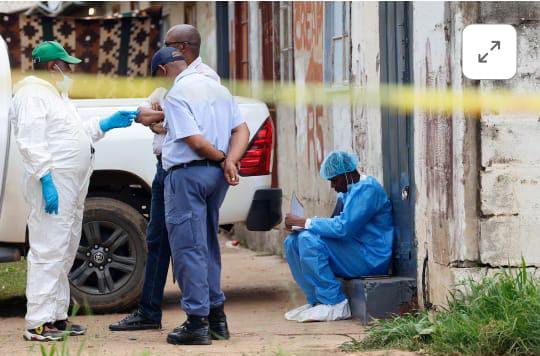
Pretoria in Mourning: 11 Dead, 14 Wounded as Gunmen Storm Hostel in Saulsville – A Nation Demands Answers.
By George Omagbemi Sylvester | Published on saharaweeklyng.com
“Shocking mass-shooting at illegal “SHEBEEN” hostel bar exposes deep-rooted crisis of crime, guns and social decay in South Africa.”

In the early hours of Saturday, December 6, 2025, the township of Saulsville (located in Atteridgeville, some 18 kilometres west of Pretoria) was once again plunged into grief and outrage. A group of armed men forced their way into a hostel that doubled as an illegal “SHEBEEN” (bar) and unleashed indiscriminate gunfire on dozens of unsuspecting patrons. By the time the smoke cleared, at least 11 people lay dead and 14 more were wounded with many seriously. Among the dead were three children: a 3-year-old boy, a 12-year-old boy and a 16-year-old girl. The youngest victim reportedly belonged to the owner of the shebeen.
According to a statement issued by the South African Police Service (SAPS), at least three unknown gunmen entered the hostel shortly after 4:15 a.m. local time and began firing randomly at a group of people who were drinking. In total, police say 25 individuals were shot, 14 of them seriously enough to be hospitalised.
By afternoon, SAPS spokesperson Athlenda Mathe confirmed that one more victim had succumbed to their wounds in hospital with raising the death toll to 12. Investigators from the Forensic and Ballistics Units combed the scene of horror, while a manhunt was launched for the suspects.

A Painful Reflection of a Broader Crisis. This brutal massacre is not an isolated horror. Rather, it is part of a deeply troubling pattern that has come to define too many corners of contemporary South Africa is where illegal liquor venues, unlicensed firearms, poverty and gang violence converge in a deadly cocktail.
As Mathe lamented: “We are having a serious challenge when it comes to these illegal and unlicensed liquor premises. Innocent people also get caught up in the crossfire.”
Crime statistics bear that out starkly. South Africa, already burdened by one of the highest murder rates globally, registered more than 26,000 murders in 2024 alone which is an average of over 70 killings per day.
Between April and September 2025, police say they shut down nearly 12,000 unlicensed liquor outlets nationwide and arrested over 18,000 people for illegal liquor sales, a massive but clearly insufficient effort to curb the carnage.
Yet still the violence rages on. The Saulsville massacre is merely the latest in a string of mass shootings that have shaken townships and urban areas across the country with each attack a grim reminder of the fragility of safety for ordinary South Africans.

The Human Cost: Lives Lost, Families Torn Apart. Among the dead were very young children (a three-year-old boy, a 12-year-old, a 16-year-old girl) lives extinguished in an instant of cruelty and recklessness. Imagine the anguish of parents who sent their children out for what they thought would be a normal night but only to have that night end in horror. Imagine the siblings whose homecoming never came. Imagine a community which is already battered by decades of inequality, joblessness and marginalization is been confronted once more with the abyss of violence.
These are not faceless statistics. These are mothers, fathers, siblings, children, they are real people whose stories now ended in grief.
As social-justice scholar Khaya Moyo recently argued, “When violence is normalised, the humanity of its victims is erased and they become just numbers in crime statistics.” His words echo painfully in the wake of Saulsville.
Root Causes: Guns, Poverty, Illicit Economy and the Failure of Oversight. To understand how this horror could occur (and recur) one must confront a network of systemic failures.
Illegal and unregulated liquor outlets (“shebeens”) (often run out of desperation in impoverished areas) operate under the radar of law enforcement and regulation. Their unlicensed status makes them vulnerable to criminal infiltration: drug deals, gang recruitment, turf wars and extortion. According to police, these venues have become “HOTBEDS” of violence.
Proliferation of illegal firearms compounds the danger. Despite strict gun-control laws on paper, South Africa remains awash with illicit weapons. This enables petty disputes (or organized crime conflicts) to escalate rapidly into mass slaughter. As criminologist Jane Ndungu has observed: “In communities where livelihoods are precarious, guns become the ultimate currency and life becomes cheap.”
Poverty, unemployment and social marginalisation are the fertile soil in which this lethal mix grows. High levels of youth unemployment, inadequate housing, lack of recreational outlets and limited economic opportunity leave many with few prospects and many more vulnerable to predatory crime networks.
Weak regulation and enforcement have failed to close the door on illegal shebeens, guns and criminal networks. Even though thousands of unlicensed liquor venues were shut down this year, information suggests many remain active, while some reopen shortly after closure. The resources allocated to policing and oversight seem outmatched by the scale of the problem.
Why This Attack Demands National Outrage and Real Action. The blood spilled in Saulsville is not simply the result of unfortunate circumstance: it is emblematic of a national crisis that demands far more than condolence statements or momentary outrage. It requires fundamental, systemic change.
First, a comprehensive crackdown on illegal liquor outlets and the illicit economy. Authorities must vastly expand resources for enforcement, regulation, and community-level monitoring and not just reactive lockdowns but proactive disruption of criminal networks.
Second, a serious effort to disarm illicit firearms. Gun amnesty programmes, effective policing of illegal arms trafficking and cooperation between law-enforcement, local communities and civil society organisations must be prioritized as a national security emergency.
Third, meaningful social and economic investment in vulnerable communities. Poverty, inequality and marginalization cannot be addressed by policing alone. Government and civil society must create pathways to employment, education, stable housing, recreation and community development, so that young people do not see illegal shebeens or criminal networks as their only recourse.
Fourth, community empowerment and social accountability. Citizens must be encouraged and protected if they speak out against illicit operations in their neighbourhoods. Local civic organisations, churches, schools and grassroots movements must be supported to reclaim community spaces from criminal exploitation.
As author and human-rights advocate Lindiwe Ndlovu once wrote: “When communities are allowed to rot in silence, violence becomes the language of despair.” If Saulsville does not stir the nation from that silence, then we are complicit in its decay.
Summative Insight: A Nation at a Crossroads. The massacre at Saulsville is not just another tragic headline to scroll past. It is a stark warning and a painful, blood-stained alarm bell. It must shake the conscience of every South African who still believes in the dignity of human life, the sanctity of childhood and the promise of a safer society.
Eleven innocent souls, including children, were killed. Fourteen more lie in hospital, fighting for their lives. Families have been shattered. Communities traumatized. Trust in safety eroded. This is a moment that demands more than grief. It demands outrage. It demands accountability. And above all, it demands action.
If we fail to respond, we risk letting this massacre become just another statistic, just another page in the ledger. But if we respond (with resolve, compassion and justice) perhaps we can begin to turn the tide.
May the memories of the victims of Saulsville challenge us (as a nation, as a society) to confront the rot, to demand better, to build a future where no child goes to a shebeen, or a hostel, or a bar fearing for their life again.




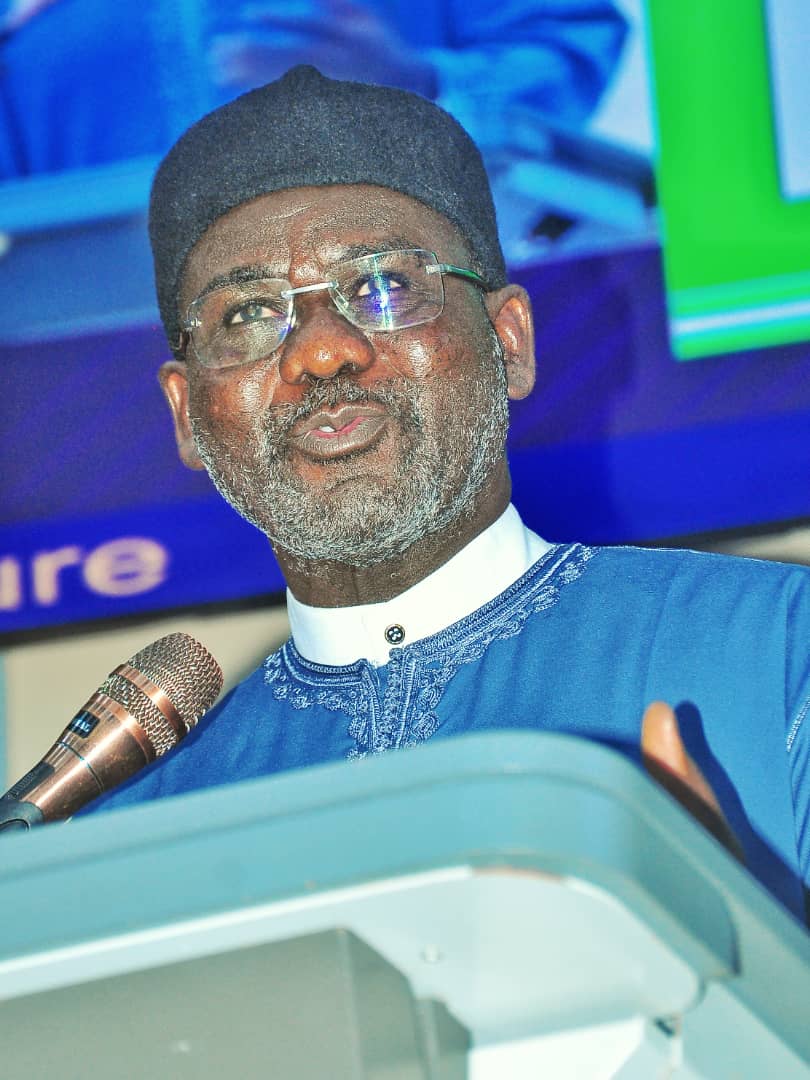
Insecurity: General Buratai Advocates Youth-Driven National Security Strategy
Former Chief of Army Staff, Tukur Yusuf Buratai, has stressed the need for increased youth participation in Nigeria’s security architecture, warning that failure to engage young people meaningfully could further aggravate insecurity across the country.
Buratai made the assertion while delivering a lecture titled, “The Armed Forces of Nigeria and National Security: The Youth and National Security Aspirations,” at the University of Ilorin.
The retired military officer described Nigerian youths as the nation’s greatest strength, noting that their creativity, patriotism, and innovation must be effectively channelled towards combating terrorism, banditry, cybercrime, separatist agitations, and other security threats confronting the country.
According to him, the Armed Forces of Nigeria had transformed from a colonial constabulary institution into a formidable force responsible for protecting the nation’s sovereignty and territorial integrity.
He observed that persistent insecurity across the North-East, North-West, Middle Belt, and South-East remained a major threat to national unity, adding that meaningful youth engagement in security initiatives would play a decisive role in ensuring stability and sustainable development.
Buratai further outlined the constitutional responsibilities of the Armed Forces, including defending Nigeria against external aggression, suppressing insurrection, and supporting civil authorities in maintaining law and order.
The former army chief also reviewed Nigeria’s security landscape, identifying Boko Haram insurgency, ISWAP activities, banditry, oil theft, separatist violence, and transnational organised crimes as some of the major challenges confronting the country.
Drawing comparisons with counter-insurgency operations in Colombia and Sri Lanka, he urged Nigeria to adopt a combination of military operations and socio-economic reforms in addressing insecurity.
He also encouraged Nigerian youths to embrace careers in the Armed Forces, noting that the military offers opportunities for leadership development, discipline, skills acquisition, career advancement, and national integration.
Buratai proposed the recruitment of 50,000 youths annually into the Armed Forces over the next five years, alongside the establishment of state intelligence fusion centres and a national civic security training programme for graduates.


He concluded by urging Nigerian youths to actively support efforts aimed at promoting peace and national security, stressing that enduring peace could only be achieved through justice, inclusion, and development.
society
Court Warns Police: Your Role in Debt Recovery is Illegal; Awards N50m in Favour of Man Detained for 6 Months Over Failed Forex Deal
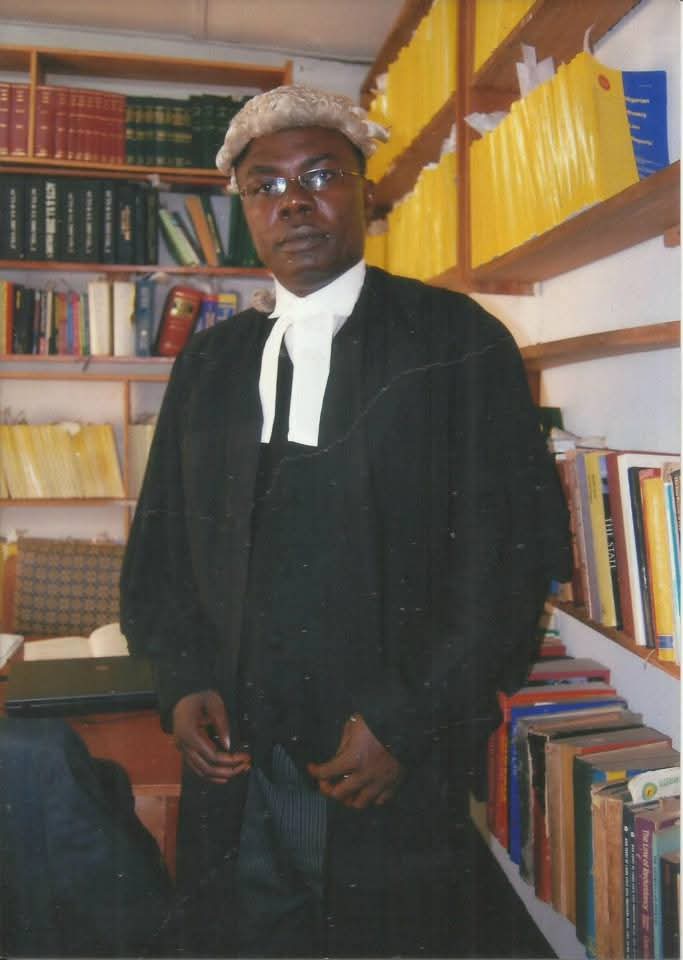
Court Warns Police: Your Role in Debt Recovery is Illegal; Awards N50m in Favour of Man Detained for 6 Months Over Failed Forex Deal
The Lagos State High Court has declared the six-month detention of businessman Bassey Ikpi Ubi over a failed foreign exchange transaction illegal and unconstitutional, ordering the police and private respondents to pay N50 million in damages for torture and unlawful detention.
Justice O. O. Adewunmi-Oshin held that the Nigeria Police Force has no legal authority to act as a debt recovery agency or to mediate private civil disputes.
The ruling was delivered on Monday, 11 May 2026, at the Lagos Judicial Division, High Court No. 49, in Suit No. LD/18019MFHR/2024.
Mr. Ubi, Managing Director of MC COY IKPI BUSINESS INTERNATIONAL LIMITED, had sued the Inspector General of Police, the Assistant Inspector General Zone 2, the DSS, the EFCC, and 11 private individuals and corporate entities.
He alleged that he was arrested and detained on Friday,16 February 2024, tortured almost to death in custody, denied bail, and had his Samsung Galaxy Z Flip 4 and Tecno phones forcibly taken and hacked.
The applicant told the court that the dispute arose from a failed foreign exchange transaction and that the police were being used by private respondents to recover civil debts.
Justice Adewunmi-Oshin stated unequivocally that “the police are not debt collectors and the detention cell is not a venue for settling private disputes.”
The court observed with concern what it called a recurring trend whereby officers of the Nigeria Police Force arrest and detain citizens under the pretext of criminality while the underlying dispute amounts to nothing more than a breach of contract or a failed commercial transaction.
“This Court observes with concern the recurring trend whereby officers of the Nigeria Police Force arrest and detain Citizens under the pretext of Criminality, while the underlying dispute amounts to nothing more than a breach of contract or a failed commercial transaction,” the judge said.
“Such conduct finds no warrant in law. Sections 4 of the Police Act 2020 above cited does not confer any power to act as debt collectors or to mediate private civil disputes.”
Citing _Fawehimi V Inspector General of Police_ (2002) 7 NWLR pt 767 pg 606, the court reiterated that
“the Police must not allow themselves to be used as tools for the enforcement of Civil obligations.”
The judge also referenced Section 6 of the Administration of Criminal Justice Act 2015, which makes clear that arrest shall only be made for a reasonable suspicion of a criminal offence, not for the recovery of debts or enforcement of contractual obligations.
On the applicant’s detention, the court found that holding him for six months without bringing him before a court violated Sections 33, 34, 35, 36, 37 and 41 of the 1999 Constitution, as well as Articles 4, 5, 6 and 7 of the African Charter on Human and Peoples’ Rights.
The judge further declared that the seizure and hacking of the applicant’s phones by the 4th respondent infringed his right to privacy and personal liberty guaranteed under Sections 35 and 37 of the Constitution.
Consequently, the court granted 11 orders. It restrained the 1st to 5th respondents from acting as recovery agents or from further arresting and detaining the applicant and officers of his company.
It ordered the 4th respondent to unconditionally release the seized phones. The court awarded N50,000,000 jointly and severally against all respondents for general, aggravated and exemplary damages, to be paid within 30 days.
It also directed the respondents to publish a public apology to the applicant in a full-page advertorial in a national daily newspaper within 14 days, in line with Section 35(6) of the Constitution.
“The practice is condemned in the strongest terms and the leadership of the Nigeria Police Force is expected to take immediate disciplinary and administrative steps to eradicate it,” Justice Adewunmi-Oshin ruled.
The applicant was represented by Kennedy Osunwa with J. Akor, while M. O. Bajela appeared for the 4th respondent. The 18th and 24th respondents had earlier been struck out of the suit.
society
2027 PRESIDENTIAL POLL: Nwosu, Akobundu, Ihedioha, Nwajiuba, Ikeobasi- Political Juggernauts Who Will Lead ADC To Landslide Victory In The South East
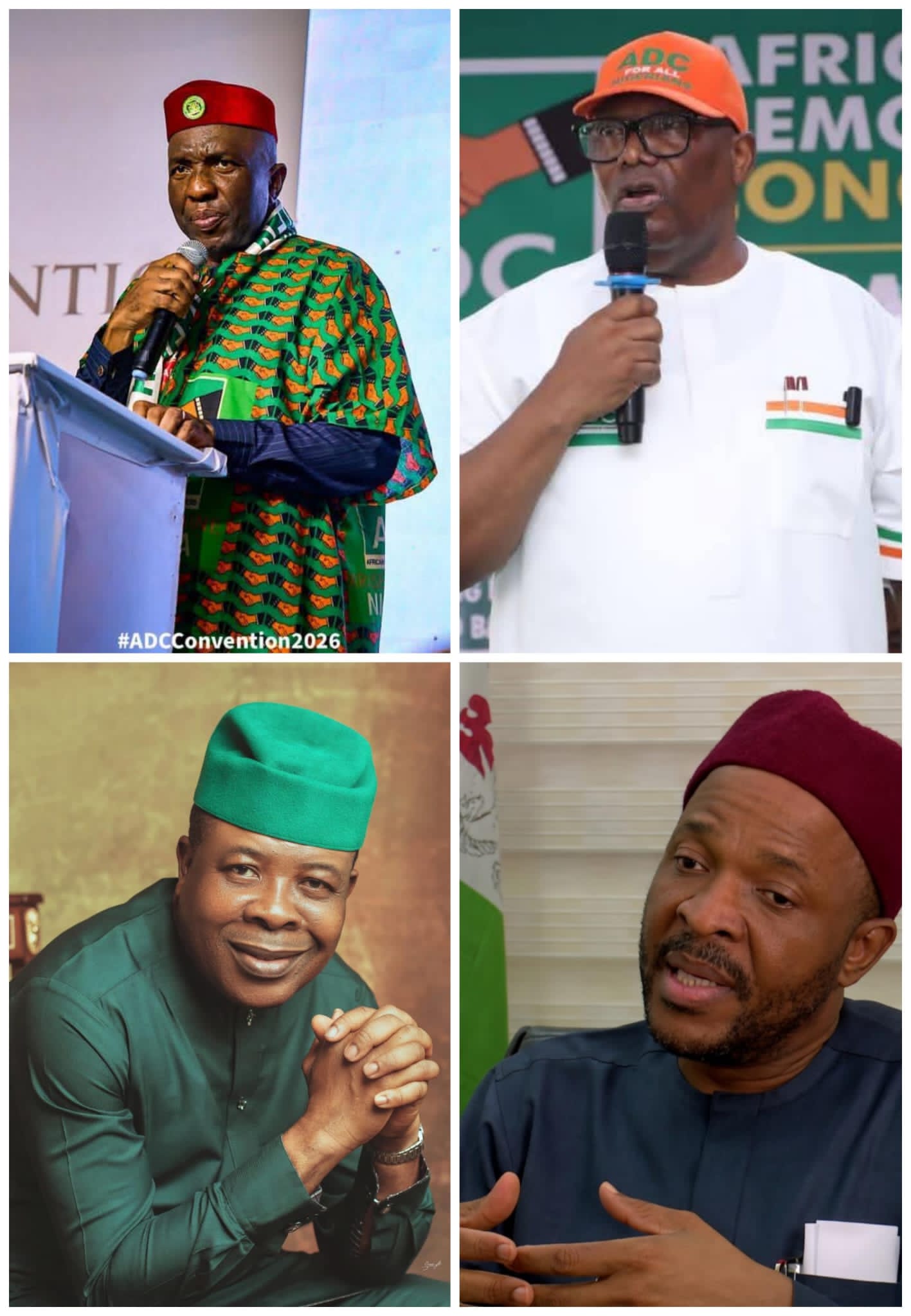
2027 PRESIDENTIAL POLL: Nwosu, Akobundu, Ihedioha, Nwajiuba, Ikeobasi- Political Juggernauts Who Will Lead ADC To Landslide Victory In The South East
Barely eight months to the all-important Nigerian presidential election billed for Saturday, January 16, 2027, below are the who is who in the South East, the political heavyweights and juggernauts who will lead the main opposition African Democratic Congress (ADC), to a landslide victory across the five South East States of Abia, Anambra, Ebonyi, Enugu, and Imo States.
1. Chief Ralph Nwosu: He is the founding National Chairman of the main opposition ADC. Nwosu beat Mr. Peter Obi during the 2002 guber primaries of the All Progressives Grand Alliance (APGA), but was asked to step down for Obi, by the revered leader of the Igbo nation, Chief Chukwuemeka Odumegwu Ojukwu.
2. Senator Augustine Akobundu: He is Senator representing Abia Central Senatorial District in the Nigerian Senate, since 2023. He has just won the ADC primary ticket ahead of the 2027 Senatorial election billed for January 16, 2027.
3. H.E. Rt. Hon. Emeka Ihedioha: He was the former Deputy Speaker of the House of Representatives (2011-2015), and former Governor of Imo State (2019-2020). Ihedioha was illegitimately ousted from office by the Supreme Court led by CJN Kudirat Motonmori Olatokunbo Kekere-Ekun. The Supreme Court illegally smuggled APC candidate Hope Uzodimma who came a distant 4th to become Governor through the backdoor.
4. Chief Emeka Nwajiuba: He was the former Minister of State for Education (2019-2022). He contested the APC Presidential primaries in 2022. Nwajiuba speaks Hausa fluently and is very close to the Buhari/Katsina Northern political bloc.
5. Chief Ikeobasi Mokelu: He was the Minister of Information under the administration of General Sanni Abacha. He is a political juggernaut who is very close to Kashim Imam, Zango Daura, and even His Excellency Atiku Abubakar.
Among other eminent political juggernauts and heavyweights, the abovementioned are the men of timber and caliber who will lead the ADC charge across the South East Geo-Political Zone, going into the 2027 Presidential election.
Our team of eminent young political scientists and investigative journalists have done our backgrounders on these men, and can state unequivocally and emphatically that they got the verified capacity to lead the ADC to a landslide victory across the five South East States, next year.
It’s against this backdrop that we the leaders and members of Afa Igbo Efuna Worldwide call on His Excellency Atiku Abubakar- @atiku, and the Senator David Mark-led @ADCNig leadership to without any iota of doubt shop for a Vice Presidential candidate, among these qualified Igbo leaders from the South East Geo-Political Zone, on or before June 31, 2026.


- Member States advance regional coordination on Bundibugyo Ebola response May 23, 2026
- World Health Organization (WHO) Supports Zambia to Strengthen Access to Mental Health Medicines and Services May 23, 2026
- Brazzaville 2026 African Development Bank Group (AfDB) Annual Meetings to focus on mobilising Africa’s development financing at scale May 22, 2026
- Morocco: African Development Bank Group and OCP Group Sign €450 Million Partial Credit Guarantee to Accelerate Industrial Transition May 22, 2026
- South Sudan: Leaders of tomorrow take center-stage at lively debates on gender equality and democracy in Pibor May 22, 2026
- Seychelles and Bangladesh hold Constructive Talks on Cooperation and International Engagement May 22, 2026
- Seychelles: Minister Faure and Ambassador Azais Tatistscheff discuss humanitarian and healthcare cooperation May 22, 2026
- African Energy Chamber (AEC) to Position Africa as South America’s Next Strategic Energy Frontier at Association of Oil, Gas and Renewable Energy Companies of Latin America and the Caribbean (ARPEL) Conference 2026 May 22, 2026
- Afreximbank Posts Robust Q1 2026 Results with 25% Growth in Net Income and Improved Profitability May 22, 2026
- Africa: Soil Mapping for Resilient Agrifood Systems (SoilFER) programme scales up soil fertility monitoring through Mid-Infrared Spectroscopy May 22, 2026
- Member States advance regional coordination on Bundibugyo Ebola response May 23, 2026
- World Health Organization (WHO) Supports Zambia to Strengthen Access to Mental Health Medicines and Services May 23, 2026
- Brazzaville 2026 African Development Bank Group (AfDB) Annual Meetings to focus on mobilising Africa’s development financing at scale May 22, 2026
- Morocco: African Development Bank Group and OCP Group Sign €450 Million Partial Credit Guarantee to Accelerate Industrial Transition May 22, 2026
- South Sudan: Leaders of tomorrow take center-stage at lively debates on gender equality and democracy in Pibor May 22, 2026
- Seychelles and Bangladesh hold Constructive Talks on Cooperation and International Engagement May 22, 2026
- Seychelles: Minister Faure and Ambassador Azais Tatistscheff discuss humanitarian and healthcare cooperation May 22, 2026
-

 news5 months ago
WHO REALLY OWNS MONIEPOINT? The $290 Million Deal That Sold Nigeria’s Top Fintech to Foreign Interests
-

 society3 weeks ago
SOCIAL MEDIA IS NOT A BATTLEFIELD COMMAND – WHY THE NIGERIAN ARMY’S ACTION AGAINST JUSTICE CRACK IS A NATIONAL SECURITY IMPERATIVE
-

 celebrity radar - gossips4 months ago
Dr. Chris Okafor Returns with Power and Fire of the Spirit -Mounts Grace Nation Altar with Fresh Anointing and Restoration Grace on February 1, 2026
-

 celebrity radar - gossips5 months ago
Prophet Kingsley Aitafo Releases 2026 Prophecy: ‘Nigeria Will Rise, but the World Must Prepare for Turbulence’