
society
Professor Fidelis Oditah is Wrong about the EFCC By Dele Oyewale

Professor Fidelis Oditah is Wrong about the EFCC
By Dele Oyewale
Professor Fidelis Oditah’s recent interactive discussion on a wide range of issues on Arise News, are quite engaging. As a Senior Advocate of Nigeria, SAN and an international legal mind, his views on national issues cannot be disregarded. Benjamin Disraeli, former Prime Minister of the United Kingdom once said, “with words we govern men”. Thus, Oditah’ s words are important and cannot be dismissed as empty effusion lacking weight or impact.
However, the learned Professor’s submission on what he called the Economic and Financial Crimes Commission, EFCC’s three fundamental problems are, to say the least, prejudicial, unfounded and misleading. First, Oditah stated that “The EFCC is often being used for settling many scores. Some are political scores, some are social scores. So, you could run away from your girlfriend and the girlfriend goes to the EFCC and the EFCC could ask you questions(sic). What has that got to do with economic crimes? That is blatant abuse of power”(sic).
How on earth will this kind of a scenario painted by the learned silk hold water? The simplest argument against this kind of effusion is to challenge Oditah to provide proofs of such banality. We all know that this just an idle talk because the EFCC is a serious- minded law enforcement agency. The only worrisome aspect of such a talk is that it betrays an embarrassing lack of grasp of what the EFCC’s focus is.
This issue of appropriate and proper focusing of the mandate of the EFCC has been a central pivot of the three- pronged agenda of the Executive Chairman of the EFCC, Mr. Ola Olukoyede. In the full glare of the entire world, while addressing members of the National Assembly in October 2023, Olukoyede stated that the focus of every fight against corruption was to stimulate growth in the economy. For more than a year now, the EFCC’s boss has been consistently following this route. The review of the arrest and bail procedures of the EFCC is in line with this. Professor Oditah is probably busy with his works as a King’s Counsel in the United Kingdom and have no time to be abreast of development in the EFCC. Olukoyede is a lawyer of high pedigree and would not allow what the learned counsel called “ blatant abuse of power”.
The second “ fundamental problem of the EFCC”, according to Oditah is that “The EFCC has abandoned its mandate and reduce itself to a debt- collection agency, notwithstanding the numerous court decisions saying the EFCC must stay within the narrow confines of financial and economic crimes. The EFCC has gone out for debt recovery”. This submission, again, is hollow and vacuous. The EFCC’s Establishment Act does not empower the Commission to collect debt on behalf of anyone. The recovery the EFCC does is taking back proceeds of crime from fraudsters. Asset recovery, all over the world, is a fundamental law enforcement and anti- corruption initiative. As a matter of fact, it is the ground norm of every anti- corruption fight. To this end, Olukoyede in just one year, recovered N248,750,049,365.52 (Two Hundred and Forty-Eight Billion, Seven Hundred and Fifty Million, Forty-Nine Thousand, Three Hundred and Sixty-Five Naira, Fifty-Two Kobo).
In foreign currencies, recoveries of the Commission in the one year of Olukoyede’s leadership are: $105,423,190.39 (One Hundred and Five Million, Four Hundred and Twenty-Three Thousand, One Hundred and Ninety Dollars, Thirty-Nine Cents); £ 53,133.64 (Fifty-Three Thousand, One Hundred and Thirty-Three Pounds, Sixty-Four Pence; €172,547.10 (One Hundred and Seventy-Two Thousand, Five Hundred and Forty-Seven Euros, Ten Cents) and many others.
Going by the quantum of these recoveries, not to talk of real estate recovered all over the country, including shares acquired with proceeds of crime in blue- chip companies, it is simply preposterous to reduce and ridicule asset recoveries to debt recovery. Professor Oditah owes the EFCC and the entire nation unconditional apology in this regard. Just two days ago, a Federal High Court sitting in Lagos granted final forfeitures of over $2million and seven princely properties in choice areas of Lagos to the Federal Government. The assets are proceeds of crime traced to a former governor of Central Bank of Nigeria, CBN. Do such recoveries fall into the category of debt recovery insinuation of Oditah? President Bola Ahmed Tinubu recently directed that N100billion be channeled to the funding of the Nigerian Education Loan Fund, NELFUND and the Nigerian Consumer Credit Corporation, CreditCorp, respectively from the monetary recoveries of the EFCC. Is the Professor aware of all these? It is evident that bringing down the issue of asset recovery to the ridiculous corridor of debt recovery is deliberate caricature of an important anti- corruption framework of the government. This is an initiative which local, regional and international agencies are commending Olukoyede and the EFCC about. It is to be noted also that the Director of FBI and the DG of National Crime Agency in the UK where he resides have paid cortesty visits to Olukoyede commending him on the feat he has attained in the fight against corruption and financial crimes and to seek more collaboration with the agency in their shared mandate of fighting corruption and financial crimes
The third issue Odikah raised against the EFCC, like the earlier issues, again, lacks any firm ground of substance. Hear him:
“The EFCC itself, a number of officers are more corrupt than those they are chasing. So, you remember what happened to Mr Bawa, Mr Matawalle, when Mr Matawalle finished his tenure as governor of Zamfara state and he said he was invited by Mr Bawa to bring $2million so as not to be investigated. The EFCC itself has become a corrupt organisation which needs to be completely disbanded and a new body set up . The EFCC has the resources. It does not have the ethics. The EFCC majors on minor issues, catching students and showing them as cyber criminals and so it says, it procured 1000 convictions and when you look at them they are people who have defrauded people of 20 or 22 dollars. That’s not the mandate. That’s the periphery. The central mandate is to ensure that the resources which are put in the hands of states are used by the states and that’s where the EFCC”
Going through all these trumped- up claims, it is obvious that Oditah has elected to totally launch unwarranted verbal war against the Commission and its officers. How many officers of the EFCC have been tainted with corruption allegations? Is it acceptable to use the “ sins” of very few elements in a community to paint and taint it as a community of sinners? It should be noted that there is no law enforcement agency in the world that is not vulnerable to corrupt officers. What is important is what the agency is doing to such elements. Olukoyede is known for his no- nonsense approach to ethical issues in the Commission. As a matter of fact, upon assumption of duties, he directed every officer of the Commission to declare their assets and ensure that verification of assets so declared is established. He went ahead to name the Department of Internal Affairs as Department of Ethics and Integrity. Beyond all these, some erring officers of the Commission have either been shown the way out or facing trial. In recent times, the Commission has had cause to dismiss some officers on allegations of corruption and gross misconduct. The EFCC is self- cleansing and the Commission deserves commendation for this.
It is worrisome that a Professor of the reputation and exposure of Oditah could dismiss the Commission’s onslaught against internet fraudsters as an unserious engagement. The damages this genre of fraudsters are causing the nation is untold. A crime that has a projection of $10.6trillion loss to the whole world in 2025 and Nigeria lost more than $500million in 2022 alone, is what Oditah derisively lampooned the EFCC about. We have cause to be worried that those who ought to know better are either playing the Ostrich or advertising their ignorance of a major malaise confronting the nation. Owing to the threat of cybercrimes to the development of our country, the EFCC has held two national dialogues on it. The recent one held few days ago at the Presidential Villa. The Professor should know that the EFCC mandate is to investigate all financial and economic crimes and no financial crime is small or big to be investigated in order to save the soul of the nation. It should be recalled that in recent times, the EFCC had had cause to prosecute and file charges against four ex- governors and some former ministers who were found culpable by EFCC’s investigation for looting state treasuries. This is just to confirm that the Commission is not scared of taking up large- scale fraud’s investigations and prosecution which we shall continue to do
There is no denying the fact that the respected professor goofed in all his comments about the EFCC and his views are not reflective of the realities on ground concerning the anti- corruption fight of the government.
On a final note, we enjoin professor Oditah to get himself familiar with the works of the Commission and lend his expertise and rich experience to the nation for a more robust and fully- integrated war against corruption. We also want to advise the fourth estate of the realm not to allow their platforms to be used to cast unfounded aspersions on the good works of the EFCC. The Commission is not averse to meaningful contributions and advise from well- meaning and reform- minded Nigerians to strengthen our processes and procedures as we continue this crusade,
*** Dele Oyewale is Head, Media & Publicity of the EFCC.




Police Officers Detained as Family Property Dispute Sparks Demolition Controversy in Lagos
By Ifeoma Ikem
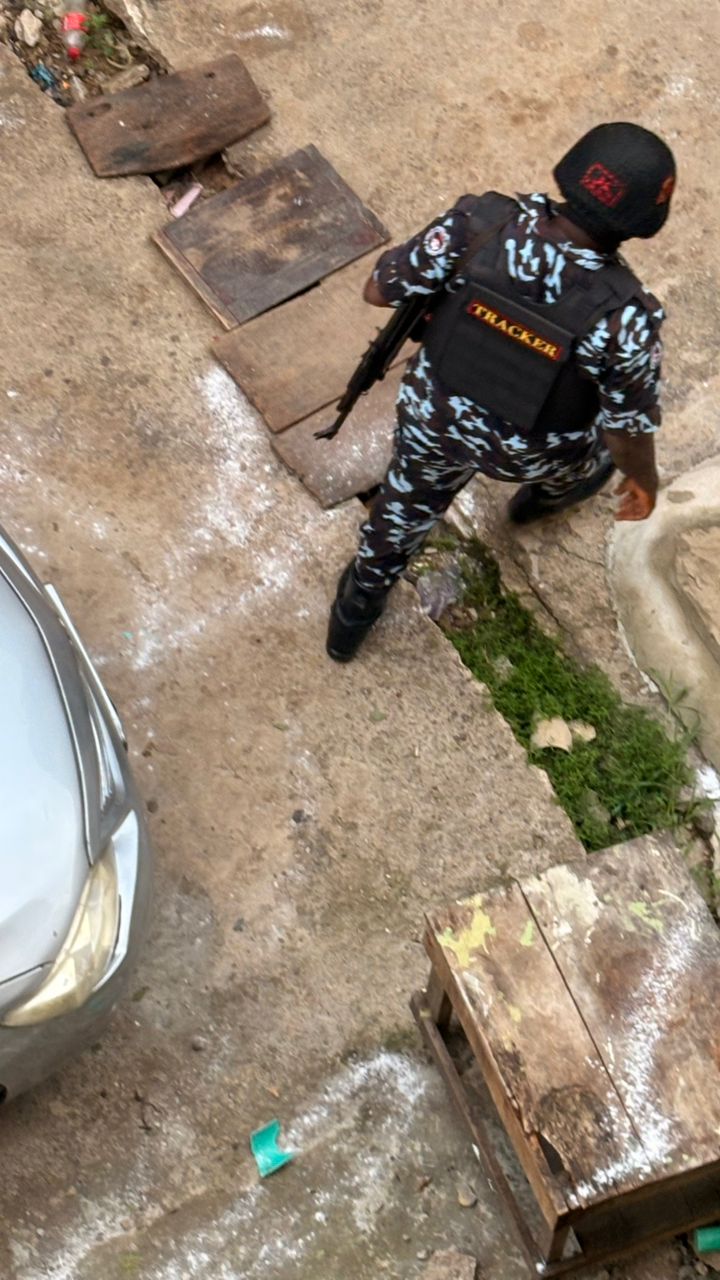
A property dispute within the Omotayo-Ojo family has taken a dramatic turn following a controversial demolition exercise at a residential building in Ikosi-Ketu, Lagos State, which reportedly left tenants displaced and led to the detention of some police officers allegedly involved in the operation.

The property, located at 23B Loveall Street, Ikosi-Ketu, has been the subject of a prolonged ownership tussle since the death of its owner, Chief Oludola Omotayo Ojo, the Babaalaje of Imesi-Ile, Osun State, in 2019.
Residents said tension erupted when a group of individuals, accompanied by security operatives, stormed the premises and commenced demolition activities.
According to eyewitnesses, portions of the building were pulled down while tenants rushed to salvage their belongings from affected apartments.
The residents alleged that windows, doors and roofing sheets were damaged during the exercise, exposing parts of the building to the elements and causing significant losses to occupants.
At the centre of the dispute is Mrs Mojisola Omotayo Ojo Alolagbe, who claimed that the property was allocated to her by her late father during his lifetime as a source of financial support.
She alleged that some family members had persistently challenged her ownership claim despite ongoing legal proceedings relating to the administration of the deceased’s estate.
Alolagbe further claimed that the latest incident was part of a series of attempts to wrest control of the property, citing previous cases of alleged vandalism and partial demolition in November 2025, January 2026 and February 2026.
The situation escalated further when reports emerged that police officers allegedly involved in the demolition were later apprehended and conveyed in a Black Maria vehicle over questions surrounding the legality of their participation in the operation.
Sources familiar with the matter said those behind the demolition had initially claimed to be acting on approval from the Lagos State Ministry of Lands. However, the authenticity and extent of such approval could not be independently verified as of the time of filing this report.
The development has generated concern among residents and community members, who questioned the involvement of security personnel in what they described as a civil matter.
Some tenants, who said they had recently renewed their tenancy agreements, lamented the destruction of their property and appealed to the authorities for protection and possible compensation.

They also called for a thorough investigation into the circumstances surrounding the demolition, insisting that the rights of all parties involved should be protected.
Stakeholders have urged the Lagos State Government, security agencies and the judiciary to intervene and ensure that the dispute is resolved through lawful means to prevent further escalation.
The controversy has continued to draw public attention, raising concerns over property rights, estate administration and the role of law enforcement agencies in civil disputes.

UKA Gears Up for Final ATC Exchangeability Test Run as June Preparations Begin.
May 30, 2026 – As the month of June gathers momentum, the *United Kingdom of Atlantis, UKA*, a sovereign nation has unveiled a series of vital guidelines and preparatory packages to ensure citizens and stakeholders run the *ATC Exchangeability* process effectively.
In an official update, the *President of Atlantic Crown Limited, Empress of Attica Empire UKA*, confirmed that the *Final Test Run of ATC Exchangeability* is scheduled for the month of June 2026. The exercise marks a key phase ahead of the *Official Exchangeability Window, set to run from July 2026 to February 2027*.
### Key Highlights from the Presidential Briefing
1. *Final Test Run – June 2026*
The test run is designed to validate systems, procedures, and user readiness before full activation. Citizens, partners, and designated participants are urged to follow all official advisories released by UKA authorities during this period.
2. *Official Exchangeability Period*
Following the successful completion of the June test run, the Official Exchangeability will commence in july 2026 and we are Expecting Full Exchange ability between July Ending, 2026 to February 2026.
UKA stated that detailed schedules, eligibility requirements, and step-by-step instructions will be communicated progressively through verified UKA channels.
3. *Benefiting Packages for June*
In line with UKA’s commitment to citizen empowerment, the month of June will feature “benefiting packages” aimed at education, preparation, and seamless onboarding. These packages are intended to equip the people of UKA with the knowledge and tools needed for effective participation.
4. *Commitment to Transparency*
Addressing the nation, the Empress of Attica Empire UKA emphasized:
_“Final Test Run of ATC Comes up in The Month of June, As We Prepare For The Official Exchangeability, Between July 2026 To Feb 2027. All Information Will Be Communicated.”_
UKA reaffirmed that only information released through official UKA platforms should be regarded as authoritative.
The United Kingdom of Atlantis is encouraging all citizens, representatives, and interested parties to remain alert to official communications, attend designated orientation sessions, and avoid unofficial sources. UKA’s dedication to order, clarity, and the collective benefit of its people as the nation moves into this significant phase.
For updates, advisories, and participation guidelines, citizens are advised to monitor official UKA communication channels.
United Kingdom of Atlantis, UKA, is a sovereign nation, committed to national development, citizen welfare, and structured economic participation through initiatives such as ATC Exchangeability.
Three Years On, General Buratai Hails Tinubu’s Economic, Security Achievements
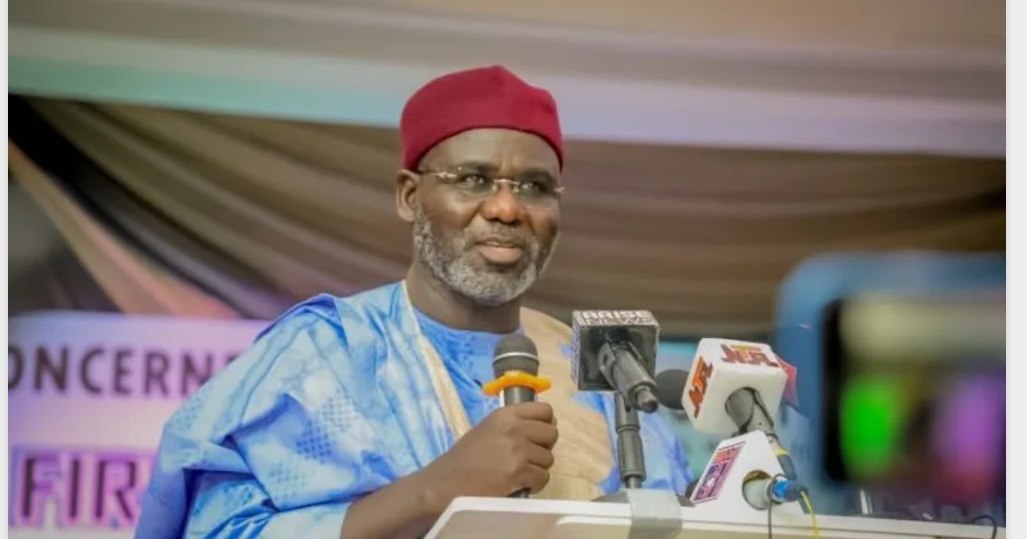
Former Chief of Army Staff, Lt. Gen. Tukur Buratai (retd.), has commended President Bola Ahmed Tinubu for what he described as bold economic reforms and improved security efforts as the President marks three years in office.
In a goodwill message on Thursday to commemorate Tinubu’s third anniversary as President and Commander-in-Chief of the Armed Forces, Buratai said the administration had taken courageous decisions that would leave a lasting impact on Nigeria’s development.

According to him, President Tinubu broke a long-standing cycle that had hindered national growth by removing fuel subsidy and implementing foreign exchange reforms aimed at stabilising the naira and strengthening the economy.
He noted that the reforms were beginning to yield positive results, citing the global acceptance of Nigerian debit cards, the gradual revival of local refineries, access to student loans, and ongoing road and infrastructure projects across the country.
“The FCT Administration has also recorded remarkable progress, completing major road projects that remained unfinished for over 16 years,” Buratai stated.
The former army chief also praised the administration’s security efforts, saying renewed military offensives against insurgents, terrorists and bandits had led to notable successes across various parts of the country.
He specifically lauded recent joint operations involving Nigerian and United States forces against Boko Haram and ISWAP in the North-East, as well as intensified counter-banditry operations in the North-West.
“We have seen notorious ISWAP commanders being neutralised. I congratulate the Commander-in-Chief, the Minister of Defence, the Chief of Defence Staff, the Service Chiefs, the Inspector-General of Police and heads of intelligence agencies for their efforts,” he said.
Buratai, however, acknowledged that challenges remained, stressing the need for more aggressive military operations and intelligence-driven strategies in the coming year.
While urging Nigerians to remain hopeful, he said celebrating the President’s achievements did not amount to ignoring the difficulties facing the nation.
“Because you truly care, you have shown the courage to trade short-term comfort for long-term hope. Nigerians need your reassurances, and that is why we remain optimistic and full of confidence,” he added.
The retired military officer reaffirmed his support for the Tinubu administration and expressed confidence that the foundation being laid by the government would deliver a brighter future for the country.
He also prayed for God’s guidance, wisdom, strength and good health for the President as he continues to lead Nigeria.


- Africa: UNAIDS calls for renewed global solidarity as UN Secretary-General’s report warns that AIDS is not over and fragile gains are at risk June 4, 2026
- Eritrea: Vocational training provided to college students June 4, 2026
- World Bank Group Launches Ten-Year Strategy to Drive Jobs and Prosperity in Uganda June 4, 2026
- Prof Oramah’s appointments to the Royal African Society Patronage and Kenya’s National Infrastructure Fund herald continued recognition of his global leadership and pan-African impact June 4, 2026
- Africa Finance Corporation Raises Record US$2 Billion Syndicated Loan in Landmark Show of Confidence in Transformational Infrastructure Strategy June 4, 2026
- Libya Energy & Economic Summit (LEES) 2027 to Define Libya’s Next Phase of Energy Expansion in Tripoli June 4, 2026
- Uganda: President delivers State of the Nation Address today June 4, 2026
- United Nations High Commissioner for Refugees (UNHCR): Refugees in Eastern and Southern Africa remain in exile for nearly 16 years June 4, 2026
- 85% of Ministry of Food and Agriculture's (MoFA) 2026 Budget Released to Boost Food Production — Deputy Finance Minister June 4, 2026
- Deputy (Dep.) Finance Minister Courts Investors to Transform Ghana’s rice Economy June 4, 2026
- Africa: UNAIDS calls for renewed global solidarity as UN Secretary-General’s report warns that AIDS is not over and fragile gains are at risk June 4, 2026
- Eritrea: Vocational training provided to college students June 4, 2026
- World Bank Group Launches Ten-Year Strategy to Drive Jobs and Prosperity in Uganda June 4, 2026
- Prof Oramah’s appointments to the Royal African Society Patronage and Kenya’s National Infrastructure Fund herald continued recognition of his global leadership and pan-African impact June 4, 2026
- Africa Finance Corporation Raises Record US$2 Billion Syndicated Loan in Landmark Show of Confidence in Transformational Infrastructure Strategy June 4, 2026
- Libya Energy & Economic Summit (LEES) 2027 to Define Libya’s Next Phase of Energy Expansion in Tripoli June 4, 2026
- Uganda: President delivers State of the Nation Address today June 4, 2026
-

 news6 months ago
WHO REALLY OWNS MONIEPOINT? The $290 Million Deal That Sold Nigeria’s Top Fintech to Foreign Interests
-

 society1 month ago
SOCIAL MEDIA IS NOT A BATTLEFIELD COMMAND – WHY THE NIGERIAN ARMY’S ACTION AGAINST JUSTICE CRACK IS A NATIONAL SECURITY IMPERATIVE
-

 celebrity radar - gossips4 months ago
Dr. Chris Okafor Returns with Power and Fire of the Spirit -Mounts Grace Nation Altar with Fresh Anointing and Restoration Grace on February 1, 2026
-

 celebrity radar - gossips6 months ago
Prophet Kingsley Aitafo Releases 2026 Prophecy: ‘Nigeria Will Rise, but the World Must Prepare for Turbulence’