
society
PROTESTS: NOT EVERYTHING LEGAL IS EXPEDIENT- Tim Akano

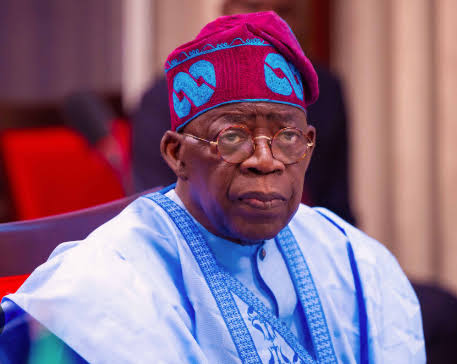
*PROTESTS: NOT EVERYTHING LEGAL IS EXPEDIENT*
*Tim Akano
N700 billion! KSH 6 billion! The former is the amount Lagos, Nigeria lost in the first 10 days of the #ENDSARS protest, according to the Lagos Chamber of Commerce and Industry (LCCI), while the latter represents the losses incurred by the Kenyan government in the early days of the ongoing Gen-Z revolts. Even more alarming, the total number of lives lost in both countries is uncountable.
In Sudan, a protest instigated from outside and amplified on social media by some human rights activists has ignited a civil war. The Sudanese economy contracted by about 20% in 2023, with tax revenue plummeting from 5.6% of GDP in 2021 to 2% in 2023. Over 30,000 lives have been lost, and 20% of the population has been displaced. Tragically, Sudan has become worse than an abattoir, with vultures seemingly holding a national conference, feeding on decaying bodies left on the streets. Currently, 37% of the population has nothing to eat, and the living envy the dead. The human rights activists who set the stage for this uncontrolled chaos, leading to the conflict between the Sudanese Armed Forces (SAF) and the paramilitary Rapid Support Forces (RSF), have all vanished. For a glimpse of hell and its colors, one needs only take a short excursion to Sudan, where the newly renovated “Devil’s HQ” is located, with Mr. Devil himself issuing orders for both parties to annihilate each other.
Libya’s case is very instructive and sad. It used to be one of the most prosperous countries in Africa with a GDP of $87 Billion in 2008, a year before the protests that begot the war. Today Libya’s GDP is $45 Billions, just about 50% of where it was before protests.
It will be recalled that the Libya war was preceded by protests in Zarriya on August (same August) 2009, while another round of protests in Benghazi beginning on Tuesday 15th February, 2011 led to the clashes with security forces who fired on the crowd, and then the Gate of hell became wide open for Libya.
Today, Libya is spectacularly a failed State, and paradoxically enough, about 75% of the people of Libya wish they could have Ghadaffi back as their President. They regretted not listening to him when he warned the protesters not to listen to foreigners that instigated them.
*The question is: Will Nigeria drink from this cup, or will this cup pass over us*? It depends on the Nigerians Youths and the decisions taken by Mr. President in the next 24 hours.
Nigeria has a history of controlled chaos: the 1978 “Ali Must Go” student riots, the 2010 and 2012 fuel subsidy crises—all were led by known figures who understood the limits of their rights in a constitutional democracy.
The proposed August 1st protest appears to be championed by “ghosts and spirits.” In any protest where both the driver and the bus conductor are mysterious beings, the potential for chaos escalates from mere probability to a near certainty is highly likely. I call it “uncontrolled chaos,” akin to a boxing match without a referee. How can the fight be stopped, and who will the government negotiate with when things go awry?
Has anyone conducted a cost-benefit analysis of this August 1st protest? Can Nigeria afford the cost of protests at this critical time, given our dwindling and sagging revenue? Nigerians need to ask: Who stands to gain from the proposed protests if they occur on the scale envisioned by the planners? Who are the potential losers?
This is why I am using this piece to advise the Youths that not everything that is legal is expedient.
Listening to the leadership of over 100 students and youth associations across Nigeria, and talking with the common man on the streets, including drivers, pepper sellers, and cleaners, over the past week has been a revealing and humbling experience. The suffering faced by the youth is real and widespread, it is what the United Nations terms “multidimensional,” meaning 360-degree suffering, affecting mothers, fathers, and uncles alike. But is this suffering solely caused by the present government? The answer is no. So why are some protesters demanding President Tinubu’s removal after just one year in office? This highlights the complications introduced by those with ethnic agendas, which could lead Nigeria to a situation similar to Sudan’s if we mismanage our diversity and inclusiveness.
For instance, Moses, a staff member at the hotel I use, told me that his entire monthly salary is not enough for transportation, let alone feeding and other necessities. Moses’ story is the story of 90% of Nigerians today. From Benue, where he comes from, he said farmers no longer go to their farms, and people sleep with weapons under their pillows at night, fully armed and ready to fight if killer herdsmen come knocking. It is a common occurrence now.
For Moses, he is ready to join the protest, not because of foreign or political inducement, but because of sheer necessity, which he calls “stomach inducement.” According to Moses, “The cost of living crisis, unbearable hunger, and pervasive insecurity in Benue are the reasons I am in this struggle.” When I asked Moses what else motivates him in this protest project, he responded, “Kenya. If Gen-Z youths did it, why not Nigerian youths?” Consequently, I concluded in my mind that “Kenya is playing a role in the August 1st planned events.” *Domino Theory at work* ! Then, which countries are next in Africa?
My engagement with student leadership over the last week, trying to reason together and find a pathway to a peaceful outcome, has been intellectually engaging, mentally exhausting, and emotionally challenging. One could feel, see, and even touch the pain, anger, and frustration in their hearts. The President of the National Association of Colleges of Education Students (NACES), for instance, told me that as small as ₦27,000.00 is, which is their school fees, more than 50% of the students struggle to pay because, as he puts it, “only the children of the poor attend Colleges of Education.”
The truth is raw, bitter, and inconvenient, but it must be told: *our Youths are truly angry at the way we have collectively, continuously, and comprehensively mismanaged Nigeria* We have piled up debts for them and their children without accountability for the oil revenue. They see the untold affluence of their governors, National Assembly members, and the Presidency, living platinum lifestyles. They look at their helpless parents and see nothing for themselves on the horizon in the project Nigeria, all they see is hopelessness. And then, they ask, “God, where are You, how soon will Your judgment come?”
It seems, having waited and waited without change, the youth want to judge the elites, using their numeric strength. They are united by three things: hunger, anger, and hopelessness. They appear to have lost confidence in the ability of the political elites to run Nigeria Inc. profitably, for the benefit of all shareholders.
*KOKO OF THE PROTEST*
The youths seem to have crossed the Rubicon. They have called for an emergency extraordinary board meeting of all the shareholders of Nigeria Inc. on August 1st at 7 AM, with a view to holding the management accountable. In this case, the CEO of Nigeria Inc. is President Tinubu, who recently took over from President Buhari, who bankrupted the country. While the management staff and executive directors consist of Governors and National Assembly members and Ministers.
Is it true that some politicians are using a section of the youth? The answer is yes. Is it true that some foreign interests are using some youth? Possibly. Is there an ethnic agenda in all this? Certainly. Some people are in this struggle not for the national interest but to perpetuate their parochial, ethnic hegemonic interests.
The sincerity of the student leadership who have pulled their members and institutions out of the planned protests is highly commendable. The National Association of University Students (NAUS), the National Association of Polytechnic Students (NAPS), the National Association of Colleges of Education Students (NACES), Middle Belt Youths, Yoruba Youths, and some credible civil society organizations (CSOs), along with a section of AREWA Youths and Obafemi Awolowo University Students, among others, have chosen peace and dialogue over protest, which could escalate into a crisis.
All said, the KOKO of the matter is that the majority of the youth are suffering from *Long-Term Insomnia* (*LTI)* due to stress caused by hunger, joblessness, pervasive insecurity, and wholesale frustration. The youth can’t sleep because their stomachs are empty; now they want the elites to have a taste of *Artificial Insomnia*(AI) and truly, who among the political elites has been sleeping soundly in the last month? That’s Artificial Insomnia!
*PBAT NEEDS TO SCORE MORE GOALS QUICKLY TO CANCEL THE DEFICIT
In fairness to the youth and student leadership, they truly appreciate some of the policies Mr. President has implemented to alleviate hardship, such as student loans, local government autonomy, free fertilizers for farmers, the signing of the minimum wage bill into law, the creation of regional development plans, and improved revenue allocation to the states, among others.
*However, despite these efforts, the excruciating pain caused by the three “nuclear bombs” (the removal of fuel subsidy, the floating of the foreign exchange rate, and the 200% increase in electricity tariffs) has made life nearly impossible for Nigerians outside the government circle
*INSOMNIA PILL: WHICH ONE WILL WORK*?
President Tinubu needs to address the youth directly on Wednesday, July 31, 2024, in a national TV broadcast. Some people around the President, who assure him that all is well, are insincere. All is not well! He needs to tell the youth how bad the economic situation is, how close we are to bankruptcy, and outline the steps he is taking to solve the problems.
To prevent the youth from implementing their agenda in August, the President needs to provide an *”insomnia pill”* to calm them, allowing both the President and the political class to sleep peacefully.
Since May 2023, the President has prioritized the welfare of politicians at the expense of the populace. Now, with the situation critical, the President must prioritize the youth.
President needs to hold an emergency meeting with National Assembly members and other office holders, appeal to them to relinquish 50% of their jumbo allowances and community projects budget for Common Good of the country. He should suspend certain national-level projects to save one trillion naira immediately and give the Economic and Financial Crimes Commission (EFCC) 100% freedom to go after the immediate past treasury looters, aiming to recover $100 billion. He should increase the incentive for whistleblowing to 20% of the recovered amount, sign an Executive Order granting amnesty to looters who return 80% of their loot by October 1, 2024. For example, Governor Yahaya Bello should be encouraged to return 80% of the alleged N80 billion he looted to regain his freedom and a *Certificate of Go & Sin No More* should be publicly presented to him in his village in Kogi state by the EFCC chairman.
*The President should use the one trillion naira savings to reinstate the fuel subsidy effective August 1*
*”Fuel subsidy, ke?” I can hear someone soliloquizing. Yes! The cost of a national protest would run into trillions of naira. If the #ENDSARS protests cost Nigeria N700 billion in just 10 days, primarily affecting Lagos, imagine the cost of a nationwide protest for 10 days*
Tomorrow at 7 PM, 31st of July 2024, Mr. President should speak to the nation’s youth as a loving father speaks to his hungry and angry children. Addressing them doesn’t make him weak, doing that transform him from a Boss to a Statesman. Similarly, reducing fuel prices temporarily until the “food” he is preparing is ready, doesn’t take anything away from his ego. Recently, for the COMMON GOOD of America, Joe Biden reversed himself by endorsing Lady Harris as his party’s presidential candidate in the November 2024 election.
In doing so, he would have pulled the rug from the feet of those trying to cause mayhem in the country. This is what Deng Xiaoping, the great leader who built modern China, would do. Deng Xiaoping said, “*When a leader is faced with both political and economic problems simultaneously, a wise leader should fix the latter first because when people’s stomachs are full, the leader will have the freedom to address the former on his terms*”
Finally, the Youths, Students and would- be protesters should pray for wisdom to understand that: *Not Everything Legal is Expedient- Libya, Sudan, Syria on my mind*!
Tim Akano
*[email protected]*
*N/B: please share till it gets to Mr President*




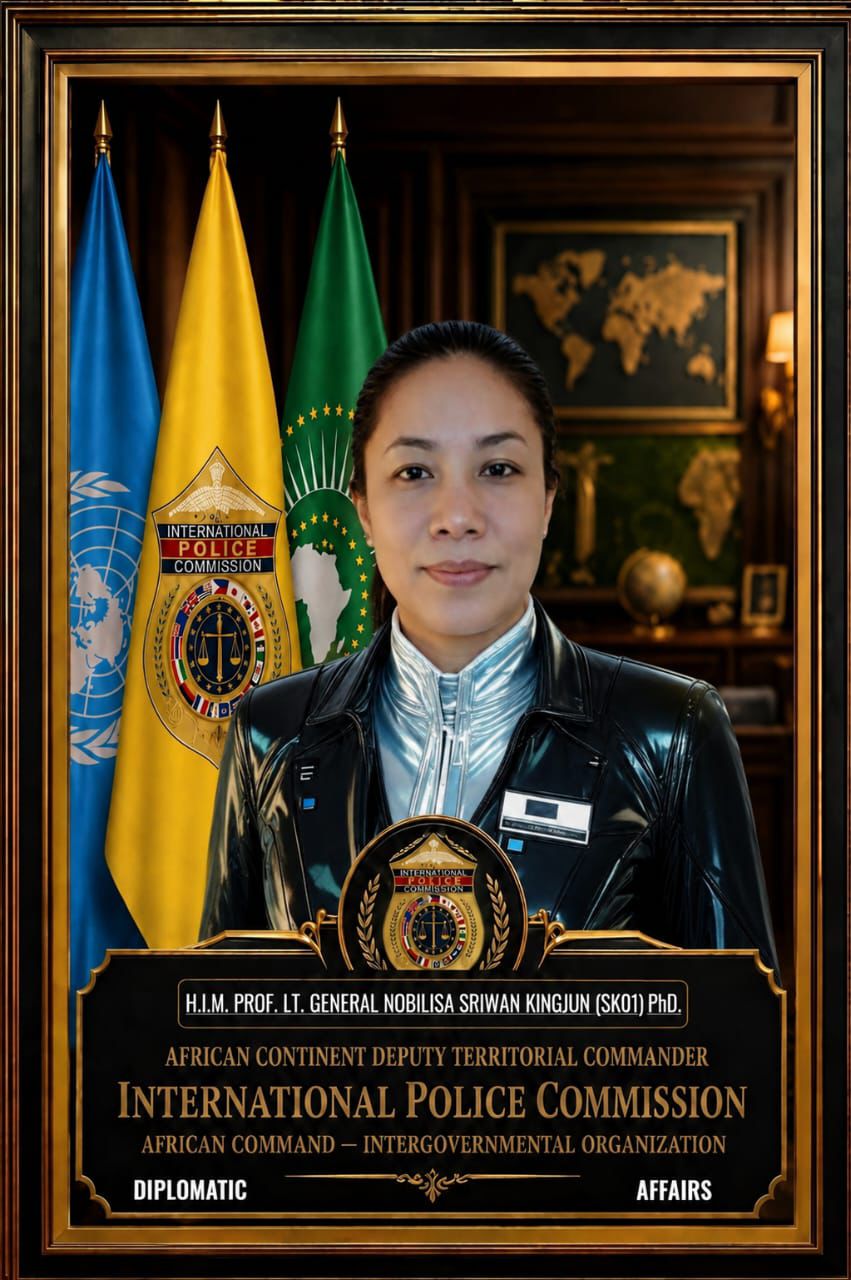
UKA Gears Up for Final ATC Exchangeability Test Run as June Preparations Begin.
May 30, 2026 – As the month of June gathers momentum, the *United Kingdom of Atlantis, UKA*, a sovereign nation has unveiled a series of vital guidelines and preparatory packages to ensure citizens and stakeholders run the *ATC Exchangeability* process effectively.
In an official update, the *President of Atlantic Crown Limited, Empress of Attica Empire UKA*, confirmed that the *Final Test Run of ATC Exchangeability* is scheduled for the month of June 2026. The exercise marks a key phase ahead of the *Official Exchangeability Window, set to run from July 2026 to February 2027*.
### Key Highlights from the Presidential Briefing
1. *Final Test Run – June 2026*
The test run is designed to validate systems, procedures, and user readiness before full activation. Citizens, partners, and designated participants are urged to follow all official advisories released by UKA authorities during this period.
2. *Official Exchangeability Period*
Following the successful completion of the June test run, the Official Exchangeability will commence in july 2026 and we are Expecting Full Exchange ability between July Ending, 2026 to February 2026.
UKA stated that detailed schedules, eligibility requirements, and step-by-step instructions will be communicated progressively through verified UKA channels.
3. *Benefiting Packages for June*
In line with UKA’s commitment to citizen empowerment, the month of June will feature “benefiting packages” aimed at education, preparation, and seamless onboarding. These packages are intended to equip the people of UKA with the knowledge and tools needed for effective participation.
4. *Commitment to Transparency*
Addressing the nation, the Empress of Attica Empire UKA emphasized:
_“Final Test Run of ATC Comes up in The Month of June, As We Prepare For The Official Exchangeability, Between July 2026 To Feb 2027. All Information Will Be Communicated.”_
UKA reaffirmed that only information released through official UKA platforms should be regarded as authoritative.
The United Kingdom of Atlantis is encouraging all citizens, representatives, and interested parties to remain alert to official communications, attend designated orientation sessions, and avoid unofficial sources. UKA’s dedication to order, clarity, and the collective benefit of its people as the nation moves into this significant phase.
For updates, advisories, and participation guidelines, citizens are advised to monitor official UKA communication channels.
United Kingdom of Atlantis, UKA, is a sovereign nation, committed to national development, citizen welfare, and structured economic participation through initiatives such as ATC Exchangeability.
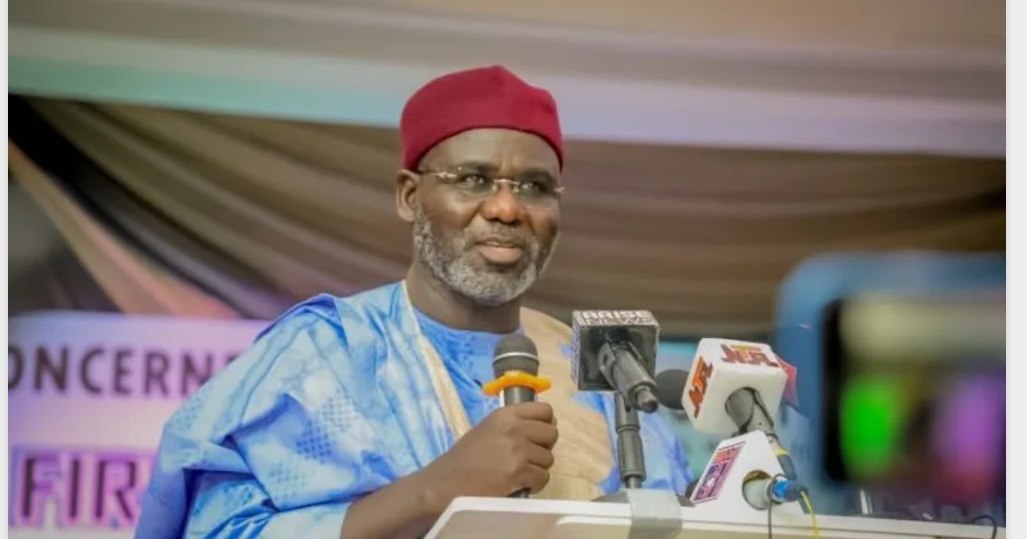
Three Years On, General Buratai Hails Tinubu’s Economic, Security Achievements
Former Chief of Army Staff, Lt. Gen. Tukur Buratai (retd.), has commended President Bola Ahmed Tinubu for what he described as bold economic reforms and improved security efforts as the President marks three years in office.
In a goodwill message on Thursday to commemorate Tinubu’s third anniversary as President and Commander-in-Chief of the Armed Forces, Buratai said the administration had taken courageous decisions that would leave a lasting impact on Nigeria’s development.

According to him, President Tinubu broke a long-standing cycle that had hindered national growth by removing fuel subsidy and implementing foreign exchange reforms aimed at stabilising the naira and strengthening the economy.
He noted that the reforms were beginning to yield positive results, citing the global acceptance of Nigerian debit cards, the gradual revival of local refineries, access to student loans, and ongoing road and infrastructure projects across the country.
“The FCT Administration has also recorded remarkable progress, completing major road projects that remained unfinished for over 16 years,” Buratai stated.
The former army chief also praised the administration’s security efforts, saying renewed military offensives against insurgents, terrorists and bandits had led to notable successes across various parts of the country.
He specifically lauded recent joint operations involving Nigerian and United States forces against Boko Haram and ISWAP in the North-East, as well as intensified counter-banditry operations in the North-West.
“We have seen notorious ISWAP commanders being neutralised. I congratulate the Commander-in-Chief, the Minister of Defence, the Chief of Defence Staff, the Service Chiefs, the Inspector-General of Police and heads of intelligence agencies for their efforts,” he said.
Buratai, however, acknowledged that challenges remained, stressing the need for more aggressive military operations and intelligence-driven strategies in the coming year.
While urging Nigerians to remain hopeful, he said celebrating the President’s achievements did not amount to ignoring the difficulties facing the nation.
“Because you truly care, you have shown the courage to trade short-term comfort for long-term hope. Nigerians need your reassurances, and that is why we remain optimistic and full of confidence,” he added.
The retired military officer reaffirmed his support for the Tinubu administration and expressed confidence that the foundation being laid by the government would deliver a brighter future for the country.
He also prayed for God’s guidance, wisdom, strength and good health for the President as he continues to lead Nigeria.
NUT Raises Alarm Over Continued Captivity of Abducted Oyo Pupils, Teachers
The Nigeria Union of Teachers has expressed deep concern over the continued captivity of pupils and teachers abducted during an attack on schools in the Ahoro-Esinle and Yawota communities in Oriire Local Government Area of Oyo State.
In a statement issued on Saturday, the Oyo State wing of the union described the situation as increasingly distressing, particularly following the emergence of a video allegedly released by the abductors showing the victims pleading for their freedom.
The union said the footage had heightened fears over the welfare of the abducted pupils and teachers, describing their ordeal as heartbreaking and unacceptable.

According to the NUT, no child or teacher deserves to be subjected to such traumatic experiences, adding that the prolonged captivity of the victims has continued to inflict psychological pain on their families, colleagues and the wider education community.
The union called on the Federal Government, Oyo State Government and relevant security agencies to intensify efforts towards securing the immediate and safe release of the victims.
“This is not a moment for hesitation. It is a moment for coordinated, intelligence-driven efforts to ensure the immediate and safe release of all abducted pupils and teachers,” the statement read.
While acknowledging ongoing interventions by security agencies and government authorities, the union stressed that time was of the essence, warning that every additional day in captivity deepens the trauma suffered by the victims.
The NUT urged security operatives to strengthen surveillance, improve community intelligence gathering and deploy all necessary operational and diplomatic measures to facilitate the rescue of the abductees.
It also appealed to traditional rulers, community leaders and residents to support rescue efforts by providing credible information that could assist security agencies.
“The safety of our children and teachers must remain a collective priority,” the union stated.
Reaffirming its support for the families of the victims, the NUT pledged continued solidarity and prayers while advocating safer learning environments across the country.
The statement was jointly signed by the Chairman of the Oyo State NUT, Comrade Hassan Ajibola Fatai, and the Secretary, Comrade Salami Olukayode.


- Afreximbank Deepens Commitment to Economic Progress in The Bahamas June 1, 2026
- African Electric Vehicle (EV) platform Spiro raises $215M in equity to scale electric mobility and energy infrastructure across Africa June 1, 2026
- Africa Centres for Disease Control and Prevention (Africa CDC) Statement on Attacks Against Health Facilities During the Bundibugyo Virus Disease Response in the Democratic Republic of the Congo June 1, 2026
- Putting consumers at the centre of Africa’s dairy transformation June 1, 2026
- International Rescue Committee (IRC) warns Democratic Republic of the Congo (DRC) Ebola outbreak likely far larger than official figures suggest June 1, 2026
- South Africa: Portfolio Committee on Health Marks National Cancer Survivor Day and Reaffirms Importance of Early Detection and Public Awareness June 1, 2026
- Rwanda’s RSSB Tigers Crowned 2026 Basketball Africa League Champions June 1, 2026
- Uganda: Appointments Committee Begins Vetting of Ministerial Nominees June 1, 2026
- Sudan braces for worsening child malnutrition as pre-harvest season starts June 1, 2026
- Etu Energias Strengthens Angolan Footprint, Returns to Angola Oil & Gas (AOG) 2026 as Champion Sponsor June 1, 2026
- Afreximbank Deepens Commitment to Economic Progress in The Bahamas June 1, 2026
- African Electric Vehicle (EV) platform Spiro raises $215M in equity to scale electric mobility and energy infrastructure across Africa June 1, 2026
- Africa Centres for Disease Control and Prevention (Africa CDC) Statement on Attacks Against Health Facilities During the Bundibugyo Virus Disease Response in the Democratic Republic of the Congo June 1, 2026
- Putting consumers at the centre of Africa’s dairy transformation June 1, 2026
- International Rescue Committee (IRC) warns Democratic Republic of the Congo (DRC) Ebola outbreak likely far larger than official figures suggest June 1, 2026
- South Africa: Portfolio Committee on Health Marks National Cancer Survivor Day and Reaffirms Importance of Early Detection and Public Awareness June 1, 2026
- Rwanda’s RSSB Tigers Crowned 2026 Basketball Africa League Champions June 1, 2026
-

 news6 months ago
WHO REALLY OWNS MONIEPOINT? The $290 Million Deal That Sold Nigeria’s Top Fintech to Foreign Interests
-

 society4 weeks ago
SOCIAL MEDIA IS NOT A BATTLEFIELD COMMAND – WHY THE NIGERIAN ARMY’S ACTION AGAINST JUSTICE CRACK IS A NATIONAL SECURITY IMPERATIVE
-

 celebrity radar - gossips4 months ago
Dr. Chris Okafor Returns with Power and Fire of the Spirit -Mounts Grace Nation Altar with Fresh Anointing and Restoration Grace on February 1, 2026
-

 celebrity radar - gossips6 months ago
Prophet Kingsley Aitafo Releases 2026 Prophecy: ‘Nigeria Will Rise, but the World Must Prepare for Turbulence’