
society
Ramaphosa’s Quiet Diplomacy vs. Loud Xenophobia: How Operation Dudula Is Undermining South Africa’s Global Standing


Ramaphosa’s Quiet Diplomacy vs. Loud Xenophobia: How Operation Dudula Is Undermining South Africa’s Global Standing.
By George Omagbemi Sylvester | SaharaWeeklyNG.com
A Nation Pulling in Two Directions. President Cyril Ramaphosa’s administration is walking a tightrope. On one side lies the urgent task of rebuilding South Africa’s economy, battered by years of mismanagement, COVID-19 shocks, rampant corruption and crippling power shortages. On the other side stands a growing domestic threat: the surge of xenophobic extremism, led by vigilante groups like Operation Dudula, who are waging war on African migrants under the false pretense of patriotism.

As Ramaphosa desperately tries to woo foreign investors (such as through a private telephone call with U.S. President Donald Trump seeking financial aid) he faces sabotage from within. The violent rhetoric and actions of xenophobic groups are painting a picture of South Africa as intolerant, lawless and hostile to Africans. How does a nation attract the world’s investment while simultaneously attacking its own African brothers and sisters?
This contradiction is not just a diplomatic blunder. It is a moral, economic and political crisis.

The Trump Call: A Desperate Plea for Help. In a move that underscores the dire state of the South African economy, President Ramaphosa reportedly held a private phone conversation with U.S. President Trump during his presidency. The conversation focused on foreign investment, debt relief and bilateral cooperation in key infrastructure and energy projects. This outreach was part of Ramaphosa’s larger effort to revive investor confidence amid deteriorating economic indicators.
Dr. John Stremlau, visiting professor of international relations at Wits University, contextualized the urgency: “Such a conversation between heads of state signifies desperation not diplomacy. South Africa needed help and Ramaphosa turned to Washington.”
But while Ramaphosa was quietly lobbying for help abroad, the scenes unfolding on South African streets told a different story; one of chaos, hatred and systemic violence.
Operation Dudula: A Dangerous National Embarrassment. Launched in 2021, Operation Dudula presents itself as a grassroots movement protecting South African interests. In reality, it is a xenophobic militia targeting black African immigrants. Its members have raided shops, harassed traders, stormed neighborhoods and even hospitals accusing undocumented foreigners of stealing jobs and resources. In one shocking incident in Soweto in March 2022, members of Operation Dudula stormed the Kalafong Provincial Tertiary Hospital, demanding that foreign nationals be denied medical attention. The group claimed that Zimbabwean and Congolese patients were straining the South African health system. Their presence endangered healthcare workers, patients and the sanctity of the health sector.
Police swiftly intervened and arrested several Dudula members involved in the illegal hospital raid. According to Gauteng police spokesperson Colonel Noxolo Kweza: “No one has the right to deny another human being healthcare. Those who breach the law under the guise of activism will face consequences.”
This disgraceful act sparked widespread outrage across civil society. The South African Medical Association issued a scathing condemnation: “Hospitals are places of healing, not political battlegrounds. Denying healthcare based on nationality is not just unethical but criminal.”
Despite this, Dudula leaders doubled down on their actions, vowing to “continue protecting South Africa from foreign invasion.” That language, chillingly similar to far-right groups across the globe, has no place in a democratic society.
Diplomatic Damage and Regional Fallout. The international community has not remained silent. The African Union, ECOWAS and multiple foreign embassies have expressed grave concern over recurring xenophobic incidents in South Africa. These incidents not only tarnish South Africa’s image but also threaten regional integration efforts like the African Continental Free Trade Agreement (AfCFTA).

A 2024 statement from the African Union Commission bluntly stated: “The continued xenophobic violence in South Africa undermines the values of African unity and mutual prosperity.”
In economic terms, the damage is tangible. According to South Africa’s Reserve Bank, foreign direct investment (FDI) fell by 12% in 2024 compared to 2023, with major declines in tourism, retail and health services. Investor perception surveys show a significant drop in South Africa’s “political risk” ratings; due not just to corruption or power instability, but also “widespread anti-immigrant sentiment.”
Dr. Mzukisi Qobo of the Wits School of Governance warns: “You do not invite global investors with one hand while chasing their citizens out of hospitals with the other. The optics are horrible and the message is worse.”
Ramaphosa’s Silence: Complicity or Cowardice? What makes this crisis even more alarming is President Ramaphosa’s consistent silence. Rather than confronting Operation Dudula and its sister movements head-on, the president has tiptoed around the issue, choosing vague statements over decisive condemnation.
Advocate Tembeka Ngcukaitobi, constitutional lawyer and political commentator, argues: “When a president fails to condemn what is clearly hate-driven vigilantism, he gives it oxygen. Silence, in this context, is not neutrality, it is complicity.”
Critics believe Ramaphosa fears political backlash from segments of the unemployed population who have been manipulated into believing that foreigners are to blame for their suffering; but scapegoating migrants does nothing to address the ANC’s long-standing governance failures, nor the widening inequality that fuels unrest.
A Crisis of Identity: Who Are We as a Nation?
The xenophobia crisis is more than a diplomatic headache, it is a moral referendum on South Africa’s soul. Once admired as the rainbow nation led by Mandela’s dream of unity, the country now risks becoming infamous for mob rule, state neglect and tribal hatred.
Human rights lawyer Kaajal Ramjathan-Keogh remarked: “We cannot call ourselves a beacon of African leadership when we assault fellow Africans. You cannot build a nation by burning the bridges that connect it to its neighbors.”
Instead of building solidarity across the continent, South Africa is becoming isolated. Bilateral relations with countries like Zimbabwe and Nigeria are strained. Grassroots Pan-African solidarity is collapsing under the weight of paranoia and propaganda.
What Must Be Done: The Path Forward. The time for speeches is over. South Africa needs action:
Dismantle Operation Dudula and similar groups: These organizations are domestic terrorists, not civil society actors.
Protect Healthcare and Education Spaces: Government must pass legislation declaring hospitals and schools as non-negotiable humanitarian zones.
Public Acknowledgment of Xenophobia: Ramaphosa must confront the crisis directly in his public addresses and outline state policy to curb it.
Regional Diplomatic Reset: South Africa should host an emergency summit with African leaders to renew trust and reaffirm its Pan-African commitments.
Job Creation Through Inclusion, Not Exclusion: Blaming foreigners won’t solve unemployment. Structural reforms, investment in youth entrepreneurship and labor market flexibility are key.
Final Thoughts: A Nation at the Crossroads. President Cyril Ramaphosa stands at a defining moment in his leadership. He can either be remembered as the man who allowed hatred to fracture the dream of a united Africa, or as the leader who rose above populism to protect South Africa’s future.
The CHOICE is his; but TIME is not.
As Nelson Mandela warned decades ago: “The greatest glory in living lies not in never falling, but in rising every time we fall.”
South Africa has fallen. The question now is; will it rise?

Written by George Omagbemi Sylvester
Published by SaharaWeeklyNG.com




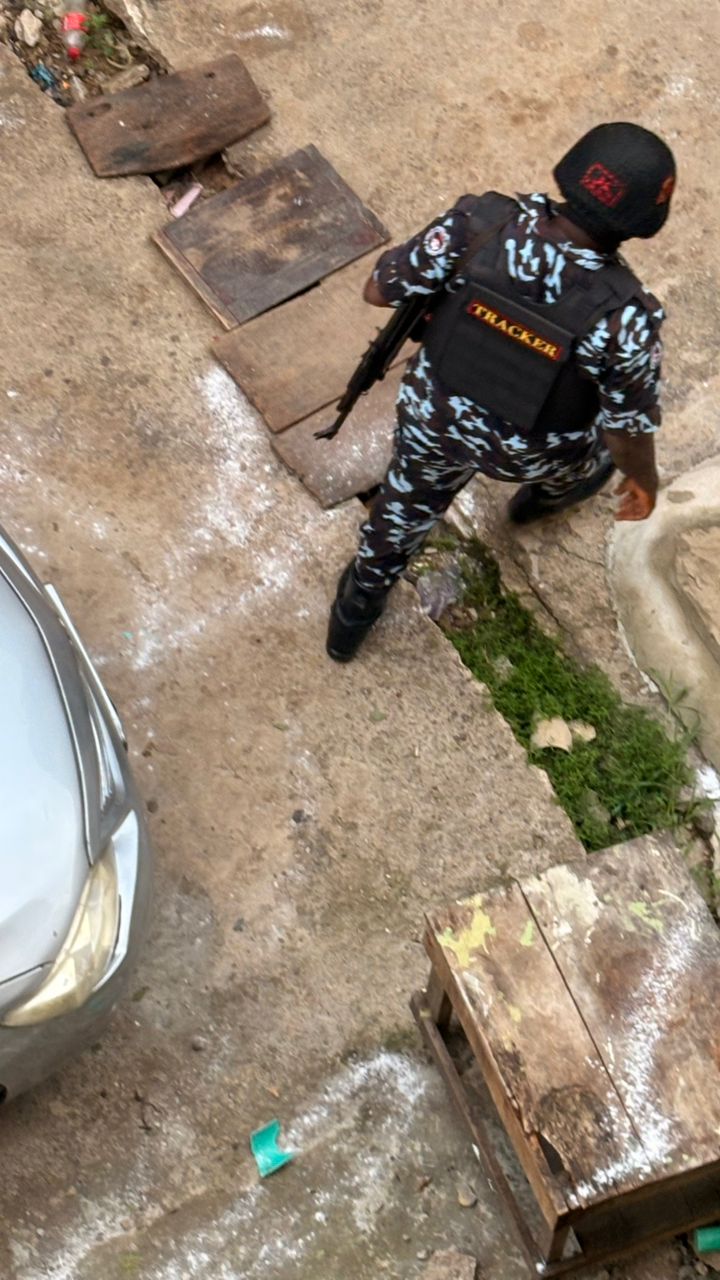
Police Officers Detained as Family Property Dispute Sparks Demolition Controversy in Lagos
By Ifeoma Ikem
A property dispute within the Omotayo-Ojo family has taken a dramatic turn following a controversial demolition exercise at a residential building in Ikosi-Ketu, Lagos State, which reportedly left tenants displaced and led to the detention of some police officers allegedly involved in the operation.

The property, located at 23B Loveall Street, Ikosi-Ketu, has been the subject of a prolonged ownership tussle since the death of its owner, Chief Oludola Omotayo Ojo, the Babaalaje of Imesi-Ile, Osun State, in 2019.
Residents said tension erupted when a group of individuals, accompanied by security operatives, stormed the premises and commenced demolition activities.
According to eyewitnesses, portions of the building were pulled down while tenants rushed to salvage their belongings from affected apartments.
The residents alleged that windows, doors and roofing sheets were damaged during the exercise, exposing parts of the building to the elements and causing significant losses to occupants.
At the centre of the dispute is Mrs Mojisola Omotayo Ojo Alolagbe, who claimed that the property was allocated to her by her late father during his lifetime as a source of financial support.
She alleged that some family members had persistently challenged her ownership claim despite ongoing legal proceedings relating to the administration of the deceased’s estate.
Alolagbe further claimed that the latest incident was part of a series of attempts to wrest control of the property, citing previous cases of alleged vandalism and partial demolition in November 2025, January 2026 and February 2026.
The situation escalated further when reports emerged that police officers allegedly involved in the demolition were later apprehended and conveyed in a Black Maria vehicle over questions surrounding the legality of their participation in the operation.
Sources familiar with the matter said those behind the demolition had initially claimed to be acting on approval from the Lagos State Ministry of Lands. However, the authenticity and extent of such approval could not be independently verified as of the time of filing this report.
The development has generated concern among residents and community members, who questioned the involvement of security personnel in what they described as a civil matter.
Some tenants, who said they had recently renewed their tenancy agreements, lamented the destruction of their property and appealed to the authorities for protection and possible compensation.

They also called for a thorough investigation into the circumstances surrounding the demolition, insisting that the rights of all parties involved should be protected.
Stakeholders have urged the Lagos State Government, security agencies and the judiciary to intervene and ensure that the dispute is resolved through lawful means to prevent further escalation.
The controversy has continued to draw public attention, raising concerns over property rights, estate administration and the role of law enforcement agencies in civil disputes.

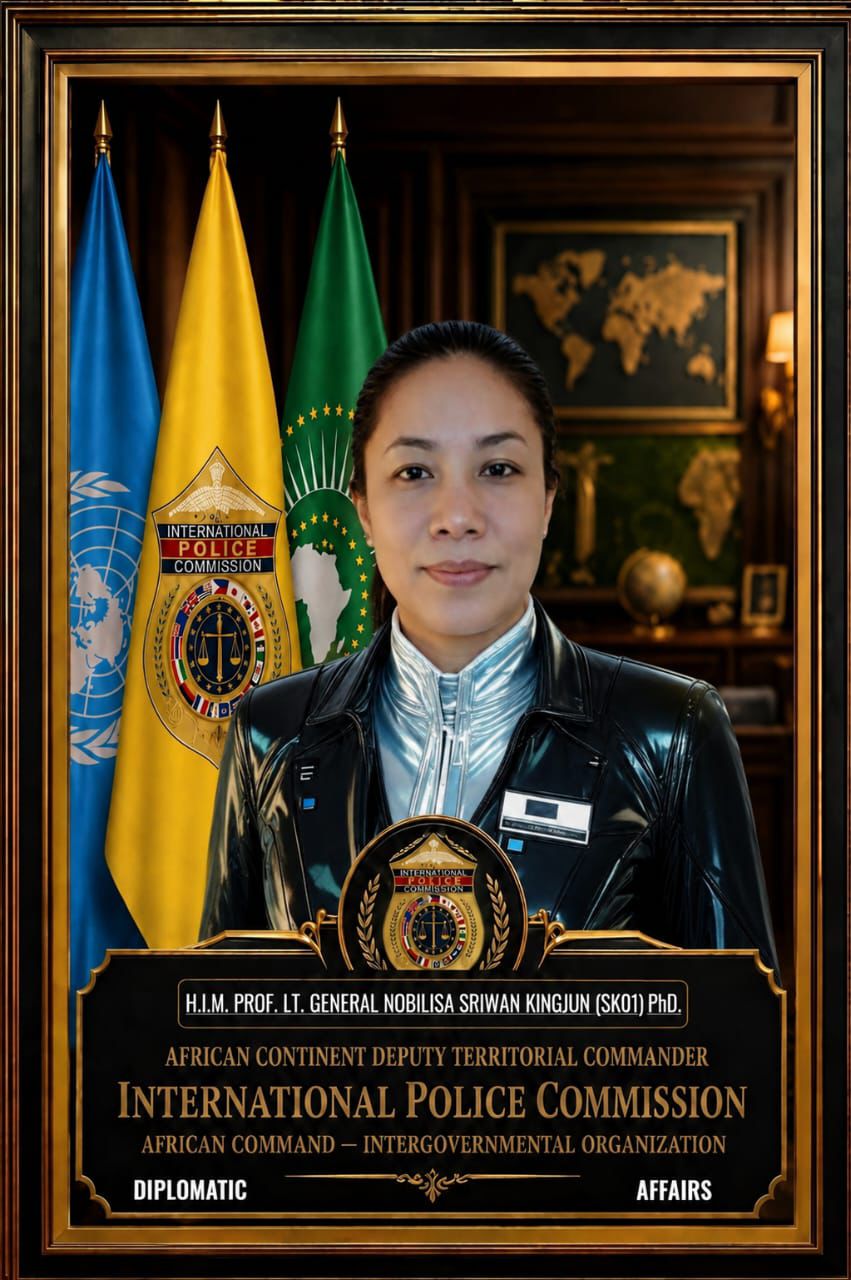
UKA Gears Up for Final ATC Exchangeability Test Run as June Preparations Begin.
May 30, 2026 – As the month of June gathers momentum, the *United Kingdom of Atlantis, UKA*, a sovereign nation has unveiled a series of vital guidelines and preparatory packages to ensure citizens and stakeholders run the *ATC Exchangeability* process effectively.
In an official update, the *President of Atlantic Crown Limited, Empress of Attica Empire UKA*, confirmed that the *Final Test Run of ATC Exchangeability* is scheduled for the month of June 2026. The exercise marks a key phase ahead of the *Official Exchangeability Window, set to run from July 2026 to February 2027*.
### Key Highlights from the Presidential Briefing
1. *Final Test Run – June 2026*
The test run is designed to validate systems, procedures, and user readiness before full activation. Citizens, partners, and designated participants are urged to follow all official advisories released by UKA authorities during this period.
2. *Official Exchangeability Period*
Following the successful completion of the June test run, the Official Exchangeability will commence in july 2026 and we are Expecting Full Exchange ability between July Ending, 2026 to February 2026.
UKA stated that detailed schedules, eligibility requirements, and step-by-step instructions will be communicated progressively through verified UKA channels.
3. *Benefiting Packages for June*
In line with UKA’s commitment to citizen empowerment, the month of June will feature “benefiting packages” aimed at education, preparation, and seamless onboarding. These packages are intended to equip the people of UKA with the knowledge and tools needed for effective participation.
4. *Commitment to Transparency*
Addressing the nation, the Empress of Attica Empire UKA emphasized:
_“Final Test Run of ATC Comes up in The Month of June, As We Prepare For The Official Exchangeability, Between July 2026 To Feb 2027. All Information Will Be Communicated.”_
UKA reaffirmed that only information released through official UKA platforms should be regarded as authoritative.
The United Kingdom of Atlantis is encouraging all citizens, representatives, and interested parties to remain alert to official communications, attend designated orientation sessions, and avoid unofficial sources. UKA’s dedication to order, clarity, and the collective benefit of its people as the nation moves into this significant phase.
For updates, advisories, and participation guidelines, citizens are advised to monitor official UKA communication channels.
United Kingdom of Atlantis, UKA, is a sovereign nation, committed to national development, citizen welfare, and structured economic participation through initiatives such as ATC Exchangeability.
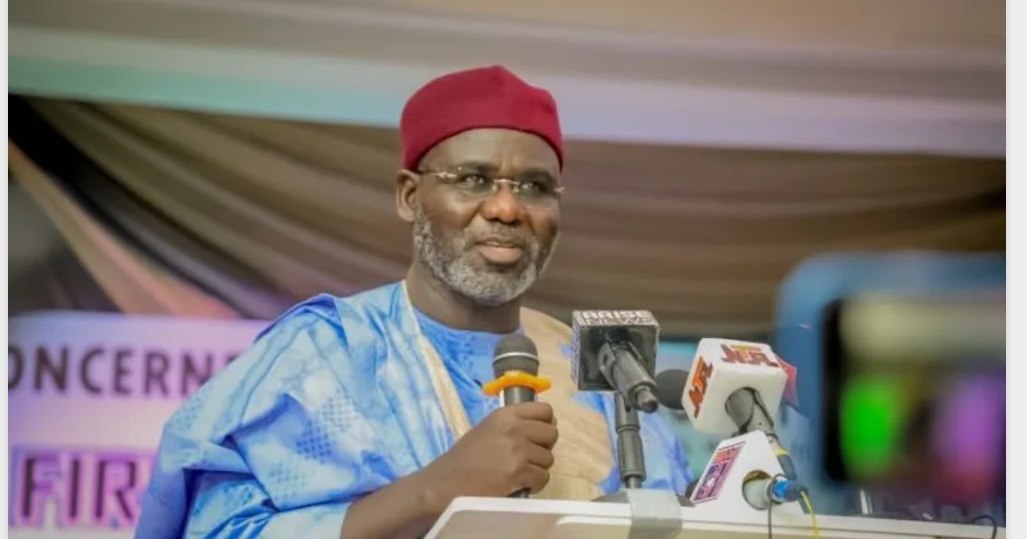
Three Years On, General Buratai Hails Tinubu’s Economic, Security Achievements
Former Chief of Army Staff, Lt. Gen. Tukur Buratai (retd.), has commended President Bola Ahmed Tinubu for what he described as bold economic reforms and improved security efforts as the President marks three years in office.
In a goodwill message on Thursday to commemorate Tinubu’s third anniversary as President and Commander-in-Chief of the Armed Forces, Buratai said the administration had taken courageous decisions that would leave a lasting impact on Nigeria’s development.

According to him, President Tinubu broke a long-standing cycle that had hindered national growth by removing fuel subsidy and implementing foreign exchange reforms aimed at stabilising the naira and strengthening the economy.
He noted that the reforms were beginning to yield positive results, citing the global acceptance of Nigerian debit cards, the gradual revival of local refineries, access to student loans, and ongoing road and infrastructure projects across the country.
“The FCT Administration has also recorded remarkable progress, completing major road projects that remained unfinished for over 16 years,” Buratai stated.
The former army chief also praised the administration’s security efforts, saying renewed military offensives against insurgents, terrorists and bandits had led to notable successes across various parts of the country.
He specifically lauded recent joint operations involving Nigerian and United States forces against Boko Haram and ISWAP in the North-East, as well as intensified counter-banditry operations in the North-West.
“We have seen notorious ISWAP commanders being neutralised. I congratulate the Commander-in-Chief, the Minister of Defence, the Chief of Defence Staff, the Service Chiefs, the Inspector-General of Police and heads of intelligence agencies for their efforts,” he said.
Buratai, however, acknowledged that challenges remained, stressing the need for more aggressive military operations and intelligence-driven strategies in the coming year.
While urging Nigerians to remain hopeful, he said celebrating the President’s achievements did not amount to ignoring the difficulties facing the nation.
“Because you truly care, you have shown the courage to trade short-term comfort for long-term hope. Nigerians need your reassurances, and that is why we remain optimistic and full of confidence,” he added.
The retired military officer reaffirmed his support for the Tinubu administration and expressed confidence that the foundation being laid by the government would deliver a brighter future for the country.
He also prayed for God’s guidance, wisdom, strength and good health for the President as he continues to lead Nigeria.


- Africa: UNAIDS calls for renewed global solidarity as UN Secretary-General’s report warns that AIDS is not over and fragile gains are at risk June 4, 2026
- Eritrea: Vocational training provided to college students June 4, 2026
- World Bank Group Launches Ten-Year Strategy to Drive Jobs and Prosperity in Uganda June 4, 2026
- Prof Oramah’s appointments to the Royal African Society Patronage and Kenya’s National Infrastructure Fund herald continued recognition of his global leadership and pan-African impact June 4, 2026
- Africa Finance Corporation Raises Record US$2 Billion Syndicated Loan in Landmark Show of Confidence in Transformational Infrastructure Strategy June 4, 2026
- Libya Energy & Economic Summit (LEES) 2027 to Define Libya’s Next Phase of Energy Expansion in Tripoli June 4, 2026
- Uganda: President delivers State of the Nation Address today June 4, 2026
- United Nations High Commissioner for Refugees (UNHCR): Refugees in Eastern and Southern Africa remain in exile for nearly 16 years June 4, 2026
- 85% of Ministry of Food and Agriculture's (MoFA) 2026 Budget Released to Boost Food Production — Deputy Finance Minister June 4, 2026
- Deputy (Dep.) Finance Minister Courts Investors to Transform Ghana’s rice Economy June 4, 2026
- Africa: UNAIDS calls for renewed global solidarity as UN Secretary-General’s report warns that AIDS is not over and fragile gains are at risk June 4, 2026
- Eritrea: Vocational training provided to college students June 4, 2026
- World Bank Group Launches Ten-Year Strategy to Drive Jobs and Prosperity in Uganda June 4, 2026
- Prof Oramah’s appointments to the Royal African Society Patronage and Kenya’s National Infrastructure Fund herald continued recognition of his global leadership and pan-African impact June 4, 2026
- Africa Finance Corporation Raises Record US$2 Billion Syndicated Loan in Landmark Show of Confidence in Transformational Infrastructure Strategy June 4, 2026
- Libya Energy & Economic Summit (LEES) 2027 to Define Libya’s Next Phase of Energy Expansion in Tripoli June 4, 2026
- Uganda: President delivers State of the Nation Address today June 4, 2026
-

 news6 months ago
WHO REALLY OWNS MONIEPOINT? The $290 Million Deal That Sold Nigeria’s Top Fintech to Foreign Interests
-

 society1 month ago
SOCIAL MEDIA IS NOT A BATTLEFIELD COMMAND – WHY THE NIGERIAN ARMY’S ACTION AGAINST JUSTICE CRACK IS A NATIONAL SECURITY IMPERATIVE
-

 celebrity radar - gossips4 months ago
Dr. Chris Okafor Returns with Power and Fire of the Spirit -Mounts Grace Nation Altar with Fresh Anointing and Restoration Grace on February 1, 2026
-

 celebrity radar - gossips6 months ago
Prophet Kingsley Aitafo Releases 2026 Prophecy: ‘Nigeria Will Rise, but the World Must Prepare for Turbulence’