
Politics
Re: Need To Call Ugochinyere To Order* By Adamu Kuta.

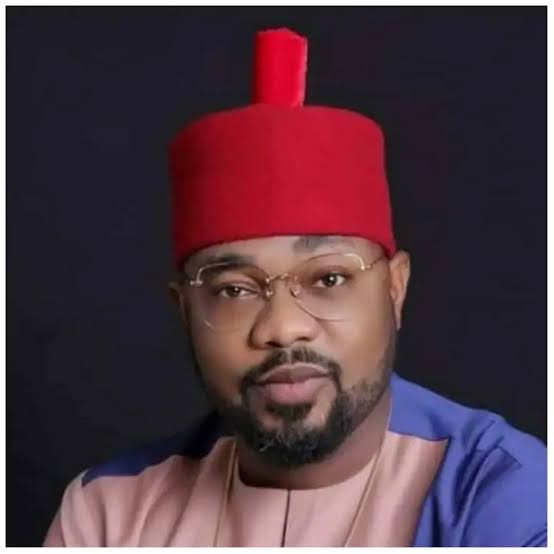
The press release issued by the Rivers State Caucus in the House of Representatives, titled “Need to Call Hon. Ikenga Ugochinyere to Order” is one that anyone who loves Nigeria and the future of Nigeria must pay attention to, study and condemn the warped thinking of those who issued it.
In this regard, while Rt. Hon. Dumnamene Dekor-Leader, Rivers Caucus in the House of Representatives and Hon. Cyril Hart-Secretary, Rivers Caucus in the House of Representatives, are the signatories to the document, the reality is that the statement and the false narrative it sought to push is a clear instance of the “voice of Jacob but the hand of Esau” as the Rivers Caucus is merely running errands for those who are exploiting Rivers State as a staging ground to hijack democracy in Nigeria.
Had the ideas propounded in the statement not been depraved and despicable it would have been comical because of its poor grasp of the fair intervention that Hon. Ikenga Ugochinyere made on the theatre of the absurd playing out in Rivers State. The lawmaker representing Ideato North/Ideato South Federal Constituency in Imo State had led a group, G-60, to demand the trial of 23 former local government chairmen in Rivers State for alleged treason after they refused to vacate office upon the expiration of their tenure. Their tenures derived from the 1999 Constitution of the Federal Republic of Nigeria (as amended), and to attempt to elongate their tenures without recourse to elections as prescribed in the Constitution is treasonable – it is a violation of the core aspect of the grand norm.
The former local Government Chairmen and some former members of the Rivers State House of Assembly who passed a sham resolution to extend council bosses’ tenures are of course openly loyal to the Federal Capital Territory Minister Nyesom Wike, who is the predeccessor to the incumbent governor, Siminalayi Fubara.
Whatever anyone has said or argued about the descent into anarchy playing out in Rivers State, the abridged version of the fact is that Fubara rebuffed Wike’s attempt to make himself a defacto life governor of the state, what some call the godfather, which is an euphemism for unrestricted access to keep stealing the state’s resources by dictating who occupies every single office in the state government.
That arrangement is criminal. The crisis it has precipitated in River State is even more criminal. Hence the need to commend the honourable feat of people like Ugochinyere who marshalled the bravery to make statesmanly interventions that call attention to the ongoing brigandage by Wike’s loyalists in Rivers State, including the recalcitrant former council chairmen who would not leave office even when their tenure is over.
The House of Representatives Rivers State Caucaus’ statement titled “Need to Call Hon. Ikenga Ugochinyere to Order” is consequently a laughable piece of writing by a group of oppressors, tyrants and anarchists who want to go equity with dirty hands.
The caucus is a vocal minority in the House of Representatives whose members are desperate for their coup in Rivers State to succeed so that they can use it as a template to hijack the House leadership, hence their drive to factionalise the House as a precursor to a Wike take-over of the parliament.
So, while not holding brief for Ugochinyere and G-60, it is pertinent to point out the tenuous attempts by the Rivers State Caucus in the House of Representatives to stand facts on their head in their press release.
First, insinuating that the Honourable member is making interventions in the Rivers debacle to “feather his nest” is outlandish as the Caucus members have by this assertion confirmed that they are the ones protecting their feathered nests through their attacks on Ugochinyere. They possibly hope to scare him off from drawing global attention to their reign of infamy in Rivers State. Sadly for them, Ugochinyere was not known to chicken out, even before he became a lawmaker. If the caucus concluded that Ugochinyere was sponsored then it is logical that they too were sponsored.
Secondly, they alleged that his interventions “constitute a thoughtless assault on due process and ongoing judicial processes aimed at resolving the disagreement in Rivers.” On the contrary, the court cases in Rivers State are not aimed at “resolving disagreements”. Rather, the litigations were mostly instituted to stop state capture by Wike and his associates. To the extent that there have been attempts by associates of these caucus members to cow or intimidate the judiciary to hijack the judgment in these cases then the interventions of the likes of Ugochinyere are the vigilance needed to save democracy in Nigeria.
Furthermore, if Ugochinyere is an insignificant twerp in the social space as asserted by the caucus, then he is a useful one because he has compelled his supposed colleagues to reassess the damage they are causing to the grand scheme of Rivers politics and by implication the whole of Nigeria. It is comic that these caucus members believe that only someone from Rivers State has the right to comment or intervene in a crisis that risks being replicated or spreading to other states and ultimately set Nigeria ablaze.
Of course, the current situation in Rivers State concerns Hon. Ugochinyere, who has experienced a version of the evil franchise in his home state, Imo State; a state where he was repeatedly targeted for assassination by people who share the same ideology as the caucus members. His intervention in Rivers is thus to ensure that a new strain of the madness is not allowed to mature and spread to another state, which does not require that the matter be brought to the floor of the House before he acts proactively.
As a parting shot, members of the caucus must hide their faces in shame since it took their colleague from Imo State to draw national attention to something they should have flagged in plenary under a motion of urgent national importance. The Rivers Caucus can still save their faces by doing the needful and taking genuine steps to end their support for illegality in their home state.
In conclusion, the Rivers lawmakers must publicly call on the leadership of the House of Representatives to recognise Ugochinyere’s contributions in holding up the House as an institution of repute and using its platform to seek a solution to the Rivers State debacle.
Kuta wrote this piece from Bosso.




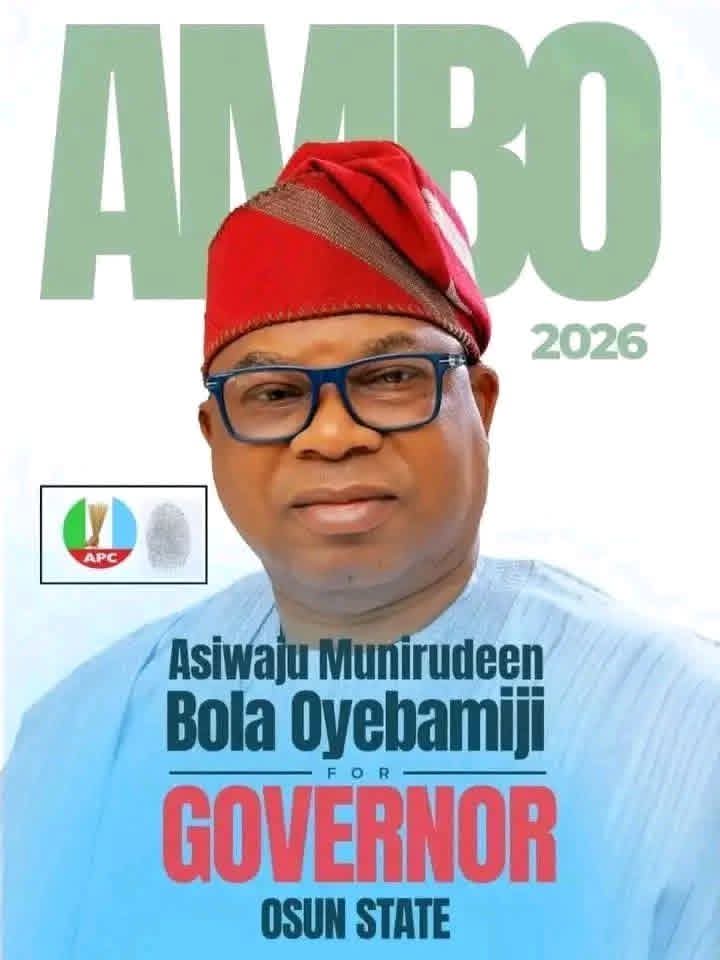
AMBO and the Osun Governorship Race: Assessing the Man, the Politics and the Vision
As political activities gather momentum ahead of the 2026 Osun State governorship election, a public affairs commentator, Oluseyi Olonade, has described the emergence of Asiwaju Munirudeen Bola Oyebamiji, popularly known as AMBO, as a significant development in the state’s political landscape.
In an article titled “Oyebamiji: The Man, The Politics and The Aspiration,” Olonade argued that the All Progressives Congress governorship hopeful possesses the character, experience and vision needed to reposition Osun State for sustainable growth.
According to the writer, Oyebamiji’s appeal stems from his extensive background in the banking sector, where he spent nearly three decades working with institutions including Wema Bank, Trans International Bank, Spring Bank and Enterprise Bank.
A native of Ikire in Irewole Local Government Area, Oyebamiji was described as a technocrat whose experience in corporate governance, finance and risk management has shaped his approach to public administration.
The article noted that his public service journey gained prominence in 2012 when he was appointed to oversee the then Osun State Investment Company Limited. Under his leadership, the organisation was reportedly restructured and transformed into Omoluabi Holdings Limited.
The writer further highlighted Oyebamiji’s tenure as Commissioner for Finance under successive APC administrations, where he was credited with managing the state’s finances during challenging economic periods.
Olonade also referenced Oyebamiji’s appointment as Managing Director of the National Inland Waterways Authority, describing it as further evidence of his administrative and leadership capabilities.
The article contrasted Oyebamiji’s governance philosophy with that of the current administration in Osun State, arguing that the APC aspirant favours institutional reforms, economic diversification and fiscal discipline.

According to the writer, Oyebamiji’s proposed agenda includes strengthening transparency in government spending, expanding internally generated revenue, attracting private-sector investments and promoting industrial and agricultural development.
The article also highlighted youth empowerment, entrepreneurship development and digital skills acquisition as key components of his vision for the state.
Olonade concluded that the forthcoming governorship election would present voters with a choice between different approaches to governance, expressing confidence that Oyebamiji’s experience and developmental agenda make him a strong contender in the race.
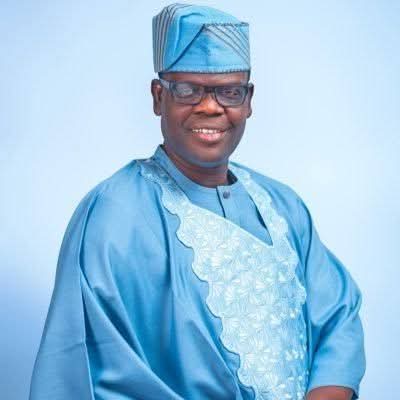
*Oselu Tiwa nTiwa Endorses Oriyomi Hamzat for Oyo Governorship*
A sociopolitical support group in Oyo State, Oselu Tiwa nTiwa, has declared its support for Alhaji Oriyomi Hamzat as the authentic governorship candidate of the Accord Party ahead of the forthcoming governorship election in the state.
The group made its position known in a statement jointly signed by its President, Mr. Adewale Oluwaseyi and Secretary, Alh. Adebayo Oyewole, on Thursday, describing Hamzat as a grassroots figure with strong connection to the people and a track record of humanitarian interventions across Oyo State.

According to the group, the endorsement followed what it described as careful observation of Hamzat’s leadership qualities, compassion and dedication to the welfare of ordinary citizens.
“Oriyomi Hamzat has consistently demonstrated empathy, courage and selfless commitment to humanity. Through his numerous interventions in the lives of ordinary citizens, he has become a symbol of hope to many families and communities,” the statement read.
Oselu Tiwa nTiwa also appealed to the national leadership of the Accord Party to prioritise the long-term future and electoral growth of the party in its decision-making process.
The group noted that Hamzat’s candidacy presents an opportunity for the party to strengthen its grassroots support base and expand its political relevance across Oyo State.
“We respectfully appeal to the National Leadership of the Accord Party to look beyond immediate political calculations and consider the bigger picture, the future growth, stability and electoral success of the party in Oyo State and beyond,” the statement added.
The group further expressed confidence in the leadership of the party, saying it believes the party’s national officers and stakeholders would take decisions that reflect fairness, inclusiveness and the collective interest of members.
While calling on party loyalists to remain calm and united, Oselu Tiwa nTiwa said continued consultations among stakeholders would help strengthen the Accord Party ahead of the election.
Signed:
Alh. Adebayo Oyewole,
Secretary.
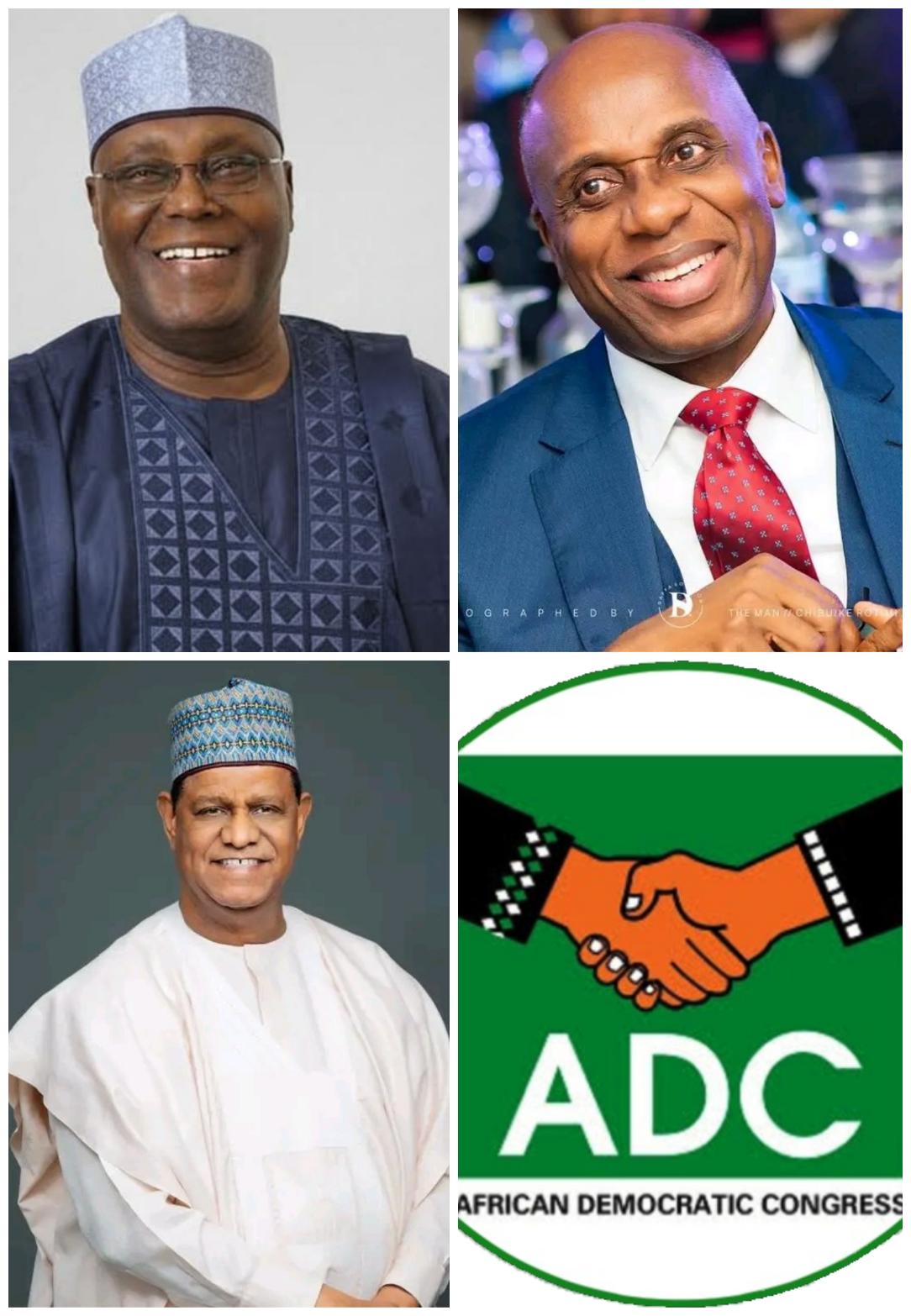
Atiku Set To Clinch ADC Presidential Ticket, Leads Amaechi, Hayatu-Deen In 34 States
Former Vice President of Nigeria and frontline presidential aspirant of the African Democratic Congress (ADC), Atiku Abubakar, is projected to emerge winner of the party’s presidential primaries, according to impeccable sources in Abuja.
The primaries, conducted across over 8,000 wards in the 36 states of the federation and the Federal Capital Territory, reportedly placed Atiku far ahead of his closest rivals — former Rivers State Governor, Rotimi Amaechi, and former Chairman of the Nigerian Economic Summit Group, Mohammed Hayatu-Deen.

Highly placed party insiders disclosed that Atiku is currently leading in 34 states, including the FCT, after securing dominance across the 19 Northern states, the five South-East states, and the six South-West states, while also maintaining a strong showing in at least three states in the South-South geopolitical zone.
The sources added that the outcome reflects what they described as “an overwhelming nationwide acceptance” of the former vice president within the opposition party ahead of the 2027 general election.
Meanwhile, the ADC leadership has invited members of the press to the official announcement of the final collated results scheduled for 11:00 a.m. on Tuesday, May 26, 2026, in Abuja.
The declaration of results is expected to be broadcast live on ARISE Television and two other major television stations, while also being livestreamed on the party’s official social media platforms on X and Facebook.
Speaking ahead of the announcement, the founding National Chairman of the ADC, Chief Ralph Nwosu, said the decision to televise the exercise live was aimed at promoting transparency and democratic accountability.
“We want millions of Nigerians at home and in the Diaspora to witness democracy in action,” Nwosu said.
He further revealed that the party leadership would encourage all three presidential aspirants to publicly embrace a peace accord and commit themselves to working together in unity for the party’s success.
According to him, the move is necessary to strengthen internal cohesion and position the ADC for victory in the presidential election scheduled for January 16, 2027.
Details later.


- Africa: UNAIDS calls for renewed global solidarity as UN Secretary-General’s report warns that AIDS is not over and fragile gains are at risk June 4, 2026
- Eritrea: Vocational training provided to college students June 4, 2026
- World Bank Group Launches Ten-Year Strategy to Drive Jobs and Prosperity in Uganda June 4, 2026
- Prof Oramah’s appointments to the Royal African Society Patronage and Kenya’s National Infrastructure Fund herald continued recognition of his global leadership and pan-African impact June 4, 2026
- Africa Finance Corporation Raises Record US$2 Billion Syndicated Loan in Landmark Show of Confidence in Transformational Infrastructure Strategy June 4, 2026
- Libya Energy & Economic Summit (LEES) 2027 to Define Libya’s Next Phase of Energy Expansion in Tripoli June 4, 2026
- Uganda: President delivers State of the Nation Address today June 4, 2026
- United Nations High Commissioner for Refugees (UNHCR): Refugees in Eastern and Southern Africa remain in exile for nearly 16 years June 4, 2026
- 85% of Ministry of Food and Agriculture's (MoFA) 2026 Budget Released to Boost Food Production — Deputy Finance Minister June 4, 2026
- Deputy (Dep.) Finance Minister Courts Investors to Transform Ghana’s rice Economy June 4, 2026
- Africa: UNAIDS calls for renewed global solidarity as UN Secretary-General’s report warns that AIDS is not over and fragile gains are at risk June 4, 2026
- Eritrea: Vocational training provided to college students June 4, 2026
- World Bank Group Launches Ten-Year Strategy to Drive Jobs and Prosperity in Uganda June 4, 2026
- Prof Oramah’s appointments to the Royal African Society Patronage and Kenya’s National Infrastructure Fund herald continued recognition of his global leadership and pan-African impact June 4, 2026
- Africa Finance Corporation Raises Record US$2 Billion Syndicated Loan in Landmark Show of Confidence in Transformational Infrastructure Strategy June 4, 2026
- Libya Energy & Economic Summit (LEES) 2027 to Define Libya’s Next Phase of Energy Expansion in Tripoli June 4, 2026
- Uganda: President delivers State of the Nation Address today June 4, 2026
-

 news6 months ago
WHO REALLY OWNS MONIEPOINT? The $290 Million Deal That Sold Nigeria’s Top Fintech to Foreign Interests
-

 society1 month ago
SOCIAL MEDIA IS NOT A BATTLEFIELD COMMAND – WHY THE NIGERIAN ARMY’S ACTION AGAINST JUSTICE CRACK IS A NATIONAL SECURITY IMPERATIVE
-

 celebrity radar - gossips4 months ago
Dr. Chris Okafor Returns with Power and Fire of the Spirit -Mounts Grace Nation Altar with Fresh Anointing and Restoration Grace on February 1, 2026
-

 celebrity radar - gossips6 months ago
Prophet Kingsley Aitafo Releases 2026 Prophecy: ‘Nigeria Will Rise, but the World Must Prepare for Turbulence’