
news
Real reasons dismissed DSS Boss, Lawal Daura ordered operatives to block National Assembly – Police report

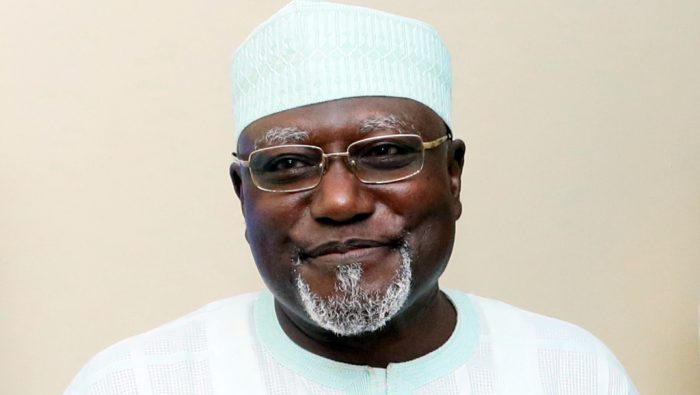

A leaked report of the Inspector General of Police, Ibrahim Idris on the reckless and unauthorised blockade of the National Assembly on Tuesday by masked DSS operatives has buttressed suspicions that it was ordered by the sacked Lawal Daura at the behest of some ‘powerful politicians’.
The IGP said the blockade was done with the intent to “incite and weep up sentiment of the National Assembly members against the Federal Government of Nigeria”.
The report said Daura was not officially invited by the leadership of the National Assembly to send his hooded and masked men to mount the blockade on 7 August and there was no crime committed prior to the invasion.
He did so on a “claimed intelligence report that unauthorised persons were planning to smuggle “undisclosed weapons and incriminating items into the National Assembly Complex. He did not inform the Acting President, neither did he share the information with the Nigerian Police Force or other security agencies.”
And to underscore the false premise of the so-called intelligence relied upon by Daura, he did not deploy anti-terrorist forces or EOD experts or specialists to the National Assembly, the IGP said.
Instead Daura sent armed officers of the DSS, who were wearing masks to disguise their identities, and who acted more like “mercenaries, hired to carry out executions.”
The Police boss concluded: that “it is crystal clear that the principal suspect, Lawal Musa Daura may be acting the script of some highly placed politicians to achieve selfish political goals, hence his unilateral and unlawful decision to invade the `National Assembly Complex”.
In a related development , Senator Babafemi Ojudu, Special Adviser to the President on Political Matters, told Channels TV on Wednesday that the government was shocked to see hooded operatives of the DSS at the National Assembly. And he revealed that contrary to the video images circulating on social media that some PDP legislators were prevented from entering the National Assembly, about 25 of them were found sitting at the lobby, inside. There was no single APC legislator around.
“It was very embarrassing to the Acting President. People started calling us to say that it was on television that APC members were being allowed in while PDP members were not. I was immediately instructed to go there and find out what was happening. I went and found about 25 PDP lawmakers sitting in the lobby. I looked around and couldn’t find a single APC lawmaker. I went back and asked because what we were told was that the APC senators were inside trying to impeach the Senate president and I found out it was not true.
” So What was happening? I asked the DSS operatives – if you barricaded the gate because you anticipated trouble, then how did the legislators inside gain access? Who did you discuss with?
“The acting President was not aware so who authorised you to mount the barricades? If you are going to take such a measure as a security Chief, then you must consult the commander-in- chief.
“He needed to be consulted and then he would tell you whether or not to go ahead. But he was in the dark and did not know anything about it. He got to find out about that incident like you and me.
Source : NAN




By Prince Adeyemi Shonibare
Public Affairs Analyst and Media Consultant.
Politics, like sports, produces winners and losers. Every competition cannot end with everyone carrying home a trophy, and every election cannot produce multiple winners for a single office.
At the conclusion of every democratic contest, there will be celebrations in some camps and disappointment in others.
What ultimately distinguishes a mature democracy is not the absence of defeat, controversy or disagreement, but the capacity of participants to display sportsmanship, accept outcomes with dignity, pursue legitimate grievances through lawful channels and place the collective interest of democracy above personal ambitions.
The recently concluded primaries of the All Progressives Congress (APC) have once again demonstrated both the beauty and complexity of democratic politics. Across Nigeria’s 8,809 wards, millions of party members participated in one of the most expensive and extensive internal democratic exercises ever undertaken by a political party on the African continent.
The party conducted primaries for 993 State House of Assembly constituencies, 360 House of Representatives constituencies, 109 Senate seats, governorship positions in states due for elections and the presidential ticket of the party. In practical terms, more than 1,462 legislative positions alone were subjected to democratic contests, in addition to governorship and presidential elections.
The magnitude of the exercise was extraordinary. Thousands of aspirants campaigned simultaneously across the federation. Millions of party members participated in selecting candidates. Thousands of election officials, observers, journalists, consultants, agents, volunteers and security personnel were mobilized. Ward structures came alive from the creeks of the Niger Delta to the savannah of the North, from the commercial centres of Lagos and Kano to remote communities scattered across the federation. Results were collated, disputes addressed and appeal mechanisms activated.
Yet, despite the sheer scale of the exercise, Nigeria remained peaceful.
Markets remained open. Businesses continued trading. Schools remained in session. Commercial flights took off and landed as scheduled. Public institutions functioned normally. Citizens carried on with their daily activities. The nation did not descend into widespread unrest despite the enormous political activity generated by the primaries.
That achievement deserves recognition and commendation.
Perhaps the most remarkable feature of the APC primaries was the adoption of the direct primary system, a process many observers have compared to the participatory spirit of the famous Option A4 model introduced during the political transition programme of former military President Ibrahim Babangida. Through this mechanism, political power moved beyond governors, ministers, senators and political elites and was placed directly in the hands of ordinary party members at the grassroots.
For perhaps the first time on such a nationwide scale, APC members in villages, towns, cities and communities across Nigeria were given the opportunity to directly determine who would represent the party in future elections.
The message was unmistakable.
The party belongs to its members.
Not to governors.
Not to ministers.
Not to senators.
Not to political godfathers.
Not even to the President.
But to the ordinary men and women who constitute the foundation of the party.
That is the essence of democratic participation.
Direct primaries are expensive. There is no denying that reality. Conducting elections across 8,809 wards simultaneously requires enormous financial resources, manpower, logistics and administrative coordination. Results recording materials must be distributed. Officials deployed. Security arrangements made. Results collected and verified.
Yet democracy is rarely cheap.
Participation has a cost.
Inclusion has a cost.
Legitimacy has a cost.
The reward, however, is that power becomes decentralized and decision-making is transferred from a handful of influential actors to ordinary party members.
The direct primary system compels aspirants to return to the grassroots. It forces politicians to reconnect with ordinary members. It rewards political relationships built over years rather than influence exercised from air-conditioned offices.
Indeed, one of the major lessons from the APC primaries is that money alone cannot guarantee victory in a direct primary election.
Financial resources may facilitate campaigns. They may improve logistics. They may enhance visibility. But they cannot easily substitute for popularity, grassroots structures, credibility and sustained engagement with party members.
Several prominent political figures discovered this reality too late.
Some highly placed office holders failed to secure nominations despite their visibility and influence. Some former ministers who left executive positions in pursuit of elective offices discovered that occupying public office does not automatically translate into grassroots popularity. Some lawmakers who had become accustomed to political comfort zones found themselves confronted by party members eager to exercise independent judgment.
In several constituencies and districts, party members selected candidates they considered more suitable, available and accessible to represent their interests.
That is democracy at work.
The result may be painful for some aspirants, but democracy was never designed to guarantee victory and painless.
It was designed to guarantee opportunity.
It was designed to guarantee participation.
It was designed to guarantee free choice.
The beauty of direct primaries lies in their capacity to reflect the authentic mood of the grassroots. Political history repeatedly demonstrates that it is difficult to suppress a genuinely popular candidate when ordinary voters are given direct access to the ballot.
Nigeria’s democratic experience provides perhaps the most famous example. During the historic 1993 Nigerian presidential election, widely regarded as one of the freest elections in the nation’s history, Moshood Kashimawo Olawale Abiola secured victories across regional, ethnic and religious boundaries, including areas many analysts considered politically improbable against Bashir Tofa. The election demonstrated a timeless democratic truth: when citizens are genuinely allowed to express their preferences freely, popular candidates can transcend conventional political calculations.
That lesson remains relevant today.
It is difficult to defeat a candidate who genuinely enjoys overwhelming grassroots support when party members are given direct participation. The larger the electorate, the more difficult it becomes for narrow interests to impose outcomes contrary to popular sentiment.
The presidential primary itself was historic. President Bola Ahmed Tinubu emerged as the APC presidential candidate after securing an overwhelming majority of 10.9 Million votes cast by party members nationwide.
While a party primary should never be confused with a general election, the turnout demonstrated significant organizational strength and grassroots mobilization within the party.
Many political observers have interpreted the participation figures as a vote of confidence in President Tinubu’s leadership of both the party and the government.
Equally significant was the fact that the President himself faced a challenger.
The APC did not prevent the challenger from contesting.
It did not treat the aspiration as an act of rebellion.
It did not deny him access to the democratic process.
Instead, it allowed him to exercise his democratic right to test his popularity before party members nationwide.
That is democracy.
That is inclusion.
That is confidence in democratic institutions.
Following his victory, President Tinubu emphasized unity, democratic participation and inclusiveness. In acknowledging his challenger, he reinforced the principle that democratic competition should not create permanent enemies but strengthen democratic culture.
Every political giant was once unknown.
Every governor was once an aspirant.
Every senator once sought support.
Every president once requested votes.
Democracy creates opportunities where privilege alone cannot guarantee success.
The APC National Chairman also consistently emphasized party unity, reconciliation and internal democracy throughout the process. His repeated message was that while contests may produce winners and losers, the larger family of the party must remain united after the competition.
That message remains important.
Political contests are temporary.
Political institutions endure.
One notable development that generated political discussion was the decision of Siminalayi Fubara not to seek a second-term APC ticket. According to public statements from APC leaders, he successfully passed the party’s screening process. However, for reasons known principally to himself and those within his political circle, he ultimately did not proceed with the contest. As an old African proverb reminds us, a man does not inquire too deeply into the circumstances surrounding his father’s death until he possesses the strength and wisdom to confront the answers. Politics often contains dimensions visible only to those directly involved.
Beyond politics, the APC primaries generated substantial economic activity throughout Nigeria.
Campaign offices were rented and furnished. Hotels recorded increased occupancy. Vehicles were hired. Airlines transported campaign teams. Restaurants and caterers supplied food for meetings, consultations and rallies. Event centres hosted stakeholder engagements and political gatherings.
The advertising and communications sector experienced one of its busiest periods in recent years.
Political public relations professionals, media strategists, consultants, advertising agencies, printers, graphic designers and branding companies secured contracts worth millions of naira.
Campaign posters, banners, billboards, flyers and promotional materials decorated communities nationwide. Television stations benefited from paid interviews and sponsored political programmes. Radio stations hosted campaign discussions and special broadcasts. Newspapers carried advertisements and feature articles. Online media platforms generated substantial revenue through campaign-related content and digital advertising.
Social media became a major arena of political engagement. Facebook, Instagram, X, TikTok, YouTube and WhatsApp were transformed into platforms for persuasion, mobilization and voter outreach. Content creators, digital consultants and social media managers found themselves in high demand.
Experiential campaigns flourished.
Town hall meetings.
Stakeholder consultations.
Youth engagements.
Women mobilization programmes.
Community interactions.
Ward meetings.
Political rallies.
All these activities created opportunities for event managers, decorators, photographers, videographers, sound engineers, logistics providers and countless service professionals.
Campaign merchandise flooded communities nationwide. Thousands of T-shirts, face caps, umbrellas, notebooks, calendars, shopping bags and promotional souvenirs were produced by local manufacturers. Textile suppliers benefited. Tailors secured contracts. Embroidery companies expanded production. Transportation providers moved supporters and campaign teams across communities.
From roadside printers in local government headquarters to major advertising agencies in Lagos and Abuja, countless businesses benefited from the circulation of campaign resources.
The APC primaries therefore became not merely a political exercise but also a significant contributor to economic activity and temporary employment generation.
Another issue that generated debate concerns aspirants facing investigations or court proceedings.
Here, constitutional principles must remain paramount.
An allegation is not a conviction.
An investigation is not a conviction.
A trial is not a conviction.
Under the rule of law, every citizen remains innocent until proven guilty by a court of competent jurisdiction.
Political parties are not courts of law.
They are not judicial tribunals.
They are not moral temples established to determine guilt or innocence.
Their constitutional responsibility is to facilitate political participation within the framework of the law.
Where the Constitution, electoral laws or final judicial pronouncements disqualify an individual, such provisions must naturally be respected. However, where no legal disqualification exists, the determination of guilt remains exclusively the responsibility of the courts.
To replace due process with suspicion would undermine the foundations of constitutional democracy.
As Nelson Mandela once observed, a critical, independent and investigative press is the lifeblood of democracy.
Criticism therefore has an important place in democratic society.
Complaints should be investigated.
Questions should be asked.
Transparency should be encouraged.
However, criticism must also be fair.
Achievements deserve recognition just as shortcomings deserve scrutiny.
At this point, one is reminded of the biblical admonition:
“Let him who is without sin cast the first stone.”
Before condemning an exercise involving millions of participants and thousands of contestants, critics should identify a democracy anywhere in the world that consistently conducts elections without disputes, petitions, appeals, disagreements or litigation.
Such perfection does not exist. Or it can be found in the graveyard only.
As Winston Churchill famously observed:
“Democracy is the worst form of government except for all those other forms that have been tried.”
Similarly, Barack Obama noted:
“The hallmark of a functioning democracy is not whether everybody agrees, but whether people can disagree peacefully.”
And Abraham Lincoln provided perhaps democracy’s most enduring definition:
“Government of the people, by the people, for the people.”
Even William Shakespeare understood the complexities of leadership and public judgment when he wrote:
“The fault, dear Brutus, is not in our stars, but in ourselves.”
Democratic societies succeed not because they are perfect but because they continually strive for improvement.
The APC primaries have also demonstrated a growing maturity within Nigeria’s democratic culture. Despite the enormous number of participants and contestants, democratic institutions continued to function. The republic endured. The political system absorbed disagreements without descending into widespread instability.
That is progress.
That is democratic consolidation.
At this stage, the wisdom of legendary Juju maestro Chief Ebenezer Obey becomes particularly relevant. In one of his memorable narratives, he tells the story of a father and son travelling with a donkey. When the father rode the donkey while the son walked, onlookers condemned him as heartless. When the father dismounted and allowed the son to ride while he walked, the same public condemned the son as disrespectful and the father as foolish. The lesson was profound: no matter what decision is taken, there will always be critics. Human beings are often difficult to satisfy completely.
Politics follows the same pattern.
No election will satisfy everyone.
No primary will please every aspirant.
No democratic process will escape criticism.
Leaders must therefore focus on fairness, participation, transparency and accountability, leaving posterity to render the final judgment.
However, every success story carries lessons and warnings.
The APC must not mistake success in internal primaries for guaranteed victory in the 2027 general elections.
A training session is not the same as a championship match against another formidable opponent.
Political strategists understand that internal party contests and national elections operate under entirely different dynamics. What succeeds within party structures may not automatically translate into victory against determined opposition parties in a general election.
The party must therefore avoid complacency.
It should pay close attention to voter sentiment in the South-West and other strategic regions. Political strongholds should never be taken for granted.
Loyalty grows when citizens feel respected, heard and rewarded through good governance.
The APC must also move swiftly to reconcile aggrieved aspirants and their supporters.
Politics is a game of addition, not subtraction.
Every disappointed aspirant represents supporters, associates, financiers and political structures.
Ignoring grievances can create opportunities for opponents.
That is why reconciliation is not merely desirable.
It is essential.
The leadership of the party at national, state and local levels should embark upon deliberate consultations, peace initiatives and confidence-building measures. Political bridges should be repaired before they become political fault lines.
A farmer who neglects his crops should not be surprised when another farmer harvests them.
Political parties must continually cultivate, encourage and retain their members.
Most importantly, governments at all levels must remain focused on governance.
Citizens want more security.
Citizens want more jobs.
Citizens want more stable prices.
Citizens want more quality healthcare.
Citizens want more better schools.
Citizens want more better roads and affordable mass transportation system.
Citizens want more electricity.
Citizens want more housing.
Citizens want more economic opportunities.
Citizens want more macroeconomic stability translated into better microeconomic prosperity for families, workers, traders, artisans, farmers and small businesses.
Politics is not an end in itself.
It is a means to improving the lives of the people.
In the final analysis, the APC primaries have demonstrated government of the people , by the people , for the people and that internal democracy is alive and evolving within Nigeria’s political system. They have empowered ordinary party members. They have strengthened grassroots participation. They have generated economic activity. They have reinforced democratic competition. They have highlighted the importance of sportsmanship .
Finally .
There were winners.
There were losers.
There were celebrations.
There were disappointments.
Yet above all else, one truth stands unmistakably clear.
Democracy was the ultimate winner.
Political victories are temporary.
Political defeats are temporary.
But democratic institutions endure when citizens and leaders alike respect the rules of the game.
The APC primaries have provided another opportunity for Nigeria to deepen democratic culture, strengthen internal party democracy and reinforce the timeless principle that political legitimacy ultimately flows from the people.
And in the final judgment of history—not emotion, bitterness or temporary political passions—the enduring verdict may well be that while individuals won and lost, democracy itself emerged victorious.
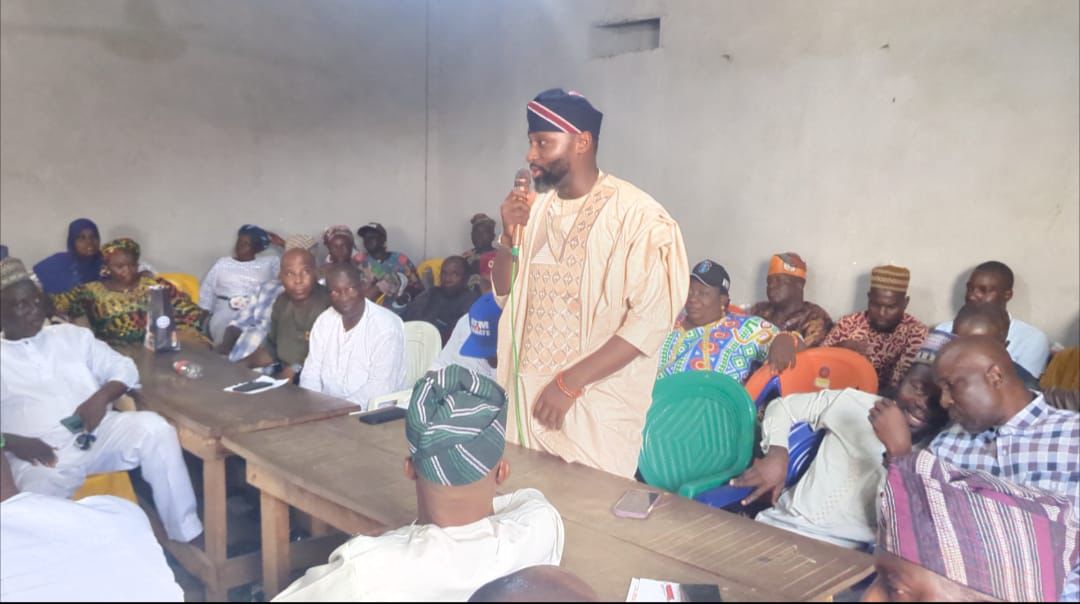
Reports from the field in Ondo North Senatorial District indicate that voters, officers, and agents at the voting centers across the wards have put Abdul Tunji Mohammed (ATM) in the lead.
According to the current figures collated from the centers, ATM is polling with wider margins of votes
Going by these figures, ATM is poised to win all the six Local Government in the Senatorial Districtt.
We urge all party members and supporters to remain peaceful as collation continues.
news
Senate Leader Opeyemi Bamidele Hosts Ondo North Aspirant Abdul Tunji Mohammed, Backs Grassroots Development Agenda
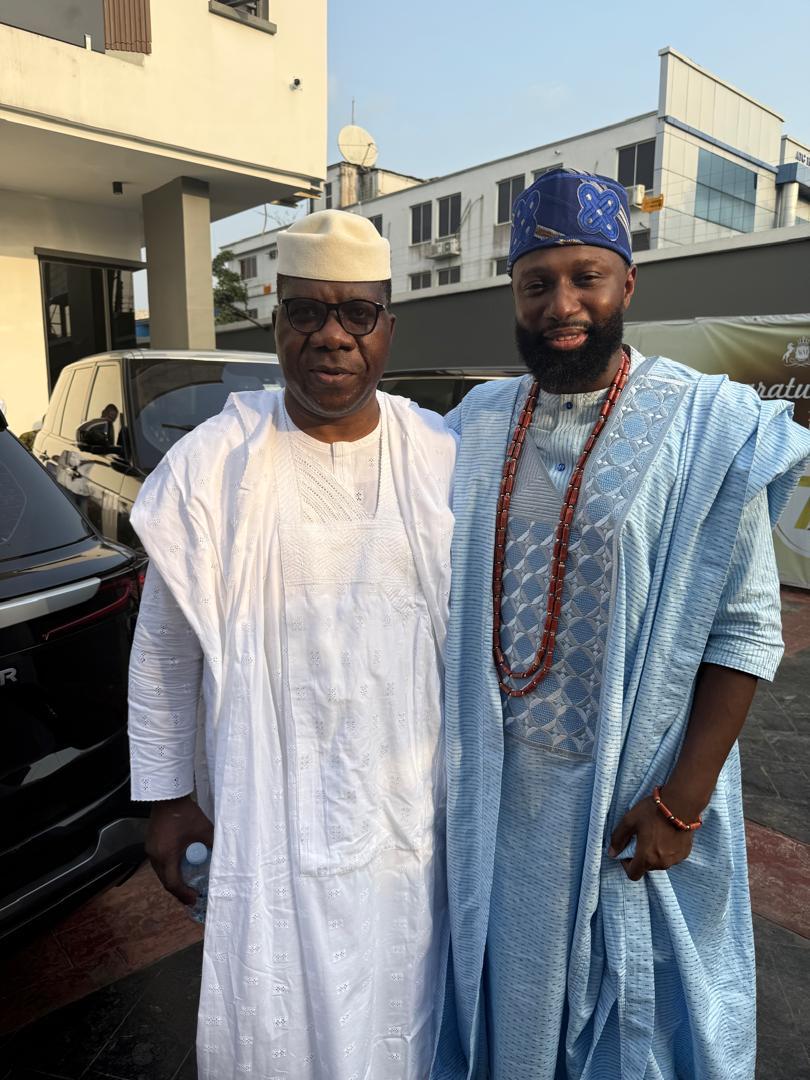
Senate Leader Opeyemi Bamidele recently hosted Chief Abdul Tunji Mohammed (ATM), a prominent aspirant for the Ondo North senatorial seat.
The meeting highlighted a strategic alignment between progressive forces, with both leaders emphasizing a shared vision for grassroots development and legislative excellence.
Senator Bamidele, a respected figure in Nigerian politics, is recognized for his contributions to national cohesion and impactful policymaking, drawing on his experience as a legal luminary and human rights activist.
Chief Mohammed, an astute businessman and dedicated grassroots mobilizer, has made a notable impact on Ondo North through his philanthropic work and commitment to constituents’ welfare. His approach blends corporate discipline, economic ingenuity, and a deep concern for people—qualities that have reshaped the region’s political narrative.
The two leaders discussed the district’s critical needs, exploring avenues for socioeconomic growth, legislative reform, and stronger community integration. Senator Bamidele stressed the importance of supporting President Bola Ahmed Tinubu’s Renewed Hope Agenda, a sentiment echoed by Chief Mohammed.
The convergence of Chief Mohammed’s vision with Senator Bamidele’s legislative experience offers hope for Ondo North. This synergy between grassroots ambition and seasoned mentorship points to a promising future for the district’s representation in the Senate. With ATM’s drive and the guidance of leaders like Senator Bamidele, Ondo North is positioned for progress and transformative governance.


- Afreximbank Deepens Commitment to Economic Progress in The Bahamas June 1, 2026
- African Electric Vehicle (EV) platform Spiro raises $215M in equity to scale electric mobility and energy infrastructure across Africa June 1, 2026
- Africa Centres for Disease Control and Prevention (Africa CDC) Statement on Attacks Against Health Facilities During the Bundibugyo Virus Disease Response in the Democratic Republic of the Congo June 1, 2026
- Putting consumers at the centre of Africa’s dairy transformation June 1, 2026
- International Rescue Committee (IRC) warns Democratic Republic of the Congo (DRC) Ebola outbreak likely far larger than official figures suggest June 1, 2026
- South Africa: Portfolio Committee on Health Marks National Cancer Survivor Day and Reaffirms Importance of Early Detection and Public Awareness June 1, 2026
- Rwanda’s RSSB Tigers Crowned 2026 Basketball Africa League Champions June 1, 2026
- Uganda: Appointments Committee Begins Vetting of Ministerial Nominees June 1, 2026
- Sudan braces for worsening child malnutrition as pre-harvest season starts June 1, 2026
- Etu Energias Strengthens Angolan Footprint, Returns to Angola Oil & Gas (AOG) 2026 as Champion Sponsor June 1, 2026
- Afreximbank Deepens Commitment to Economic Progress in The Bahamas June 1, 2026
- African Electric Vehicle (EV) platform Spiro raises $215M in equity to scale electric mobility and energy infrastructure across Africa June 1, 2026
- Africa Centres for Disease Control and Prevention (Africa CDC) Statement on Attacks Against Health Facilities During the Bundibugyo Virus Disease Response in the Democratic Republic of the Congo June 1, 2026
- Putting consumers at the centre of Africa’s dairy transformation June 1, 2026
- International Rescue Committee (IRC) warns Democratic Republic of the Congo (DRC) Ebola outbreak likely far larger than official figures suggest June 1, 2026
- South Africa: Portfolio Committee on Health Marks National Cancer Survivor Day and Reaffirms Importance of Early Detection and Public Awareness June 1, 2026
- Rwanda’s RSSB Tigers Crowned 2026 Basketball Africa League Champions June 1, 2026
-

 news6 months ago
WHO REALLY OWNS MONIEPOINT? The $290 Million Deal That Sold Nigeria’s Top Fintech to Foreign Interests
-

 society4 weeks ago
SOCIAL MEDIA IS NOT A BATTLEFIELD COMMAND – WHY THE NIGERIAN ARMY’S ACTION AGAINST JUSTICE CRACK IS A NATIONAL SECURITY IMPERATIVE
-

 celebrity radar - gossips4 months ago
Dr. Chris Okafor Returns with Power and Fire of the Spirit -Mounts Grace Nation Altar with Fresh Anointing and Restoration Grace on February 1, 2026
-

 celebrity radar - gossips6 months ago
Prophet Kingsley Aitafo Releases 2026 Prophecy: ‘Nigeria Will Rise, but the World Must Prepare for Turbulence’
You must be logged in to post a comment Login
You must log in to post a comment.