
Business
‘Real reasons People do Plastic sugery’ – US-Based Nigerian Surgeon, Dr. Stanley A. Okoro reveals


Dr. Stanley A. Okoro is a doubled Board certified plastic surgeon based in Atlanta, Georgia in the United States of America, USA, and a medical doctor of international repute. A native of Orlu, Imo State, he was adjudged the best cosmetic plastic surgeon in the State of Georgia in 2014, beating American doctors and those from other countries in the process. In this interview with THOMAS IMONIKHE and BISIRIYU OLAOYE, the award-winning Physician shares his practice experience, challenges of the profession and how his fatherland can transform into medical tourism hub in Africa, among other issues. Excerpts:
May we know you?
My name is Dr. Stanley Okoro, I am a double Board certified plastic surgeon in Atlanta Georgia in the United States of America. . I am certified by both the American Board of Plastic Surgery and the American Board of Surgery. I am also a member of the American College of Surgeons and American Society of Plastic Surgeons.
I am a native home grown citizen of Nigeria, I was born and raised in Orlu, Imo state Nigeria, I went to school in Nigeria. Then I went to the USA, when I was aged 16 to pursue further education. While in the USA, I studied my medicine specializing in plastic surgery. While doing that, I served in the U.S. A. Navy up to a Commander. I served for about 12 years. When I finished my service in the Navy, I decided to head back home trying to help my people after so many education and experience, I had all the skills, I felt the need to share my skills and my knowledge with my home people. You know they say charity begins at home. I basically organized the Imo Medical Mission into a formal entity. I ran it as the Executive Director for close to 10 years. We did medical mission twice a year to Imo State which was sponsored by the Imo State government, which provided logistics, transportation, feeding and security for our team. In every medical mission, we had an average of 20 to 30 doctors of different specialties, from general surgery to plastic surgery, orthopedic surgery, cardiac surgery, urology, everything you want, we have. We essentially took over Owerri hospital and treated everybody for free that came to the hospital for treatment and we did this with the local doctors so that they had adequate follow up for those patients. While doing this for so many years, people started asking me for plastic surgery which is the passion that I had in the US and that is what I do. My current practice is 99 per cent cosmetic surgery. So, after that interest I said I might as well open my own office here in Nigeria and in 2011, we incorporated Abuja Plastics and we started full- time plastic surgery service in Nigeria in 2012. The main reason for that is that a lot of Nigerians were travelling overseas for plastic surgery and I was seeing a lot of them, that most of those attending to them didn’t give adequate care for Nigerians, they just cared for their money, there was no adequate follow-up and at times they didn’t get the right treatment most of the time and some of the patients were having complications and I have to take care of those things. So, my goal was to offer the same service that is available elsewhere in the world right here home in Nigeria to prevent them from going overseas. In 2012, we started doing that and in every two months, I started coming to Nigeria.
Why the name Abuja Plastics?
My family lives in Abuja and I wanted to stay in Abuja because I didn’t even have family in Lagos. So, I said well, I need to get close to my family; it will serve two purposes, do surgery, see my family. Most of my patients and phone calls came from Lagos. So, now it is Abuja Plastics at Lagos. We still have a lot of patients from Abuja, they fly in here to see me; we have patients from everywhere, Kano, Port Harcourt so they come.
What do you think would have made or prompted one to go for plastic or reconstructive surgery?
Nigerians are seeking this service because they want to look better and feel better. Some people think that it is not something necessary but I want to say that studies have shown that when people look good, they feel good and some people argue that cosmetic surgery is a vanity thing and our question is you spend so much money in your hair, on your make-up, on your clothing, all those things are cosmetics but you only have one clothe that you wear which is your body. You can’t change that. So, when you enhance the body, your clothes fit better especially for women, same for your make-up. Now, more men do plastic surgery because of the desire to look good, look young; youth is healthy and desirable, nobody wants to look old; nobody wants to be old. I always have a quote that I always say: ‘Getting old is inevitable, looking old is optional’. So, that has been my philosophy. Thank God, since 2012, nobody has died under our care, we have minimal complications and most Nigerians are now coming to us because they realize that they don’t have to travel anymore, you don’t have to go overseas, it is actually cheaper for them to do plastic surgery here in Nigeria; they don’t need to travel, pay for hotel fees, air fares, it is actually cheaper and better and they know who the doctor is so that I can come back and see them instead of doing surgery once and the doctor will never call you back. When I am in Atlanta, I regularly call my patients here in Nigeria for possible follow-up. If you go to Dubai, the doctor will not call you in Nigeria, the India doctor is not going to call you, they will never come to Nigeria to see you but I come to Nigeria to see you. So, this trend continues. We are attracting plastic surgeons of Nigeria origin to come back to Nigeria. We started with brain drain, now we are bringing them back; so, that was my main goal of coming back, of bringing plastic surgery back to Nigeria. By the grace of God, since 2012, we are the number one plastic surgery in Nigeria. We have accomplished one of our first goals so that people can know that these services are available in Nigeria. That is it.
How would you react to perception by many that Nigeria doesn’t have good and experienced medical doctors to treat them which is why they travel abroad in hundreds for treatment?
It is not true. We have the best doctors. If you go to any hospital in the U.S, the best doctors are Nigerians. Why are we best over there and can’t be best here? We have all the resources we need for us to be the best country in the world, we have the best engineers and we have the best lawyers. Now, when Nigerians come to the U.S, they seek for a Nigerian doctor, they look for us over there. I gave a speech at the Association of Nigerian Physicians in America, it is called ANPA. It is the largest association of Nigerian Physicians in the Americas. The speech was how I was able to achieve a goal of coming back to Nigeria to establish a practice in Nigeria. We discussed all my experiences. So, it is a struggle; Nigeria is a very tough country to live; it is not easy; it is tough to live here, but you have to have the passion to want to live here. Once you go through the initial obstacles, you will succeed. No country is a bed of Roses, every country has its own challenges; no place is heaven except for heaven. I haven’t been to heaven, so, I wouldn’t know but Nigeria is a unique country. Once you understand the nature of Nigeria, the place is enjoyable. The speech was well received, a lot of people came and I got a lot of accolades from it. CNN International interviewed me last month about plastic surgery in Nigeria. They came to me because they thought I am number one, they want to know how I am doing it. CNN is interested in plastic surgery in Nigeria because they know that Nigerians are going overseas to get treatment; we are the most populous country in Africa, people notice, we travel; look at how many international flights that come to Murtala Muhammed International Airport Ikeja every day. Who do you think is flying them? Of course Nigerians, almost every hour, they are coming, direct flight to Nigeria, British Airways, Air France, Lufthansa, Delta Airlines started direct flight from Atlanta to Lagos every day, who is flying?
What is the motivation and at what point is plastic surgery or reconstructive surgery desirable?
Plastic surgery is two parts. There is plastic surgery and there is reconstructive surgery. Reconstructive surgery is when we do surgery to repair some diseases, accident, trauma and cancer. Everybody understands that. We started plastic surgery from reconstructive surgery which is fixing a disease consequence. Now, cosmetic or plastic surgery is when there is nothing is wrong with a patient. Most common one is a woman who is fine, remembers how she looks, she gets married, have children, now her body will change, most men don’t understand this. The body will change. Women remember how they used to look like and the psychology of men and women are totally different and you as a man will not understand it. It took me over 20 years to understand what a woman desires for her; that is my job. So, the women are depressed, every morning they look at their tummy, it has hanging down, they know at a time they were looking fine. They look at who is on television everyday,; the television stations show us very beautiful women everyday without blemishes, the woman wants to look like that, social media, Facebook, WhatsApp, Instagram, everywhere, people say why can’t I look like that and that is the problem. Now, the woman wants to look better. When they look better, they get a better husband. In South America, the parents will pay for their daughters to get breast implant so that they can get better attracted to the men to get married. If you look at two women, one looks fine and the other doesn’t look fine. Which one will you marry? So, don’t you think women know these things? They do. In South America, when you finish high school, a lot of them, their family will pay for them to look attractive; everybody wants their daughter to get married. Secondly, if they look really good at a job place, they get better job. If two women apply for a position, qualified, one looks very well dressed, looks really good for the job and the other one doesn’t, guess who is going to get the job? Of course, the former. Men like women who look good, and that is what attracts them. That is the reason women to do more plastic surgery. But do you know what is happening now? More women are competing for those jobs now than before. So, men are now doing plastic surgery, younger men, older men trying to beat the other to look better so that they can compete for the jobs because of the economic downturn not just in Nigeria but all over the world. That is what is happening, that is why there is a boom of plastic surgery all over the world and Nigeria doesn’t have anything to offer. So, we are taking our money, this has deep implications, we are taking our dollars that we have, the foreign exchange we have to other countries; instead of bringing money back, we are taking it out. It has a lot of economic implications. Now I am getting patients from other African countries, that is my second dream, to make Nigeria the hub of plastic surgery in Africa, we are getting patients from Ghana, Sierra Leone, Cameroon, Senegal and most of West African countries. That is the second phase of our plan where Nigeria will be a hub of plastic surgery. So, instead of flying to Dubai or India, we want them to come to Nigeria. How does this imply now? You have hotel rooms filled up, people getting jobs, everything, we cannot depend on oil anymore, we need to diversify. Taiwan has done it, India has done it; Dubai has done it and we are still just depending on oil. We need to diversify, everything is important now; everything has to be on the table. Medical tourism, I call it surgical tourism, that is what I can bring, that is what I am doing. If everybody does his/her part, that is what is going to make Nigeria better.
Now that yours has become a success story, what is your advice for your colleagues out there in the Diaspora even though the situation is tough back home?
It is hard here. When I was in College, we called it marginal man in Social Studies. The marginal man is a man, who leaves his country, you go to another country, you don’t really belong in that country, the people know that you are not from there and your original country, you don’t belong there either, because now you don’t even understand the culture anymore because things have changed. Now, you are a marginal man, you don’t belong anywhere. So, a lot of our people in the Diaspora are marginal people, we are lost. The people you live with know you were not there originally, you have an accent, you look different, even though you’ve been in America for 30 years, a 16 year-old boy, you were there when he was born, will ask you, where do you come from, because of your accent, you are never really accepted. So, you live so far, many years abroad, when you come back home now you are a stranger in your own land. So, there are also some difficulties there, it is sad.
How do you realize your dream of making Nigeria the hub of plastic surgery in Africa?
I have started. If you search for the number one plastic surgery in Nigeria and Africa now, I am number one. It is no longer Dubai except for the paid advertisement. When I started this thing, it was India but go to Google now and you will get Abuja Plastics. When they search for plastic surgery, they will see that it is a Nigerian who is qualified and ethical to do this, I have a full time nurse that works for me now in Lagos. Her name is Chioma, I bring my staff from Atlanta, you met my personal assistant from Atlanta, this is the fifth time to Nigeria, she has been to Nigeria three times this year and now she knows the culture, she knows more of the Nigeria culture than a lot of Nigerians in the Diaspora. I am on schedule, every two months I am here, we brought the technology back home. I remember the first time we asked a patient to pay online, they thought it was a scam, 419 business, we are not going to do business in the old fashion, a man brought money here and we told him we don’t accept cash, we told him we were going to do it modern way- go to the bank, pay, we get alert, we confirm your payment. Will a 419 person ask you to do that? It is a registered business in Nigeria here, we have a corporate account. Now, people have accepted the practice.
You were voted the best plastic surgeon in Atlanta in 2014. How did you achieve this feat?
Your patients vote for you. It is a competition every year. A question is put: who is the best plastic surgeon this year? Other doctors, your colleagues vote. So, I don’t have any control over that but I think because of the care we deliver over there, you know I said Nigerians in the U.S. A have to be better than the average American doctor because they view you as inferior to them. So, to prove yourself, we over compensate to survive there, we will take examination and you have to be better than them, that one there is no question. When I do surgery, it has to be better than any body’s own before they accept you. Now, I have white patients, black patients, Asian patients and Nigerian patients. I have a well diversified practice, I have about 30 to 40 per cent patients in my practice and they know that I am qualified and better. You cannot be inferior.
What is normally responsible for the post-surgery complications?
I just finished a tummy tuck, which some people died of. A lot of time, people don’t do research, they go to quack doctor who is only interested in getting their money. The whole world is the same; it is just the systems that are different. If you are not qualified for surgery, the doctor will tell you that you are not a candidate for surgery instead of doing surgery on that candidate that will lead to complications. If you are not healthy, you shouldn’t do plastic surgery, some doctors take more than they can handle or a patient doesn’t follow their instruction. There are lots of reasons why you can have complications. A good Board Certified Plastic Surgeon in America knows how to mitigate certain complications. For example, if you are going to have blood clot, he will give you an injection to prevent it. All of my surgeries for tummy tuck, we give the patients to prevent complication and it is a common practice. The complication rate for plastic surgery performed by a Board Certified Plastic Surgeon is less than five per cent.
Do you have an anesthesia in Nigeria?
That is another problem. In life, you get what you pay for. So, I can tell you we have an experienced anesthesia we use since 2012, there has been no death, no complication because we are careful. I do it exactly the way I do in Atlanta, no deviation, no compromise, you don’t compromise. If you are not qualified for surgery, that is it, you can’t have it.
Does any Medical School of Nigeria University runs a department of Plastic Surgery?
None. That is my fourth goal; I have actually started that one. I picked surgeon from Port Harcourt; I am training him right now but there is no cosmetic plastic surgery training in Nigeria.
Why?
There are lots of factors. One, the culture is not supportive of that right now. It is still a taboo in some circles. However, they understand how these things work; the people are driving the demand, the culture is there. So, what people are doing, we say okay fine, we just go outside to do it and we come back ,we are not going to tell anybody, that is what they are doing. Remember I told you most airlines are flying into Nigeria every night to Murtala Muhammed International Airport, Ikeja, Lagos, in and out so while the culture is so restrictive, people are doing it and they are not telling anybody. So, the people are driving the demand; I can tell you the demand is there. I have done the studies. In 2011/2012, we did a study about consecutive phone calls in my practice, we looked at what those patients wanted, and most of them wanted plastic surgery. We carried out our research before we came to Nigeria.
Are you suggesting that government should carry out public enlightenment so that prospective patients should avail themselves of the service locally instead of travelling overseas?
Like I told you earlier, a lot of my female patients don’t say anything, they don’t even tell their husbands until after because their fear of being judged that they are vain, fear of being persecuted in their religious circle. I can tell you that most of my patients don’t feel comfortable letting anybody know about their surgery. I can tell you that a lot of Nigerians are doing this; that is why I am here in Nigeria every two months.
What are you doing to get plastic surgeons trained in Nigeria?
I am already collaborating with the Nigeria Association of Plastic Surgeons. I delivered a speech to them three years ago, I came. The thing is that when you give a speech, people have their own motives because of what they want. I am very successful in Atlanta; I am doing this because I love my country. John F Kennedy, a former President of the US, said do not ask what your country can give you but what you can do for your country. For me now, what is my legacy? One day, I will be gone; we will all be gone some day. What is our legacy when we are gone? That is what should bother us the most. When people mention my name in the future, what will they say I have for my father land? What is my contribution to Nigeria? What will history say and how would that affect other plastic surgeons? How would that affect average Nigerian citizens, who want to go abroad for plastic surgery that can afford it? That is what I am doing. I am doing my part.
What are you doing to get government more involved in your practice?
Government has no major role but our people should change their focus. Government can assist us, it can create policies that will make it easy for us medical professionals in the Diaspora to come back home. They are already doing that. Now, they have made it easy for Nigerian doctors in the Diaspora to come and get licence in Nigeria and that is through networking. Our national convention in the US in Las Vegas the National President of the Nigerian Medical Association was there, the Director for the Medical and Dental Council of Nigeria was there. Last year, the Minister of Health was there, all the major stakeholders were represented. They are making it easy for us to come back. Government cannot go into business with you because of the inefficiency not only in Nigeria but all over the world. No government is efficient because they will say it is government work. So, they can only create the policies that can make us succeed in what we do. But you know what is holding us back now? Electricity or power is the problem. Our problem is power, if you have power, you will have security; without power, you will not have security; without power, you cannot have good drinking water; without power, you cannot run a good hospital; you cannot run traffic light; power determines everything. The growth of Nigeria and the success of Nigeria depend on power. So, what has plastic surgery gone to do with power? Everything, I can’t bring my machine and other equipment to run here but alternating current from generator and public supply will destroy them. The circuit will just burn. I can’t bring them here because my investment will just be a waste. How much is government going to pay me for that? So, you see the limitations now, power is everything.





GTCO Launches “Take on Squad” Hackathon 3.0, Opens Call for Applications
Guaranty Trust Holding Company Plc (“GTCO” or the “Group”) has announced the launch of “Take on Squad” Hackathon 3.0, reaffirming its commitment to fostering innovation, empowering talent, and supporting the development of technology-driven solutions that address real-world challenges across Africa.
Now in its third edition, the Hackathon brings together developers, designers and entrepreneurs across Nigeria in a collaborative environment to build practical solutions across key sectors including financial services, healthcare, commerce and digital inclusion. Under the theme “Smart Systems: The Intelligent Economy,” participants are challenged to design and build intelligent, data-driven solutions that transform how communities engage with money.
Applications are now open, and interested teams can find full guidelines and registration details on the official portal at https://squadco.com/hackathon.
Speaking on the initiative, Eduophon Japhet, Managing Director of HabariPay, stated: “Today’s dynamic, digitally driven world demands continuous innovation, which is shaping how economies grow, how businesses scale, and how societies evolve. Through “Take on Squad” Hackathon, we are deliberately investing in the ideas and talent that will define the future. Our objective is not simply to encourage innovation, but to enable its translation into scalable solutions that deliver real and measurable impact. This reflects GTCO’s role as a financial services platform that connects capital, capability, and creativity to drive sustainable progress.”
The social coding event remains a cornerstone of HabariPay’s mission to foster creativity and problem-solving among emerging tech talents. Competing teams will leverage Squad’s advanced APIs to create scalable digital tools that address everyday challenges faced by businesses and individuals.
Through initiatives such as this, GTCO continues to position itself at the intersection of finance, technology and enterprise, actively shaping the future of digital transformation in Africa.
About HabariPay
HabariPay Ltd is the fintech subsidiary of Guaranty Trust Holding Company Plc (GTCO), one of the largest financial services institutions in Africa with direct and indirect investments in a network of operating entities located in 10 countries across Africa and the United Kingdom.
Licensed by the Central Bank of Nigeria (CBN), our goal is to support SMEs, micro merchants, large corporations and other fintechs (Tech Stars) with the tools they need to thrive in an evolving digital economy and expand beyond their current market reach. HabariPay’s solutions include Squad, a full-scale digital payments toolkit to make in-person and online payments simpler, HabariPay Storefront, an e-commerce website to facilitate online purchases, Value-Added Services to help merchants access cost-effective and flexible airtime and data bundles to run their businesses, as well as a switching infrastructure that enables tech-focused businesses to optimise cost and make transactions more efficient.
HabariPay’s contributions to Accelerating Digital Acceptance in Africa have not gone unnoticed–it received Mastercard’s Innovative Mobile Payment Solution Award at TIA 2022 for its innovative payment solution, SquadPOS.
About Squad
Squad is a complete digital payments solution that is reliable, secure, and affordable, making receiving in-person and online payments simpler and convenient.
Thousands of merchants currently leverage Squad’s payment solutions for their daily business operations. Squad’s current products and service offerings include SquadPOS, Squad Payment Links, Squad Virtual Accounts, USSD, and E-Commerce Storefront.
Find out more at www.squadco.com.
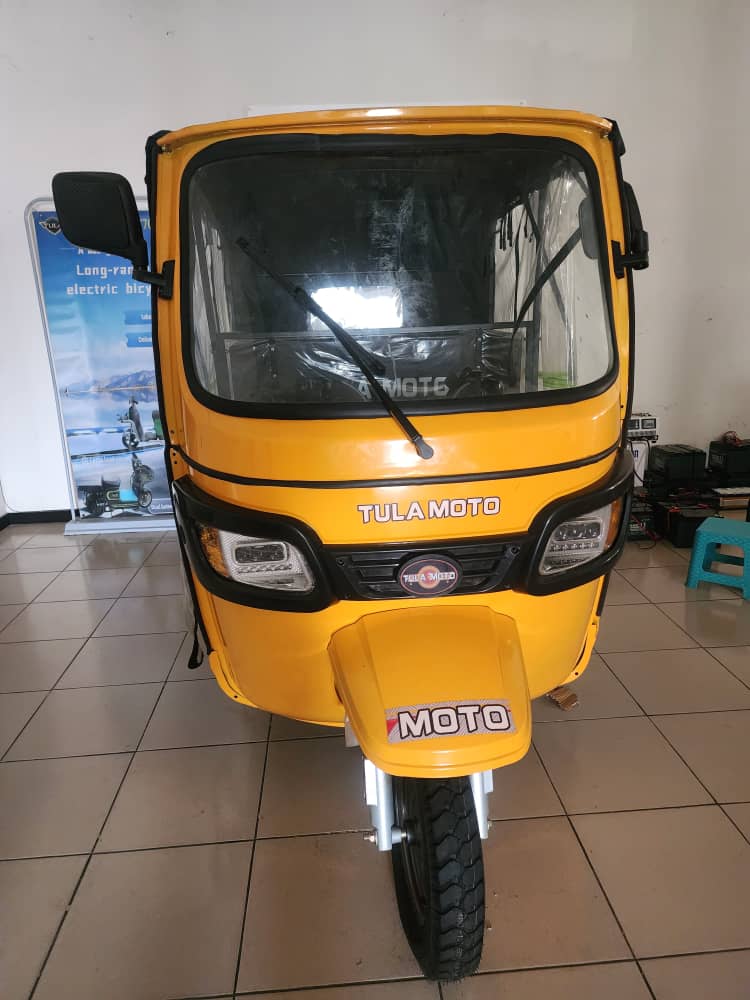
Electric 8-Seater Tula Moto Keke Enters Nigerian Market, Targets Higher Operator Earnings
LAGOS — A new electric-powered tricycle with an expanded passenger capacity has been introduced into Nigeria’s urban transport sector, offering operators a potentially more profitable and eco-friendly alternative to conventional petrol-driven “keke.”
The newly launched 8-seater electric tricycle, now available in Lagos with plans for nationwide distribution, features a dual-row seating arrangement capable of accommodating up to eight passengers per trip—significantly higher than the standard three-passenger configuration common across the country.
Promoters of the innovation say the increased capacity is designed to boost daily earnings for operators, particularly amid persistent fluctuations in fuel prices. By running entirely on electric power, the vehicle eliminates dependence on petrol, reducing operating costs and shielding drivers from fuel price volatility.
According to the distributors, the tricycle is equipped with a durable battery system capable of covering extended distances on a single charge, making it suitable for commercial operations across high-traffic routes, residential estates, campuses, and marketplaces.
“The concept is straightforward—enable drivers to earn more while spending less,” a company representative stated. “With higher passenger capacity and zero fuel requirements, operators can maximise each trip without the burden of daily fuel expenses.”
Beyond its cost-saving potential, the electric keke is also said to require less maintenance than traditional models, offering additional long-term savings. Its quieter and smoother operation is expected to enhance passenger comfort and overall commuting experience.
Industry analysts note that the introduction of electric mobility solutions reflects a growing shift toward cleaner and more sustainable transportation alternatives in Nigeria, particularly in densely populated urban centres such as Lagos.
The distributors added that the product is currently available under a limited promotional offer, with delivery options across the country.
For inquiries and purchase: 📞 08153432071
📞 08035889103
Office Address:
📍 Plot 9, Block 113, Beulah Plaza,
Lekki–Epe Expressway,
Lekki Phase 1, Lagos
As transportation costs continue to rise and environmental concerns gain prominence, innovations like the electric 8-seater keke may signal an emerging transition toward more efficient and sustainable mobility solutions nationwide.


Business
A Pipeline, a Licence, and a Storm Brewing: Corruption allegations Draw global oil giant, Shell, Into Nigeria’s Reform Test
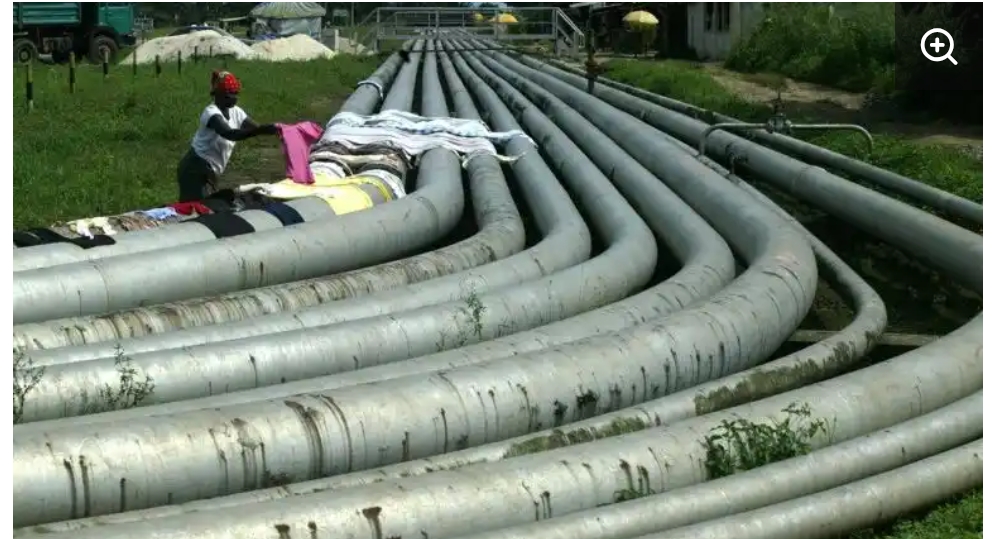
*A Pipeline, a Licence, and a Storm Brewing: Corruption allegations Draw global oil giant, Shell, Into Nigeria’s Reform Test*
By Deji Johnson and Mustapha Bello
t begins with a pipeline that should have been completed by June 2026. It widens into a regulatory dispute. And it now risks becoming a defining test of Nigeria’s gas reforms under President Bola Ahmed Tinubu.
At the center is a stalled 80 kilometre gas pipeline from Sagamu to Ibadan, a project backed by over 100 million dollars in investment and built on a protected Gas Distribution Licence issued under the Petroleum Industry Act 2021. The licence granted NGML–NIPCO exclusive rights to distribute gas within Ibadan for 25years based on Nigeria’s Petroleum Industry Act.
On paper, the law is clear. On the ground, the situation is anything but.
For more than three months, construction has been halted following a stop work order issued by the Oyo State Government led by former Shell Contractor and engineer, Governor Seyi Makinde. No detailed public justification has been provided that aligns with existing federal approvals already secured for the project.
What might have remained a quiet regulatory disagreement has now escalated into something far more politically charged. How?
In recent remarks, Nigeria’s Minister of the Federal Capital Territory, Nyesom Wike, who is of the same political party as Governor Seyi Makinde, made a pointed allegation that has since rippled across political and industry circles. He suggested that the Governor of Oyo State and Shell were in what could be described as an “unholy alliance.”
It is a serious claim. One that, if substantiated, would raise profound questions about the intersection of corporate influence, state level action, and federal law.
Neither Shell nor the Oyo State Government has publicly responded in detail to the allegation.
But the silence is now part of the story.
*THE SHELL QUESTION*
For Shell, this moment carries particular weight.
The company has operated in Nigeria for decades, building one of its most significant global portfolios in the Niger Delta. But that history is not without controversy. From corruption claims to environmental damage claims and community disputes amongst others, Shell has faced years of litigation and, in several high profile cases, adverse rulings tied to its operations in the region.
Those cases, many adjudicated in foreign courts, have shaped a negative reputation that continues to follow the company.
Now, a new question emerges.
Is Shell once again operating at the edge of Nigeria’s regulatory framework seeking to exert undue influence in circumventing Nigeria’s petroleum laws, or firmly within it?
Industry sources including a widely reported meeting between their representatives, Oyo State Government representatives and the newly appointed midstream and downstream chief executive, indicate that engagements involving Shell and the Nigerian Midstream and Downstream Petroleum Regulatory Authority could enable the company to enter a gas distribution zone already licensed to another operator in breach of the PIA.
If true, the implications are immediate and far reaching.
A licence meant to protect investors and investments in Nigeria’s gas space ceases to be exclusive against the dictates of the guiding laws. A framework begins to look flexible, and a reform risks appearing reversible.
To many, it seems more than just a commercial dispute and is not just about one company versus another.
Nigeria is in the middle of an energy transition where gas is expected to play a central role in powering industries, stabilising electricity supply, and reducing reliance on expensive diesel. President Bola Tinubu has emerged as a global champion of using gas as a transition fuel in Nigeria and Africa whilst rolling out elaborate but clearly defined plans to achieve it. Yet gas availability remains inconsistent, constraining power generation and limiting industrial output.
Projects like the Sagamu to Ibadan pipeline are designed to close that gap. To halt such a project is to delay not just infrastructure, but impact. To undermine its legal basis is to question the system that enabled it and to introduce competing claims within the same licensed zone is to risk regulatory confusion at a time when clarity is most needed.
This is where the issue moves from commercial to national because at stake is not only an investment, but the credibility of the reform architecture itself.
*OYO STATE AND THE FEDERAL QUESTION*
The role of the Oyo State Government adds another layer of complexity.
Energy regulation in Nigeria, particularly in the gas sector, is governed by federal law. Yet implementation often intersects with state authority, creating spaces where jurisdiction can blur.
The stop work order issued on the pipeline has become the clearest manifestation of that tension. Was it a regulatory necessity?
A precautionary measure? Or, as alleged by Minister Wike, part of a broader alignment with external interests? Without transparency, speculation fills the vacuum and the regulator must avoid finding itself mired in such allegations.
*QUESTIONS THAT WILL NOT GO AWAY*
For Shell, the questions are now direct and unavoidable:
Is Shell, a global energy giant, seeking to operate within the Ibadan gas distribution zone already licensed to NGML–NIPCO?
What assurances, if any, has it received from regulators or state actors?
How does it reconcile such actions with the exclusivity provisions of the PIA?
For the regulator, NMDPRA:
Can a Gas Distribution Licence be effectively shared, diluted, or overridden after issuance? According to Nigerian laws, the answer is No.
What precedent does this set for Nigeria’s gas infrastructure market?
For the Oyo State Government:
On what legal grounds does the stop work order stand, given federal approvals already in place?
And how does this action align with national energy priorities or the state’s gas needs?
Nigeria has spent the last two years telling a new story to the world. A story of reform, of discipline, of a country ready to compete for global capital. And it has worked so far with stability returning to Nigeria’s economy and over $20bn of energy investments looking to enter the country in the short to midterm.
But reforms are not tested in policy papers. They are tested in moments like this.
Moments where law meets influence, investment meets interference and promise meets pressure.
For Shell, long mired in issues surrounding ethical operations in Nigeria, this is more than a business decision. It is a reputational crossroads.
For Nigeria, it is something even larger. Whether the country’s laws will hold when they are most challenged or Whether its reforms will stand when they are most inconvenient or even whether Nigeria’s energy investments future will be shaped by the rules of law, adherence to regulatory protections and provisions or by unethical and corrupt relationships.
Until those questions are answered clearly, publicly, and decisively, the pipeline in Ibadan will remain more than steel in the ground.
It will remain a symbol of a country still deciding which path it truly intends to follow. Nigeria must act quickly and decisively because the world is watching.


-

 society7 months ago
Religion: Africa’s Oldest Weapon of Enslavement and the Forgotten Truth
-

 news4 months ago
WHO REALLY OWNS MONIEPOINT? The $290 Million Deal That Sold Nigeria’s Top Fintech to Foreign Interests
-

 society6 months ago
“You Are Never Without Help” – Pastor Gebhardt Berndt Inspires Hope Through Empower Church (Video)
-

 celebrity radar - gossips2 months ago
Dr. Chris Okafor Returns with Power and Fire of the Spirit -Mounts Grace Nation Altar with Fresh Anointing and Restoration Grace on February 1, 2026
You must be logged in to post a comment Login
You must log in to post a comment.