
Business
‘Real reasons People do Plastic sugery’ – US-Based Nigerian Surgeon, Dr. Stanley A. Okoro reveals


Dr. Stanley A. Okoro is a doubled Board certified plastic surgeon based in Atlanta, Georgia in the United States of America, USA, and a medical doctor of international repute. A native of Orlu, Imo State, he was adjudged the best cosmetic plastic surgeon in the State of Georgia in 2014, beating American doctors and those from other countries in the process. In this interview with THOMAS IMONIKHE and BISIRIYU OLAOYE, the award-winning Physician shares his practice experience, challenges of the profession and how his fatherland can transform into medical tourism hub in Africa, among other issues. Excerpts:
May we know you?
My name is Dr. Stanley Okoro, I am a double Board certified plastic surgeon in Atlanta Georgia in the United States of America. . I am certified by both the American Board of Plastic Surgery and the American Board of Surgery. I am also a member of the American College of Surgeons and American Society of Plastic Surgeons.
I am a native home grown citizen of Nigeria, I was born and raised in Orlu, Imo state Nigeria, I went to school in Nigeria. Then I went to the USA, when I was aged 16 to pursue further education. While in the USA, I studied my medicine specializing in plastic surgery. While doing that, I served in the U.S. A. Navy up to a Commander. I served for about 12 years. When I finished my service in the Navy, I decided to head back home trying to help my people after so many education and experience, I had all the skills, I felt the need to share my skills and my knowledge with my home people. You know they say charity begins at home. I basically organized the Imo Medical Mission into a formal entity. I ran it as the Executive Director for close to 10 years. We did medical mission twice a year to Imo State which was sponsored by the Imo State government, which provided logistics, transportation, feeding and security for our team. In every medical mission, we had an average of 20 to 30 doctors of different specialties, from general surgery to plastic surgery, orthopedic surgery, cardiac surgery, urology, everything you want, we have. We essentially took over Owerri hospital and treated everybody for free that came to the hospital for treatment and we did this with the local doctors so that they had adequate follow up for those patients. While doing this for so many years, people started asking me for plastic surgery which is the passion that I had in the US and that is what I do. My current practice is 99 per cent cosmetic surgery. So, after that interest I said I might as well open my own office here in Nigeria and in 2011, we incorporated Abuja Plastics and we started full- time plastic surgery service in Nigeria in 2012. The main reason for that is that a lot of Nigerians were travelling overseas for plastic surgery and I was seeing a lot of them, that most of those attending to them didn’t give adequate care for Nigerians, they just cared for their money, there was no adequate follow-up and at times they didn’t get the right treatment most of the time and some of the patients were having complications and I have to take care of those things. So, my goal was to offer the same service that is available elsewhere in the world right here home in Nigeria to prevent them from going overseas. In 2012, we started doing that and in every two months, I started coming to Nigeria.
Why the name Abuja Plastics?
My family lives in Abuja and I wanted to stay in Abuja because I didn’t even have family in Lagos. So, I said well, I need to get close to my family; it will serve two purposes, do surgery, see my family. Most of my patients and phone calls came from Lagos. So, now it is Abuja Plastics at Lagos. We still have a lot of patients from Abuja, they fly in here to see me; we have patients from everywhere, Kano, Port Harcourt so they come.
What do you think would have made or prompted one to go for plastic or reconstructive surgery?
Nigerians are seeking this service because they want to look better and feel better. Some people think that it is not something necessary but I want to say that studies have shown that when people look good, they feel good and some people argue that cosmetic surgery is a vanity thing and our question is you spend so much money in your hair, on your make-up, on your clothing, all those things are cosmetics but you only have one clothe that you wear which is your body. You can’t change that. So, when you enhance the body, your clothes fit better especially for women, same for your make-up. Now, more men do plastic surgery because of the desire to look good, look young; youth is healthy and desirable, nobody wants to look old; nobody wants to be old. I always have a quote that I always say: ‘Getting old is inevitable, looking old is optional’. So, that has been my philosophy. Thank God, since 2012, nobody has died under our care, we have minimal complications and most Nigerians are now coming to us because they realize that they don’t have to travel anymore, you don’t have to go overseas, it is actually cheaper for them to do plastic surgery here in Nigeria; they don’t need to travel, pay for hotel fees, air fares, it is actually cheaper and better and they know who the doctor is so that I can come back and see them instead of doing surgery once and the doctor will never call you back. When I am in Atlanta, I regularly call my patients here in Nigeria for possible follow-up. If you go to Dubai, the doctor will not call you in Nigeria, the India doctor is not going to call you, they will never come to Nigeria to see you but I come to Nigeria to see you. So, this trend continues. We are attracting plastic surgeons of Nigeria origin to come back to Nigeria. We started with brain drain, now we are bringing them back; so, that was my main goal of coming back, of bringing plastic surgery back to Nigeria. By the grace of God, since 2012, we are the number one plastic surgery in Nigeria. We have accomplished one of our first goals so that people can know that these services are available in Nigeria. That is it.
How would you react to perception by many that Nigeria doesn’t have good and experienced medical doctors to treat them which is why they travel abroad in hundreds for treatment?
It is not true. We have the best doctors. If you go to any hospital in the U.S, the best doctors are Nigerians. Why are we best over there and can’t be best here? We have all the resources we need for us to be the best country in the world, we have the best engineers and we have the best lawyers. Now, when Nigerians come to the U.S, they seek for a Nigerian doctor, they look for us over there. I gave a speech at the Association of Nigerian Physicians in America, it is called ANPA. It is the largest association of Nigerian Physicians in the Americas. The speech was how I was able to achieve a goal of coming back to Nigeria to establish a practice in Nigeria. We discussed all my experiences. So, it is a struggle; Nigeria is a very tough country to live; it is not easy; it is tough to live here, but you have to have the passion to want to live here. Once you go through the initial obstacles, you will succeed. No country is a bed of Roses, every country has its own challenges; no place is heaven except for heaven. I haven’t been to heaven, so, I wouldn’t know but Nigeria is a unique country. Once you understand the nature of Nigeria, the place is enjoyable. The speech was well received, a lot of people came and I got a lot of accolades from it. CNN International interviewed me last month about plastic surgery in Nigeria. They came to me because they thought I am number one, they want to know how I am doing it. CNN is interested in plastic surgery in Nigeria because they know that Nigerians are going overseas to get treatment; we are the most populous country in Africa, people notice, we travel; look at how many international flights that come to Murtala Muhammed International Airport Ikeja every day. Who do you think is flying them? Of course Nigerians, almost every hour, they are coming, direct flight to Nigeria, British Airways, Air France, Lufthansa, Delta Airlines started direct flight from Atlanta to Lagos every day, who is flying?
What is the motivation and at what point is plastic surgery or reconstructive surgery desirable?
Plastic surgery is two parts. There is plastic surgery and there is reconstructive surgery. Reconstructive surgery is when we do surgery to repair some diseases, accident, trauma and cancer. Everybody understands that. We started plastic surgery from reconstructive surgery which is fixing a disease consequence. Now, cosmetic or plastic surgery is when there is nothing is wrong with a patient. Most common one is a woman who is fine, remembers how she looks, she gets married, have children, now her body will change, most men don’t understand this. The body will change. Women remember how they used to look like and the psychology of men and women are totally different and you as a man will not understand it. It took me over 20 years to understand what a woman desires for her; that is my job. So, the women are depressed, every morning they look at their tummy, it has hanging down, they know at a time they were looking fine. They look at who is on television everyday,; the television stations show us very beautiful women everyday without blemishes, the woman wants to look like that, social media, Facebook, WhatsApp, Instagram, everywhere, people say why can’t I look like that and that is the problem. Now, the woman wants to look better. When they look better, they get a better husband. In South America, the parents will pay for their daughters to get breast implant so that they can get better attracted to the men to get married. If you look at two women, one looks fine and the other doesn’t look fine. Which one will you marry? So, don’t you think women know these things? They do. In South America, when you finish high school, a lot of them, their family will pay for them to look attractive; everybody wants their daughter to get married. Secondly, if they look really good at a job place, they get better job. If two women apply for a position, qualified, one looks very well dressed, looks really good for the job and the other one doesn’t, guess who is going to get the job? Of course, the former. Men like women who look good, and that is what attracts them. That is the reason women to do more plastic surgery. But do you know what is happening now? More women are competing for those jobs now than before. So, men are now doing plastic surgery, younger men, older men trying to beat the other to look better so that they can compete for the jobs because of the economic downturn not just in Nigeria but all over the world. That is what is happening, that is why there is a boom of plastic surgery all over the world and Nigeria doesn’t have anything to offer. So, we are taking our money, this has deep implications, we are taking our dollars that we have, the foreign exchange we have to other countries; instead of bringing money back, we are taking it out. It has a lot of economic implications. Now I am getting patients from other African countries, that is my second dream, to make Nigeria the hub of plastic surgery in Africa, we are getting patients from Ghana, Sierra Leone, Cameroon, Senegal and most of West African countries. That is the second phase of our plan where Nigeria will be a hub of plastic surgery. So, instead of flying to Dubai or India, we want them to come to Nigeria. How does this imply now? You have hotel rooms filled up, people getting jobs, everything, we cannot depend on oil anymore, we need to diversify. Taiwan has done it, India has done it; Dubai has done it and we are still just depending on oil. We need to diversify, everything is important now; everything has to be on the table. Medical tourism, I call it surgical tourism, that is what I can bring, that is what I am doing. If everybody does his/her part, that is what is going to make Nigeria better.
Now that yours has become a success story, what is your advice for your colleagues out there in the Diaspora even though the situation is tough back home?
It is hard here. When I was in College, we called it marginal man in Social Studies. The marginal man is a man, who leaves his country, you go to another country, you don’t really belong in that country, the people know that you are not from there and your original country, you don’t belong there either, because now you don’t even understand the culture anymore because things have changed. Now, you are a marginal man, you don’t belong anywhere. So, a lot of our people in the Diaspora are marginal people, we are lost. The people you live with know you were not there originally, you have an accent, you look different, even though you’ve been in America for 30 years, a 16 year-old boy, you were there when he was born, will ask you, where do you come from, because of your accent, you are never really accepted. So, you live so far, many years abroad, when you come back home now you are a stranger in your own land. So, there are also some difficulties there, it is sad.
How do you realize your dream of making Nigeria the hub of plastic surgery in Africa?
I have started. If you search for the number one plastic surgery in Nigeria and Africa now, I am number one. It is no longer Dubai except for the paid advertisement. When I started this thing, it was India but go to Google now and you will get Abuja Plastics. When they search for plastic surgery, they will see that it is a Nigerian who is qualified and ethical to do this, I have a full time nurse that works for me now in Lagos. Her name is Chioma, I bring my staff from Atlanta, you met my personal assistant from Atlanta, this is the fifth time to Nigeria, she has been to Nigeria three times this year and now she knows the culture, she knows more of the Nigeria culture than a lot of Nigerians in the Diaspora. I am on schedule, every two months I am here, we brought the technology back home. I remember the first time we asked a patient to pay online, they thought it was a scam, 419 business, we are not going to do business in the old fashion, a man brought money here and we told him we don’t accept cash, we told him we were going to do it modern way- go to the bank, pay, we get alert, we confirm your payment. Will a 419 person ask you to do that? It is a registered business in Nigeria here, we have a corporate account. Now, people have accepted the practice.
You were voted the best plastic surgeon in Atlanta in 2014. How did you achieve this feat?
Your patients vote for you. It is a competition every year. A question is put: who is the best plastic surgeon this year? Other doctors, your colleagues vote. So, I don’t have any control over that but I think because of the care we deliver over there, you know I said Nigerians in the U.S. A have to be better than the average American doctor because they view you as inferior to them. So, to prove yourself, we over compensate to survive there, we will take examination and you have to be better than them, that one there is no question. When I do surgery, it has to be better than any body’s own before they accept you. Now, I have white patients, black patients, Asian patients and Nigerian patients. I have a well diversified practice, I have about 30 to 40 per cent patients in my practice and they know that I am qualified and better. You cannot be inferior.
What is normally responsible for the post-surgery complications?
I just finished a tummy tuck, which some people died of. A lot of time, people don’t do research, they go to quack doctor who is only interested in getting their money. The whole world is the same; it is just the systems that are different. If you are not qualified for surgery, the doctor will tell you that you are not a candidate for surgery instead of doing surgery on that candidate that will lead to complications. If you are not healthy, you shouldn’t do plastic surgery, some doctors take more than they can handle or a patient doesn’t follow their instruction. There are lots of reasons why you can have complications. A good Board Certified Plastic Surgeon in America knows how to mitigate certain complications. For example, if you are going to have blood clot, he will give you an injection to prevent it. All of my surgeries for tummy tuck, we give the patients to prevent complication and it is a common practice. The complication rate for plastic surgery performed by a Board Certified Plastic Surgeon is less than five per cent.
Do you have an anesthesia in Nigeria?
That is another problem. In life, you get what you pay for. So, I can tell you we have an experienced anesthesia we use since 2012, there has been no death, no complication because we are careful. I do it exactly the way I do in Atlanta, no deviation, no compromise, you don’t compromise. If you are not qualified for surgery, that is it, you can’t have it.
Does any Medical School of Nigeria University runs a department of Plastic Surgery?
None. That is my fourth goal; I have actually started that one. I picked surgeon from Port Harcourt; I am training him right now but there is no cosmetic plastic surgery training in Nigeria.
Why?
There are lots of factors. One, the culture is not supportive of that right now. It is still a taboo in some circles. However, they understand how these things work; the people are driving the demand, the culture is there. So, what people are doing, we say okay fine, we just go outside to do it and we come back ,we are not going to tell anybody, that is what they are doing. Remember I told you most airlines are flying into Nigeria every night to Murtala Muhammed International Airport, Ikeja, Lagos, in and out so while the culture is so restrictive, people are doing it and they are not telling anybody. So, the people are driving the demand; I can tell you the demand is there. I have done the studies. In 2011/2012, we did a study about consecutive phone calls in my practice, we looked at what those patients wanted, and most of them wanted plastic surgery. We carried out our research before we came to Nigeria.
Are you suggesting that government should carry out public enlightenment so that prospective patients should avail themselves of the service locally instead of travelling overseas?
Like I told you earlier, a lot of my female patients don’t say anything, they don’t even tell their husbands until after because their fear of being judged that they are vain, fear of being persecuted in their religious circle. I can tell you that most of my patients don’t feel comfortable letting anybody know about their surgery. I can tell you that a lot of Nigerians are doing this; that is why I am here in Nigeria every two months.
What are you doing to get plastic surgeons trained in Nigeria?
I am already collaborating with the Nigeria Association of Plastic Surgeons. I delivered a speech to them three years ago, I came. The thing is that when you give a speech, people have their own motives because of what they want. I am very successful in Atlanta; I am doing this because I love my country. John F Kennedy, a former President of the US, said do not ask what your country can give you but what you can do for your country. For me now, what is my legacy? One day, I will be gone; we will all be gone some day. What is our legacy when we are gone? That is what should bother us the most. When people mention my name in the future, what will they say I have for my father land? What is my contribution to Nigeria? What will history say and how would that affect other plastic surgeons? How would that affect average Nigerian citizens, who want to go abroad for plastic surgery that can afford it? That is what I am doing. I am doing my part.
What are you doing to get government more involved in your practice?
Government has no major role but our people should change their focus. Government can assist us, it can create policies that will make it easy for us medical professionals in the Diaspora to come back home. They are already doing that. Now, they have made it easy for Nigerian doctors in the Diaspora to come and get licence in Nigeria and that is through networking. Our national convention in the US in Las Vegas the National President of the Nigerian Medical Association was there, the Director for the Medical and Dental Council of Nigeria was there. Last year, the Minister of Health was there, all the major stakeholders were represented. They are making it easy for us to come back. Government cannot go into business with you because of the inefficiency not only in Nigeria but all over the world. No government is efficient because they will say it is government work. So, they can only create the policies that can make us succeed in what we do. But you know what is holding us back now? Electricity or power is the problem. Our problem is power, if you have power, you will have security; without power, you will not have security; without power, you cannot have good drinking water; without power, you cannot run a good hospital; you cannot run traffic light; power determines everything. The growth of Nigeria and the success of Nigeria depend on power. So, what has plastic surgery gone to do with power? Everything, I can’t bring my machine and other equipment to run here but alternating current from generator and public supply will destroy them. The circuit will just burn. I can’t bring them here because my investment will just be a waste. How much is government going to pay me for that? So, you see the limitations now, power is everything.




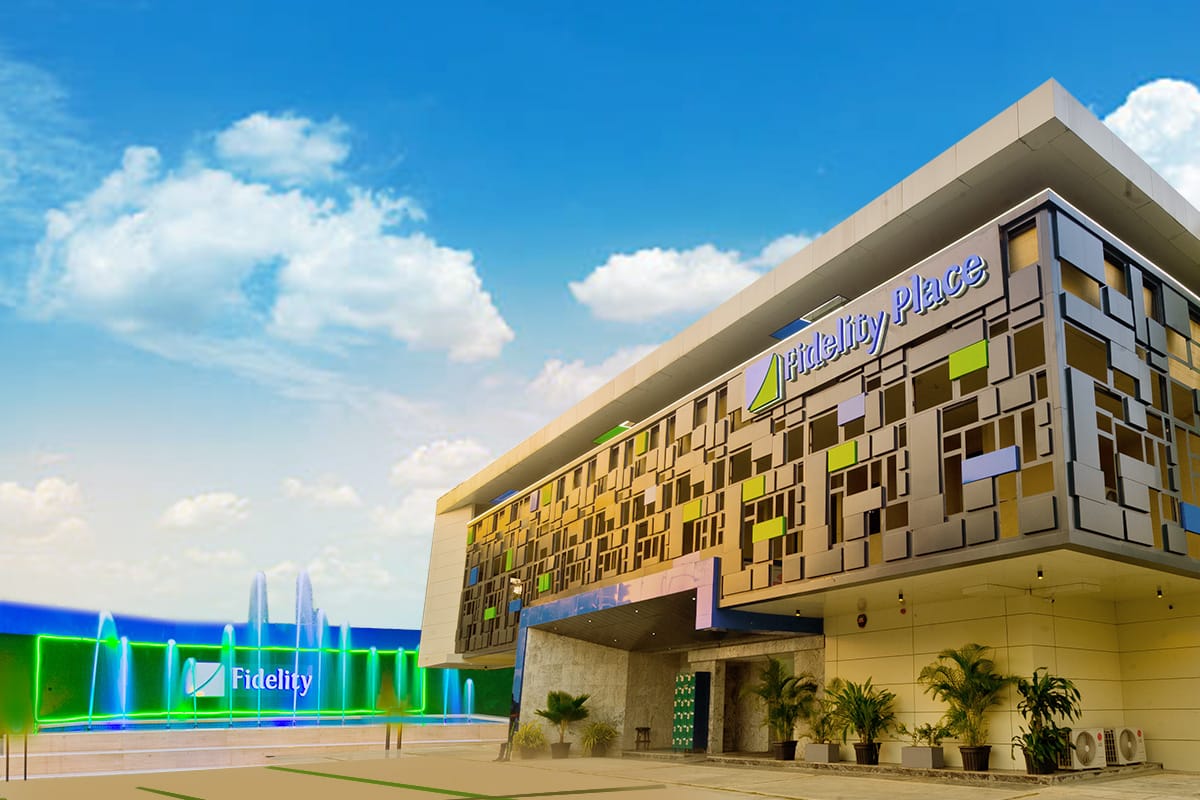
Fidelity Bank grows gross earnings by 38% to N434.95b in Q1
Fidelity Bank Plc recorded 37.9 per cent growth in gross earnings to N434.95 billion in first quarter 2026 as the international commercial bank continued to expand its core banking market share.
Interim report and accounts of Fidelity Bank for the three months ended March 31, 2026 released at the Nigerian Exchange (NGX) showed that gross earnings rose from N315.42 billion in first quarter 20025 to N434.95 billion in first quarter 2026, representing an increase of 37.9 per cent.
The top-line performance was driven by impressive growth in the bank’s core business operations with interest incomes rising by 22.8 per cent to N314.48 billion in first quarter 2026 as against N256.10 billion in first quarter 2025.
With net interest income at N180.97 billion, the bank closed the period with profit before tax of N92.48 billion. After taxes, net profit stood at N74.47 billion for the three-month period. Earnings per share remained high at N5.69, underlining the capacity of the bank to reward its shareholders.
The balance sheet of the bank also emerged stronger. Total assets crossed the N11 trillion mark to N11.35 trillion by March 2026 compared with N10.46 trillion recorded in December 2025. Customers’ deposits increased from N6.89 trillion to N7.38 trillion. Total equity rode on the back of earnings growth to a 27.5 per cent increase from N1.09 trillion in December 2025 to N1.39 trillion by March 2026.
The first quarter 2026 results further consolidated the strong earnings outlook of the bank, which had successfully completed its recapitalisation amidst impressive earnings performance in 2025.
Fidelity Bank had recorded double-digit growths in interest and non-interest incomes as well as key balance sheet items during the year ended December 31, 2025.
The audited report showed that gross earnings rose from N1.04 trillion in 2024 to N1.52 trillion in 2025, an increase of 45.6 per cent. Interest and similar incomes had grown by 38.7 per cent from N803.1 billion in 2024 to N1.11 trillion in 2025. Fees and commission incomes also rose by 44.7 per cent from N78.4 billion to N113.4 billion. The bank recorded net profit after tax of N242.4 billion in 2025.
The bank’s balance sheet emerged stronger with total assets rising by 18.6 per cent to N10.46 trillion in 2025 as against N8.82 trillion in 2024. Customer deposits increased by 16.1 per cent from N5.94 trillion to N6.89 trillion, reflecting continued franchise strength and an improved funding profile. Net loans and advances meanwhile declined by 2.4 per cent to N4.28 trillion in 2025 as against N4.39 trillion in 2024, attributable to customers paying down on their mature obligations.
The bank had in 2025 strengthened its capital position, with eligible capital rising to N561 billion, above the regulatory minimum of N500 billion for banks with international authorisation. In addition, capital adequacy had remained robust, with Capital Adequacy Ratio of 30.94 per cent by December 2025 as against 23.47 per cent by December 2024.
Managing Director, Fidelity Bank Plc, Dr. Nneka Onyeali-Ikpe, said the first quarter 2026 results reinforced the bank’s strong and resilient business model.
She noted that with the remarkable success of its recapitalisation programme and continuing expansion, Fidelity Bank has entered a new era of growth and impressive returns.
“We are on a stronger footing and confident that we will set new growth records that are reflective of our legacy and the future we are working on,” Onyeali-Ikpe said.
Business
Dangote Refinery Ends Nigeria’s Era of Fuel Import Dependence, Boosts GDP, FX Earnings — EIU
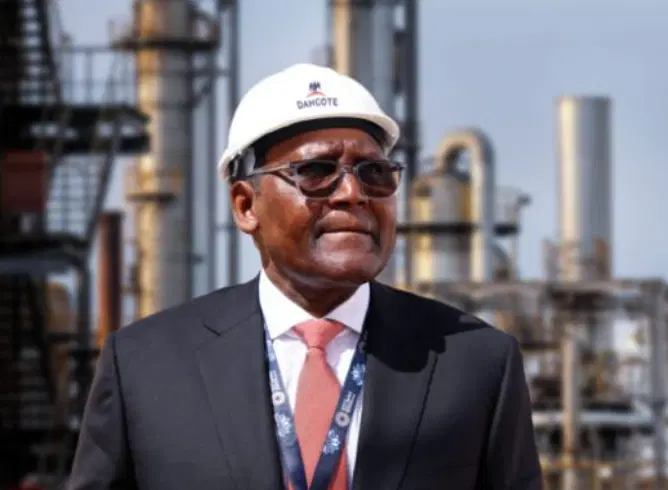
Dangote Refinery Ends Nigeria’s Era of Fuel Import Dependence, Boosts GDP, FX Earnings — EIU
The operational ramp up of the 650,000 barrels per day Dangote Petroleum Refinery & Petrochemicals is fundamentally reshaping Nigeria’s downstream oil sector, significantly reducing the country’s dependence on imported refined petroleum products and strengthening its external position, according to the Economist Intelligence Unit (EIU).
In its latest assessment on Nigeria’s fuel market and regulatory environment, the EIU said the refinery has already transformed a sector that was previously characterised by heavy reliance on imported fuel despite Nigeria being Africa’s largest crude oil producer. The report noted that the refinery met nearly 80 per cent of domestic petrol demand in April and produced enough volumes to satisfy local consumption requirements as operations approached full capacity.
The EIU described Nigeria’s downstream petroleum sector before the refinery as “long dysfunctional”, noting that the country had remained almost entirely dependent on costly imported fuel while producing nearly 1.5 million barrels of crude oil daily.
According to the report, the emergence of the refinery has reduced import dependence, improved domestic fuel availability and strengthened Nigeria’s balance of payments position through lower import demand and rising exports of refined petroleum products.
“The gradual ramp up of the 650,000 barrel/day Dangote refinery since May 2023 has transformed Nigeria’s long dysfunctional downstream sector,” the report stated. “The country’s main refineries, all state owned, had been inoperative for years and Nigeria was almost entirely reliant on costly imported fuel.”
The research and analysis division of The Economist Group, London added that the refinery’s attainment of full operational capacity and its planned expansion would further support Nigeria’s economic growth and foreign exchange earnings over the medium term.
“Meanwhile, the attainment of full capacity at, and an increase in exports from, the Dangote refinery will support real GDP growth and foreign exchange earnings in 2026 and 2027 and beyond, as a planned doubling of the plant’s output comes on stream around the end of the decade,” it added.
Industry analysts said the refinery is increasingly positioning Nigeria as an emerging refining and export hub, altering energy trade flows across Africa and reducing the vulnerability associated with fuel import dependence.
The EIU noted that the refinery’s expansion has coincided with major reforms in Nigeria’s downstream sector, including the removal of fuel subsidies and the introduction of market driven pricing mechanisms.
The report, however, said the transition from a state dominated fuel import structure to large scale domestic refining has triggered resistance from interests linked to the old import regime.
The latest tensions emerged following the decision by the Nigerian Midstream and Downstream Petroleum Regulatory Authority to relax restrictions on petrol imports despite the refinery’s growing capacity to meet domestic demand.
Dangote Industries subsequently initiated legal action, arguing that continued import approvals undermine domestic refining investments and conflict with the objectives of the Petroleum Industry Act, which seeks to encourage local refining capacity and reduce import dependence.
Analysts noted that the availability of large-scale domestic refining capacity has improved Nigeria’s energy security and reduced exposure to external supply shocks and foreign exchange volatility.
The Centre for the Promotion of Private Enterprise also cautioned against unrestrained importation of petroleum products, warning that such a policy could weaken Nigeria’s industrialisation drive and discourage investments in domestic refining.
Chief Executive Officer of CPPE, Muda Yusuf, said continued dependence on imported fuel had historically contributed to pressure on foreign reserves, exchange rate instability and fiscal leakages.
The refinery’s growing impact is also being reflected in Nigeria’s broader macroeconomic indicators. Earlier this month, S&P Global Ratings cited increased domestic refining capacity and rising hydrocarbon exports among the major factors supporting Nigeria’s sovereign credit rating upgrade – the first in 14 years.
Beyond Nigeria, analysts said the refinery is increasingly being viewed as a strategic industrial asset for Africa, where many countries remain heavily dependent on imported fuel despite rising demand for transportation, manufacturing, and power generation.
Business
BREAKING: Court Dismisses $19.6 Million Claim Against NNPCL — Rules Contract Scope Cannot Be Changed Orally
BREAKING: Court Dismisses $19.6 Million Claim Against NNPCL — Rules Contract Scope Cannot Be Changed Orally
In a landmark ruling on Friday, May 22, 2026, the Federal Capital Territory High Court in Abuja threw out a $19.6 million lawsuit filed by Alternate Dimensions Ventures Ltd against the Nigerian National Petroleum Company Limited (NNPCL), affirming a key legal principle: a written contract cannot be expanded through oral agreements or conduct.
Alternate Dimensions had sought $19,600,000 in professional fees, claiming the scope of its Direct Sale, Direct Purchase (DSDP e-pro) contract with NNPCL was orally expanded. Represented by counsel Patrick Peter, the firm argued it was entitled to the revised sum for services rendered under the alleged new terms.
But NNPCL, through its lawyer Ituah Imhanze of KENNA LP, pushed back sharply, arguing that parties are bound exclusively by the clear terms of their written agreement. Imhanze contended that without any written amendment, the claim was legally unsound, and the court agreed.
Delivering judgment, Justice Hamza Mu’azu upheld NNPCL’s defense, stating that the contract was unambiguous and that no evidence was adduced during the trial, which supported the alleged scope expansion. The court further found that NNPCL fully complied with all contractual terms and committed no breach.
Dismissing the suit as meritless, Justice Mu’azu reinforced the doctrine of sanctity of contract: any amendment to a written agreement must be express, unequivocal, and documented, not implied or verbal.
The ruling spares NNPCL from the S19.6 million claim and also a floodgate of similar potential liabilities.


- Uganda: Parliament concludes vetting of ministers June 2, 2026
- Fund for Export Development in Africa (FEDA) Board Appoints Mr. Emmanuel Assiak as Chief Executive Officer June 2, 2026
- Ecobank Group Launches World First Nature Bond Mobilising Global Capital to Protect Africa’s Natural Ecosystems June 2, 2026
- Merck Foundation Chief Executive Officer (CEO) Dr. Rasha Kelej together with Kenya First Lady support the education of 47 Kenyan Schoolgirls by providing Annual Scholarships till they Graduate June 2, 2026
- Annual Meetings 2026: Governors Back the Bank’s Platform Solutions to Transform Aviation and Health Systems in Africa June 2, 2026
- ThinkMarkets launches ChelseaAI, bringing live CFD trading into Artificial Intelligence (AI) assistants June 2, 2026
- Afreximbank Invites Rugby Africa President Herbert Mensah to Address the 33rd Annual Meetings on a Panel Exploring Sport as a Driver of African Industrialisation June 2, 2026
- Afreximbank Deepens Commitment to Economic Progress in The Bahamas June 1, 2026
- African Electric Vehicle (EV) platform Spiro raises $215M in equity to scale electric mobility and energy infrastructure across Africa June 1, 2026
- Africa Centres for Disease Control and Prevention (Africa CDC) Statement on Attacks Against Health Facilities During the Bundibugyo Virus Disease Response in the Democratic Republic of the Congo June 1, 2026
- Uganda: Parliament concludes vetting of ministers June 2, 2026
- Fund for Export Development in Africa (FEDA) Board Appoints Mr. Emmanuel Assiak as Chief Executive Officer June 2, 2026
- Ecobank Group Launches World First Nature Bond Mobilising Global Capital to Protect Africa’s Natural Ecosystems June 2, 2026
- Merck Foundation Chief Executive Officer (CEO) Dr. Rasha Kelej together with Kenya First Lady support the education of 47 Kenyan Schoolgirls by providing Annual Scholarships till they Graduate June 2, 2026
- Annual Meetings 2026: Governors Back the Bank’s Platform Solutions to Transform Aviation and Health Systems in Africa June 2, 2026
- ThinkMarkets launches ChelseaAI, bringing live CFD trading into Artificial Intelligence (AI) assistants June 2, 2026
- Afreximbank Invites Rugby Africa President Herbert Mensah to Address the 33rd Annual Meetings on a Panel Exploring Sport as a Driver of African Industrialisation June 2, 2026
-

 news6 months ago
WHO REALLY OWNS MONIEPOINT? The $290 Million Deal That Sold Nigeria’s Top Fintech to Foreign Interests
-

 society1 month ago
SOCIAL MEDIA IS NOT A BATTLEFIELD COMMAND – WHY THE NIGERIAN ARMY’S ACTION AGAINST JUSTICE CRACK IS A NATIONAL SECURITY IMPERATIVE
-

 celebrity radar - gossips4 months ago
Dr. Chris Okafor Returns with Power and Fire of the Spirit -Mounts Grace Nation Altar with Fresh Anointing and Restoration Grace on February 1, 2026
-

 celebrity radar - gossips6 months ago
Prophet Kingsley Aitafo Releases 2026 Prophecy: ‘Nigeria Will Rise, but the World Must Prepare for Turbulence’
You must be logged in to post a comment Login
You must log in to post a comment.