
news
Real reasons Saraki, Tambuwal left APC – Tinubu reveals

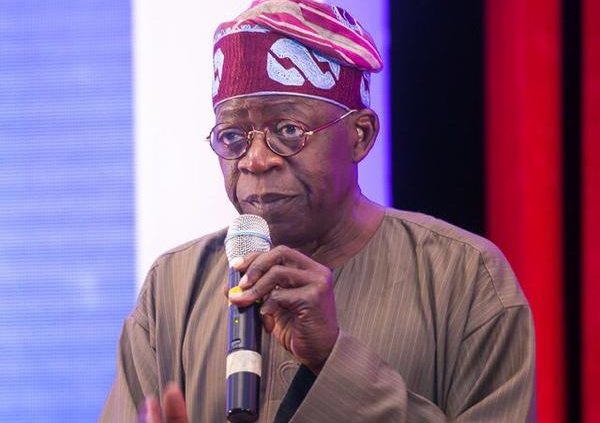

The national leader of the All Progressives Congress, APC, Asiwaju Bola Ahmed Tinubu, has offered a political-philosophical analysis on why Senate President Bukola Saraki and Sokoto State Governor Aminu Waziri Tambuwal left the APC.
He said the duo quit because the APC could not offer them what they wanted.
In a major analysis of the political situation in Nigeria, titled “They go Away because We go the Right Way, which he also tweeted, Tinubu said the two defectors left the APC because they “wanted automatic tickets and sharing of the national wealth which the APC could not guarantee”.
“The rest of the defectors were given similar assurances by the PDP as to their offices. The APC refused to make such bargains as they are part of the ancient regime; these bargains are not of our democratic new way.
They “left the party to return to a motley agglomeration that would promise them what true democracy could not: automatic tickets, sharing of the national wealth and other offices and privileges
“Governor Tambuwal’s exit can be distilled to one cause. He covets the presidency. However, he had not the stomach to challenge President Buhari in a primary. Tambuwal felt further insulted that he would be compelled to face a direct primary just to retain the governorship
“But for the promise made by PDP hardliners like Rivers State Governor Wike that he would have the PDP presidential nomination, Tambuwal would not have left. His exit had nothing to do with governance of the nation. It was about forging a personal ambition predicated on the defeat of progressive reform not the advancement of it”.
“Much the same for Senate President Saraki. Returning to the PDP, he harbours dreams of the presidency but Tambuwal’s ambition will dwarf Saraki’s when the two collide. If Saraki had remained in the APC, he would be unable to reclaim his Senate seat let alone the Senate Presidency. He thus bolted because he lusts for the presidency but was promised by the PDP, at least, a return to his position in the Senate”.
“For Saraki to talk about lack of governance is for him to deny who he is and the position he holds. This man stands as Nigeria’s Number 3 citizen. Clothed is he in ample power and influence. If he saw areas where government and the nation needed help, he could have easily applied his energies to these areas. He could have drafted legislation and easily got laws passed.
“However, no progressive enactment bears his name for he cared not for progress. He has been more focused on changing the rules of the Senate to favour himself and changing the order of elections so as to coincide with his selfish designs”.
Asiwaju Tinubu asked the people to go beyond the debate on the numbers in the Senate or House of Representatives, saying “we must pull back from the shallow headlines to recognise that something fundamental is at stake.
“Nigeria is undergoing a historic transition. Sometimes awkwardly, tentatively, yet inexorably, we nurture political and governance reform. We steadily close the door on the old malpractices that have caused a rich nation to reside in the tenement of the global poor”.
“There is nothing wrong with ambition. Without a degree of ambition, we would never strive to improve and develop ourselves. But ambition, restrained by nothing but itself, is a dangerous commodity. Unwedded to social conscience, it leads to ruthlessness; it is the father of the deception that leaders are meant to lord over instead of to serve the populace.
“In the final analysis, the reason for the defections is as clear to see as it is crooked in its motives. The APC seeks to reform governance and politics. However, many powerful people believe the established system assures their maximum benefit. Progressive reform would defeat them. They must fight reform and never be allied to it. Thus, they had to leave the APC.
“In a fundamental way, the APC may be better for their exit. It would be untrue to say their departures did not generate concern. As the air clears and we can better assess what is lost and gained by their exit, I can truthfully say the APC will be better off because they are gone.
“We can more decisively push for the jobs programme, expansion of social security for the poor, affordable housing programs and a viable mortgage system, national infrastructural programme that will provide adequate power and potable water, basic health care for all, and educational reform. Each of these is important in itself. In combination, these objectives shall reshape the very landscape of our political economy. They shall bring fairness and prosperity where none has been. They will give the average person a government that serves them and the land that they deserve.
“We can now focus more wholly on democratic governance inside and outside the party. Inside the party, we have adopted direct primaries to discourage corruption of the democratic process. Regarding public policy, we can now better articulate our progressive stance without having naysayers among complaining that we are going too far or that the good we seek for the people ought not to be done.
“We can more decisively push for the jobs programme, expansion of social security for the poor, affordable housing programs and a viable mortgage system, national infrastructural programme that will provide adequate power and potable water, basic health care for all, and educational reform. Each of these is important in itself. In combination, these objectives shall reshape the very landscape of our political economy. They shall bring fairness and prosperity where none has been. They will give the average person a government that serves them and the land that they deserve.
“But this prospect means a large segment of the political class will oppose the APC. We, as a party, must have the courage to accept this reality. Having decided to place the public welfare above the private welfare of the few, we must forge ahead no matter the foes aligned against us.
”This struggle toward a better Nigeria is hard, described more by difficult obstacles than by smooth passages. Had reform been easy, the task would have already been accomplished. Powerful hands have gathered to halt our collective move forward. Not everyone wants a better Nigeria for all. Those who profit from the imbalances of the past are those who fear a fairer tomorrow.
”Come the general election, the people will face a stark choice. If they want to relive the certain failure and inequality of the system the PDP had erected against their very interests, the people will walk the way of the defectors. If the people want to give themselves a better chance at an excellent nation they will adhere to the path elected in 2015 when they voted for reform and the APC.
“I believe in the collective wisdom of the people. They will choose the right way for they are Nigerians which means they shall do what is right and just”.
” This moral battle informed the recent defections. Those who belong to that PDP mode of thought could find no permanent comfort in walking the path of progressive reform and progress. All the things we have inaugurated such as school-feeding programs for poor pupils, social security for poor families, affordable housing programs, greater access to credit for small businesses and greater access to education and health care, these things the defectors could not well abide. They detested President Buhari’s Treasury Single Account (TSA) innovation because it barred them from mis-directing funds into a maze of unaudited accounts from which they could siphon as they pleased. Buhari cut off their clandestine illicit spigot.
“These politicians see accountable good governance and lifting of the common person as the tearing down of their quest for great riches and power.
Even more so, they detested the APC drive toward greater internal democracy. They bristled when we demanded that congresses and conventions be held; they had demanded giving themselves automatic extension in their positions. They privately erupted as the APC decided that direct primaries where all party members vote on the party’s nominations should be the way of the future. The injection of greater democracy meant a decrease in their ability to manipulate end results. Politics will be ushered out of the backroom and given to the people to whom sovereignty genuinely belongs. These men could not countenance such transformation. They saw it not as the gift of democracy but as an obstacle that complicated their self-interest. They left the party to return to a motley agglomeration that would promise them what true democracy could not: automatic tickets, sharing of the national wealth and other offices and privileges.
“Their defection statements swell with high-sounding words and the attempted grasp of lofty ideals. While I shall refrain from being so coarse as to call these statements counterfeit, I must invoke a sufficient level of common sense for the protection of all. Anyone who accepts their statements at face value will quickly experience buyer’s remorse. Their attempt at fine notions aside, what compelled these people was galloping yet blind ambition.”





More than ₦3 billion was targeted, but about ₦677 million reached the culprits, with recovery and prosecutions underway, reflecting how banks are responding to more sophisticated fraud risks.
Nigeria’s expanding digital banking sector is facing increasingly sophisticated fraud attempts, as financial institutions adapt to faster transactions and broader online services.
A recent case involving First City Monument Bank (FCMB), linked to fraudulent activity detected in December 2025, has drawn attention to how banks are responding to such incidents, with a focus on limiting exposure, recovering funds and working with law enforcement.
According to findings referenced in proceedings before the Lagos State Special Offences Court, the incident involved unauthorised transactions tied to a digital product. Early reports erroneously suggested more than ₦3 billion was lost. Subsequent clarification shows that over ₦3 billion was targeted, ₦2.4 billion was blocked and recovered, while ₦677 million got into the possession of the culprits. This outcome reflects the bank’s cyber security and monitoring capabilities, as well as improved collaboration among regulated financial institutions and with law enforcement agencies. Several suspects and beneficiaries have been apprehended, while recovery and prosecution efforts are ongoing, led by the Economic and Financial Crimes Commission (EFCC).
Proceedings at the Lagos State Special Offences Court have resulted in convictions, including that of a repeat offender, with restitution orders issued. Related matters are also being handled at the Federal High Court in Lagos, where additional suspects are being tried in connection with the scheme. This process is aimed at ensuring that bad actors are identified and permanently blacklisted from the financial system.
Authorities say recovery efforts are continuing as additional funds are traced.
Analysts note that the pace of legal action reflects closer coordination between financial institutions and enforcement agencies in addressing cyber-related financial crime.
The case comes as banks contend with more complex fraud methods, including social engineering and automated exploitation of system processes.
As digital products and platforms expand, so too does the risk associated with cyber-crime and related fraud.
“The scale of digital banking means risks are evolving alongside the systems,” said a Lagos-based financial analyst. “Institutions are now judged by how they manage these events.”
Observers say the sector is moving toward a stronger focus on response and recovery, rather than prevention alone.
This includes improving monitoring capabilities, strengthening transaction controls and enhancing collaboration with regulators and law enforcement. The FCMB case, with limited exposure relative to the amount targeted and ongoing recovery, reflects that shift.
For customers, the primary concern is the safety of their funds. In this case, there has been no indication of losses affecting customer deposits. Maintaining that level of protection remains central to sustaining trust in the financial system.
Nigeria’s financial sector continues to grow, supported by digital innovation and expanding access to banking services.
However, analysts say fraud attempts are likely to persist as systems become more complex and interconnected.
They say institutions will increasingly be judged not only on their ability to prevent incidents, but on how effectively they respond and recover when they occur.
news
Ex-APC Deputy Guber flag bearer, Joshua MacIver backs Tinubu, express fears over implosion in Bayelsa APC
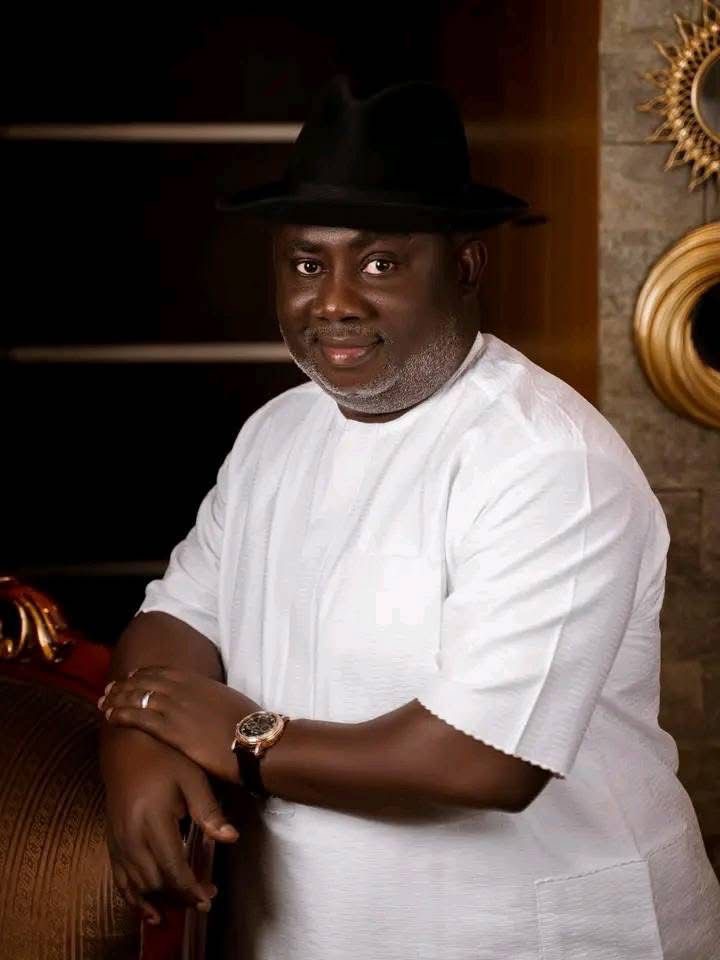
….congratulates new State Party Chairman, Warman Ogoriba
APC Deputy Governorship Candidate in the 2023 general elections in Bayelsa State, Great Joshua MacIver has declared his total commitment to the re-election of President Bola Tinubu come 2027, declaring that the Tinubu re-election project is non-negotiable.
Great Joshua MacIver, in his statement titled ” BAYELSA APC CONGRESSES: GOING FORWARD, A CALL TO LOOK INWARDS” and made available to newsmen in Yenagoa, warned APC leaders in the state to look Inward and take note of certain factors which may hinder or cut short our victory.
According to Great Joshua MacIver, such noticeable pitfalls include the imbalance in the united front being put up by the State Governor,Senator Douye Diri among various political blocs in the state.
In the statement issued at the weekend. Great Joshua MacIver stated that “First, before His Excellency, Senator Douye Diri, joined the APC in the state, there were clearly two political blocs that made up the party, with the approximate population ratios of the blocs standing at 95% to 5%.”
“After the entrance of His Excellency, Senator Douye Diri, ONLY THE SMALLER BLOC IS BEING CARRIED ALONG IN THE AFFAIRS OF THE PARTY, leaving the greater percentage to their fate, and this situation has the potential to build anger and dissatisfaction in our dear party.”
” The consequence of this has been the high level defection we have witnessed in the party recently and we believe more may likely follow, if we do not put our house in order.”
” If we do not pull together as a party, we may witness a situation where we will lose key stakeholders, especially after the State and National Assembly Primaries as well the Gubernatorial Primaries.”
“Finally, while it is very clear that we are the party to beat in the 2027 elections and that our loyalty to Mr. President IS NON-NEGOTIABLE, we must make haste to say that we cannot afford to create situations or loopholes in our unity which will be exploited by other political interests in the state. We cannot afford to under-rate anyone.”
“Our core interest remains the re-election of Mr. President, a project to which we have committed our all. We also pledge our total loyalty to the party as we have no alternative to the APC. However, our concern is that we must, as a party, look inwards and ensure that we do not create loopholes that can impede our common goal.”
Great Joshua MacIver, however congratulated the newly elected State Executives of the APC in Bayelsà State led by Hon. Warman Ogoriba, saying their emergence is welcomed at this critical time in our national history.
At least 23 people were killed in a series of suspected suicide bombings, police in Nigeria’s northeastern city of Maiduguri said on Tuesday.

https://www.stanbicibtcbank.com/nigeriabank/personal/products-and-services/all-loans/stanbic-ibtc-mreif-home-loans
More than 100 other people were injured in the blasts that took place on Monday evening in the capital of Nigeria’s restive Borno state.
No group has claimed responsibility for the suspected attacks.
The deadly blasts come after a military post was attacked overnight Sunday to Monday, which authorities blamed on suspected Islamist militants.
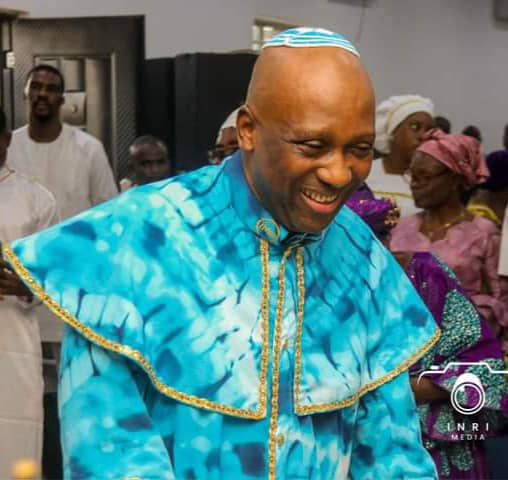
This sad incident is coming barely two weeks after Primate Elijah Ayodele, the Leader of INRI Evangelical Spiritual Church specifically warned against attacks in some states. He mentioned these states while calling on security operatives to pay close attention to them.
These were his words:
“Another attack is coming up in these following states where the military must watch carefully and intelligently; Kano, Kaduna, Zamfara, Kebbi, Niger, Borno, Kwara and Kogi state. They want to do a deadly attack, it’s preventable but it depends on how they will handle it. I have told you about the danger coming up.”
@primateayodele
Unfortunately, some of our military agencies don’t believe spiritual intelligence can save the country from so much danger hence, their neglect of this prophetic warning but now, it has been fulfilled with the miliary losing credibility by the day while Primate Ayodele continues to gain momentum.
Likewise, At least 26 passengers and crew sustained varying degrees of injuries on Monday following an accident involving the Kaduna–Abuja train, according to the Nigerian Railway Corporation (NRC).
Opeifa explained that the train departed Rigasa in Kaduna at 7:15 a.m. and was approaching Asham station around 9:16 a.m. when a loud bang was heard after the power car and trailing locomotive collided with one of the passenger coaches.
In July 2025, Primate Ayodele asked nigerians to pray not to see train mishap on the Kaduna-Abuja route.
@primateayodele #nigeriantiktok🇳🇬 #fulfillment #train #abuja #primateayodele
“Let’s pray not to see train mishap in Abuja-Kaduna, Kaduna-Abuja route.”
This has also been fulfilled.


- National Council for Curriculum Development (NCDC) seeks Shs17 Billion for curriculum review, teacher training April 9, 2026
- Senegal: A Decade of Unresolved Climate Displacement April 9, 2026
- Uganda engages its diaspora in Japan on national policy framework for inclusive development April 9, 2026
- Afreximbank supports Dangote Group as it targets US$100 billion annual revenue by 2030 April 8, 2026
- Africa's top-ranked Global Reporting Initiative (GRI) Training Partner launches 15th cohort of globally recognized sustainability reporting certification April 8, 2026
- African Energy Chamber (AEC) Intervenes in Landmark Climate Case to Defend Africa’s Energy Future April 8, 2026
- Eswatini opens to investors for first-of-its-kind roadshow April 8, 2026
- Egypt: President El-Sisi Meets Ministers of Electricity, Petroleum April 8, 2026
- Seychelles and Japan explore expanded cooperation and future partnerships April 8, 2026
- President Mahama to headline The Africa Debate 2026 as Ghana-United Kingdom (UK) investment ties deepen April 8, 2026
- National Council for Curriculum Development (NCDC) seeks Shs17 Billion for curriculum review, teacher training April 9, 2026
- Senegal: A Decade of Unresolved Climate Displacement April 9, 2026
- Uganda engages its diaspora in Japan on national policy framework for inclusive development April 9, 2026
- Afreximbank supports Dangote Group as it targets US$100 billion annual revenue by 2030 April 8, 2026
- Africa's top-ranked Global Reporting Initiative (GRI) Training Partner launches 15th cohort of globally recognized sustainability reporting certification April 8, 2026
- African Energy Chamber (AEC) Intervenes in Landmark Climate Case to Defend Africa’s Energy Future April 8, 2026
- Eswatini opens to investors for first-of-its-kind roadshow April 8, 2026
-

 news4 months ago
WHO REALLY OWNS MONIEPOINT? The $290 Million Deal That Sold Nigeria’s Top Fintech to Foreign Interests
-

 society7 months ago
“You Are Never Without Help” – Pastor Gebhardt Berndt Inspires Hope Through Empower Church (Video)
-

 celebrity radar - gossips2 months ago
Dr. Chris Okafor Returns with Power and Fire of the Spirit -Mounts Grace Nation Altar with Fresh Anointing and Restoration Grace on February 1, 2026
-

 celebrity radar - gossips4 months ago
Prophet Kingsley Aitafo Releases 2026 Prophecy: ‘Nigeria Will Rise, but the World Must Prepare for Turbulence’
You must be logged in to post a comment Login
You must log in to post a comment.