
celebrity radar - gossips
Recession: FG To Sell Refineries, NLNG Shares & Presidential Aircraft


The Federal Government has concluded arrangements to sell the nation’s critical assets in order to raise $15 billion to rescue the country out of economic recession. Minister of Budget and National Planning, Senator Udoma Udo Udoma, disclosed this at a cabinet retreat hosted at the presidential villa, Abuja.
New Telegraph investigations revealed that some of the assets being considered for sale are government shares in Joint Venture Companies (JVCs) and the Nigeria Liquefied Natural Gas (NLNG).
The national assets to be sold include the four refineries in Kaduna, Wari, and Port Harcourt as well as some aircraft in the presidential fleet. Speaking at the just concluded cabinet retreat, Udoma in a document entitled “Turning a Crisis into an Opportunity: the Economy and the 2017 Budget,” obtained by New Telegraph yesterday, explained that the sale of government assets, Advance Payment for License renewals, infrastructure concessioning and use of recovered funds from corrupt officials were part of strategies put in place by government to bridge the huge funding gap. Our correspondent confirmed that the Presidential Air Fleet (PAF) contains 10 aircraft.
These are Boeing Business Jet (Boeing 737-800 or AirForce One), one Gulfstream 550, one Gulfstream V (Gulfstream 500), two Falcons 7X, one Hawker Sidley 4000, two AgustaWestland AW 139 helicopters and two Agusta Westland AW 101 helicopters. Each of the two Falcon 7X jets was purchased in 2010 by the Federal Government for $51.1 million, while the Gulfstream 550 costs $53.3 million.
The Federal Government, through the Nigerian National Petroleum Corporation (NNPC), owns 49 per cent shares in NLNG Limited while Shell Gas B.V. owns 25.6 per cent, Total LNG Nigeria Ltd owns 15 per cent and Eni International owns 10.4 per cent. In the four refineries in Warri, Port Harcourt and Kaduna, the Federal Government has 100 per cent stake, which is up for sale.
The government has, since 1999 when the country returned to democracy, expended N264 billion on maintenance of the four refineries. In spite of billions claimed to have been spent by the NNPC over the last 16 years on Turn Around Maintenance (TAM), the country’s refineries have remained in comatose.
The four refineries located in Port Harcourt (two), Warri and Kaduna have a combined capacity to refine 445,000 barrels of crude per day. The Senate yesterday threw its weight behind the Federal Government in the planned sales of the national assets. Senate President Bukola Saraki, at a plenary, urged President Muhammadu Buhari to sell some important national assets as part of efforts to boost the country’s dwindling foreign reserves.
According to Saraki, “The executive must raise capital from asset sales and other sources to shore up foreign reserves. This will calm investors, discourage currency speculation and stabilise the economy.
“The measures should include part sale of NLNG Holdings; reduction of government’s share in upstream oil joint venture operations; sale of government stake in financial institutions e.g. Africa Finance Corporation; and the privatization and concession of major/regional airports and refineries.”
Governor of the Central Bank of Nigeria (CBN), Mr. Godwin Emefiele, and Africa’s richest man, Aliko Dangote,have expressed support for the sale of the national assets.
Emefiele said the best option open to government is to sell the assets. “In the short run, we can sell assets… before the government came on board, I had opined that there was need for the government to scale down or sell off some of its investments in oil and gas, particularly in the NNPC and NLNG as at that time when the price of oil was around $50-$55 per barrel.
“We actually commissioned some consultants that conducted the study and, at the end of that study, we were told that if we sold 10% to 15% of our holding in the oil and gas sector, we could realise up to $40 billion,” the CBN governor said at the weekend.
At the weekend, Africa’s richest man, Aliko Dangote, specifically told the Federal Government to sell its stake in the NLNG, to beef up foreign reserves.
A communique issued at the end of the ministe-rial retreat indicate that the Budget and National Planning Minister had explained that “government was working hard to resolve the militant disruptions in the Niger Delta, and, in addition, a fiscal stimulus strategy was being developed involving, amongst other things, a plan to generate and inject large amount of funds, principally in foreign currency, estimated at $10 – $15 billion into the economy through Asset Sales, Advance Payment for License renewals, infrastructure.”
The Federal Government intends to achieve the sale of the assets through introduction of measures, including presidential orders that could fast track transaction processes. Buhari is expected to send to the leadership of the Senate soon an Emergency Economic Recovery Bill (EERB) that will take care of some of the challenges that are likely to thwart the sale process.
“Government was also planning to introduce measures for fast-tracking procedures so as to speed up the processes for getting these funds into the economy. Some of these will be achieved by Presidential Orders and Directives. “In addition, an Emergency Economic Recovery Bill is also being prepared for submission to the National Assembly to deal with those changes requiring legislation,” Udoma said.
The key resolutions, according to the communiqué issued at the end of the retreat and obtained yesterday by New Telegraph, are: (i) The programme of action for dealing with the recession and the current effort of government in developing an Economic Emergency Recovery Bill to address the situation, as well as the plan to bridge the funding gap was endorsed by participants; (ii) The need to prioritise capital spending in the 2017 budget in the area of infrastructure development, agriculture and social intervention; (iii) The retreat participants agreed on 2-3 quick-win areas to be implemented before the end of 2016 and six priority/ programme project areas for the 2017 Budget.
The quick wins agreed on are: (i) Immediate implementation of the social intervention programmes (School Feeding, N-Power; Science, Technology, Engineering and Mathematics (STEM) scheme; Conditional Cash Transfer (CCT), etc.; (ii) Effective communication of government projects, programmes and policies to the citizens will go a long way in mobilising support for government to succeed; (iii) Local debt repayment, including debt owed states and contractors to stimulate spending.
Meanwhile, government has confirmed that the 2016 Budget poor performance is reflective of the low revenue out-turns attributable to the global and domestic developments earlier highlighted.
“Oil revenues fell significantly in the second quarter compared to the first quarter as a result of increased oil pipeline vandalism and production shut-ins.
“Non-oil revenues also declined due to the acute shortage of foreign exchange,” Udoma said. The minister said that the failure to diversify the economy and implement the national goals due to lack of discipline in the past had made the country witness negative growth. Udoma said the major factor responsible for the recession was the overdependence of the economy on revenues from a single commodity, petroleum.
According to him, revenue source is not sustainable since the country doesn’t control the price of crude oil.
He said unsustainable structure was characterised by some indices, including “oil sector less than nine per cent of Gross Domestic Product (GDP), but about 80 per cent of government revenue and 95 per cent of Forex.” Other indices are “nonoil sector about 90 per cent of GDP (of which 52 per cent was indirectly dependent on oil) but less than 20 per cent of government revenue.
According to him, another index is declining capital expenditure with rising recurrent expenditure (2015 about 10 per cent capital) and import dependent consumption growth model with stagnant growth in investment to GDP.
New Telegraph




celebrity radar - gossips
The Unfinished Conversation: Five Years of Missing T.B. Joshua BY FEMI OYEWALE
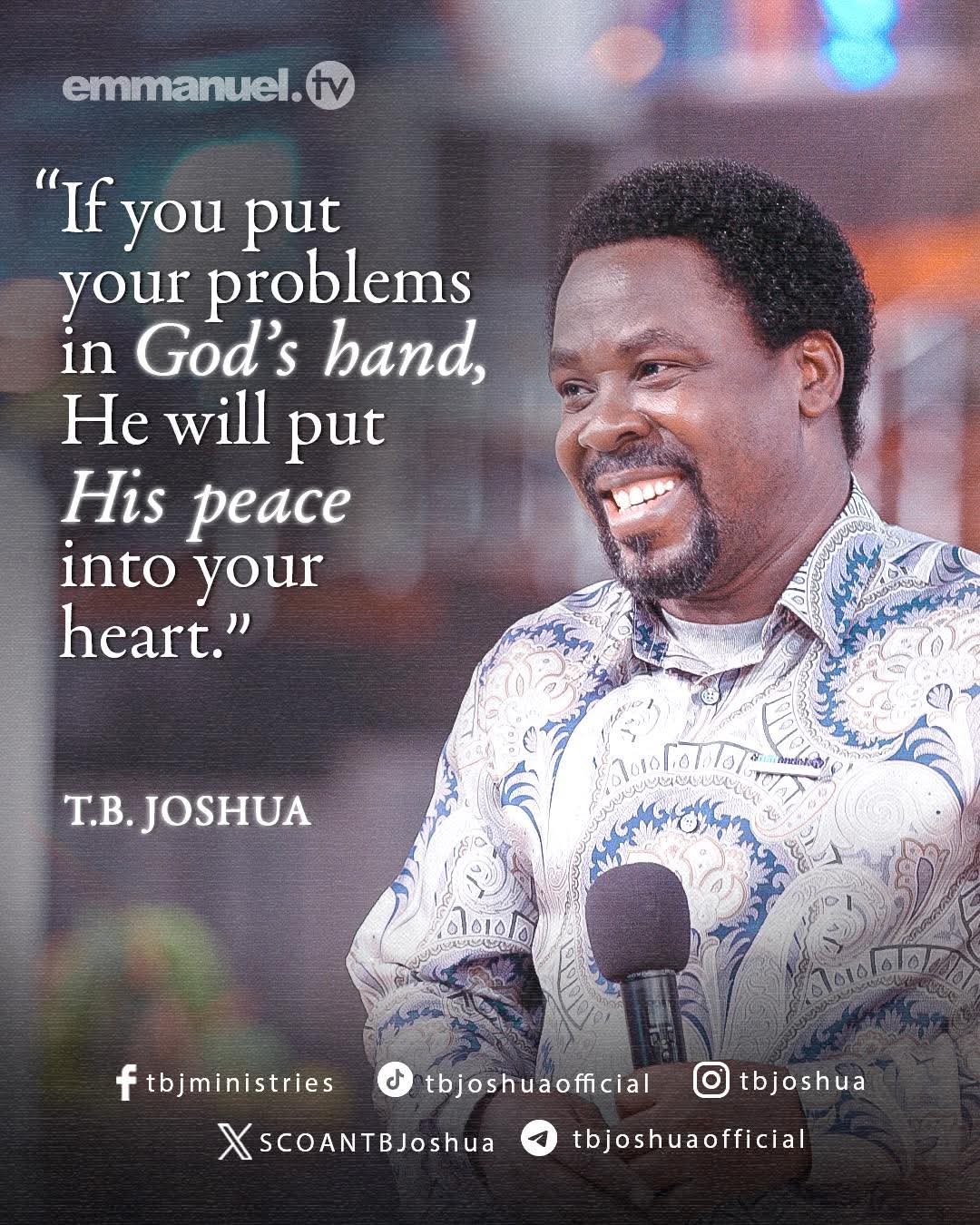
The Unfinished Conversation: Five Years of Missing T.B. Joshua BY FEMI OYEWALE
”In life we meet to part, we part to meet, but parting is the sweetest sorrow.”

Five years have vanished like a vapor, yet the echoes of his voice remain as vivid as a morning sunrise. June 5th marks the anniversary of the transition of a man who was not merely a global religious icon, but a father, a mentor, and a beacon of profound simplicity in a complex world. As I pen this, I find myself still navigating the shores of denial. How does one write a tribute to a man whose influence was as vast as the oceans, yet whose heart remained as humble as the desert sands?

The Last Assignment
Time truly flies, but some moments are frozen in the amber of memory. I recall with poignant nostalgia that I was among the final few with whom he spoke before stepping out for his last assignment on the pulpit on June 5,2021. Unknown to many, we shared an uncommon bond—a father-son relationship that stood the test of time.

Just an hour before that glorious, final ministration, my phone rang. We discussed the fulfillment of prophecies and my planned assignment to South Africa, an assignment he promised to single-handedly finance. By God’s grace, I have traveled the globe, and ninety percent of those journeys were bankrolled by him. Before ending the call, he spoke with finality: “Femi, go and watch it.” I never knew it was a parting shot. I never knew those words would be the threshold of eternity. Perhaps that is why, despite being part of his burial media committee, I lacked the courage to write until today.
From Fear to Faith: The Beginning
My journey to the Synagogue Church of All Nations (SCOAN) was written in the stars of fate. Then a reporter for Encomium Weekly, under the tutelage of the legendary Mr. Kunle Bakare, I was recommended to handle media work for a “prominent client.” When the name “T.B. Joshua” was mentioned, my heart sank.
Having cut my journalistic teeth under titans like Mr. Femi Adeshina and Mr. Dele Alake, I had heard the tales, stories of monsters, of shape-shifters, of dark magic. As I drove to Ikotun, I recited every Psalm I could muster and texted my parents my destination, unsure if I would return. I arrived expecting a beast; I was introduced to a brother. I met a man so profoundly simple, so devastatingly ordinary in his humility, that if not for his presence on Emmanuel TV, I would have sworn I was meeting an impostor. That was the day the fear died, and a lifelong relationship began.
The Man Behind the Mantle
I am not here to validate a legend; I am here to honor a human. I have been privileged to stand in his office, his personal room, his private altar, and his prayer house. What did I find? Not a demigod, but a man who lived for others.
A Heart of Forgiveness: Like the father in Luke 15, no matter the depth of the offense, a sincere “I am sorry” was all it took to be welcomed back into his fold.
The Weight of Misunderstanding: I remember the pain of the building collapse. He asked me, with tears that shattered my heart, “Femi, can you believe they said I used these people for rituals?” That was the first time I saw the iron man break.
A Channel of Healing: I recall a man brought to the prayer line who had previously declared, “Even if T.B. Joshua is the devil, if he can take this pain away, I am ready.” The moment those words left his lips, the Prophet walked over, touched him, and the healing was instantaneous.
He was a comedian, a teacher, a preacher, and above all, a man who loved his family and his ministry with every fiber of his being. If most clergy possessed even half the global influence he wielded, they would have long ago become arrogant demigods. T.B. Joshua remained, to his last breath, a servant.

A Legacy Enduring
It has been five years, yet it feels like yesterday. Many of those who cast stones in the shadows often came seeking his light in secret. Today, as we remember him, I see that legacy thriving. Prophetess Evelyn Joshua is truly holding the torch, preserving the foundation with grace and strength.
Good morning, Prophet T.B. Joshua. You live on in the lives you changed, the doors you opened, and the heart of your many disciples who will never forget the man who taught them that true greatness is found in the simplicity of love.
”He was a man globally misunderstood, yet a man whose name alone opened doors globally. He lived for others, and in doing so, he became immortal.”

celebrity radar - gossips
Let’s build a future where access to healthcare is strengthened…….Oba Odugbemi
Let’s build a future where access to healthcare is strengthened…….Oba Odugbemi
A call has gone to every stakeholder in the health sector to build a future where access to healthcare is guaranteed and strengthened.
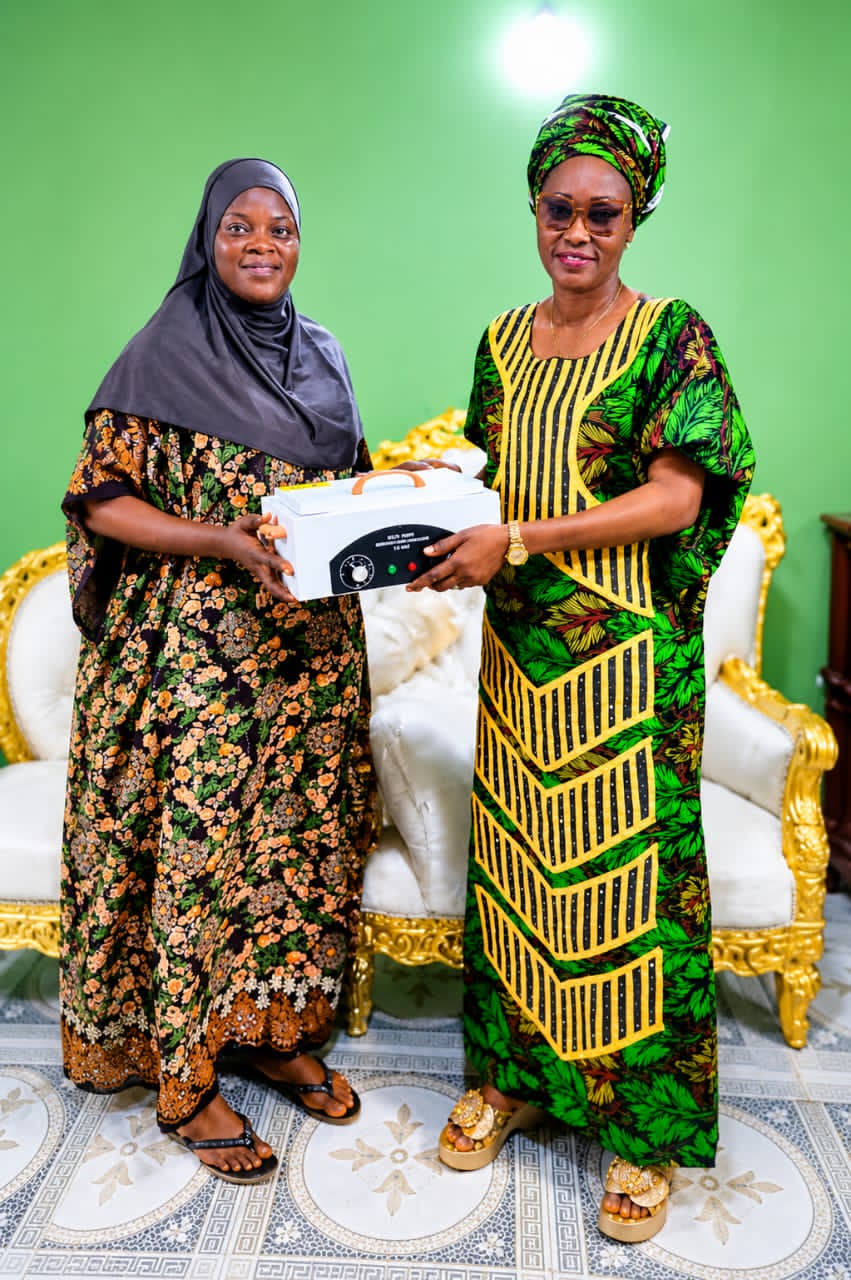
The Onilisa of Lisa Kingdom, Oba Oladele Odugbemi make the call in Lisa while donating a Sanitary Sterilisation Box to the Lisa health centre.
Oba Odugbemi said that the donation became necessary in order to further strengthen the capacity of the health centre for the benefits of the people.
The royal father stressed that his foundation, Oladele Odugbemi foundation would continue to make meaningful impacts in community healthcare aimed at complementing the efforts of government in healthcare delivery system.
He pointed out that the foundation reflects its unwavering commitment to promoting quality healthcare services, enhancing hygiene standards and supporting health institutions with essential tools that contribute to safer and healthier communities.
According to the monarch, all stakeholders in the health sector should work hand-in- hand with government to take healthcare to the doorsteps of the masses as government cannot do it alone, hence health is wealth.
Oba Odugbemi also charged the governments at all levels to declare a state of emergency in the health sector so that every Nigerian can have smooth access to healthcare delivery system in the interest of the country and for the benefits of the masses.
The monarch therefore said that the foundation would continue to care for the people through empowerment by ensuring that masses have good and quality health condition.
The Sanitary Sterilisation Box was presented by the Foundation Director, Hajia Suliat Odugbemi – Tinuosho to the Matron of Lisa Community Health Centre, Mrs Temitope Nofisat Sanni who received it on behalf of the health centre.
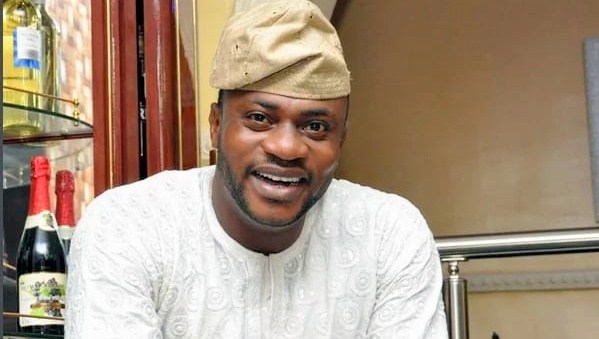
King of the Screen: Why Odunlade, Muyiwa, Femi Adebayo Remain Yoruba Movie Giants
The Yoruba movie industry has continued to produce legendary talents whose influence stretches beyond Nigeria to global audiences. Over the years, some actors have distinguished themselves through consistency, versatility, box office success, and cultural impact.
Among the numerous stars in Nollywood’s Yoruba sector, three actors have remained dominant figures whose names constantly resonate with fans and filmmakers alike — Odunlade Adekola, Muyiwa Ademola, and Femi Adebayo.

Odunlade Adekola: The Street King of Yoruba Cinema
Popularly regarded as one of the most entertaining actors in Nollywood, Odunlade Adekola has built a unique reputation through his energetic delivery, comic timing, emotional depth, and strong connection with grassroots audiences.
From comedy to action and emotional family dramas, the actor has consistently proven his versatility in blockbuster productions. His ability to interpret diverse roles effortlessly has made him a household name across Nigeria.
Industry observers believe his dominance on social media platforms, where his movie clips frequently go viral, has further strengthened his popularity among younger audiences.
Beyond acting, Odunlade has also contributed immensely to mentoring upcoming talents and expanding the commercial value of Yoruba films.
Muyiwa Ademola: The Master Storyteller

For many lovers of indigenous movies, Muyiwa Ademola remains one of the finest storytellers the Yoruba film industry has produced.
Widely respected for producing emotional and morally driven movies, the actor earned massive recognition through classic productions that focused on family values, culture, betrayal, perseverance, and societal lessons.
His calm delivery, deep scripts, and originality have kept him relevant despite changing trends in the entertainment industry.
Film critics often describe Muyiwa Ademola as one of the few actors whose productions combine entertainment with strong cultural education, making his movies timeless among older and younger viewers alike.
Femi Adebayo: The Modern-Day Box Office Force

Femi Adebayo has successfully combined traditional Yoruba storytelling with modern cinematic excellence, helping to project indigenous films to international audiences.
The actor, filmmaker, and producer has recorded major successes with high-budget productions that gained attention on streaming platforms and cinemas.
Known for his professionalism and attention to detail, Femi Adebayo has continued to push Yoruba movies beyond local boundaries while preserving cultural identity.
Entertainment analysts say his ability to blend culture, technology, and quality production has positioned him among the leading faces shaping the future of Yoruba cinema.
Growing Global Influence
The success of these actors reflects the increasing acceptance of indigenous Nigerian content globally. With streaming platforms creating wider access to local movies, Yoruba actors are now gaining international recognition and attracting new audiences.
Fans and stakeholders in the entertainment industry believe the contributions of Odunlade Adekola, Muyiwa Ademola, and Femi Adebayo have not only sustained Yoruba culture through film but have also elevated Nollywood’s global reputation.


- Economic Community of West African States (ECOWAS) Commission and Women in Law and Development (WiLDAF) Train Women Cross-Border Traders in The Gambia June 5, 2026
- Eritrea: Seminar to Nationals in The Hague June 5, 2026
- Eritrea: Training on Photography and Video Production June 5, 2026
- Dr. Rasha Kelej Merck Foundation Chief Executive Officer (CEO) and African First Ladies release “Rays of Hope” Animation Film and Storybook to Raise Awareness About Childhood Cancer June 5, 2026
- Digital transformation journey takes centre stage at ANGOTIC 2026 June 5, 2026
- Junior Achievement (JA) Africa Delivers 1.6 Million Learning Experiences in a Single Year, Marking Twelve-Fold Growth in Five Years June 5, 2026
- United Nations Mission in South Sudan (UNMISS) helps plant hope among youth on World Environment Day June 5, 2026
- Afreximbank Deepens Engagement with Jamaica to Drive Trade, Investment and Industrialisation June 5, 2026
- World Health Organization (WHO) supports reactive yellow fever vaccination campaign and Bundibugyo virus disease (BVD) preparedness in Liberia June 5, 2026
- Uganda: Museveni pushes for wealth creation through development programmes June 5, 2026
- Economic Community of West African States (ECOWAS) Commission and Women in Law and Development (WiLDAF) Train Women Cross-Border Traders in The Gambia June 5, 2026
- Eritrea: Seminar to Nationals in The Hague June 5, 2026
- Eritrea: Training on Photography and Video Production June 5, 2026
- Dr. Rasha Kelej Merck Foundation Chief Executive Officer (CEO) and African First Ladies release “Rays of Hope” Animation Film and Storybook to Raise Awareness About Childhood Cancer June 5, 2026
- Digital transformation journey takes centre stage at ANGOTIC 2026 June 5, 2026
- Junior Achievement (JA) Africa Delivers 1.6 Million Learning Experiences in a Single Year, Marking Twelve-Fold Growth in Five Years June 5, 2026
- United Nations Mission in South Sudan (UNMISS) helps plant hope among youth on World Environment Day June 5, 2026
-

 news6 months ago
WHO REALLY OWNS MONIEPOINT? The $290 Million Deal That Sold Nigeria’s Top Fintech to Foreign Interests
-

 society1 month ago
SOCIAL MEDIA IS NOT A BATTLEFIELD COMMAND – WHY THE NIGERIAN ARMY’S ACTION AGAINST JUSTICE CRACK IS A NATIONAL SECURITY IMPERATIVE
-

 celebrity radar - gossips4 months ago
Dr. Chris Okafor Returns with Power and Fire of the Spirit -Mounts Grace Nation Altar with Fresh Anointing and Restoration Grace on February 1, 2026
-

 celebrity radar - gossips6 months ago
Prophet Kingsley Aitafo Releases 2026 Prophecy: ‘Nigeria Will Rise, but the World Must Prepare for Turbulence’
You must be logged in to post a comment Login
You must log in to post a comment.