
society
Refusal to honour Police invitations: Over 70 CSOs ask IGP to declare SDP candidate, Muritala Yakubu, wanted

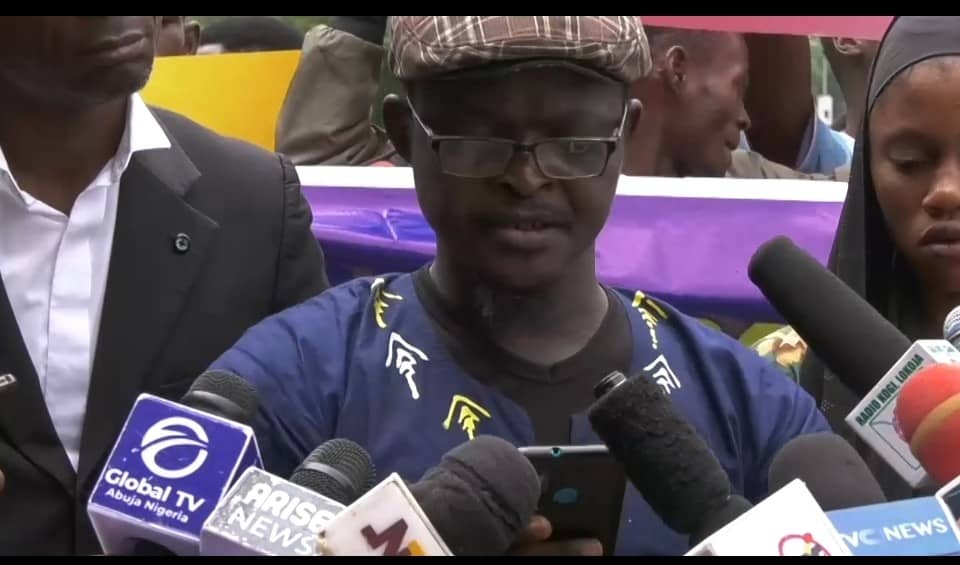
*Refusal to honour Police invitations: Over 70 CSOs ask IGP to declare SDP candidate, Muritala Yakubu, wanted
Over 70 Civil Society Organisations (CSOs) that have been in the struggle for credible elections in Nigeria for over 20 years have called on the Inspector-General of Police (IGP), Kayode Egbetokun, and the Governor of Kogi State, Yahaya Bello, to urgently ensure that politicians stoking violence in the state with inciting statements and political brigandage that have led to loss of lives and property are made to face the law.
The CSOs specifically called on the IGP to declare the governorship candidate of the Social Democratic Party (SDP), Muritala Ajaka, wanted, if he continues to ignore Police invitations for investigations into acts of political violence in the state, moves about with “suspected thugs armed to the teeth” and undermines security efforts of the Police and other agencies as stated in a recent statement by the Kogi State Police Command.
The Coalition for Credible Elections in Nigeria (CCE), Kogi State Young Professionals, and concerned civic organisations, staged a peaceful walk in Abuja on Saturday, after submitting a petition to the IGP, titled, “PETITION FOR A THOROUGH INVESTIGATION INTO POLITICAL VIOLENCE IN KOGI STATE AND THE ROLE OF SDP GOVERNORSHIP CANDIDATE, MR MURTALA YAKUBU AJAKA”.
They displayed placards with inscriptions such as “Anyone who ignores Police invitations must be arrested immediately”, “arrest and prosecute killers of Khadijat now”, “Gov. Bello, don’t be soft on promoters of violence”, “we demand peaceful elections in Kogi State”, and “IGP must declare Ajaka wanted now”, among others.
Addressing the press on behalf of others during the road walk, the Coordinator,
Coalition for Credible Elections, Comrade Israel Abiodun, noted that the major focus of the Peace Walk for Kogi State and material focus of the Coalition’s petition to the IGP was the political violence being allegedly orchestrated by some politicians, ahead of the November 11 governorship election in the state.
The Coordinator was flanked by Barrister Jeff Uwaifo, Hajia Aisha Ibrahim and Comrade Fatimah Qudus.
He said, “We are concerned that the Police in Kogi State have mentioned one of the Parties’ Governorship candidates in person of Mr. Muritala Ajaka of the Social Democratic Party, whose actions, the authorities said, had been undermining security efforts in the state.
“The Police, in a recent statement, said he had been invited on several occasions, just like other candidates, in line with investigations into allegations of violence but that he had refused to honour the invitations, yet, up till now, he has not been declared wanted when we all know that he doesn’t have constitutional immunity but already acting above the law.”
The CSOs also demanded justice for Khadijat Yahaya, a female All Progressives Congress (APC) supporter, who was allegedly killed by SDP thugs, saying that the claim by the SDP that the harmless lady was a thug did not make any sense, particularly coming from a party, whose candidate had been accused by the Police of moving around with “suspected thugs armed to the teeth”.
They quoted the Kogi State Police Command as saying, “His (Muritala Yakubu) riding rough-shod and engaging in political brinkmanship and brigandage is an ill-wind that blows no one any good. For instance on the complaint of Breach of Security Against The Executive Governor of Kogi State at Banda on 3rd June, 2023, the SDP Candidate, Murtala Yakubu Ajaka, has consistently refused to honour Police several invitations to give his own side of the story!
“Again, since he applied for Police Security, he was invited to come but till date, he refused to show up, he moves around with a retinue of suspected political thugs armed to the teeth. Consequently, the above facts and scenario, coupled with his recalcitrance and obduracy have continued to jeopardise Police Investigation and maintenance of law and order in the State.”
The CSOs, therefore, said, “It is for this reason that we are calling on the Nigeria Police Force to declare Mr Ajaka wanted if he fails to honour Police invitation, moves around with armed thugs, undermines security efforts and constitutes a threat to the peace of Kogi State, as has been said. Not acting on these allegations does not speak well of the fight against crime and political brigandage in Nigeria.
“We can’t have a situation whereby anyone will be acting with impunity while people are dying. The young lady, Khadijat Yahaya, who was murdered in cold-blood allegedly by SDP thugs cannot be allowed to die like that without proper investigations, arrest and prosecution of culprits.
“The SDP managers have, unfortunately, labelled this lady a thug. She must get justice. We wonder how a man accused of moving around with ‘thugs armed to the teeth’ would turn around to call an innocent soul a thug.
“Mr. Ajaka has been fond of promoting ethnic divisions and supporting violence even by Police admissions and he cannot be allowed to continue riding roughshod on Kogi State without the intervention of security agencies.”





society
Lagos Intensifies Mental Health Campaign as Experts Push Integrated Healthcare, Education System
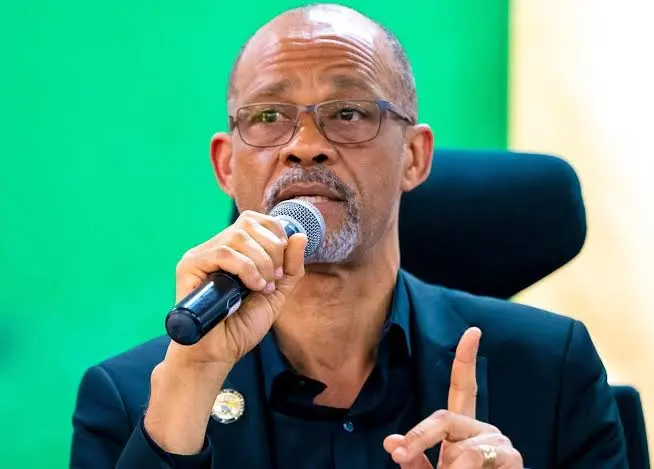
Lagos Intensifies Mental Health Campaign as Experts Push Integrated Healthcare, Education System
By Ifeoma Ikem
The Lagos State Ministry of Health has reiterated the need for a stronger connection between healthcare, education, and emotional well-being as part of efforts to tackle growing mental health challenges and youth drug abuse in the state.
Commissioner for Health, Prof. Akin Abayomi, stated this during the maiden edition of the Integrated Wellness and Education Conference held in Lagos.
The conference, which took place at Ikeja GRA, brought together health professionals, educators, students, and policy advocates to discuss the future of healthcare delivery, mental wellness, and youth development in Nigeria.
According to Abayomi, healthcare, education, and mental well-being are interconnected areas that must be addressed collectively in order to build a healthier society.
The commissioner, who was represented by Atewologun Titofunmi, a Mental Health Officer and Technical Support Adviser, explained that the state government is actively tackling mental health issues through its Mental Health Programme Lagos, popularly known as the MiND initiative.
He noted that mental health concerns have long been neglected due to social stigma and excessive focus on physical health, stressing that authorities are now working to change public perception and encourage open conversations around emotional well-being.
“Everything works hand in hand. We need to address mental health issues because historically, attention has focused mainly on physical health due to the stigma surrounding mental illness,” he said.
Abayomi disclosed that the state currently operates several wellness initiatives aimed at providing psychosocial support for public servants dealing with workplace stress, anxiety, depression, and suicidal thoughts.
He further explained that the Ministry of Health runs dedicated 24-hour counseling support services free of charge for residents requiring emotional and psychological assistance.
Speaking on youth development, the commissioner expressed concern over the rising rate of drug abuse among young people, warning that substance abuse has become a major threat to mental health and social stability.
According to him, the state government is developing policies and awareness campaigns under the MiND initiative that will take anti-drug abuse advocacy directly into communities in order to educate youths on the dangers of substance abuse.
Also speaking at the event, Prof. Lere Baale emphasized the importance of mentorship, counseling, and quality education in helping young people make responsible life choices.
Baale said young people possess unique talents and abilities that can positively transform society if properly guided and supported through the right educational and career opportunities.
“We must teach our children the right things. God has shaped them to change the world despite the challenges they face,” he stated.
The pharmacy expert added that the decisions young people make at critical stages of life often determine their future, stressing the need for mentorship and career counseling to help them navigate educational and professional pathways successfully.
He maintained that Africa, particularly Nigeria, still holds enormous opportunities for growth and innovation despite its current challenges, adding that quality education remains the key to unlocking the continent’s potential.
“There is no place like home. The problems in Africa, especially Nigeria, are also opportunities. What we need is quality education to excel,” he added.
On his part, Dr. Samuel Kayode explained that the conference was designed to bridge knowledge gaps within the healthcare system and inspire young people to pursue careers in medicine and related professions.
According to him, many youths lack adequate understanding of opportunities within the healthcare sector, making it necessary to expose them to the realities, challenges, and rewards associated with medical professions.
Kayode noted that the COVID-19 pandemic exposed serious shortages in healthcare manpower globally and revealed the vulnerability of health systems during emergencies.
He observed that Nigeria’s healthcare workforce crisis has worsened due to the migration of trained professionals abroad, leaving the country with inadequate personnel to cater to its rapidly growing population.
“Globally, the goal is to produce more healthcare personnel, but in Nigeria the situation has become more critical because many professionals are leaving the country,” he said.
The conference also highlighted the importance of workplace flexibility, continuous learning, and career development in retaining healthcare professionals and improving productivity within organizations.
Participants stressed that flexible work schedules, remote work options, and supportive work environments are essential in helping workers balance personal responsibilities with professional demands.
The event featured participation from Jawa Group Nigeria and six secondary schools from across Lagos metropolis, with students engaging in debates and educational activities focused on healthcare, wellness, and career development.


society
MC DAY – The Global Voice: A Cultural Influencer, Global Host, and Purpose-Driven Creative Redefining Entertainment Worldwide
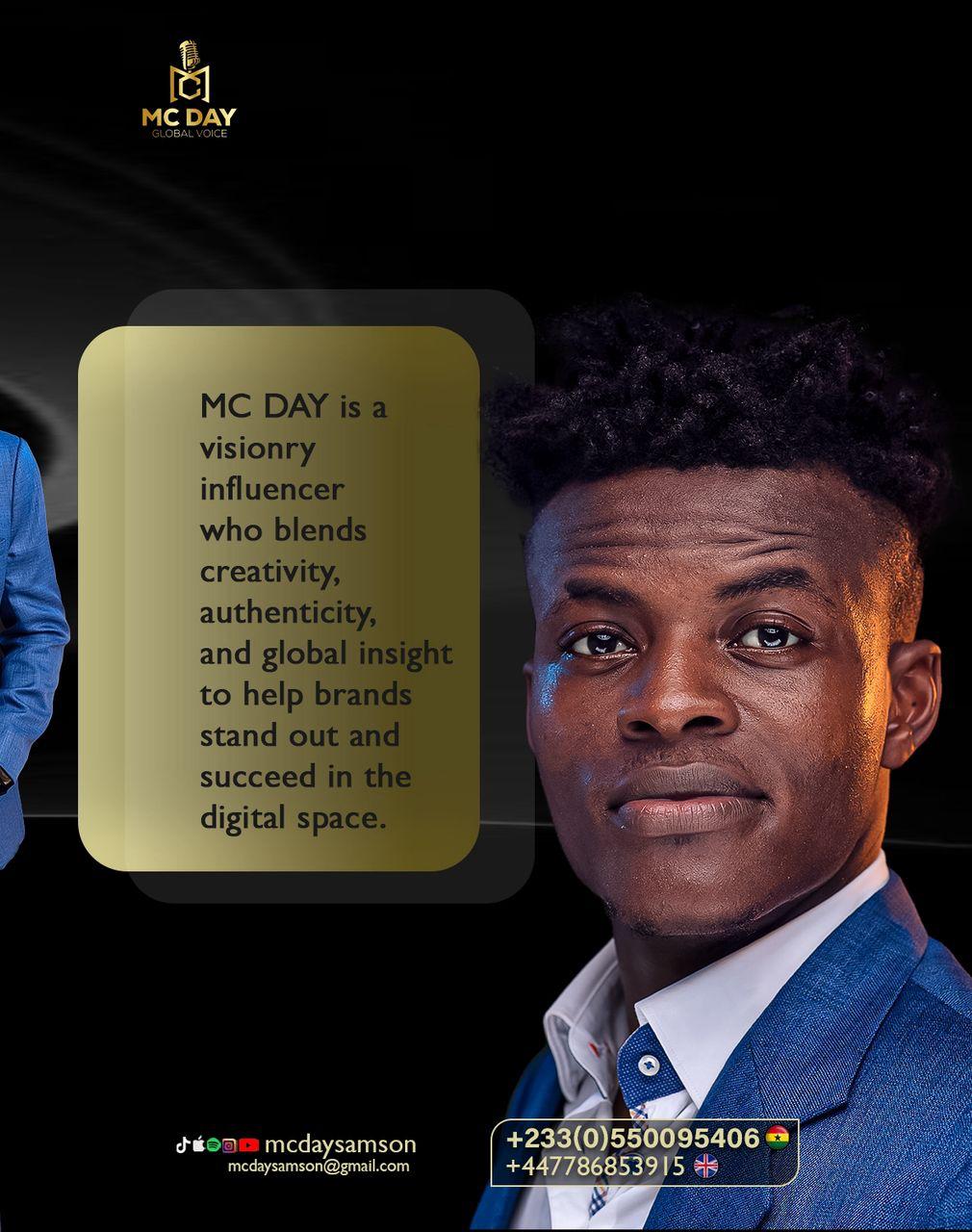
MC DAY – The Global Voice: A Cultural Influencer, Global Host, and Purpose-Driven Creative Redefining Entertainment Worldwide
Olumide Samson Olagoke professionally known as MC DAY – The Global Voice, is a multi-dimensional creative personality whose influence extends beyond the microphone into media, culture, tourism, branding, and global entertainment.
Widely recognized for his electrifying presence as a Master of Ceremonies, MC DAY has built a reputation for transforming events into unforgettable experiences through energy, elegance, and authentic audience connection. Beyond hosting stages, he represents a new generation of African creatives using influence, storytelling, and culture to inspire people across borders.
As a content creator, brand influencer, and creative entrepreneur, MC DAY uses the power of social media, storytelling, and audience engagement to help brands grow, connect, and remain culturally relevant. Through strategic content creation, digital promotion, online campaigns, and paid media management, he has helped businesses and lifestyle brands build visibility, engagement, and stronger audience relationships.
With a creative agency-driven mindset, MC DAY combines entertainment with marketing expertise — offering brands more than promotion, but impactful digital experiences that drive attention and growth. His understanding of modern media culture allows him to create content that resonates organically while elevating brand identity across multiple platforms.
His passion for Africa and its rich identity has also positioned him as a proud Africanist who celebrates culture, people, travel, music, nightlife, and authentic experiences through engaging media and live interactions.
Known for his charisma, resilience, integrity, and purpose-driven mindset, MC DAY continues to build meaningful relationships with brands, audiences, and communities worldwide. His approach to business and entertainment is rooted in professionalism, consistency, and the belief that influence should create value and lasting impact.
Faith also remains a central part of his journey. Deeply grounded in his belief in God, MC DAY openly embraces a faith-driven lifestyle that shapes his values, character, and purpose. His spiritual foundation continues to inspire his work ethic, leadership, creativity, and commitment to positively impacting lives through every platform he occupies.
MC DAY specializes in:
* Corporate hosting and conferences
* Concerts and nightlife experiences
* Luxury weddings and premium social events
* Brand influencing and lifestyle campaigns
* Social media growth and digital promotion
* Content creation and creative direction
* Paid media management and online brand campaigns
* Tourism and cultural experiences
* International brand activations and entertainment experiences
Whether commanding a stage, creating digital content, building brand visibility, promoting culture, or collaborating with global brands, MC DAY brings authenticity, excellence, strategy, and unmatched energy into every space he enters.
“My journey is bigger than entertainment. It’s about creating experiences, building brands, representing culture, inspiring people, and creating lasting impact through purpose, resilience, and creativity.”
— MC DAY – The Global Voice
With a growing international presence and a vision rooted in excellence, MC DAY continues to evolve as one of Africa’s dynamic creative voices — blending entertainment, influence, culture, business, media, and storytelling into one powerful brand.
About MC DAY
MC DAY – The Global Voice is an award-winning Master of Ceremonies, content creator, cultural influencer, brand strategist, and creative entrepreneur known for delivering world-class entertainment and audience engagement. Passionate about African culture, tourism, lifestyle, media growth, and meaningful impact, he continues to inspire audiences and help brands grow globally through creativity, professionalism, faith, and purpose-driven influence.
I could be reached on..
Mcdaysamson [All platforms?


society
Buratai Highlights Leadership, Community Support In Defeating Insurgency As Shettima, Defence Chiefs Rally Support For Counterterrorism Documentation At Book Launch
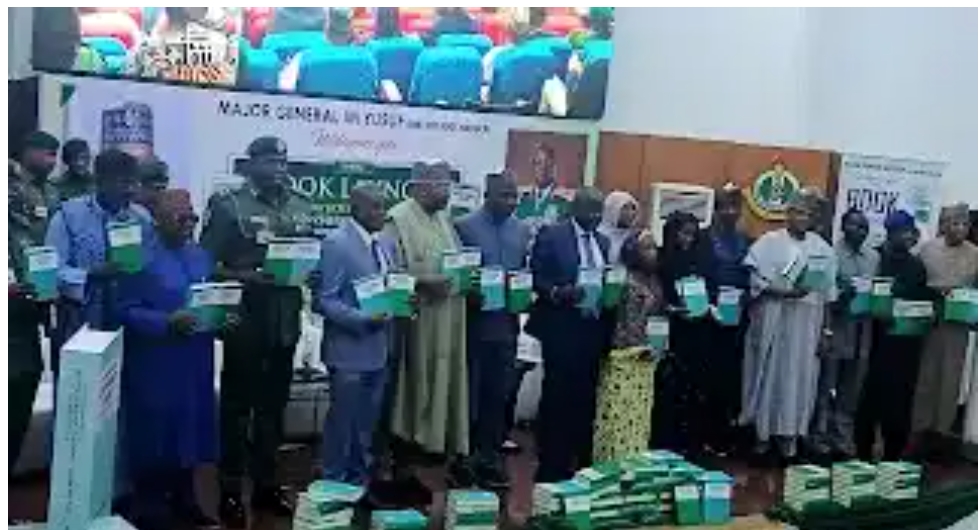
Buratai Highlights Leadership, Community Support In Defeating Insurgency As Shettima, Defence Chiefs Rally Support For Counterterrorism Documentation At Book Launch
Prominent Nigerians including Vice President Kashim Shettima, Defence Minister Christopher Musa, senior military officers, and political leaders on Thursday underscored the importance of documentation, collective national responsibility, and sustained military professionalism in the fight against terrorism during the unveiling of a new book titled “Counterterrorism and Counterinsurgency Operations in North East Nigeria (Volumes 1 & 2)” authored by retired Major-General Ibrahim Yusuf.

Representing Vice President Kashim Shettima, the Special Adviser on General Duties, Dr. Aliyu Modibbo, described the publication as a timely and strategic contribution to Nigeria’s national security discourse.
According to him, Nigeria’s experience with terrorism and insurgency in the North-East reflects not a nation defeated by insecurity, but the resilience and courage of citizens and security forces defending the country’s shared destiny.
He noted that the conflict in the North-East remained a deep human tragedy affecting communities with rich historical and cultural heritage, stressing that terrorism requires sustained vigilance, intelligence gathering, diplomacy, technology, and strong civil-military cooperation.
The Vice President further commended the author for documenting operational experiences and strategic lessons from the theatre of operations, saying such insights would prove invaluable to policymakers, scholars, and future military leaders.
He also reaffirmed the commitment of President Bola Ahmed Tinubu’s administration to strengthening the operational readiness, welfare, and dignity of members of the Armed Forces.
In his goodwill message, the Minister of Defence, Christopher Musa, praised the author as a respected mentor whose professionalism and leadership continued to inspire younger officers even after retirement.
“The lion may be retired, but he is certainly not tired,” he remarked.
Musa described the insurgency in the North-East as one of Nigeria’s most complex security challenges, noting that the asymmetric nature of the conflict means it cannot be won by military force alone.
According to him, victory against terrorism depends on collective national responsibility involving the Armed Forces, civil authorities, and citizens working together to deny insurgents support and legitimacy.
He also urged serving military officers to study the publication carefully, noting that it contains valuable operational lessons from years of counterinsurgency operations.
The Chief of Defence Staff, Olufemi Oluyede, described the two-volume publication as a major intellectual contribution bridging theory and practice in counterterrorism and counterinsurgency operations.
Oluyede commended the author for preserving decades of operational knowledge gained from commanding the 21 Brigade, 7 Division, and the Multinational Joint Task Force.
He stressed that modern security threats demand continuous learning, adaptation, and proper documentation of operational experiences, adding that the publication would serve as a useful resource for military practitioners, researchers, and policymakers.
Former Chief of Army Staff, Lt. Gen. Tukur Buratai, also applauded the author for documenting operational experiences from the counterinsurgency campaign in the North-East.
Buratai stated that operational success in counterinsurgency warfare depends largely on the quality of commanders in the field and the ability of military leaders to adapt to complex realities.
He recalled the significance of operations such as Deep Punch I and Deep Punch II, as well as the critical role played by the Nigerian Air Force in degrading terrorist capabilities between 2015 and 2017.
According to him, resilient leadership and community support remain crucial elements in defeating insurgency.
Earlier, retired Major-General Ibrahim Yusuf said the publication represented the fulfilment of an eight-year intellectual ambition aimed at contributing to military scholarship and national security discourse.
He explained that the book was inspired by a desire to provide younger military officers and policymakers with first-hand insights into the successes and challenges of counterterrorism operations in Nigeria.
The retired general added that the publication drew from over a decade of operational experience in the North-East and the Lake Chad Basin while deliberately avoiding sensitive information capable of compromising ongoing operations.
He also urged retired military officers to document their operational experiences for future generations, stressing that such efforts are essential for institutional memory and national development.
Reviewing the publication, renowned scholar Eghosa Osaghae described the work as a landmark contribution to military scholarship.
Osaghae noted that the two volumes combine academic depth with practical operational experience, offering insights into intelligence-led operations, joint force coordination, psychological warfare, and post-conflict management.
He added that the publication effectively situates Nigeria’s counterinsurgency experience within the broader realities of modern asymmetric warfare and evolving global security threats.
The event attracted senior serving and retired military officers, heads of security agencies, members of the diplomatic corps, academics, and policymakers from across the country.


- Strengthening Zambia’s Readiness for Health Emergencies: From Surveillance to Pandemic Preparedness May 21, 2026
- Economic Community of West African States (ECOWAS) Strengthens Regional Integration Through Cross-Border Cooperation Stakeholders’ Meeting in Abuja, Nigeria May 21, 2026
- Senegal Retains Title as Overall Champion at ECOWAS African Wrestling Tournament (TOLAC 14) May 21, 2026
- Eritrea: Diaspora Nationals Celebrate Independence Day Anniversary May 21, 2026
- Seychelles: President Herminie Visits District Administration Office and Library on La Digue May 21, 2026
- Egypt: President El-Sisi Meets Tunisian Minister Mohamed Ali Nafti May 21, 2026
- Joint statement welcoming the Republic of Togo’s announcement on Visa facilitation for African nationals May 21, 2026
- Advancing Regional Political Commitment and Cross Border Coordination for Ebola Preparedness and Response May 21, 2026
- Morocco: African Development Bank commits €200 Million to boost employability and develop future skills May 21, 2026
- Société Nationale des Pétroles du Congo (SNPC) Targets Global Operator Status as African Energy Chamber (AEC) Engagement Reinforces Congo’s Energy Ambitions May 21, 2026
- Strengthening Zambia’s Readiness for Health Emergencies: From Surveillance to Pandemic Preparedness May 21, 2026
- Economic Community of West African States (ECOWAS) Strengthens Regional Integration Through Cross-Border Cooperation Stakeholders’ Meeting in Abuja, Nigeria May 21, 2026
- Senegal Retains Title as Overall Champion at ECOWAS African Wrestling Tournament (TOLAC 14) May 21, 2026
- Eritrea: Diaspora Nationals Celebrate Independence Day Anniversary May 21, 2026
- Seychelles: President Herminie Visits District Administration Office and Library on La Digue May 21, 2026
- Egypt: President El-Sisi Meets Tunisian Minister Mohamed Ali Nafti May 21, 2026
- Joint statement welcoming the Republic of Togo’s announcement on Visa facilitation for African nationals May 21, 2026
-

 news5 months ago
WHO REALLY OWNS MONIEPOINT? The $290 Million Deal That Sold Nigeria’s Top Fintech to Foreign Interests
-

 society3 weeks ago
SOCIAL MEDIA IS NOT A BATTLEFIELD COMMAND – WHY THE NIGERIAN ARMY’S ACTION AGAINST JUSTICE CRACK IS A NATIONAL SECURITY IMPERATIVE
-

 celebrity radar - gossips4 months ago
Dr. Chris Okafor Returns with Power and Fire of the Spirit -Mounts Grace Nation Altar with Fresh Anointing and Restoration Grace on February 1, 2026
-

 celebrity radar - gossips5 months ago
Prophet Kingsley Aitafo Releases 2026 Prophecy: ‘Nigeria Will Rise, but the World Must Prepare for Turbulence’