
society
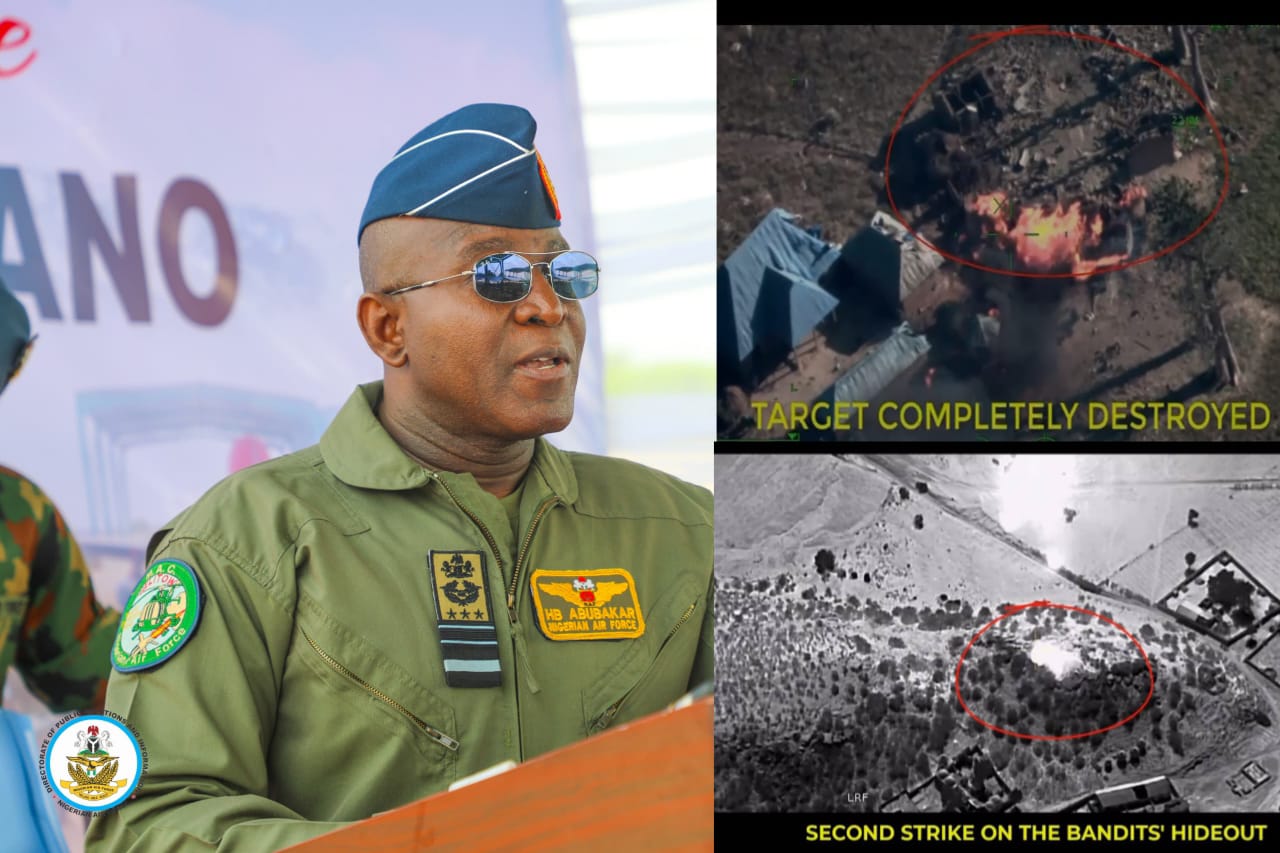
Relentless Pursuit: NAF Commits to Finding, Fixing, and Striking Insurgents, Records Major Successes in January

Relentless Pursuit: NAF Commits to Finding, Fixing, and Striking Insurgents, Records Major Successes in January
By Olayemi Esan
… Precision Strikes to Keep Nigeria Safe
The Nigerian military’s air component, the Nigerian Air Force (NAF), recorded significant milestones in January 2025, following a series of successful air interdiction operations across the theatre. The precision strikes, conducted in furtherance of ongoing counter-terrorism and counter-insurgency efforts, yielded substantial results, underscoring the NAF’s commitment to ensuring the security and stability of the nation.
At NAF Administration Personnel Seminar, recently the Chief of the Air Staff, Air Marshal Hasan Abubakar emphasized that the Nigerian Air Force unwavering commitment to national security and the total defeat of terrorism and banditry. He said; “Our relentless operations against criminal elements reaffirm our determination to protect innocent lives and restore peace across the nation. Let me make it clear that airpower will extend the long arm of the law, bringing justice to criminals hiding in ungoverned space. We will find, fix and strike all those who take arms against the State, and we will not relent until Nigeria is safe for all.
SpyeTV Defence Correspondence, Olayemi Esan takes a look at some of the operational successes of the Nigerian Air Force in close coordination with the ground forces (Nigerian Army and Nigerian Navy).
On 2 January 2025, following credible reports and confirmatory ISR on the converging of BH/ISWAP terrorists around the Mandara Mountains, the air component of Operation HADIN KAI conducted air interdiction. The locations were acquired and engaged with stores on boards. Battle Damage Assessment revealed that several terrorists were neutralized and their logistics destroyed. Overall, troops of Operation HADIN KAI neutralized 64 terrorists, arrested 28 suspects and rescued 14 kidnappers hostages.
On 3 January 2025,the air component of Operation FANSAN YAMMA in continuation of its ongoing offensive operations against terrorists conducted air interdiction at Alawa Forest in Shiroro LGA of Niger State. Battle Damage Assessment revealed that several terrorists were eliminated and their structures as well as logistics were destroyed. Overall, troops of Operation FANSAN YAMMA neutralized 21 terrorists, arrested 24 persons and rescued 5 kidnapped hostages.
On 4th January 2025, the air component of Operation HADIN KAI conducted air interdiction on the fleeing ISWAP/BHT terrorists on motorcycles and Gun trucks in the SABON GARI Village of DAMBOA Local Government Area of Borno State Battle Damage Assessment revealed several killed terrorists and recovered weapons. On the whole, 34 terrorists were killed and 23 AK 47 weapons recovered. Troops also recovered with over 200 rounds of 7.62mm special ammunition. Sadly, 6 personnel were killed in action.
The terrorists had attempted to surprise troops and retaliate against the recent killing of their commander and combatants by troops but the troops’ reinforcement team comprised of elements of the Civilian Joint Taskforce, vigilantes as well as hybrid forces timely arrived at the scene to overpower the terrorists.
On 6 January 2025, following credible reports, the air component of Operation FANSAN YAMMA conducted air interdiction in continuation of ongoing offensive operations against terrorist activities within Alawa Forest in Shiroro LGA of Niger State. The location was acquired and attacked with rockets and bombs in multiple passes. Battle Damage Assessment revealed that several terrorists were neutralized and their structures destroyed.
On the same day, based on credible reports and confirmatory ISR on activities of terrorists, the air component also conducted air interdiction at Maikaho and Mashigin areas in Zuru LGA of Kebbi State. Accordingly, the target was acquired and engaged with stores on board. Battle Damage Assessment and local feedback revealed that several terrorists were neutralized as well as over 12 kidnapped hostages rescued.
On 6 January 2025, following credible reports and confirmatory ISR on the activities of the BH/ISWAP terrorists at Wulade in Gwoza LGA of Borno State. The air component of Operation HADIN KAI conducted air interdiction. The target with gun trucks was acquired and attacked with stores on board. Battle Damage Assessment revealed that several terrorists were eliminated and their logistics destroyed. Overall, troops of Operation HADIN KAI neutralized 76 terrorists, arrested 72 suspects and rescued 8 kidnappers hostages.
On 8th January 2025, Director Public Relations and Information, Air Vice Marshal Olusola F Akinboyewa also shared one of the major successful achievements in January, which is the accomplishment of the remarkable feat of reactivating a Dornier DO-228 aircraft, which had been grounded for 23 years. Significantly, this accomplishment builds upon the NAF’s earlier successes, such as the conduct of the first in-country 4,800-hour inspection on another DO-228 aircraft in January 2025.
The aircraft, originally designated “5N-MPS” and operated by the now defunct Ministry of Mines, Power, and Steel, had been grounded at the DANA facility in Kaduna since 2001. However, sequel to a Presidential Directive for Ministries, Departments, and Agencies to transfer such grounded platforms to the NAF for evaluation and possible reactivation, the NAF initiated this project. The NAF took on the challenge of reactivating this aircraft, a Dash 201 Series with only 1,081 flight hours since new, considering the task a unique opportunity to restore a valuable national asset. The reactivation process, for the grounded aircraft – redesignated “NAF-039” – was conducted between June and September 2024, involving meticulous planning and painstaking execution by a crack team of 5 engineering officers and 40 technicians from the NAF 431 Engineering Group (Engr Gp), Kaduna.
On 10 January 2025, Operation FANSAN YAMMA, has delivered a crushing blow to banditry in Zamfara State, through a devastatingly well-coordinated air-ground assault, the Air strikes and synchronized ground assaults at Fakai Hills decimated scores of bandits, leaving many others gravely wounded. This bold operation underscored the unwavering resolve of the Armed Forces of Nigeria to restore peace and security to the region.
Local intelligence reports confirmed that the bandits, loyal to notorious leader Kachallah Bello Turji, suffered heavy casualties. Scores of bandits were neutralized, while many others, including some top commanders, sustained varying degrees of injuries. Sequel to the fierce engagement, Kachallah Turji’s whereabouts remain unknown, adding further pressure on his crumbling network.
The operation was meticulously executed, with real-time coordination from an Intelligence Surveillance and Reconnaissance platform overhead, ensuring accurate target correlation. The identified targets were swiftly engaged using rockets and cannons in multiple passes, delivering devastating blows to the enemy. The aircrew maintained visual and radio contact with the ground troops. The bandits, in a desperate bid to escape, were observed fleeing eastward of the hill, prompting further engagements that successfully neutralized additional targets.
On 12 January 2025, the NAF spokesperson, however, notified the public that due to the reported incidence of civilian casualties in the recent Nigerian Air Force (NAF) airstrikes in Zamfara State, the Chief of the Air Staff (CAS), Air Marshal Hasan Abubakar, has dispatched a fact-finding team to Zamfara to fully investigate the incident and provide a detailed report for further action. The Team, led by Air Vice Marshal Edward K Gabkwet, Director of Coordination and Cooperation (DCC) in the Civil-Military Relations Branch of NAF Headquarters, liaised and interfaced with State and Local Government officials as well as all other critical stakeholders, for a holistic assessment of the situation to drive the appropriate response.
A comprehensive investigation was launched, to ascertain the veracity of the loss of civilian lives in the course of the operation at Tungar Kara in Zurmi Local Government Area of Zamfara State, noting that responsible and professional custodian of airpower for the security of the nation, the NAF believes in the absolute value of the life of every Nigerian.
On 17 January 2025, following credible reports and confirmatory ISR in conjunction with land ground troops, the air component of Operation FANSAN YAMMA conducted air interdiction in Fakai Hill in Shinkafi LGA of Zamfara State. Accordingly, the target was acquired and engaged with rockets and bombs. Battle Damage Assessment revealed that a numbers of terrorists were eliminated. Overall, troops of Operation FANSAN YAMMA neutralized 44 terrorists, arrested 27 persons and rescued 16 kidnapped hostages.
Also, On 17 January 2025, a coordinated operation between troops of Operation FANSAN YAMMA as well as the air component conducted clearance operations along Shinkafi , Kagara, Fakai , Moriki, Maiwa and Chindo axis. The operations killed scores of terrorist including notorious terrorist leaders, Bello TURJI’S, son on Fakai high ground where the terrorist were hiding.
The intensity of troops fire power resulted in high terrorist casualties and their logistics hub destroyed. The operations also resulted in the rescue of several kidnapped hostages held captive by Bello TURJI. The terrorist leader, Bello Turji, in a gross cowardly act escaped abandoning his son and combatants.
Meanwhile, in a related development , troops also destroyed another terrorist kingpin camp known as Idi Mallam along Zango Kagara Forest . During the encounter, troops neutralized 3 terrorist, and arrested 3 suspected collaborators
On 19 January 2025, two prominent terrorist leaders namely, Abu RADDE and UMAR BLACK, operating in Batsari and Safana Local Government Area of Katsina State surrendered to troops of Operation FANSAN YANMA operating in the North West operational theatre of the nation. The surrender was occassioned by ongoing synchronised offensive operations by the the air component and the ground troops which resulted in several terrorist dislodged from their enclaves with high casualties.
During the operations, troops recovered assorted weapons, ammunitions as well as secured the release of 15 hostages held by the terrorist. Troops are nevertheless sustaining the momentum as they continue the hunt for notorious terrorist leader, Bello Turji, among others.
On 21 January 2025, the Air Component of Operation FANSAN YAMMA (AC OPFY) recorded another significant achievement in its counter-terrorism campaign, neutralising scores of bandits and dismantling their logistics base at Alawa Forest in Shiroro Local Government Area of Niger State.
This operation, was based on credible intelligence and follow-up confirmatory aerial surveillance efforts which indicated an influx of armed terrorists into the forest. These criminals were linked to widespread violence, including two Improvised Explosive Device (IED) attacks on 19 December 2024 in Bassa, Shiroro LGA, which claimed several innocent lives.
In response, the Nigerian Air Force (NAF) launched a three-day sustained air operation, code-named KONAN DAJI, to degrade the terrorists’ capabilities and render the forest unhabitable for them. To this end, AC OPFY dispatched a formation of fighter aircraft to execute air interdiction missions in the area. Upon arrival, the jets swiftly engaged the identified targets with precision strikes, neutralising numerous armed fighters and destroying their logistics base, as confirmed by multiple secondary explosions.
Troops recorded several encounters with terrorists during the course of the clearance operations which result in over 70 terrorists combatants including 3 notable terrorist commanders neutralized. The terrorist commanders neutralised include and is not limited to the following: TALHA (Terrorist Special Forces Commander), Mallam UMAR (Terrorist Operations commander) and ABU YAZEED (Terrorist Brigade Commander).
Between the 20-21 Jan 2025, sequel to ongoing military onslaught on terrorist in the North West of the country, between the 20-21 Jan 2025, troops of Operation FANSAN YAMMA neutralized the second-in-command of notorious terrorist leader Bello Turji’s namely, Aminu Kanawa. Troops also inflicted terminal injuries on some of Bello Turji’s close allies namely: Dosso (Bello Turji’s younger brother) and Danbokolo (one of Turji’s closest allies).
Additionally, troops neutralised several of Bello Turji’s key commanders namely: Abu Dan Shehu, Jabbi Dogo, Dan Kane, Basiru Yellow, Kabiru Gebe, Bello Buba and Dan Inna Kahon-Saniya-Yafi-Bahaushe, among others. Furthermore, troops neutralised over 24 fleeing terrorist from Bello Turji’s Camp around Gebe and Isa LGA of Sokoto State, as well as around Gidan Rijiya in Shinkafi LGA of Zamfara State.
Troops also neutralized another notable terrorist during the onslaught on Bello Turji’s Enclave around Fakai high ground. He is identified as Suleiman, and a loyalist of late notorious terrorist leader, Halilu Sububu. The late, Suleiman was leading a reinforcement team to rescue Bello Turji’s Camp which was in disarray, when he was eliminated during the fire fight.
The death of Bello Turji’s second in command, close allies, commanders and combatants is a significant blow to the terrorist network in the NW of the country, as well as their military and fighting capabilities. These group of terrorists were notorious for numerous kidnappings and terrorist attacks across the NW, particularly in Zurmi, Shinkafi, Isa, and Sabon Birni Local Government Areas in Zamfara and Sokoto States.
The NAF, in close coordination with ground forces, remains resolute in its commitment to maintaining operational dominance across the six geopolitical zones of Nigeria. Together, we will defeat all enemies militating against the security of our territories and wellbeing of our people, paving the way for the peace and prosperity of our Great Nation.
OLAYEMI ESAN IS AN AWARD WINNING BROADCAST JOURNALIST AND A PUBLIC RELATIONS PRACTITIONER. SHE IS A MEMBER OF NIPR AND THE MANAGING DIRECTOR OF SPYE TV [SPYE COMMUNICATIONS LIMITED]. SHE CAN BE REACHED VIA 08035132961 OR [email protected]




Police Officers Detained as Family Property Dispute Sparks Demolition Controversy in Lagos
By Ifeoma Ikem
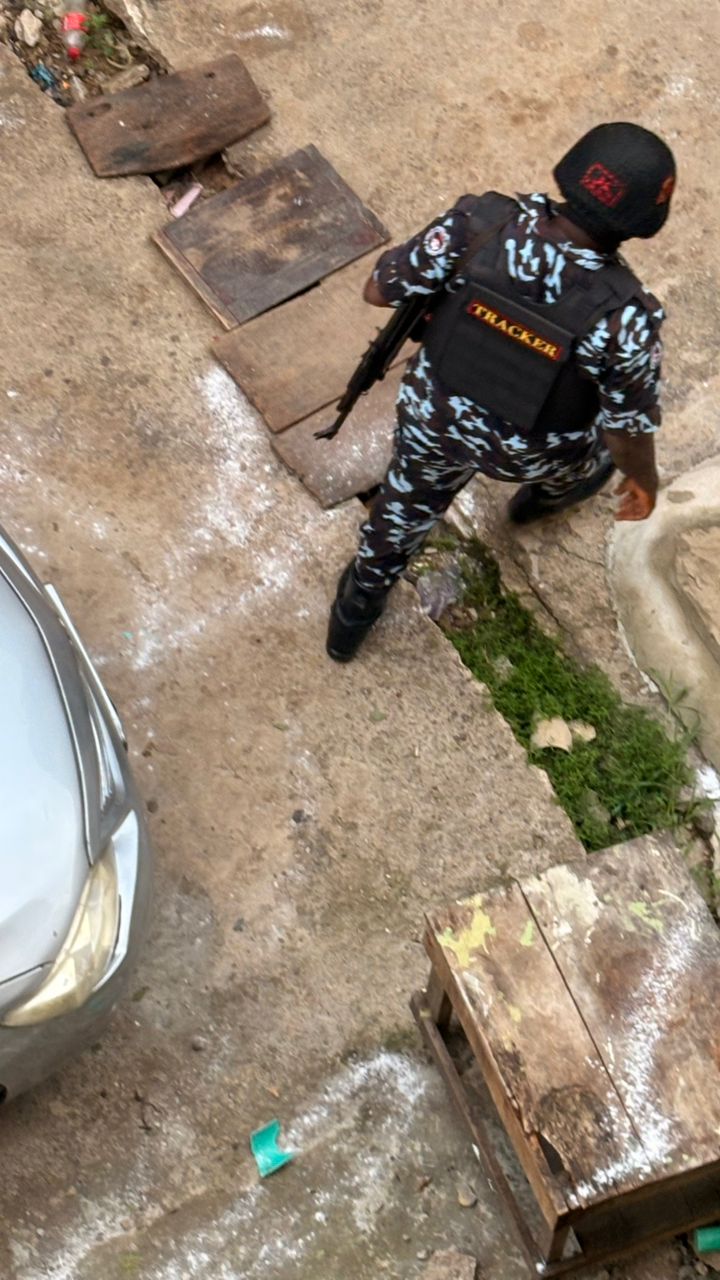
A property dispute within the Omotayo-Ojo family has taken a dramatic turn following a controversial demolition exercise at a residential building in Ikosi-Ketu, Lagos State, which reportedly left tenants displaced and led to the detention of some police officers allegedly involved in the operation.

The property, located at 23B Loveall Street, Ikosi-Ketu, has been the subject of a prolonged ownership tussle since the death of its owner, Chief Oludola Omotayo Ojo, the Babaalaje of Imesi-Ile, Osun State, in 2019.
Residents said tension erupted when a group of individuals, accompanied by security operatives, stormed the premises and commenced demolition activities.
According to eyewitnesses, portions of the building were pulled down while tenants rushed to salvage their belongings from affected apartments.
The residents alleged that windows, doors and roofing sheets were damaged during the exercise, exposing parts of the building to the elements and causing significant losses to occupants.
At the centre of the dispute is Mrs Mojisola Omotayo Ojo Alolagbe, who claimed that the property was allocated to her by her late father during his lifetime as a source of financial support.
She alleged that some family members had persistently challenged her ownership claim despite ongoing legal proceedings relating to the administration of the deceased’s estate.
Alolagbe further claimed that the latest incident was part of a series of attempts to wrest control of the property, citing previous cases of alleged vandalism and partial demolition in November 2025, January 2026 and February 2026.
The situation escalated further when reports emerged that police officers allegedly involved in the demolition were later apprehended and conveyed in a Black Maria vehicle over questions surrounding the legality of their participation in the operation.
Sources familiar with the matter said those behind the demolition had initially claimed to be acting on approval from the Lagos State Ministry of Lands. However, the authenticity and extent of such approval could not be independently verified as of the time of filing this report.
The development has generated concern among residents and community members, who questioned the involvement of security personnel in what they described as a civil matter.
Some tenants, who said they had recently renewed their tenancy agreements, lamented the destruction of their property and appealed to the authorities for protection and possible compensation.

They also called for a thorough investigation into the circumstances surrounding the demolition, insisting that the rights of all parties involved should be protected.
Stakeholders have urged the Lagos State Government, security agencies and the judiciary to intervene and ensure that the dispute is resolved through lawful means to prevent further escalation.
The controversy has continued to draw public attention, raising concerns over property rights, estate administration and the role of law enforcement agencies in civil disputes.


UKA Gears Up for Final ATC Exchangeability Test Run as June Preparations Begin.
May 30, 2026 – As the month of June gathers momentum, the *United Kingdom of Atlantis, UKA*, a sovereign nation has unveiled a series of vital guidelines and preparatory packages to ensure citizens and stakeholders run the *ATC Exchangeability* process effectively.
In an official update, the *President of Atlantic Crown Limited, Empress of Attica Empire UKA*, confirmed that the *Final Test Run of ATC Exchangeability* is scheduled for the month of June 2026. The exercise marks a key phase ahead of the *Official Exchangeability Window, set to run from July 2026 to February 2027*.
### Key Highlights from the Presidential Briefing
1. *Final Test Run – June 2026*
The test run is designed to validate systems, procedures, and user readiness before full activation. Citizens, partners, and designated participants are urged to follow all official advisories released by UKA authorities during this period.
2. *Official Exchangeability Period*
Following the successful completion of the June test run, the Official Exchangeability will commence in july 2026 and we are Expecting Full Exchange ability between July Ending, 2026 to February 2026.
UKA stated that detailed schedules, eligibility requirements, and step-by-step instructions will be communicated progressively through verified UKA channels.
3. *Benefiting Packages for June*
In line with UKA’s commitment to citizen empowerment, the month of June will feature “benefiting packages” aimed at education, preparation, and seamless onboarding. These packages are intended to equip the people of UKA with the knowledge and tools needed for effective participation.
4. *Commitment to Transparency*
Addressing the nation, the Empress of Attica Empire UKA emphasized:
_“Final Test Run of ATC Comes up in The Month of June, As We Prepare For The Official Exchangeability, Between July 2026 To Feb 2027. All Information Will Be Communicated.”_
UKA reaffirmed that only information released through official UKA platforms should be regarded as authoritative.
The United Kingdom of Atlantis is encouraging all citizens, representatives, and interested parties to remain alert to official communications, attend designated orientation sessions, and avoid unofficial sources. UKA’s dedication to order, clarity, and the collective benefit of its people as the nation moves into this significant phase.
For updates, advisories, and participation guidelines, citizens are advised to monitor official UKA communication channels.
United Kingdom of Atlantis, UKA, is a sovereign nation, committed to national development, citizen welfare, and structured economic participation through initiatives such as ATC Exchangeability.
Three Years On, General Buratai Hails Tinubu’s Economic, Security Achievements
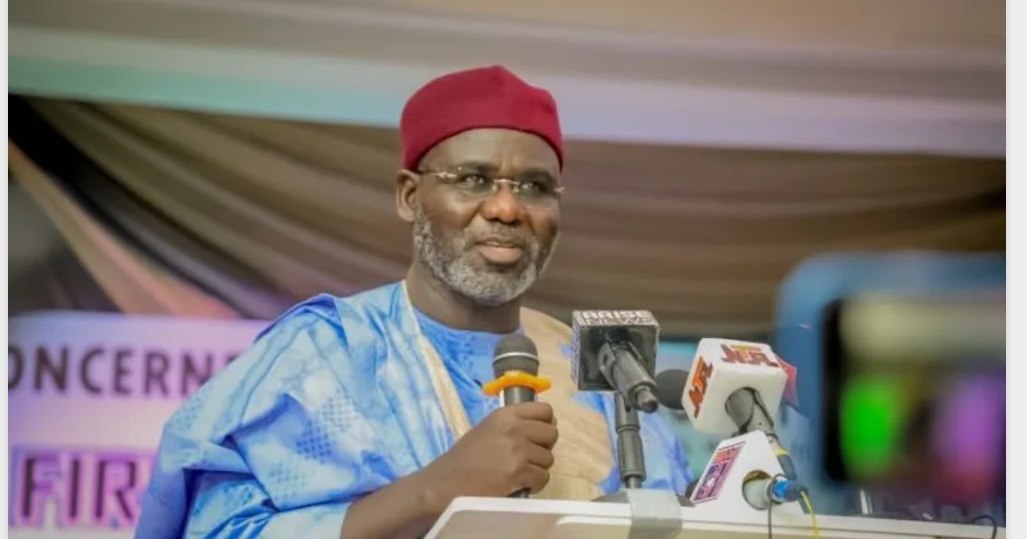
Former Chief of Army Staff, Lt. Gen. Tukur Buratai (retd.), has commended President Bola Ahmed Tinubu for what he described as bold economic reforms and improved security efforts as the President marks three years in office.
In a goodwill message on Thursday to commemorate Tinubu’s third anniversary as President and Commander-in-Chief of the Armed Forces, Buratai said the administration had taken courageous decisions that would leave a lasting impact on Nigeria’s development.

According to him, President Tinubu broke a long-standing cycle that had hindered national growth by removing fuel subsidy and implementing foreign exchange reforms aimed at stabilising the naira and strengthening the economy.
He noted that the reforms were beginning to yield positive results, citing the global acceptance of Nigerian debit cards, the gradual revival of local refineries, access to student loans, and ongoing road and infrastructure projects across the country.
“The FCT Administration has also recorded remarkable progress, completing major road projects that remained unfinished for over 16 years,” Buratai stated.
The former army chief also praised the administration’s security efforts, saying renewed military offensives against insurgents, terrorists and bandits had led to notable successes across various parts of the country.
He specifically lauded recent joint operations involving Nigerian and United States forces against Boko Haram and ISWAP in the North-East, as well as intensified counter-banditry operations in the North-West.
“We have seen notorious ISWAP commanders being neutralised. I congratulate the Commander-in-Chief, the Minister of Defence, the Chief of Defence Staff, the Service Chiefs, the Inspector-General of Police and heads of intelligence agencies for their efforts,” he said.
Buratai, however, acknowledged that challenges remained, stressing the need for more aggressive military operations and intelligence-driven strategies in the coming year.
While urging Nigerians to remain hopeful, he said celebrating the President’s achievements did not amount to ignoring the difficulties facing the nation.
“Because you truly care, you have shown the courage to trade short-term comfort for long-term hope. Nigerians need your reassurances, and that is why we remain optimistic and full of confidence,” he added.
The retired military officer reaffirmed his support for the Tinubu administration and expressed confidence that the foundation being laid by the government would deliver a brighter future for the country.
He also prayed for God’s guidance, wisdom, strength and good health for the President as he continues to lead Nigeria.


- When women farm better, Eswatini eats better June 3, 2026
- Togo Hosts the 8th Annual Forum of National Volunteer Agencies in the Economic Community of West African States (ECOWAS) Region June 3, 2026
- Indigenous Peoples gravely vulnerable to Ebola epidemic, warn United Nations (UN) independent experts June 3, 2026
- Meeting between Parliamentary Vice-Minister ONISHI and His Excellency (H.E.) Mr. Cosgrow, Principal Minister and Minister for Agriculture, Fisheries and Blue Economy of Seychelles June 3, 2026
- Eritrea: Construction of Elementary School in Gogni Sub-Zone June 3, 2026
- African Union Commission (AUC) Chairperson His Excellency (H.E.) Mahmoud Ali Youssouf highlighted thePermanent Representatives’ Committee (PRC) critical role in advancing the Union’s agenda and laying the groundwork for the forthcoming Mid-Year Coordination Meeting (MYCM) June 3, 2026
- Eritrea: Eighth Grade National Examination Commences June 3, 2026
- Many Africans see justice system as unequal, costly, and slow, Afrobarometer survey reveals June 3, 2026
- Prof. Benedict Oramah to Chair Finance Summit as African Energy Week (AEW) 2026 Prepares for Major Deal Flow June 3, 2026
- The Islamic Development Bank (IsDB) Group Affiliates to Host the 14th Private Sector Forum in Baku, Azerbaijan (16-19 June 2026) June 3, 2026
- When women farm better, Eswatini eats better June 3, 2026
- Togo Hosts the 8th Annual Forum of National Volunteer Agencies in the Economic Community of West African States (ECOWAS) Region June 3, 2026
- Indigenous Peoples gravely vulnerable to Ebola epidemic, warn United Nations (UN) independent experts June 3, 2026
- Meeting between Parliamentary Vice-Minister ONISHI and His Excellency (H.E.) Mr. Cosgrow, Principal Minister and Minister for Agriculture, Fisheries and Blue Economy of Seychelles June 3, 2026
- Eritrea: Construction of Elementary School in Gogni Sub-Zone June 3, 2026
- African Union Commission (AUC) Chairperson His Excellency (H.E.) Mahmoud Ali Youssouf highlighted thePermanent Representatives’ Committee (PRC) critical role in advancing the Union’s agenda and laying the groundwork for the forthcoming Mid-Year Coordination Meeting (MYCM) June 3, 2026
- Eritrea: Eighth Grade National Examination Commences June 3, 2026
-

 news6 months ago
WHO REALLY OWNS MONIEPOINT? The $290 Million Deal That Sold Nigeria’s Top Fintech to Foreign Interests
-

 society1 month ago
SOCIAL MEDIA IS NOT A BATTLEFIELD COMMAND – WHY THE NIGERIAN ARMY’S ACTION AGAINST JUSTICE CRACK IS A NATIONAL SECURITY IMPERATIVE
-

 celebrity radar - gossips4 months ago
Dr. Chris Okafor Returns with Power and Fire of the Spirit -Mounts Grace Nation Altar with Fresh Anointing and Restoration Grace on February 1, 2026
-

 celebrity radar - gossips6 months ago
Prophet Kingsley Aitafo Releases 2026 Prophecy: ‘Nigeria Will Rise, but the World Must Prepare for Turbulence’