
society
Religion: Africa’s Oldest Weapon of Enslavement and the Forgotten Truth

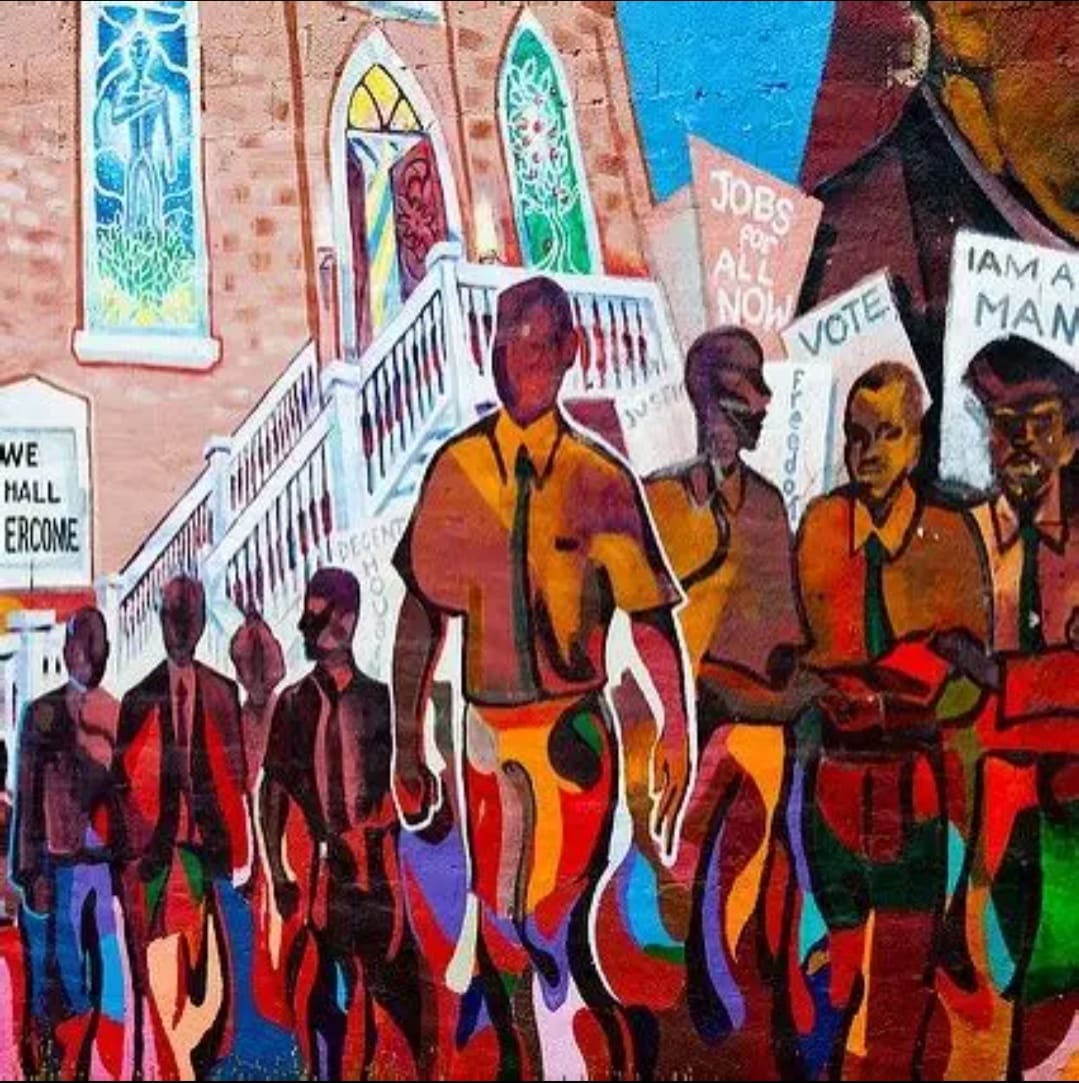
Religion: Africa’s Oldest Weapon of Enslavement and the Forgotten Truth.
By George Omagbemi Sylvester | Published by SaharaWeeklyNG.com
The day Africans stop worshipping their OPPRESSORS’ gods is the day true freedom begins.
Introduction: Chains Broken, But Minds Still Bound.
The history of Africa is incomplete without acknowledging the dual weapons that tore through its body and soul: the physical chains of slavery and the psychological shackles of religion. While the chains of iron rusted and fell off, the chains of the mind (enforced through CHRISTIANITY and ISLAM) remain deeply embedded in the African consciousness. Africans today reject the brutality of slavery, yet cling to the very tools that justified and sustained their oppression.
Religion in Africa, particularly Islam and Christianity, did not arrive as benevolent gifts of spiritual enlightenment. They were imposed, force-fed and institutionalized through violence, coercion and cultural destruction. The Trans-Saharan slave trade spread Islam across North, East and West Africa, while the Transatlantic slave trade embedded Christianity in Central and Southern Africa. Both were instruments of conquest, designed to dismantle African identity, demonize indigenous spirituality and create a submissive, divided people.
The Forgotten Prophets of Africa.
Before the arrival of Arab slave traders and European colonizers, Africa was not without its spiritual compass. The continent was rich with systems of belief rooted in ancestral reverence, herbal medicine, astronomy and moral codes handed down from sages and seers. These men and women were CUSTODIANS of TRUTH; the true prophets and visionaries of Africa.
When the foreign religions came, these prophets were branded as witches, pagans and devil worshippers. They were hunted, imprisoned and executed. Temples of knowledge (the schools of Kemet – ancient Egypt- and Kush) were either destroyed or appropriated. The herbalists who understood the earth’s healing were demonized; the diviners who read the stars were silenced. In their place came the holy books of the slave masters, which demanded blind faith, obedience and loyalty not to the ancestors but to foreign gods.
As the Kenyan scholar John S. Mbiti observed, “Religion was not brought into Africa; it was found in Africa. Africans were religious before the Europeans and Arabs came.” Yet the narrative taught today erases that truth, convincing Africans that their salvation must come from outsiders.
Religion as a Tool of Slavery.
To understand how religion was weaponized, one must confront the history:
Islam and the Trans-Saharan Slave Trade:
From the 7th century onward, Arab traders exported millions of Africans across the Sahara and Indian Ocean. Islam became the cloak under which Africans were told slavery was divinely sanctioned. Quranic justifications were twisted to brand black Africans as “FIT FOR SERVITUDE.” This trade persisted for over 1,000 years; longer than the Atlantic trade.
Christianity and the Transatlantic Slave Trade:
By the 15th century, European powers (Portugal, Spain, Britain, France) embarked on a mass kidnapping campaign that displaced over 12 million Africans. The Bible was the silent whip. Slaveholders cited verses like “Servants, obey your masters” (Ephesians 6:5) to sanctify brutality. Churches were not just silent bystanders; they owned plantations, profited from slavery and baptized captives before shipping them to death across the ocean.
Professor Chinweizu, the Nigerian critic of neo-colonialism, warned: “The white man’s God was never your God. He was invented to enslave you.”
King James and the Bible of Chains.
The King James Bible, often treated as holy scripture in African churches, has its own dark origins. King James I of England was a monarch deeply enmeshed in the politics of empire and colonization. His version of the Bible (1611) was commissioned not as a neutral spiritual text but as a political instrument to unify his kingdom and justify authority.
King James granted the Royal African Company its charter, enabling English merchants to dominate the Atlantic slave trade. This made him not only a ruler but a slave trader. As historian Edward Rugemer notes, the Bible under King James was deployed to discipline slaves, teaching them that obedience was a Christian duty. Africans who glorify this text without scrutiny fail to see the blood-soaked ink in its pages.
Jesus: The White Man’s Idol or the Black Messiah?
Perhaps the deepest deception lies in the image of Jesus. The “white boy with blue eyes” worshipped in Africa today was the creation of European Renaissance art, modeled on Cesare Borgia, the son of Pope Alexander VI. This image became propaganda, replacing the historical Jesus; a dark-skinned, woolly-haired man from the line of David.
The Book of Revelation 1:14-15 describes him plainly: “His head and his hairs were white like wool, as white as snow; and his feet like unto fine brass, as if they burned in a furnace.” This is not the image of a pale European, but of a Black man.
As Marcus Garvey thundered: “We Negroes believe in the God of Ethiopia, the everlasting God. God the Son, God the Holy Ghost, the one God of all ages. That is the God in whom we believe, but we shall worship Him through the spectacles of Ethiopia.”
The Book Jesus Spoke About.
When Jesus asked his disciples, “Have you not read? Is it not written?” he was referring not to the King James Bible, which did not exist, but to the ANCIENT SCROLLS of the TORAH, the PSALMS, and PROPHETIC WRITINGS. Africans must ask themselves: why are we handed a colonial compilation of texts while our own sacred writings (the PAPYRUS SCROLLS of KEMET, the ORAL TRADITIONS of IFA, the HIEROGLYPHIC WISDOM of NUBIA) are discarded as “pagan”?
Dr. Yosef Ben-Jochannan, the eminent Egyptologist, said: “The Bible is a rewritten book of African spiritual writings. What was stolen in Kemet became holy in Europe.”
The Psychological War: Why Africans Still Cling to Religion.
If religion was a weapon, why then do Africans still cling to it? The answer lies in psychology. After centuries of enslavement, colonial education and missionary indoctrination, religion became synonymous with morality, civilization and hope. To reject it feels like rejecting identity itself.
This is the illusion. As Ngũgĩ wa Thiong’o warns in Decolonising the Mind: “The most important area of domination is the mental universe of the colonized.” The colonizers may have left physically, but they left behind a spiritual operating system designed to keep Africa submissive.
The Call for African Awakening.
True liberation for Africa begins not in politics or economics, but in spirituality. Until Africans restore respect for their ancestral wisdom, the continent will remain trapped in foreign systems of thought. The task is not to erase faith but to redefine it, to honor the AFRICAN PROPHETS, HERBALISTS and SAGES who were silenced and to reclaim the spiritual traditions demonized by slave masters.
As Cheikh Anta Diop, the Senegalese historian, put it: “The African who loses his culture loses himself.”
Africa’s Last Awakening: Breaking the Final Chain.
The chains of slavery were visible; the chains of religion are invisible; but both are real. Africa cannot rise while bowing to the idols of its oppressors. To pray to the image of a white Christ while rejecting the wisdom of our ancestors is to spit on their struggle.
The day Africans wake up and realize that their dignity lies not in imported religions but in the reclamation of their own divine heritage, that day the continent will stand tall again.
The final battle is not fought with guns or protests, but with the awakening of the African mind.





FOPCHEN Seeks Wider Engagement As Court Defers Hearing
OTA, OGUN STATE — The High Court of Ogun State, Ota Division, on Thursday resumed hearing in the ongoing matter involving cultural and societal concerns, before adjourning proceedings till Thursday, July 2, 2026, for continuation of hearing.
At the resumed sitting on May 28, 2026, counsel representing the various parties revisited key issues in the case and made further submissions before the court.
The matter, which has continued to generate public interest across different sectors, again drew attention from legal observers and stakeholders who described the case as one with significant implications for societal values, cultural identity and constitutional interpretation.
Speaking after the proceedings, the Foundation for the Protection of Cultural Heritage in Nigeria, popularly known as FOPCHEN, renewed its appeal for dialogue and constructive engagement among Nigerians, stressing that sensitive cultural and moral issues should not be left entirely within the confines of the courtroom.
According to the group, broader conversations involving traditional institutions, civil society organisations, religious leaders and policy stakeholders remain necessary in addressing issues relating to national values and social responsibility.
Legal analysts at the court premises noted that arguments being canvassed by parties in the suit could shape future legal interpretations surrounding cultural and moral questions in the country.
Following submissions by counsel, the presiding judge adjourned the matter till Thursday, July 2, 2026, to enable parties further prepare and respond to issues raised during the hearing.
The development has continued to spark reactions among observers, with many Nigerians closely monitoring the proceedings ahead of the next hearing date.

US-Based Society Lady, Fehintola-Brat Extends Eid-El-Kabir Greetings To Muslims
United States based fahionista of class, Chief (Mrs) Ayoola Fehintola-Brat has extended a warm greetings to Muslim faithful all over the world on the occasion of the 2026 Eid-El-Kabir celebration.
Fehintola-Brat who is the Balogun Egbe Obaneye Obinrin Akile Ijebu, and the Yeye Asofin of Idenaland in her message to Journalists urged Muslim to continually uphold the enduring values of sacrifice, obedience, faith, and compassion, which are central to the significance of Eid-El-Kabir festival.
A quiet philantropist whose humanitarian services has won her several laurels urged Muslims to use the spiritual occasion to pray for the peace co-existence of Nigerians regardless of religious, social and political leanings stressing that the oneness of the country should not be underplay.
In a related development, she expressed her felicitations to all sons and daughters of Ijebuland on the forthcoming Ojude Oba 2026 celebration, tasking age-groups otherwise known as Regbregbe to be more proactive in giving back to their immediate communities.
According to her, the beauty of the age-groups in Ijebuland is the need to contribute immensely to the development of the land in no small means. “This we will continue to achieve with God on our side”, she concluded.
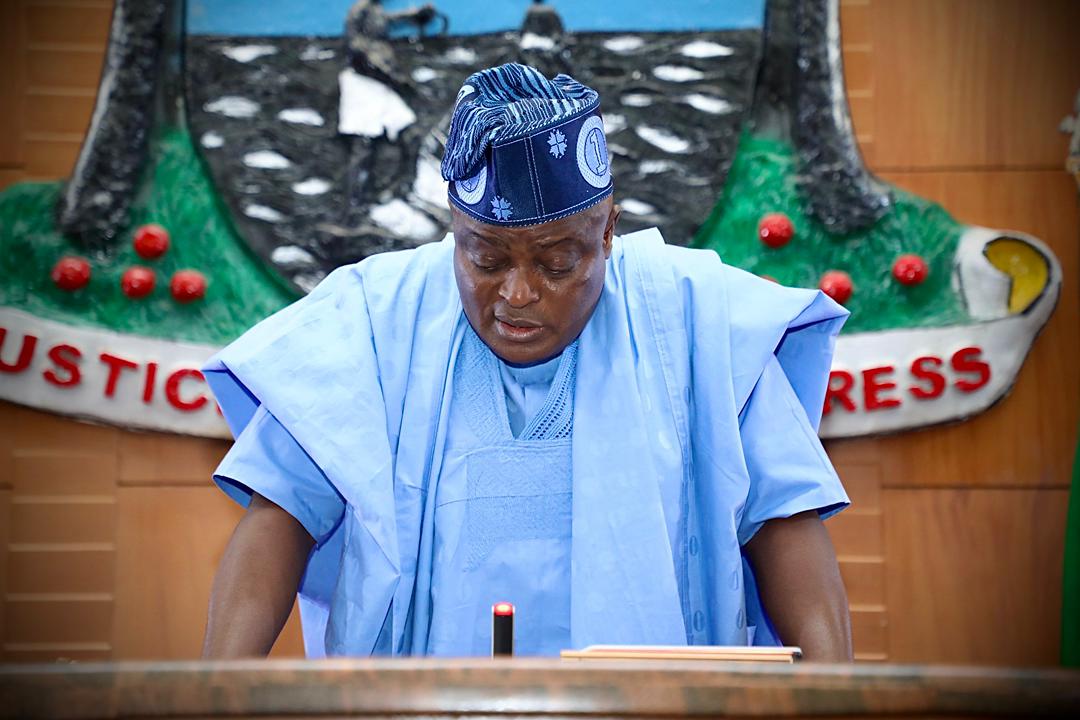
Sallah: Obasa Felicitates Muslim Ummah, Commends Nigerians for APC Primaries Turnout
The Speaker of the Lagos State House of Assembly, Rt. Hon. Mudashiru Obasa has extended warm felicitations to Muslims in Lagos State and across Nigeria on the occasion of Eid al-Adha.
In a statement released by his Chief Press Secretary, Mr. Dave Agboola, Obasa described the festival as a season of sacrifice, reflection, and gratitude, urging the faithful to continue to uphold the values of peace, unity, and love that strengthen the nation.
He noted that the celebration of Eid al-Adha is not only a spiritual milestone but also a reminder of the importance of togetherness and collective responsibility in building a stronger society.
He, likewise, emphasized that the festival provides an opportunity for Nigerians to renew their commitment to national progress and to support leadership that prioritizes development and prosperity.
Obasa, however, commended Nigerians, particularly members of the All Progressives Congress (APC), for their massive turnout during the recently concluded party primaries. He described the participation as a clear demonstration of the people’s confidence in the government of President Bola Ahmed Tinubu and their belief in the administration’s vision for a greater Nigeria.
“The APC primaries have shown the resilience of our democracy and the confidence Nigerians have in the leadership of President Bola Ahmed Tinubu and the Renewed Hope Agenda. This is a strong message that our people are ready to continue supporting policies that will drive growth and prosperity,” Obasa stated.
The Speaker further encouraged Muslims to celebrate responsibly, stressing that the joy of Eid should be accompanied by prayers for the continued peace and progress of Lagos State and Nigeria.
“As you celebrate with family and loved ones, may this season bring joy, peace, and prosperity to your homes. Let us remain united in our resolve to build a stronger nation,” he added.
On behalf of the Lagos State House of Assembly, Obasa wished all Muslims a happy and fulfilling Eid al-Adha celebration.


- Société Nationale des Pétroles du Congo (SNPC) Chief Ominga to Speak at African Energy Week (AEW) 2026 as Congo Accelerates Gas Expansion May 29, 2026
- South Africa: Deputy President Mashatile arrives in India for a Working Visit May 29, 2026
- Seychelles: President Visits Key Development Sites on Coetivy Island May 29, 2026
- Accelerating regional action to advance mental health care in Africa May 29, 2026
- President of the Republic of Seychelles Meets Young La Digue Talent Ahead of London Showcase May 29, 2026
- United Nations Economic Commission for Africa (ECA) launches regional initiative to accelerate women’s digital entrepreneurship across four African countries May 29, 2026
- Ethiopia: International community must act to safeguard press freedom ahead of national election May 29, 2026
- CORRECTION: Annual Meetings 2026 (AM2026): African Development Bank (AfDB) 2025 Trade Finance Report Highlights Resilience of African Financial Institutions After Covid-19 May 29, 2026
- Why Big Tech Could Become Nigeria’s New Gas Partner May 29, 2026
- African Energy Chamber (AEC)-Venezuela Alliance Accelerates Pathways into South-South Energy Expansion May 29, 2026
- Société Nationale des Pétroles du Congo (SNPC) Chief Ominga to Speak at African Energy Week (AEW) 2026 as Congo Accelerates Gas Expansion May 29, 2026
- South Africa: Deputy President Mashatile arrives in India for a Working Visit May 29, 2026
- Seychelles: President Visits Key Development Sites on Coetivy Island May 29, 2026
- Accelerating regional action to advance mental health care in Africa May 29, 2026
- President of the Republic of Seychelles Meets Young La Digue Talent Ahead of London Showcase May 29, 2026
- United Nations Economic Commission for Africa (ECA) launches regional initiative to accelerate women’s digital entrepreneurship across four African countries May 29, 2026
- Ethiopia: International community must act to safeguard press freedom ahead of national election May 29, 2026
-

 news6 months ago
WHO REALLY OWNS MONIEPOINT? The $290 Million Deal That Sold Nigeria’s Top Fintech to Foreign Interests
-

 society4 weeks ago
SOCIAL MEDIA IS NOT A BATTLEFIELD COMMAND – WHY THE NIGERIAN ARMY’S ACTION AGAINST JUSTICE CRACK IS A NATIONAL SECURITY IMPERATIVE
-

 celebrity radar - gossips4 months ago
Dr. Chris Okafor Returns with Power and Fire of the Spirit -Mounts Grace Nation Altar with Fresh Anointing and Restoration Grace on February 1, 2026
-

 celebrity radar - gossips6 months ago
Prophet Kingsley Aitafo Releases 2026 Prophecy: ‘Nigeria Will Rise, but the World Must Prepare for Turbulence’