
news
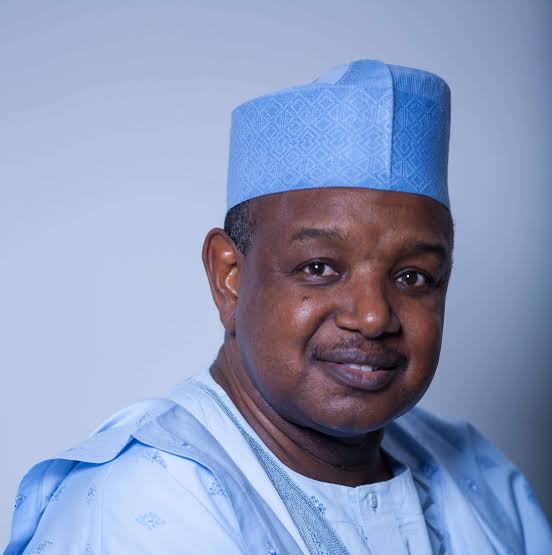
Renewed Hope: Appraising the Transformational Impact of Atiku Bagudu

By Arome Audu
From the sun-kissed savannas of Kebbi State to the corridors of power in Abuja, His Excellency Abubakar Atiku Bagudu’s rise is a masterclass in visionary leadership. With a career spanning over a decade of impactful governance, Bagudu’s remarkable journey has been marked by a string of groundbreaking achievements that have left an indelible mark on the lives of Nigerians, particularly his people in Kebbi. As the current Minister of Budget and Economic Planning, he continues to soar to new heights, leveraging his expertise and vision to drive economic growth, development, and prosperity for the nation.
From senator to governor, and now minister, Abubakar Atiku Bagudu’s career trajectory has been a masterstroke of visionary leadership. Born on December 26th, 1961, Bagudu’s impact on Kebbi State as senator and governor continues to resonate deeply with its people. His legacy of monumental achievements remains unmatched, with the Zuru Emirate Road standing as a giant symbol of his transformative leadership – a marvel of engineering that has redefined the state’s landscape.
Under Bagudu’s visionary leadership, Kebbi’s landscape underwent a dramatic transformation. The gleaming New Secretariat Complex in Gwandangaji, Birnin-Kebbi, an N949 million masterpiece crafted by Rockwell Nigeria Limited, attests to his commitment to infrastructural excellence. The state-of-the-art complex has become a landmark, symbolizing the state’s progress and potential.
Meanwhile, the FIFA-standard mini stadium in Birnin-Kebbi, built for $1.189 million, has become a hub for sporting activities and community bonding, fostering a sense of unity and healthy competition among the youth. Furthermore, the Matawallen Gwandu initiative revolutionized Kebbi’s agricultural sector, catapulting the state to the forefront of rice production and making it a major revenue earner for the nation. Today, Kebbi’s rice pyramid is a symbol of its agricultural prowess, setting a benchmark for other states to follow.
Bagudu’s impact on healthcare was nothing short of transformative. He breathed new life into Kebbi’s medical facilities, renovating and rehabilitating hospitals, healthcare centers, and clinics, including the Kebbi Medical Centre in Kalgo and the Sir Yahaya Memorial Hospital. These once-aging institutions were transformed into ultra-modern facilities, providing top-notch medical care to the people. His commitment to people-oriented leadership also extended to education, where he invested heavily in building and upgrading schools across the state.
The Adamu Augie College of Education Argungu, the Kebbi State College of Nursing Sciences and Midwifery, and the College of Health Technology in Jega were among the institutions elevated to degree-awarding status, opening up new opportunities for students. His leadership and charisma also drew thousands of opposition politicians to the All Progressives Congress (APC). Perhaps most remarkable, however, is the unprecedented N40 billion he left in the state treasury for his successor, a rare feat that speaks volumes about his integrity and commitment to transparency and accountability.
Bagudu’s leadership has been marked by a deep sense of empathy and thoughtfulness, earning him a special place in the hearts of his people. One notable gesture that still resonates with civil servants is the payment of over N3 billion in gratuities to retired state, local government, and local government education authority workers. Similarly, legislators who worked with him recall the N2 billion released for constituency projects across the state, a move that brought development closer to the people.
As a senator, Bagudu’s empowerment programs were trailblazing, particularly the Rice Academy initiative in Dakingari, which trained farmers and provided subsidized fertilizers, tractors, and buyback programs worth N3.5 billion. He also supported agricultural extension workers with 100 motorcycles, enhancing their efficiency. His partnership with OXFAM to distribute one million, three hundred thousand tree seedlings to communities statewide showcased his commitment to environmental sustainability. Now, as Minister of Budget and Economic Planning, Bagudu’s innovative approach focuses on job creation, poverty reduction, and wealth generation, driving prosperity for all Nigerians.
Through strategic collaboration with the Infrastructure Concession Regulatory Commission (ICRC), he successfully concessioned the Cassava Bio-Ethanol Value Chain project across six geographical zones. This groundbreaking initiative aims to revolutionize biotechnology, establishing industrial parks on 20-hectare plots across 20 universities and research institutions, and creating over 8,000 jobs. The project’s impact is expected to be profound, doubling cassava production from 62 million tons to 120 million tons, and fostering robust partnerships and resource mobilization.
By prioritizing renewable biomass, Bagudu aims to create wealth, generate jobs, reduce poverty, and improve food security, all while promoting sustainable energy and reducing carbon footprint. Furthermore, his commitment to timely release of monthly inflation figures has been a game-changer, enabling data-driven policy decisions that inform budget allocation, expenditure control, and economic planning. This proactive approach has helped mitigate inflationary trends, ultimately enhancing citizens’ welfare and driving economic growth.
Under Bagudu’s leadership, budgetary policy adjustments have been fine-tuned to drive economic stability and growth. By prioritizing strategic spending, introducing price control measures, and ensuring transparency and accountability, the Renewed Hope Mandate of the present administration has been brought to life. A key milestone has been the reinvention of the National Bureau of Statistics, which has overhauled data collection and analysis, enabling more accurate GDP calculations and cementing Nigeria’s position as a leading economic powerhouse in Africa.
Furthermore, the launch of the revised National Social Protection Policy promises to revolutionize social welfare, while digital project monitoring, geospatial analysis, and collaboration with development partners like the World Bank are ensuring more effective resource allocation and sustainable development. These reforms are paving the way for a more prosperous future for Nigerian citizens.
As a champion of economic diversification and national development, Bagudu has consistently showcased a unique blend of visionary leadership and innovative thinking. With a strong academic foundation in Economics from Usman Danfodio University, Sokoto, and a Master’s Degree in Money and Banking from the University of Jos, Bagudu’s expertise has been recognised nationally and internationally. He is a recipient of Nigeria’s prestigious Commander of the Order of the Niger (CON) and the Order of Merit of Niger Republic, for his outstanding contributions to public service and economic development.
As Nigeria’s economic landscape evolves, Bagudu’s impact will remain a defining chapter in the nation’s story. His leadership has set a new standard for visionary governance, and his influence will continue to shape the country’s future. Today, as Nigeria charts its course towards a brighter future, Bagudu’s impact on the nation’s economic landscape will be felt for years to come. His story is a reminder that with determination and hard work, even the most ambitious dreams can become a reality.
Audu is a public affairs analyst writing from Kaduna.



By Prince Adeyemi Shonibare
THE CITY, THE CROWN, AND THE CODE OF POWER
Lagos is not merely governed—it is engineered and meticulously organised. A megacity of over 25 million people, the economic heartbeat of Nigeria, and arguably the most strategic sub- national political ecosystem in Africa.
As 2027 approaches, a familiar but profound question echoes across corridors of influence—from Alausa to Marina, from the five Ibile divisions to the 57 LGs and LCDAs, down to wards and grassroots structures:
Who wears the crown?
Yet Lagos does not answer loudly. It whispers.
“Elections may be public, but power in Lagos is negotiated in private and through caucuses—long before ballots are cast.”
HISTORY: FROM PRIMROSE TO JUSTICE FORUM AND MANDATE — THE MAKING OF A POLITICAL MACHINE
Before the consolidation of today’s political order, Lagos politics was shaped by structured caucuses that defined leadership selection.
At the elite level stood the Primrose Group, a discreet but powerful screening body that assessed aspirants in the early 90s and late 1990s. It played a critical role in screening Bola Ahmed Tinubu for the Senate against political heavyweight Odu Onikosi, in what many described as a David-versus-Goliath contest. Tinubu emerged victorious.
Primrose also screened the 1998 governorship aspirants:
Bola Ahmed Tinubu
Wahab Dosunmu
Funsho Williams
The Primrose circle included:
Prince Tajudeen Olusi
Bushura Alebiosu
Mofutau Olatunji Hamzat
Alhaji Kola Oseni
Dapo Sarumi
Oyinlomo Danmole (the youngest member)
Notably, Mofutau Olatunji Hamzat, father of Kadri Obafemi Hamzat, chaired the screening process that produced Tinubu as the 1998 AD governorship candidate.
Alongside Primrose emerged two other critical blocs:
Mandate Group — the grassroots mobilisation engine
Justice Forum — the stabilising and conflict-resolution bloc
Together, they formed a strategic architecture:
Primrose — elite validation
Mandate Group — mass mobilisation
Justice Forum — internal balance and cohesion
From this convergence, Tinubu emerged—not by accident, but by design.
“He was not elected into power—he was processed into leadership.”
FROM BLOCS TO INSTITUTION: THE GAC EVOLUTION
Over time, these blocs evolved into a more formal structure—the Governor’s Advisory Council (GAC).
President Bola Ahmed Tinubu did not create the GAC; he strengthened, harmonised, and institutionalised these legacy blocs into a central decision-making body.
“GAC is the institutional memory of Lagos politics.”
THE DOCTRINE OF SUCCESSION IN LAGOS
Lagos has developed a predictable pattern of leadership transition:
Babatunde Fashola — technocratic consolidation
Akinwunmi Ambode — performance with political rupture
Babajide Sanwo-Olu — consensus restoration
Each transition reinforces a central doctrine:
“The primary is the battlefield. The structure is the judge. Consensus is the verdict.”
And more fundamentally:
“The candidate will always come from within.”
THE INVISIBLE CABINET: GAC AS POWER SOVEREIGN
At the centre of Lagos political architecture sits the Governor’s Advisory Council (GAC)—a body that does far more than advice.
Chairman:
Prince Tajudeen Olusi
Key Members Include:
Babatunde Fashola
Femi Gbajabiamila
Mudashiru Obasa
Adeyemi Ikuforiji
Senator Anthony Adefuye
Tokunbo Abiru,
Musiliu Obanikoro
Oluremi Tinubu
Sarah Sosan
Idiat Adebule
Femi Pedro
James Faleke
Adeseye Ogunlewe
Demola Seriki
Adejoke Adefulire
Kadri Obafemi Hamzat.
Other Influential Figures Within the Structure:
Henry Ajomale
Ganiyu Solomon
Rabiu Oluwa
Muraina Taiwo
Abdul-Wahab Ogundele
Sunmi Odesanya
Kaoli Olusanya.
In addition, almost all former governors, deputy governors, senators, and selected members of the House of Representatives and Primrose, mandate Group and justice forum are embedded within or aligned to the GAC structure.
“At critical moments, the GAC does not merely advise—it decides.”
CRACKS, CONFLICTS AND SYSTEM DISCIPLINE
The political history of Lagos has consistently demonstrated one principle: discipline within the system is non-negotiable.
The experience of Akinwunmi Ambode remains instructive.
“Performance alone is not enough—alignment with the structure is critical.”
In Lagos:
“No individual is bigger than the system.”
THE ASPIRANTS: POWER, PEDIGREE AND POSITIONING
The 2027 governorship race is no longer speculative—it is crystallising into a layered contest of insiders, technocrats, institutional loyalists, and strategic actors. Beneath the surface, resumes are being weighed as much as relationships; pedigree is being measured alongside perception.
Key Aspirants Include:
Kadri Obafemi Hamzat — Deputy Governor; perhaps the most deeply embedded institutional actor in the race. A technocrat with academic depth and governance continuity credentials. Notably headhunted from the United States banking sector by Bola Ahmed Tinubu, his return to public service reflects longstanding trust. His father, Mofutau Olatunji Hamzat, chaired the screening process that produced Tinubu in 1998—placing him at the intersection of legacy and continuity.
Femi Gbajabiamila — Chief of Staff to the President; former Speaker of the House of Representatives. A consummate legislator with vast national reach, elite networks, and deep understanding of federal power dynamics. Bridges Lagos structure with Abuja influence seamlessly.
Tokunbo Abiru — Senator; former Managing Director in the banking sector. Represents fiscal discipline, financial system credibility, and investor reassurance. A technocrat-politician hybrid with strong appeal to the private sector and global investors.
Tokunbo Wahab — Commissioner for Environment. A bold regulator and reformist voice, known for enforcing urban order and environmental compliance. Projects decisiveness, discipline, and administrative courage.
Mudashiru Obasa — Long-serving Speaker of the Lagos State House of Assembly. A master of grassroots politics with deep control of legislative structures and ward-level mobilisation. Represents structure from the ground up.
Olajide Adediran (Jandor) — Media entrepreneur and political mobiliser. Built his base through grassroots engagement and alternative political messaging. Represents outsider energy attempting to penetrate a deeply structured system.
Akinwunmi Ambode — Former governor; technocrat with a proven governance record. His tenure still resonates in infrastructure and public sector efficiency. Carries a redemption narrative, but must reconcile history with structure.
Mojisola Lasbat Meranda — Legislative figure and symbol of gender inclusion. Represents institutional evolution and the expanding role of women in Lagos power architecture.
Kayode Egbetokun (speculative) — Security chief; represents discipline, order, and enforcement capability. A potential “stability candidate” in uncertain times.
Samuel Ajose (speculative) — Former Head of Service; experienced bureaucratic strategist with deep knowledge of Lagos governance machinery. Represents administrative continuity and institutional memory.
Tayo Ayinde (speculative) — Long-serving Chief of Staff in Lagos; a quiet but powerful insider with proximity to executive decision-making and operational governance.
“Some are building alliances. Others are building acceptance. A few are building inevitability.”
THE REAL TEST: CRITERIA FOR THE APC TICKET
Beyond ambition, the Lagos APC operates a strict, unwritten checklist for candidate selection:
Proven Loyalty to the Party
A party defector stands little chance.
Product of the System
The candidate must come from within.
Alignment with the Lagos Master Plan
Continuity over disruption.
Investor Confidence
Lagos cannot risk economic instability.
Political Discipline and Temperament
Arrogance and lawlessness are disqualifiers.
Ibile Balance and Broad Acceptability
Zonal sensitivity remains critical.
Ability to Work with the Structure
Collaboration over confrontation.
Presidential Trust Factor
National confidence is key—but not absolute.
Electoral Value and Grassroots Reach
Structure must meet the street.
Importantly, this will not be a solo decision.
A former, widely respected governor and former minister is expected to play a critical role as the eyes and ears of the President in determining the most suitable candidate.
A reliable source revealed that the President held a private meeting with this former governor and minister in Lagos during the Easter break—signaling early alignment consultations ahead of 2027.
UNDERCURRENTS: SILENT MOVES AND STRATEGIC HEDGING
Quiet political movements are already unfolding beneath the surface.
There are strong rumours that:
One top aspirant is in talks with the ADC to fly their fly.
Another is exploring alignment with the Accord Party.
“Those who sense resistance within the structure begin to shop for alternatives.”
Beyond party alignments, another layer of activity is emerging.
It is widely whispered in political circles that:
Some bank accounts of PR operatives, journalists, and lobbyists have begun to quietly interface with key GAC members.
Certain aspirants are already patronising columnists to shape favourable narratives.
Billions of naira have allegedly been earmarked for lobbying, influence, and perception management.
A reliable source suggests that the real contest has already begun—not on the ballot, but in boardrooms, private residences, and media corridors and newsrooms.
Yet history cautions:
“Breaking away from the Lagos APC structure rarely guarantees victory.”
THE CALCULUS OF POWER
Five decisive variables will ultimately determine the outcome:
GAC consensus
Presidential trust (shared, not unilateral)
Party loyalty
Economic confidence
Public acceptability
Notably, the private sector remains a critical stakeholder. Lagos, as Africa’s commercial nerve centre, cannot afford political uncertainty that threatens capital flow. Investors—local and international—are watching closely.
The international community is equally attentive. Lagos is no ordinary state—it is a golden economic enclave, a city of compounding value and strategic global interest.
The Presidency too cannot be indifferent—notwithstanding that Lagos is its political base. Stability in Lagos is stability in the broader national equation.
THE CROWN AND THE SYSTEM
Lagos does not gamble with leadership,it engineers and groomed it.
No emergency leader in Lagos.
From Primrose…
To Mandate…
To Justice Forum…
To GAC…
The philosophy remains unchanged:
“Power in Lagos is not taken. It is processed.”
As 2027 approaches, one truth stands firm:
The crown will not go to the loudest.
It will not go to the most desperate.
It will not go to ambition alone.
It will go to the most acceptable aspirant.
And in Lagos:
“Acceptability is not declared,it is decided by all the variables and joint gatekeepers before the general public cast their votes.”
Politics, in the end, remains a temple of many tendencies—
the good, the bad, the pretenders, and the presumed righteous.
All contending for one crown.

More than ₦3 billion was targeted, but about ₦677 million reached the culprits, with recovery and prosecutions underway, reflecting how banks are responding to more sophisticated fraud risks.
Nigeria’s expanding digital banking sector is facing increasingly sophisticated fraud attempts, as financial institutions adapt to faster transactions and broader online services.
A recent case involving First City Monument Bank (FCMB), linked to fraudulent activity detected in December 2025, has drawn attention to how banks are responding to such incidents, with a focus on limiting exposure, recovering funds and working with law enforcement.
According to findings referenced in proceedings before the Lagos State Special Offences Court, the incident involved unauthorised transactions tied to a digital product. Early reports erroneously suggested more than ₦3 billion was lost. Subsequent clarification shows that over ₦3 billion was targeted, ₦2.4 billion was blocked and recovered, while ₦677 million got into the possession of the culprits. This outcome reflects the bank’s cyber security and monitoring capabilities, as well as improved collaboration among regulated financial institutions and with law enforcement agencies. Several suspects and beneficiaries have been apprehended, while recovery and prosecution efforts are ongoing, led by the Economic and Financial Crimes Commission (EFCC).
Proceedings at the Lagos State Special Offences Court have resulted in convictions, including that of a repeat offender, with restitution orders issued. Related matters are also being handled at the Federal High Court in Lagos, where additional suspects are being tried in connection with the scheme. This process is aimed at ensuring that bad actors are identified and permanently blacklisted from the financial system.
Authorities say recovery efforts are continuing as additional funds are traced.
Analysts note that the pace of legal action reflects closer coordination between financial institutions and enforcement agencies in addressing cyber-related financial crime.
The case comes as banks contend with more complex fraud methods, including social engineering and automated exploitation of system processes.
As digital products and platforms expand, so too does the risk associated with cyber-crime and related fraud.
“The scale of digital banking means risks are evolving alongside the systems,” said a Lagos-based financial analyst. “Institutions are now judged by how they manage these events.”
Observers say the sector is moving toward a stronger focus on response and recovery, rather than prevention alone.
This includes improving monitoring capabilities, strengthening transaction controls and enhancing collaboration with regulators and law enforcement. The FCMB case, with limited exposure relative to the amount targeted and ongoing recovery, reflects that shift.
For customers, the primary concern is the safety of their funds. In this case, there has been no indication of losses affecting customer deposits. Maintaining that level of protection remains central to sustaining trust in the financial system.
Nigeria’s financial sector continues to grow, supported by digital innovation and expanding access to banking services.
However, analysts say fraud attempts are likely to persist as systems become more complex and interconnected.
They say institutions will increasingly be judged not only on their ability to prevent incidents, but on how effectively they respond and recover when they occur.
news
Ex-APC Deputy Guber flag bearer, Joshua MacIver backs Tinubu, express fears over implosion in Bayelsa APC

….congratulates new State Party Chairman, Warman Ogoriba
APC Deputy Governorship Candidate in the 2023 general elections in Bayelsa State, Great Joshua MacIver has declared his total commitment to the re-election of President Bola Tinubu come 2027, declaring that the Tinubu re-election project is non-negotiable.
Great Joshua MacIver, in his statement titled ” BAYELSA APC CONGRESSES: GOING FORWARD, A CALL TO LOOK INWARDS” and made available to newsmen in Yenagoa, warned APC leaders in the state to look Inward and take note of certain factors which may hinder or cut short our victory.
According to Great Joshua MacIver, such noticeable pitfalls include the imbalance in the united front being put up by the State Governor,Senator Douye Diri among various political blocs in the state.
In the statement issued at the weekend. Great Joshua MacIver stated that “First, before His Excellency, Senator Douye Diri, joined the APC in the state, there were clearly two political blocs that made up the party, with the approximate population ratios of the blocs standing at 95% to 5%.”
“After the entrance of His Excellency, Senator Douye Diri, ONLY THE SMALLER BLOC IS BEING CARRIED ALONG IN THE AFFAIRS OF THE PARTY, leaving the greater percentage to their fate, and this situation has the potential to build anger and dissatisfaction in our dear party.”
” The consequence of this has been the high level defection we have witnessed in the party recently and we believe more may likely follow, if we do not put our house in order.”
” If we do not pull together as a party, we may witness a situation where we will lose key stakeholders, especially after the State and National Assembly Primaries as well the Gubernatorial Primaries.”
“Finally, while it is very clear that we are the party to beat in the 2027 elections and that our loyalty to Mr. President IS NON-NEGOTIABLE, we must make haste to say that we cannot afford to create situations or loopholes in our unity which will be exploited by other political interests in the state. We cannot afford to under-rate anyone.”
“Our core interest remains the re-election of Mr. President, a project to which we have committed our all. We also pledge our total loyalty to the party as we have no alternative to the APC. However, our concern is that we must, as a party, look inwards and ensure that we do not create loopholes that can impede our common goal.”
Great Joshua MacIver, however congratulated the newly elected State Executives of the APC in Bayelsà State led by Hon. Warman Ogoriba, saying their emergence is welcomed at this critical time in our national history.


- Seychelles: Upcoming Working Visits of the President, Dr Patrick Herminie, to Russia and Abu Dhabi April 18, 2026
- Seychelles and China sign development cooperation agreement supporting national development priorities April 18, 2026
- Merck Foundation and Kenya First Lady mark a Landmark Moment for Supporting Girl Education with their "Educating Linda" Program at Kenya State House April 17, 2026
- Uganda - Shs46bn Idle Funds for Science Ministry leave Members of Parliament (MPs) furious April 17, 2026
- Ambassador of Belarus D.Krasouski meets State Minister on Agricultural Investment and Input Supply Development Sector of Ethiopia April 17, 2026
- Germany Discusses Strengthening Cooperation and its United Nations (UN) Security Council Bid with Seychelles April 17, 2026
- Youth Charter Calls for Stronger Youth-Focused Communiqué Following United Nations (UN) Economic and Social Council (ECOSOC) Youth Forum 2026 April 17, 2026
- Africa’s Phosphate Future Set to Take Center Stage at African Mining Week (AMW) 2026 Amid Rising Fertilizer Prices April 17, 2026
- Small Enterprise Development and Finance Agency (SEDFA) backs Africa’s next generation of digital businesses at Converge Africa 2026 April 17, 2026
- Enlit Africa 2026: The business of power and the value of compounding impact April 17, 2026
- Seychelles: Upcoming Working Visits of the President, Dr Patrick Herminie, to Russia and Abu Dhabi April 18, 2026
- Seychelles and China sign development cooperation agreement supporting national development priorities April 18, 2026
- Merck Foundation and Kenya First Lady mark a Landmark Moment for Supporting Girl Education with their "Educating Linda" Program at Kenya State House April 17, 2026
- Uganda - Shs46bn Idle Funds for Science Ministry leave Members of Parliament (MPs) furious April 17, 2026
- Ambassador of Belarus D.Krasouski meets State Minister on Agricultural Investment and Input Supply Development Sector of Ethiopia April 17, 2026
- Germany Discusses Strengthening Cooperation and its United Nations (UN) Security Council Bid with Seychelles April 17, 2026
- Youth Charter Calls for Stronger Youth-Focused Communiqué Following United Nations (UN) Economic and Social Council (ECOSOC) Youth Forum 2026 April 17, 2026
-

 news4 months ago
WHO REALLY OWNS MONIEPOINT? The $290 Million Deal That Sold Nigeria’s Top Fintech to Foreign Interests
-

 celebrity radar - gossips3 months ago
Dr. Chris Okafor Returns with Power and Fire of the Spirit -Mounts Grace Nation Altar with Fresh Anointing and Restoration Grace on February 1, 2026
-

 celebrity radar - gossips6 months ago
End of an Era: Nigeria Mourns Evangelist Dr. Uma Ukpai, 80
-

 celebrity radar - gossips4 months ago
Prophet Kingsley Aitafo Releases 2026 Prophecy: ‘Nigeria Will Rise, but the World Must Prepare for Turbulence’