
Politics
RIVERS STATE IN THE EYE OF THE STORM: POLITICS, IMPEACHMENT & NATIONAL IMPLICATIONS

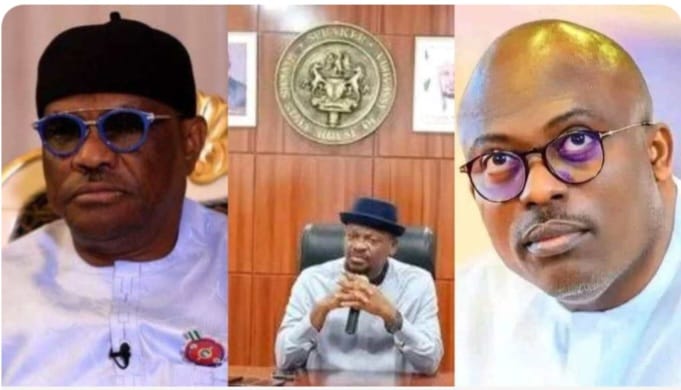
RIVERS STATE IN THE EYE OF THE STORM: POLITICS, IMPEACHMENT & NATIONAL IMPLICATIONS.
By George Omagbemi Sylvester | Published by SaharaWeeklyNG.com
“From Paris to Port Harcourt. A Constitutional Clash, Power Play and the Future of Nigerian Democratic Governance.”
In what can only be described as one of the most explosive and consequential political sagas in Nigeria’s recent history, Rivers State has once again plunged into a constitutional and political crisis that transcends mere state politics in which reverberating across the Nigerian federation and challenging the very essence of democratic governance. At the heart of this unfolding drama is Governor Siminalayi Fubara, his relationship with political heavyweights and the ongoing impeachment proceedings launched against him and his deputy, Professor Ngozi Odu.

This crisis is not a sudden spark but a culmination of prolonged political rivalry, deep factional divisions and contestations over constitutional authority. This write-up does not seek to merely narrate events; it is to contextualise, dissect and scrutinise the interplay of constitutional law, political strategy and democratic principles shaping the crisis in Rivers State whereby leaving no stone unturned in understanding its implications.
A Governor Under Siege: The Genesis of the Crisis.
Siminalayi Fubara (a seasoned accountant turned politician) officially assumed office as the Governor of Rivers State in May 2023 following a decisive electoral victory in what was then a Peoples Democratic Party (PDP) stronghold. However, this ascent was not without internal turmoil. His relationship with his political godfather and predecessor, Minister of the Federal Capital Territory (FCT), Nyesom Wike, deteriorated rapidly, setting the stage for prolonged political strife.
Political observers often quote Alexis de Tocqueville: “A democracy cannot exist without a certain measure of mutual toleration and respect for the rule of law” but yet, in Rivers State, what is unfolding can only be described as a breakdown of mutual political respect, with factional interests dominating constitutional norms.
The House of Assembly (predominantly aligned with Wike’s political camp) has, for the third time, initiated impeachment proceedings against Fubara and his deputy. The motion cites allegations of gross misconduct, including refusal to present the budget, extra-budgetary spending, obstruction of legislative oversight, demolition of the Assembly complex and alleged disregard for judicial directives pertaining to the financial autonomy of the legislature.
Speaker Martins Amaewhule declared that the legislature would pursue due process to its conclusion, even vowing to resign rather than abdicate what he described as constitutional responsibility. Critics, however, argue that this rhetoric masks political theatre rather than due process.

Impeachment vs. Political Sabotage: The APC’s Rejection.
The Rivers State chapter of the All Progressives Congress (APC); the ruling party at the national level has forcefully rejected the impeachment move, describing it as “DESTABILIZING, UNNECESSARY and POLITICALLY MOTIVATED.” In an official statement, the party’s spokesperson, Darlington Nwauju, held that while the legislature enjoys constitutional independence, resorting to impeachment against its own governor and deputy “AMOUNTS TO DESTABILIZATION ” and risks undermining governance in an APC-led administration.
The APC emphasized fiscal and constitutional safeguards: the ₦1.485 trillion budget approved during emergency rule in 2025 remains valid until August 2026, and the Nigerian Constitution permits governors to continue spending for six months into a new fiscal year without presenting a supplementary budget therefore nullifying claims that Fubara failed in fiscal duties.
The APC’s stance is not merely partisan defence; it reflects constitutional reasoning. Impeachment under Section 188 of the 1999 Constitution (which defines the grounds and process) must be anchored in clear and demonstrable gross misconduct, grave violations of the law, or misappropriation of public funds. Citing budget timing and procedural disagreements alone does not constitute such breaches.
Renowned constitutional scholar, Professor Itse Sagay, once asserted: “The impeachment power is created by our Constitution as a last resort and not as a weapon of political vendetta.” Without airtight evidentiary grounding, impeachment becomes a tool for factional politics rather than constitutional accountability.
Fubara’s Strategic Diplomacy: The Paris Intervention.
In a remarkable turn of events, Governor Fubara reportedly traveled to Paris, France, to meet President Bola Ahmed Tinubu ahead of the impeachment session, seeking presidential intervention amid mounting pressure from lawmakers aligned with Wike.
This strategic move underscores the governor’s recognition that the crisis extends beyond state legislature corridors, reaching the national political summit. No democracy can survive if its constitutional actors operate in isolation from constitutional anchors at the federal level. Fubara’s decision to brief the president highlights an attempt to balance regional dynamics with national political order.

Tinubu, arguably Nigeria’s most influential political actor, brokered a ceasefire in 2025 when he declared a six-month state of emergency in Rivers State after earlier impeachment attempts destabilised governance. This intervention elevated the conflict from local politics to federal constitutional negotiations.
Civil Society and Legal Advocacy: Critique of the Impeachment Move.
The impeachment threat in Rivers State has drawn widespread condemnation from civil society groups and legal watchdogs. The Human Rights Writers Association of Nigeria (HURIWA) described the impeachment plot as “reckless, unconstitutional, and a grave danger to democratic stability.” HURIWA accused lawmakers of acting at the behest of political interests rather than genuine constitutional oversight, urging President Tinubu to rein in the situation and uphold democratic norms.
The APC Progressive Mandate Group also criticised the proceedings as “constitutionally flawed and politically motivated,” framing it as an affront to the peace accord personally brokered by Tinubu.
These criticisms align with principles articulated by constitutional scholars: impeachment must remain a last-resort accountability mechanism, not a substitute for political dissatisfaction or factional rivalry.
Wider Political Implications: National Stability & Federalism.
The Rivers State crisis is not an isolated event; it strikes at the heart of Nigerian federalism and democratic sustainability. If a governor can be impeached (or threatened with impeachment) predominantly on political alignments rather than incontrovertible legal evidence, then the doctrine of separation of powers is imperiled.
Political scientist Leo Strauss once warned: “When law becomes subject to politics, democracy is no longer a government of law but of persons.” This insight resonates deeply in the current crisis. The Legislature’s actions risk converting constitutional mechanisms into political instruments, weakening democratic checks and balances.
Moreover, the expanded involvement of national party actors and speculation about the roles of influential figures like Tinubu and Wike, suggest that Rivers State’s political storm has strategic implications for national political alignments and the 2027 elections.
The Road Ahead: Constitutional Order, Political Integrity and the Future of Rivers.
The impeachment crisis in Rivers State represents multiple layers of conflict and constitutional interpretation versus political strategy, executive oversight versus legislative assertiveness, and local factionalism versus national political calculus.
At stake is not merely the political survival of Governor Fubara but the integrity of Nigeria’s democratic institutions. As respected democracy scholar Larry Diamond asserts: “Democracy is more than elections; it is about predictable, transparent governance under the rule of law.”
For Rivers State, the crisis is a stern test of constitutional resilience, political maturity and democratic fortitude. If constitutional processes are subverted for factional ends, the state (and indeed the nation) risks eroding public trust in democratic governance.
As events continue to unfold, Nigerians must watch closely: not just for who wins the political battle in Rivers State, but for whether constitutional order, judicial independence and the rule of law prevail in the face of political turbulence.

Published by SaharaWeeklyNG.com




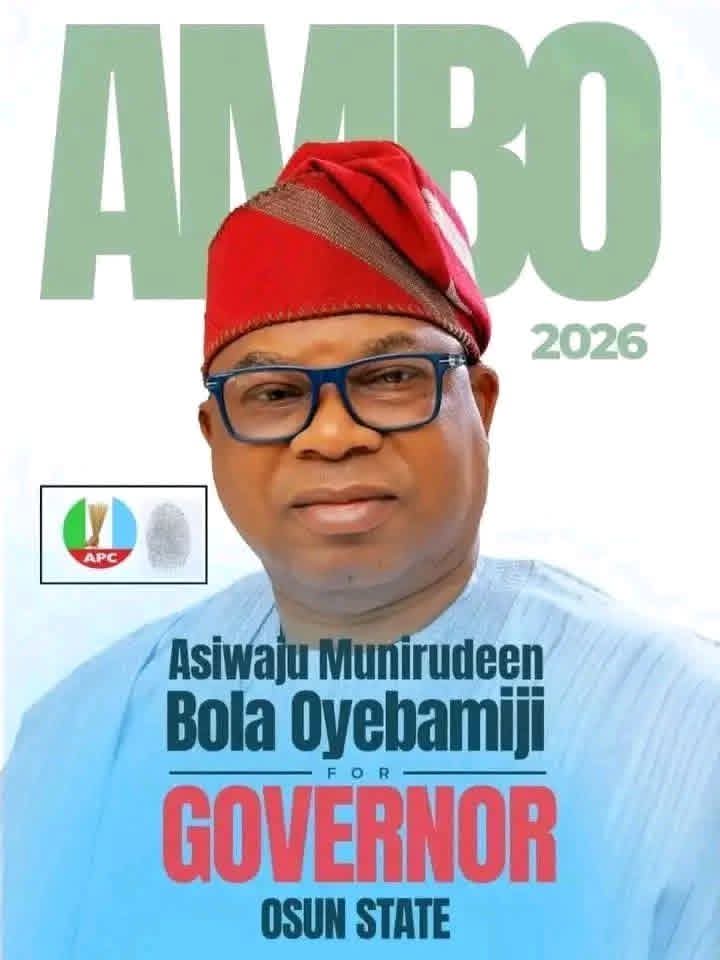
AMBO and the Osun Governorship Race: Assessing the Man, the Politics and the Vision
As political activities gather momentum ahead of the 2026 Osun State governorship election, a public affairs commentator, Oluseyi Olonade, has described the emergence of Asiwaju Munirudeen Bola Oyebamiji, popularly known as AMBO, as a significant development in the state’s political landscape.
In an article titled “Oyebamiji: The Man, The Politics and The Aspiration,” Olonade argued that the All Progressives Congress governorship hopeful possesses the character, experience and vision needed to reposition Osun State for sustainable growth.
According to the writer, Oyebamiji’s appeal stems from his extensive background in the banking sector, where he spent nearly three decades working with institutions including Wema Bank, Trans International Bank, Spring Bank and Enterprise Bank.
A native of Ikire in Irewole Local Government Area, Oyebamiji was described as a technocrat whose experience in corporate governance, finance and risk management has shaped his approach to public administration.
The article noted that his public service journey gained prominence in 2012 when he was appointed to oversee the then Osun State Investment Company Limited. Under his leadership, the organisation was reportedly restructured and transformed into Omoluabi Holdings Limited.
The writer further highlighted Oyebamiji’s tenure as Commissioner for Finance under successive APC administrations, where he was credited with managing the state’s finances during challenging economic periods.
Olonade also referenced Oyebamiji’s appointment as Managing Director of the National Inland Waterways Authority, describing it as further evidence of his administrative and leadership capabilities.
The article contrasted Oyebamiji’s governance philosophy with that of the current administration in Osun State, arguing that the APC aspirant favours institutional reforms, economic diversification and fiscal discipline.

According to the writer, Oyebamiji’s proposed agenda includes strengthening transparency in government spending, expanding internally generated revenue, attracting private-sector investments and promoting industrial and agricultural development.
The article also highlighted youth empowerment, entrepreneurship development and digital skills acquisition as key components of his vision for the state.
Olonade concluded that the forthcoming governorship election would present voters with a choice between different approaches to governance, expressing confidence that Oyebamiji’s experience and developmental agenda make him a strong contender in the race.
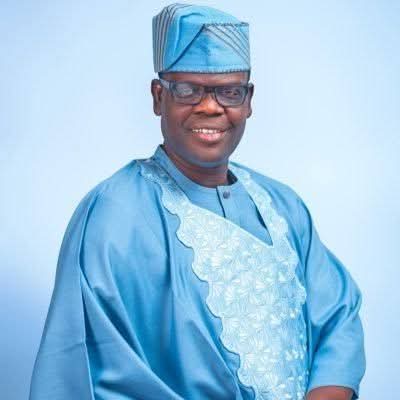
*Oselu Tiwa nTiwa Endorses Oriyomi Hamzat for Oyo Governorship*
A sociopolitical support group in Oyo State, Oselu Tiwa nTiwa, has declared its support for Alhaji Oriyomi Hamzat as the authentic governorship candidate of the Accord Party ahead of the forthcoming governorship election in the state.
The group made its position known in a statement jointly signed by its President, Mr. Adewale Oluwaseyi and Secretary, Alh. Adebayo Oyewole, on Thursday, describing Hamzat as a grassroots figure with strong connection to the people and a track record of humanitarian interventions across Oyo State.

According to the group, the endorsement followed what it described as careful observation of Hamzat’s leadership qualities, compassion and dedication to the welfare of ordinary citizens.
“Oriyomi Hamzat has consistently demonstrated empathy, courage and selfless commitment to humanity. Through his numerous interventions in the lives of ordinary citizens, he has become a symbol of hope to many families and communities,” the statement read.
Oselu Tiwa nTiwa also appealed to the national leadership of the Accord Party to prioritise the long-term future and electoral growth of the party in its decision-making process.
The group noted that Hamzat’s candidacy presents an opportunity for the party to strengthen its grassroots support base and expand its political relevance across Oyo State.
“We respectfully appeal to the National Leadership of the Accord Party to look beyond immediate political calculations and consider the bigger picture, the future growth, stability and electoral success of the party in Oyo State and beyond,” the statement added.
The group further expressed confidence in the leadership of the party, saying it believes the party’s national officers and stakeholders would take decisions that reflect fairness, inclusiveness and the collective interest of members.
While calling on party loyalists to remain calm and united, Oselu Tiwa nTiwa said continued consultations among stakeholders would help strengthen the Accord Party ahead of the election.
Signed:
Alh. Adebayo Oyewole,
Secretary.
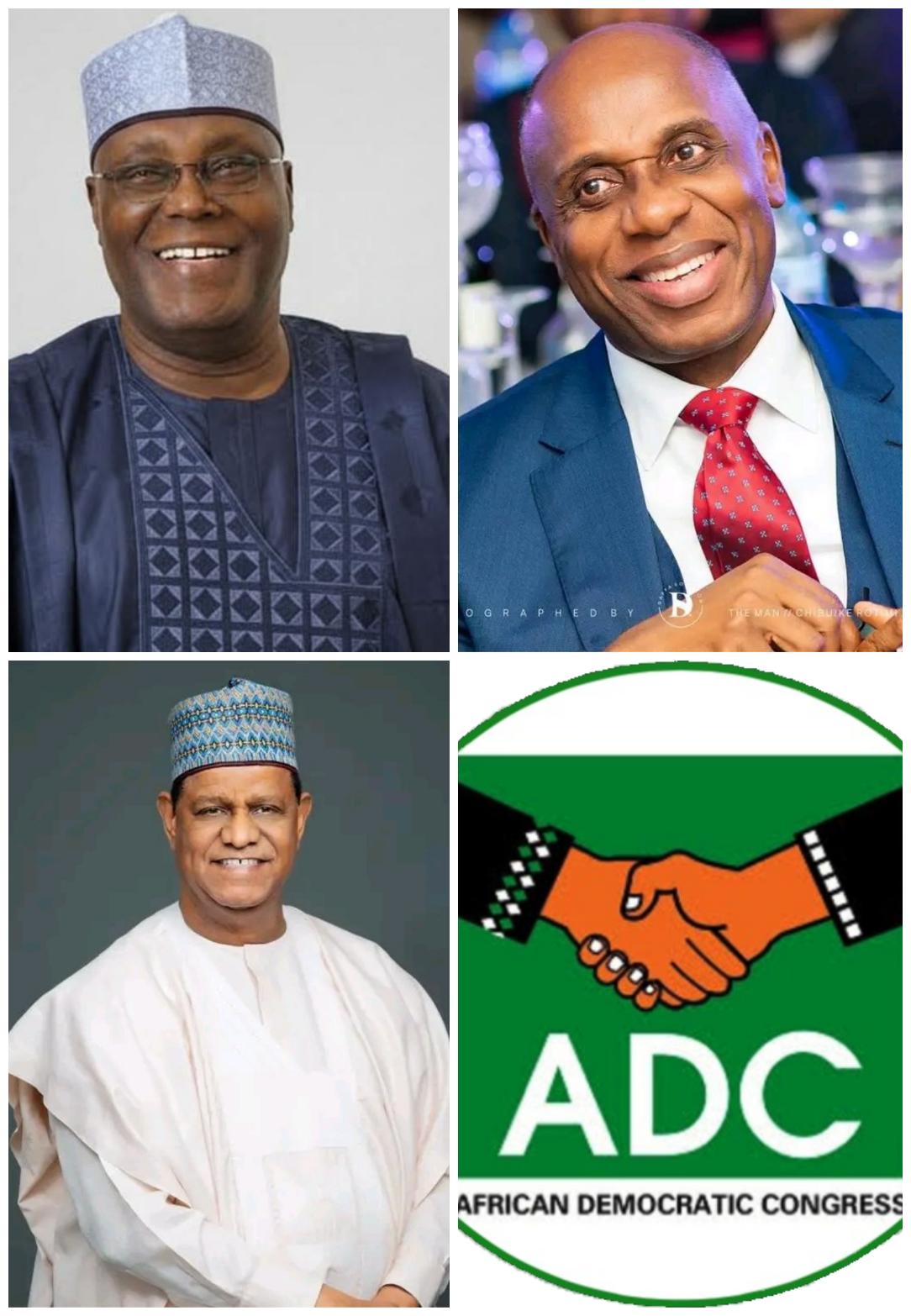
Atiku Set To Clinch ADC Presidential Ticket, Leads Amaechi, Hayatu-Deen In 34 States
Former Vice President of Nigeria and frontline presidential aspirant of the African Democratic Congress (ADC), Atiku Abubakar, is projected to emerge winner of the party’s presidential primaries, according to impeccable sources in Abuja.
The primaries, conducted across over 8,000 wards in the 36 states of the federation and the Federal Capital Territory, reportedly placed Atiku far ahead of his closest rivals — former Rivers State Governor, Rotimi Amaechi, and former Chairman of the Nigerian Economic Summit Group, Mohammed Hayatu-Deen.

Highly placed party insiders disclosed that Atiku is currently leading in 34 states, including the FCT, after securing dominance across the 19 Northern states, the five South-East states, and the six South-West states, while also maintaining a strong showing in at least three states in the South-South geopolitical zone.
The sources added that the outcome reflects what they described as “an overwhelming nationwide acceptance” of the former vice president within the opposition party ahead of the 2027 general election.
Meanwhile, the ADC leadership has invited members of the press to the official announcement of the final collated results scheduled for 11:00 a.m. on Tuesday, May 26, 2026, in Abuja.
The declaration of results is expected to be broadcast live on ARISE Television and two other major television stations, while also being livestreamed on the party’s official social media platforms on X and Facebook.
Speaking ahead of the announcement, the founding National Chairman of the ADC, Chief Ralph Nwosu, said the decision to televise the exercise live was aimed at promoting transparency and democratic accountability.
“We want millions of Nigerians at home and in the Diaspora to witness democracy in action,” Nwosu said.
He further revealed that the party leadership would encourage all three presidential aspirants to publicly embrace a peace accord and commit themselves to working together in unity for the party’s success.
According to him, the move is necessary to strengthen internal cohesion and position the ADC for victory in the presidential election scheduled for January 16, 2027.
Details later.


- Uganda: Parliament concludes vetting of ministers June 2, 2026
- Fund for Export Development in Africa (FEDA) Board Appoints Mr. Emmanuel Assiak as Chief Executive Officer June 2, 2026
- Ecobank Group Launches World First Nature Bond Mobilising Global Capital to Protect Africa’s Natural Ecosystems June 2, 2026
- Merck Foundation Chief Executive Officer (CEO) Dr. Rasha Kelej together with Kenya First Lady support the education of 47 Kenyan Schoolgirls by providing Annual Scholarships till they Graduate June 2, 2026
- Annual Meetings 2026: Governors Back the Bank’s Platform Solutions to Transform Aviation and Health Systems in Africa June 2, 2026
- ThinkMarkets launches ChelseaAI, bringing live CFD trading into Artificial Intelligence (AI) assistants June 2, 2026
- Afreximbank Invites Rugby Africa President Herbert Mensah to Address the 33rd Annual Meetings on a Panel Exploring Sport as a Driver of African Industrialisation June 2, 2026
- Afreximbank Deepens Commitment to Economic Progress in The Bahamas June 1, 2026
- African Electric Vehicle (EV) platform Spiro raises $215M in equity to scale electric mobility and energy infrastructure across Africa June 1, 2026
- Africa Centres for Disease Control and Prevention (Africa CDC) Statement on Attacks Against Health Facilities During the Bundibugyo Virus Disease Response in the Democratic Republic of the Congo June 1, 2026
- Uganda: Parliament concludes vetting of ministers June 2, 2026
- Fund for Export Development in Africa (FEDA) Board Appoints Mr. Emmanuel Assiak as Chief Executive Officer June 2, 2026
- Ecobank Group Launches World First Nature Bond Mobilising Global Capital to Protect Africa’s Natural Ecosystems June 2, 2026
- Merck Foundation Chief Executive Officer (CEO) Dr. Rasha Kelej together with Kenya First Lady support the education of 47 Kenyan Schoolgirls by providing Annual Scholarships till they Graduate June 2, 2026
- Annual Meetings 2026: Governors Back the Bank’s Platform Solutions to Transform Aviation and Health Systems in Africa June 2, 2026
- ThinkMarkets launches ChelseaAI, bringing live CFD trading into Artificial Intelligence (AI) assistants June 2, 2026
- Afreximbank Invites Rugby Africa President Herbert Mensah to Address the 33rd Annual Meetings on a Panel Exploring Sport as a Driver of African Industrialisation June 2, 2026
-

 news6 months ago
WHO REALLY OWNS MONIEPOINT? The $290 Million Deal That Sold Nigeria’s Top Fintech to Foreign Interests
-

 society4 weeks ago
SOCIAL MEDIA IS NOT A BATTLEFIELD COMMAND – WHY THE NIGERIAN ARMY’S ACTION AGAINST JUSTICE CRACK IS A NATIONAL SECURITY IMPERATIVE
-

 celebrity radar - gossips4 months ago
Dr. Chris Okafor Returns with Power and Fire of the Spirit -Mounts Grace Nation Altar with Fresh Anointing and Restoration Grace on February 1, 2026
-

 celebrity radar - gossips6 months ago
Prophet Kingsley Aitafo Releases 2026 Prophecy: ‘Nigeria Will Rise, but the World Must Prepare for Turbulence’