
society
Royal Alliance for African Renaissance: King Misuzulu Hosts Ògíamè Atúwàtse III at KwaKhangelamankengane

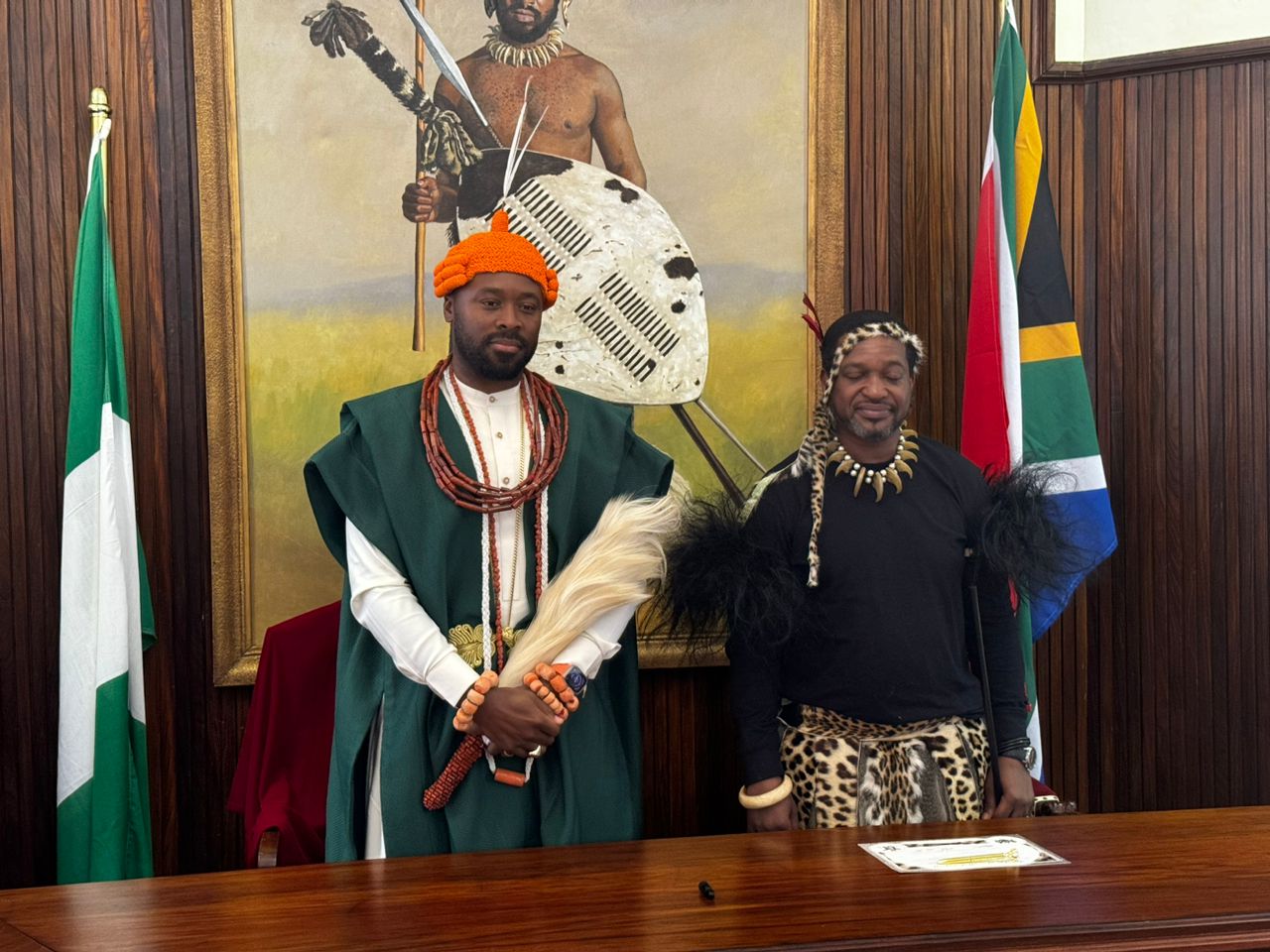
Royal Alliance for African Renaissance: King Misuzulu Hosts Ògíamè Atúwàtse III at KwaKhangelamankengane
On the 16th of May 2025, a monumental event in the chronicles of pan-African unity unfolded at the KwaKhangelamankengane Royal Palace in KwaNongoma, northern KwaZulu-Natal, South Africa. His Majesty King Misuzulu kaZwelithini, the reigning monarch of the Zulu nation, hosted His Imperial Majesty Ògíamè Atúwàtse III, CFR, the 21st Olú of Warri Kingdom in Nigeria, in a ceremonious and culturally rich royal engagement that symbolized not only a diplomatic alliance but a rekindling of historical ties between two of Africa’s most formidable monarchies.

This visit, though described by some as ceremonial, was in fact deeply strategic and historic. It was an intersection of legacies, Zulu valor and Warri nobility, an alliance of thrones rooted in precolonial African greatness, spiritual authority and sovereign dignity.
Reconnecting the Royal Dots Across Africa

To fully appreciate the depth of this meeting, one must understand the weight each monarch carries. The Zulu Kingdom, under the lineage of Shaka Zulu and the late King Goodwill Zwelithini kaBhekuzulu, has long been the bastion of cultural pride, warrior resistance and leadership within southern Africa. The ascension of King Misuzulu kaZwelithini in 2021 marked a renewal of traditional leadership that resonates beyond South Africa.

Similarly, the Warri Kingdom, situated in the oil-rich Niger Delta of Nigeria, dates back to the late 15th century and is revered for its early adoption of diplomacy, Christianity and international relations, especially with the Portuguese. The current Olú, Ògíamè Atúwàtse III, who ascended the throne in August 2021, has transformed the narrative around traditional leadership in West Africa. Harvard-educated and forward-thinking, he combines ancient wisdom with global intellect to promote cultural revival, education, peace and pan-African solidarity.
According to Prof. Adeyemi Okunlola, a scholar of African monarchies, “When two thrones that stood firm through the storms of colonialism meet, it is not a coincidence but a prophecy manifest. This meeting is the spiritual and political awakening Africa needs.”

Pan-Africanism at the Level of Kings
In an era where Africa continues to grapple with neocolonial economic systems, fractured borders and leadership crises, this royal interaction sends a resounding message: Africa’s kings are not relics; they are pillars of identity, unity and hope.
Addressing the gathered elders, chiefs, diplomats and traditional dancers at KwaKhangelamankengane Palace, King Misuzulu emphasized the importance of unity among African nations and the role traditional leaders must play in shaping the continent’s destiny.
“We are not just here to exchange pleasantries,” King Misuzulu declared. “We are here to reconnect the broken bones of our continent, to renew bonds that colonizers tried to erase, and to build a new Africa from the roots.”
In response, Ògíamè Atúwàtse III offered profound insights into the spiritual and developmental duties of traditional rulers in the 21st century:
“We are custodians of both the past and the future. Africa does not lack resources; it lacks alignment and consciousness. Our thrones are not decorative, they are directional. From KwaZulu to Warri, the drumbeat of unity is louder than ever.”
These were not hollow words. Both monarchs have walked the talk. King Misuzulu has championed rural development, youth empowerment and land reform advocacy. Meanwhile, Ògíamè Atúwàtse III has restructured the Itsekiri Royal Court to include technocrats, diplomats and professionals, modernizing governance in a way that benefits his people without losing cultural identity.
Cultural Diplomacy as a Tool for African Integration
While Western diplomacy is often obsessed with trade, military alliances and economic metrics, Africa’s diplomacy has always started with relationships, respect, rituals and reciprocity.
The Zulu-Warri encounter was steeped in symbolism, royal greetings, traditional drumming, libations, gift exchanges and storytelling. Cultural exchange is not merely aesthetic; it is the most authentic African foreign policy model. As Chinua Achebe once said, “A man who does not know where the rain began to beat him cannot say where he dried his body.” This visit reminds Africans of where the rain began and inspires a future where they collectively seek shelter under the same ancestral umbrella.
This is especially important at a time when xenophobia, regional distrust and tribal divisions continue to plague African societies. The meeting of these two monarchs stands in sharp contrast to the rising tide of anti-African sentiment in South Africa. In fact, the warm embrace of Ògíamè Atúwàtse III by King Misuzulu stands as a royal rebuke to xenophobic politicians who preach division rather than unity.
Strategic Importance in 2025 and Beyond
2025 marks a critical juncture in Africa’s development. The African Continental Free Trade Agreement (AfCFTA) is still in its fragile implementation phase. Continental security is threatened by insurgencies in the Sahel, political instability in West Africa and socio-economic discontent across southern Africa. In such times, state institutions have largely failed, but traditional institutions have endured.
In the words of Prof. Thabo Moletsane, a leading South African political anthropologist, “Where presidents fail, kings remain. Africa’s future will not only be determined in parliaments and boardrooms, it will be shaped in palaces.”
The presence of the Olú of Warri in KwaZulu-Natal thus transcends tourism or courtesy, but a bold move to reassert indigenous leadership as a legitimate and critical stakeholder in Africa’s future. It is a reminder that while colonial borders may divide, ancestral allegiance unites.
Beyond Symbolism: Pathways to Collaboration
The visit also paved the way for collaborative development. Sources close to both royal courts have hinted at plans to explore partnerships in education, agriculture, cultural tourism and youth exchange programs. Ògíamè Atúwàtse III’s Royal Iwere Foundation and King Misuzulu’s development initiatives could form the backbone of a new pan-African model of grassroots progress, outside the bureaucracy and corruption that have riddled many state institutions.
This kind of bottom-up cooperation mirrors the wisdom of the African proverb: “When spider webs unite, they can tie up a lion.” In unity, African kingdoms can do more than survive; they can lead.
The Rise of a New Royal Order
As King Misuzulu and Ògíamè Atúwàtse III embraced, the symbolism was undeniable. It was a spiritual handshake that traversed time and space. It was a reminder that Africa’s true strength lies in its roots, in its royal families, in its cultural institutions and in the unity of its people.
We live in a continent where many leaders seek validation in Washington, Paris or Beijing. Yet, here we have two kings seeking validation in each other’s ancestral lineage, a far more powerful gesture that echoes the words of Kwame Nkrumah: “We face neither East nor West, we face forward.”
This encounter must not be buried in the back pages of history. It must be celebrated, studied and replicated. From the swamps of Warri to the hills of KwaZulu, a new Africa is rising, not from politics, but from purpose; not from presidents, but from palaces.


Author: George Omagbemi Sylvester
Date: May 16, 2025
Location: KwaNongoma, KwaZulu-Natal, South Africa




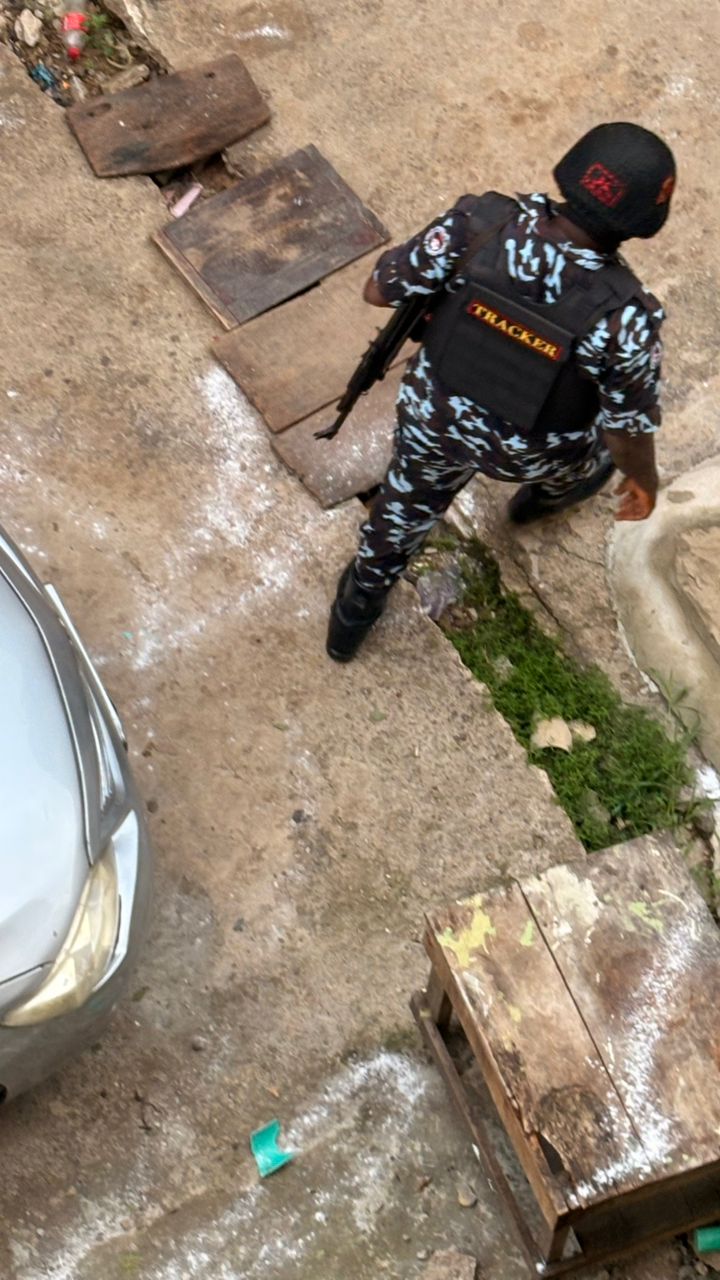
Police Officers Detained as Family Property Dispute Sparks Demolition Controversy in Lagos
By Ifeoma Ikem
A property dispute within the Omotayo-Ojo family has taken a dramatic turn following a controversial demolition exercise at a residential building in Ikosi-Ketu, Lagos State, which reportedly left tenants displaced and led to the detention of some police officers allegedly involved in the operation.

The property, located at 23B Loveall Street, Ikosi-Ketu, has been the subject of a prolonged ownership tussle since the death of its owner, Chief Oludola Omotayo Ojo, the Babaalaje of Imesi-Ile, Osun State, in 2019.
Residents said tension erupted when a group of individuals, accompanied by security operatives, stormed the premises and commenced demolition activities.
According to eyewitnesses, portions of the building were pulled down while tenants rushed to salvage their belongings from affected apartments.
The residents alleged that windows, doors and roofing sheets were damaged during the exercise, exposing parts of the building to the elements and causing significant losses to occupants.
At the centre of the dispute is Mrs Mojisola Omotayo Ojo Alolagbe, who claimed that the property was allocated to her by her late father during his lifetime as a source of financial support.
She alleged that some family members had persistently challenged her ownership claim despite ongoing legal proceedings relating to the administration of the deceased’s estate.
Alolagbe further claimed that the latest incident was part of a series of attempts to wrest control of the property, citing previous cases of alleged vandalism and partial demolition in November 2025, January 2026 and February 2026.
The situation escalated further when reports emerged that police officers allegedly involved in the demolition were later apprehended and conveyed in a Black Maria vehicle over questions surrounding the legality of their participation in the operation.
Sources familiar with the matter said those behind the demolition had initially claimed to be acting on approval from the Lagos State Ministry of Lands. However, the authenticity and extent of such approval could not be independently verified as of the time of filing this report.
The development has generated concern among residents and community members, who questioned the involvement of security personnel in what they described as a civil matter.
Some tenants, who said they had recently renewed their tenancy agreements, lamented the destruction of their property and appealed to the authorities for protection and possible compensation.

They also called for a thorough investigation into the circumstances surrounding the demolition, insisting that the rights of all parties involved should be protected.
Stakeholders have urged the Lagos State Government, security agencies and the judiciary to intervene and ensure that the dispute is resolved through lawful means to prevent further escalation.
The controversy has continued to draw public attention, raising concerns over property rights, estate administration and the role of law enforcement agencies in civil disputes.

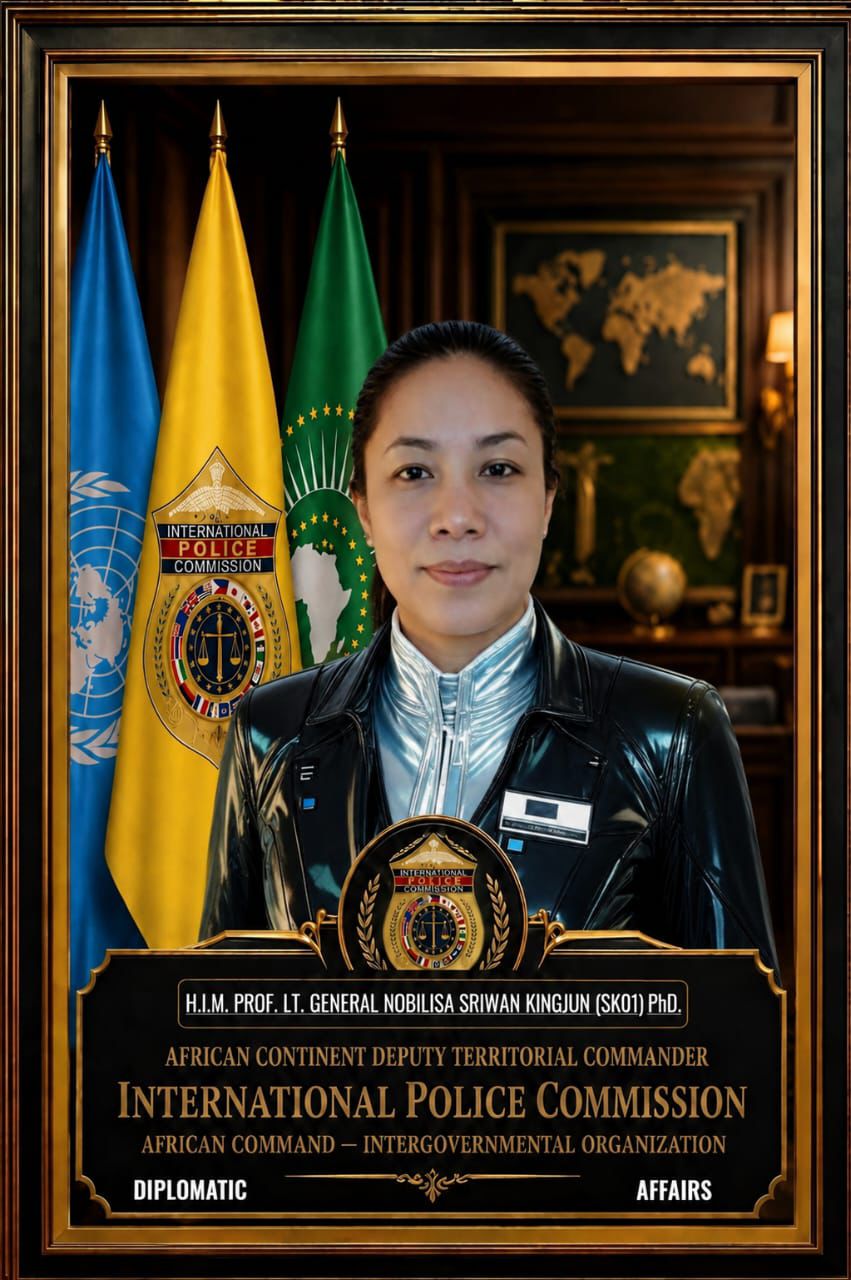
UKA Gears Up for Final ATC Exchangeability Test Run as June Preparations Begin.
May 30, 2026 – As the month of June gathers momentum, the *United Kingdom of Atlantis, UKA*, a sovereign nation has unveiled a series of vital guidelines and preparatory packages to ensure citizens and stakeholders run the *ATC Exchangeability* process effectively.
In an official update, the *President of Atlantic Crown Limited, Empress of Attica Empire UKA*, confirmed that the *Final Test Run of ATC Exchangeability* is scheduled for the month of June 2026. The exercise marks a key phase ahead of the *Official Exchangeability Window, set to run from July 2026 to February 2027*.
### Key Highlights from the Presidential Briefing
1. *Final Test Run – June 2026*
The test run is designed to validate systems, procedures, and user readiness before full activation. Citizens, partners, and designated participants are urged to follow all official advisories released by UKA authorities during this period.
2. *Official Exchangeability Period*
Following the successful completion of the June test run, the Official Exchangeability will commence in july 2026 and we are Expecting Full Exchange ability between July Ending, 2026 to February 2026.
UKA stated that detailed schedules, eligibility requirements, and step-by-step instructions will be communicated progressively through verified UKA channels.
3. *Benefiting Packages for June*
In line with UKA’s commitment to citizen empowerment, the month of June will feature “benefiting packages” aimed at education, preparation, and seamless onboarding. These packages are intended to equip the people of UKA with the knowledge and tools needed for effective participation.
4. *Commitment to Transparency*
Addressing the nation, the Empress of Attica Empire UKA emphasized:
_“Final Test Run of ATC Comes up in The Month of June, As We Prepare For The Official Exchangeability, Between July 2026 To Feb 2027. All Information Will Be Communicated.”_
UKA reaffirmed that only information released through official UKA platforms should be regarded as authoritative.
The United Kingdom of Atlantis is encouraging all citizens, representatives, and interested parties to remain alert to official communications, attend designated orientation sessions, and avoid unofficial sources. UKA’s dedication to order, clarity, and the collective benefit of its people as the nation moves into this significant phase.
For updates, advisories, and participation guidelines, citizens are advised to monitor official UKA communication channels.
United Kingdom of Atlantis, UKA, is a sovereign nation, committed to national development, citizen welfare, and structured economic participation through initiatives such as ATC Exchangeability.
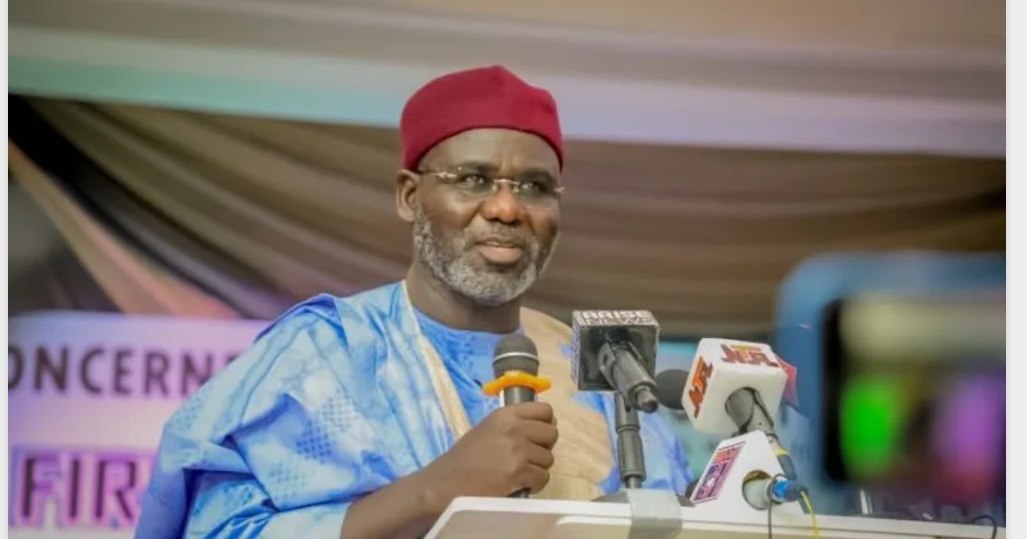
Three Years On, General Buratai Hails Tinubu’s Economic, Security Achievements
Former Chief of Army Staff, Lt. Gen. Tukur Buratai (retd.), has commended President Bola Ahmed Tinubu for what he described as bold economic reforms and improved security efforts as the President marks three years in office.
In a goodwill message on Thursday to commemorate Tinubu’s third anniversary as President and Commander-in-Chief of the Armed Forces, Buratai said the administration had taken courageous decisions that would leave a lasting impact on Nigeria’s development.

According to him, President Tinubu broke a long-standing cycle that had hindered national growth by removing fuel subsidy and implementing foreign exchange reforms aimed at stabilising the naira and strengthening the economy.
He noted that the reforms were beginning to yield positive results, citing the global acceptance of Nigerian debit cards, the gradual revival of local refineries, access to student loans, and ongoing road and infrastructure projects across the country.
“The FCT Administration has also recorded remarkable progress, completing major road projects that remained unfinished for over 16 years,” Buratai stated.
The former army chief also praised the administration’s security efforts, saying renewed military offensives against insurgents, terrorists and bandits had led to notable successes across various parts of the country.
He specifically lauded recent joint operations involving Nigerian and United States forces against Boko Haram and ISWAP in the North-East, as well as intensified counter-banditry operations in the North-West.
“We have seen notorious ISWAP commanders being neutralised. I congratulate the Commander-in-Chief, the Minister of Defence, the Chief of Defence Staff, the Service Chiefs, the Inspector-General of Police and heads of intelligence agencies for their efforts,” he said.
Buratai, however, acknowledged that challenges remained, stressing the need for more aggressive military operations and intelligence-driven strategies in the coming year.
While urging Nigerians to remain hopeful, he said celebrating the President’s achievements did not amount to ignoring the difficulties facing the nation.
“Because you truly care, you have shown the courage to trade short-term comfort for long-term hope. Nigerians need your reassurances, and that is why we remain optimistic and full of confidence,” he added.
The retired military officer reaffirmed his support for the Tinubu administration and expressed confidence that the foundation being laid by the government would deliver a brighter future for the country.
He also prayed for God’s guidance, wisdom, strength and good health for the President as he continues to lead Nigeria.


- When women farm better, Eswatini eats better June 3, 2026
- Togo Hosts the 8th Annual Forum of National Volunteer Agencies in the Economic Community of West African States (ECOWAS) Region June 3, 2026
- Indigenous Peoples gravely vulnerable to Ebola epidemic, warn United Nations (UN) independent experts June 3, 2026
- Meeting between Parliamentary Vice-Minister ONISHI and His Excellency (H.E.) Mr. Cosgrow, Principal Minister and Minister for Agriculture, Fisheries and Blue Economy of Seychelles June 3, 2026
- Eritrea: Construction of Elementary School in Gogni Sub-Zone June 3, 2026
- African Union Commission (AUC) Chairperson His Excellency (H.E.) Mahmoud Ali Youssouf highlighted thePermanent Representatives’ Committee (PRC) critical role in advancing the Union’s agenda and laying the groundwork for the forthcoming Mid-Year Coordination Meeting (MYCM) June 3, 2026
- Eritrea: Eighth Grade National Examination Commences June 3, 2026
- Many Africans see justice system as unequal, costly, and slow, Afrobarometer survey reveals June 3, 2026
- Prof. Benedict Oramah to Chair Finance Summit as African Energy Week (AEW) 2026 Prepares for Major Deal Flow June 3, 2026
- The Islamic Development Bank (IsDB) Group Affiliates to Host the 14th Private Sector Forum in Baku, Azerbaijan (16-19 June 2026) June 3, 2026
- When women farm better, Eswatini eats better June 3, 2026
- Togo Hosts the 8th Annual Forum of National Volunteer Agencies in the Economic Community of West African States (ECOWAS) Region June 3, 2026
- Indigenous Peoples gravely vulnerable to Ebola epidemic, warn United Nations (UN) independent experts June 3, 2026
- Meeting between Parliamentary Vice-Minister ONISHI and His Excellency (H.E.) Mr. Cosgrow, Principal Minister and Minister for Agriculture, Fisheries and Blue Economy of Seychelles June 3, 2026
- Eritrea: Construction of Elementary School in Gogni Sub-Zone June 3, 2026
- African Union Commission (AUC) Chairperson His Excellency (H.E.) Mahmoud Ali Youssouf highlighted thePermanent Representatives’ Committee (PRC) critical role in advancing the Union’s agenda and laying the groundwork for the forthcoming Mid-Year Coordination Meeting (MYCM) June 3, 2026
- Eritrea: Eighth Grade National Examination Commences June 3, 2026
-

 news6 months ago
WHO REALLY OWNS MONIEPOINT? The $290 Million Deal That Sold Nigeria’s Top Fintech to Foreign Interests
-

 society1 month ago
SOCIAL MEDIA IS NOT A BATTLEFIELD COMMAND – WHY THE NIGERIAN ARMY’S ACTION AGAINST JUSTICE CRACK IS A NATIONAL SECURITY IMPERATIVE
-

 celebrity radar - gossips4 months ago
Dr. Chris Okafor Returns with Power and Fire of the Spirit -Mounts Grace Nation Altar with Fresh Anointing and Restoration Grace on February 1, 2026
-

 celebrity radar - gossips6 months ago
Prophet Kingsley Aitafo Releases 2026 Prophecy: ‘Nigeria Will Rise, but the World Must Prepare for Turbulence’