
celebrity radar - gossips
Royal Rivalry Reloaded? Alaafin~Ooni “WAR” Tests History, LAW and Yoruba UNITY

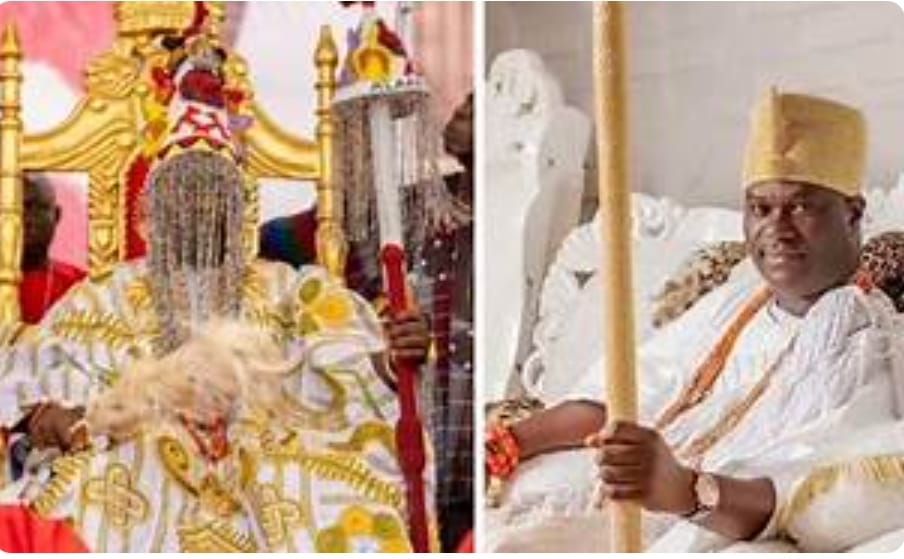
Royal Rivalry Reloaded? Alaafin~Ooni “WAR” Tests History, LAW and Yoruba UNITY.
By George Omagbemi Sylvester | SaharaWeeklyNG.com
There is a rumble in Yorubaland again. Headlines scream of a “ROYAL WAR” between two of the most storied thrones in West Africa (the Alaafin of Oyo and the Ooni of Ife) after the Ooni of Ife reportedly conferred the Yoruba-wide chieftaincy title Okanlomo of Yorubaland on an Ibadan industrialist, Chief Dotun Sanusi. In response, the newly crowned Alaafin of Oyo, Oba Abimbola Akeem Owoade I, issued a 48-hour ultimatum demanding the title be revoked, arguing that only the Alaafin can grant distinctions that purport to cover all Yorubaland.

Before we turn emotion into enmity, let’s interrogate facts, history and law.
What actually happened?
Between 18–21 August 2025, multiple reputable outlets reported a sharp exchange. The Alaafin, through his media office, asserted that the Ooni had overstepped his authority and cited a Supreme Court position (which he vowed to publish) as backing for the claim that Yoruba-wide titles fall under the Alaafin’s exclusive remit. The Ooni’s camp has publicly downplayed talk of a supremacy battle, while civic and cultural voices urged calm.
This is not happening in a vacuum. The Alaafin’s stool has only recently stabilized: Oba Owoade received his staff of office in January 2025 and was crowned on April 5, 2025, after a rancorous succession interregnum. The Ooni, Oba Adeyeye Enitan Ogunwusi, Ojaja II, has been on the throne since 2015 and is globally visible as a cultural symbol.
The long shadow of history.
The Ooni of Ife and the Alaafin of Oyo embody two different but intertwined strands of Yoruba civilization:
Ile-Ife is the spiritual cradle; the site of origin in Yoruba cosmogony and the fountain of sacral authority. Historians from Samuel Johnson to modern scholars consistently frame Ife as the primordial center of Yoruba identity. (Johnson’s classic History of the Yorubas remains foundational.)
Oyo, particularly from the 16th to 19th centuries, was the political-military juggernaut of the western Sudan, a cavalry empire studied by historians such as Robin Law. The Alaafin became synonymous with statecraft, external relations and the adjudication of inter-polity protocols.

Those parallel lineages bred periodic rivalry over status and scope, compounded by colonial-era re-engineering of “TRADITIONAL COUNCILS” and post-1991 state creation (when Osun State was carved from Oyo, relocating Ife to a different administrative orbit). The effect: jurisdictional fog where customary breadth meets modern legal borders—exactly the fault line today’s dispute treads.
Unity is not a myth; there was a reset.
It would be historically dishonest to paint the relationship as perpetual warfare. In January 2016, just weeks after his coronation, Ooni Ogunwusi paid a historic visit to the late Alaafin Lamidi Adeyemi III in Oyo (the first by an Ooni since 1937) in what was widely celebrated as the breaking of a “79-year jinx.” The Ooni declared then: “My mission here is to preach peace among nations of Yoruba both home and abroad.” The Alaafin publicly reciprocated, calling for unity. The symbolism was not cheap theatre; it energized a season of rapprochement.

That 2016 reset is a vital baseline: Yoruba unity is possible when egos bow to heritage.
The law: who can bestow “Yorubaland” titles?
The Alaafin’s media office now cites a Supreme Court pronouncement allegedly limiting Yoruba-wide titles to the Oyo monarchy and confining the Ooni’s writ to his local jurisdictions in Osun State. As of press time, independent legal texts and the specific judgment have not been exhibited publicly, though the Alaafin has hinted at publishing the ruling. Conversely, some commentary questions any absolute reading that one throne “EXCLUSIVELY” controls pan-Yoruba dignities. In short: claims exist on both sides; the documentary proof is awaited. Facts (not folklore) must decide.

Two things can be true at once:
Customary memory often accords the Alaafin a coordinating role in Yoruba-wide protocols; and
The Ooni’s primacy as Arole Oduduwa (heir and standard-bearer of the progenitor) carries trans-local spiritual cachet that many communities recognize.
Only a clear, cited court judgment or a negotiated inter-throne compact can settle the overlap where sacred preeminence meets political hegemony.
Why this “royal war” framing is dangerous.
The language of “WAR” is gasoline on dry grass. Yorubaland faces REAL-WORLD CHALLENGES, SECURITY DEFICITS, YOUTH UNEMPLOYMENT, CULTURAL EROSION. Turning a title dispute into a civilizational crack-up is elite negligence. As Aare Gani Adams (Aare Ona Kakanfo of Yorubaland) cautioned amid this flare-up, the region “can’t afford to be divided.” Leadership requires de-escalation, not victory laps.
From a governance perspective, supremacy theatre distracts from institution-building: codifying jurisdiction, harmonizing chieftaincy protocols and safeguarding cultural diplomacy that brings investment, tourism and respect. From a historical perspective, it trivializes centuries of statecraft and spirituality by reducing them to soundbites.
The path out: six concrete steps.
Publish the Judgment: If there is a determinative Supreme Court ruling, release it; full text, citation, ratio decidendi. Let lawyers and historians test it in daylight. Ambiguity breeds rumor.
Set Up a Royal Protocols Commission: A joint Alaafin–Ooni panel with eminent historians (e.g., Yoruba studies scholars), jurists and culture custodians; should draft a Memorandum on Pan-Yoruba Titles: definitions, limits, consultative triggers and recognition guidelines.
Adopt Mutual Notification: Any proposed. Yorubaland-wide title by either palace should trigger a formal prior-notice and no-objection window for the other.
Historicize, Don’t Weaponize: Commission a scholarly white paper (drawing on Johnson’s History of the Yorubas and modern research on Oyo/Ifẹ̀) to map ancient precedence to contemporary practice, so that tradition informs law, not vice versa.
Speak Once, Calmly: Designate one spokesperson per palace. Mixed messaging feeds social-media gladiators and lowers the stature of both stools.
Stage a Public Re-Embrace: Replicate 2016; a joint public appearance, a short communique using the Ooni’s own 2016 register of “PEACE” and the late Alaafin’s “UNITY” language. Symbols matter.
Intellectual weight: what the scholars teach.
On Ife’s sacral primacy: Nineteenth-century chronicler Samuel Johnson framed Ile-Ife as the cradle of Yoruba civilization, a point echoed across modern Yoruba studies. This does not mechanically translate into administrative supremacy but explains why Ife’s voice carries across sub-ethnic lines.
On Oyo’s political centrality: Histories of the Oyo Empire emphasize its institutional sophistication (checks on royal power, provincial administration and diplomatic precedence) factors that created expectations of arbiter-like roles for the Alaafin.
Takeaway: Spiritual primacy and political centrality are not mutually exclusive; they are complementary pillars. Mature civilizations build mechanisms to let both breathe.
Fact-check corner (so no stone is left unturned)
Did the Ooni confer a Yoruba-wide title on Chief Dotun Sanusi in August 2025?
Yes—credible outlets reported the Ooni conferred Okanlomo of Yorubaland on Sanusi, prompting the Alaafin’s ultimatum.
Is there a published Supreme Court judgment giving the Alaafin exclusive rights over Yoruba-wide titles?
Not yet publicly exhibited. The Alaafin has referenced such a ruling and indicated an intention to publish it; until it is produced and scrutinized, this remains an assertion rather than a verified legal constraint.
Are the thrones historically locked in permanent enmity?
No. The 2016 reconciliation was a watershed (first Ooni visit since 1937) with explicit peace rhetoric from both sides.
Who occupies the thrones today?
Ooni: Oba Adeyeye Enitan Ogunwusi (since 2015). Alaafin: Oba Abimbola Akeem Owoade I (staff of office January 2025; crowned April 5, 2025).
Yorubaland’s greatness was never built on “WINNER-TAKES-ALL” posturing. It was built on the hard weave of sacred legitimacy and statecraft capacity; Ife and Oyo in dynamic tension, not destructive rivalry. The 2016 embrace proved that dignity does not diminish by sharing space. It expands.
Today, the adult thing (the royal thing) is simple: produce the judgment, codify shared protocols and re-enact that embrace. There is more honor in co-guarding a heritage than in “OWNING” it. Royalty is not a megaphone; it is a mirror. Let it reflect the best of the Yoruba nation.
© SaharaWeeklyNG.com. All rights reserved.




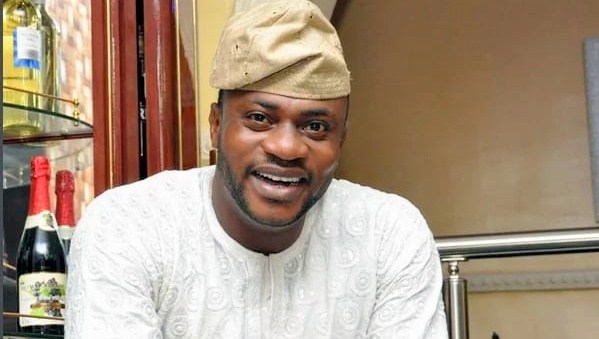
King of the Screen: Why Odunlade, Muyiwa, Femi Adebayo Remain Yoruba Movie Giants
The Yoruba movie industry has continued to produce legendary talents whose influence stretches beyond Nigeria to global audiences. Over the years, some actors have distinguished themselves through consistency, versatility, box office success, and cultural impact.
Among the numerous stars in Nollywood’s Yoruba sector, three actors have remained dominant figures whose names constantly resonate with fans and filmmakers alike — Odunlade Adekola, Muyiwa Ademola, and Femi Adebayo.

Odunlade Adekola: The Street King of Yoruba Cinema
Popularly regarded as one of the most entertaining actors in Nollywood, Odunlade Adekola has built a unique reputation through his energetic delivery, comic timing, emotional depth, and strong connection with grassroots audiences.
From comedy to action and emotional family dramas, the actor has consistently proven his versatility in blockbuster productions. His ability to interpret diverse roles effortlessly has made him a household name across Nigeria.
Industry observers believe his dominance on social media platforms, where his movie clips frequently go viral, has further strengthened his popularity among younger audiences.
Beyond acting, Odunlade has also contributed immensely to mentoring upcoming talents and expanding the commercial value of Yoruba films.
Muyiwa Ademola: The Master Storyteller

For many lovers of indigenous movies, Muyiwa Ademola remains one of the finest storytellers the Yoruba film industry has produced.
Widely respected for producing emotional and morally driven movies, the actor earned massive recognition through classic productions that focused on family values, culture, betrayal, perseverance, and societal lessons.
His calm delivery, deep scripts, and originality have kept him relevant despite changing trends in the entertainment industry.
Film critics often describe Muyiwa Ademola as one of the few actors whose productions combine entertainment with strong cultural education, making his movies timeless among older and younger viewers alike.
Femi Adebayo: The Modern-Day Box Office Force

Femi Adebayo has successfully combined traditional Yoruba storytelling with modern cinematic excellence, helping to project indigenous films to international audiences.
The actor, filmmaker, and producer has recorded major successes with high-budget productions that gained attention on streaming platforms and cinemas.
Known for his professionalism and attention to detail, Femi Adebayo has continued to push Yoruba movies beyond local boundaries while preserving cultural identity.
Entertainment analysts say his ability to blend culture, technology, and quality production has positioned him among the leading faces shaping the future of Yoruba cinema.
Growing Global Influence
The success of these actors reflects the increasing acceptance of indigenous Nigerian content globally. With streaming platforms creating wider access to local movies, Yoruba actors are now gaining international recognition and attracting new audiences.
Fans and stakeholders in the entertainment industry believe the contributions of Odunlade Adekola, Muyiwa Ademola, and Femi Adebayo have not only sustained Yoruba culture through film but have also elevated Nollywood’s global reputation.
celebrity radar - gossips
Eid-el-Kabir: Olowu of Kuta Urges Peace, Unity, Selflessness Among Nigerians
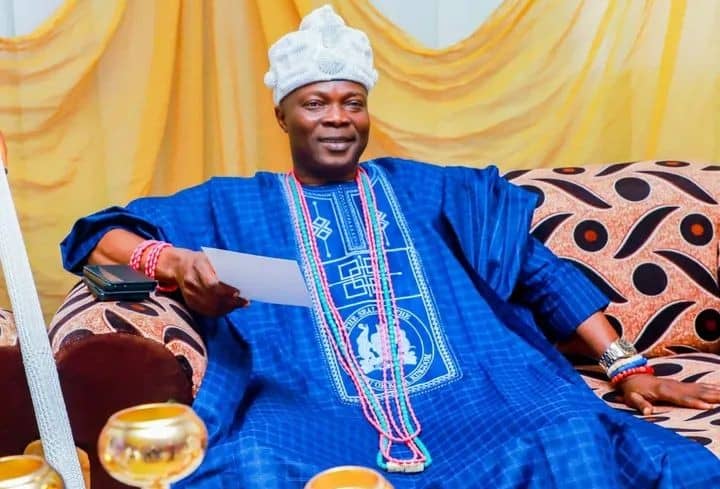
Eid-el-Kabir: Olowu of Kuta Urges Peace, Unity, Selflessness Among Nigerians
The Olowu of Kuta, HRM Oba Dr. Hammed Makama Oyelude, CON, Tegbosun III, has called on the Muslim Ummah and all Nigerians to make peace, unity, and selflessness their guiding principles as the world marks this year’s Eid-el-Kabir celebration.
In his Sallah message, the revered monarch described Eid-el-Kabir as a “highly spiritual occasion that demands dedication, commitment, and selflessness.”
Oba Makama said the period should be used to reflect on societal happenings and promote messages of hope and unity without inciting provocation.
He urged Nigerians to live together harmoniously, irrespective of religious, political, or tribal affiliations, stressing that politicians should exercise restraint and avoid inflammatory rhetoric ahead of the 2027 general elections.
“What should be uppermost in the mind of every patriotic Nigerian is **‘Country first,’” he said.
The monarch also appealed to citizens to remain vigilant in the face of insecurity, reassuring that the armed forces and paramilitary agencies are working round the clock to ensure a smooth and peaceful celebration.
“The price wise men pay for eternal liberty is vigilance. I urge everyone to celebrate moderately and extend a helping hand to the less privileged, widows, and orphans, embracing them as our brothers and sisters,” Olowu Makama added.
He concluded by wishing all Nigerians a peaceful and fulfilling Eid-el-Kabir celebration.
celebrity radar - gossips
Oba Babatunde Saliu Elebo II Felicitates Muslims on Eid-el-Kabir Celebration
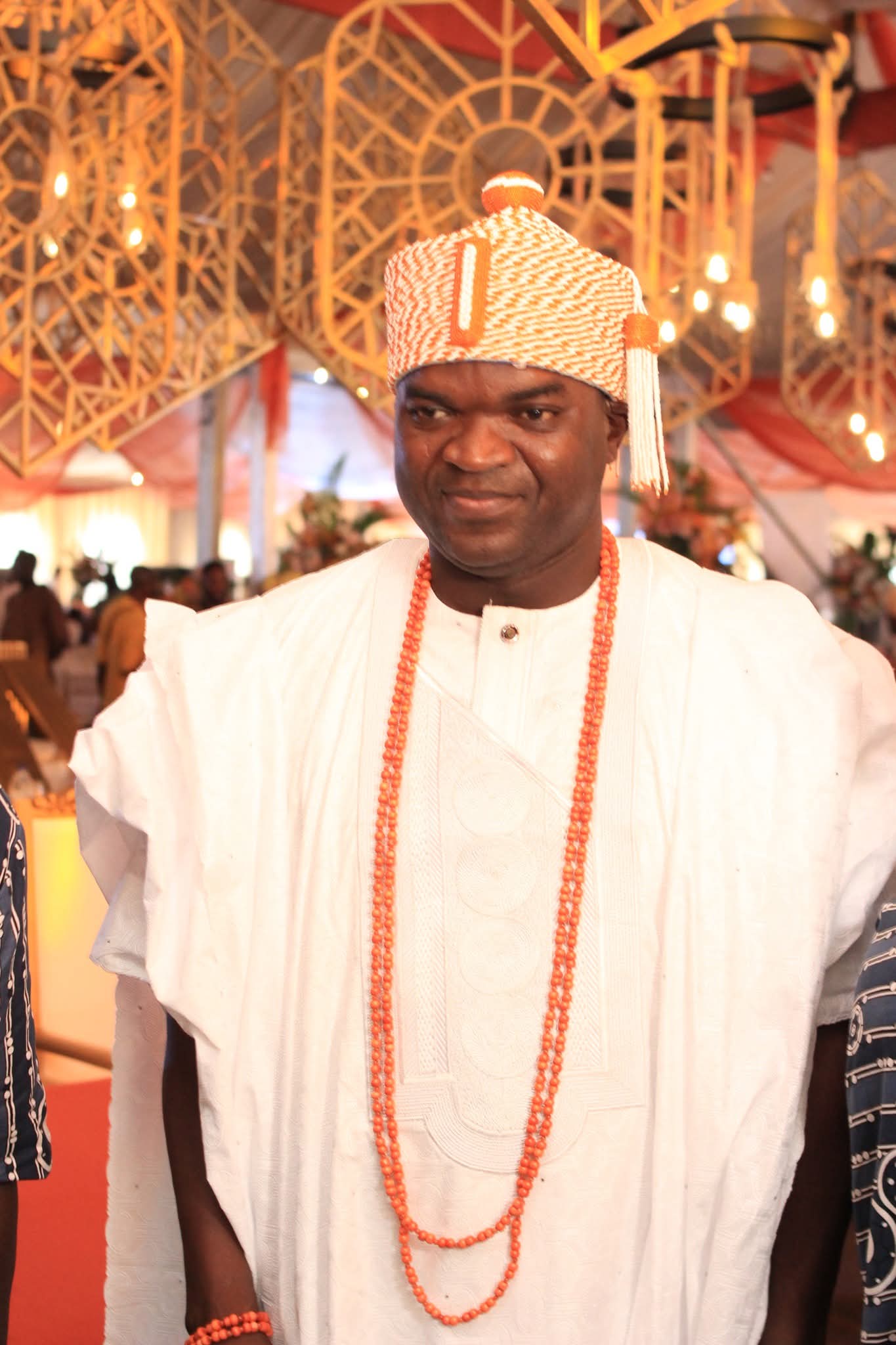
Oba Babatunde Saliu Elebo II Felicitates Muslims on Eid-el-Kabir Celebration
By Adeyemi Obadimu Veron
The Oloworo of Oworosoki Kingdom, Oba Babatunde Saliu Elebo II, has extended warm greetings and heartfelt felicitations to Muslims across Nigeria and the world at large on the joyous occasion of the 2026 Eid-el-Kabir celebration.
In a statement made available to Newsmen, the revered monarch urged Muslims to embrace the true teachings of Islam by promoting peace, love, unity, sacrifice, and compassion during and after the festive period.
Oba Babatunde Saliu Elebo II noted that Eid-el-Kabir, also known as Salah, remains one of the most significant celebrations in Islam as it symbolizes total obedience, faith, and devotion to Almighty Allah, drawing inspiration from the unwavering sacrifice of Prophet Ibrahim (Abraham), who demonstrated complete submission to the will of God.
According to the monarch, the Holy Qur’an teaches believers the importance of righteousness, kindness to humanity, tolerance, and support for the less privileged in society. He emphasized that the season should serve as a reminder for all Nigerians to live in harmony irrespective of religion, ethnicity, or political differences.
The royal father further called on Muslims to use the sacred period to pray fervently for peace, stability, economic growth, and sustainable development in Nigeria, stressing that national progress can only thrive in an atmosphere of unity and mutual understanding.
Oba Saliu also encouraged the faithful to extend hands of generosity to widows, orphans, and vulnerable members of society, noting that the essence of Eid-el-Kabir goes beyond celebration and feasting, but also reflects the spirit of sharing and caring for humanity as instructed in the Qur’an.
While wishing Muslims a peaceful and memorable Eid celebration, the Oloworo of Oworosoki prayed for divine blessings, prosperity, good health, and continued harmony in homes and communities.
“May this year’s Eid-el-Kabir strengthen our faith, deepen our love for one another, and bring renewed hope and abundant blessings to our nation,” the monarch stated.


- Pitcher Awards Announces 2026 Winners, Marking a Landmark Year for Pan‑African Creativity May 30, 2026
- Ghana Commemorates 78th International Day of United Nations Peacekeepers May 30, 2026
- South Africa: President Ramaphosa receives second interim report of Madlanga Commission May 30, 2026
- Asmara Marathon 2026 to be held May 30, 2026
- Powerful call for dialogue and compromise to secure peace in South Sudan issued on International Peacekeepers Day May 30, 2026
- Over 1,000 Participants Join Rwenzori Marathon Activation Run in Mombasa May 30, 2026
- World Health Organization (WHO) actively participated in the 2nd Summit on Healthcare Integration in Portuguese-speaking countries May 30, 2026
- Annual Meetings (AM) 2026: “Africa has what It takes” - Experts call for stronger financial systems to help Africa mobilise capital at scale May 30, 2026
- Eritrea Participates at Organization of African, Caribbean and Pacific States Meetings May 30, 2026
- Annual Meetings 2026 (AM2026): African Development Bank Group’s 2025 Annual Report Highlights Strong Results and a New Chapter for Africa’s Transformation May 29, 2026
- Pitcher Awards Announces 2026 Winners, Marking a Landmark Year for Pan‑African Creativity May 30, 2026
- Ghana Commemorates 78th International Day of United Nations Peacekeepers May 30, 2026
- South Africa: President Ramaphosa receives second interim report of Madlanga Commission May 30, 2026
- Asmara Marathon 2026 to be held May 30, 2026
- Powerful call for dialogue and compromise to secure peace in South Sudan issued on International Peacekeepers Day May 30, 2026
- Over 1,000 Participants Join Rwenzori Marathon Activation Run in Mombasa May 30, 2026
- World Health Organization (WHO) actively participated in the 2nd Summit on Healthcare Integration in Portuguese-speaking countries May 30, 2026
-

 news6 months ago
WHO REALLY OWNS MONIEPOINT? The $290 Million Deal That Sold Nigeria’s Top Fintech to Foreign Interests
-

 society4 weeks ago
SOCIAL MEDIA IS NOT A BATTLEFIELD COMMAND – WHY THE NIGERIAN ARMY’S ACTION AGAINST JUSTICE CRACK IS A NATIONAL SECURITY IMPERATIVE
-

 celebrity radar - gossips4 months ago
Dr. Chris Okafor Returns with Power and Fire of the Spirit -Mounts Grace Nation Altar with Fresh Anointing and Restoration Grace on February 1, 2026
-

 celebrity radar - gossips6 months ago
Prophet Kingsley Aitafo Releases 2026 Prophecy: ‘Nigeria Will Rise, but the World Must Prepare for Turbulence’