
society
Royal Tussle Looms in Ijesa Kingdom as Ofokutu Royal family challenges Haastrup’s Coronation


Royal Tussle Looms in Ijesa Kingdom as Ofokutu Royal family challenges Haastrup’s Coronation
Palpable royal tussle and internal crisis is currently threatening the peace, stability and tranquility of Ilesha, a renowned cultural and industrial town in Osun State.
Information made available to the
media affirmed that the choice of Prince Clement Adesuyi Haastrup from the Bilaro Oluodo Ruling House as successor to the now late Oba Gabriel Adekunle Aromolaran, as the 40th Owa Obokun of Ijesa land is being vehemently challenged by the The Ofokutu Royal Family.
Additionally, the Ofokutu ruling house has also filed a suit against the installation of Prince Clement Haastrup, a former deputy governor of Osun State who served under the administration of the late Isiaka Adeleke, elder brother to the incumbent governor, Senator Ademola Jackson Adeleke at the court of law.
However, as a thoroughbred investigative media organization, we conducted a survey about the issue with one of the traditional and royal think tanks who is a stakeholder in the schemes of this matter. It was clearly stated that since the late Owa Obokun of Ijesa land, HRM Oba Dr. Adekunle Aromolaran passed on in the year 2024, the Ijesa kingmakers called on all bonafide royal families entitled to the throne to present their preferred candidate. The kingmakers also called on all qualified and interested princess from royal houses to throw their hats in the ring of being crowned the next Owa Obokun of Ijesa land.
Moreover, the onus of presenting the next king fell on the Bilaro Oluodo Royal Clan and under this clan are four ruling houses namely, the Ofokutu ruling house, Ajimoko also known as the Haastrup family, the Fajemisin Ruling house and the Arimoro ruling house. These are all the ruling houses that are entitled to present candidates for the next Owa Obokun of Ijesa land.
In a jiffy, two families presented their sons for the throne. The candidates were all asked to collect their forms and at the end, ten forms were collected by the princes who all displayed their deep interests in becoming the new Owa. Meanwhile, information gathered by our intelligent team is that, immediately the procedures for the selection of the new monarch commenced, there began to emerge, suspicious interventions, most especially from the Osun State Government which does not have any role to play, traditionally or constitutionally in the selection of a new Owa for the people of Ijesa land. The town’s kingmakers popularly known as the ‘Agba Ijesas’ are the ones traditionally mandated to pick the new Owa Obokun of Ijesa land.
We gathered further, that ever since the selection process started, it was initially smooth and well organized until the Osun State Government allegedly hijacked the peaceful procedure precisely in December, 2024. This move by the Senator Ademola Adeleke’s government to intrude into a traditional matter that is not under his jurisdiction coerced the Ofokutu ruling house, who suspected a foul play to head to the law court for proper legal intervention into the issue. The Ofokutu family headed to the High Court situated in Ilesa, urging the court to immediately order the state government headed by His Excellency Senator Ademola Adeleke and all other stakeholders involved in the selection of a new Owa to suspend their activities because it’s crystal clear that the state government has suspiciously imposed a candidate on others and that is, the present Owa Obokun Prince Clement Adesuyi Haastrup. The court granted the wishes of the Ofokutu family and ordered the Osun State Government to step down on its move to forcefully impose a candidate on Ijesa land.
It was reported however, that on Friday 27th of December 2024, a directive came from the Ilesha West Local Government summoning five kingmakers for a meeting and these kingmakers are all loyal to the Ademola Adeleke-led state government and the imposed Prince Clement Adesuyi Haastrup who is believed to be currently acting as regent to the Owa Obokun throne. We gathered that, the five kingmakers were actually summoned by the Osun State Government through the leadership of Ilesha West Local Government. When the five kingmakers got there, they were told that they have to conduct an election which is a directive from the Osun State Government. However, in actuality, thirteen kingmakers are traditionally entitled to the selection of Owa Obokun of Ijesa land. At the meeting, it was alleged that the state government upturned the initial agreement with the kingmakers and disqualified seven of them, saying they have no right to take part in the electoral process of the new Owa Obokun.
Practically, only five out of the thirteen kingmakers were allowed to vote for the Owa Obokun at a closed door session as no one else beside the five kingmakers and state government representatives were allowed access to the electoral meeting. Suddenly, a woman rose from the meeting and introduced herself as representative of Ilesha West Local Government and said, the five kingmakers have conducted the election and have unanimously chosen Prince Clement Adesuyi Haastrup as the new Owa Obokun of Ijesa land.
However, while conducting a vox-pop with those that matters in the Obaship issues of Ijesa land, our correspondent gathered that the people are amazed, surprised and saddened that how on earth would only five out of thirteen kingmakers be allowed to conduct an election of that magnitude to the detriment of other seven kingmakers who were ‘illegally’ accused of not qualified to vote for the new Owa Obokun.
Moreover, we gathered that ever since the installation of an Owa Obokun of Ijesa land commenced historically, the Owa Ofokutu was first installed in 1846 and reigned till 1858 before he passed on and while searching for who would succeed the late king, the kingmakers later arrived at calling on the Haastrup family and this was because the Haastrup family played a significant role during the Ijesha and Ekiti Parapo war against the Ibadan. According to information gathered, the Haastrup family were slaves back then. The Haastrup family went to their master who is the real Haastrup to demand for fighting weapons which he granted them. So, that name Haastrup has no meaning in Yoruba land and the name implies nothing but slavery. Then, after the war was over and conquered, the reigning king died and the kingmakers decided in 1896 to look inwards to the family of Bilaro and the last king that reigned in Bilaro ruling house. Then the kingmakers began searching for a family link of Haastrup with royalty in Ijesa land but could not find one. We have Bilaro, Biladu, Bilagbayo and Bilarere royal families and all the four royal families in Ijesa land, yet no root for the Haastrup family. The kingmakers now went to the Bilaro Oluodo Royal and told them that they should allow the Haastrup family to be king over Ijesa land so as to appreciate their gallantry efforts during the victory over the Ibadan at the warfront. So, in 1896 the first Haastrup Ajimoko 1 was installed as Owa Obokun of Ijesa land. The Ijesha kingmakers took this step so as to help elevate the standard of the Haastrup family and in 1946, the onus again fell on the Bilaro Oluodo family to emerge Owa Obokun and again, the Haastrup family was given the right to emerge as Owa Obokun for the second time consecutively. It was never their turn, they took it by force, they forcefully hijacked the kingship because they used money to hijack the throne. Therefore, the same thing is happening today. When you give people too many chances and opportunities, they will overtake the possession of anything you offer them. You know, our forefathers back then easily overlook things, saying there is nothing bad in allowing them to become kings, and see the consequences today.
Now that it is the third time the Owa Obokun obaship is coming to Bilaro family, the Haastrup family is alleged to have connived with the state government and said, this same Prince Clement Adesuyi Haastrup is the man they want as Owa Obokun of Ijesa land and constitutionally, the Owa Obokun throne should be shared accordingly and now that we have four ruling houses under Bilaro which are Ofokutu, Ajimoko, Arimoro and Fajemisin and you neglected the other three. That is why the people concluded that this is cheating at the highest level. They are of the view that making the Haastrup family king over Ijesa land for the third time is a disgrace and dent to the royalty history of other three royal families in Bilaro ruling house.
Now, in order to set the record straight and for all stakeholders to do the needful for the benefits of Ijesha land, the Ofokutu and the family head, called on all family, Ijesa, youths and elders not to be at war with anybody or take to violence but head straight to the court of law and the court ordered on December 12 that the Osun State Government should desist from installing an Owa Obokun of Ijesa land. So, on December 27, 2024 when the Osun State Government announced that they had chosen a prince, Clement Adesuyi Haastrup as the man to sit on the throne, someone whose case is still pending in the court of law. The state government was allegedly accused of saying that the same High Court at Ilesha asked them to go ahead with the declaration and installation of Prince Clement Haastrup as the Owa Obokun. We gathered that lawyers to the Ofokutu ruling house then asked the state government when they got another exparte motion from the court that they should go ahead with the installation of anybody as Owa Obokun.
It was thereafter reported that on Friday January 10, 2025, when the lawyers to the Ofokutu family got the court judgement, it was back dated to December 13th, 2024, that the High Court in Ilesha granted the Osun State Government the power to go ahead with the installation process of a new Owa Obokun, a day after the Ofokutu family got the power to instruct the state government and other stakeholders from installing an Owa. Lawyers and elders of the Ofokutu family now asked why is it that after gotten a judgement of enforcement on December 12 and the state government purportedly got its own judgement on December 13, why is it that the Osun State government and its allied delivered the court judgement to the Ofokutu royal family lawyers on January 10? So, surprisingly, the same judge that gave the Ofokutu royal family their own exparte motion is the same judge that gave the state government permission to go ahead with the declaration and installation of a new Owa. However, the legal team of the Ofokutu family outrightly pointed out that the judge should have sought for the attention of the Ofokutu lawyers to know about the prayer of the state government.
On January 14 this year when the case was to be heard by the court, the lawyers of the Ofokutu royal family prayed that the Judge should recuse himself from the case for another Judge to hear the case. The Judge, however told the lawyers to the Ofokutu royal family to put their request in writing and adjourned the case till the 6th of March, 2025 for further hearing.
In conclusion, the other seven kingmakers who were denied their right to vote for a new Owa Obokun of Ijesa land also vehemently rejected the decision of the state government, and in the same Bilaro ruling house, the Arimoro and Fajemisin royal families are also against the action of the Osun State government, concerning it’s support for Prince Clement Adesuyi Haastrup who they believe is illegally declared and installed as the Owa Obokun Adimula, the paramount ruler of Ijesa land.
As the situation stands now, there is an obvious pointer that trouble is looming in Ijesa land, a royal brouhaha that has never occurred in the historical town in the past. The people are vehemently against the decision of the Osun State Government led by His Excellency Governor Ademola Jackson Adeleke to declare and installed Prince Clement Adesuyi Haastrup as the Owa Obokun of Ijesa.




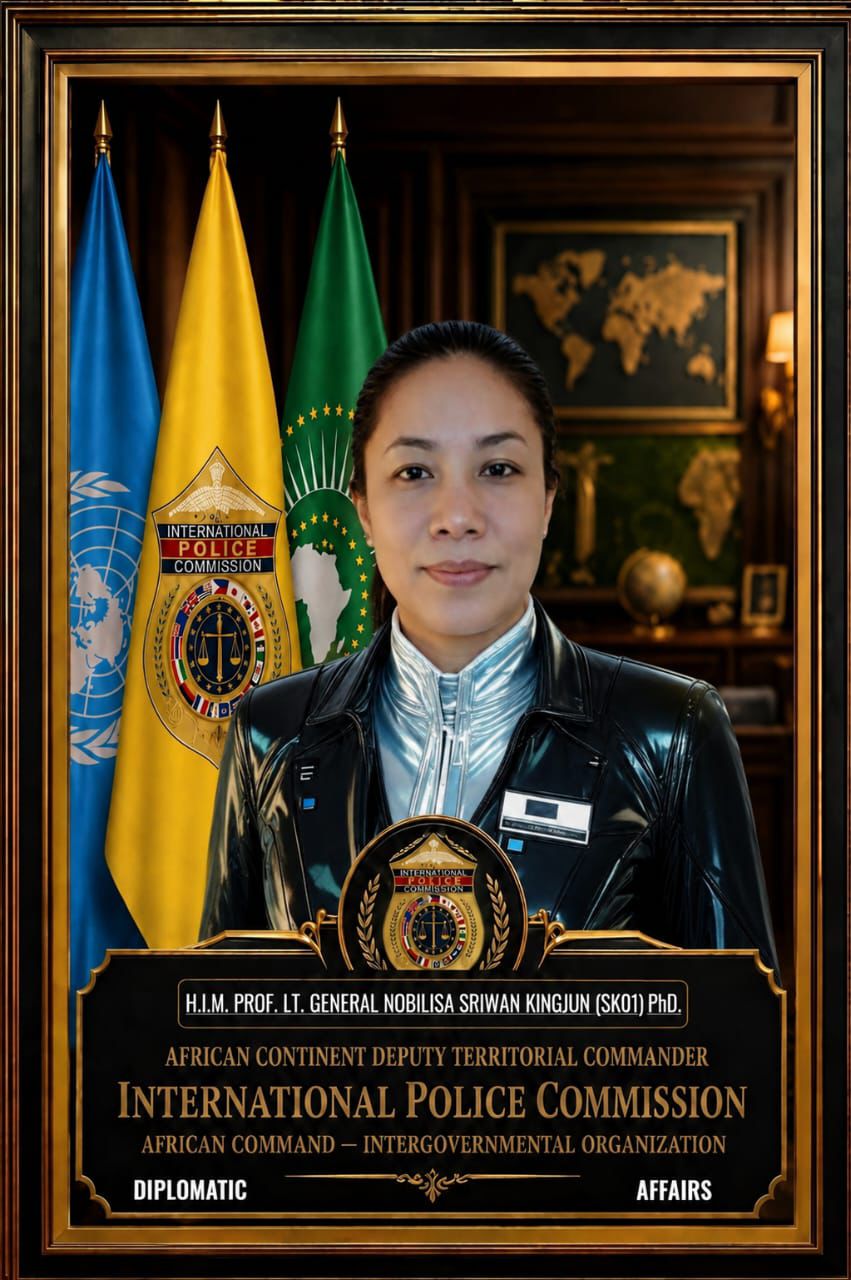
UKA Gears Up for Final ATC Exchangeability Test Run as June Preparations Begin.
May 30, 2026 – As the month of June gathers momentum, the *United Kingdom of Atlantis, UKA*, a sovereign nation has unveiled a series of vital guidelines and preparatory packages to ensure citizens and stakeholders run the *ATC Exchangeability* process effectively.
In an official update, the *President of Atlantic Crown Limited, Empress of Attica Empire UKA*, confirmed that the *Final Test Run of ATC Exchangeability* is scheduled for the month of June 2026. The exercise marks a key phase ahead of the *Official Exchangeability Window, set to run from July 2026 to February 2027*.
### Key Highlights from the Presidential Briefing
1. *Final Test Run – June 2026*
The test run is designed to validate systems, procedures, and user readiness before full activation. Citizens, partners, and designated participants are urged to follow all official advisories released by UKA authorities during this period.
2. *Official Exchangeability Period*
Following the successful completion of the June test run, the Official Exchangeability will commence in july 2026 and we are Expecting Full Exchange ability between July Ending, 2026 to February 2026.
UKA stated that detailed schedules, eligibility requirements, and step-by-step instructions will be communicated progressively through verified UKA channels.
3. *Benefiting Packages for June*
In line with UKA’s commitment to citizen empowerment, the month of June will feature “benefiting packages” aimed at education, preparation, and seamless onboarding. These packages are intended to equip the people of UKA with the knowledge and tools needed for effective participation.
4. *Commitment to Transparency*
Addressing the nation, the Empress of Attica Empire UKA emphasized:
_“Final Test Run of ATC Comes up in The Month of June, As We Prepare For The Official Exchangeability, Between July 2026 To Feb 2027. All Information Will Be Communicated.”_
UKA reaffirmed that only information released through official UKA platforms should be regarded as authoritative.
The United Kingdom of Atlantis is encouraging all citizens, representatives, and interested parties to remain alert to official communications, attend designated orientation sessions, and avoid unofficial sources. UKA’s dedication to order, clarity, and the collective benefit of its people as the nation moves into this significant phase.
For updates, advisories, and participation guidelines, citizens are advised to monitor official UKA communication channels.
United Kingdom of Atlantis, UKA, is a sovereign nation, committed to national development, citizen welfare, and structured economic participation through initiatives such as ATC Exchangeability.
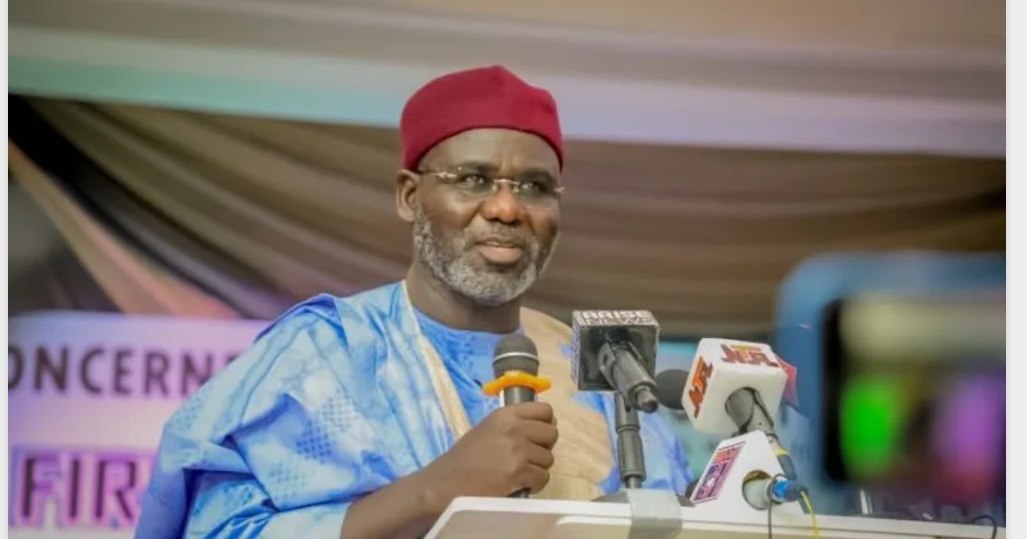
Three Years On, General Buratai Hails Tinubu’s Economic, Security Achievements
Former Chief of Army Staff, Lt. Gen. Tukur Buratai (retd.), has commended President Bola Ahmed Tinubu for what he described as bold economic reforms and improved security efforts as the President marks three years in office.
In a goodwill message on Thursday to commemorate Tinubu’s third anniversary as President and Commander-in-Chief of the Armed Forces, Buratai said the administration had taken courageous decisions that would leave a lasting impact on Nigeria’s development.

According to him, President Tinubu broke a long-standing cycle that had hindered national growth by removing fuel subsidy and implementing foreign exchange reforms aimed at stabilising the naira and strengthening the economy.
He noted that the reforms were beginning to yield positive results, citing the global acceptance of Nigerian debit cards, the gradual revival of local refineries, access to student loans, and ongoing road and infrastructure projects across the country.
“The FCT Administration has also recorded remarkable progress, completing major road projects that remained unfinished for over 16 years,” Buratai stated.
The former army chief also praised the administration’s security efforts, saying renewed military offensives against insurgents, terrorists and bandits had led to notable successes across various parts of the country.
He specifically lauded recent joint operations involving Nigerian and United States forces against Boko Haram and ISWAP in the North-East, as well as intensified counter-banditry operations in the North-West.
“We have seen notorious ISWAP commanders being neutralised. I congratulate the Commander-in-Chief, the Minister of Defence, the Chief of Defence Staff, the Service Chiefs, the Inspector-General of Police and heads of intelligence agencies for their efforts,” he said.
Buratai, however, acknowledged that challenges remained, stressing the need for more aggressive military operations and intelligence-driven strategies in the coming year.
While urging Nigerians to remain hopeful, he said celebrating the President’s achievements did not amount to ignoring the difficulties facing the nation.
“Because you truly care, you have shown the courage to trade short-term comfort for long-term hope. Nigerians need your reassurances, and that is why we remain optimistic and full of confidence,” he added.
The retired military officer reaffirmed his support for the Tinubu administration and expressed confidence that the foundation being laid by the government would deliver a brighter future for the country.
He also prayed for God’s guidance, wisdom, strength and good health for the President as he continues to lead Nigeria.
NUT Raises Alarm Over Continued Captivity of Abducted Oyo Pupils, Teachers
The Nigeria Union of Teachers has expressed deep concern over the continued captivity of pupils and teachers abducted during an attack on schools in the Ahoro-Esinle and Yawota communities in Oriire Local Government Area of Oyo State.
In a statement issued on Saturday, the Oyo State wing of the union described the situation as increasingly distressing, particularly following the emergence of a video allegedly released by the abductors showing the victims pleading for their freedom.
The union said the footage had heightened fears over the welfare of the abducted pupils and teachers, describing their ordeal as heartbreaking and unacceptable.

According to the NUT, no child or teacher deserves to be subjected to such traumatic experiences, adding that the prolonged captivity of the victims has continued to inflict psychological pain on their families, colleagues and the wider education community.
The union called on the Federal Government, Oyo State Government and relevant security agencies to intensify efforts towards securing the immediate and safe release of the victims.
“This is not a moment for hesitation. It is a moment for coordinated, intelligence-driven efforts to ensure the immediate and safe release of all abducted pupils and teachers,” the statement read.
While acknowledging ongoing interventions by security agencies and government authorities, the union stressed that time was of the essence, warning that every additional day in captivity deepens the trauma suffered by the victims.
The NUT urged security operatives to strengthen surveillance, improve community intelligence gathering and deploy all necessary operational and diplomatic measures to facilitate the rescue of the abductees.
It also appealed to traditional rulers, community leaders and residents to support rescue efforts by providing credible information that could assist security agencies.
“The safety of our children and teachers must remain a collective priority,” the union stated.
Reaffirming its support for the families of the victims, the NUT pledged continued solidarity and prayers while advocating safer learning environments across the country.
The statement was jointly signed by the Chairman of the Oyo State NUT, Comrade Hassan Ajibola Fatai, and the Secretary, Comrade Salami Olukayode.


- Afreximbank Deepens Commitment to Economic Progress in The Bahamas June 1, 2026
- African Electric Vehicle (EV) platform Spiro raises $215M in equity to scale electric mobility and energy infrastructure across Africa June 1, 2026
- Africa Centres for Disease Control and Prevention (Africa CDC) Statement on Attacks Against Health Facilities During the Bundibugyo Virus Disease Response in the Democratic Republic of the Congo June 1, 2026
- Putting consumers at the centre of Africa’s dairy transformation June 1, 2026
- International Rescue Committee (IRC) warns Democratic Republic of the Congo (DRC) Ebola outbreak likely far larger than official figures suggest June 1, 2026
- South Africa: Portfolio Committee on Health Marks National Cancer Survivor Day and Reaffirms Importance of Early Detection and Public Awareness June 1, 2026
- Rwanda’s RSSB Tigers Crowned 2026 Basketball Africa League Champions June 1, 2026
- Uganda: Appointments Committee Begins Vetting of Ministerial Nominees June 1, 2026
- Sudan braces for worsening child malnutrition as pre-harvest season starts June 1, 2026
- Etu Energias Strengthens Angolan Footprint, Returns to Angola Oil & Gas (AOG) 2026 as Champion Sponsor June 1, 2026
- Afreximbank Deepens Commitment to Economic Progress in The Bahamas June 1, 2026
- African Electric Vehicle (EV) platform Spiro raises $215M in equity to scale electric mobility and energy infrastructure across Africa June 1, 2026
- Africa Centres for Disease Control and Prevention (Africa CDC) Statement on Attacks Against Health Facilities During the Bundibugyo Virus Disease Response in the Democratic Republic of the Congo June 1, 2026
- Putting consumers at the centre of Africa’s dairy transformation June 1, 2026
- International Rescue Committee (IRC) warns Democratic Republic of the Congo (DRC) Ebola outbreak likely far larger than official figures suggest June 1, 2026
- South Africa: Portfolio Committee on Health Marks National Cancer Survivor Day and Reaffirms Importance of Early Detection and Public Awareness June 1, 2026
- Rwanda’s RSSB Tigers Crowned 2026 Basketball Africa League Champions June 1, 2026
-

 news6 months ago
WHO REALLY OWNS MONIEPOINT? The $290 Million Deal That Sold Nigeria’s Top Fintech to Foreign Interests
-

 society4 weeks ago
SOCIAL MEDIA IS NOT A BATTLEFIELD COMMAND – WHY THE NIGERIAN ARMY’S ACTION AGAINST JUSTICE CRACK IS A NATIONAL SECURITY IMPERATIVE
-

 celebrity radar - gossips4 months ago
Dr. Chris Okafor Returns with Power and Fire of the Spirit -Mounts Grace Nation Altar with Fresh Anointing and Restoration Grace on February 1, 2026
-

 celebrity radar - gossips6 months ago
Prophet Kingsley Aitafo Releases 2026 Prophecy: ‘Nigeria Will Rise, but the World Must Prepare for Turbulence’