
news
Senate rules: I’ve no hand in alteration — Ekweremadu


DEPUTY Senate President, Ike Ekweremadu, yesterday, dissociated himself from the amendment of the 8th Senate Standing Rules, saying he was no longer a senator when the rules were made.
Senator Ekweremadu spoke through his Special Adviser on Media, Uche Anichukwu, on a Ray Power Radio morning programme, tagged: “Political Platform”, where he responded to questions on the alleged forgery/amendment of the Senate Standing Rule, 2011.
He washed his hands off the allegation, saying at the time the said Senate Standing Rule/Order 2015 was made, he had ceased being the Deputy Senate President and so was no longer a principal officer to have contributed to the making of the document in question.
He said the making of a new Rule/Order for a new Senate or House was entirely the business of the National Assembly bureaucracy and asked those striving to frame him up to look elsewhere.

He said: “Let me just explain here that every National Assembly, that is every Senate or House has its Standing Rule/Order as every Standing Rule/Order normally has a life span of four years. So, if you go to the Office of the Clerk to the National Assembly now, you are likely to find Standing Rules/Orders of 1999, 2003, 2007, 2011 and the current 2015.
“From the point of the valedictory session of the 7th Senate on 4th June, Senator Ike Ekweremadu, Distinguished Senator David Mark and the rest of other members of the 7th Senate ceased to be senators until the 9th of June, when the 8th Senate was inaugurated; and as usually done, the new senators received new Standing Rule/Order 2015.
“The making of that 2015 edition of the Senate Rule/Order is the business of the bureaucracy of the National Assembly. What the 8th Senate can do, which its predecessors have sometimes done is to amend as suitable. And the process of the amendment is spelt out in the that document.
“So, if you say that the current Senate or Ekweremadu or whoever altered the Standing Rule that brought them to power, it is just like saying that former President Olusegun Obasanjo forged the 1999 Constitution upon which he was inaugurated as a president. You know it wasn’t his making and the governors that came that time too, it wasn’t their making. What happens is if Nigerians don’t like what is contained in the 1999 Constitution, they try to amend it. It’s the same with the Rules/Orders of the National Assembly. But you cannot even amend it until you are inaugurated as a Senator or Member. So, haven been inaugurated, anybody not comfortable with any part of the Standing Rule/Order 2015 upon which the Senate was inaugurated can follow the laid down procedure in the Rule within the lifespan of the Senate.
“So, you can see that what they call an amendment is a new document with a life of its own. It couldn’t have been done by any member of the 8th Senate. It is just impossible for it to have been made by Ekweremadu. I guess it is all politics”
Asked whether his principal did not work behind the scene to influence the alleged changes in the Senate Rule, Mr Anichukwu said: “How could he have worked behind the scene to amend it because from the 4th of June, when the 7thSenate ended, he ceased to be a senator, just like every other senator.
“You could remember that after the valedictory session on that day, Ekweremadu and Senator David Mark left without their usual official cars. That showed they were no longer senators or occupying their offices in the Senate. So, how could he have worked from behind the scene? And do not forget that even the main matter they are contesting is not Ekweremadu’s eligibility. They claim the old Rule for the 7th Senate prescribed open ballot in which you mention the name of the person you want to vote in as the Senate President or Deputy President of the Senate, while the Clerk to the National Assembly used the open secret ballot system in which your name is called, you are given a piece of paper to write down the name of your preferred candidate and drop in the box in the full glare of everyone and on live TV watched all over the world. No one has complained that the election was rigged. Even Senator Ali Ndume crossed over to Ekweremadu and gave him a very warm congratulatory embrace”
He explained further: “There is an important point I want to make here, how a new Senate or House is inaugurated is entirely the business of the National Assembly bureaucracy
“Remember that in the 6th Senate, Senator George Akume ran against Senator David Mark for the position of the Senate President. You would remember that some people said no, he was not qualified to run for that office going by the old Rule because he was a new Senator. But the then CNA, Mr. Ogunyomi, said no, ‘this is how I want to run it.”
When told that some people, especially from the opposition APC felt that his principal took a seat that rightly belonged to the APC, Mr Anichukwu said the seat did not belong to any political party.
He said: “Going by Section 50 (1) of the 1999 Constitution, that Office doesn’t belong to anybody or party. It belongs to Nigerians. That is why APC lawmakers became Speakers in Plateau and Benue State Assemblies last June even when the APC was in minority. By the way, are some people trying to tell Nigerians that if the PDP had won majority in the National Assembly, which is an independent arm of government, and head both chambers, the President Buhari Administration would cease to function?
vanguard


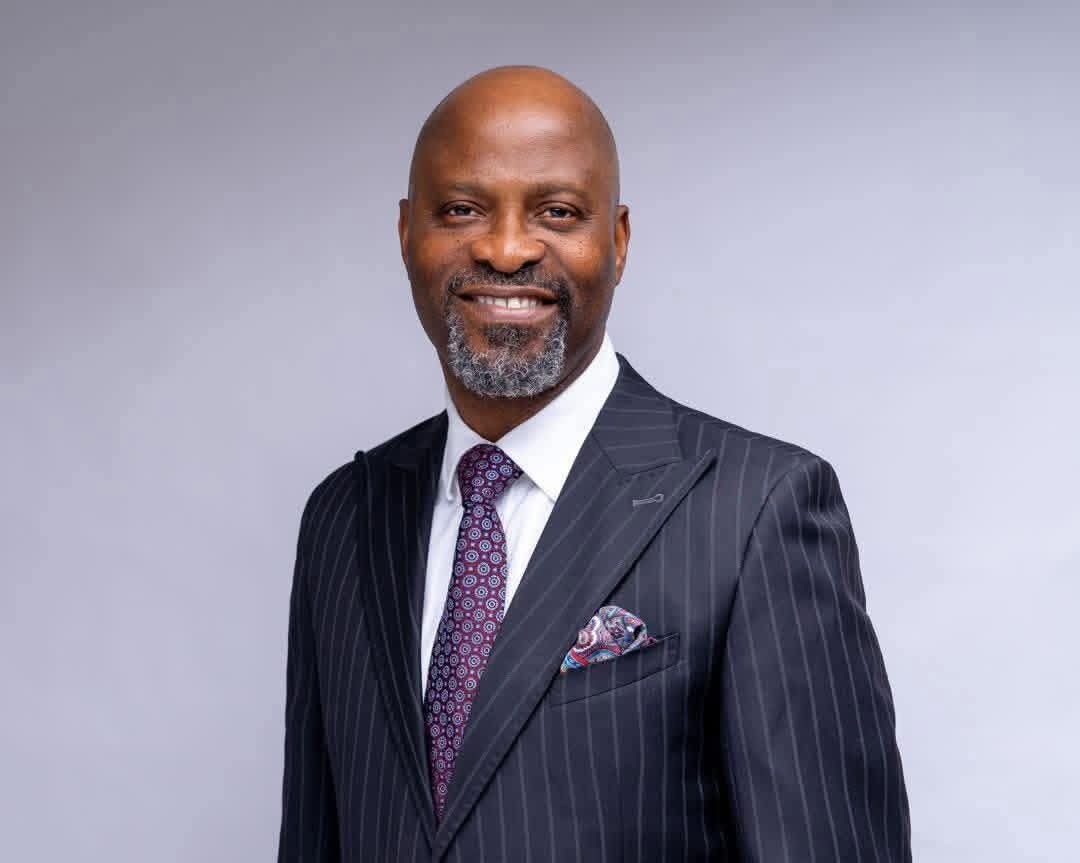

More than ₦3 billion was targeted, but about ₦677 million reached the culprits, with recovery and prosecutions underway, reflecting how banks are responding to more sophisticated fraud risks.
Nigeria’s expanding digital banking sector is facing increasingly sophisticated fraud attempts, as financial institutions adapt to faster transactions and broader online services.
A recent case involving First City Monument Bank (FCMB), linked to fraudulent activity detected in December 2025, has drawn attention to how banks are responding to such incidents, with a focus on limiting exposure, recovering funds and working with law enforcement.
According to findings referenced in proceedings before the Lagos State Special Offences Court, the incident involved unauthorised transactions tied to a digital product. Early reports erroneously suggested more than ₦3 billion was lost. Subsequent clarification shows that over ₦3 billion was targeted, ₦2.4 billion was blocked and recovered, while ₦677 million got into the possession of the culprits. This outcome reflects the bank’s cyber security and monitoring capabilities, as well as improved collaboration among regulated financial institutions and with law enforcement agencies. Several suspects and beneficiaries have been apprehended, while recovery and prosecution efforts are ongoing, led by the Economic and Financial Crimes Commission (EFCC).
Proceedings at the Lagos State Special Offences Court have resulted in convictions, including that of a repeat offender, with restitution orders issued. Related matters are also being handled at the Federal High Court in Lagos, where additional suspects are being tried in connection with the scheme. This process is aimed at ensuring that bad actors are identified and permanently blacklisted from the financial system.
Authorities say recovery efforts are continuing as additional funds are traced.
Analysts note that the pace of legal action reflects closer coordination between financial institutions and enforcement agencies in addressing cyber-related financial crime.
The case comes as banks contend with more complex fraud methods, including social engineering and automated exploitation of system processes.
As digital products and platforms expand, so too does the risk associated with cyber-crime and related fraud.
“The scale of digital banking means risks are evolving alongside the systems,” said a Lagos-based financial analyst. “Institutions are now judged by how they manage these events.”
Observers say the sector is moving toward a stronger focus on response and recovery, rather than prevention alone.
This includes improving monitoring capabilities, strengthening transaction controls and enhancing collaboration with regulators and law enforcement. The FCMB case, with limited exposure relative to the amount targeted and ongoing recovery, reflects that shift.
For customers, the primary concern is the safety of their funds. In this case, there has been no indication of losses affecting customer deposits. Maintaining that level of protection remains central to sustaining trust in the financial system.
Nigeria’s financial sector continues to grow, supported by digital innovation and expanding access to banking services.
However, analysts say fraud attempts are likely to persist as systems become more complex and interconnected.
They say institutions will increasingly be judged not only on their ability to prevent incidents, but on how effectively they respond and recover when they occur.
news
Ex-APC Deputy Guber flag bearer, Joshua MacIver backs Tinubu, express fears over implosion in Bayelsa APC
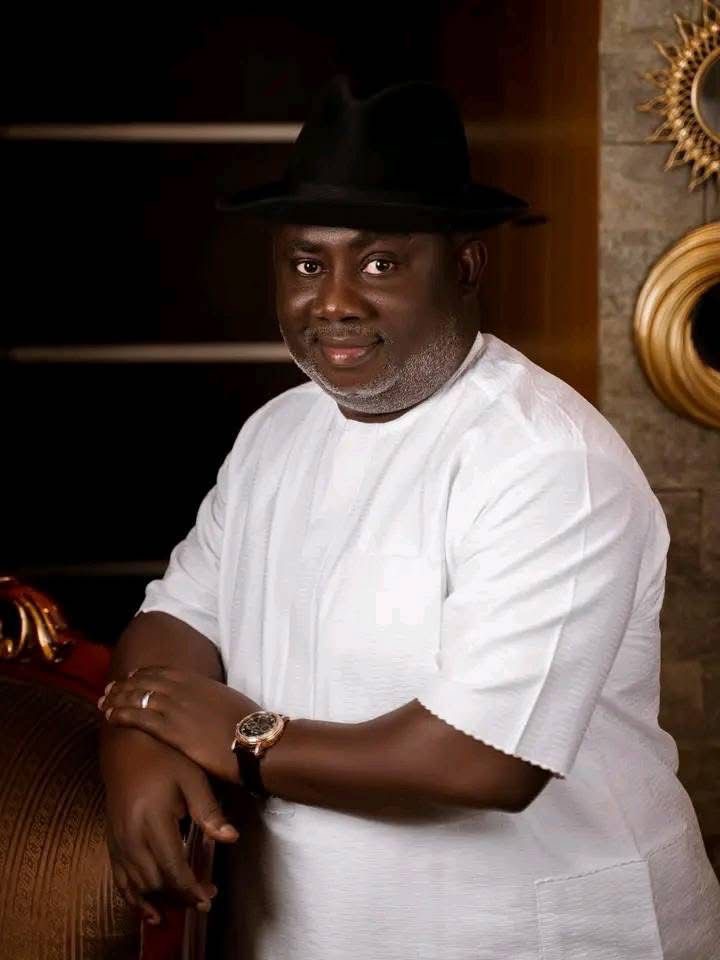
….congratulates new State Party Chairman, Warman Ogoriba
APC Deputy Governorship Candidate in the 2023 general elections in Bayelsa State, Great Joshua MacIver has declared his total commitment to the re-election of President Bola Tinubu come 2027, declaring that the Tinubu re-election project is non-negotiable.
Great Joshua MacIver, in his statement titled ” BAYELSA APC CONGRESSES: GOING FORWARD, A CALL TO LOOK INWARDS” and made available to newsmen in Yenagoa, warned APC leaders in the state to look Inward and take note of certain factors which may hinder or cut short our victory.
According to Great Joshua MacIver, such noticeable pitfalls include the imbalance in the united front being put up by the State Governor,Senator Douye Diri among various political blocs in the state.
In the statement issued at the weekend. Great Joshua MacIver stated that “First, before His Excellency, Senator Douye Diri, joined the APC in the state, there were clearly two political blocs that made up the party, with the approximate population ratios of the blocs standing at 95% to 5%.”
“After the entrance of His Excellency, Senator Douye Diri, ONLY THE SMALLER BLOC IS BEING CARRIED ALONG IN THE AFFAIRS OF THE PARTY, leaving the greater percentage to their fate, and this situation has the potential to build anger and dissatisfaction in our dear party.”
” The consequence of this has been the high level defection we have witnessed in the party recently and we believe more may likely follow, if we do not put our house in order.”
” If we do not pull together as a party, we may witness a situation where we will lose key stakeholders, especially after the State and National Assembly Primaries as well the Gubernatorial Primaries.”
“Finally, while it is very clear that we are the party to beat in the 2027 elections and that our loyalty to Mr. President IS NON-NEGOTIABLE, we must make haste to say that we cannot afford to create situations or loopholes in our unity which will be exploited by other political interests in the state. We cannot afford to under-rate anyone.”
“Our core interest remains the re-election of Mr. President, a project to which we have committed our all. We also pledge our total loyalty to the party as we have no alternative to the APC. However, our concern is that we must, as a party, look inwards and ensure that we do not create loopholes that can impede our common goal.”
Great Joshua MacIver, however congratulated the newly elected State Executives of the APC in Bayelsà State led by Hon. Warman Ogoriba, saying their emergence is welcomed at this critical time in our national history.


- Century Group Joins African Energy Week (AEW) 2026 as Floating Production Storage and Offloading (FPSO) Partner, Showcasing Regional Offshore Expansion April 10, 2026
- Climate Litigation Surge Reshapes Energy Policy as Africa Seeks Stronger Legal Voice April 10, 2026
- ES-KO Secures Five-Year Catering & Facilities Management Contract Renewal with TotalEnergies EP Congo April 10, 2026
- Beyond the Court: The Kalahari Conference Solidifies its Status as Africa’s Premier Sports & Lifestyle Destination April 10, 2026
- Africa Sports Unified Launches Pan-African Sports Deals Tracker to Improve Market Visibility and Decision-Making April 10, 2026
- Nigeria and Senegal Must Follow Ghana and Mozambique Against Exclusionary Practices April 10, 2026
- Sheraton Nouakchott marks the entry of Marriott International in Mauritania April 10, 2026
- Eritrea: Seminar to Nationals in Nairobi and Its Environs April 10, 2026
- African financial institutions call for coordinated financing solutions to unlock Africa’s digital transformation April 9, 2026
- African Energy Chamber (AEC) Supports Perenco Partnership to Advance Industry 4.0 Skills in Central Africa April 9, 2026
- Century Group Joins African Energy Week (AEW) 2026 as Floating Production Storage and Offloading (FPSO) Partner, Showcasing Regional Offshore Expansion April 10, 2026
- Climate Litigation Surge Reshapes Energy Policy as Africa Seeks Stronger Legal Voice April 10, 2026
- ES-KO Secures Five-Year Catering & Facilities Management Contract Renewal with TotalEnergies EP Congo April 10, 2026
- Beyond the Court: The Kalahari Conference Solidifies its Status as Africa’s Premier Sports & Lifestyle Destination April 10, 2026
- Africa Sports Unified Launches Pan-African Sports Deals Tracker to Improve Market Visibility and Decision-Making April 10, 2026
- Nigeria and Senegal Must Follow Ghana and Mozambique Against Exclusionary Practices April 10, 2026
- Sheraton Nouakchott marks the entry of Marriott International in Mauritania April 10, 2026
-

 news4 months ago
WHO REALLY OWNS MONIEPOINT? The $290 Million Deal That Sold Nigeria’s Top Fintech to Foreign Interests
-

 society7 months ago
“You Are Never Without Help” – Pastor Gebhardt Berndt Inspires Hope Through Empower Church (Video)
-

 celebrity radar - gossips2 months ago
Dr. Chris Okafor Returns with Power and Fire of the Spirit -Mounts Grace Nation Altar with Fresh Anointing and Restoration Grace on February 1, 2026
-

 celebrity radar - gossips4 months ago
Prophet Kingsley Aitafo Releases 2026 Prophecy: ‘Nigeria Will Rise, but the World Must Prepare for Turbulence’
You must be logged in to post a comment Login
You must log in to post a comment.