
society
Showcasing Astronomic Achievements of Nigeria’s Most Sought-After Actress, Amandla Ebeye


Showcasing Astronomic Achievements of Nigeria’s Most Sought-After Actress, Amandla Ebeye
Amandla Ebeye is a superb actress who has redefined the Nollywood industry. She is very active in all characters presented to her. Today, she stands tall as one of the most quintessential and dynamic movie stars in Nigeria. Managed by CMC Media led by Africa’s Most Prolific P.R.& Media Strategist Amb. Cornell Udofia who has a track Record in Promoting and managing super stars both in Nigeria and the Diaspora, this lady is flying very high, representing the Nigerian brand and performing expertly in her line of duty.
To be factual, Amandla Ebeye is from Ika Local Government Agbor Delta State and she commenced her career as a model due to her beauty and structure which every modeling agency admired. This was in the year 2006. The journey to prominence started right in front of her mother’s shop in Benin, Albridal by a modeling agency named Apple House.
What a fantastic lady and very gorgeous in all ramifications, Amandla has inspired quite a lot of Nigerian young girls to be focused on their careers and maintain very high standards of living. She is gradually stepping into the steps of the likes of Monalisa Chinda, Genevieve Nnaji and others and she is even there in their level.
A graduate of the prestigious Benson Idahosa University where she came out in flying colours, making the best of results in International Studies and Diplomacy, Amandla remains one of the very few educated actresses Nigeria can boast of.
As someone who knows what she wants for her life, Amandla left Benin, Edo State to Lagos for greener pastures and thank God, her dreams and desires came through. She became the face of Brands like United Bank of Africa, Unity Bank, Calypso, Etisalat, just to mention a few, working with Apple House.
As a very rugged and committed girl, Amandla began to seek acting jobs and was Introduced to the National Theatre in Iganmu Lagos where she met her best friend and business partner till date Aret Edet.
Aret Edet is another serious personality who wants the best for herself. She immediately ensured that they both attended auditions together and usually were always picked. This is due to the artistic prowess they were blessed with. Amandla saw this as an opportunity to kick-start a career that will take her to the greatest height in Nollywood.
This lovely actress took all her time to concentrate on making the best of whatever character was presented to her in every script she was cast in and till date, sha remains one of the most responsible female actors in Nigeria.
It was in one of the auditions Amandla encountered Charles Inojie who was directing a movie she was cast in.
Charles Inojie advised Amandla to keep coming for auditions because she was very talented.
Amandla’s first movie ever was a movie called “Weeping Tiger” directed by Valuchi and after that Amandla did some other movies before she clinched the role of Nurse Abigail in Paul Igwe’s Clinic matters which was life changing for the actress as she was the most loved in the sitcom.
The attention became so much and she was stopped everywhere as she was greatly loved.
Amandla Ebeye exited the sitcom after 39 episodes due to some disagreements with timing between herself and the director.
Amandla also left for Ghana to feature in Ifeanyi Onyeabor’s hit film tribe which earned her a best actress nomination at the NAFCA awards USA.
After that Amandla became unstoppable, she starred in “Governor’s babe” a movie produced by Uche Mbunabo and this earned her a best New actress nomination at the ZAFFAA awards UK.
Amandla was also nominated for The Nigerian Entertainment award USA, Best of Nollywood Awards, City people award. Amandla won the Classic media merit awards CAMA and Garden city Fashion awards.
Amandla went on to star in so many TV series like Super story, This life, Extended family and also did movies like Promise beyond, Tribe just to mention a few.
In 2016 Amandla birthed her first son in Canada Chukwunyem.
In 2018 She graduated as a director From Trebas Film Institute Canada and Produced a short film Horros which she starred in with her Son. Same 2018 she produced and partly directed the sitcom “It’s a crazy world”. This movie went on to be the number one series on Netflix Nigeria for 11 consecutive weeks and it also did well on Silverbird, TVC, NTA.
Amandla also had great support from Ifunaya Obiakor of Dano Milk who sponsored It’s a crazy world.
Amandla also produced and partly directed the series 30s single and bored which premiered on an African magic showcase.
As Amandla continued to grow older in life she rediscovered and re-invented herself in so many ways. One of which was changing the latin name Amanda to an African name, Amandla. Amandla chose the name Amandla because not only was it closer to her former name Amanda, it was also a chant spoken by a person she has always admired and looked up to as a Model, Nelson Mandela.
Amandla is a Xhosa word meaning power. Amandla is pro-African and believes strongly that our culture and identity should remain with us and strongly imbedded in our children no matter the part of the world we find ourselves.
On October 5th 2021 Amandla got married to her cousin Godwin’s best friend whom the family lost in 2020 in a ghastly car accident. The pain of losing her cousin and the pain of her husband losing his best friend brought both closer and both got married at quiet registry wedding in Ikoyi Nigeria.
Amandla and her spouse welcomed their Second son Oje on April 7th of 2024. April 20th 2025 Amandla launched her own YouTube channel which she hopes would be a strong platform to showcase her work and also enlighten and teach young girls the importance of loving themselves. In her own words: “I grew up believing everything black was inferior and everything white was top notch and authentic. We cannot let our children think that way. From cradle, they need to understand how great they are and that when they walk in a room they must command that space. If I am able to teach the kids right, things like bleaching their skin would be a thing that will never happen in their generation, wigs might gradually stop being a major investment. My platform I would use to teach the truth. Life is short, June 30th 2024 I lost my brother in law and my best friend. Life became very gloomy, all my plans and my purpose began to gradually fade. I decided to wake myself up and re-educate myself about my purpose on Earth”, concluded the multiple awards winning actress,
Amandla.
Amandla has performed wonderfully in movies such as Finding Odera (2023), Odera
Seeking Solace (2022) – Alice Omotola, The Other Side (2021), Teni
It’s a Crazy World (2020 TV Series), Melekwe
Inbred (2018) – Calista
It’s Her Day [9] (2016) , Nancy, Tongue (2014) , Florence
100% Secret (2012)[10] , Tarris, Bursting Out (2010) – Ugochi
Heat of the Moment (2009), Rita, Clinic Matter (2009)
Dangerous Angels as Carol
The Pastor’s Daughter
Desire (2008), Janet
My Last Wedding (2009) – Juliet, Super Story (More than a friend, 2008)
Weeping Tiger (2007), Joy
Keep my Love
Super Story (Blast from past, 2007), Tales of Women, The Evil Seed
Agwonma: The Unbreakable Egg, Sorrowful Heart (with Ebube Nwagbo and Yul Edochie)
Everyday People (TV series), Indecent Lover and more.
In all these magnificent movies, Amandla displayed the highest level of professionalism in acting and artistry. Definitely, she is a blessing to the Nigerian cum African entertainment industries.





Police Officers Detained as Family Property Dispute Sparks Demolition Controversy in Lagos
By Ifeoma Ikem
A property dispute within the Omotayo-Ojo family has taken a dramatic turn following a controversial demolition exercise at a residential building in Ikosi-Ketu, Lagos State, which reportedly left tenants displaced and led to the detention of some police officers allegedly involved in the operation.

The property, located at 23B Loveall Street, Ikosi-Ketu, has been the subject of a prolonged ownership tussle since the death of its owner, Chief Oludola Omotayo Ojo, the Babaalaje of Imesi-Ile, Osun State, in 2019.
Residents said tension erupted when a group of individuals, accompanied by security operatives, stormed the premises and commenced demolition activities.
According to eyewitnesses, portions of the building were pulled down while tenants rushed to salvage their belongings from affected apartments.
The residents alleged that windows, doors and roofing sheets were damaged during the exercise, exposing parts of the building to the elements and causing significant losses to occupants.
At the centre of the dispute is Mrs Mojisola Omotayo Ojo Alolagbe, who claimed that the property was allocated to her by her late father during his lifetime as a source of financial support.
She alleged that some family members had persistently challenged her ownership claim despite ongoing legal proceedings relating to the administration of the deceased’s estate.
Alolagbe further claimed that the latest incident was part of a series of attempts to wrest control of the property, citing previous cases of alleged vandalism and partial demolition in November 2025, January 2026 and February 2026.
The situation escalated further when reports emerged that police officers allegedly involved in the demolition were later apprehended and conveyed in a Black Maria vehicle over questions surrounding the legality of their participation in the operation.
Sources familiar with the matter said those behind the demolition had initially claimed to be acting on approval from the Lagos State Ministry of Lands. However, the authenticity and extent of such approval could not be independently verified as of the time of filing this report.
The development has generated concern among residents and community members, who questioned the involvement of security personnel in what they described as a civil matter.
Some tenants, who said they had recently renewed their tenancy agreements, lamented the destruction of their property and appealed to the authorities for protection and possible compensation.

They also called for a thorough investigation into the circumstances surrounding the demolition, insisting that the rights of all parties involved should be protected.
Stakeholders have urged the Lagos State Government, security agencies and the judiciary to intervene and ensure that the dispute is resolved through lawful means to prevent further escalation.
The controversy has continued to draw public attention, raising concerns over property rights, estate administration and the role of law enforcement agencies in civil disputes.

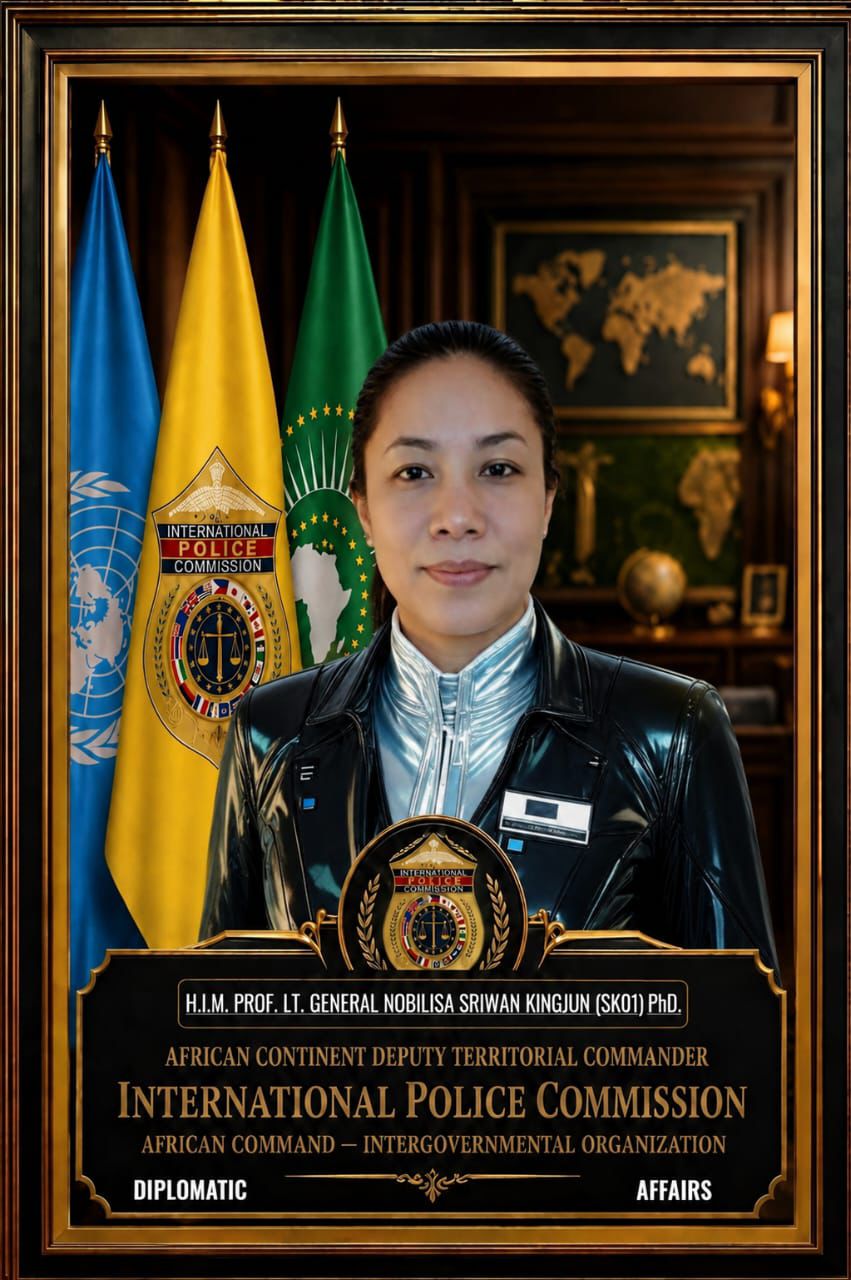
UKA Gears Up for Final ATC Exchangeability Test Run as June Preparations Begin.
May 30, 2026 – As the month of June gathers momentum, the *United Kingdom of Atlantis, UKA*, a sovereign nation has unveiled a series of vital guidelines and preparatory packages to ensure citizens and stakeholders run the *ATC Exchangeability* process effectively.
In an official update, the *President of Atlantic Crown Limited, Empress of Attica Empire UKA*, confirmed that the *Final Test Run of ATC Exchangeability* is scheduled for the month of June 2026. The exercise marks a key phase ahead of the *Official Exchangeability Window, set to run from July 2026 to February 2027*.
### Key Highlights from the Presidential Briefing
1. *Final Test Run – June 2026*
The test run is designed to validate systems, procedures, and user readiness before full activation. Citizens, partners, and designated participants are urged to follow all official advisories released by UKA authorities during this period.
2. *Official Exchangeability Period*
Following the successful completion of the June test run, the Official Exchangeability will commence in july 2026 and we are Expecting Full Exchange ability between July Ending, 2026 to February 2026.
UKA stated that detailed schedules, eligibility requirements, and step-by-step instructions will be communicated progressively through verified UKA channels.
3. *Benefiting Packages for June*
In line with UKA’s commitment to citizen empowerment, the month of June will feature “benefiting packages” aimed at education, preparation, and seamless onboarding. These packages are intended to equip the people of UKA with the knowledge and tools needed for effective participation.
4. *Commitment to Transparency*
Addressing the nation, the Empress of Attica Empire UKA emphasized:
_“Final Test Run of ATC Comes up in The Month of June, As We Prepare For The Official Exchangeability, Between July 2026 To Feb 2027. All Information Will Be Communicated.”_
UKA reaffirmed that only information released through official UKA platforms should be regarded as authoritative.
The United Kingdom of Atlantis is encouraging all citizens, representatives, and interested parties to remain alert to official communications, attend designated orientation sessions, and avoid unofficial sources. UKA’s dedication to order, clarity, and the collective benefit of its people as the nation moves into this significant phase.
For updates, advisories, and participation guidelines, citizens are advised to monitor official UKA communication channels.
United Kingdom of Atlantis, UKA, is a sovereign nation, committed to national development, citizen welfare, and structured economic participation through initiatives such as ATC Exchangeability.
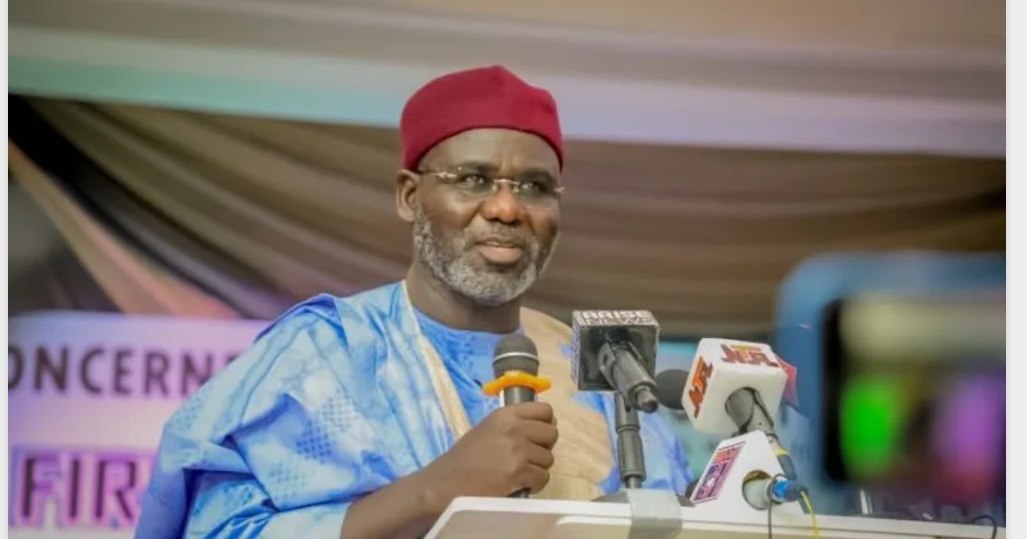
Three Years On, General Buratai Hails Tinubu’s Economic, Security Achievements
Former Chief of Army Staff, Lt. Gen. Tukur Buratai (retd.), has commended President Bola Ahmed Tinubu for what he described as bold economic reforms and improved security efforts as the President marks three years in office.
In a goodwill message on Thursday to commemorate Tinubu’s third anniversary as President and Commander-in-Chief of the Armed Forces, Buratai said the administration had taken courageous decisions that would leave a lasting impact on Nigeria’s development.

According to him, President Tinubu broke a long-standing cycle that had hindered national growth by removing fuel subsidy and implementing foreign exchange reforms aimed at stabilising the naira and strengthening the economy.
He noted that the reforms were beginning to yield positive results, citing the global acceptance of Nigerian debit cards, the gradual revival of local refineries, access to student loans, and ongoing road and infrastructure projects across the country.
“The FCT Administration has also recorded remarkable progress, completing major road projects that remained unfinished for over 16 years,” Buratai stated.
The former army chief also praised the administration’s security efforts, saying renewed military offensives against insurgents, terrorists and bandits had led to notable successes across various parts of the country.
He specifically lauded recent joint operations involving Nigerian and United States forces against Boko Haram and ISWAP in the North-East, as well as intensified counter-banditry operations in the North-West.
“We have seen notorious ISWAP commanders being neutralised. I congratulate the Commander-in-Chief, the Minister of Defence, the Chief of Defence Staff, the Service Chiefs, the Inspector-General of Police and heads of intelligence agencies for their efforts,” he said.
Buratai, however, acknowledged that challenges remained, stressing the need for more aggressive military operations and intelligence-driven strategies in the coming year.
While urging Nigerians to remain hopeful, he said celebrating the President’s achievements did not amount to ignoring the difficulties facing the nation.
“Because you truly care, you have shown the courage to trade short-term comfort for long-term hope. Nigerians need your reassurances, and that is why we remain optimistic and full of confidence,” he added.
The retired military officer reaffirmed his support for the Tinubu administration and expressed confidence that the foundation being laid by the government would deliver a brighter future for the country.
He also prayed for God’s guidance, wisdom, strength and good health for the President as he continues to lead Nigeria.


- Africa: UNAIDS calls for renewed global solidarity as UN Secretary-General’s report warns that AIDS is not over and fragile gains are at risk June 4, 2026
- Eritrea: Vocational training provided to college students June 4, 2026
- World Bank Group Launches Ten-Year Strategy to Drive Jobs and Prosperity in Uganda June 4, 2026
- Prof Oramah’s appointments to the Royal African Society Patronage and Kenya’s National Infrastructure Fund herald continued recognition of his global leadership and pan-African impact June 4, 2026
- Africa Finance Corporation Raises Record US$2 Billion Syndicated Loan in Landmark Show of Confidence in Transformational Infrastructure Strategy June 4, 2026
- Libya Energy & Economic Summit (LEES) 2027 to Define Libya’s Next Phase of Energy Expansion in Tripoli June 4, 2026
- Uganda: President delivers State of the Nation Address today June 4, 2026
- United Nations High Commissioner for Refugees (UNHCR): Refugees in Eastern and Southern Africa remain in exile for nearly 16 years June 4, 2026
- 85% of Ministry of Food and Agriculture's (MoFA) 2026 Budget Released to Boost Food Production — Deputy Finance Minister June 4, 2026
- Deputy (Dep.) Finance Minister Courts Investors to Transform Ghana’s rice Economy June 4, 2026
- Africa: UNAIDS calls for renewed global solidarity as UN Secretary-General’s report warns that AIDS is not over and fragile gains are at risk June 4, 2026
- Eritrea: Vocational training provided to college students June 4, 2026
- World Bank Group Launches Ten-Year Strategy to Drive Jobs and Prosperity in Uganda June 4, 2026
- Prof Oramah’s appointments to the Royal African Society Patronage and Kenya’s National Infrastructure Fund herald continued recognition of his global leadership and pan-African impact June 4, 2026
- Africa Finance Corporation Raises Record US$2 Billion Syndicated Loan in Landmark Show of Confidence in Transformational Infrastructure Strategy June 4, 2026
- Libya Energy & Economic Summit (LEES) 2027 to Define Libya’s Next Phase of Energy Expansion in Tripoli June 4, 2026
- Uganda: President delivers State of the Nation Address today June 4, 2026
-

 news6 months ago
WHO REALLY OWNS MONIEPOINT? The $290 Million Deal That Sold Nigeria’s Top Fintech to Foreign Interests
-

 society1 month ago
SOCIAL MEDIA IS NOT A BATTLEFIELD COMMAND – WHY THE NIGERIAN ARMY’S ACTION AGAINST JUSTICE CRACK IS A NATIONAL SECURITY IMPERATIVE
-

 celebrity radar - gossips4 months ago
Dr. Chris Okafor Returns with Power and Fire of the Spirit -Mounts Grace Nation Altar with Fresh Anointing and Restoration Grace on February 1, 2026
-

 celebrity radar - gossips6 months ago
Prophet Kingsley Aitafo Releases 2026 Prophecy: ‘Nigeria Will Rise, but the World Must Prepare for Turbulence’