
society
South Africa’s Sovereign Stand: Defending Deportation of Kenyan Nationals and Rebuking U.S. Allegations

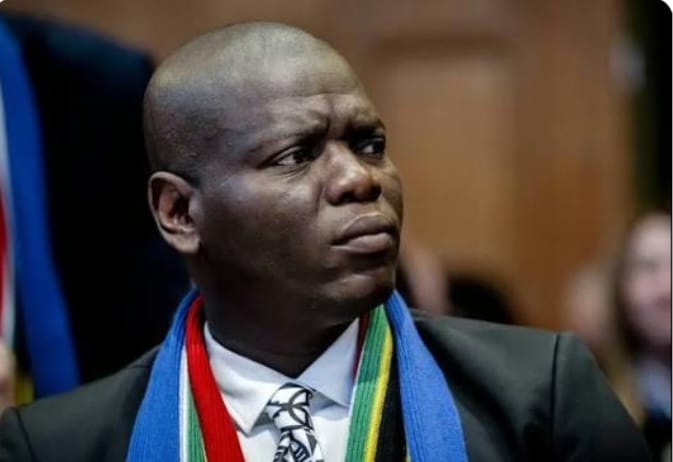
South Africa’s Sovereign Stand: Defending Deportation of Kenyan Nationals and Rebuking U.S. Allegations.
By George Omagbemi Sylvester | Published by SaharaWeeklyNG.com
In a world where national sovereignty increasingly collides with global geopolitical muscle-flexing, South Africa’s recent deportation of seven Kenyan nationals (and its rebuff of allegations emanating from the United States) stands as a defining moment in African statecraft. The incidents have not only ignited diplomatic tensions between Pretoria and Washington, but they have also exposed the fault lines of immigration sovereignty, foreign interventionism, and the rule of law in international relations.
The uproar centers on South Africa’s lawful arrest and deportation of seven Kenyan nationals who were found working without valid permits at an immigration application centre in Johannesburg. The facility was linked to the processing of refugee applications for the United States (particularly for white South Africans under a controversial U.S. resettlement programme) and has since become the fulcrum of a diplomatic dispute.

A Lawful Enforcement Action Met With Foreign Accusation. On 16 December 2025, in an intelligence-driven operation, South Africa’s Department of Home Affairs (DHA), in cooperation with law enforcement partners, raided an immigration processing centre in Johannesburg where seven Kenyan nationals were found engaging in work while holding tourist visas. According to official statements, these individuals had previously applied for lawful work permits (requests that had been denied) yet continued to work in violation of the terms of entry into the country.
Home Affairs Minister Leon Schreiber later confirmed that the seven were issued deportation orders and banned from re-entry into South Africa for five years. He emphasised that the operation was conducted in strict compliance with South African immigration laws and that no United States officials were arrested during the process, which did not take place on a diplomatic site.
Yet, the United States (through statements issued by the U.S. State Department) accused South African authorities of detaining American personnel and unlawfully publicising personal information of U.S. officials. Washington cautioned that failure to hold those responsible to account could lead to “SEVERE CONSEQUENCES.”
South Africa has categorically rejected these allegations.
In a statement issued by the Ministry of International Relations and Cooperation (DIRCO), Pretoria labelled the suggestion of data exposure or harassment of U.S. officials as unfounded and devoid of credible evidence. The government reiterated that matters of data security are treated with “UTMOST SERIOUSNESS” and governed by established legal and diplomatic protocols. It underscored its commitment to principled diplomacy grounded in mutual respect and factual dialogue.
Sovereignty and the Rule of Law: Defending. Constitutional Mandates
South Africa’s position is not merely a defensive posture; it is an assertive declaration of state sovereignty and adherence to its legal framework. As DIRCO’s official statement put it, “The government will not negotiate its sovereignty and the implementation of the rule of law.”
This declaration resonates with foundational principles of international law. Sovereignty (the absolute authority of a state to govern its territory and enforce its laws) is a bedrock norm recognised universally. South Africa’s enforcement of its immigration statutes, particularly concerning who may work within its borders and under what conditions, is a legitimate exercise of that sovereign authority.
Professor Steven Friedman, a respected South African political analyst, argues:

“A sovereign state must, at all times, uphold the primacy of its laws. No amount of external pressure (even from powerful allies) should compromise that obligation.”
Furthermore, immigration violations are not trivial administrative infractions. They concern questions of national security, labour regulation, public order, and fairness in the administration of visas and permits. South African law (like that of other sovereign states) stipulates that work without a permit is a prosecutable offence, irrespective of the employer or perceived humanitarian objectives of foreign entities.
Foreign Programmes and Uneasy Diplomatic Terrain. The controversy is exacerbated by the highly politicised backdrop of the U.S. refugee programme at the centre of this incident. Under the administration of President Donald Trump, the United States dramatically reshaped its refugee policy, instituting a low cap on global admissions and prioritising special arrangements for white South Africans who claim racial persecution under domestic policies like Black Economic Empowerment. These claims have been widely disputed both within South Africa and by international legal scholars.
In legally robust terms, South Africa does not recognise white South Africans as refugees and a category reserved for those who face persecution based on race, religion, nationality, political opinion, or membership in a particular social group, as defined under the 1951 UN Refugee Convention. No credible evidence supports claims of state-sanctioned persecution of white citizens.
Dr. Michael Schmidt, a scholar of international refugee law, states:
“A host state must not become complicit in the redefinition of persecution criteria for political convenience. Refugee status is a legal category and not a political bargaining chip.”
The fact that the centre in question was engaged in processing such applications (and that foreign workers were present without proper authorisation) raised legitimate concerns for South African authorities about the legality and diplomatic propriety of the operation.
Diplomatic Engagement: Rejecting Threats, Embracing Dialogue. Despite the tension, South Africa has not shut the door on diplomacy. DIRCO has asserted that it has engaged the United States through official channels to clarify the allegations and to ensure that future interactions respect both countries’ legal frameworks and mutual interests.
In the words of Ambassador Ebrahim Rasool, South Africa’s Permanent Representative to the United Nations:
“Diplomacy is not conducted through threats or unilateral declarations. It requires dialogue rooted in facts, mutual understanding, and respect for sovereign law.”
This approach reflects a mature understanding of statecraft. South Africa is neither isolationist nor adversarial by default, but it will push back against narratives that compromise its legal autonomy.
Contextualising the U.S. Response. The United States’ sharp reaction (including threats of “severe consequences”) stems from multiple sources. Washington is sensitive to perceived challenges to its global leadership, especially where humanitarian or refugee programmes are involved. Moreover, the political utility of the Afrikaner refugee narrative within certain U.S. domestic constituencies has amplified tensions. However, diplomacy that favours ideological narratives over legal realities cannot withstand scrutiny in the global arena.
Renowned international law expert Professor Fatima Hussain encapsulates the issue succinctly:
“International cooperation cannot thrive on the assumption that might makes right. Respect for legal norms must transcend political posturing.”
Sovereignty on Trial: A Landmark Moment for Principle and Law. South Africa’s handling of the deportation of Kenyan nationals (and its decisive rejection of unfounded allegations) serves as a reminder that the rule of law cannot be subordinated to geopolitical pressure. In an era where powerful nations often wield influence over weaker states, Pretoria’s forthright stance affirms that sovereignty and legal order remain paramount.
More than an immigration enforcement action, this episode is a litmus test of the principles that underpin just international relations. It calls on African nations (and indeed all states) to defend legal sovereignty, resist external coercion, and uphold dignity in diplomatic engagement.
As the dust settles, the conversation must move beyond partisan headlines and confront the substantive issues at stake: legitimate law enforcement, respect for sovereign borders, and an international system governed not by unilateral threats, but by shared commitment to law, order, and mutual respect.





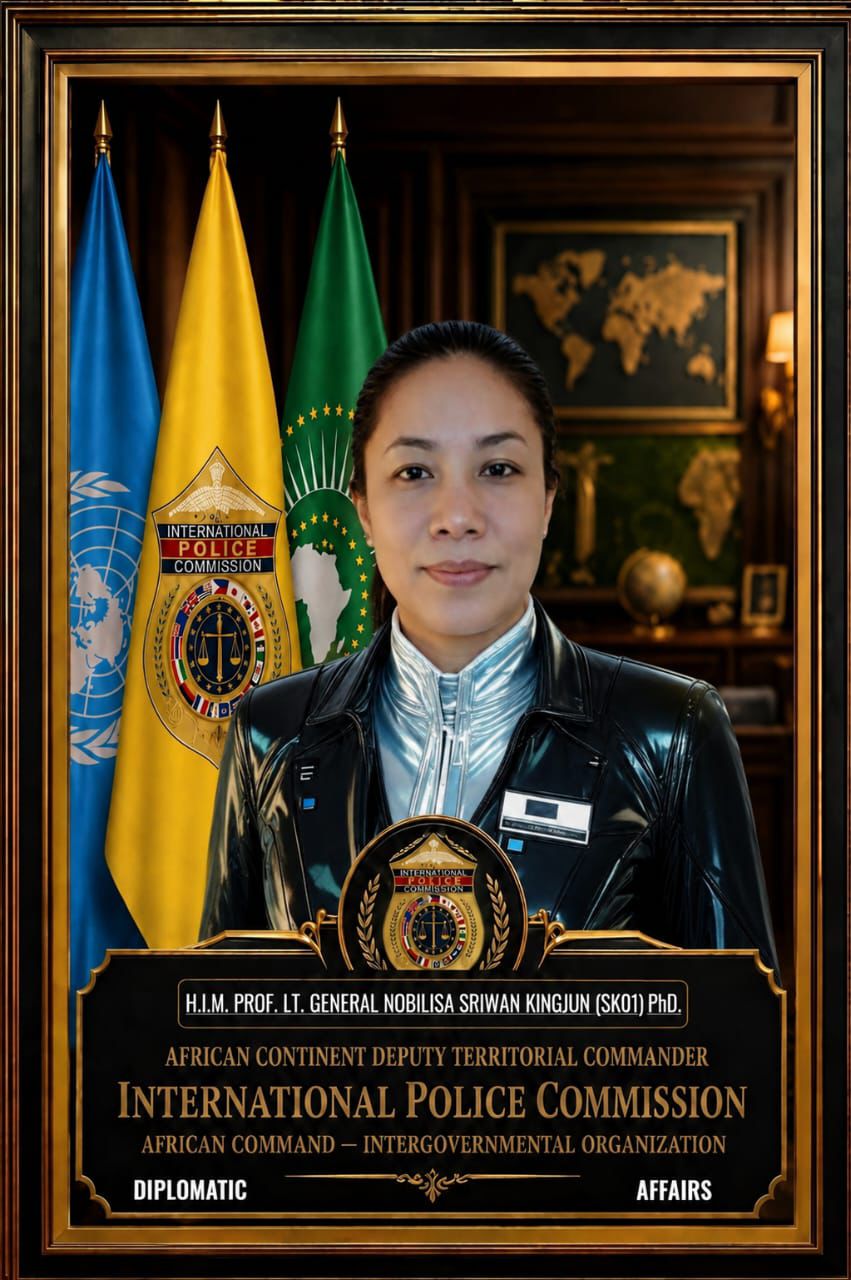
UKA Gears Up for Final ATC Exchangeability Test Run as June Preparations Begin.
May 30, 2026 – As the month of June gathers momentum, the *United Kingdom of Atlantis, UKA*, a sovereign nation has unveiled a series of vital guidelines and preparatory packages to ensure citizens and stakeholders run the *ATC Exchangeability* process effectively.
In an official update, the *President of Atlantic Crown Limited, Empress of Attica Empire UKA*, confirmed that the *Final Test Run of ATC Exchangeability* is scheduled for the month of June 2026. The exercise marks a key phase ahead of the *Official Exchangeability Window, set to run from July 2026 to February 2027*.
### Key Highlights from the Presidential Briefing
1. *Final Test Run – June 2026*
The test run is designed to validate systems, procedures, and user readiness before full activation. Citizens, partners, and designated participants are urged to follow all official advisories released by UKA authorities during this period.
2. *Official Exchangeability Period*
Following the successful completion of the June test run, the Official Exchangeability will commence in july 2026 and we are Expecting Full Exchange ability between July Ending, 2026 to February 2026.
UKA stated that detailed schedules, eligibility requirements, and step-by-step instructions will be communicated progressively through verified UKA channels.
3. *Benefiting Packages for June*
In line with UKA’s commitment to citizen empowerment, the month of June will feature “benefiting packages” aimed at education, preparation, and seamless onboarding. These packages are intended to equip the people of UKA with the knowledge and tools needed for effective participation.
4. *Commitment to Transparency*
Addressing the nation, the Empress of Attica Empire UKA emphasized:
_“Final Test Run of ATC Comes up in The Month of June, As We Prepare For The Official Exchangeability, Between July 2026 To Feb 2027. All Information Will Be Communicated.”_
UKA reaffirmed that only information released through official UKA platforms should be regarded as authoritative.
The United Kingdom of Atlantis is encouraging all citizens, representatives, and interested parties to remain alert to official communications, attend designated orientation sessions, and avoid unofficial sources. UKA’s dedication to order, clarity, and the collective benefit of its people as the nation moves into this significant phase.
For updates, advisories, and participation guidelines, citizens are advised to monitor official UKA communication channels.
United Kingdom of Atlantis, UKA, is a sovereign nation, committed to national development, citizen welfare, and structured economic participation through initiatives such as ATC Exchangeability.
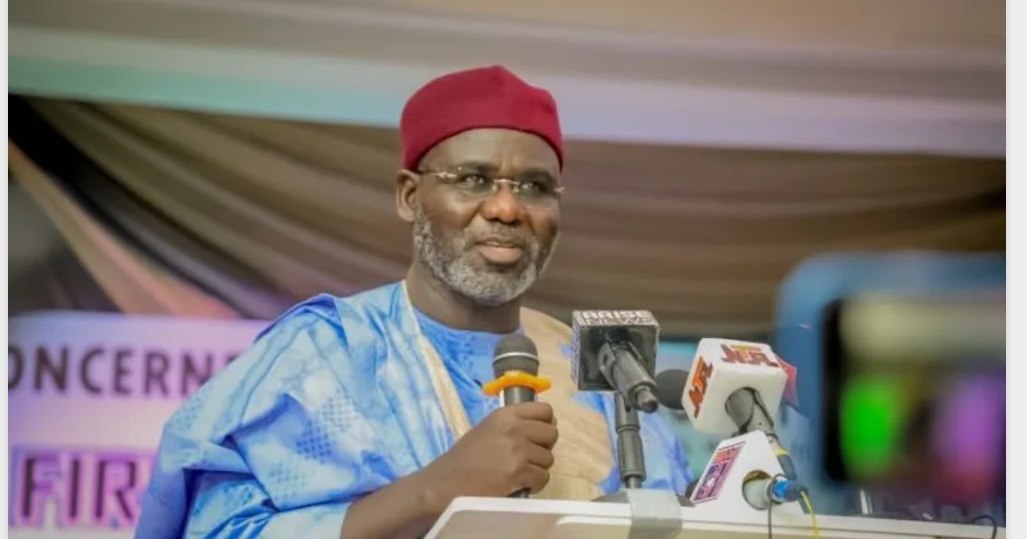
Three Years On, General Buratai Hails Tinubu’s Economic, Security Achievements
Former Chief of Army Staff, Lt. Gen. Tukur Buratai (retd.), has commended President Bola Ahmed Tinubu for what he described as bold economic reforms and improved security efforts as the President marks three years in office.
In a goodwill message on Thursday to commemorate Tinubu’s third anniversary as President and Commander-in-Chief of the Armed Forces, Buratai said the administration had taken courageous decisions that would leave a lasting impact on Nigeria’s development.

According to him, President Tinubu broke a long-standing cycle that had hindered national growth by removing fuel subsidy and implementing foreign exchange reforms aimed at stabilising the naira and strengthening the economy.
He noted that the reforms were beginning to yield positive results, citing the global acceptance of Nigerian debit cards, the gradual revival of local refineries, access to student loans, and ongoing road and infrastructure projects across the country.
“The FCT Administration has also recorded remarkable progress, completing major road projects that remained unfinished for over 16 years,” Buratai stated.
The former army chief also praised the administration’s security efforts, saying renewed military offensives against insurgents, terrorists and bandits had led to notable successes across various parts of the country.
He specifically lauded recent joint operations involving Nigerian and United States forces against Boko Haram and ISWAP in the North-East, as well as intensified counter-banditry operations in the North-West.
“We have seen notorious ISWAP commanders being neutralised. I congratulate the Commander-in-Chief, the Minister of Defence, the Chief of Defence Staff, the Service Chiefs, the Inspector-General of Police and heads of intelligence agencies for their efforts,” he said.
Buratai, however, acknowledged that challenges remained, stressing the need for more aggressive military operations and intelligence-driven strategies in the coming year.
While urging Nigerians to remain hopeful, he said celebrating the President’s achievements did not amount to ignoring the difficulties facing the nation.
“Because you truly care, you have shown the courage to trade short-term comfort for long-term hope. Nigerians need your reassurances, and that is why we remain optimistic and full of confidence,” he added.
The retired military officer reaffirmed his support for the Tinubu administration and expressed confidence that the foundation being laid by the government would deliver a brighter future for the country.
He also prayed for God’s guidance, wisdom, strength and good health for the President as he continues to lead Nigeria.
NUT Raises Alarm Over Continued Captivity of Abducted Oyo Pupils, Teachers
The Nigeria Union of Teachers has expressed deep concern over the continued captivity of pupils and teachers abducted during an attack on schools in the Ahoro-Esinle and Yawota communities in Oriire Local Government Area of Oyo State.
In a statement issued on Saturday, the Oyo State wing of the union described the situation as increasingly distressing, particularly following the emergence of a video allegedly released by the abductors showing the victims pleading for their freedom.
The union said the footage had heightened fears over the welfare of the abducted pupils and teachers, describing their ordeal as heartbreaking and unacceptable.

According to the NUT, no child or teacher deserves to be subjected to such traumatic experiences, adding that the prolonged captivity of the victims has continued to inflict psychological pain on their families, colleagues and the wider education community.
The union called on the Federal Government, Oyo State Government and relevant security agencies to intensify efforts towards securing the immediate and safe release of the victims.
“This is not a moment for hesitation. It is a moment for coordinated, intelligence-driven efforts to ensure the immediate and safe release of all abducted pupils and teachers,” the statement read.
While acknowledging ongoing interventions by security agencies and government authorities, the union stressed that time was of the essence, warning that every additional day in captivity deepens the trauma suffered by the victims.
The NUT urged security operatives to strengthen surveillance, improve community intelligence gathering and deploy all necessary operational and diplomatic measures to facilitate the rescue of the abductees.
It also appealed to traditional rulers, community leaders and residents to support rescue efforts by providing credible information that could assist security agencies.
“The safety of our children and teachers must remain a collective priority,” the union stated.
Reaffirming its support for the families of the victims, the NUT pledged continued solidarity and prayers while advocating safer learning environments across the country.
The statement was jointly signed by the Chairman of the Oyo State NUT, Comrade Hassan Ajibola Fatai, and the Secretary, Comrade Salami Olukayode.


- Africa Centres for Disease Control and Prevention (Africa CDC) Statement on Attacks Against Health Facilities During the Bundibugyo Virus Disease Response in the Democratic Republic of the Congo June 1, 2026
- Putting consumers at the centre of Africa’s dairy transformation June 1, 2026
- International Rescue Committee (IRC) warns Democratic Republic of the Congo (DRC) Ebola outbreak likely far larger than official figures suggest June 1, 2026
- South Africa: Portfolio Committee on Health Marks National Cancer Survivor Day and Reaffirms Importance of Early Detection and Public Awareness June 1, 2026
- Rwanda’s RSSB Tigers Crowned 2026 Basketball Africa League Champions June 1, 2026
- Uganda: Appointments Committee Begins Vetting of Ministerial Nominees June 1, 2026
- Sudan braces for worsening child malnutrition as pre-harvest season starts June 1, 2026
- Etu Energias Strengthens Angolan Footprint, Returns to Angola Oil & Gas (AOG) 2026 as Champion Sponsor June 1, 2026
- PayAngel Expands Global Payout Capabilities Through Collaboration with Visa and Currencycloud June 1, 2026
- From Commitment to Classrooms: Advancing Refugee Education through the United Nations High Commissioner for Refugees (UNHCR)–TECNO’s Global Partnership June 1, 2026
- Africa Centres for Disease Control and Prevention (Africa CDC) Statement on Attacks Against Health Facilities During the Bundibugyo Virus Disease Response in the Democratic Republic of the Congo June 1, 2026
- Putting consumers at the centre of Africa’s dairy transformation June 1, 2026
- International Rescue Committee (IRC) warns Democratic Republic of the Congo (DRC) Ebola outbreak likely far larger than official figures suggest June 1, 2026
- South Africa: Portfolio Committee on Health Marks National Cancer Survivor Day and Reaffirms Importance of Early Detection and Public Awareness June 1, 2026
- Rwanda’s RSSB Tigers Crowned 2026 Basketball Africa League Champions June 1, 2026
- Uganda: Appointments Committee Begins Vetting of Ministerial Nominees June 1, 2026
- Sudan braces for worsening child malnutrition as pre-harvest season starts June 1, 2026
-

 news6 months ago
WHO REALLY OWNS MONIEPOINT? The $290 Million Deal That Sold Nigeria’s Top Fintech to Foreign Interests
-

 society4 weeks ago
SOCIAL MEDIA IS NOT A BATTLEFIELD COMMAND – WHY THE NIGERIAN ARMY’S ACTION AGAINST JUSTICE CRACK IS A NATIONAL SECURITY IMPERATIVE
-

 celebrity radar - gossips4 months ago
Dr. Chris Okafor Returns with Power and Fire of the Spirit -Mounts Grace Nation Altar with Fresh Anointing and Restoration Grace on February 1, 2026
-

 celebrity radar - gossips6 months ago
Prophet Kingsley Aitafo Releases 2026 Prophecy: ‘Nigeria Will Rise, but the World Must Prepare for Turbulence’