
society
Speak and Seek Justice: Why Free Speech and the Right to Litigate Stand or Fall Together


Speak and Seek Justice: Why Free Speech and the Right to Litigate Stand or Fall Together.
By George Omagbemi Sylvester | Published by saharaweeklyng.com
There are societies that fear words and there are societies that fear courts. The first tries to gag dissent; the second tries to close the courthouse door. Both are attacks on human dignity. A truly free republic protects both the right to speak and the right to litigate. These are not competing liberties; they are twin pillars of the rule of law. Where speech dies, truth withers. Where litigation is denied, rights become ornaments. We must defend both; without apology, without equivocation.

The Legal Bedrock: Global and African Standards.
Freedom of expression is not a privilege handed out by rulers; it is a human right recognized in black-letter international law. Article 19 of the Universal Declaration of Human Rights (UDHR) affirms that “EVERYONE HAS THE RIGHT TO FREEDOM OF OPINION AND EXPRESSION,” including the freedom to seek, receive and impart information and ideas through any media.
The same guarantee is legally binding under Article 19 of the International Covenant on Civil and Political Rights (ICCPR), which protects the right to hold opinions without interference and to express them; subject only to narrowly tailored restrictions provided by law and necessary for respect of the rights of others or for national security, public order, public health or morals.

On our continent, Article 9 of the African Charter on Human and Peoples’ Rights secures the right to receive information and to express and disseminate opinions within the law. The African Commission’s Declaration of Principles on Freedom of Expression and Access to Information in Africa (2019) further consolidates these protections for the digital age.
Freedom of speech is not a slogan; it is law.
National Constitutions: Nigeria and South Africa.
These global standards breathe through our domestic constitutions. Nigeria’s 1999 Constitution guarantees freedom of expression and the press in Section 39, the right to fair hearing in Section 36, and it establishes a special jurisdiction of High Courts for enforcement of fundamental rights under Section 46; including rules allowing public interest suits.

South Africa’s Constitution echoes the same architecture. Section 16 protects freedom of expression (press freedom, the right to receive or impart information, artistic creativity and academic freedom) while making clear that the right does not extend to incitement of imminent violence, advocacy of hatred that incites harm, or propaganda for war. Section 34 goes further, guaranteeing access to courts, the right of everyone to have legal disputes decided in a fair public hearing before an independent and impartial tribunal. This is the constitutional spine of the right of litigation.

In short: speak freely and if power infringes your liberty, SUE – the Constitution says you can.
The Right to Litigate: Justice Without Violence.
Courts are where citizens contest power without bloodshed. The ICCPR’s Article 14 proclaims equality before courts and tribunals and the right to a fair and public hearing. The African Charter’s Article 7 guarantees the right to have one’s cause heard, a presumption of innocence and the right to defense and counsel. A democracy without these mechanisms is merely orderly despotism.
Over a century ago, the U.S. Supreme Court captured a universal truth that transcends jurisdictions: “The right to sue and defend in the courts is the alternative of force… the right conservative of all other rights.” Deny people the courtroom and you invite the street. That is not a Western aphorism; it is a constitutional logic any RULE-OF-LAW system must accept.

Why Both Rights Rise and Fall Together.
Free speech and fair litigation are interdependent. Speech exposes abuse; litigation remedies it. Journalists and citizens uncover corruption, environmental harm, election irregularities or police misconduct; then litigation compels evidence, checks executive overreach, vindicates rights and develops jurisprudence. Without speech, courts go blind. Without courts, speech is a cry into the wind.
This is why any policy that muzzles the press or criminalizes dissent corrodes judicial independence and why procedural barriers that block public-interest suits or muzzle access to counsel chill speech. Democracies that weaken either liberty eventually weaken both.
As Nigerian comedian I Go Dye once joked in a show, “In Nigeria, if you talk too much, they will say you are disturbing peace. If you keep quiet, they will say you are enjoying the suffering. My brother, which one we go do?” His humor captures the absurdity of silencing voices; it’s a LOSE-LOSE situation when citizens cannot express grievances freely.
The Boundaries: Lawful Limits, Not Convenient Gags.
Rights are robust but not reckless. International law permits narrow, necessary and proportionate restrictions; for example, to prevent incitement to violence or to protect the rights and reputations of others through defamation law. OPEN-ENDED BANS, vague notions of “OFFENSE,” and executive convenience do not meet this test.
The South African Constitution is explicit: advocacy of hatred that incites harm and incitement of imminent violence are outside the protection of Section 16. That clarity both protects pluralism and guards society against genuine danger; without handing censors a blank cheque.
The Intellectual Case: Why Liberty Works.
Great thinkers have long warned against the arrogance of censorship. John Stuart Mill, in On Liberty, called the silencing of any opinion a theft from humanity: if the opinion is right, we lose the chance to exchange error for truth; if it is wrong, we lose the sharper understanding that comes from confronting error.
In modern constitutional thought, Justice Oliver Wendell Holmes Jr. crystallized the “marketplace of ideas”: “the best test of truth is the power of the thought to get itself accepted in the competition of the market.”
Justice Louis Brandeis added the doctrine of counterspeech: “If there be time to expose through discussion the falsehood and fallacies, the remedy to be applied is more speech, not enforced silence.”
Nigerian comedian Gordons brought the same truth home with laughter: “Our leaders do not like people talking because once you talk too much, their lies will need extra lies to cover it.” The humor might sound casual, but it reflects a sharp reality: truth dies in silence and litigation becomes useless when speech is stifled.
Practical Imperatives: What Governments Must Do.
Protect journalists and whistleblowers.
Keep the courthouse door open.
Legislate with precision.
Educate for resilience.
As Gordons quipped in another show: “Na only in Africa person go sue government, government go still be the judge.” The laughter hides a warning: judicial independence must be protected or litigation rights are reduced to theatre.
A Civic Mandate: Citizens, Not Subjects.
Citizens have duties too. Free speech is not a license for slander; it is a calling to truthful, accountable discourse. Litigation is not a toy; it is a sober instrument to vindicate rights and clarify law.
The Bottom Line
The measure of a constitutional order is simple: Can I speak? Can I sue? If either answer is “no,” the promise of freedom is already broken.
Let us say this plainly: There’s the right of free speech. There’s the right of litigation. Nobody should be denied either. Not by the state. Not by mobs. Not by wealthy actors who would rather settle truth with money than with evidence. The only alternative to speech is silence; the only alternative to litigation is force. We choose speech. We choose courts. We choose the rule of law.
Or as I Go Dye might say: “If you silence the people, don’t be surprised when the silence begins to shout louder than words.”




UKA Gears Up for Final ATC Exchangeability Test Run as June Preparations Begin.
May 30, 2026 – As the month of June gathers momentum, the *United Kingdom of Atlantis, UKA*, a sovereign nation has unveiled a series of vital guidelines and preparatory packages to ensure citizens and stakeholders run the *ATC Exchangeability* process effectively.
In an official update, the *President of Atlantic Crown Limited, Empress of Attica Empire UKA*, confirmed that the *Final Test Run of ATC Exchangeability* is scheduled for the month of June 2026. The exercise marks a key phase ahead of the *Official Exchangeability Window, set to run from July 2026 to February 2027*.
### Key Highlights from the Presidential Briefing
1. *Final Test Run – June 2026*
The test run is designed to validate systems, procedures, and user readiness before full activation. Citizens, partners, and designated participants are urged to follow all official advisories released by UKA authorities during this period.
2. *Official Exchangeability Period*
Following the successful completion of the June test run, the Official Exchangeability will commence in july 2026 and we are Expecting Full Exchange ability between July Ending, 2026 to February 2026.
UKA stated that detailed schedules, eligibility requirements, and step-by-step instructions will be communicated progressively through verified UKA channels.
3. *Benefiting Packages for June*
In line with UKA’s commitment to citizen empowerment, the month of June will feature “benefiting packages” aimed at education, preparation, and seamless onboarding. These packages are intended to equip the people of UKA with the knowledge and tools needed for effective participation.
4. *Commitment to Transparency*
Addressing the nation, the Empress of Attica Empire UKA emphasized:
_“Final Test Run of ATC Comes up in The Month of June, As We Prepare For The Official Exchangeability, Between July 2026 To Feb 2027. All Information Will Be Communicated.”_
UKA reaffirmed that only information released through official UKA platforms should be regarded as authoritative.
The United Kingdom of Atlantis is encouraging all citizens, representatives, and interested parties to remain alert to official communications, attend designated orientation sessions, and avoid unofficial sources. UKA’s dedication to order, clarity, and the collective benefit of its people as the nation moves into this significant phase.
For updates, advisories, and participation guidelines, citizens are advised to monitor official UKA communication channels.
United Kingdom of Atlantis, UKA, is a sovereign nation, committed to national development, citizen welfare, and structured economic participation through initiatives such as ATC Exchangeability.
Three Years On, General Buratai Hails Tinubu’s Economic, Security Achievements
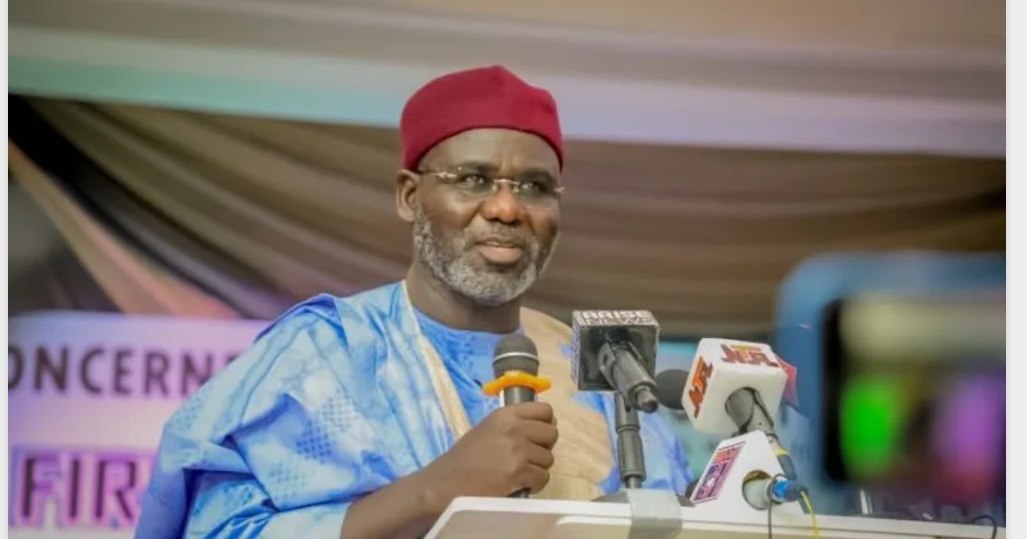
Former Chief of Army Staff, Lt. Gen. Tukur Buratai (retd.), has commended President Bola Ahmed Tinubu for what he described as bold economic reforms and improved security efforts as the President marks three years in office.
In a goodwill message on Thursday to commemorate Tinubu’s third anniversary as President and Commander-in-Chief of the Armed Forces, Buratai said the administration had taken courageous decisions that would leave a lasting impact on Nigeria’s development.

According to him, President Tinubu broke a long-standing cycle that had hindered national growth by removing fuel subsidy and implementing foreign exchange reforms aimed at stabilising the naira and strengthening the economy.
He noted that the reforms were beginning to yield positive results, citing the global acceptance of Nigerian debit cards, the gradual revival of local refineries, access to student loans, and ongoing road and infrastructure projects across the country.
“The FCT Administration has also recorded remarkable progress, completing major road projects that remained unfinished for over 16 years,” Buratai stated.
The former army chief also praised the administration’s security efforts, saying renewed military offensives against insurgents, terrorists and bandits had led to notable successes across various parts of the country.
He specifically lauded recent joint operations involving Nigerian and United States forces against Boko Haram and ISWAP in the North-East, as well as intensified counter-banditry operations in the North-West.
“We have seen notorious ISWAP commanders being neutralised. I congratulate the Commander-in-Chief, the Minister of Defence, the Chief of Defence Staff, the Service Chiefs, the Inspector-General of Police and heads of intelligence agencies for their efforts,” he said.
Buratai, however, acknowledged that challenges remained, stressing the need for more aggressive military operations and intelligence-driven strategies in the coming year.
While urging Nigerians to remain hopeful, he said celebrating the President’s achievements did not amount to ignoring the difficulties facing the nation.
“Because you truly care, you have shown the courage to trade short-term comfort for long-term hope. Nigerians need your reassurances, and that is why we remain optimistic and full of confidence,” he added.
The retired military officer reaffirmed his support for the Tinubu administration and expressed confidence that the foundation being laid by the government would deliver a brighter future for the country.
He also prayed for God’s guidance, wisdom, strength and good health for the President as he continues to lead Nigeria.
NUT Raises Alarm Over Continued Captivity of Abducted Oyo Pupils, Teachers
The Nigeria Union of Teachers has expressed deep concern over the continued captivity of pupils and teachers abducted during an attack on schools in the Ahoro-Esinle and Yawota communities in Oriire Local Government Area of Oyo State.
In a statement issued on Saturday, the Oyo State wing of the union described the situation as increasingly distressing, particularly following the emergence of a video allegedly released by the abductors showing the victims pleading for their freedom.
The union said the footage had heightened fears over the welfare of the abducted pupils and teachers, describing their ordeal as heartbreaking and unacceptable.

According to the NUT, no child or teacher deserves to be subjected to such traumatic experiences, adding that the prolonged captivity of the victims has continued to inflict psychological pain on their families, colleagues and the wider education community.
The union called on the Federal Government, Oyo State Government and relevant security agencies to intensify efforts towards securing the immediate and safe release of the victims.
“This is not a moment for hesitation. It is a moment for coordinated, intelligence-driven efforts to ensure the immediate and safe release of all abducted pupils and teachers,” the statement read.
While acknowledging ongoing interventions by security agencies and government authorities, the union stressed that time was of the essence, warning that every additional day in captivity deepens the trauma suffered by the victims.
The NUT urged security operatives to strengthen surveillance, improve community intelligence gathering and deploy all necessary operational and diplomatic measures to facilitate the rescue of the abductees.
It also appealed to traditional rulers, community leaders and residents to support rescue efforts by providing credible information that could assist security agencies.
“The safety of our children and teachers must remain a collective priority,” the union stated.
Reaffirming its support for the families of the victims, the NUT pledged continued solidarity and prayers while advocating safer learning environments across the country.
The statement was jointly signed by the Chairman of the Oyo State NUT, Comrade Hassan Ajibola Fatai, and the Secretary, Comrade Salami Olukayode.


- Afreximbank Deepens Commitment to Economic Progress in The Bahamas June 1, 2026
- African Electric Vehicle (EV) platform Spiro raises $215M in equity to scale electric mobility and energy infrastructure across Africa June 1, 2026
- Africa Centres for Disease Control and Prevention (Africa CDC) Statement on Attacks Against Health Facilities During the Bundibugyo Virus Disease Response in the Democratic Republic of the Congo June 1, 2026
- Putting consumers at the centre of Africa’s dairy transformation June 1, 2026
- International Rescue Committee (IRC) warns Democratic Republic of the Congo (DRC) Ebola outbreak likely far larger than official figures suggest June 1, 2026
- South Africa: Portfolio Committee on Health Marks National Cancer Survivor Day and Reaffirms Importance of Early Detection and Public Awareness June 1, 2026
- Rwanda’s RSSB Tigers Crowned 2026 Basketball Africa League Champions June 1, 2026
- Uganda: Appointments Committee Begins Vetting of Ministerial Nominees June 1, 2026
- Sudan braces for worsening child malnutrition as pre-harvest season starts June 1, 2026
- Etu Energias Strengthens Angolan Footprint, Returns to Angola Oil & Gas (AOG) 2026 as Champion Sponsor June 1, 2026
- Afreximbank Deepens Commitment to Economic Progress in The Bahamas June 1, 2026
- African Electric Vehicle (EV) platform Spiro raises $215M in equity to scale electric mobility and energy infrastructure across Africa June 1, 2026
- Africa Centres for Disease Control and Prevention (Africa CDC) Statement on Attacks Against Health Facilities During the Bundibugyo Virus Disease Response in the Democratic Republic of the Congo June 1, 2026
- Putting consumers at the centre of Africa’s dairy transformation June 1, 2026
- International Rescue Committee (IRC) warns Democratic Republic of the Congo (DRC) Ebola outbreak likely far larger than official figures suggest June 1, 2026
- South Africa: Portfolio Committee on Health Marks National Cancer Survivor Day and Reaffirms Importance of Early Detection and Public Awareness June 1, 2026
- Rwanda’s RSSB Tigers Crowned 2026 Basketball Africa League Champions June 1, 2026
-

 news6 months ago
WHO REALLY OWNS MONIEPOINT? The $290 Million Deal That Sold Nigeria’s Top Fintech to Foreign Interests
-

 society4 weeks ago
SOCIAL MEDIA IS NOT A BATTLEFIELD COMMAND – WHY THE NIGERIAN ARMY’S ACTION AGAINST JUSTICE CRACK IS A NATIONAL SECURITY IMPERATIVE
-

 celebrity radar - gossips4 months ago
Dr. Chris Okafor Returns with Power and Fire of the Spirit -Mounts Grace Nation Altar with Fresh Anointing and Restoration Grace on February 1, 2026
-

 celebrity radar - gossips6 months ago
Prophet Kingsley Aitafo Releases 2026 Prophecy: ‘Nigeria Will Rise, but the World Must Prepare for Turbulence’