
society
Sponsored Narratives and International Impact: Who Backed the Screwdriver Trader’s Genocide Petition and What It Actually Means

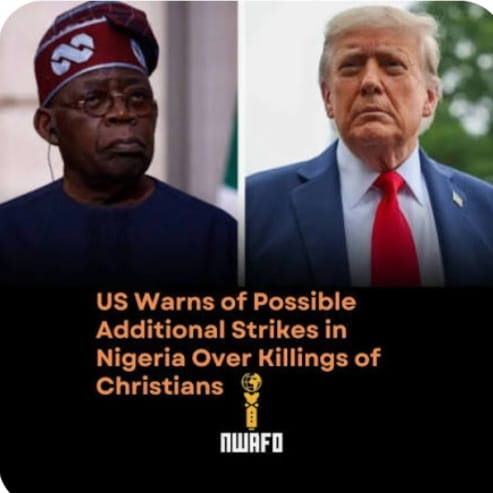
Sponsored Narratives and International Impact: Who Backed the Screwdriver Trader’s Genocide Petition and What It Actually Means.
By George Omagbemi Sylvester | Published by saharaweeklyng.com — for global audiences
“Beyond the Screwdriver, How Unverified Claims from Onitsha Shocked Global Policy and What It Says About Information, Influence and Accountability.”
In January 2026, a New York Times investigation revealed how Emeka Umeagbalasi, a modest screwdriver and tool trader operating from a market stall in Onitsha, Anambra State, somehow became a key source for United States policymakers alleging an ongoing “CHRISTIAN GENOCIDE” in Nigeria this narratives strong enough to influence air strikes carried out by the U.S. military on Nigerian soil.
That alone was shocking; but an even more important question has rarely been asked by domestic or international media: WHO SPONSORED HIM? WHO AMPLIFIED HIS PETITION TO THE UNITED NATIONS, UNITED STATES CONSULATE and INTERNATIONAL MISSIONS AROUND the WORLD? And what does this say about the dangerous intersection of unverified claims, global geopolitics and real consequences?

This article unpacks that complex story, tests Umeagbalasi’s claims against available evidence and explains why this moment is far more than a quirky human-interest tale of a screw-site vendor turned “EXPERT.”
The Screwdriver Trader and the Trump Air Strikes. In late 2025, the U.S. government under President Donald Trump redesignated Nigeria as a “COUNTRY of PARTICULAR CONCERN” a label reserved for nations where religious freedom is believed to be under systematic attack. Soon after, the U.S. launched air strikes on Islamist militants in Nigeria’s northwest on December 26, citing Nigeria’s failure to protect Christians.
The New York Times reported that Umeagbalasi’s advocacy organisation which is the International Society for Civil Liberties and Rule of Law (Intersociety) was cited repeatedly by congressmen and senators who pressed the Trump administration to treat the issue as an existential threat to Christianity.

Key U.S. lawmakers including Senator Ted Cruz and Representatives Riley Moore and Chris Smith have used his figures and narratives, despite the fact that Umeagbalasi openly admitted his data is often unverified and based largely on internet searches, secondary media reports and assumptions about victims religion based on location rather than on thorough field investigation.
In one revealing moment, he told reporters he had documented 125,000 “Christian deaths” since 2009, a number experts and data trackers say is inaccurate, unverified and based on flawed methods.
For a man whose primary business is selling screwdrivers, this leap to the center of global religious geopolitics raises urgent questions about who elevated him and why.
The Sponsorship and Network Behind the Petition. While the New York Times coverage highlights Umeagbalasi’s surprising influence, it does not fully explain who organized, funded or amplified his petitions to international bodies like the United Nations, the U.S. Embassy and missions across Europe.

However, independent reporting and background documents show that the International Society for Civil Liberties and Rule of Law (Intersociety) has a history of crafting and disseminating activism letters and petitions to foreign missions and human-rights bodies and often with the support of allied coalitions, external advocacy groups and diaspora networks. For instance:
In earlier campaigns in 2021 and prior years, Intersociety coordinated letters signed by coalitions of rights groups and intellectuals to African diplomatic corps and foreign missions with demanding accountability for alleged atrocities and urging foreign protection of Nigerian rights. Documents from these campaigns show how coalitions of NGOs can amplify letters by having them co-signed, translated and submitted simultaneously to multiple missions and global institutions.
This pattern of coordinated petitions shows a network of allied groups (not just Umeagbalasi acting in isolation) that has sought to elevate their narratives to international audiences.
Yet there is little evidence that traditional humanitarian monitoring organisations (like the United Nations Office of the High Commissioner for Human Rights, Amnesty International, Human Rights Watch, or established data projects) are backing these genocide figures or methodology. Instead, what we see are activist networks which lean into emotionally charged interpretations of insecurity in Nigeria, often without robust verification.
The Peter Obi Petition: A Pattern of Unverified Alarms. Adding another layer to this puzzle is Umeagbalasi’s past activism. In 2022 and 2023, the same organisation issued an alert alleging an assassination plot against Peter Obi, former Governor of Anambra State and 2023 presidential candidate.
In those statements, Intersociety claimed without verifiable evidence that Boko Haram-linked fighters intended to assassinate Obi and called on foreign governments and the UN to protect him, alarmist language that critics said was politically charged and lacking independent verification.
These earlier petitions were circulated widely to foreign missions, human-rights organisations and international observers and not just within Nigeria but across embassies globally. Coupled with Umeagbalasi’s later Christianity genocide narrative, this repetition shows a pattern of activism that amplifies crisis claims without the methodological rigor required for sound international policy decisions.
It is worth noting that political actors and observers dismissed the assassination claims at the time as unsubstantiated and potentially inflaming tensions without evidence. But the pattern of producing and circulating alarming claims is now part of the public record.
Experts Weigh In: Why Methodology Matters. Nigeria’s security situation is complex. Experts agree that violence (from Boko Haram, Islamic State West Africa Province, ethnic herders and communal conflicts) has caused significant loss of life. But multiple monitoring projects caution against simplistic attributions or religious genocide framing.
ACLED (Armed Conflict Location & Event Data Project) regularly tracks conflict and notes that while Christians have been killed, violence affects all communities (including Muslims and other civilians) and that data does not support a claim of systematic, religion-targeted genocide.
Analysts at the Council on Foreign Relations have emphasised that jihadist groups in Nigeria attack both Christians and Muslims and that framing the violence as exclusively anti-Christian can obscure the broader structural security failures.
Bishop Matthew Hassan Kukah, a senior Catholic cleric, has warned that focusing too narrowly on casualty figures among Christians can misdiagnose the crisis. He argues that Nigeria’s weak institutions fail to protect all citizens and that religion is just one dimension among many in conflict.
These expert voices matter because policy decisions (especially those involving military action) must be grounded in verified evidence and independent data, not individual claims amplified without scrutiny.
The Risks of Narratives Without Verification. There are real consequences when unverified claims gain international traction:
Military Action Based on Flawed Inputs – If policymakers rely on inaccurate narratives, the result can be misguided interventions with unintended consequences for civilians and national sovereignty.
Political Polarisation – Amplifying claims that feed into ethnic or religious narratives can deepen divisions within societies already strained by insecurity.
Delegitimising Genuine Grievances – When exaggerated or poorly supported claims dominate discourse, it can drown out legitimate concerns about human rights abuses that deserve attention and rigorous investigation.
Where This Leaves Nigeria: Accountability, Evidence and Responsible Advocacy. The story of the screwdriver trader whose petitions influenced international discourse (and possibly military actions) is a cautionary tale. It shows how networks of advocacy organisations, amplified through powerful political channels, can escalate unverified narratives into global policy discussions.
It also raises an urgent call for stronger standards of evidence, transparent methodologies and independent verification in human rights advocacy and especially when such claims have the potential to reshape foreign policy and impact the lives of millions.
As global intelligence, advocacy networks and media platforms intersect more than ever, the world must demand accountability not just for atrocities, but for how claims about atrocities are generated, sponsored, circulated and acted upon.
Only through rigorous evidence and balanced reporting can justice be served, though not sensationalism. And only by grounding narratives in verified truth can the international community help build peace not profit from panic.





FOPCHEN Seeks Wider Engagement As Court Defers Hearing
OTA, OGUN STATE — The High Court of Ogun State, Ota Division, on Thursday resumed hearing in the ongoing matter involving cultural and societal concerns, before adjourning proceedings till Thursday, July 2, 2026, for continuation of hearing.
At the resumed sitting on May 28, 2026, counsel representing the various parties revisited key issues in the case and made further submissions before the court.
The matter, which has continued to generate public interest across different sectors, again drew attention from legal observers and stakeholders who described the case as one with significant implications for societal values, cultural identity and constitutional interpretation.
Speaking after the proceedings, the Foundation for the Protection of Cultural Heritage in Nigeria, popularly known as FOPCHEN, renewed its appeal for dialogue and constructive engagement among Nigerians, stressing that sensitive cultural and moral issues should not be left entirely within the confines of the courtroom.
According to the group, broader conversations involving traditional institutions, civil society organisations, religious leaders and policy stakeholders remain necessary in addressing issues relating to national values and social responsibility.
Legal analysts at the court premises noted that arguments being canvassed by parties in the suit could shape future legal interpretations surrounding cultural and moral questions in the country.
Following submissions by counsel, the presiding judge adjourned the matter till Thursday, July 2, 2026, to enable parties further prepare and respond to issues raised during the hearing.
The development has continued to spark reactions among observers, with many Nigerians closely monitoring the proceedings ahead of the next hearing date.

US-Based Society Lady, Fehintola-Brat Extends Eid-El-Kabir Greetings To Muslims
United States based fahionista of class, Chief (Mrs) Ayoola Fehintola-Brat has extended a warm greetings to Muslim faithful all over the world on the occasion of the 2026 Eid-El-Kabir celebration.
Fehintola-Brat who is the Balogun Egbe Obaneye Obinrin Akile Ijebu, and the Yeye Asofin of Idenaland in her message to Journalists urged Muslim to continually uphold the enduring values of sacrifice, obedience, faith, and compassion, which are central to the significance of Eid-El-Kabir festival.
A quiet philantropist whose humanitarian services has won her several laurels urged Muslims to use the spiritual occasion to pray for the peace co-existence of Nigerians regardless of religious, social and political leanings stressing that the oneness of the country should not be underplay.
In a related development, she expressed her felicitations to all sons and daughters of Ijebuland on the forthcoming Ojude Oba 2026 celebration, tasking age-groups otherwise known as Regbregbe to be more proactive in giving back to their immediate communities.
According to her, the beauty of the age-groups in Ijebuland is the need to contribute immensely to the development of the land in no small means. “This we will continue to achieve with God on our side”, she concluded.
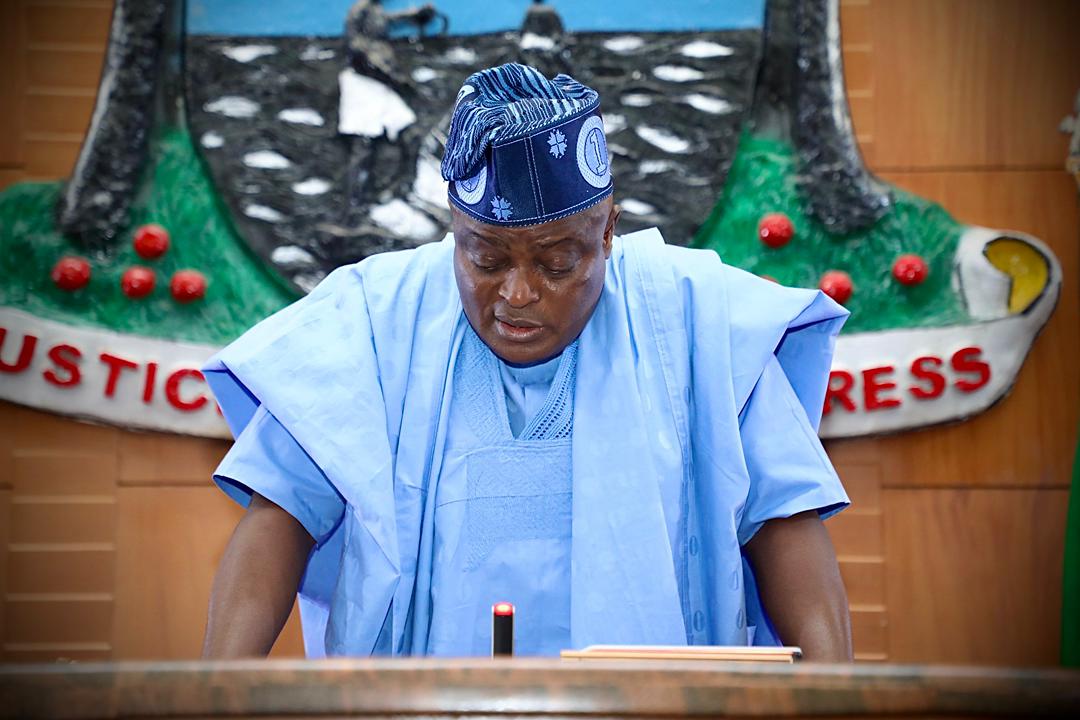
Sallah: Obasa Felicitates Muslim Ummah, Commends Nigerians for APC Primaries Turnout
The Speaker of the Lagos State House of Assembly, Rt. Hon. Mudashiru Obasa has extended warm felicitations to Muslims in Lagos State and across Nigeria on the occasion of Eid al-Adha.
In a statement released by his Chief Press Secretary, Mr. Dave Agboola, Obasa described the festival as a season of sacrifice, reflection, and gratitude, urging the faithful to continue to uphold the values of peace, unity, and love that strengthen the nation.
He noted that the celebration of Eid al-Adha is not only a spiritual milestone but also a reminder of the importance of togetherness and collective responsibility in building a stronger society.
He, likewise, emphasized that the festival provides an opportunity for Nigerians to renew their commitment to national progress and to support leadership that prioritizes development and prosperity.
Obasa, however, commended Nigerians, particularly members of the All Progressives Congress (APC), for their massive turnout during the recently concluded party primaries. He described the participation as a clear demonstration of the people’s confidence in the government of President Bola Ahmed Tinubu and their belief in the administration’s vision for a greater Nigeria.
“The APC primaries have shown the resilience of our democracy and the confidence Nigerians have in the leadership of President Bola Ahmed Tinubu and the Renewed Hope Agenda. This is a strong message that our people are ready to continue supporting policies that will drive growth and prosperity,” Obasa stated.
The Speaker further encouraged Muslims to celebrate responsibly, stressing that the joy of Eid should be accompanied by prayers for the continued peace and progress of Lagos State and Nigeria.
“As you celebrate with family and loved ones, may this season bring joy, peace, and prosperity to your homes. Let us remain united in our resolve to build a stronger nation,” he added.
On behalf of the Lagos State House of Assembly, Obasa wished all Muslims a happy and fulfilling Eid al-Adha celebration.


- Société Nationale des Pétroles du Congo (SNPC) Chief Ominga to Speak at African Energy Week (AEW) 2026 as Congo Accelerates Gas Expansion May 29, 2026
- South Africa: Deputy President Mashatile arrives in India for a Working Visit May 29, 2026
- Seychelles: President Visits Key Development Sites on Coetivy Island May 29, 2026
- Accelerating regional action to advance mental health care in Africa May 29, 2026
- President of the Republic of Seychelles Meets Young La Digue Talent Ahead of London Showcase May 29, 2026
- United Nations Economic Commission for Africa (ECA) launches regional initiative to accelerate women’s digital entrepreneurship across four African countries May 29, 2026
- Ethiopia: International community must act to safeguard press freedom ahead of national election May 29, 2026
- CORRECTION: Annual Meetings 2026 (AM2026): African Development Bank (AfDB) 2025 Trade Finance Report Highlights Resilience of African Financial Institutions After Covid-19 May 29, 2026
- Why Big Tech Could Become Nigeria’s New Gas Partner May 29, 2026
- African Energy Chamber (AEC)-Venezuela Alliance Accelerates Pathways into South-South Energy Expansion May 29, 2026
- Société Nationale des Pétroles du Congo (SNPC) Chief Ominga to Speak at African Energy Week (AEW) 2026 as Congo Accelerates Gas Expansion May 29, 2026
- South Africa: Deputy President Mashatile arrives in India for a Working Visit May 29, 2026
- Seychelles: President Visits Key Development Sites on Coetivy Island May 29, 2026
- Accelerating regional action to advance mental health care in Africa May 29, 2026
- President of the Republic of Seychelles Meets Young La Digue Talent Ahead of London Showcase May 29, 2026
- United Nations Economic Commission for Africa (ECA) launches regional initiative to accelerate women’s digital entrepreneurship across four African countries May 29, 2026
- Ethiopia: International community must act to safeguard press freedom ahead of national election May 29, 2026
-

 news6 months ago
WHO REALLY OWNS MONIEPOINT? The $290 Million Deal That Sold Nigeria’s Top Fintech to Foreign Interests
-

 society4 weeks ago
SOCIAL MEDIA IS NOT A BATTLEFIELD COMMAND – WHY THE NIGERIAN ARMY’S ACTION AGAINST JUSTICE CRACK IS A NATIONAL SECURITY IMPERATIVE
-

 celebrity radar - gossips4 months ago
Dr. Chris Okafor Returns with Power and Fire of the Spirit -Mounts Grace Nation Altar with Fresh Anointing and Restoration Grace on February 1, 2026
-

 celebrity radar - gossips6 months ago
Prophet Kingsley Aitafo Releases 2026 Prophecy: ‘Nigeria Will Rise, but the World Must Prepare for Turbulence’