
Politics
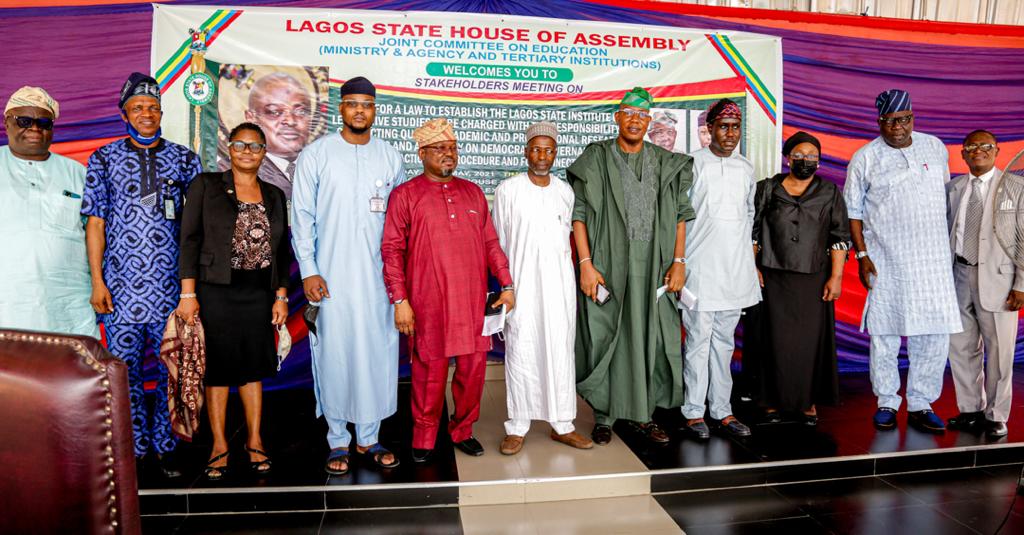
Stakeholders Support Bill To Establish Legislative Training Institute In Lagos

Stakeholders Support Bill To Establish Legislative Training Institute In Lagos

When passed into law, the proposed Institute of Legislative Studies being considered by the Lagos State House of Assembly will be the first in Nigeria to be backed by law.

This was made known the Director of the National Institute of Legislative and Democratic Studies, Abuja, Dr. Shuaib Danwaka, at a stakeholders’ meeting in Lagos on Friday in consideration of the bill for the state’s version of the Institute of Legislative Studies.

Danwaka, who was the guest speaker at the event, said that the institute is predicated on the need to provide training for lawmakers and legislative staff.
He commended the Assembly for following the footsteps of the federal government while arguing that democracy is sustained through capacity development.
“The bill is to establish the institute that would provide capacity so that the Assembly would be able to discharged its duties of law making and oversight.
“The duties of the legislature cannot be discharged without capacity. With the institute the capacity of the legislature and staff is guaranteed and it will go beyond Lagos and Nigeria,” he said while noting some parts of the bill that should be considered.
Like Danwaka, Prof. Sylvester Odion Akhaine, a Nigerian activist and academic, supported the bill, but noted areas that could be reviewed.
The bill sponsored by the Speaker of the House, Rt. Hon.(Dr) Mudashiru Obasa, shows that the proposed institute is to be charged with the responsibility of conducting quality academic and professional research, training and advocacy on democratic governance, legislative practices, procedures and for connected purposes.
According to the bill, the institute would act as a centre of excellence for research and publication on democratic governance as well as be a centre for continuing education on democracy and legislation.
Among other functions, the institute is to “conduct courses for all categories of legislative officers and the support staff with a view to expanding their overall knowledge and performance in different sections of service;
“Provide continuing education for all categories of legislative officers by undertaking, organising, conducting and facilitating studies, courses, lectures, seminars, workshops, conference and other programmes related to Legislative education;
“Promote and disseminate among legislative Assemblies and Local Governments in the State the practice of science-based methodologies of lawmaking.”
The institute is to also disseminate information through the publication of books, journals, records, reports and other means regarding its activities subject to the approval of its Board.
“The institute would also promote and protect constitutional due process in legislative practices and encourage private sector participation and collaborate with national and international organisations on research and training on issues relevant to its mandate,” the bill stated.
The institute will also have the power to conduct periodic short and refresher courses for National and State legislators, staff, committee secretaries and political aides on democracy and good governance.
It will provide research reports to aide legislation for the House of Assembly, its committees as well as the Legislative Drafting and Legal Services of the House.
The institute will have a council which would comprises the Speaker as Chairman, or at his instance, the Deputy Speaker and five serving members from the five Divisions of the State, who would b nominated.
Others members of the council will include the Chairman, House of Assembly Service Commission, the Clerk of the House of Assembly; and the Director-General of the Institute who would be the Secretary.
The bill states that members of the council other than the ex-officio members will hold office for a term of four years and may be eligible for reappointment for another term of four years only.
A member of the council may resign from the appointment by giving one month notice in writing.
In his keynote address, the Speaker Obasa, represented by the Deputy Speaker, Hon. Wasiu Eshilokun-Sanni, said that it was the tradition of the House to organise stakeholders meeting before any bill is passed into law.
Obasa recalled the establishment of the Institute for Legislative and Democratic Studies by former President Good luck Jonathan in 2011 adding that the proposed institute in Lagos would enhance governance.
Earlier, the Chairman of the House Committee on Education, Hon. Ganiu Okanlawon, said that the meeting was aimed at involving relevant stakeholders and members of the public in the process of passing the bill.
He said that the institute would provide education for lawmakers and all kinds of legislative officers through seminars, workshops, conferences and other forms of training.
This was corroborated by the Chairman of the House Committee on Tertiary Education, Hon. Owolabi Ajani, who said that the Assembly would do what was expected of it before the bill is passed to the Governor for his assent.
The overview of the bill was done by the Leader of the House, Hon. Sanai Agunbiade, who said that the legislature is the major arm that differentiates a democratic from a military government.




AMBO and the Osun Governorship Race: Assessing the Man, the Politics and the Vision
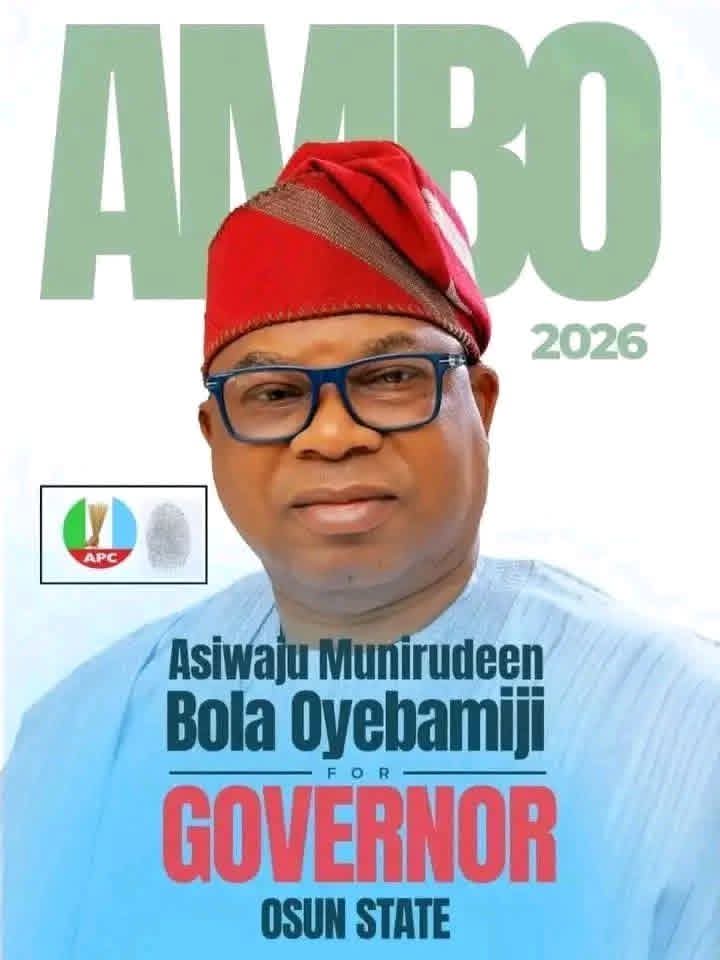
As political activities gather momentum ahead of the 2026 Osun State governorship election, a public affairs commentator, Oluseyi Olonade, has described the emergence of Asiwaju Munirudeen Bola Oyebamiji, popularly known as AMBO, as a significant development in the state’s political landscape.
In an article titled “Oyebamiji: The Man, The Politics and The Aspiration,” Olonade argued that the All Progressives Congress governorship hopeful possesses the character, experience and vision needed to reposition Osun State for sustainable growth.
According to the writer, Oyebamiji’s appeal stems from his extensive background in the banking sector, where he spent nearly three decades working with institutions including Wema Bank, Trans International Bank, Spring Bank and Enterprise Bank.
A native of Ikire in Irewole Local Government Area, Oyebamiji was described as a technocrat whose experience in corporate governance, finance and risk management has shaped his approach to public administration.
The article noted that his public service journey gained prominence in 2012 when he was appointed to oversee the then Osun State Investment Company Limited. Under his leadership, the organisation was reportedly restructured and transformed into Omoluabi Holdings Limited.
The writer further highlighted Oyebamiji’s tenure as Commissioner for Finance under successive APC administrations, where he was credited with managing the state’s finances during challenging economic periods.
Olonade also referenced Oyebamiji’s appointment as Managing Director of the National Inland Waterways Authority, describing it as further evidence of his administrative and leadership capabilities.
The article contrasted Oyebamiji’s governance philosophy with that of the current administration in Osun State, arguing that the APC aspirant favours institutional reforms, economic diversification and fiscal discipline.

According to the writer, Oyebamiji’s proposed agenda includes strengthening transparency in government spending, expanding internally generated revenue, attracting private-sector investments and promoting industrial and agricultural development.
The article also highlighted youth empowerment, entrepreneurship development and digital skills acquisition as key components of his vision for the state.
Olonade concluded that the forthcoming governorship election would present voters with a choice between different approaches to governance, expressing confidence that Oyebamiji’s experience and developmental agenda make him a strong contender in the race.
*Oselu Tiwa nTiwa Endorses Oriyomi Hamzat for Oyo Governorship*
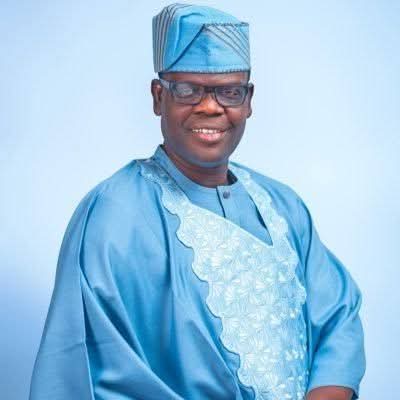
A sociopolitical support group in Oyo State, Oselu Tiwa nTiwa, has declared its support for Alhaji Oriyomi Hamzat as the authentic governorship candidate of the Accord Party ahead of the forthcoming governorship election in the state.
The group made its position known in a statement jointly signed by its President, Mr. Adewale Oluwaseyi and Secretary, Alh. Adebayo Oyewole, on Thursday, describing Hamzat as a grassroots figure with strong connection to the people and a track record of humanitarian interventions across Oyo State.

According to the group, the endorsement followed what it described as careful observation of Hamzat’s leadership qualities, compassion and dedication to the welfare of ordinary citizens.
“Oriyomi Hamzat has consistently demonstrated empathy, courage and selfless commitment to humanity. Through his numerous interventions in the lives of ordinary citizens, he has become a symbol of hope to many families and communities,” the statement read.
Oselu Tiwa nTiwa also appealed to the national leadership of the Accord Party to prioritise the long-term future and electoral growth of the party in its decision-making process.
The group noted that Hamzat’s candidacy presents an opportunity for the party to strengthen its grassroots support base and expand its political relevance across Oyo State.
“We respectfully appeal to the National Leadership of the Accord Party to look beyond immediate political calculations and consider the bigger picture, the future growth, stability and electoral success of the party in Oyo State and beyond,” the statement added.
The group further expressed confidence in the leadership of the party, saying it believes the party’s national officers and stakeholders would take decisions that reflect fairness, inclusiveness and the collective interest of members.
While calling on party loyalists to remain calm and united, Oselu Tiwa nTiwa said continued consultations among stakeholders would help strengthen the Accord Party ahead of the election.
Signed:
Alh. Adebayo Oyewole,
Secretary.
Atiku Set To Clinch ADC Presidential Ticket, Leads Amaechi, Hayatu-Deen In 34 States
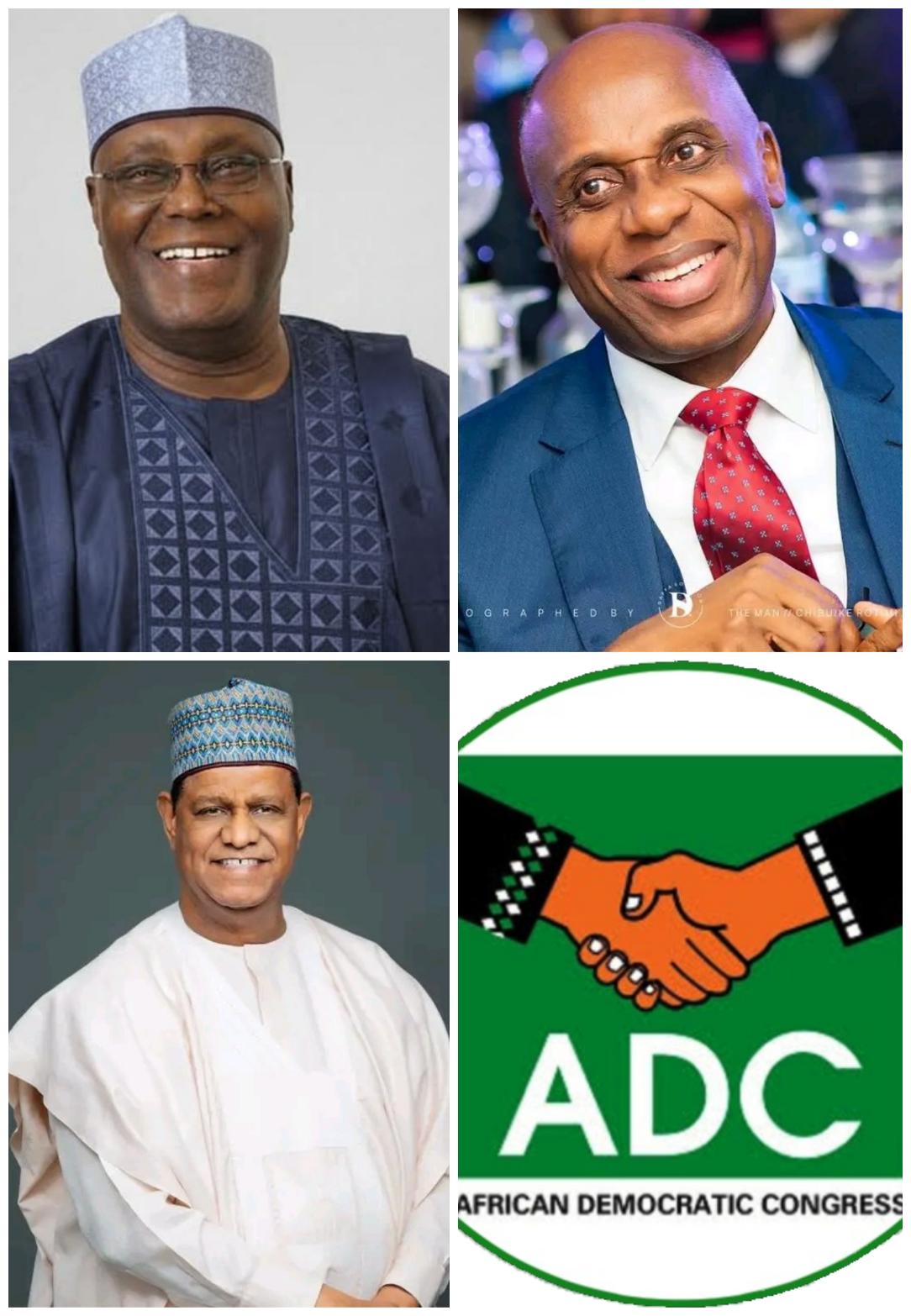
Former Vice President of Nigeria and frontline presidential aspirant of the African Democratic Congress (ADC), Atiku Abubakar, is projected to emerge winner of the party’s presidential primaries, according to impeccable sources in Abuja.
The primaries, conducted across over 8,000 wards in the 36 states of the federation and the Federal Capital Territory, reportedly placed Atiku far ahead of his closest rivals — former Rivers State Governor, Rotimi Amaechi, and former Chairman of the Nigerian Economic Summit Group, Mohammed Hayatu-Deen.

Highly placed party insiders disclosed that Atiku is currently leading in 34 states, including the FCT, after securing dominance across the 19 Northern states, the five South-East states, and the six South-West states, while also maintaining a strong showing in at least three states in the South-South geopolitical zone.
The sources added that the outcome reflects what they described as “an overwhelming nationwide acceptance” of the former vice president within the opposition party ahead of the 2027 general election.
Meanwhile, the ADC leadership has invited members of the press to the official announcement of the final collated results scheduled for 11:00 a.m. on Tuesday, May 26, 2026, in Abuja.
The declaration of results is expected to be broadcast live on ARISE Television and two other major television stations, while also being livestreamed on the party’s official social media platforms on X and Facebook.
Speaking ahead of the announcement, the founding National Chairman of the ADC, Chief Ralph Nwosu, said the decision to televise the exercise live was aimed at promoting transparency and democratic accountability.
“We want millions of Nigerians at home and in the Diaspora to witness democracy in action,” Nwosu said.
He further revealed that the party leadership would encourage all three presidential aspirants to publicly embrace a peace accord and commit themselves to working together in unity for the party’s success.
According to him, the move is necessary to strengthen internal cohesion and position the ADC for victory in the presidential election scheduled for January 16, 2027.
Details later.


- When women farm better, Eswatini eats better June 3, 2026
- Togo Hosts the 8th Annual Forum of National Volunteer Agencies in the Economic Community of West African States (ECOWAS) Region June 3, 2026
- Indigenous Peoples gravely vulnerable to Ebola epidemic, warn United Nations (UN) independent experts June 3, 2026
- Meeting between Parliamentary Vice-Minister ONISHI and His Excellency (H.E.) Mr. Cosgrow, Principal Minister and Minister for Agriculture, Fisheries and Blue Economy of Seychelles June 3, 2026
- Eritrea: Construction of Elementary School in Gogni Sub-Zone June 3, 2026
- African Union Commission (AUC) Chairperson His Excellency (H.E.) Mahmoud Ali Youssouf highlighted thePermanent Representatives’ Committee (PRC) critical role in advancing the Union’s agenda and laying the groundwork for the forthcoming Mid-Year Coordination Meeting (MYCM) June 3, 2026
- Eritrea: Eighth Grade National Examination Commences June 3, 2026
- Many Africans see justice system as unequal, costly, and slow, Afrobarometer survey reveals June 3, 2026
- Prof. Benedict Oramah to Chair Finance Summit as African Energy Week (AEW) 2026 Prepares for Major Deal Flow June 3, 2026
- The Islamic Development Bank (IsDB) Group Affiliates to Host the 14th Private Sector Forum in Baku, Azerbaijan (16-19 June 2026) June 3, 2026
- When women farm better, Eswatini eats better June 3, 2026
- Togo Hosts the 8th Annual Forum of National Volunteer Agencies in the Economic Community of West African States (ECOWAS) Region June 3, 2026
- Indigenous Peoples gravely vulnerable to Ebola epidemic, warn United Nations (UN) independent experts June 3, 2026
- Meeting between Parliamentary Vice-Minister ONISHI and His Excellency (H.E.) Mr. Cosgrow, Principal Minister and Minister for Agriculture, Fisheries and Blue Economy of Seychelles June 3, 2026
- Eritrea: Construction of Elementary School in Gogni Sub-Zone June 3, 2026
- African Union Commission (AUC) Chairperson His Excellency (H.E.) Mahmoud Ali Youssouf highlighted thePermanent Representatives’ Committee (PRC) critical role in advancing the Union’s agenda and laying the groundwork for the forthcoming Mid-Year Coordination Meeting (MYCM) June 3, 2026
- Eritrea: Eighth Grade National Examination Commences June 3, 2026
-

 news6 months ago
WHO REALLY OWNS MONIEPOINT? The $290 Million Deal That Sold Nigeria’s Top Fintech to Foreign Interests
-

 society1 month ago
SOCIAL MEDIA IS NOT A BATTLEFIELD COMMAND – WHY THE NIGERIAN ARMY’S ACTION AGAINST JUSTICE CRACK IS A NATIONAL SECURITY IMPERATIVE
-

 celebrity radar - gossips4 months ago
Dr. Chris Okafor Returns with Power and Fire of the Spirit -Mounts Grace Nation Altar with Fresh Anointing and Restoration Grace on February 1, 2026
-

 celebrity radar - gossips6 months ago
Prophet Kingsley Aitafo Releases 2026 Prophecy: ‘Nigeria Will Rise, but the World Must Prepare for Turbulence’