
society
Stand Together, Not Apart: Solidarity for MNK October 20, 2025

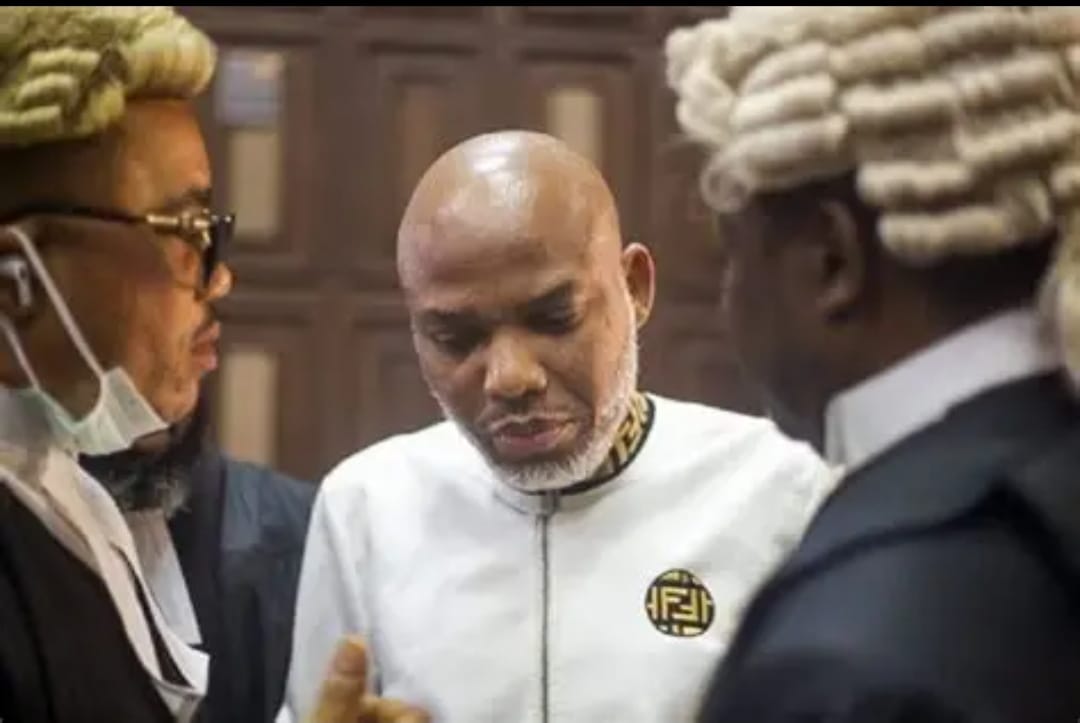
Stand Together, Not Apart: Solidarity for MNK October 20, 2025.
By George Omagbemi Sylvester | saharaweeklyng.com
“One Day. One Demand. Free MNK, Justice Now.”
On Monday, October 20, 2025, Nigerians and friends of justice the world over will again test the promise of democratic life in our country, the promise that the right to assemble, to petition and to demand accountability will not be shrugged aside by injunctions, intimidation or the heavy hand of the state. The #FreeMaziNnamdiKanuNow (MNK) mobilisations (organised by civil society activists, diaspora groups and political figures) present a simple, unavoidable demand, that a man who has become the symbol of a larger grievance be afforded due process, humane treatment and a transparent justice system. The stakes are bigger than one man; they are about whether Nigeria honours the rule of law and the dignity of dissent.
This piece argues, plainly and insistently, that solidarity for MNK’s peaceful protest is not an act of tribalism or lawlessness. It is an affirmation of democratic principle; one that citizens and international partners should support, monitor and protect. It also explains why peaceful solidarity is needed now, what the legal and security context is and how Nigerians and the global community should respond to ensure the exercise of legitimate rights without violence.
The legal and security reality: official warnings, court orders and real risk.
In the run-up to October 20, authorities and external actors have signalled caution. A High Court ruling and subsequent court orders have sought to restrict protests in sensitive locations around Aso Rock, the National Assembly complex and other government precincts, creating a legal fence that organisers and lawyers are actively contesting. The fact of that court action is not in dispute and must be acknowledged by anyone calling for or supporting public demonstrations.
Foreign missions have taken the prospect of large demonstrations seriously, the United States Embassy issued a security alert to its citizens about potential demonstrations on October 20, warning of possible roadblocks, disruptions and confrontation risks. That is a sober reminder that mass protests in Nigeria (as in many countries) can attract opportunists, security countermeasures and flashpoints where peace can be lost.
Though caution is not a licence for suppression. The Nigeria Police Force has publicly affirmed that the right to peaceful protest is inalienable while also urging that assemblies remain within the bounds of court orders and law. This dual message underscores the difficult tightrope, authorities must protect public order without weaponising the law to choke civic space.
Why solidarity matters – beyond headlines and hashtags.
Solidarity for MNK on October 20 is not merely performative. It is an essential democratic corrective for at least three reasons.
First, it centres due process and transparency. Calls for MNK’s release are also calls for a legal process free from clouded procedures, secret detention or politicised prosecutions. When civil society (inside and outside Nigeria) mobilises, it forces scrutiny and sunlight onto legal proceedings that might otherwise proceed behind closed doors. Prominent Nigerians and civic organisations have argued that the manner of his detention and treatment should raise questions about the fairness of our system.
Second, solidarity is a check on the use of force. International human-rights organisations and past reporting have documented instances where security forces used lethal force against protesters in Nigeria; a grim memory that must inform how authorities and protesters conduct themselves now. Amnesty International’s recent investigations into excessive force during Nigeria’s protests in 2024 and earlier incidents in the southeast are a clarion call: both citizens and the state must prevent a replay of violence. If Nigerians are to trust the system, the state must demonstrate restraint and accountability.
Third, unity in dissent breaks the toxic narrative that activism is regional or ethnic. Organisers including mainstream activists have intentionally framed October 20 as a peaceful, national campaign for justice; an invitation for citizens across ethnic and political lines to stand for the rule of law. That is a powerful antidote to deliberate attempts to paint protest as sectarian agitation.
What solidarity should look like; principled, legal, and strategic.
Solidarity must be disciplined. Here are practical, non-negotiable rules for those who will stand with MNK:
Non-violence first. Any legitimate protest that turns violent hands the state an excuse to crush civic space. Organisers and participants must unequivocally commit to peaceful methods: marches, silent vigils, legal petitions and sit-ins not property damage or attacks on people.
Legal preparedness. Support legal teams that can rapidly challenge unlawful injunctions, provide bail funds and document any rights violations. Use professional lawyers; do not rely solely on social-media lawyers.
Documentation and monitoring. Independent monitors, press and human-rights groups should document events in real time. If arrests or use of force occur, filmed evidence and credible eyewitness accounts are the oxygen of accountability.
Clear messaging. Keep the demands specific: humane treatment, transparent legal process, respect for court rulings unless overturned by due process and investigations into any extrajudicial conduct. Avoid incendiary language that can be exploited by those seeking to delegitimise the cause.
International pressure, not intervention. Engage international human-rights bodies and foreign missions to pressure for transparent judicial process and protection of protest rights, while rejecting outside military or clandestine interference.
Voices that matter.
Human-rights advocates and UN special rapporteurs have warned against criminalising dissent and delegitimising protest movements globally; a warning that resonates in Nigeria today. Mary Lawlor, the UN Special Rapporteur on human-rights defenders, has documented a worrying trend of state repression of peaceful activists in recent months, noting the grave dangers when governments treat dissent as a security threat rather than a democratic right. Such expert analysis should guide both authorities and citizens toward restraint and respect.
At home, elder statesmen and civic leaders who have called for due process stress that the health of our republic depends on the ability to hold power to account without descending into anarchy. The police themselves have said the right to peaceful protest is recognised; a statement whose credibility must be matched by action.
The test for our institutions and for Nigerians.
October 20 is a test. It will reveal how robust our institutions are, how committed our security services are to the constitutional order and how mature our civil society can be in the face of provocation. If the state responds with restraint and the organisers maintain discipline, Nigeria will have demonstrated a maturing democratic temperament. If the reverse occurs, the consequences will be ugly; erosion of trust, cycles of recrimination and deeper polarisation.
For those of us writing from the press, civil society and the academy: our duty is to report accurately, to demand accountability and to platform credible voices. For the international community: support monitoring and documentation; press for adherence to international human-rights standards. For ordinary Nigerians: stand in principled solidarity; in the markets that close quietly, in vigils and on the line when lawful mobilisation occurs.
Closing: justice is indivisible.
Solidarity for MNK is not an endorsement of everything he has said or done. It is not a tribal signal. It is a moral posture: that justice must be visible, that trials must be fair, that detention must follow the law and that peaceful calls for redress deserve protection, not pulverisation. If Nigeria is to be proud of its democracy, it must protect the weakest expression of dissent as fervently as it protects the comforts of power.
On October 20, raise your voice; but raise it within the law, with witnesses, with lawyers present and with the unshakable conviction that the cause of justice is indivisible. Stand for due process. Stand for humane treatment. Stand for the principle that no state is strengthened by silencing the people it is meant to serve.
George Omagbemi Sylvester is a journalist and commentator. He can be reached via saharaweeklyng.com





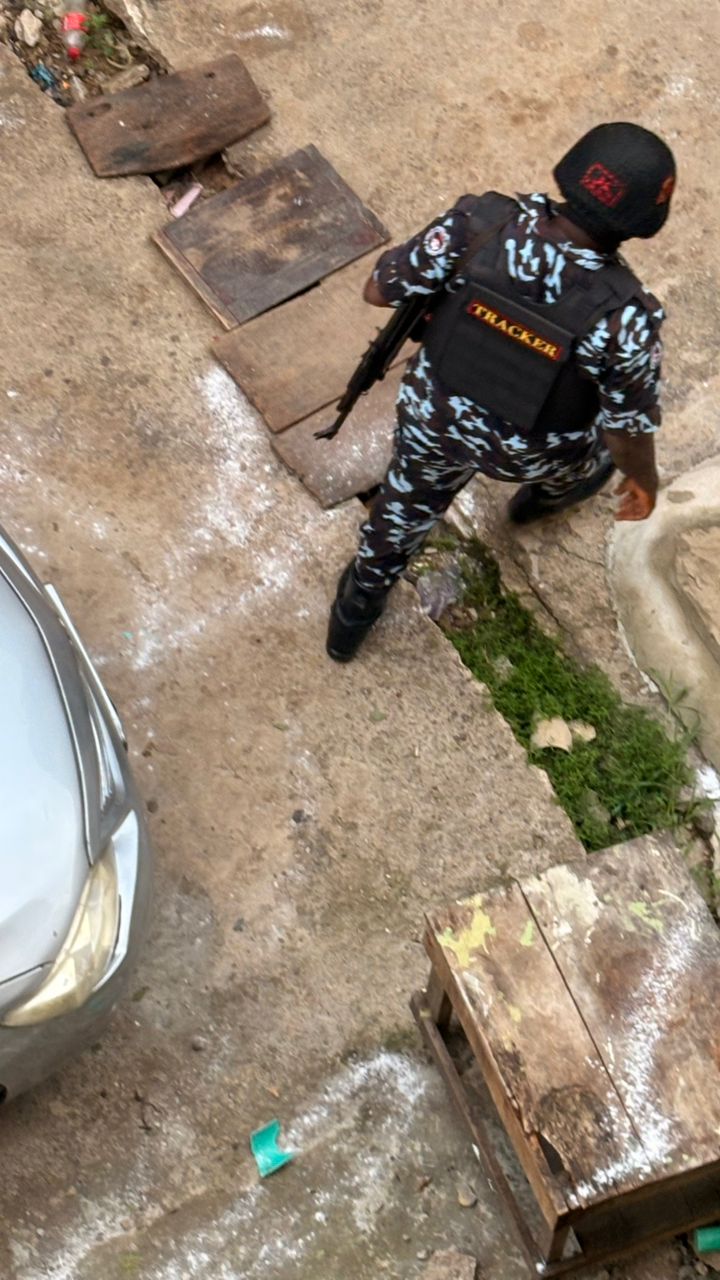
Police Officers Detained as Family Property Dispute Sparks Demolition Controversy in Lagos
By Ifeoma Ikem
A property dispute within the Omotayo-Ojo family has taken a dramatic turn following a controversial demolition exercise at a residential building in Ikosi-Ketu, Lagos State, which reportedly left tenants displaced and led to the detention of some police officers allegedly involved in the operation.

The property, located at 23B Loveall Street, Ikosi-Ketu, has been the subject of a prolonged ownership tussle since the death of its owner, Chief Oludola Omotayo Ojo, the Babaalaje of Imesi-Ile, Osun State, in 2019.
Residents said tension erupted when a group of individuals, accompanied by security operatives, stormed the premises and commenced demolition activities.
According to eyewitnesses, portions of the building were pulled down while tenants rushed to salvage their belongings from affected apartments.
The residents alleged that windows, doors and roofing sheets were damaged during the exercise, exposing parts of the building to the elements and causing significant losses to occupants.
At the centre of the dispute is Mrs Mojisola Omotayo Ojo Alolagbe, who claimed that the property was allocated to her by her late father during his lifetime as a source of financial support.
She alleged that some family members had persistently challenged her ownership claim despite ongoing legal proceedings relating to the administration of the deceased’s estate.
Alolagbe further claimed that the latest incident was part of a series of attempts to wrest control of the property, citing previous cases of alleged vandalism and partial demolition in November 2025, January 2026 and February 2026.
The situation escalated further when reports emerged that police officers allegedly involved in the demolition were later apprehended and conveyed in a Black Maria vehicle over questions surrounding the legality of their participation in the operation.
Sources familiar with the matter said those behind the demolition had initially claimed to be acting on approval from the Lagos State Ministry of Lands. However, the authenticity and extent of such approval could not be independently verified as of the time of filing this report.
The development has generated concern among residents and community members, who questioned the involvement of security personnel in what they described as a civil matter.
Some tenants, who said they had recently renewed their tenancy agreements, lamented the destruction of their property and appealed to the authorities for protection and possible compensation.

They also called for a thorough investigation into the circumstances surrounding the demolition, insisting that the rights of all parties involved should be protected.
Stakeholders have urged the Lagos State Government, security agencies and the judiciary to intervene and ensure that the dispute is resolved through lawful means to prevent further escalation.
The controversy has continued to draw public attention, raising concerns over property rights, estate administration and the role of law enforcement agencies in civil disputes.

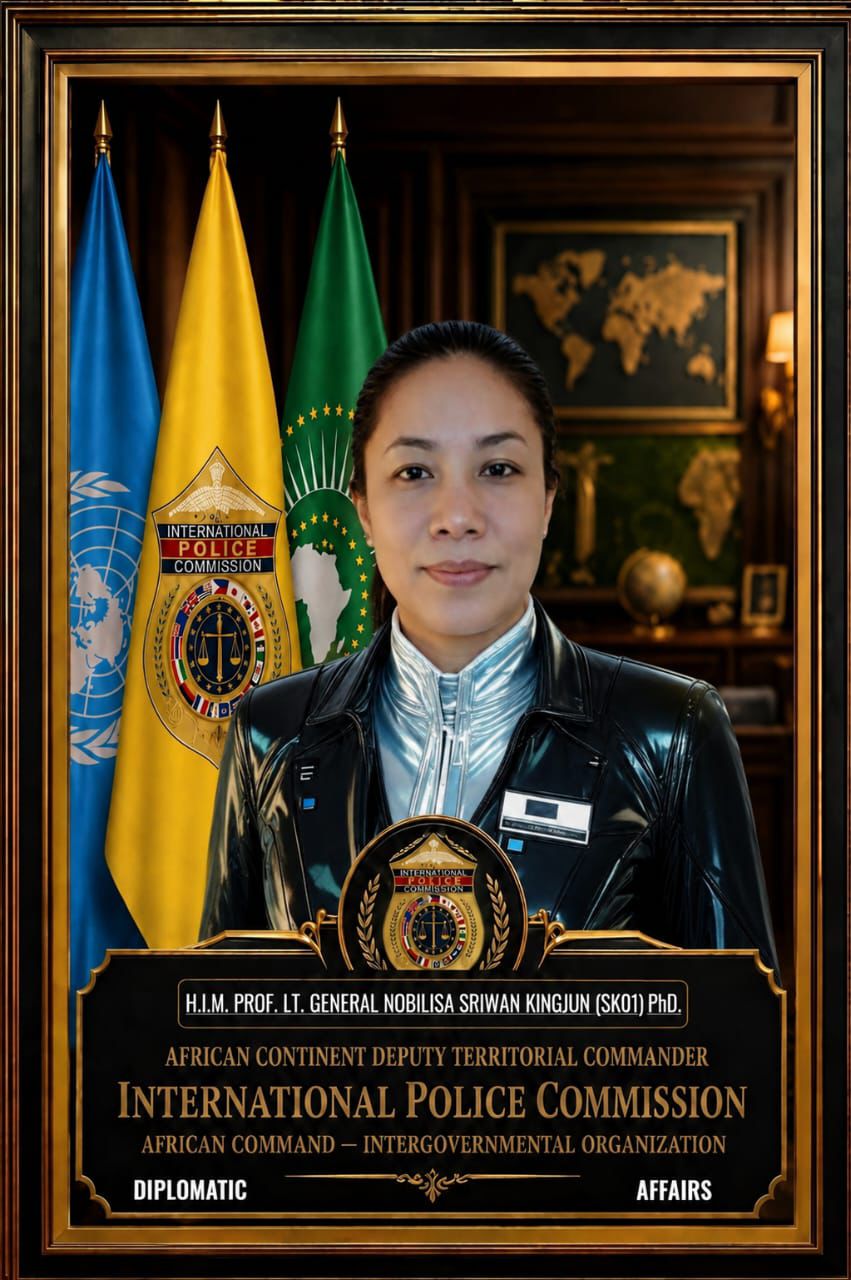
UKA Gears Up for Final ATC Exchangeability Test Run as June Preparations Begin.
May 30, 2026 – As the month of June gathers momentum, the *United Kingdom of Atlantis, UKA*, a sovereign nation has unveiled a series of vital guidelines and preparatory packages to ensure citizens and stakeholders run the *ATC Exchangeability* process effectively.
In an official update, the *President of Atlantic Crown Limited, Empress of Attica Empire UKA*, confirmed that the *Final Test Run of ATC Exchangeability* is scheduled for the month of June 2026. The exercise marks a key phase ahead of the *Official Exchangeability Window, set to run from July 2026 to February 2027*.
### Key Highlights from the Presidential Briefing
1. *Final Test Run – June 2026*
The test run is designed to validate systems, procedures, and user readiness before full activation. Citizens, partners, and designated participants are urged to follow all official advisories released by UKA authorities during this period.
2. *Official Exchangeability Period*
Following the successful completion of the June test run, the Official Exchangeability will commence in july 2026 and we are Expecting Full Exchange ability between July Ending, 2026 to February 2026.
UKA stated that detailed schedules, eligibility requirements, and step-by-step instructions will be communicated progressively through verified UKA channels.
3. *Benefiting Packages for June*
In line with UKA’s commitment to citizen empowerment, the month of June will feature “benefiting packages” aimed at education, preparation, and seamless onboarding. These packages are intended to equip the people of UKA with the knowledge and tools needed for effective participation.
4. *Commitment to Transparency*
Addressing the nation, the Empress of Attica Empire UKA emphasized:
_“Final Test Run of ATC Comes up in The Month of June, As We Prepare For The Official Exchangeability, Between July 2026 To Feb 2027. All Information Will Be Communicated.”_
UKA reaffirmed that only information released through official UKA platforms should be regarded as authoritative.
The United Kingdom of Atlantis is encouraging all citizens, representatives, and interested parties to remain alert to official communications, attend designated orientation sessions, and avoid unofficial sources. UKA’s dedication to order, clarity, and the collective benefit of its people as the nation moves into this significant phase.
For updates, advisories, and participation guidelines, citizens are advised to monitor official UKA communication channels.
United Kingdom of Atlantis, UKA, is a sovereign nation, committed to national development, citizen welfare, and structured economic participation through initiatives such as ATC Exchangeability.
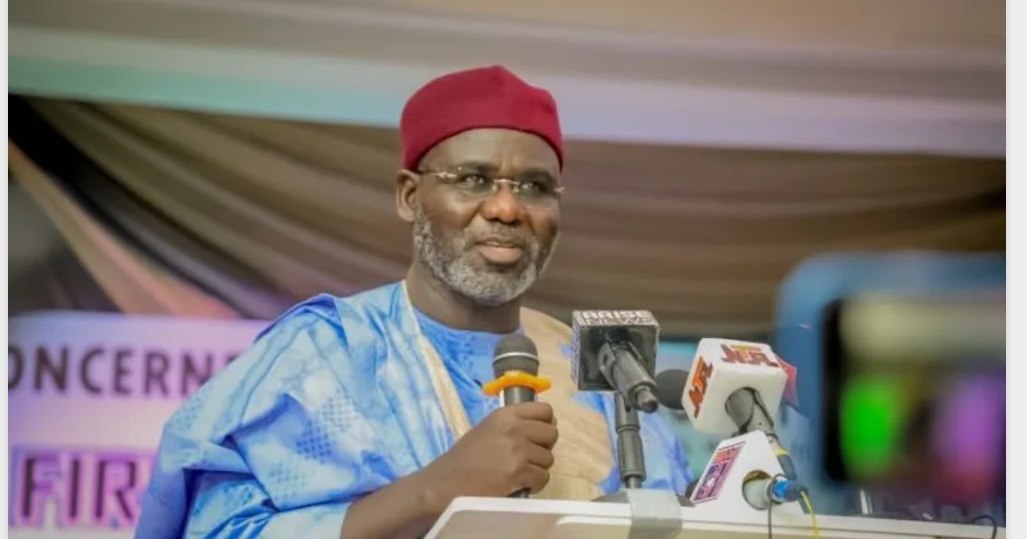
Three Years On, General Buratai Hails Tinubu’s Economic, Security Achievements
Former Chief of Army Staff, Lt. Gen. Tukur Buratai (retd.), has commended President Bola Ahmed Tinubu for what he described as bold economic reforms and improved security efforts as the President marks three years in office.
In a goodwill message on Thursday to commemorate Tinubu’s third anniversary as President and Commander-in-Chief of the Armed Forces, Buratai said the administration had taken courageous decisions that would leave a lasting impact on Nigeria’s development.

According to him, President Tinubu broke a long-standing cycle that had hindered national growth by removing fuel subsidy and implementing foreign exchange reforms aimed at stabilising the naira and strengthening the economy.
He noted that the reforms were beginning to yield positive results, citing the global acceptance of Nigerian debit cards, the gradual revival of local refineries, access to student loans, and ongoing road and infrastructure projects across the country.
“The FCT Administration has also recorded remarkable progress, completing major road projects that remained unfinished for over 16 years,” Buratai stated.
The former army chief also praised the administration’s security efforts, saying renewed military offensives against insurgents, terrorists and bandits had led to notable successes across various parts of the country.
He specifically lauded recent joint operations involving Nigerian and United States forces against Boko Haram and ISWAP in the North-East, as well as intensified counter-banditry operations in the North-West.
“We have seen notorious ISWAP commanders being neutralised. I congratulate the Commander-in-Chief, the Minister of Defence, the Chief of Defence Staff, the Service Chiefs, the Inspector-General of Police and heads of intelligence agencies for their efforts,” he said.
Buratai, however, acknowledged that challenges remained, stressing the need for more aggressive military operations and intelligence-driven strategies in the coming year.
While urging Nigerians to remain hopeful, he said celebrating the President’s achievements did not amount to ignoring the difficulties facing the nation.
“Because you truly care, you have shown the courage to trade short-term comfort for long-term hope. Nigerians need your reassurances, and that is why we remain optimistic and full of confidence,” he added.
The retired military officer reaffirmed his support for the Tinubu administration and expressed confidence that the foundation being laid by the government would deliver a brighter future for the country.
He also prayed for God’s guidance, wisdom, strength and good health for the President as he continues to lead Nigeria.


- National Insurance Corporation of Eritrea (NICE): Shareholders’ Annual Regular Meeting June 6, 2026
- World Cup accredited journalists raise concerns over unfair United States (US) visa restrictions, International Sports Press Association (AIPS) calls on FIFA to intervene June 6, 2026
- Ghana: President Mahama arrives in Belarus, lays wreath at Victory Monument June 6, 2026
- Liberia: President Boakai Advances Clean Energy Agenda; Dedicates 20-Megawatt Solar Power Plant at Mount Coffee June 6, 2026
- African Union (AU) Commission Chairperson mourns Passing of the Former Angola Minister of Foreign Affairs June 6, 2026
- Economic Community of West African States (ECOWAS) Welcomes Students on an Educational Visit to Its Headquarters June 6, 2026
- Seychelles: President Patrick Herminie attended Official Opening of Rise and Shine Day Care Centre at Mont Fleuri June 6, 2026
- Faith, fear and trust: Inside Democratic Republic of the Congo's (DR Congo) fight against Ebola June 6, 2026
- Economic Community of West African States (ECOWAS) Commission and Women in Law and Development (WiLDAF) Train Women Cross-Border Traders in The Gambia June 5, 2026
- Eritrea: Seminar to Nationals in The Hague June 5, 2026
- National Insurance Corporation of Eritrea (NICE): Shareholders’ Annual Regular Meeting June 6, 2026
- World Cup accredited journalists raise concerns over unfair United States (US) visa restrictions, International Sports Press Association (AIPS) calls on FIFA to intervene June 6, 2026
- Ghana: President Mahama arrives in Belarus, lays wreath at Victory Monument June 6, 2026
- Liberia: President Boakai Advances Clean Energy Agenda; Dedicates 20-Megawatt Solar Power Plant at Mount Coffee June 6, 2026
- African Union (AU) Commission Chairperson mourns Passing of the Former Angola Minister of Foreign Affairs June 6, 2026
- Economic Community of West African States (ECOWAS) Welcomes Students on an Educational Visit to Its Headquarters June 6, 2026
- Seychelles: President Patrick Herminie attended Official Opening of Rise and Shine Day Care Centre at Mont Fleuri June 6, 2026
-

 news6 months ago
WHO REALLY OWNS MONIEPOINT? The $290 Million Deal That Sold Nigeria’s Top Fintech to Foreign Interests
-

 society1 month ago
SOCIAL MEDIA IS NOT A BATTLEFIELD COMMAND – WHY THE NIGERIAN ARMY’S ACTION AGAINST JUSTICE CRACK IS A NATIONAL SECURITY IMPERATIVE
-

 celebrity radar - gossips4 months ago
Dr. Chris Okafor Returns with Power and Fire of the Spirit -Mounts Grace Nation Altar with Fresh Anointing and Restoration Grace on February 1, 2026
-

 celebrity radar - gossips6 months ago
Prophet Kingsley Aitafo Releases 2026 Prophecy: ‘Nigeria Will Rise, but the World Must Prepare for Turbulence’