
Politics
Tensions Soar in Rivers State as Ijaw Groups Warn Against Fubara’s Impeachment

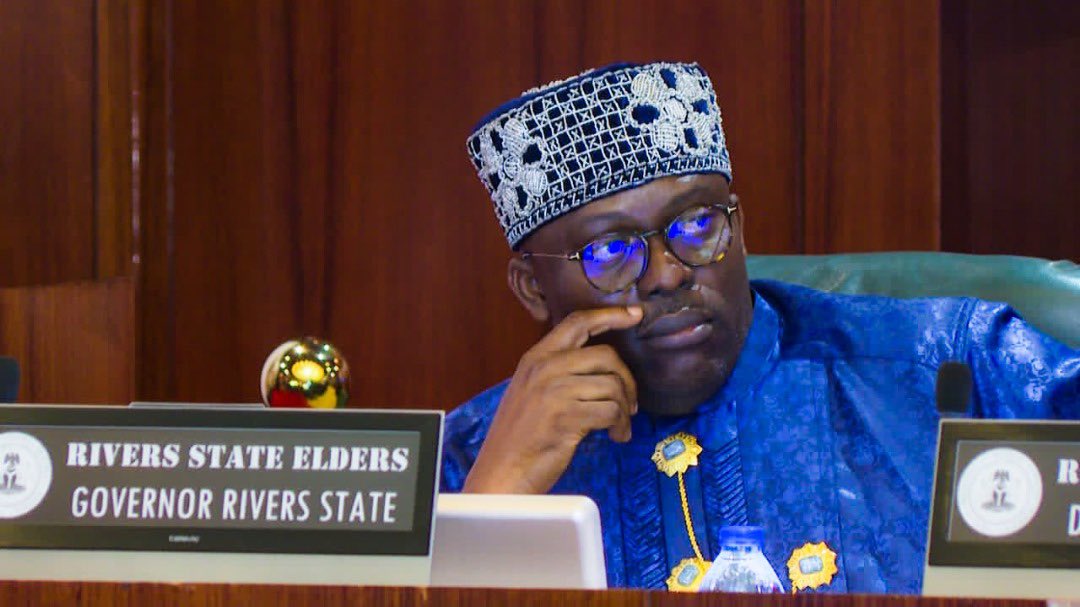
Tensions Soar in Rivers State as Ijaw Groups Warn Against Fubara’s Impeachment
The political crisis in Rivers State has reached a boiling point as major Ijaw groups, including the Ijaw National Congress (INC) and the Ijaw Youths Council (IYC), issued a stern warning against the impeachment of Governor Siminalayi Fubara. The groups declared their readiness to defend the governor’s mandate, warning that any attempt to remove him could destabilize the Niger Delta and disrupt oil production in the region.
Political Tensions Escalate
This warning comes after the expiration of a 48-hour ultimatum issued by the Martin Amaewhule-led Rivers State House of Assembly, demanding that Governor Fubara resubmit the 2025 budget for approval. The political face-off intensified after the Supreme Court’s ruling on February 28, 2025, reaffirmed the legitimacy of the Rivers Assembly while ordering the seizure of state allocations and nullifying the October 2024 local government elections.
At its first sitting following the ruling, the Assembly instructed Fubara to present the budget within 48 hours, emphasizing that failure to comply could result in severe consequences. With the deadline set to expire on March 5, 2025, tensions have escalated, prompting strong reactions from Ijaw groups and other stakeholders.
Ijaw Leaders Vow to Defend Fubara
Reacting to the developments, INC President Prof. Benjamin Okaba strongly condemned the impeachment threats, describing them as a direct attack on the Ijaw people, who he said have historically played a crucial role in Rivers State politics. He warned that any attempt to remove Fubara could have dire consequences for national peace and economic stability, particularly in the oil-rich Niger Delta.
“If Governor Fubara’s tenure is truncated by the Martin Amaewhule-led Assembly or any other force, the INC cannot guarantee the sustenance of the current peace in the Niger Delta, nor the continued rise in oil production,” Okaba declared.
Historical Context and Ijaw Contributions to Rivers Politics
Okaba recalled the sacrifices made by the Ijaw people in shaping Rivers State’s political landscape. He cited instances from 1999 when Ijaw leaders backed Dr. Peter Odili’s governorship bid, the assassination of Chief Marshal Harry in 2003 for supporting Sergeant Awuse, and the role of Ijaw warlords in securing electoral victories for Celestine Omehia and subsequent administrations.
Despite these sacrifices, Okaba lamented what he described as the systematic marginalization of the Ijaw people, warning that the ongoing political maneuvering to unseat Fubara would be fiercely resisted.
“The Ijaw nation will defend Fubara with every pint of blood in their veins,” he vowed.
Ijaw Youths Council Issues Ultimatum
The Ijaw Youths Council (IYC), led by its President Worldwide, Dr. Theophilus Alaye, also condemned the Supreme Court ruling, alleging political interference aimed at destabilizing Rivers State. Alaye warned that any attempt to impeach Fubara would be met with strong resistance from Ijaw youths across the Niger Delta.
“The nullification of the Rivers State local government elections while similar elections in other states were upheld is provocative and unacceptable. We have also noted how certain individuals, including the FCT Minister, have continuously boasted about a political tsunami in Rivers State,” Alaye said.
The IYC, Eastern Zone, also echoed similar concerns, warning the Rivers Assembly against plunging the state into violence. In a statement signed by Chairman Datolu Sukubo and Secretary Tamunokuro Dango, the IYC emphasized that the ultimatum given to Fubara was part of a broader scheme to create chaos and push for his impeachment.
“This is not only an attack on our leadership but also an affront to the will of the Rivers people who freely elected Fubara. We will resist any such attempts,” the statement read.
National and Economic Implications
The Ijaw groups further warned that any attempt to undermine Fubara’s government could have devastating consequences for the national economy, given that Rivers State plays a key role in Nigeria’s crude oil production.
“If Rivers State is starved of its economic rights, we will also starve the economy of Nigeria,” the IYC declared, hinting at possible disruptions to oil production should the impeachment efforts continue.
The groups called on President Bola Tinubu to intervene, urging the federal government to ensure that Rivers State’s political crisis is not dismissed as ordinary politicking. They stressed that the stakes were too high, warning that prolonged instability could jeopardize national security and economic stability.
Police and Security Responses
When contacted for a response to the threats issued by Ijaw groups, Rivers State Police Command spokesperson Grace Iringe-Koko declined to comment and referred journalists to Commissioner of Police Olugbenga Adepoju. However, efforts to reach the commissioner were unsuccessful, as he neither answered calls nor responded to messages at the time of filing this report.
As the political impasse continues, all eyes remain on the Rivers State Assembly’s next move and the potential fallout from the deepening crisis. Observers fear that if not carefully managed, the standoff could spiral into broader unrest, with grave implications for Rivers State and the Niger Delta at large.




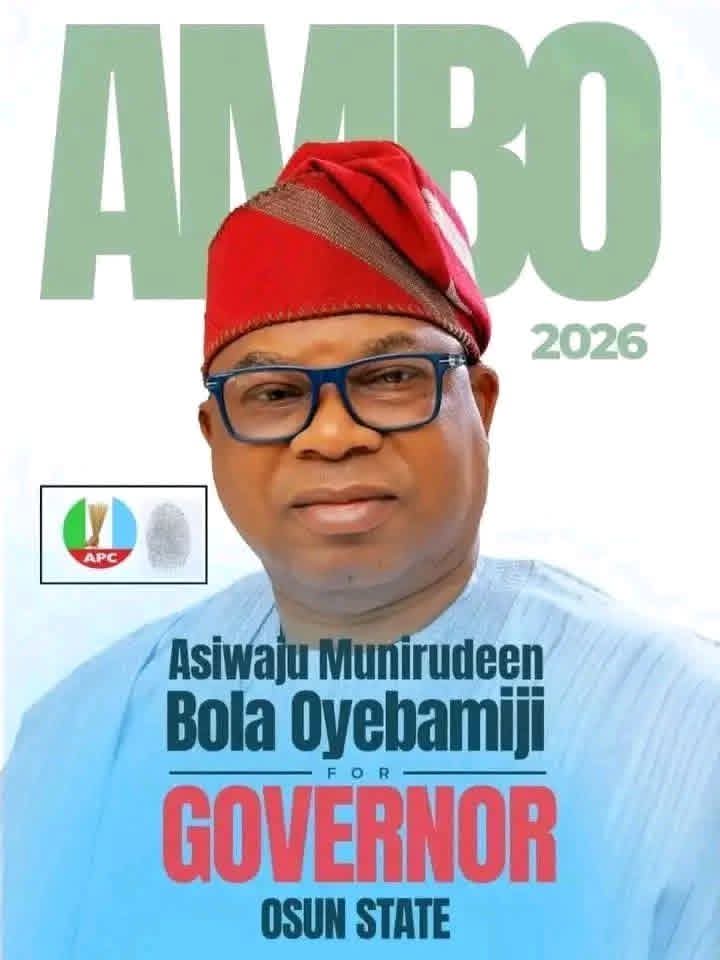
AMBO and the Osun Governorship Race: Assessing the Man, the Politics and the Vision
As political activities gather momentum ahead of the 2026 Osun State governorship election, a public affairs commentator, Oluseyi Olonade, has described the emergence of Asiwaju Munirudeen Bola Oyebamiji, popularly known as AMBO, as a significant development in the state’s political landscape.
In an article titled “Oyebamiji: The Man, The Politics and The Aspiration,” Olonade argued that the All Progressives Congress governorship hopeful possesses the character, experience and vision needed to reposition Osun State for sustainable growth.
According to the writer, Oyebamiji’s appeal stems from his extensive background in the banking sector, where he spent nearly three decades working with institutions including Wema Bank, Trans International Bank, Spring Bank and Enterprise Bank.
A native of Ikire in Irewole Local Government Area, Oyebamiji was described as a technocrat whose experience in corporate governance, finance and risk management has shaped his approach to public administration.
The article noted that his public service journey gained prominence in 2012 when he was appointed to oversee the then Osun State Investment Company Limited. Under his leadership, the organisation was reportedly restructured and transformed into Omoluabi Holdings Limited.
The writer further highlighted Oyebamiji’s tenure as Commissioner for Finance under successive APC administrations, where he was credited with managing the state’s finances during challenging economic periods.
Olonade also referenced Oyebamiji’s appointment as Managing Director of the National Inland Waterways Authority, describing it as further evidence of his administrative and leadership capabilities.
The article contrasted Oyebamiji’s governance philosophy with that of the current administration in Osun State, arguing that the APC aspirant favours institutional reforms, economic diversification and fiscal discipline.

According to the writer, Oyebamiji’s proposed agenda includes strengthening transparency in government spending, expanding internally generated revenue, attracting private-sector investments and promoting industrial and agricultural development.
The article also highlighted youth empowerment, entrepreneurship development and digital skills acquisition as key components of his vision for the state.
Olonade concluded that the forthcoming governorship election would present voters with a choice between different approaches to governance, expressing confidence that Oyebamiji’s experience and developmental agenda make him a strong contender in the race.
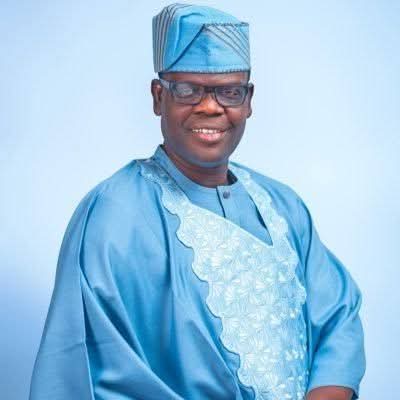
*Oselu Tiwa nTiwa Endorses Oriyomi Hamzat for Oyo Governorship*
A sociopolitical support group in Oyo State, Oselu Tiwa nTiwa, has declared its support for Alhaji Oriyomi Hamzat as the authentic governorship candidate of the Accord Party ahead of the forthcoming governorship election in the state.
The group made its position known in a statement jointly signed by its President, Mr. Adewale Oluwaseyi and Secretary, Alh. Adebayo Oyewole, on Thursday, describing Hamzat as a grassroots figure with strong connection to the people and a track record of humanitarian interventions across Oyo State.

According to the group, the endorsement followed what it described as careful observation of Hamzat’s leadership qualities, compassion and dedication to the welfare of ordinary citizens.
“Oriyomi Hamzat has consistently demonstrated empathy, courage and selfless commitment to humanity. Through his numerous interventions in the lives of ordinary citizens, he has become a symbol of hope to many families and communities,” the statement read.
Oselu Tiwa nTiwa also appealed to the national leadership of the Accord Party to prioritise the long-term future and electoral growth of the party in its decision-making process.
The group noted that Hamzat’s candidacy presents an opportunity for the party to strengthen its grassroots support base and expand its political relevance across Oyo State.
“We respectfully appeal to the National Leadership of the Accord Party to look beyond immediate political calculations and consider the bigger picture, the future growth, stability and electoral success of the party in Oyo State and beyond,” the statement added.
The group further expressed confidence in the leadership of the party, saying it believes the party’s national officers and stakeholders would take decisions that reflect fairness, inclusiveness and the collective interest of members.
While calling on party loyalists to remain calm and united, Oselu Tiwa nTiwa said continued consultations among stakeholders would help strengthen the Accord Party ahead of the election.
Signed:
Alh. Adebayo Oyewole,
Secretary.
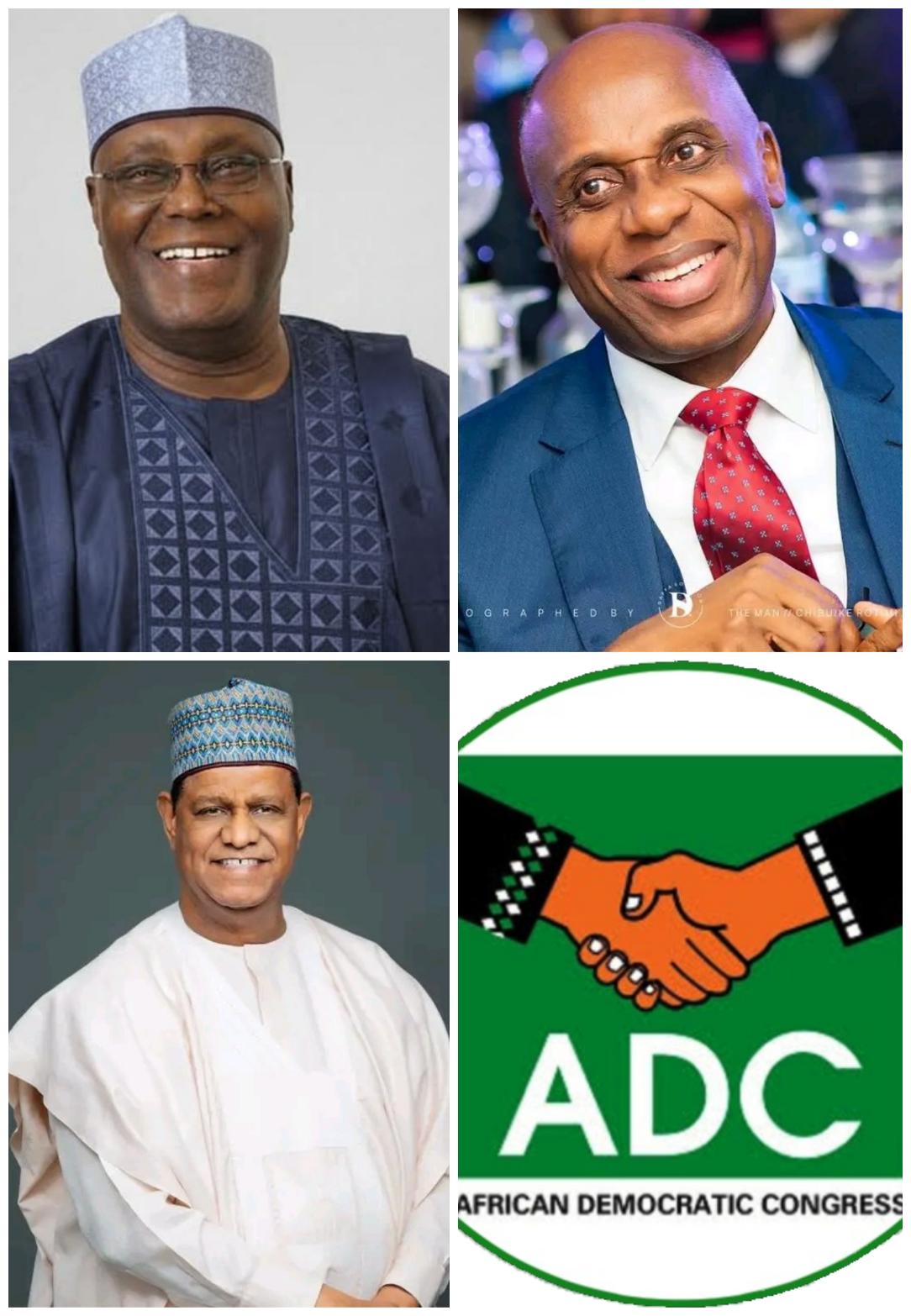
Atiku Set To Clinch ADC Presidential Ticket, Leads Amaechi, Hayatu-Deen In 34 States
Former Vice President of Nigeria and frontline presidential aspirant of the African Democratic Congress (ADC), Atiku Abubakar, is projected to emerge winner of the party’s presidential primaries, according to impeccable sources in Abuja.
The primaries, conducted across over 8,000 wards in the 36 states of the federation and the Federal Capital Territory, reportedly placed Atiku far ahead of his closest rivals — former Rivers State Governor, Rotimi Amaechi, and former Chairman of the Nigerian Economic Summit Group, Mohammed Hayatu-Deen.

Highly placed party insiders disclosed that Atiku is currently leading in 34 states, including the FCT, after securing dominance across the 19 Northern states, the five South-East states, and the six South-West states, while also maintaining a strong showing in at least three states in the South-South geopolitical zone.
The sources added that the outcome reflects what they described as “an overwhelming nationwide acceptance” of the former vice president within the opposition party ahead of the 2027 general election.
Meanwhile, the ADC leadership has invited members of the press to the official announcement of the final collated results scheduled for 11:00 a.m. on Tuesday, May 26, 2026, in Abuja.
The declaration of results is expected to be broadcast live on ARISE Television and two other major television stations, while also being livestreamed on the party’s official social media platforms on X and Facebook.
Speaking ahead of the announcement, the founding National Chairman of the ADC, Chief Ralph Nwosu, said the decision to televise the exercise live was aimed at promoting transparency and democratic accountability.
“We want millions of Nigerians at home and in the Diaspora to witness democracy in action,” Nwosu said.
He further revealed that the party leadership would encourage all three presidential aspirants to publicly embrace a peace accord and commit themselves to working together in unity for the party’s success.
According to him, the move is necessary to strengthen internal cohesion and position the ADC for victory in the presidential election scheduled for January 16, 2027.
Details later.


- African Development Bank 2026 Annual Meetings: Governors Endorse the Four Cardinal Points and Call for Accelerated Reform of Africa’s Financial Architecture May 31, 2026
- Annual Meetings (AM) 2026: The African Development Bank Group’s Rome Process/Mattei Plan Financing Facility announces Clean Cooking Program at 2026 Annual Meetings May 31, 2026
- Economic Community of West African States (ECOWAS) has Deployed a Technical Mission to Observe the Legislative and Local Elections of May 31, 2026 in Guinea May 31, 2026
- President Herminie Attends Seychelles Football Federation (SFF) Cup Final and Presents Trophy to Bazar Brothers FC May 31, 2026
- ‘You are not alone’: World Health Organization (WHO) chief vows to stand with Democratic Republic of the Congo (DR Congo) through Ebola outbreak May 31, 2026
- United Arab Emirates (UAE) Expresses Solidarity with Kenya and Conveys Condolences over Victims of Girls’ School Dormitory Fire May 31, 2026
- Pitcher Awards Announces 2026 Winners, Marking a Landmark Year for Pan‑African Creativity May 30, 2026
- Ghana Commemorates 78th International Day of United Nations Peacekeepers May 30, 2026
- South Africa: President Ramaphosa receives second interim report of Madlanga Commission May 30, 2026
- Asmara Marathon 2026 to be held May 30, 2026
- African Development Bank 2026 Annual Meetings: Governors Endorse the Four Cardinal Points and Call for Accelerated Reform of Africa’s Financial Architecture May 31, 2026
- Annual Meetings (AM) 2026: The African Development Bank Group’s Rome Process/Mattei Plan Financing Facility announces Clean Cooking Program at 2026 Annual Meetings May 31, 2026
- Economic Community of West African States (ECOWAS) has Deployed a Technical Mission to Observe the Legislative and Local Elections of May 31, 2026 in Guinea May 31, 2026
- President Herminie Attends Seychelles Football Federation (SFF) Cup Final and Presents Trophy to Bazar Brothers FC May 31, 2026
- ‘You are not alone’: World Health Organization (WHO) chief vows to stand with Democratic Republic of the Congo (DR Congo) through Ebola outbreak May 31, 2026
- United Arab Emirates (UAE) Expresses Solidarity with Kenya and Conveys Condolences over Victims of Girls’ School Dormitory Fire May 31, 2026
- Pitcher Awards Announces 2026 Winners, Marking a Landmark Year for Pan‑African Creativity May 30, 2026
-

 news6 months ago
WHO REALLY OWNS MONIEPOINT? The $290 Million Deal That Sold Nigeria’s Top Fintech to Foreign Interests
-

 society4 weeks ago
SOCIAL MEDIA IS NOT A BATTLEFIELD COMMAND – WHY THE NIGERIAN ARMY’S ACTION AGAINST JUSTICE CRACK IS A NATIONAL SECURITY IMPERATIVE
-

 celebrity radar - gossips4 months ago
Dr. Chris Okafor Returns with Power and Fire of the Spirit -Mounts Grace Nation Altar with Fresh Anointing and Restoration Grace on February 1, 2026
-

 celebrity radar - gossips6 months ago
Prophet Kingsley Aitafo Releases 2026 Prophecy: ‘Nigeria Will Rise, but the World Must Prepare for Turbulence’