
society
The Aftermath of US Airstrikes on Nigerian Soil: Benue Under Siege; Bandits Influx as Sokoto Terror Networks Disintegrate

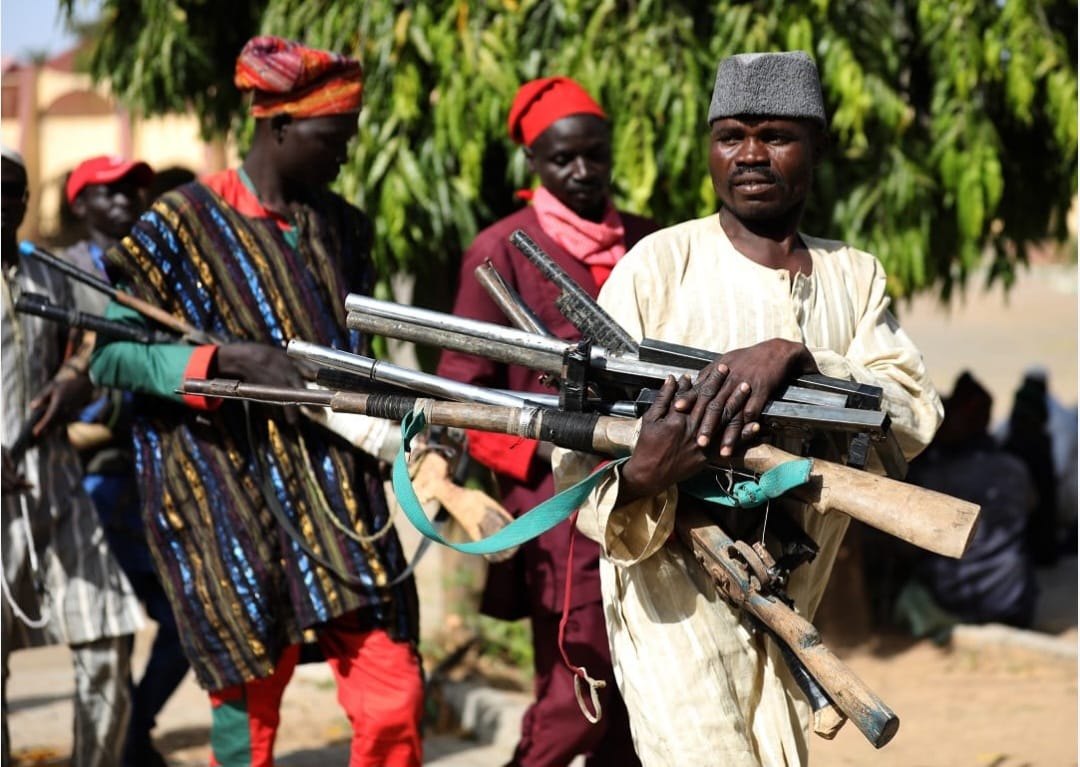
The Aftermath of US Airstrikes on Nigerian Soil:
Benue Under Siege; Bandits Influx as Sokoto Terror Networks Disintegrate.
By George Omagbemi Sylvester | Published by saharaweeklyng.com
“A Strategic Blow to Extremists Triggers Displacement, Security Gaps and Alarms Across Central Nigeria.”
In the cold aftermath of a decisive December 25, 2025 United States-backed military operation targeting extremist hideouts in northwestern Nigeria, tremors of instability have rippled far beyond the forests of Sokoto State. What was intended as a strategic strike against terror cells has morphed into a multidimensional security challenge; particularly with alarming reports of armed bandits and displaced militants infiltrating Benue State, forcing local leaders and security analysts to raise urgent warnings.
The traditional ruler and Chairman of the Traditional Council in Gwer West Local Government Area of Benue, Daniel Abomtse, has unequivocally stated that an influx of heavily armed herders and suspected bandits moving from Sokoto into his domain has been observed since the US-backed airstrikes. He disclosed that these elements have been sighted with sophisticated arms and grazing openly in communities such as Agatu LGA, describing the movement as a direct fallout from the aerial campaign against strongholds up north.
Abomtse’s alarm is neither speculative nor isolated. Security sources and community leaders in Sokoto’s Tangaza, Gudu, and Illela areas report significant dislocation and movement among armed bandits following the strikes. Many criminals have reportedly abandoned known hideouts, choosing to trek in smaller cadres through forest corridors or to disperse across borders to evade increased aerial and ground surveillance.
This shift in criminal dynamics highlights two painful realities: first, the interconnectedness of Nigeria’s security threats; where armed bandits, ethnic militias and jihadist elements often overlap in both motive and geography; and second, that unilateral military action, especially from foreign powers, can sometimes displace the problem rather than extinguish it. Analysts fear that if these armed groups land in regions like Benue, the human cost could be catastrophic.
Context: What the US Strikes Targeted and Why? The airstrikes, confirmed by multiple international sources, were carried out with precision-guided munitions fired from U.S. military drones and launched from naval platforms in the Gulf of Guinea, aimed at camps linked to the Islamic State Sahel Province (ISSP) with particularly a faction known locally as LAKURAWA. These groups are believed to operate near the Nigeria-Niger border, using remote forests as cover to plan raids, kidnappings and violent incursions.
Although Nigerian officials maintain that the operation was conducted within a framework of security cooperation and at Nigeria’s request, the broader geopolitical narrative carries competing interpretations. Some external voices framed the strikes as retaliation for attacks on Christians, a characterization the Nigerian government has publicly rebuffed, stressing the indiscriminate nature of violent extremism affecting all communities.
Notably, no confirmed casualties of militants were officially reported, leading to questions about the tactical impact of the strike and whether it was symbolic more than substantive. Local villagers in the strike regions reported shaking ground and a terrifying glow in the sky as missiles hit nearby lands, but with no concrete evidence of hardened militants being neutralized.
Benue’s Pre-Existing Security Crisis Heightens the Concern. Benue State has long been a crucible of insecurity and a battleground where armed herders, local militias and bandit groups have clashed with farming communities over land, resources and political power. Reports by human rights organizations have documented catastrophic attacks across multiple LGAs like Ukum, Logo, Katsina-Ala, Gwer East and West and Agatu, where villages were sacked, boreholes and clinics razed and entire populations displaced.
A respected voice in security analysis, Professor Ibrahim Suleiman, an expert on West African militancy, recently observed:
“When pressure is applied in one theatre of insurgency without comprehensive containment strategies, criminal networks (whether bandits or jihadist proxies) simply adapt and migrate. Zones like Benue become unintentional reservoirs of displaced armed actors unless multi-layered strategies are deployed.”
His warning underscores that the movement of bandits into Benue could inflame already volatile fault lines between pastoralist and agrarian communities which is a tinderbox that has devastating humanitarian consequences.
Bandits, Militias and the Crime-Terror Continuum. Nigeria’s insecurity landscape is not monolithic. Many of the actors involved in banditry are motivated by a mix of criminality, local grievances, economic incentives and ideological influences. In northwest Nigeria, some bandit groups have sustained uneasy alliances with extremist organizations like ISSP in pursuit of logistical support, revenue streams and territorial leverage.
Benue’s case illustrates this complexity. Local militias and armed herders are often not ideological insurgents but have become increasingly militarized, sometimes working with or benefiting from larger networks. Earlier research highlights how porous borders, ungoverned forest corridors and socioeconomic deprivation make states like Benue vulnerable to such infiltration.
Security expert Dr. Maryam Audu elaborates:
“When displaced bandits and militant elements enter a new region with fragile governance and social dislocation, they do not simply disappear. They embed, co-opt local grievances and often transform into even more complex threats whereby exploiting ethnic tensions and weak law enforcement.”
Her words resonate loudly as reports from Benue increasingly speak of newly sighted armed men blending into herding and farming communities.
The Human Toll and Societal Impact..Beyond the strategic chessboard of military engagement lies a human catastrophe. Benue’s agricultural heartland, often hailed as the “Food Basket of the Nation,” has already seen its production crippled, educational systems disrupted and communities devastated. Internally displaced persons (IDPs), already numbering in the hundreds of thousands in northern states, may see fresh waves of distress if bandit presence expands.
Dr. Chukwuemeka Udeh, a humanitarian specialist, warns:
“Displaced fighters entering agrarian zones push fear, disruption and food insecurity to the forefront. We risk not only violent conflict but long-term societal collapse especially when communities abandon farms, schools close and trust in the state erodes.”
Policy Gaps and the Way Forward. The current situation reveals critical gaps in Nigeria’s security architecture: reactive tactics without strategic depth, piecemeal enforcement without socio-economic anchoring, and foreign military intervention without robust domestic stabilization plans. A narrow focus on kinetic strikes must be recalibrated to include:
Strengthened border security and intelligence sharing to track movement of armed groups beyond political frontiers.
Community-based peacebuilding initiatives to undercut local recruitment into bandit ranks.
Integration of socio-economic development programs that address poverty and exclusion in rural and pastoral zones.
Judicial and security reforms to restore confidence in law enforcement and accountability.
In the words of veteran peace negotiator Chief Bola Osagie:
“Security devoid of justice is a mirage. Unless we combine force with fairness, strategy with empathy and enforcement with opportunity, we will chase shadows while our people suffer.”
Rhe Way Forward. The airstrikes, while a bold strategic gesture, have inadvertently underscored the interdependence of Nigeria’s security challenges. Benue’s rising bandit influx is a clarion call that the battle against violent extremism cannot be waged through sporadic bombardment alone. It demands cohesive policies, community resilience, and a relentless pursuit of justice.
As Nigeria navigates this turbulent chapter, the fate of Benue hangs in the balance with a stark reminder that when one front of insecurity is pressured, another can erupt unless the root causes are confronted with courage, clarity and compassion.






US-Based Society Lady, Fehintola-Brat Extends Eid-El-Kabir Greetings To Muslims
United States based fahionista of class, Chief (Mrs) Ayoola Fehintola-Brat has extended a warm greetings to Muslim faithful all over the world on the occasion of the 2026 Eid-El-Kabir celebration.
Fehintola-Brat who is the Balogun Egbe Obaneye Obinrin Akile Ijebu, and the Yeye Asofin of Idenaland in her message to Journalists urged Muslim to continually uphold the enduring values of sacrifice, obedience, faith, and compassion, which are central to the significance of Eid-El-Kabir festival.
A quiet philantropist whose humanitarian services has won her several laurels urged Muslims to use the spiritual occasion to pray for the peace co-existence of Nigerians regardless of religious, social and political leanings stressing that the oneness of the country should not be underplay.
In a related development, she expressed her felicitations to all sons and daughters of Ijebuland on the forthcoming Ojude Oba 2026 celebration, tasking age-groups otherwise known as Regbregbe to be more proactive in giving back to their immediate communities.
According to her, the beauty of the age-groups in Ijebuland is the need to contribute immensely to the development of the land in no small means. “This we will continue to achieve with God on our side”, she concluded.

Sallah: Obasa Felicitates Muslim Ummah, Commends Nigerians for APC Primaries Turnout
The Speaker of the Lagos State House of Assembly, Rt. Hon. Mudashiru Obasa has extended warm felicitations to Muslims in Lagos State and across Nigeria on the occasion of Eid al-Adha.
In a statement released by his Chief Press Secretary, Mr. Dave Agboola, Obasa described the festival as a season of sacrifice, reflection, and gratitude, urging the faithful to continue to uphold the values of peace, unity, and love that strengthen the nation.
He noted that the celebration of Eid al-Adha is not only a spiritual milestone but also a reminder of the importance of togetherness and collective responsibility in building a stronger society.
He, likewise, emphasized that the festival provides an opportunity for Nigerians to renew their commitment to national progress and to support leadership that prioritizes development and prosperity.
Obasa, however, commended Nigerians, particularly members of the All Progressives Congress (APC), for their massive turnout during the recently concluded party primaries. He described the participation as a clear demonstration of the people’s confidence in the government of President Bola Ahmed Tinubu and their belief in the administration’s vision for a greater Nigeria.
“The APC primaries have shown the resilience of our democracy and the confidence Nigerians have in the leadership of President Bola Ahmed Tinubu and the Renewed Hope Agenda. This is a strong message that our people are ready to continue supporting policies that will drive growth and prosperity,” Obasa stated.
The Speaker further encouraged Muslims to celebrate responsibly, stressing that the joy of Eid should be accompanied by prayers for the continued peace and progress of Lagos State and Nigeria.
“As you celebrate with family and loved ones, may this season bring joy, peace, and prosperity to your homes. Let us remain united in our resolve to build a stronger nation,” he added.
On behalf of the Lagos State House of Assembly, Obasa wished all Muslims a happy and fulfilling Eid al-Adha celebration.

ABEOKUTA FILM FESTIVAL AT ILEYA
Kayshow Multimedia a filmmaking and Media organization this year 2026 holds its annual Abeokuta film festival at the Ake Palace in Abeokuta.
Alake of Egba land, Ọba Michael Adedotun Arẹmu Gbadebo has graciously endorsed the Free Training of Egba Youths on Film and Arts and the Entertainment of the the People with a FREE FILM SHOW at the AKE PAVILION. as part of the ABEOKUTA FILM FESTIVAL 2.0.
The Convener of the Film Festival Honorable Kehinde Soaga says this year’s event promises to be more exciting as distinguished personalities are sure to attend.
This includes the honorable Minister for Art Culture and Creative Economy in Nigeria, Barr. Hannatu Musa Musawa, Ààrẹ Lai Labode, Sen. Ibikunle Amosun and other special guests.
The event will feature Film, Cultural Dance Cultural foods and Award Ceremony.
The general public is hereby invited to the Free film show at the Abeokuta film festival at the Alake Palace Pavilion on Thursday 28th of May 2026 by 4:00 p.m.
Only well dressed is the Entry. The Abeokuta Film Festival is an annual event taking place in the capital city of Ogun State state.


- Qrent says delaying Information Technology (IT) refresh cycles may be increasing operational risk for businesses in Africa May 27, 2026
- Dentons’ Iyunola Adekanye Appointed to African Mining Week (AMW) Advisory Board May 27, 2026
- United Nations (UN) Women Liberia and Partners Convene for Spotlight Initiative 2.0 Women’s Economic Empowerment Inception Meeting May 27, 2026
- African Mining Week (AMW) to Host Central Bank Governors Roundtable as Monetary Authorities Deepen Role in Mining Sector Growth May 27, 2026
- Eritrea: Diaspora Nationals Celebrate Independence Day Anniversary May 27, 2026
- Africa Unveils Landmark Humanitarian Coordination Platform to Strengthen aligned Response to Humanitarian Crises May 27, 2026
- Seychelles: President Herminie Engages with Police and Fire Services on Praslin May 27, 2026
- Issue 3 of Mining Review Africa now available for free download May 27, 2026
- NOV Joins African Energy Week (AEW) 2026 as Gold Sponsor Amid Africa’s Offshore Expansion Push May 26, 2026
- African Union of Broadcasting (AUB) and United Nations University Institute for Water, Environment and Health (UNU-INWEH) Launch Landmark Webinar Series on Africa’s Water Crisis, Starting June 2, 2026 May 26, 2026
- Qrent says delaying Information Technology (IT) refresh cycles may be increasing operational risk for businesses in Africa May 27, 2026
- Dentons’ Iyunola Adekanye Appointed to African Mining Week (AMW) Advisory Board May 27, 2026
- United Nations (UN) Women Liberia and Partners Convene for Spotlight Initiative 2.0 Women’s Economic Empowerment Inception Meeting May 27, 2026
- African Mining Week (AMW) to Host Central Bank Governors Roundtable as Monetary Authorities Deepen Role in Mining Sector Growth May 27, 2026
- Eritrea: Diaspora Nationals Celebrate Independence Day Anniversary May 27, 2026
- Africa Unveils Landmark Humanitarian Coordination Platform to Strengthen aligned Response to Humanitarian Crises May 27, 2026
- Seychelles: President Herminie Engages with Police and Fire Services on Praslin May 27, 2026
-

 news5 months ago
WHO REALLY OWNS MONIEPOINT? The $290 Million Deal That Sold Nigeria’s Top Fintech to Foreign Interests
-

 society3 weeks ago
SOCIAL MEDIA IS NOT A BATTLEFIELD COMMAND – WHY THE NIGERIAN ARMY’S ACTION AGAINST JUSTICE CRACK IS A NATIONAL SECURITY IMPERATIVE
-

 celebrity radar - gossips4 months ago
Dr. Chris Okafor Returns with Power and Fire of the Spirit -Mounts Grace Nation Altar with Fresh Anointing and Restoration Grace on February 1, 2026
-

 celebrity radar - gossips6 months ago
Prophet Kingsley Aitafo Releases 2026 Prophecy: ‘Nigeria Will Rise, but the World Must Prepare for Turbulence’