
celebrity radar - gossips
The Dreamers Who Prefer to Smile While Standing in the Ashes


The Dreamers Who Prefer to Smile While Standing in the Ashes.
George Omagbemi Sylvester | Published on saharaweeklyng.com
“We pray for change; then we applaud the status quo.”
The tragedy of Nigeria is not a lack of intelligence, talent or even ambition, it is the absence of collective courage. The average Nigerian dreams of the best, prays for transformation, but trembles at the thought of doing what it takes to make that dream real. He is content to “suffering and smiling” as the late Fela Anikulapo Kuti sang, while waiting for salvation from a system he secretly knows is rotten to the core.
We are a nation of dreamers not doers; believers, not builders. We talk revolution at night and queue for handouts in the morning. Everyone laments corruption, but only a few dare to challenge it. We all desire a better Nigeria, yet most Nigerians fear the discomfort that true change demands.

Our national mindset has been conditioned to equate endurance with virtue. We glorify survival instead of progress. Instead of fighting back, we have learned to adapt to hardship (living without light, without security, without hope) and calling it “God’s will.” This attitude has birthed generations of citizens who prefer endurance to resistance.
The late literary icon Chinua Achebe once declared, “The trouble with Nigeria is simply and squarely a failure of leadership.” Leadership is not born in isolation; it grows from a people willing to demand accountability. The Nigerian tragedy, therefore, is not just in bad governance but in citizen complacency but the silence of millions who prefer to smile in the ashes rather than rebuild from the ruins.
According to the National Bureau of Statistics (NBS), over 133 million Nigerians live in multidimensional poverty; deprived of access to clean water, health care, education or secure income. Yet, the outrage is mild. Instead of mass civic awakening, we see mass migration. The World Bank estimates that more than 1.2 million Nigerian professionals have left the country in the last five years, draining critical sectors such as medicine, engineering and academia.
Dreamers keep leaving; the timid keep surviving.
History offers us instructive contrasts. Some nations reached a breaking point (that sacred threshold where silence was no longer an option) and chose to stand.
South Africa did it in 1994, after decades of apartheid. The courage of Nelson Mandela and countless unnamed revolutionaries changed the course of history. They decided it was “now or never.” For them, freedom was not a prayer point; it was a moral obligation.
Ghana did it in 1957, when Kwame Nkrumah declared independence and rallied his people around self-reliance and dignity. They did not wait for perfect conditions; they created them.

Tunisia did it in 2011, when the self-immolation of Mohamed Bouazizi sparked the Arab Spring, ending decades of dictatorship.
Even Rwanda, ravaged by genocide in 1994, stood up, redefined itself and became one of Africa’s most disciplined societies.
Each of these nations reached a point where fear was no longer an option and they transformed because citizens decided to act.
In contrast, Nigeria (with her unmatched human capital, oil wealth and global influence) still crouches beneath the weight of timidity. We have perfected the art of complaining without confrontation. We hide behind tribalism, religion and pessimism, waiting for messiahs who never come.
Dr. Ngozi Okonjo-Iweala, current Director-General of the World Trade Organization, once said, “Reform is never easy. Those who benefit from the old ways will always resist change.” But Nigerians themselves, too, often resist reform. Why? Because true reform requires short-term pain and we have grown allergic to discomfort.
We want electricity but reject tariff adjustments. We want good governance but sell our votes for ₦5,000. We want leaders with integrity but glorify looters who share food during elections.

This moral inconsistency keeps us trapped in the cycle of stagnation. Economists call it “rational inertia”, the tendency of societies to prefer familiar misery over unfamiliar hope.
When President Bola Tinubu removed fuel subsidy in 2023, the same Nigerians who once criticized Goodluck Jonathan for “cowardice” in 2012 suddenly called the move “heartless.” Yet, every credible economist (from Bismarck Rewane to Dr. Doyin Salami) agrees that subsidy removal was essential to stabilizing Nigeria’s collapsing fiscal structure. But because we have been trained to seek comfort over correction, we sabotage necessary change even when it is for our collective good.
The Spirit of Revolution (Not in Blood, but in Mind.
The revolution Nigeria needs is not a bloody uprising. It is a revolution of responsibility) where citizens decide that enough is enough. The courage to demand transparency, to reject tribal politics, to participate in governance and to hold public officers accountable.
Countries that rose from chaos did not do so because of divine luck; they did so because ordinary men and women refused to surrender. South Africans defied fear to dismantle apartheid. Tunisians risked their lives to end tyranny. Rwandans rebuilt a shattered nation brick by brick.
When will Nigerians stop outsourcing courage to God? When will we realize that God blesses effort, not excuses?
Data Doesn’t Lie, Nigeria’s youth population (over 70% under the age of 35) is its greatest asset, yet also its greatest untapped potential. UNESCO reports that about 10.5 million Nigerian children remain out of school; the highest in the world. The World Bank ranks Nigeria among the top 10 countries with the worst human capital indices in 2024.
We are a nation sitting on a demographic goldmine, but instead of mining it through education, innovation and governance, we are exporting it through migration.
As Professor Wole Soyinka once noted, “The man dies in all who keep silent in the face of tyranny.” That silence, today, has become deafening. We have grown comfortable in fear and fluent in endurance.
To fix Nigeria, we must break this culture of passive optimism. Dreaming is not enough, but doing is the true measure of belief. The young must take ownership of their destiny, not just through hashtags and protests but through political participation, innovation and civic involvement.
Run for office. Build cooperatives. Join reform movements. Start small, but start somewhere.
Nigerians abroad (from Johannesburg to London) must redirect part of their remittances to projects that build, not just sustain, families. Communities must take charge of local schools, hospitals and policing. Accountability begins at the grassroots.
Dr. Akinwumi Adesina, President of the African Development Bank, once said, “Africa does not need pity. It needs fair policies and empowered people.” Empowerment begins when the people stop being spectators.
Every generation faces its defining moment (its “now or never.” For South Africa, it was apartheid. For Ghana, it was independence. For Tunisia, it was dictatorship. For Nigeria, it is moral paralysis) the choice between perpetual complaint and collective courage.
If 220 million Nigerians decide, truly decide, that this is the moment to stand, the story will change. We will no longer be the giant of Africa in name only, but in substance, in vision and in courage.
Closing Reflection.
A chronic disease that has spread to every organ can only be cured by radical treatment. Nigeria’s moral and civic illness demands a similar remedy; one rooted in discipline not denial.
If South Africa could defeat apartheid, if Rwanda could rise from genocide, then Nigeria can surely rise from mediocrity. But only when her dreamers stop standing and smiling; and start marching and building.
The choice is ours: to keep narrating dreams or to start living them.




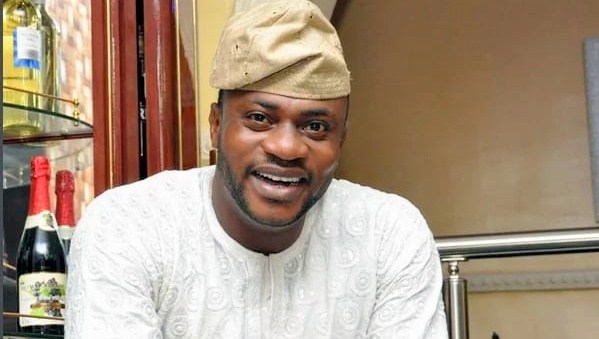
King of the Screen: Why Odunlade, Muyiwa, Femi Adebayo Remain Yoruba Movie Giants
The Yoruba movie industry has continued to produce legendary talents whose influence stretches beyond Nigeria to global audiences. Over the years, some actors have distinguished themselves through consistency, versatility, box office success, and cultural impact.
Among the numerous stars in Nollywood’s Yoruba sector, three actors have remained dominant figures whose names constantly resonate with fans and filmmakers alike — Odunlade Adekola, Muyiwa Ademola, and Femi Adebayo.

Odunlade Adekola: The Street King of Yoruba Cinema
Popularly regarded as one of the most entertaining actors in Nollywood, Odunlade Adekola has built a unique reputation through his energetic delivery, comic timing, emotional depth, and strong connection with grassroots audiences.
From comedy to action and emotional family dramas, the actor has consistently proven his versatility in blockbuster productions. His ability to interpret diverse roles effortlessly has made him a household name across Nigeria.
Industry observers believe his dominance on social media platforms, where his movie clips frequently go viral, has further strengthened his popularity among younger audiences.
Beyond acting, Odunlade has also contributed immensely to mentoring upcoming talents and expanding the commercial value of Yoruba films.
Muyiwa Ademola: The Master Storyteller

For many lovers of indigenous movies, Muyiwa Ademola remains one of the finest storytellers the Yoruba film industry has produced.
Widely respected for producing emotional and morally driven movies, the actor earned massive recognition through classic productions that focused on family values, culture, betrayal, perseverance, and societal lessons.
His calm delivery, deep scripts, and originality have kept him relevant despite changing trends in the entertainment industry.
Film critics often describe Muyiwa Ademola as one of the few actors whose productions combine entertainment with strong cultural education, making his movies timeless among older and younger viewers alike.
Femi Adebayo: The Modern-Day Box Office Force

Femi Adebayo has successfully combined traditional Yoruba storytelling with modern cinematic excellence, helping to project indigenous films to international audiences.
The actor, filmmaker, and producer has recorded major successes with high-budget productions that gained attention on streaming platforms and cinemas.
Known for his professionalism and attention to detail, Femi Adebayo has continued to push Yoruba movies beyond local boundaries while preserving cultural identity.
Entertainment analysts say his ability to blend culture, technology, and quality production has positioned him among the leading faces shaping the future of Yoruba cinema.
Growing Global Influence
The success of these actors reflects the increasing acceptance of indigenous Nigerian content globally. With streaming platforms creating wider access to local movies, Yoruba actors are now gaining international recognition and attracting new audiences.
Fans and stakeholders in the entertainment industry believe the contributions of Odunlade Adekola, Muyiwa Ademola, and Femi Adebayo have not only sustained Yoruba culture through film but have also elevated Nollywood’s global reputation.
celebrity radar - gossips
Eid-el-Kabir: Olowu of Kuta Urges Peace, Unity, Selflessness Among Nigerians
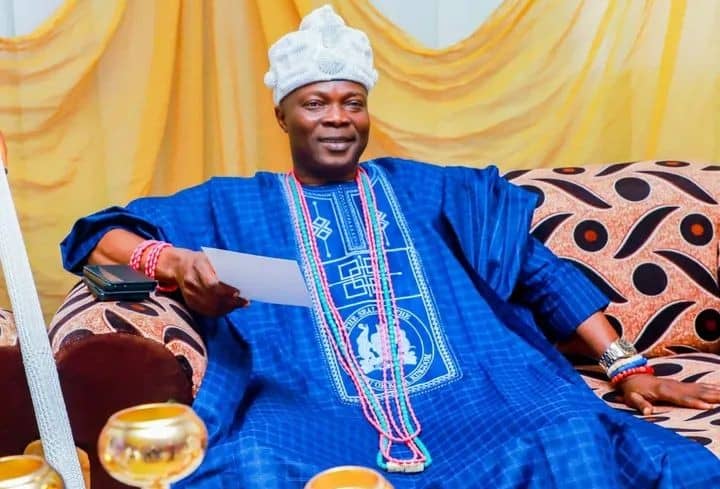
Eid-el-Kabir: Olowu of Kuta Urges Peace, Unity, Selflessness Among Nigerians
The Olowu of Kuta, HRM Oba Dr. Hammed Makama Oyelude, CON, Tegbosun III, has called on the Muslim Ummah and all Nigerians to make peace, unity, and selflessness their guiding principles as the world marks this year’s Eid-el-Kabir celebration.
In his Sallah message, the revered monarch described Eid-el-Kabir as a “highly spiritual occasion that demands dedication, commitment, and selflessness.”
Oba Makama said the period should be used to reflect on societal happenings and promote messages of hope and unity without inciting provocation.
He urged Nigerians to live together harmoniously, irrespective of religious, political, or tribal affiliations, stressing that politicians should exercise restraint and avoid inflammatory rhetoric ahead of the 2027 general elections.
“What should be uppermost in the mind of every patriotic Nigerian is **‘Country first,’” he said.
The monarch also appealed to citizens to remain vigilant in the face of insecurity, reassuring that the armed forces and paramilitary agencies are working round the clock to ensure a smooth and peaceful celebration.
“The price wise men pay for eternal liberty is vigilance. I urge everyone to celebrate moderately and extend a helping hand to the less privileged, widows, and orphans, embracing them as our brothers and sisters,” Olowu Makama added.
He concluded by wishing all Nigerians a peaceful and fulfilling Eid-el-Kabir celebration.
celebrity radar - gossips
Oba Babatunde Saliu Elebo II Felicitates Muslims on Eid-el-Kabir Celebration
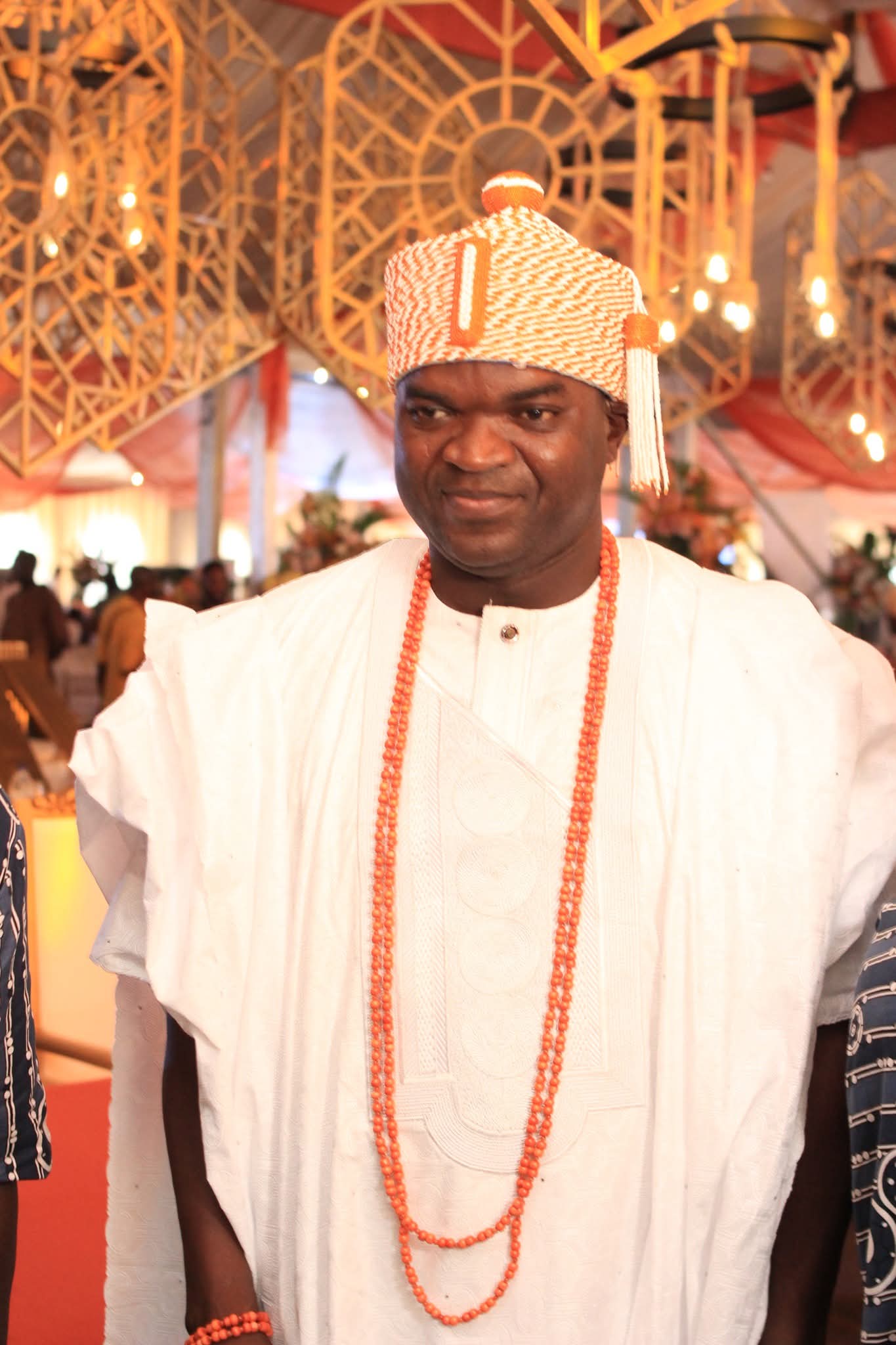
Oba Babatunde Saliu Elebo II Felicitates Muslims on Eid-el-Kabir Celebration
By Adeyemi Obadimu Veron
The Oloworo of Oworosoki Kingdom, Oba Babatunde Saliu Elebo II, has extended warm greetings and heartfelt felicitations to Muslims across Nigeria and the world at large on the joyous occasion of the 2026 Eid-el-Kabir celebration.
In a statement made available to Newsmen, the revered monarch urged Muslims to embrace the true teachings of Islam by promoting peace, love, unity, sacrifice, and compassion during and after the festive period.
Oba Babatunde Saliu Elebo II noted that Eid-el-Kabir, also known as Salah, remains one of the most significant celebrations in Islam as it symbolizes total obedience, faith, and devotion to Almighty Allah, drawing inspiration from the unwavering sacrifice of Prophet Ibrahim (Abraham), who demonstrated complete submission to the will of God.
According to the monarch, the Holy Qur’an teaches believers the importance of righteousness, kindness to humanity, tolerance, and support for the less privileged in society. He emphasized that the season should serve as a reminder for all Nigerians to live in harmony irrespective of religion, ethnicity, or political differences.
The royal father further called on Muslims to use the sacred period to pray fervently for peace, stability, economic growth, and sustainable development in Nigeria, stressing that national progress can only thrive in an atmosphere of unity and mutual understanding.
Oba Saliu also encouraged the faithful to extend hands of generosity to widows, orphans, and vulnerable members of society, noting that the essence of Eid-el-Kabir goes beyond celebration and feasting, but also reflects the spirit of sharing and caring for humanity as instructed in the Qur’an.
While wishing Muslims a peaceful and memorable Eid celebration, the Oloworo of Oworosoki prayed for divine blessings, prosperity, good health, and continued harmony in homes and communities.
“May this year’s Eid-el-Kabir strengthen our faith, deepen our love for one another, and bring renewed hope and abundant blessings to our nation,” the monarch stated.


- Afreximbank Deepens Commitment to Economic Progress in The Bahamas June 1, 2026
- African Electric Vehicle (EV) platform Spiro raises $215M in equity to scale electric mobility and energy infrastructure across Africa June 1, 2026
- Africa Centres for Disease Control and Prevention (Africa CDC) Statement on Attacks Against Health Facilities During the Bundibugyo Virus Disease Response in the Democratic Republic of the Congo June 1, 2026
- Putting consumers at the centre of Africa’s dairy transformation June 1, 2026
- International Rescue Committee (IRC) warns Democratic Republic of the Congo (DRC) Ebola outbreak likely far larger than official figures suggest June 1, 2026
- South Africa: Portfolio Committee on Health Marks National Cancer Survivor Day and Reaffirms Importance of Early Detection and Public Awareness June 1, 2026
- Rwanda’s RSSB Tigers Crowned 2026 Basketball Africa League Champions June 1, 2026
- Uganda: Appointments Committee Begins Vetting of Ministerial Nominees June 1, 2026
- Sudan braces for worsening child malnutrition as pre-harvest season starts June 1, 2026
- Etu Energias Strengthens Angolan Footprint, Returns to Angola Oil & Gas (AOG) 2026 as Champion Sponsor June 1, 2026
- Afreximbank Deepens Commitment to Economic Progress in The Bahamas June 1, 2026
- African Electric Vehicle (EV) platform Spiro raises $215M in equity to scale electric mobility and energy infrastructure across Africa June 1, 2026
- Africa Centres for Disease Control and Prevention (Africa CDC) Statement on Attacks Against Health Facilities During the Bundibugyo Virus Disease Response in the Democratic Republic of the Congo June 1, 2026
- Putting consumers at the centre of Africa’s dairy transformation June 1, 2026
- International Rescue Committee (IRC) warns Democratic Republic of the Congo (DRC) Ebola outbreak likely far larger than official figures suggest June 1, 2026
- South Africa: Portfolio Committee on Health Marks National Cancer Survivor Day and Reaffirms Importance of Early Detection and Public Awareness June 1, 2026
- Rwanda’s RSSB Tigers Crowned 2026 Basketball Africa League Champions June 1, 2026
-

 news6 months ago
WHO REALLY OWNS MONIEPOINT? The $290 Million Deal That Sold Nigeria’s Top Fintech to Foreign Interests
-

 society4 weeks ago
SOCIAL MEDIA IS NOT A BATTLEFIELD COMMAND – WHY THE NIGERIAN ARMY’S ACTION AGAINST JUSTICE CRACK IS A NATIONAL SECURITY IMPERATIVE
-

 celebrity radar - gossips4 months ago
Dr. Chris Okafor Returns with Power and Fire of the Spirit -Mounts Grace Nation Altar with Fresh Anointing and Restoration Grace on February 1, 2026
-

 celebrity radar - gossips6 months ago
Prophet Kingsley Aitafo Releases 2026 Prophecy: ‘Nigeria Will Rise, but the World Must Prepare for Turbulence’