
Business
The duty of Nigerian Youths in active Participation in true Democracy and Nation-Building by Hon. Micheal Ifemosu



This paper revisits the role of Nigerian Youths in participatory democracy and nation-building. Nigerian Youths have been a critical partner in the struggles aptly recorded during previous change of Governments from the colonial era up to our independence in 1960 and even till date. The survival of Nigeria’s dynamic political system is therefore dependent on the role of youths in participatory democratic platforms. This paper is directed at revisiting the role of the youths and their positive impact in transforming the political process towards sustaining a stable polity.
Keywords: Nigerian Youths, Democracy, Mobilization, Politics and Political Stability, Government
1.0 YOUTH – THE THEORY AND TREND
Barack Obama (2006:69, 117) emphasised thus: ‘‘What else is there to guide us? Those values are our inheritance, what makes us who we are as a people. And although we recognize that they are subject to challenge…turned inside out by intellectuals and cultural critics, they have proven to be both surprisingly durable and surprisingly constant across classes, and races, and faiths, and generations. We can make claims on their behalf, so long as we understand that our values must be tested against fact and experience, so long as we recall that they demand deeds and not just words. To do otherwise would be to relinquish our best selves.’’
Youths are generally defined as meaningful, youthful persons under various laws, conventions and culture, who are within the ages of 13 and 44 years old. The United Nations recognizes August 12th of each year as the International Youth Day. This take us to defining a Youth is a period of life from puberty to attainment of full maturity (adulthood) or growth, a time of being young when one’s appearance is full of freshness, vigour and young spirit.
Joseph Conrad while recasting his youthful experiences was quoted thus: ‘‘I remember my youth and the feeling that will never come back any more – the feeling that I could last for ever, outlast the sea, the earth, and all men; the deceitful feelings that lures us on to joys, to perils, to love, to vain effort – to death; the triumphant conviction of strength, the heat of life in the handful of dust, the glow in the heart that with every year grows dim, grows cold, grows small, and expires – and expires, too soon – before life itself.”
Robert Kennedy on the other hand demonstrated his attraction for the Youths and Youthfulness when he evoked in his 1966 Day of Affirmation Speech thus: ‘‘ This world demands the qualities of youth; not a time of life but a state of mind, a temper of the will a quality of imagination, a predominance of courage over timidity, of the appetite for adventure over the life of ease”
Barack Obama while recounting his encounter with Senator Byrd on assumption of office as a Senator Byrd noted that he said thus: ‘‘… We have kept the Republic…Learn the rules..not just the rules, but the precedents as well…not many people bother to learn them these days…but these rules unlock the power…the keys to the Kingdom…so few people read the constitution today…I have been very fortunate…much to be thankful for. There’s not much I wouldnt do over…I only have one regret, you know. The foolishness of youth…”. At that juncture, Obama responded thus: ‘‘…we all have regrets…we just ask that in the end, God’s grace shines upon us…’’
2.0 THE ROLE OF YOUTHS IN THE NIGERIA’S CURRENT DEMOCRATIC EXPERIENCE
Nigeria has celebrated 13 years of uninterrupted democratic rule in year 2012. That democratic license was not received on platter of gold, but through resilient struggles and undaunted patriotic commitments of Nigerians, particularly the unsung youths. The historic contributions of individuals and organizations, Press, civil society, labour and pro-democratic movements like NADECO, CDHR and CLO in sending the military back to their barracks is worthy of mention.
Nigerian Youths have been the engine of democratic flavours and struggles that made moments of democratic victories aptly recorded during previous change in Governments from the colonial era up to the independence in 1960 and even till date. The crucial role and activities of the youths as pro-democratic agents assisted the popular agitations to fuel the change in government as we have today in the Nigeria’s political structure.
The survival of the political system has been dependent on the role of youths in participatory democratic platforms which allowed all groups regardless of their position to articulate anticipate and negotiate their interest in the national polity. This participatory process is becoming more transparent, open and accountable through the legislative system and refined public service that allows both the gains and odds in the institutional and political leadership to be more exposed to anticipated public interest and public trust, which makes the political system to translate into a better cultured and cultivated responsive governing system. The recent fuel deregulation and National Assembly investigation into the Petroleum sector is significant in this respect.
One of the major achievements of participatory democratic process where the tested vibrancy of the youths have played significant factors is the emergence of Dr. Goodluck Ebele Jonathan, a Nigerian citizen of a minority tribe, as the Nigeria’s President.
Looking at the enormous roles played by the youths in canvassing for votes and promoting his personal identity in view of his acceptable academic credentials and youthful status, it was apparent that his electoral success cut across the various political parties, the electorates, their localities and regional divides.
A good pointer to this fact suffices in the impact of the public engagement of our Youths through the NYSC Scheme (National Youth Service Corps). The Youth corps was mobilized to serve in all constituencies to ensure strict observance of electoral processes with a view to prevent all forms of electoral frauds and manipulations. The outcome of their activities resulted in fair conduct and reporting of electoral registration and release of valid results which against all odds posed by zoning system brought victory to the incumbent President. The youths also bear the heavy brunt of their patriotic call to duty with the numbers of casualties recorded by the attendant grave reprisals which translated over time into the on-going Boko Haram attack on the Federal Government.
Indeed, historical facts had shown that Nigerian youths have been more restrained in great moments of threatening national crisis, political divisions and leadership questions in the past 13 years from making the nation totally ungovernable. This has assisted the nation to scale through many crisis, which ordinarily would had escalated into major division or break down of the nation due to incessant display of immaturity by our political class.
The rising capacity of the youth in the political system to accommodate our differences and articulate a workable process for determining national issues, without turning to the streets or making the State a No. 1 public enemy is commendable. The managed crisis in the Niger Delta Region is a good example while those of Boko Haram are a negative example of the youths’ capacity to make or mar national polity.
It is therefore necessary to review the role and responsiveness of Nigerian youths in addressing crucial issues in nation building towards reaching consensus within the political blocs and across national divides so that governance can be more focused. The future holds greener prospects for the Nigerian nation, if the lessons of the past learnt can be used to re-define the role of Nigerian youths in retracing their steps towards nation-building.
3.0 REVISITING YOUTHS PARTICIPATION IN NIGERIA’S SOCIO-POLITICAL CONTEXT
When Nigeria began the quest to emerge as a nation, the Youths who engineered the anti-colonial tendencies encountered great challenges and it was not too pleasant for some of them, particularly the educated youths from Southern Parts of Nigeria, until we acquired self rule. These youths could be described as graduates and adherents of the various schools of thoughts initiated by the Missionary Bishop Samuel Ajayi Crowder, Dr. Samuel Johnson and Surveyor Herbert Macaulay who among others lived on borrowed ideals with little or no mentoring and guide, but their passion to make bold their independence of mind, intuitions and determinations of African people to conduct their own affairs by themselves on the altar of selfless service and good leadership. Their efforts to champion the public cause as we have today are a long chequered history.
As far back as 1938, when H.O. Davies from Efon Alaaye in Ekiti part of Western Nigeria with his colleagues formed the Nigerian Youth Movement in partnering bigger political fronts led by Herbert Macaulay named National Council of Nigerians and Cameroons and followed in succession by the Zikist Movement founded by Dr. Nnamdi Azikiwe, the West African Student Union patroned by Rev. Reginald Sorenson and led by Olu Alakija and the Egbe Omo Oduduwa pioneered by Awolowo and Akintola in the 40s, it was obvious that the mandate of Nigerian Youths to chart the cause for national development and greatness had been laid.
Reinventing history, the memorandum on education policy (1925) stated that the aims of education must include the raising up of capable, trustworthy, public spirited leaders of the people, belonging to their own race.
Going through the works of J.S. Coleman (Nigeria – Background to Nationalism), it was a well known fact that the future of Nigeria was made known by the British to their rulers before 1945 as being dependent on the youths of the nation. J.S. Coleman (1958:121) stated that ‘‘…the establishment of self-government in Nigeria (was) dependent upon the quality and number of Nigerians professionally equipped to assume positions of responsible leadership. But when British officialdom, in both London and Lagos, seemed unwilling or unable to reform the educational system or create educational opportunities for Africans, educated Nigerians became more and more convinced that the government was deliberately trying to keep them from qualifying for such positions. Indeed, one of the important motivations for the rise and growth of Nigerian nationalism was frustration among the educated classes…’’
Those celebrated youths who confronted the limitations of their government and the inability of the people to fulfil their public aspirations later became statesmen in life worthy of mentioning, in particular, late Chief Dr. Nnamdi Azikiwe, late Chief Jeremiah Obafemi Awolowo, late Malam Aminu Kano and late Chief Michael Imoudu to mention a few.
The struggle for national independence on various platforms began with the quests of Obafemi Awolowo, H.O. Davies and Anthony Enahoro among other leading youths in the 40s. When Awolowo was less than 40 years old, he co-launched Egbe Omo Oduduwa which translated into Action Group in 1951. Historic acts of these men in the nationalistic struggles later became the bedrock of national polity on which we dwell and engage on concepts of leadership aspiration, public and national interest and good governance to define and determine national policies till date. May the labours of our heroes past never be in vain.
During the period of self rule in Nigeria and immediately after independence, youths took their destiny in their own hands and ensured that the cause of national interest was championed towards national independence rather than remain an appendage of military rule.
Reviewing a 398 page Biography written by Jadesola Babatola (2008) titled A WILL IN THE WIND, it was asserted that ‘‘…the reality of the Nigerian political situation and public life by December 1965 had called for a change or an intervention so as to restore SANITY and forestall total break up or internal civil war… though, one may not support the waste of life in the exercise, since leaders are bound to make mistakes and can be corrected in orderly and predictable manners, it was in the best interest of the nation that the Military intervened, when all parliamentary leaders, the judicature and the Executive had stiffened the opposition in government and made a fool of the masses in the exercise of their legitimate democratic rights…’’
The various factors which influenced the intimidation of Awolowo and his AG party by the Balewa’s government started with the 1959 Federal Election and the personality differences between Awolowo and Azikiwe. The matter proved worse due to regular legislative criticism of the Balewa’s policies by Awolowo as the Leader of Opposition in the Federal Parliament. The Anglo-Nigerian Defence Pact which Awolowo classified as ‘‘…base-faced, unabashed and undue influence…and which drew condemnation through demonstration of Nigerian University students (youths) who came to the Federal House to protest against it nailed the political crisis in the head. In the area of economic development, Awolowo’s preference for Nationalization as a radical economic policy to remove the nation’s economy from neo-colonialism as against Balewa’s preference for a free economy that attracts foreign investors were critical issues. The inability to curtail the leadership drift in Action Group was the later ‘…signpost to the end of the first Republic…’
The zeal that the opinion public mainly dominated by Nigerian youths played later resulted in the Military Revolution orchestrated by youthful soldiers led by Major Chukwuma Nzeogwu Kaduna in January 1966, the first military putsch in Nigeria. It was the youths that led the military revolution and youths that executed the counter revolution. The personality differences between Ojukwu and Yakubu Gowon led to Nigeria-Biafra war with innumerable count of human and economic losses, too painful to recount.
Celebrated youthful individuals and leaders who participated in the democratic process either as members of the civil society or within groups that mounted pressures on dictatorial and unpopular regimes, through their activities at different times between 1960 and the last few year include: Prof. Wole Soyinka, Prof. Bala Usman, Late Prof. Awojobi, Late Chief Bola Ige, Late Chief Akin Omoboriowo, Rev. Father Matthew Kukah, Arch. Bishop Okogie, Late Chief Gani Fawehinmi, Late Dr. Beko Ransome Kuti, Late Fela Anikulapo Kuti, Mr. Lanre Arogundade, Dr. Kayode Fayemi, Chief Gani Adams, Barrister Femi Falana, Barrister Bamidele Aturu and Barrister Opeyemi Bamidele, to mention a few.
No doubt, the high points of democratic victories in recent years came from the role of our youths in the enthronement of democratic process and principles through the eventual restoration of the popular mandates of Governors Rotimi Amaechi, Adams Oshiomole, Segun Mimiko, John Kayode Fayemi and Rauf Aregbesola among others. The youthful status and role of these men earned them public recognition that turned their political participation into popular mandates as elected popular leaders even when they were initially deprived of their mandates in the electoral process. The monsterous injustice which they faced in the political system could only be assailed through their sanity and maturity.
4.0 YOUTH MOBILIZATION FOR NATION-BUILDING: LESSON FOR NIGERIA
Youth mobilization as a step to political aspirations and achievements becomes a matter of critical analysis in advancing the concepts articulated in this paper and one need to borrow ideas and experiences from authorities in other fields to sustain the idea that mobilization is critical tool for achieving political ambitions and sustaining public interest.
In 1980, Chief Obafemi Awolowo addressed the party faithful at the then Ondo State House of Assembly, Akure and said a lot about extending public service to all aspect of our citizens’ life, particularly the vulnerable ages, the youths in the course of seeking to mobilize the nation and her political institutions towards adopting an wholesome development strategy where the State could serve as a catalyst for the anticipated change. The words of the late sage re-echoes in developing the talents of Nigerian Youths for a greater future thus: ‘‘…The full development of a Nigerian, or of any man for that matter must proceed on two fronts simultaneously: the full development of his body, and the full development of his mind…The full development of man’s mind consists in good and sound education up to the limit of each persons’ absorptive capacity. All men have innate talents. These talents differ from man to man. We don’t know…the quantum of a person’s talents, until those talents are developed…opportunity should be provided by the Government free of charge to enable him to develop all his talents to the fullest extent possible…when all the talents in society are not fully developed it is not the individuals that are adversely affected alone who suffer; the society as a whole suffers as well….economic, social and political development of the society is absolutely a function of the aggregate efforts of the entire members of the society…’’
Prof. Kunle Ajayi in the Problems of Democracy and Electoral Politics in Nigeria (1998) admitted that the overriding participation in politics is to serve the people. Hence, the history of the people showing their interest in political offices must be known in order to reveal their ulterior motives in politics. He argued further that democratic practices should become the watch word of the entire nation from within the contextual framework of the family, to clubs, groups and political parties. He opined that political parties that aspire to rule must conduct their affairs in a democratic manner, filling offices democratically and imbibing democratic culture at all levels to enable democracy to be internalized and become a national value and national ideal.
Barrack Obama (2006:65-69,103), asserted that: ‘‘the gap between what we deem appropriate behaviour in everyday life and what it takes to win a campaign is just one of the ways in which a politician’s values are tested. In few other professions are you required, each and ever day, to weigh so many competing claims – between different sets of constituents, between the interests of your state and the interests of the nation, between party loyalty and your own sense of independence, between the value of service and obligations to your family. There is a constant danger, in the cacophony of voices, that a politician loses his moral bearings and finds himself entirely steered by the winds of public opinion…And yet a part of us knows better. We hang to our values, even if they seem at times tarnished and worn…in today’s interconnected world, it’s difficult to penetrate the consciousness of a busy and distracted electorate. As a result, winning in politics mainly comes down to a simple matter of name recognition, which is why most incumbents spend inordinate amounts of their time between elections making sure their names are repeated over and over again…’’
In a 23rd August, 2007 internet resource published on roles of teenagers, anarchy,
lies, youth, government and materialism in USA while addressing problems of youth mobilization, it was stated thus: ‘…The truth is, people need to start standing up, but first they need to realize what’s going on. They need to see the… shadow; That’s what the general population needs to know. As far as my peers… Well, they’re a whole other set of problems…in the past, those in higher-education have taken to the streets in protest for much less than what we face today… and the social changes were drastic, many anarchists came out of the student movement upon realizing that anarchy was…Yet in the 60’s people weren’t having their rights stripped away by warrant-less wiretapping or search-and-seizures, there weren’t laws like the patriot act turning everyone into a suspect. What is happening today is almost twice as severe as what happened in the 60’s. Yet hardly anyone, especially my peers, lifts a finger in protest. I think the reason they don’t is that they are all satiated, comfortable, complacent, essentially they are asleep. Partly to blame for this cynical, hopeless attitude…In schools, submission to the nation-state is clear: children and teenagers (youths) are forced to recite a pledge… What is attempted, is to instil in the pupil not knowledge but submission and blind patriotism … In higher-education, the influence is not as clear, but still present… There is a time for work and a time for play, so the axiom goes, and today is a day of work. Today is a day we should work to inform ourselves and learn the truth. Tomorrow we will work to express our anger in the streets and let it be known that it is we, the people, and not the politicians who really rule the land. The day after that we will not just demand but create the change we seek in our world; we will not ask for it, or even take it, but we will create it with our own hands, together in our communities. And every day after that we will continue to fight until our work is done and justice, fairness, and equality are resurrected. Until that day comes, every day is a day of work and not of play…’’
Sanad Pokheral (2009) in the works on Youth mobilization affirmed that: ‘‘…With energy, ambition and belief in their own capabilities, young people can be powerful agents of positive change. Including young people in issues that directly affect them contributes to their self-confidence, allows them to exercise a fundamental human right and leads to better decisions. Inclusion can help prepare young people to exercise the rights and responsibilities of adulthood and citizenship. Youth participation is also essential to the development of successful programming. Participation in social groups also fosters a feeling of connectedness and belonging, helping young people to develop a sense of identity. Collaboration with peers and with adults who share some of their views fortifies their ideas and values. And the experience of contributing—to a cause, a decision, a group—can be crucial part to the development of a sense of responsibility, purpose and self-worth…’’
5.0 CONCLUSION
The Youths are the spirit of patriotic flavours, the dynamic engine of life and the bedrock of unity in any nation. They are the followers of today and Leaders of tomorrow. Hence, we owe them a great duty to do everything within our ability to inculcate the culture of good leadership, selfless and patriotic service, spirit of understanding and of good neighbourliness in them, so that our tomorrow can be better than our today. Posterity cannot forgive us if we fail to aggregate specific roles to our youths when determining our expectations of them and their obligations to the society. We build our tomorrow on what today presents.
Youths constitutes our sentiments and heritage. Hence, youth leadership should be properly articulated and guided to make them objectives, attractive and strategic. If we desire to influence the role of youths in our socio-political context, we should be prepared to appreciate what they do and how they can influence things among us. This evolves from the fact that if our youths believe that something can be done in a certain way and they can achieve it, then they are capable of making success.
To enable Nigerian youths to effectively participate in various political activities and to be empowered for future leadership roles, the government, political leaders and party institutions should be able to identify leading Youth leaders and activists as well as politically conscious and interested young persons in various communities who can be brought together through different forum to participate in political activities and be groomed for future roles. A successful mobilization of these youths requires:
I. a.Strategic planning to bring them together into one fold and then include all of them in planning processes to reduce frictions and conflict of interest and ideas
II. b.Build and expand the TEAM by identifying key leaders who knows the issues better and who can deliver goods, to mount and lead campaigns across the constituencies
III. c.Engage the use of the mass media and internet connectivity to promote campaign and political platform activities and be open about the intention of the candidate and the party to win the support of the electorates
IV. d.Stay in touch with the citizens and reach out to important members of the opinion public who can sway or influence public support favourably to your advantage from the churches to mosque, schools and business environment, trade and guilds
In the last PDP National Congress held in Nigeria, the winner of the National Youth Leader slot was a man above 60 years of age. A 60 year old man is no longer a youth. This in fact is a reflection of the fact that youths are yet to be recognized and given specific roles to play in Nigeria political system. If Nigerian youths are frustrated in the political process through any form of disenfranchisement and empowerment, they can never truly promote sustainable political behaviour and culture embedded in participatory democracy. The same thing happens in most political parties that exist in Nigeria today, due to existence of coercive and cabalistic political manipulation of party structures and participation.
It is therefore necessary for all stakeholders in the political process to appropriate specific roles to the youths. They need to be guided and supported in their initiatives and interest in public and political causes. This is necessary to sustain the democratic culture while educating and empowering them to manifest needed leadership attributes that would prepare them for a better society in future. Investing in youth is investment in greater future.
Ifemosu Michael Adewale.
Founder/ Convener/ Initiator Youth In Good Governance Initiative (YIGGI) .
E-mail: [email protected]
Facebook:- honourable Michael Adewale Twitter: @elderdacomplex
Instagram: Ifemosu michael
Bbm: 590D0FE9
Facebookpage:- https://m.facebook.com/Youth-In-Good-Governance-Initiative-YIGGI-625372814296327/




Business
BREAKING: Court Dismisses $19.6 Million Claim Against NNPCL — Rules Contract Scope Cannot Be Changed Orally

BREAKING: Court Dismisses $19.6 Million Claim Against NNPCL — Rules Contract Scope Cannot Be Changed Orally
In a landmark ruling on Friday, May 22, 2026, the Federal Capital Territory High Court in Abuja threw out a $19.6 million lawsuit filed by Alternate Dimensions Ventures Ltd against the Nigerian National Petroleum Company Limited (NNPCL), affirming a key legal principle: a written contract cannot be expanded through oral agreements or conduct.
Alternate Dimensions had sought $19,600,000 in professional fees, claiming the scope of its Direct Sale, Direct Purchase (DSDP e-pro) contract with NNPCL was orally expanded. Represented by counsel Patrick Peter, the firm argued it was entitled to the revised sum for services rendered under the alleged new terms.
But NNPCL, through its lawyer Ituah Imhanze of KENNA LP, pushed back sharply, arguing that parties are bound exclusively by the clear terms of their written agreement. Imhanze contended that without any written amendment, the claim was legally unsound, and the court agreed.
Delivering judgment, Justice Hamza Mu’azu upheld NNPCL’s defense, stating that the contract was unambiguous and that no evidence was adduced during the trial, which supported the alleged scope expansion. The court further found that NNPCL fully complied with all contractual terms and committed no breach.
Dismissing the suit as meritless, Justice Mu’azu reinforced the doctrine of sanctity of contract: any amendment to a written agreement must be express, unequivocal, and documented, not implied or verbal.
The ruling spares NNPCL from the S19.6 million claim and also a floodgate of similar potential liabilities.
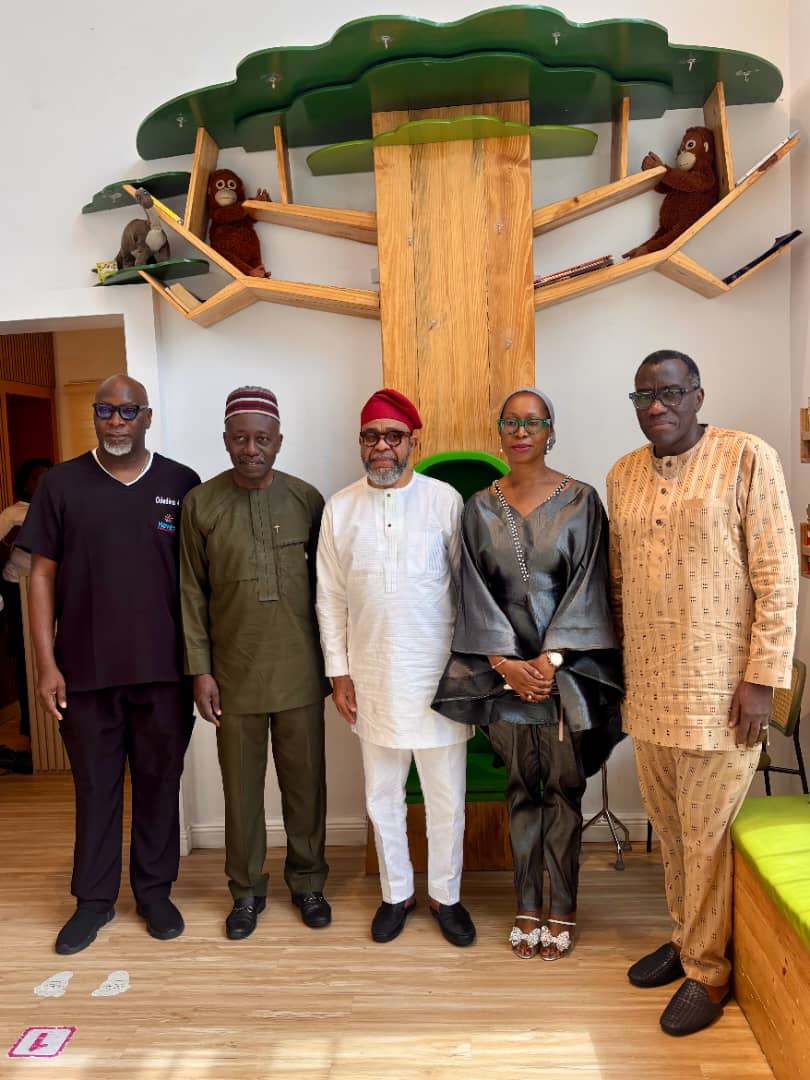
Advanced Neonatal and Pediatric ICU births in Ikeja
Haven Pediatric Practice has officially launched a state-of-the-art Neonatal Intensive Care Unit (NICU) in Ikeja, Lagos State today.
This facility is a direct response to the urgent need for specialized care, bridging the gap between despair and survival for families in Lagos and beyond.
In the world over, the dream for every expectant mother is simple: to carry to term and hold a healthy baby. But when that dream is interrupted by preterm birth, the emotional toll is devastating. In Nigeria, currently ranked as one of the most challenging environments for premature infant survival, the stakes have never been higher.
But by synergizing cutting-edge technology with the highest level of professional expertise, Haven Pediatric Practice has assembled a dedicated team of Neonatologists and pediatric specialists. Recognizing that respiration is the greatest hurdle for “born too early” champions, the clinic has invested in top of the range ventilation technology capable of supporting infants weighing as little as 0.4kg.
The Chief Medical Director of Haven Pediatric Practice Dr. Adebajo Odedina told our correspondent at the event that,
“We aren’t just launching a ward; we are deploying a lifeline. By combining world-class ventilators with specialized, experienced medical hands, we are significantly increasing the chances of survival for even our smallest warriors.”
This expansion reaffirms Haven Pediatrics’ commitment to providing comprehensive, advanced care from the very first breath, ensuring that being born early no longer means losing the fight for life.

Nigeria’s Booming Banks And A Collapsing Economy
BY BLAISE UDUNZE
Nigeria’s banking industry appears to be booming, largely driven by the policies of the Central Bank of Nigeria (CBN), under Governor Olayemi Cardoso, while the real economy continues to suffocate.
At a time when millions of Nigerians are sinking deeper into poverty, when inflation continues to erode household incomes, when businesses are collapsing under unbearable operating costs, and when migration has become a survival strategy for many young professionals, Nigerian banks are announcing staggering profits, stronger capital positions and unprecedented liquidity growth.
According to the bank’s financial statements, the financial system appears healthy. In reality, the economy where citizens work, trade and survive is gasping for breath.
This growing disconnect between financial sector prosperity and economic suffering now represents one of the gravest threats to Nigeria’s long-term economic stability and its ambition of building a $1 trillion economy.
The numbers are indeed impressive. Nigerian banks’ shareholders’ funds reportedly surged to about N27 trillion following the recapitalisation exercise. The top five banks now command balance sheets estimated at over N164 trillion. Tier-1 banks collectively generated trillions in profits within the first quarter of 2026 alone, while the sector-wide recapitalisation exercise raised over N4.56 trillion.
Ordinarily, such figures should inspire confidence about the future of the economy. Stronger banks are expected to translate into stronger businesses, more jobs, industrial expansion and wider economic opportunities. But Nigeria’s experience is proving otherwise.
Instead of serving as engines of productive growth, banks are increasingly becoming custodians of liquidity trapped within the financial system itself. That is the real danger.
Even as banking liquidity expands sharply, lending to the productive economy remains weak and constrained. Reports indicate that banks parked a record N24.13 trillion with the CBN, while simultaneously increasing investments in government securities and treasury bills because these avenues are safer, more profitable and less risky than lending to businesses operating within Nigeria’s harsh economic climate. This reality exposes a dangerous contradiction.
A developing economy desperately in need of industrialisation, manufacturing growth, infrastructure expansion and job creation cannot afford a banking system that prefers financial safety over productive economic risk.
A sustainable economy cannot thrive where the real sector is starved of funds. Yet this is exactly where Nigeria now stands.
Despite the massive liquidity in the banking system, growth in lending to the private sector continues to lag behind the pace of liquidity expansion. The implication is clear. Financial sector strength is no longer translating into real economic development. This is not how healthy economies function.
Ordinarily, banks in developing economies are expected to operate as catalysts for economic transformation. Across successful economies, commercial banks finance manufacturing, agriculture, innovation, infrastructure and entrepreneurship because those sectors generate jobs, productivity and national wealth.
Small and Medium Enterprises (SMEs), especially, are globally recognised as the backbone of grassroots economic development. Nigeria is no exception.
SMEs account for over 70 percent of registered businesses, contribute nearly half of Nigeria’s GDP and generate between 84 and 90 percent of employment opportunities. Yet despite their overwhelming importance, SMEs reportedly receive barely between 0.5 percent and one percent of total commercial bank lending. That is not merely a policy failure. It is an economic tragedy.
Every denied SME loan is a denied employment opportunity. Every failed business represents another frustrated entrepreneur. Every frustrated entrepreneur becomes another Nigerian contemplating migration.
This is how economic dysfunction transforms into human displacement. The so-called “Japa” phenomenon did not emerge in isolation. It is deeply connected to economic hopelessness. When productive citizens lose faith in their country’s economic future, migration stops being a lifestyle choice and becomes a survival mechanism.
Unbeknownst to the policymakers is that Nigeria cannot realistically build a $1 trillion economy while productive sectors remain financially suffocated.
A closer glance at the trend of events helps to reveal that the danger becomes even more severe when viewed against the backdrop of the recent outcome of the 305th Monetary Policy Committee (MPC) meeting, where the CBN retained the Monetary Policy Rate (MPR) at 26.5 percent in its bid to sustain disinflation and macroeconomic stability.
It is understandable and certain that inflation control is important, but the fact is that at 15.69 percent, inflation remains painfully high and continues to weaken purchasing power. Food prices remain elevated. Transportation costs remain unbearable. Consumer demand is weakening. The middle class is shrinking rapidly.
But maintaining elevated interest rates also comes with painful consequences. Simple arithmetic tells us that higher interest rates mean higher lending costs. Higher lending costs mean higher production costs. Higher production costs worsen inflationary pressures and weaken business survival rates.
Invariably, this also tells us that for Nigerian manufacturers and corporates already battling a weak naira, volatile exchange rates, expensive diesel, energy insecurity and declining consumer demand, access to affordable credit is becoming almost impossible.
Many businesses are no longer borrowing to expand production or employ workers. They are borrowing merely to survive. This is economic suffocation.
Meanwhile, banks continue to profit massively from high-yield government securities and treasury investments. Reports indicate that major Nigerian banks generated over N6.68 trillion from investment securities and treasury bills instead of financing productive enterprises capable of stimulating growth and employment.
Government’s appetite for borrowing itself shows no sign of slowing down. Public borrowing reportedly climbed above N39 trillion. Historically, excessive government borrowing crowds out private sector investment because banks naturally prefer lending to government rather than exposing themselves to risks associated with businesses operating in unstable economic conditions.
The result is predictable. The real sector weakens while speculative and non-productive financial activities flourish. This explains why Nigeria increasingly resembles a financial system disconnected from the realities of ordinary citizens.
While banks celebrate rising profits, poverty and hunger worsen visibly across the country. Unemployment continues to rise. Small businesses are dying quietly. Household purchasing power is collapsing under inflationary pressure.
Yet the financial system appears more liquid than ever. That contradiction should alarm policymakers. The recapitalisation exercise itself now raises difficult questions.
What exactly is the purpose of stronger banks if stronger banks do not strengthen national productivity?
If recapitalisation merely empowers banks to deepen investments in government debt instruments while manufacturers, farmers, exporters and SMEs remain starved of affordable credit, then the exercise risks becoming financially impressive but economically hollow.
Indeed, the current monetary environment appears to reward financial conservatism over productive risk-taking.
The stringent Cash Reserve Requirement (CRR), elevated interest rates and broader macroeconomic uncertainty continue to discourage aggressive lending to the private sector. Banks understandably seek safety. But nations do not industrialise through excessive financial caution.
No economy develops when capital circulates primarily within treasury bills and government securities instead of flowing into factories, farms, logistics, housing, innovation and production.
This is the larger danger confronting Nigeria today. Economic crises rarely begin with recession statistics alone. Sometimes, they begin when financial institutions become detached from the suffering realities of the wider economy. They begin when growth exists only within banking balance sheets but disappears from households, factories and streets.
Without productive credit expansion, economic growth becomes artificial and exclusionary. Without affordable financing, businesses cannot scale. Without business expansion, jobs cannot emerge. Also, it must be noted that without jobs, insecurity, poverty and migration inevitably worsen. The implications for social stability are enormous.
One painful fact is that citizens already burdened by inflation, debt pressures and widespread distrust now face a system where economic opportunities continue shrinking despite apparent financial sector prosperity. One of the lurking dangers is that this deepens resentment, weakens confidence in institutions and threatens long-term economic cohesion.
The CBN’s inflation fight may be necessary, but monetary stability alone cannot substitute for productive economic expansion. Financial stability without inclusive growth eventually becomes unsustainable.
The real economy matters more than banking optics. Nigeria urgently needs policies that incentivise real sector lending, reduce structural risks facing manufacturers and SMEs, strengthen credit infrastructure, lower production bottlenecks and redirect liquidity toward productive economic activity.
As a matter of fact, it is high time for Nigeria to start rethinking the growing dependence on debt-driven fiscal management that continues to crowd out private investment. Development cannot occur when government borrowing consumes the financial oxygen needed by businesses.
Ultimately, banking profitability should not become an isolated island of prosperity surrounded by a collapsing productive economy.
A nation cannot celebrate trillion-naira banking profits while millions of citizens sink deeper into economic despair. No society sustains such a contradiction indefinitely.
If Nigeria truly hopes to build a resilient and inclusive economy, then the banking sector must once again become a vehicle for national development rather than merely a beneficiary of government debt and monetary tightening.
Otherwise, the country risks creating a contradictory economy where banks grow richer while citizens grow poorer and where financial prosperity exists only on paper while economic hardship defines everyday life.


Blaise, a journalist and PR professional, writes from Lagos and can be reached via: [email protected]


- Venezuela Under Rodriguez: Turning Back Toward Stability and Opportunity (By NJ Ayuk) May 25, 2026
- Dubai Chamber of Commerce concludes trade mission in Addis Ababa with series of bilateral business meetings between companies from Dubai and Ethiopia May 25, 2026
- How Congo’s Offshore Legacy Fields Are Powering a New Production Upswing May 25, 2026
- Rugby Africa Appoints Former National Basketball Association (NBA) Africa Executive Aïcha Diop as Chief of Staff to the President May 25, 2026
- Global Africa Business Initiative shifts Digital and Health Action Pathways into higher gear to accelerate continent’s economic transformation May 25, 2026
- The Board of Trustees of the Al-Sumait Prize for African Development announces the award winner for the year 2025; It has been awarded to an African institution and researcher in the field of food security May 25, 2026
- Statement of the International Contact Group for the Great Lakes (ICG) on the situation in the eastern Democratic Republic of the Congo (DRC) May 24, 2026
- Eritrea: Messages of Congratulations May 24, 2026
- African Development Bank (AfDB) – 2026 Annual Meeting: Full live coverage on Africa 24 May 24, 2026
- Countries in the Horn of Africa and Yemen recommit to ending variant poliovirus May 23, 2026
- Venezuela Under Rodriguez: Turning Back Toward Stability and Opportunity (By NJ Ayuk) May 25, 2026
- Dubai Chamber of Commerce concludes trade mission in Addis Ababa with series of bilateral business meetings between companies from Dubai and Ethiopia May 25, 2026
- How Congo’s Offshore Legacy Fields Are Powering a New Production Upswing May 25, 2026
- Rugby Africa Appoints Former National Basketball Association (NBA) Africa Executive Aïcha Diop as Chief of Staff to the President May 25, 2026
- Global Africa Business Initiative shifts Digital and Health Action Pathways into higher gear to accelerate continent’s economic transformation May 25, 2026
- The Board of Trustees of the Al-Sumait Prize for African Development announces the award winner for the year 2025; It has been awarded to an African institution and researcher in the field of food security May 25, 2026
- Statement of the International Contact Group for the Great Lakes (ICG) on the situation in the eastern Democratic Republic of the Congo (DRC) May 24, 2026
-

 news5 months ago
WHO REALLY OWNS MONIEPOINT? The $290 Million Deal That Sold Nigeria’s Top Fintech to Foreign Interests
-

 society3 weeks ago
SOCIAL MEDIA IS NOT A BATTLEFIELD COMMAND – WHY THE NIGERIAN ARMY’S ACTION AGAINST JUSTICE CRACK IS A NATIONAL SECURITY IMPERATIVE
-

 celebrity radar - gossips4 months ago
Dr. Chris Okafor Returns with Power and Fire of the Spirit -Mounts Grace Nation Altar with Fresh Anointing and Restoration Grace on February 1, 2026
-

 celebrity radar - gossips5 months ago
Prophet Kingsley Aitafo Releases 2026 Prophecy: ‘Nigeria Will Rise, but the World Must Prepare for Turbulence’
You must be logged in to post a comment Login
You must log in to post a comment.