
society
The Frayed Thread: How Geopolitical Strife, Climate Breakdown and Food Insecurity Threaten Our Common Future

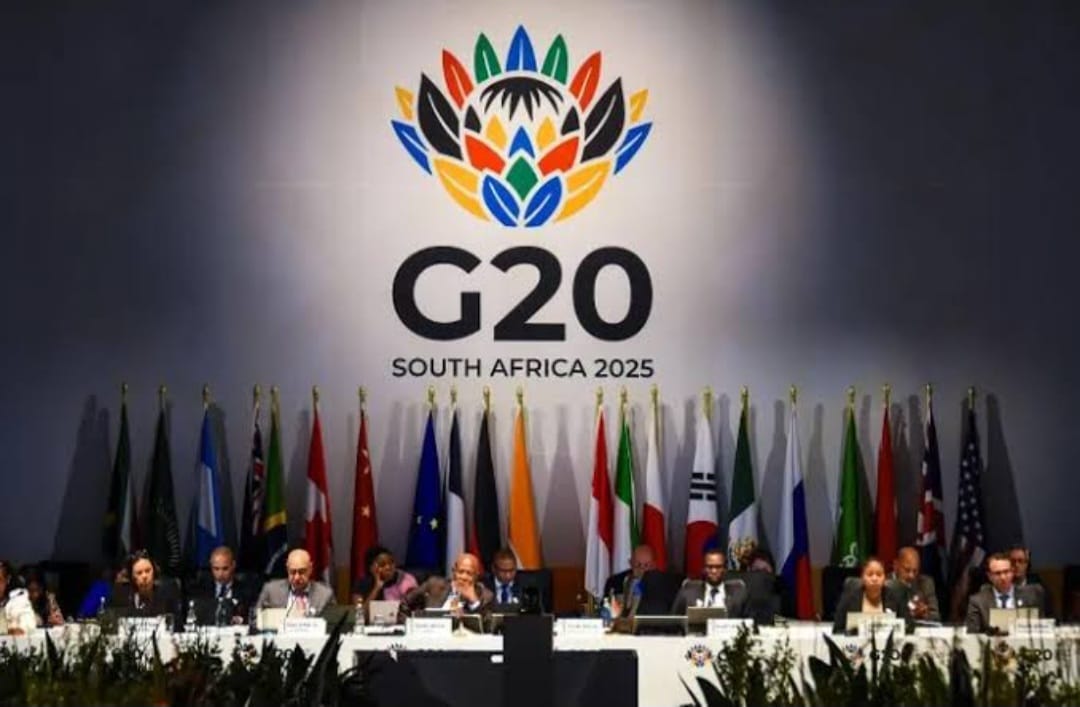
The Frayed Thread: How Geopolitical Strife, Climate Breakdown and Food Insecurity Threaten Our Common Future.
By George Omagbemi Sylvester | Published by saharaweeklyng.com
“A blistering call to concerted action after President Cyril Ramaphosa’s G20 warning — because polite complacency is now a crime against our children.
When President Cyril Ramaphosa stood before the G20 and warned that “the threats facing humanity today; from escalating geopolitical tensions, global warming, pandemics, energy and food insecurity jeopardise our collective future,” he did not offer a polite diplomatic observation: he issued an alarm bell. That sentence is not a speech flourish. It is a diagnosis, a legal brief, and a moral indictment rolled into one. The world is being rent along multiple fault lines at once and those ruptures are interacting in ways that amplify suffering, undermine institutions, and make yesterday’s crises look quaint at the G20.
Let us be clear about what we are confronting. On the food front, the United Nations flagship analysis makes plain that hunger is not a vague, distant problem to be solved by feel-good charity; it is resurging, structural, and measurable. In 2024 some 673 million people (roughly 8 percent of humanity) experienced hunger, and roughly 2.3 billion people were moderately or severely food insecure; hundreds of millions more than before the pandemic. These figures are not abstractions: they map to children stunted by malnutrition, to economies hollowed out by lost productivity, and to political tinderboxes where food scarcity feeds conflict and displacement.
Worse still, acute food crises have ballooned. Independent reporting and the Global Report on Food Crises show that nearly 300 million people faced severe, acute food crises in 2024 — a horrifying figure driven by war, economic collapse, and weather extremes. Humanitarian agencies warn that tens of millions could slide from crisis into outright famine unless funding and ceasefires arrive. This is not a distant news brief; it is a rolling catastrophe unfolding in real time in places such as Sudan, Gaza, parts of the Sahel, Yemen and beyond.
Why should a South African-hosted G20 care? Because geopolitics, climate and food are not separate spheres: they are three cogs of a single machine that, if left unchecked, will grind civilization into anarchy. Geopolitical tensions (rivalries between great powers, regional wars, proxy conflicts and the weaponisation of aid and trade) disrupt supply chains, spike prices and close off humanitarian corridors. When fertilizers, fuel and transport are priced out of reach or blocked by sanctions and conflict, harvests fail, markets panic and millions can’t afford a daily meal. The World Food Programme has repeatedly warned that funding shortfalls compounded by geopolitical choices have placed some 58 million people at the brink of an extreme hunger crisis; a direct consequence of policy choices as much as weather.
Then there is climate, the slow, remorseless amplifier. Climate scientists and planetary-boundary researchers, warning in ever more urgent tones, tell us we are perilously close to tipping points: irreversible shifts like the dieback of the Amazon, the collapse of parts of the Antarctic ice sheet, or a breakdown in major ocean currents that sustain monsoons. Those shifts do not merely raise sea levels; they rewrite the map of agriculture, collapse freshwater systems, and trigger migration on an epic scale. Leading scientists warn that transgressing multiple planetary thresholds will undermine the Earth’s life-support systems — with catastrophic consequences for food production and human security.
Add inequality and economic policy to the mix and you have a perfect storm. Nobel laureate Joseph Stiglitz and other economists have framed the present era as an “INEQUALITY EMERGENCY” a structural fragility that leaves entire populations unable to absorb shocks. Inequality sharpens the effects of famine and heatwaves because poor households cannot diversify livelihoods, access credit, or relocate. It also fuels political polarization; angry, desperate populations are tinder for demagogues and violent actors who exploit scarcity to consolidate power. The G20 itself has been urged to confront inequality as a systemic risk to global stability.
These are not problems that can be outsourced to NGOs. They are governance failures writ large: failures of diplomacy when sanctions and saber-rattling choke trade; failures of climate stewardship when fossil-fuel interests stall transitions; failures of solidarity when humanitarian funding is traded for geopolitical advantage. António Guterres and other global leaders have been blunt: hunger is being weaponized, and climate inaction is an act of intergenerational theft. That language may sting, but it must sting — EUPHEMISMS have had their day.
So what must happen? First: treat these threats as STRATEGIC; not CHARITABLE. Food systems, energy systems and climate resilience belong at the core of national security strategies. That means stockpiles for emergencies, safeguarded humanitarian corridors, and trade instruments designed to keep essential goods moving even in times of diplomatic fracture. It means debt-relief tied to investments in resilient agriculture and social protections so that poor nations aren’t forced to choose between service payments and feeding their children.
Second: elevate CLIMATE ACTION from SLOGAN to STRICT POLICY. The technological breakthroughs in renewables and storage are real; but without large-scale finance, just transition programs for fossil-fuel dependent communities, and rapid removal of market distortions that favour carbon-intensive industries, the window to limit warming to survivable bounds will slam shut. Scientists implore immediate, profound cuts in emissions and an urgent scale-up of carbon removal where necessary; not as an OPTIONAL ADD-ON but as an OBLIGATION.
Third: rebuild international cooperation mechanisms. The G20 has a unique convening power; Ramaphosa’s hosting moment must be used to forge binding, accountable pledges: emergency funding guarantees for food crises, a MULTILATERAL COMPACT to DE-ESCALATE CONFLICTS that IMPEDE food flows, and an international panel on inequality and shared prosperity modeled on proposals backed by leading economists. These are politically hard, but the alternative is to watch fragile states fail and generate waves of displacement and conflict that will ripple back to every G20 capital.
Finally: put justice at the center. Climate and food insecurity are not blind forces; they fall hardest on those who contributed least to the problem. Any credible response must include transfer of FINANCE and TECHNOLOGY to the Global South, fair trade terms for agricultural producers, and mechanisms to protect smallholder farmers from market shocks and climate volatility.
This is not an essay in despair. It is a summons. Diplomacy can quiet guns; investment can rebuild soils and power grids; policy can protect the most vulnerable. But none of that will happen if we muddle along with incrementalism and hollow talk. President Ramaphosa’s line at the G20 is more than a sentence, it is a MANDATE for URGENCY. We have the evidence, the science, and the moral case. What we lack is the political courage to act at the scale required.
If not now, when? If not together, who? The future will not forgive the generation that chose complacency while its children starved and its lands burned. The time for excuses is over; the time for systemic, cooperative action has arrived. The G20, UNICEF, FAO, WFP, scientists and civil society must stop trading EUPHEMISMS for results. We must convert ALARM into ACCOUNTABILITY and PROMISES into IMMEDIATE, MEASURABLE INTERVENTIONS. Anything less will be a betrayal of the most basic compact between governments and the people they are meant to protect.
George Omagbemi Sylvester writes from South Africa. Published by saharaweeklyng.com






US-Based Society Lady, Fehintola-Brat Extends Eid-El-Kabir Greetings To Muslims
United States based fahionista of class, Chief (Mrs) Ayoola Fehintola-Brat has extended a warm greetings to Muslim faithful all over the world on the occasion of the 2026 Eid-El-Kabir celebration.
Fehintola-Brat who is the Balogun Egbe Obaneye Obinrin Akile Ijebu, and the Yeye Asofin of Idenaland in her message to Journalists urged Muslim to continually uphold the enduring values of sacrifice, obedience, faith, and compassion, which are central to the significance of Eid-El-Kabir festival.
A quiet philantropist whose humanitarian services has won her several laurels urged Muslims to use the spiritual occasion to pray for the peace co-existence of Nigerians regardless of religious, social and political leanings stressing that the oneness of the country should not be underplay.
In a related development, she expressed her felicitations to all sons and daughters of Ijebuland on the forthcoming Ojude Oba 2026 celebration, tasking age-groups otherwise known as Regbregbe to be more proactive in giving back to their immediate communities.
According to her, the beauty of the age-groups in Ijebuland is the need to contribute immensely to the development of the land in no small means. “This we will continue to achieve with God on our side”, she concluded.
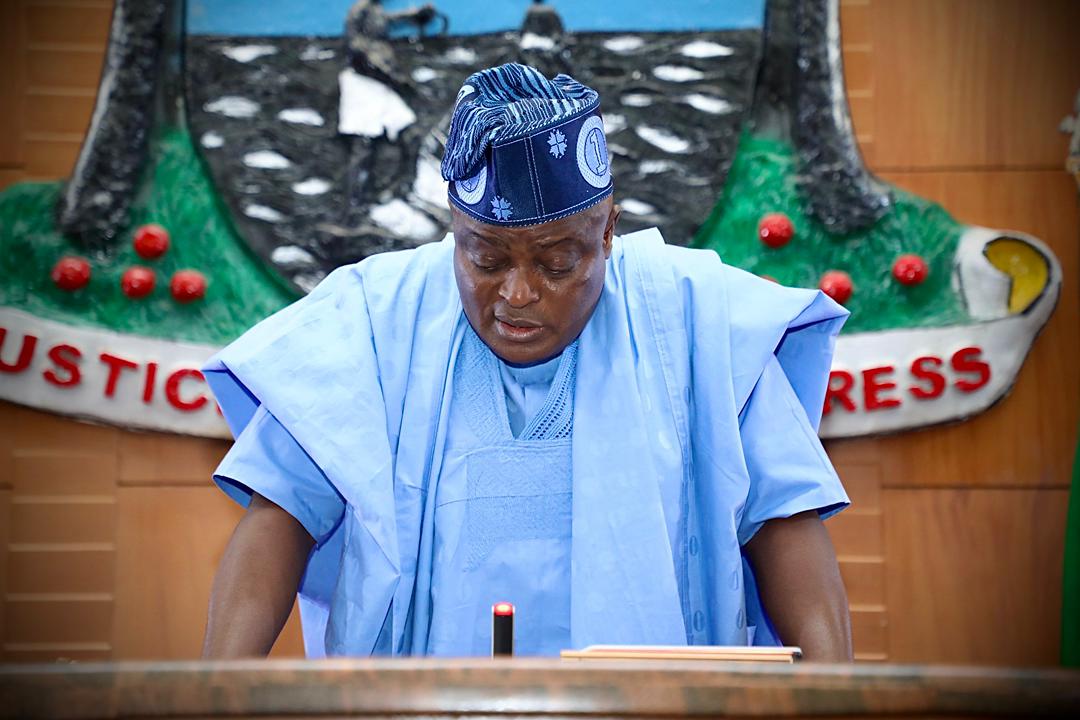
Sallah: Obasa Felicitates Muslim Ummah, Commends Nigerians for APC Primaries Turnout
The Speaker of the Lagos State House of Assembly, Rt. Hon. Mudashiru Obasa has extended warm felicitations to Muslims in Lagos State and across Nigeria on the occasion of Eid al-Adha.
In a statement released by his Chief Press Secretary, Mr. Dave Agboola, Obasa described the festival as a season of sacrifice, reflection, and gratitude, urging the faithful to continue to uphold the values of peace, unity, and love that strengthen the nation.
He noted that the celebration of Eid al-Adha is not only a spiritual milestone but also a reminder of the importance of togetherness and collective responsibility in building a stronger society.
He, likewise, emphasized that the festival provides an opportunity for Nigerians to renew their commitment to national progress and to support leadership that prioritizes development and prosperity.
Obasa, however, commended Nigerians, particularly members of the All Progressives Congress (APC), for their massive turnout during the recently concluded party primaries. He described the participation as a clear demonstration of the people’s confidence in the government of President Bola Ahmed Tinubu and their belief in the administration’s vision for a greater Nigeria.
“The APC primaries have shown the resilience of our democracy and the confidence Nigerians have in the leadership of President Bola Ahmed Tinubu and the Renewed Hope Agenda. This is a strong message that our people are ready to continue supporting policies that will drive growth and prosperity,” Obasa stated.
The Speaker further encouraged Muslims to celebrate responsibly, stressing that the joy of Eid should be accompanied by prayers for the continued peace and progress of Lagos State and Nigeria.
“As you celebrate with family and loved ones, may this season bring joy, peace, and prosperity to your homes. Let us remain united in our resolve to build a stronger nation,” he added.
On behalf of the Lagos State House of Assembly, Obasa wished all Muslims a happy and fulfilling Eid al-Adha celebration.

ABEOKUTA FILM FESTIVAL AT ILEYA
Kayshow Multimedia a filmmaking and Media organization this year 2026 holds its annual Abeokuta film festival at the Ake Palace in Abeokuta.
Alake of Egba land, Ọba Michael Adedotun Arẹmu Gbadebo has graciously endorsed the Free Training of Egba Youths on Film and Arts and the Entertainment of the the People with a FREE FILM SHOW at the AKE PAVILION. as part of the ABEOKUTA FILM FESTIVAL 2.0.
The Convener of the Film Festival Honorable Kehinde Soaga says this year’s event promises to be more exciting as distinguished personalities are sure to attend.
This includes the honorable Minister for Art Culture and Creative Economy in Nigeria, Barr. Hannatu Musa Musawa, Ààrẹ Lai Labode, Sen. Ibikunle Amosun and other special guests.
The event will feature Film, Cultural Dance Cultural foods and Award Ceremony.
The general public is hereby invited to the Free film show at the Abeokuta film festival at the Alake Palace Pavilion on Thursday 28th of May 2026 by 4:00 p.m.
Only well dressed is the Entry. The Abeokuta Film Festival is an annual event taking place in the capital city of Ogun State state.


- Qrent says delaying Information Technology (IT) refresh cycles may be increasing operational risk for businesses in Africa May 27, 2026
- Dentons’ Iyunola Adekanye Appointed to African Mining Week (AMW) Advisory Board May 27, 2026
- United Nations (UN) Women Liberia and Partners Convene for Spotlight Initiative 2.0 Women’s Economic Empowerment Inception Meeting May 27, 2026
- African Mining Week (AMW) to Host Central Bank Governors Roundtable as Monetary Authorities Deepen Role in Mining Sector Growth May 27, 2026
- Eritrea: Diaspora Nationals Celebrate Independence Day Anniversary May 27, 2026
- Africa Unveils Landmark Humanitarian Coordination Platform to Strengthen aligned Response to Humanitarian Crises May 27, 2026
- Seychelles: President Herminie Engages with Police and Fire Services on Praslin May 27, 2026
- Issue 3 of Mining Review Africa now available for free download May 27, 2026
- NOV Joins African Energy Week (AEW) 2026 as Gold Sponsor Amid Africa’s Offshore Expansion Push May 26, 2026
- African Union of Broadcasting (AUB) and United Nations University Institute for Water, Environment and Health (UNU-INWEH) Launch Landmark Webinar Series on Africa’s Water Crisis, Starting June 2, 2026 May 26, 2026
- Qrent says delaying Information Technology (IT) refresh cycles may be increasing operational risk for businesses in Africa May 27, 2026
- Dentons’ Iyunola Adekanye Appointed to African Mining Week (AMW) Advisory Board May 27, 2026
- United Nations (UN) Women Liberia and Partners Convene for Spotlight Initiative 2.0 Women’s Economic Empowerment Inception Meeting May 27, 2026
- African Mining Week (AMW) to Host Central Bank Governors Roundtable as Monetary Authorities Deepen Role in Mining Sector Growth May 27, 2026
- Eritrea: Diaspora Nationals Celebrate Independence Day Anniversary May 27, 2026
- Africa Unveils Landmark Humanitarian Coordination Platform to Strengthen aligned Response to Humanitarian Crises May 27, 2026
- Seychelles: President Herminie Engages with Police and Fire Services on Praslin May 27, 2026
-

 news5 months ago
WHO REALLY OWNS MONIEPOINT? The $290 Million Deal That Sold Nigeria’s Top Fintech to Foreign Interests
-

 society3 weeks ago
SOCIAL MEDIA IS NOT A BATTLEFIELD COMMAND – WHY THE NIGERIAN ARMY’S ACTION AGAINST JUSTICE CRACK IS A NATIONAL SECURITY IMPERATIVE
-

 celebrity radar - gossips4 months ago
Dr. Chris Okafor Returns with Power and Fire of the Spirit -Mounts Grace Nation Altar with Fresh Anointing and Restoration Grace on February 1, 2026
-

 celebrity radar - gossips6 months ago
Prophet Kingsley Aitafo Releases 2026 Prophecy: ‘Nigeria Will Rise, but the World Must Prepare for Turbulence’