
society
The Green Passport and the Price of Poverty: A Nation that Punishes its Own. (How Passport Hikes Privatise Mobility and Punish the Poor)


The Green Passport and the Price of Poverty: A Nation that Punishes its Own.
(How Passport Hikes Privatise Mobility and Punish the Poor)
By George Omagbemi Sylvester | published by saharaweeklyng.com
If there is a single, cruel joke the Nigerian state is telling its poorest citizens, it is this: CITIZENSHIP WITHOUT MOBILITY is a MOCKERY. On August 28, 2025, the Nigeria Immigration Service (NIS) quietly approved another staggering upward review of passport fees that takes effect from 1 September 2025. The 32-page standard passport (5 years) now costs ₦100,000; the 64-page booklet (10 years) costs ₦200,000. Less than two years ago these booklets were a fraction of that price. This is not a technical adjustment. It is a social decision with a brutal price tag.

To be clear about what is being sold: Nigeria issues several passport classes. The standard, green passport is what ordinary citizens must buy. There are also Official passports (BLUE) for government functionaries and Diplomatic passports (RED) for accredited diplomats; these latter classes are effectively issued free to their beneficiaries. In short: those who govern or serve diplomatic interests do not pay; those who toil and save for a chance to leave often must. That asymmetry is not incidental, it is symbolic and structural.

Diaspora Exploitation: Nigerians in South Africa Pay Triple.
If Nigerians at home are bleeding, those in the diaspora are haemorrhaging. In South Africa, reports show that Nigerians often pay between R5,000 to R6,500 (about ₦300,000 to ₦400,000) for a standard passport through the Nigerian High Commission in Pretoria or the Consulate in Johannesburg. That is nearly three times the new official rate in Nigeria. Compare this to South Africans themselves: a 10-year passport costs only R600 (about ₦60,000) in their own country.
This disparity is an insult layered upon injury. Diaspora Nigerians are not only ambassadors of culture, trade and remittances, they send home over $20 billion annually in remittances that sustain families and stimulate the economy. Yet they are forced to pay the steepest price for a document that should be their birthright. As one Nigerian student in Cape Town lamented: “By the time I save for the passport, I no longer have money for my study visa. It is like Nigeria itself is blocking me.”

Arithmetic and Politics of Poverty.
The new 32-page fee of ₦100,000 is greater than the legally approved monthly minimum wage of ₦70,000. A single passport now costs more than a month’s legal basic pay for millions of Nigerians. A young student preparing to study abroad, a nurse seeking work to support ageing parents, a trader hustling for better markets all must either delay, borrow or abandon those plans. That is mobility rationed by income. Former presidential candidate Peter Obi summed it up: “In a country where minimum wage is ₦70,000, making a passport cost more than that is a cruel policy that deepens citizens’ hardship.”
The government defends the hike with familiar technocratic language: UPGRADE SYSTEMS, CURB CORRUPTION, IMPROVE QUALITY and INTEGRITY of the PASSPORT. But when process becomes cover for price, citizens have reason to suspect priorities. Every public-sector reform that is funded by charging the many to benefit the few shifts the social contract in the wrong direction. Human-rights groups such as SERAP have rightly called the increase “UNLAWFUL and DISCRIMINATORY”, arguing the move punishes poor Nigerians and restricts fundamental freedoms.
Comedy as Civic Critique.
Across the country, the reaction has been raw: OUTRAGE, SARCASM, BITTER HUMOUR. Comedy (always a pressure valve in Nigerian life) has been doing what journalism sometimes cannot: translate pain into plain, scathing truth. Francis “I Go Dye” Agoda, a comic who doubles as a social crusader, has long used the passport as a punchline for the absurdities of status and access in Nigeria. Gordons too has joked about nearly being stranded because of passport delays, a small anecdote that signals a larger truth: when systems fail, citizens laugh bitterly to mask despair.
As Gordons once quipped on stage: “Na only for Nigeria you go need passport to travel, but na your passport go travel pass you because you never fit afford the money to collect am.” The audience roared; not because it was merely funny, but because it was painfully true.
Comparative Passport Realities in Africa.
Contrast Nigeria’s green passport with others on the continent:
South Africa: 10-year passport — R600 (₦60,000). Citizens enjoy wider visa-free access, including to the EU’s Schengen area.
Kenya: 10-year passport — KSh 7,500 (about ₦45,000). Visa-free to more African countries than Nigeria.

Rwanda: 10-year passport — RWF 75,000 (about ₦45,000). A country with far lower per-capita income makes passports cheaper, ensuring accessibility.
Ghana: 5-year passport — GHS 500 (about ₦50,000). Affordable compared to Nigeria.
Now compare: Nigeria’s ₦200,000 (10 years) stands as one of the highest not only in Africa but in the developing world, yet the Nigerian passport offers far less travel freedom than South Africa’s or even Kenya’s. In the latest Henley Passport Index (2025), Nigeria ranks among the bottom 20 globally, with visa-free access to fewer than 50 countries. What then are Nigerians paying for? A weak travel document sold at premium rates.
Governance Paradox and Moral Failure.
There is also a governance paradox: the classes who receive free or subsidised passports (senior officials, diplomats, political appointees) are the same people making and defending the policy. That reproduces privilege while cutting the poor off. It corrodes legitimacy and strengthens the belief that public policy is a tool of elite convenience rather than public service.
If other democracies cushion fees with low-income waivers, student discounts or staggered payments, why must Nigeria wield only a blunt, punitive instrument?
A Tax on Hope.
When a state makes participation in global life conditional on cash alone, it fails the promise of citizenship. Mobility is a basic ingredient of opportunity in a globalised world. By turning the passport into a luxury item, Nigeria is not reforming, it is gatekeeping. It is taxing aspiration and selling hope to the highest bidder.
And so the jokes multiply because people are hurting. The comedians’ quips are not just humour; they are civic critique in plain language. When I Go Dye or Gordons riff on the passport, they are not simply making people laugh. They are forcing Nigerians to confront the uncomfortable truth: the poor are punished for being poor, while the privileged glide through borders for free.
Finally: Reform or Ruin.
If this policy remains, expect chilling consequences: greater brain drain among those who can pay and deeper exclusion for those who cannot. Expect families to delay education and health travel; expect more irregular migration that is unsafe and unrecorded.
A passport is not just a booklet. It is a social licence to participate in the world economy. Deny it to the poor and you widen the cracks of inequality that already threaten the nation’s stability.
Nigeria must do better. A legitimate state protects its citizens’ rights and enables access, not erects tollgates at every turn. The price of a passport should not be paid in full by those least able to shoulder it. Anything less than fairness, transparency and humanity is not governance; it is exploitation.
Written by George Omagbemi Sylvester. Published by saharaweeklyng.com




UKA Gears Up for Final ATC Exchangeability Test Run as June Preparations Begin.
May 30, 2026 – As the month of June gathers momentum, the *United Kingdom of Atlantis, UKA*, a sovereign nation has unveiled a series of vital guidelines and preparatory packages to ensure citizens and stakeholders run the *ATC Exchangeability* process effectively.
In an official update, the *President of Atlantic Crown Limited, Empress of Attica Empire UKA*, confirmed that the *Final Test Run of ATC Exchangeability* is scheduled for the month of June 2026. The exercise marks a key phase ahead of the *Official Exchangeability Window, set to run from July 2026 to February 2027*.
### Key Highlights from the Presidential Briefing
1. *Final Test Run – June 2026*
The test run is designed to validate systems, procedures, and user readiness before full activation. Citizens, partners, and designated participants are urged to follow all official advisories released by UKA authorities during this period.
2. *Official Exchangeability Period*
Following the successful completion of the June test run, the Official Exchangeability will commence in july 2026 and we are Expecting Full Exchange ability between July Ending, 2026 to February 2026.
UKA stated that detailed schedules, eligibility requirements, and step-by-step instructions will be communicated progressively through verified UKA channels.
3. *Benefiting Packages for June*
In line with UKA’s commitment to citizen empowerment, the month of June will feature “benefiting packages” aimed at education, preparation, and seamless onboarding. These packages are intended to equip the people of UKA with the knowledge and tools needed for effective participation.
4. *Commitment to Transparency*
Addressing the nation, the Empress of Attica Empire UKA emphasized:
_“Final Test Run of ATC Comes up in The Month of June, As We Prepare For The Official Exchangeability, Between July 2026 To Feb 2027. All Information Will Be Communicated.”_
UKA reaffirmed that only information released through official UKA platforms should be regarded as authoritative.
The United Kingdom of Atlantis is encouraging all citizens, representatives, and interested parties to remain alert to official communications, attend designated orientation sessions, and avoid unofficial sources. UKA’s dedication to order, clarity, and the collective benefit of its people as the nation moves into this significant phase.
For updates, advisories, and participation guidelines, citizens are advised to monitor official UKA communication channels.
United Kingdom of Atlantis, UKA, is a sovereign nation, committed to national development, citizen welfare, and structured economic participation through initiatives such as ATC Exchangeability.
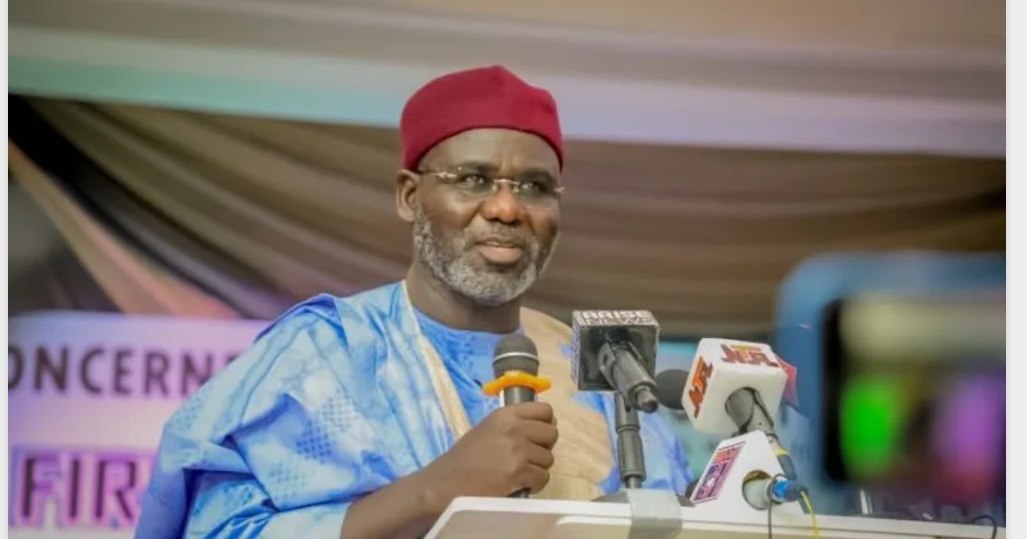
Three Years On, General Buratai Hails Tinubu’s Economic, Security Achievements
Former Chief of Army Staff, Lt. Gen. Tukur Buratai (retd.), has commended President Bola Ahmed Tinubu for what he described as bold economic reforms and improved security efforts as the President marks three years in office.
In a goodwill message on Thursday to commemorate Tinubu’s third anniversary as President and Commander-in-Chief of the Armed Forces, Buratai said the administration had taken courageous decisions that would leave a lasting impact on Nigeria’s development.

According to him, President Tinubu broke a long-standing cycle that had hindered national growth by removing fuel subsidy and implementing foreign exchange reforms aimed at stabilising the naira and strengthening the economy.
He noted that the reforms were beginning to yield positive results, citing the global acceptance of Nigerian debit cards, the gradual revival of local refineries, access to student loans, and ongoing road and infrastructure projects across the country.
“The FCT Administration has also recorded remarkable progress, completing major road projects that remained unfinished for over 16 years,” Buratai stated.
The former army chief also praised the administration’s security efforts, saying renewed military offensives against insurgents, terrorists and bandits had led to notable successes across various parts of the country.
He specifically lauded recent joint operations involving Nigerian and United States forces against Boko Haram and ISWAP in the North-East, as well as intensified counter-banditry operations in the North-West.
“We have seen notorious ISWAP commanders being neutralised. I congratulate the Commander-in-Chief, the Minister of Defence, the Chief of Defence Staff, the Service Chiefs, the Inspector-General of Police and heads of intelligence agencies for their efforts,” he said.
Buratai, however, acknowledged that challenges remained, stressing the need for more aggressive military operations and intelligence-driven strategies in the coming year.
While urging Nigerians to remain hopeful, he said celebrating the President’s achievements did not amount to ignoring the difficulties facing the nation.
“Because you truly care, you have shown the courage to trade short-term comfort for long-term hope. Nigerians need your reassurances, and that is why we remain optimistic and full of confidence,” he added.
The retired military officer reaffirmed his support for the Tinubu administration and expressed confidence that the foundation being laid by the government would deliver a brighter future for the country.
He also prayed for God’s guidance, wisdom, strength and good health for the President as he continues to lead Nigeria.
NUT Raises Alarm Over Continued Captivity of Abducted Oyo Pupils, Teachers
The Nigeria Union of Teachers has expressed deep concern over the continued captivity of pupils and teachers abducted during an attack on schools in the Ahoro-Esinle and Yawota communities in Oriire Local Government Area of Oyo State.
In a statement issued on Saturday, the Oyo State wing of the union described the situation as increasingly distressing, particularly following the emergence of a video allegedly released by the abductors showing the victims pleading for their freedom.
The union said the footage had heightened fears over the welfare of the abducted pupils and teachers, describing their ordeal as heartbreaking and unacceptable.

According to the NUT, no child or teacher deserves to be subjected to such traumatic experiences, adding that the prolonged captivity of the victims has continued to inflict psychological pain on their families, colleagues and the wider education community.
The union called on the Federal Government, Oyo State Government and relevant security agencies to intensify efforts towards securing the immediate and safe release of the victims.
“This is not a moment for hesitation. It is a moment for coordinated, intelligence-driven efforts to ensure the immediate and safe release of all abducted pupils and teachers,” the statement read.
While acknowledging ongoing interventions by security agencies and government authorities, the union stressed that time was of the essence, warning that every additional day in captivity deepens the trauma suffered by the victims.
The NUT urged security operatives to strengthen surveillance, improve community intelligence gathering and deploy all necessary operational and diplomatic measures to facilitate the rescue of the abductees.
It also appealed to traditional rulers, community leaders and residents to support rescue efforts by providing credible information that could assist security agencies.
“The safety of our children and teachers must remain a collective priority,” the union stated.
Reaffirming its support for the families of the victims, the NUT pledged continued solidarity and prayers while advocating safer learning environments across the country.
The statement was jointly signed by the Chairman of the Oyo State NUT, Comrade Hassan Ajibola Fatai, and the Secretary, Comrade Salami Olukayode.


- Pitcher Awards Announces 2026 Winners, Marking a Landmark Year for Pan‑African Creativity May 30, 2026
- Ghana Commemorates 78th International Day of United Nations Peacekeepers May 30, 2026
- South Africa: President Ramaphosa receives second interim report of Madlanga Commission May 30, 2026
- Asmara Marathon 2026 to be held May 30, 2026
- Powerful call for dialogue and compromise to secure peace in South Sudan issued on International Peacekeepers Day May 30, 2026
- Over 1,000 Participants Join Rwenzori Marathon Activation Run in Mombasa May 30, 2026
- World Health Organization (WHO) actively participated in the 2nd Summit on Healthcare Integration in Portuguese-speaking countries May 30, 2026
- Annual Meetings (AM) 2026: “Africa has what It takes” - Experts call for stronger financial systems to help Africa mobilise capital at scale May 30, 2026
- Eritrea Participates at Organization of African, Caribbean and Pacific States Meetings May 30, 2026
- Annual Meetings 2026 (AM2026): African Development Bank Group’s 2025 Annual Report Highlights Strong Results and a New Chapter for Africa’s Transformation May 29, 2026
- Pitcher Awards Announces 2026 Winners, Marking a Landmark Year for Pan‑African Creativity May 30, 2026
- Ghana Commemorates 78th International Day of United Nations Peacekeepers May 30, 2026
- South Africa: President Ramaphosa receives second interim report of Madlanga Commission May 30, 2026
- Asmara Marathon 2026 to be held May 30, 2026
- Powerful call for dialogue and compromise to secure peace in South Sudan issued on International Peacekeepers Day May 30, 2026
- Over 1,000 Participants Join Rwenzori Marathon Activation Run in Mombasa May 30, 2026
- World Health Organization (WHO) actively participated in the 2nd Summit on Healthcare Integration in Portuguese-speaking countries May 30, 2026
-

 news6 months ago
WHO REALLY OWNS MONIEPOINT? The $290 Million Deal That Sold Nigeria’s Top Fintech to Foreign Interests
-

 society4 weeks ago
SOCIAL MEDIA IS NOT A BATTLEFIELD COMMAND – WHY THE NIGERIAN ARMY’S ACTION AGAINST JUSTICE CRACK IS A NATIONAL SECURITY IMPERATIVE
-

 celebrity radar - gossips4 months ago
Dr. Chris Okafor Returns with Power and Fire of the Spirit -Mounts Grace Nation Altar with Fresh Anointing and Restoration Grace on February 1, 2026
-

 celebrity radar - gossips6 months ago
Prophet Kingsley Aitafo Releases 2026 Prophecy: ‘Nigeria Will Rise, but the World Must Prepare for Turbulence’