
society
When Comfort Becomes Complicity: The Hidden Violence of Neutrality. (How moral grandstanding silences empathy and what to do about it)


When Comfort Becomes Complicity: The Hidden Violence of Neutrality. (How moral grandstanding silences empathy and what to do about it)
By George Omagbemi Sylvester | Published on SaharaWeeklyNG.com
“Sometimes when you are not the victim you turn to be a priest.” The line is brutal in its honesty. It names a human reflex we would rather deny: WHEN PAIN IS NOT OURS, WE OFTEN SERMONIZE INSTEAD OF SYMPATHIZE. We reach for tidy morality plays, not messy solidarity. We become judges in robes we stitched for ourselves; confident, distant and wrong.

This essay argues that the priestly posture (moralizing from a safe distance) does real harm. Philosophy, history and behavioral science converge on one simple fact: NEUTRALITY and MORAL GRANDSTANDING in the face of suffering enable injustice. To resist that drift, we must choose courage over commentary, action over applause and responsibility over rhetorical righteousness.

The Priestly Reflex and Its Consequences.
It is tempting to stand safely on the pavement describing the flames rather than grabbing water. Archbishop Desmond Tutu warned against this pose: “If you are neutral in situations of injustice, you have chosen the side of the oppressor.” That’s not rhetoric; it is diagnosis. Neutrality is not a vacuum, but a shelter for the powerful.
Sociology and psychology explain how we slide into the PRIESTS PULPIT. After the 1964 murder of Kitty Genovese in New YORK (long mythologized as “38 witnesses doing nothing”) scholars Bibb Latané and John Darley designed experiments (1968–1970) that established the bystander effect: As the number of onlookers grows, the likelihood of help falls. We diffuse responsibility, assume someone else will act and talk ourselves into spiritual aloofness: “This is not my place.” The original Genovese reporting was later shown to be exaggerated in parts, but the experiments remain robust: diffusion of responsibility is real and deadly. When we are not the victim, the mind reaches for distance and the distance breeds sermons.

Philosopher Hannah Arendt offered a chilling lens: the “BANALITY of EVIL.” Much evil, she argued, is not spawned by theatrical villains but by ordinary people who outsource moral judgment to convention and bureaucracy. “The sad truth,” Arendt wrote, “is that most evil is done by people who never make up their minds to be good or evil.” The priestly reflex is precisely this quiet abdication an appearance of moral clarity that hides moral laziness.
In political life, the cost is stark. Martin Luther King Jr. warned, “Injustice anywhere is a threat to justice everywhere.” The phrase is not a slogan; it is a systems insight. When we treat others’ suffering as a stage on which to display our virtue, we do not disrupt the system; we stabilize it. We offer commentary instead of consequences.
Moral Grandstanding: The Sermon as Performance.
Modern ethics has a name for the priestly reflex: moral grandstanding. Philosophers Justin Tosi and Brandon Warmke define it as using moral talk to impress others and elevate one’s status. It is the public square’s glittering homily, designed not to help the victim but to burnish the speaker. The result is predictable: OUTRAGE INFLATION, PERFORMATIVE PURITY TESTS and a CROWD that talks over those who are actually harmed.
Psychology adds more traps. Moral licensing whispers, “You’ve posted, protested or donated once, now you’ve done enough.” Empathy gap research shows our concern shrinks with distance, difference and politics. Paul Bloom, in AGAINST EMPATHY, cautions that unexamined empathy can be biased; he recommends compassion guided by reason. The point is not to feel less but to act more intelligently: to pair warm HEARTS with cool HEADS.
Economists Ernst Fehr and Simon Gächter showed that communities flourish when members are willing to bear a cost to punish WRONGDOING, even as uninvolved third parties. This “ALTRUISTIC PUNISHMENT” knits social order by signaling that injustice will meet resistance. In other words: the antidote to the priestly pose is accountable action, not decorative outrage.
Philosophy’s Demands: From Spectatorship to Stewardship.
Long before social media, Adam Smith described the “impartial spectator,” an inner witness that checks our ego and urges justice. Properly formed, this spectator does not excuse indifference; it rebukes it. Peter Singer sharpened the edge: “If it is in our power to prevent something very bad from happening, without thereby sacrificing anything morally significant, we ought to do it.” The drowning child in Singer’s famous thought experiment is not a metaphor to admire, but a command to act.
Edmund Burke is often misquoted, but his verified counsel is tougher and truer: “WHEN BAD MEN COMBINE, the GOOD must ASSOCIATE; else they will FALL one by one.” The instruction is collective. Association (organized, disciplined, sustained) is the opposite of priestly posturing. It is solidarity operationalized.
How the Priest Shows Up Today.
Victim-blaming in public discourse: We search for the victim’s mistake to absolve ourselves. Did they dress wrongly, protest poorly, speak too loudly? The “PRIEST” asks how the hurting invited their hurt.
Policy debates as morality theater: We score points; THE POOR PAY COSTS. When food, housing or migration becomes a backdrop for brand-building, real families become scenery.
Neutrality masquerading as professionalism: Institutions hide behind “PROCESS” while harm compounds. Procedure without courage is ritual; priestly incense masking the stench of neglect.
What To Do Instead: A Brief Ethics of ANTI-PRIESTHOOD.
Move first, MORALIZE LATER. When harm is clear, action precedes analysis. Call the ambulance, secure the scene, offer the seat, share the meal, transfer the funds, sign the affidavit. Discuss theory after the danger has passed.
Center those harmed. “Nothing about us without us” is more than a slogan; it is a safeguard. Design responses with, NOT FOR, the people affected.
Invest where it hurts (aA LITTLE). If help costs nothing, it usually changes nothing. TIME, MONEY, RISK and REPUTATION are CURRENCIES of real SOLIDARITY.
Build associational power. Burke was right: ORGANIZE. JOIN UNIONS, CIVIC GROUPS, NEIGHBORHOOD WATCHES, LEGAL DEFENSE FUNDS, FAITH COMMUNITIES. Lone priests deliver sermons; communities deliver outcomes.
Measure outcomes, not applause. Swap “DID I SOUND RIGHTEOUS?” for “Did we reduce suffering? Did we increase safety, freedom and dignity?”
Choose principled dissent over fashionable outrage. King again: courage is not the absence of fear but the triumph over it. When your coalition is wrong, say so. When the headline is misleading, correct it; especially if it flatters your side.
Practice disciplined compassion. Bloom’s caution matters: PAIR FEELING with FACT. Target aid where it works; test programs; correct course. COMPASSION without COMPETENCE exhausts.
The Civic Stakes.
History is merciless to spectators. Societies do not collapse in a single dramatic act; they erode by a thousand small abdications: someone else will speak; someone else will vote; someone else will resist. The priestly reflex institutionalizes those abdications. It trains a generation to curate moral identities rather than carry moral burdens.
We can do better. The first step is to retire the pulpit we drag everywhere. The second is to recover the oldest civic technology human beings possess: showing up. Aristotle wrote that we become just by doing just acts. Not by liking just posts or issuing just statements; but by DOING.
A Final Word to the “Priest” in All of Us.
You and I are not exempt. We are all, at times, the safe commentator, the tasteful neutral, the careful non-participant. Let us give that figure a new liturgy”: When a NEIGHBOR SUFFERS, show up.
When a stranger is targeted, STAND NEAR.
When a rule shields cruelty, BREAK the SILENCE and sometimes the RULE.
When your comfort depends on someone else’s risk, TRADE your COMFORT.
The work is not glamorous. It will not feel like a sermon. It will look like grocery runs, witness statements, donated hours, early votes, shared platforms and hard conversations with your own allies. It will feel small; until it doesn’t.
The line we began with remains our warning and our way out: SOMETIMES WHEN YOU ARE NOT THE VICTIM YOU TURN to be a PRIEST. The task is to turn, instead, into a neighbor. Let the record show that in our time the bystanders learned to MOVE, the neutral learned to CHOOSE and the preachers without practice learned to put their hands to the FIRE.

~ George Omagbemi Sylvester





Police Officers Detained as Family Property Dispute Sparks Demolition Controversy in Lagos
By Ifeoma Ikem
A property dispute within the Omotayo-Ojo family has taken a dramatic turn following a controversial demolition exercise at a residential building in Ikosi-Ketu, Lagos State, which reportedly left tenants displaced and led to the detention of some police officers allegedly involved in the operation.

The property, located at 23B Loveall Street, Ikosi-Ketu, has been the subject of a prolonged ownership tussle since the death of its owner, Chief Oludola Omotayo Ojo, the Babaalaje of Imesi-Ile, Osun State, in 2019.
Residents said tension erupted when a group of individuals, accompanied by security operatives, stormed the premises and commenced demolition activities.
According to eyewitnesses, portions of the building were pulled down while tenants rushed to salvage their belongings from affected apartments.
The residents alleged that windows, doors and roofing sheets were damaged during the exercise, exposing parts of the building to the elements and causing significant losses to occupants.
At the centre of the dispute is Mrs Mojisola Omotayo Ojo Alolagbe, who claimed that the property was allocated to her by her late father during his lifetime as a source of financial support.
She alleged that some family members had persistently challenged her ownership claim despite ongoing legal proceedings relating to the administration of the deceased’s estate.
Alolagbe further claimed that the latest incident was part of a series of attempts to wrest control of the property, citing previous cases of alleged vandalism and partial demolition in November 2025, January 2026 and February 2026.
The situation escalated further when reports emerged that police officers allegedly involved in the demolition were later apprehended and conveyed in a Black Maria vehicle over questions surrounding the legality of their participation in the operation.
Sources familiar with the matter said those behind the demolition had initially claimed to be acting on approval from the Lagos State Ministry of Lands. However, the authenticity and extent of such approval could not be independently verified as of the time of filing this report.
The development has generated concern among residents and community members, who questioned the involvement of security personnel in what they described as a civil matter.
Some tenants, who said they had recently renewed their tenancy agreements, lamented the destruction of their property and appealed to the authorities for protection and possible compensation.

They also called for a thorough investigation into the circumstances surrounding the demolition, insisting that the rights of all parties involved should be protected.
Stakeholders have urged the Lagos State Government, security agencies and the judiciary to intervene and ensure that the dispute is resolved through lawful means to prevent further escalation.
The controversy has continued to draw public attention, raising concerns over property rights, estate administration and the role of law enforcement agencies in civil disputes.

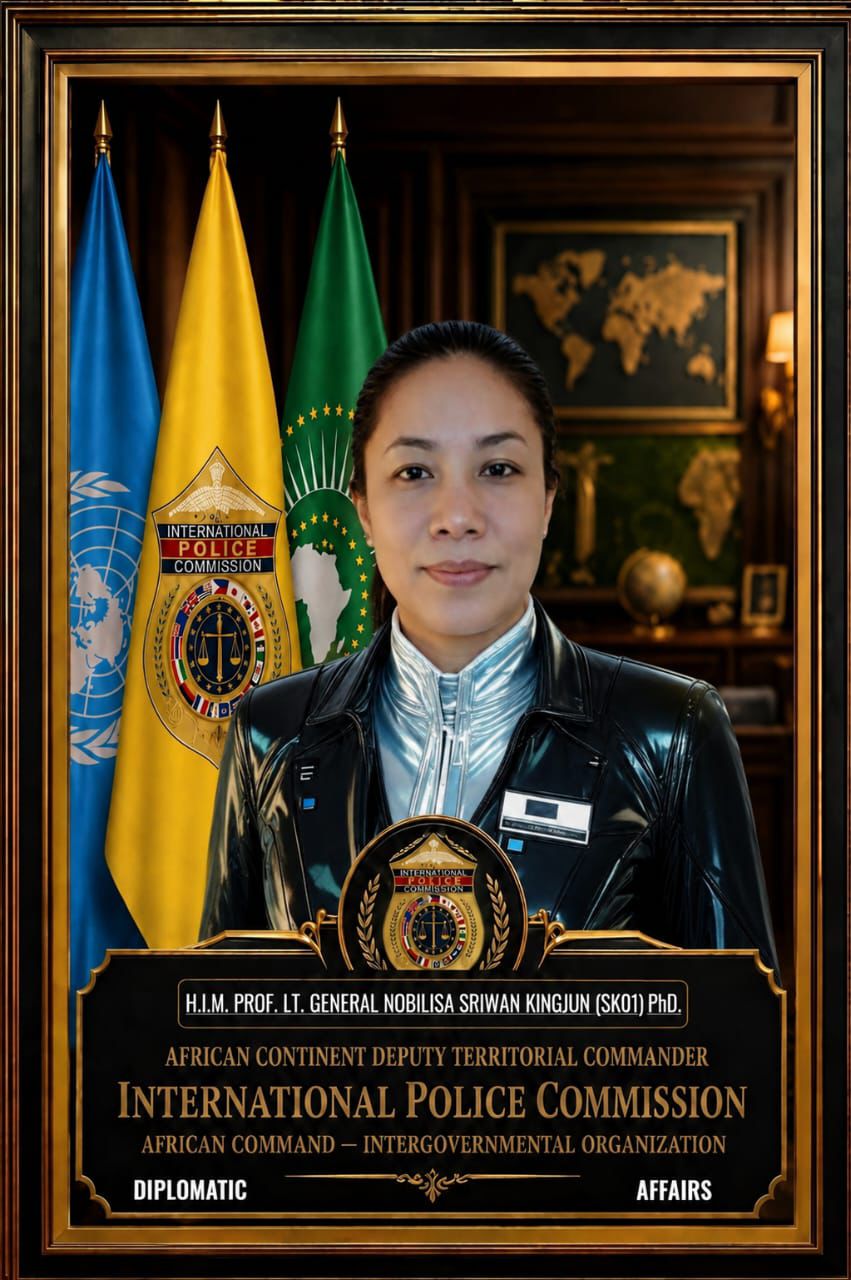
UKA Gears Up for Final ATC Exchangeability Test Run as June Preparations Begin.
May 30, 2026 – As the month of June gathers momentum, the *United Kingdom of Atlantis, UKA*, a sovereign nation has unveiled a series of vital guidelines and preparatory packages to ensure citizens and stakeholders run the *ATC Exchangeability* process effectively.
In an official update, the *President of Atlantic Crown Limited, Empress of Attica Empire UKA*, confirmed that the *Final Test Run of ATC Exchangeability* is scheduled for the month of June 2026. The exercise marks a key phase ahead of the *Official Exchangeability Window, set to run from July 2026 to February 2027*.
### Key Highlights from the Presidential Briefing
1. *Final Test Run – June 2026*
The test run is designed to validate systems, procedures, and user readiness before full activation. Citizens, partners, and designated participants are urged to follow all official advisories released by UKA authorities during this period.
2. *Official Exchangeability Period*
Following the successful completion of the June test run, the Official Exchangeability will commence in july 2026 and we are Expecting Full Exchange ability between July Ending, 2026 to February 2026.
UKA stated that detailed schedules, eligibility requirements, and step-by-step instructions will be communicated progressively through verified UKA channels.
3. *Benefiting Packages for June*
In line with UKA’s commitment to citizen empowerment, the month of June will feature “benefiting packages” aimed at education, preparation, and seamless onboarding. These packages are intended to equip the people of UKA with the knowledge and tools needed for effective participation.
4. *Commitment to Transparency*
Addressing the nation, the Empress of Attica Empire UKA emphasized:
_“Final Test Run of ATC Comes up in The Month of June, As We Prepare For The Official Exchangeability, Between July 2026 To Feb 2027. All Information Will Be Communicated.”_
UKA reaffirmed that only information released through official UKA platforms should be regarded as authoritative.
The United Kingdom of Atlantis is encouraging all citizens, representatives, and interested parties to remain alert to official communications, attend designated orientation sessions, and avoid unofficial sources. UKA’s dedication to order, clarity, and the collective benefit of its people as the nation moves into this significant phase.
For updates, advisories, and participation guidelines, citizens are advised to monitor official UKA communication channels.
United Kingdom of Atlantis, UKA, is a sovereign nation, committed to national development, citizen welfare, and structured economic participation through initiatives such as ATC Exchangeability.
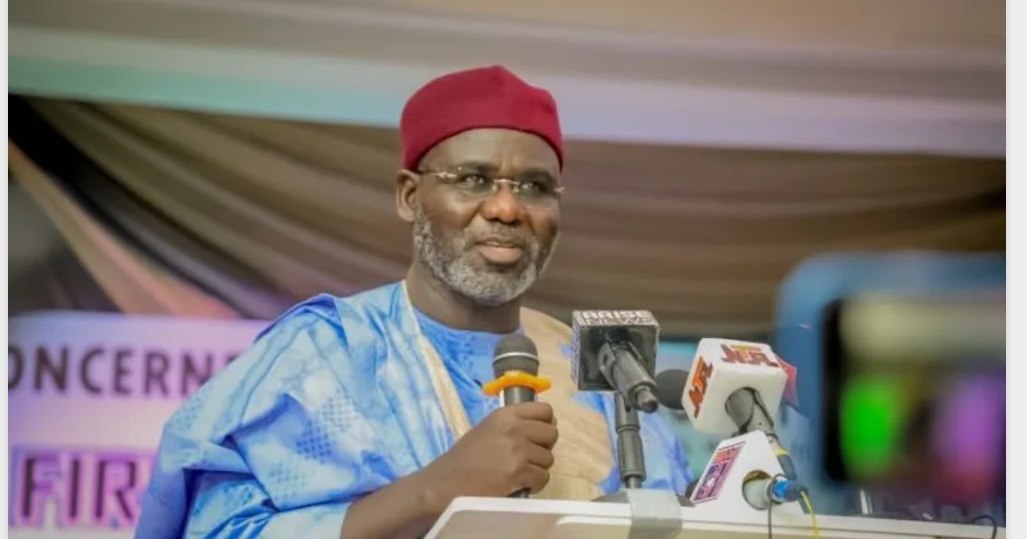
Three Years On, General Buratai Hails Tinubu’s Economic, Security Achievements
Former Chief of Army Staff, Lt. Gen. Tukur Buratai (retd.), has commended President Bola Ahmed Tinubu for what he described as bold economic reforms and improved security efforts as the President marks three years in office.
In a goodwill message on Thursday to commemorate Tinubu’s third anniversary as President and Commander-in-Chief of the Armed Forces, Buratai said the administration had taken courageous decisions that would leave a lasting impact on Nigeria’s development.

According to him, President Tinubu broke a long-standing cycle that had hindered national growth by removing fuel subsidy and implementing foreign exchange reforms aimed at stabilising the naira and strengthening the economy.
He noted that the reforms were beginning to yield positive results, citing the global acceptance of Nigerian debit cards, the gradual revival of local refineries, access to student loans, and ongoing road and infrastructure projects across the country.
“The FCT Administration has also recorded remarkable progress, completing major road projects that remained unfinished for over 16 years,” Buratai stated.
The former army chief also praised the administration’s security efforts, saying renewed military offensives against insurgents, terrorists and bandits had led to notable successes across various parts of the country.
He specifically lauded recent joint operations involving Nigerian and United States forces against Boko Haram and ISWAP in the North-East, as well as intensified counter-banditry operations in the North-West.
“We have seen notorious ISWAP commanders being neutralised. I congratulate the Commander-in-Chief, the Minister of Defence, the Chief of Defence Staff, the Service Chiefs, the Inspector-General of Police and heads of intelligence agencies for their efforts,” he said.
Buratai, however, acknowledged that challenges remained, stressing the need for more aggressive military operations and intelligence-driven strategies in the coming year.
While urging Nigerians to remain hopeful, he said celebrating the President’s achievements did not amount to ignoring the difficulties facing the nation.
“Because you truly care, you have shown the courage to trade short-term comfort for long-term hope. Nigerians need your reassurances, and that is why we remain optimistic and full of confidence,” he added.
The retired military officer reaffirmed his support for the Tinubu administration and expressed confidence that the foundation being laid by the government would deliver a brighter future for the country.
He also prayed for God’s guidance, wisdom, strength and good health for the President as he continues to lead Nigeria.


- When women farm better, Eswatini eats better June 3, 2026
- Togo Hosts the 8th Annual Forum of National Volunteer Agencies in the Economic Community of West African States (ECOWAS) Region June 3, 2026
- Indigenous Peoples gravely vulnerable to Ebola epidemic, warn United Nations (UN) independent experts June 3, 2026
- Meeting between Parliamentary Vice-Minister ONISHI and His Excellency (H.E.) Mr. Cosgrow, Principal Minister and Minister for Agriculture, Fisheries and Blue Economy of Seychelles June 3, 2026
- Eritrea: Construction of Elementary School in Gogni Sub-Zone June 3, 2026
- African Union Commission (AUC) Chairperson His Excellency (H.E.) Mahmoud Ali Youssouf highlighted thePermanent Representatives’ Committee (PRC) critical role in advancing the Union’s agenda and laying the groundwork for the forthcoming Mid-Year Coordination Meeting (MYCM) June 3, 2026
- Eritrea: Eighth Grade National Examination Commences June 3, 2026
- Many Africans see justice system as unequal, costly, and slow, Afrobarometer survey reveals June 3, 2026
- Prof. Benedict Oramah to Chair Finance Summit as African Energy Week (AEW) 2026 Prepares for Major Deal Flow June 3, 2026
- The Islamic Development Bank (IsDB) Group Affiliates to Host the 14th Private Sector Forum in Baku, Azerbaijan (16-19 June 2026) June 3, 2026
- When women farm better, Eswatini eats better June 3, 2026
- Togo Hosts the 8th Annual Forum of National Volunteer Agencies in the Economic Community of West African States (ECOWAS) Region June 3, 2026
- Indigenous Peoples gravely vulnerable to Ebola epidemic, warn United Nations (UN) independent experts June 3, 2026
- Meeting between Parliamentary Vice-Minister ONISHI and His Excellency (H.E.) Mr. Cosgrow, Principal Minister and Minister for Agriculture, Fisheries and Blue Economy of Seychelles June 3, 2026
- Eritrea: Construction of Elementary School in Gogni Sub-Zone June 3, 2026
- African Union Commission (AUC) Chairperson His Excellency (H.E.) Mahmoud Ali Youssouf highlighted thePermanent Representatives’ Committee (PRC) critical role in advancing the Union’s agenda and laying the groundwork for the forthcoming Mid-Year Coordination Meeting (MYCM) June 3, 2026
- Eritrea: Eighth Grade National Examination Commences June 3, 2026
-

 news6 months ago
WHO REALLY OWNS MONIEPOINT? The $290 Million Deal That Sold Nigeria’s Top Fintech to Foreign Interests
-

 society1 month ago
SOCIAL MEDIA IS NOT A BATTLEFIELD COMMAND – WHY THE NIGERIAN ARMY’S ACTION AGAINST JUSTICE CRACK IS A NATIONAL SECURITY IMPERATIVE
-

 celebrity radar - gossips4 months ago
Dr. Chris Okafor Returns with Power and Fire of the Spirit -Mounts Grace Nation Altar with Fresh Anointing and Restoration Grace on February 1, 2026
-

 celebrity radar - gossips6 months ago
Prophet Kingsley Aitafo Releases 2026 Prophecy: ‘Nigeria Will Rise, but the World Must Prepare for Turbulence’