
Politics
THE IMPORTANCE OF HISTORY, THE BLOODY COUP OF JANUARY 15th 1966 AND A TRIBUTE TO OUR HEROES PAST By Chief Femi Fani-Kayode

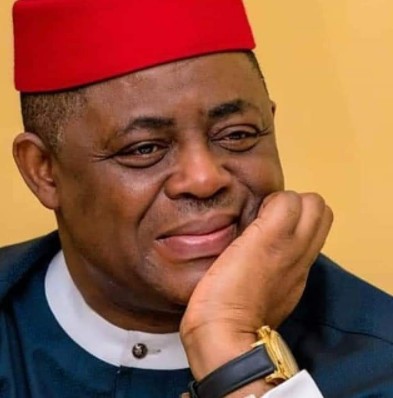
THE IMPORTANCE OF HISTORY, THE BLOODY COUP OF JANUARY 15th 1966 AND A TRIBUTE TO OUR HEROES PAST
By
Chief Femi Fani-Kayode
Nigeria is the only country in the world in which history is not taught.
This policy has done us much harm and represents perhaps the greatest, most savage, most brutal and most destructive blow to the pysche, confidence, knowledge, intellectual acumen and mental health of our people.

The consequence of this egregious and unbelievable error and grave oversight is the fact that we are now having to contend with a vast population of over 220 million people who are essentially ignorant of their own past, that have no knowledge of their noble historical heritage and that predicate and rationalise their nation’s existence on lies, misinformation, disinformation, falsehood, folklore, fairy tales, fantasy, self-serving and selective clap trap and a more than heavy dose of intellectual distortion and historical revisionism.
This is precisely why we are, in the main, essentially a conflicted and confused people who have no idea where we are coming from, where we are today or where we are going tomorrow.
This is why we, more often than not, view, discuss and debate our nation’s history with an emotional bent and from a thoroughly subjective, unintelligent and unintellectual prism rather than an objective, plausible, logical, level- headed, factual and intelligent one with strong primary sources and unassailable empirical evidence.
We have little or no regard or appreciation of the heroic deeds, monumental struggles, historical achievements and extraordinary sacrifices that our forefathers made in the struggle against British colonial rule, the fight for independence, the struggle against military rule and the challenges and obstacles that our politicians from the First, Second and Third republics faced, surmounted and overcame to get us to where we are.
This is our reality and frankly it is pitiful.
I say pitiful because without any knowledge of our history we are nothing.
Worse of all is the fact that, having learnt nothing from our past mistakes and numerous historical challenges because we have no idea about precisely what those mistakes and challenges were, it becomes inevitable for us to repeat them.
Permit me to tickle your collective fancies by asking the following questiins.
How many Nigerians know who Alafin Aole Arogangan, Sheik Usman Dan Fodio, Bishop Ajayi Crowther, Rev. Emmanuel Adelabi Kayode (my great grandfather), Herbert Macauly, Sapara Williams, Rev. Suberu Fanimokun, Isaac Boro, General Murtala Mohammed, Alhaji Ali Akilu, Alhaji Umaru Shinkafi, Colonel Gideon Orkar and Alhaji Waziri Ibrahim were?
How many know anything about Ernest Ikoli, Alhaji Aminu Kano, Chief Joseph Tarka, Owelle Nnamdi Azikiwe, Justice Daddy Onyeama, Chief Philip Asiodu, Chief Allison Ayida, Chief Hope Harriman, Chief Godfrey Amachree, Alhaji Adamu Attah, Alhaju Adamu Augie, Chief Solomon Lar, Alhaji Saleh Jambo, Alhaji Saleh Hassan, Oba Adesoji Aderemi and Alhaji Adamu Ciroma?
How many know much about General Hassan Katsina, General Ibrahim Babangida, General Shehu Musa Yar’adua, General TY Danjuma, General Sani Abacha, Colonel Abubakar Dangiwa Umar, Dr. Olusola Saraki, Chief KO Mbadiwe, Chief Obafemi Awolowo, Sir Adetokunboh Ademola, Chief FRA Williams, Justice Atanda Fatayi-Williams, Oba Okunade Sijuwade and the Black Scorpion, Benjamin Adekunle?
How many know anything about the Black Victorians of the old Lagos colony or Sara Forbes Bonneta who was the god-daughter of Queen Victoria of Great Britain.
How many have ever heard about Sara’s distinguished and well to do husband, Captain James Pinson Labulo Davis, a wealthy businessman and philanthropist from old Lagos.
How many know anything about the politics and history of Nigeria in the 1920’s, 1930’s, 1940’s, 1950’s, 1960’s, 1970’s, 1980’s and 1990’s?
How many knew that it was only in the 1950’s that Nigerians were allowed to live in the area of Lagos known as Ikoyi and that this came about only as a consequence of the long and bitter struggle and great and irresistible agitation of the proud and noble Nigerian leaders of the old Lagos colony of that day.
Up until then Ikoyi was a residential area that was the exclusive preserve of the European settlers and colonialists!
How many have heard about Justice Victor Adedapo Kayode, my Cambridge-University trained paternal grandfather who was one of the leading criminal lawyers of his generation, who was the third Nigerian to be appointed as a Magistrate (in those days all our judges were white) and who landed a dirty slap on the face of a British colonial officer in broad daylight outside the front door of the old Bristol Hotel in Lagos for his insolence, impertinence and overtly racist remarks!
The following day the matter was reported in the newspapers and it created quite a stir!
How many know about what really happened during our civil war and what led to it?
How many know about President Shehu Shagari and the Second Republic and how many have any knowledge of Chief MKO Abiola in the third?
How many know about military rule in Nigeria and who the main players were and how many have any idea about the coups and attempted coups we have experienced since independence?
Sadly most Nigerians, particularly in the Gen Z generation, know NOTHING about their nations past and its major players and even when they do that knowledge is sparse, scanty, shallow and, more often than not, minimal, inconsequential and obscure.
It really is a tragedy and one of the reasons that yours truly has written this contribution about the relevance of January 15th in our calender is to at least attempt to enlighten those that are intelligent enough to appreciate the importance of history and that have no idea why we even have or celebrate an Armed Forces Remebrance Day or where our seemingly unending troubles and turmoil really started.
Consider the following.
Today is Armed Forces Remembrance Day and it is a day that we are constrained to rembember our fallen heroes.
Many in the younger generation do not know why this particular day was chosen to commemorate those that fell and the tragic events that led to their brutal murder.
Permit me to enlighten those that know no better and to share the facts.
58 years ago today, on January 15th 1966, a bloody, vicious, merciless, unrelenting and violent mutiny took place in our Armed Forces in which many of our reverred, respected and beloved political leaders and senior military officers, together with some members of their respective families, were humiliated, tortured, mutilated and finally murdered in cold blood.
Those that were killed were Sir Abubakar Tafawa Balewa, the Prime Minister, Sir Ahmadu Bello, the Sardauna of Sokoto and Premier of the old Northern Region, Chief S.L. Akintola, the Premier of the old Western Region, Brigadier Zakariya Maimalari, Colonel James Pam, Brigadier Samuel Ademulegun, Colonel Ralph Sodeinde, Chief Festus Okotie-Eboh, the Minister of Finance, Colonel Arthur Unegbe, Colonel Kur Mohammed, Lt. Colonel Abogo Largema, Mrs. Hafsatu Bello, the wife of the Sardauna of Sokoto, Zarumi, the bodyguard of the Sardauna of Sokoto, Mrs. Lateefat Ademulegun, the wife of Brigadier Ademulegun, Ahmed B. Musa, Ahmed Pategi, Sgt. Daramola Oyegoke, PC Yohana Garkawa, PC Musa Nimzo, PC Akpan Anduka, PC Hagai Lai and PC Philip Lewande.
Two others were also abducted by the mutineers from their homes that night and brutalised. Thankfully they both managed to escape with their lives.
The first was Chief Remilekun Adetokunboh Fani-Kayode KC, SAN, CON, the Balogun of Ile-Ife and the Deputy Premier of the old Western Region (my beloved father).
I personally witnessed some of the events of that night when, led by one Captain Emmanuel Nwobosi, they came to our home and official residence in Government House, Ibadan and abducted him.
Thankfully he was rescued later in the day by loyal troops led by Lt. Colonel Yakubu Gowon (as he then was), Captain Paul Chabri Tarfa (as he then was) and Lt. Takoda, who stormed the officers mess in Dodan Barracks, Lagos where he was taken and was being held by the mutineers and freed him after a prolonged and bloody gun battle which resulted in deaths on both sides.
The second was Sir Kashim Ibrahim, the Governor of the old Northern Region who was rescued and freed by loyalist forces in Kaduna.
Both of these men were delivered by divine providence and went on to live for many more years and make their contributions to national development.
The coup was led by Major Emmanuel Arinze Ifeajuna and Major Chukuwemeka Kaduna Nzeogwu and 90% of the officers involved were Igbo.
The allegation that it was an Igbo coup is accurate and factual regardless of all attempts to revise and re-write history, often by the murderers and mutineers themselves, in a futile attempt to make it look otherwise and portray themselves as patriots and heroes.
They were far from either of the two and the bitter truth is that they were nothing more than a bunch of cowardly, treacherous, self-serving, ungrateful, over ambitious, power- hungry homicidal maniacs and murderous butchers who attempted to take power through the barrel of the gun and impose an ethnic and religious agenda.
The assertion that it was not an Igbo coup is patently false and we owe it to those that lost their lives on that terrible night to at least speak the truth about what happened and who killed them.
I commend the historians, commentators and writers, including individuals like @renoomokri, who have collectively continued to pronounce and enunciate this sacred truth despite the insults and threats which they are often subjected to by those who are blind to the reality, who have no knowledge of history and who have been misguided and brainwashed into believing otherwise.
The cycle of violence that the unprecedented amount of violence and bloodshed that took place that terrible night unleashed was horrendous and not only did it lead directly to what has rightly been described by historians as the “Northern officers revenge coup” 6 months later in July 1966 in which 300 Igbo officers and the Igbo Head of State, General Aguiyi-Ironsi, was murdered but also to the infamous pogroms in the North where up to 100,000 Igbos were murdered by angry mobs and finally the civil war in which up to 3 million Igbo civilians and Biafran soldiers (including 1 million Igbo children) were butchered alongside hundreds of thousands of Nigerian civilians and gallant Army officers.
My prayer is that we never witness or experience such bloody events in our history again but if anyone is interested in knowing where, how and why this terrible series of events and cycle of brutality started they must consider the events of January 15th 1966 when the murderous barbarians that called themselves young Army officers unleashed mayhem on our leaders and killed so many of them in the most beastly and cowardly fashion.
History records all those that were murdered that night as heroes and we shall never belittle, forget or undermine the supreme sacrifice that they made for our beloved nation.
They live on in our hearts and we resolve to soldier on regardless and make Nigeria an even greater and better country than they sought to make it and to honour their memory by building on their great and noble heritage and legacy.
May their precious souls continue to rest in peace, may the Lord continue to protect, comfort and bless those they left behind including their families and loved ones and may God continue to guide and lead our great nation Nigeria.
Happy Armed Forces Remembrance Day!




Politics
2027 BATTLE: How Much Nigeria Can Save, Invest In Infrastructure By Rotating Power Among Six Geo-political Zones For A Single Term Of Five Or Six Years
2027 BATTLE: How Much Nigeria Can Save, Invest In Infrastructure By Rotating Power Among Six Geo-political Zones For A Single Term Of Five Or Six Years
As a Southernern, particularly from the South East Geo-Political Zone, I believe the most potent argument for us in 2027 is that the North/South zoning arrangement of political power at the center is a scam. It’s a scam because it has only benefitted the South West and the North West geo-political zones since the return of ‘democracy’ (civil rule) in Nigeria on May 29, 1999. Nigeria, it must be clarified has six geo-political zones, not two.
Nigeria was divided into six geo-political zones in 1996 by the military government of General Sanni Abacha. This new zoning arrangement was a brainchild of the 1994/1995 Constitutional Conference chaired by the late Justice Adolphus Karibi-Whyte and empaneled by General Sanni Abacha.
At that Conference, no less a person than former Vice President Chief Alex Ekwueme and a group called Mkpoko Igbo proposed that since Nigeria will now be divided into six geo-political zones, to give all zones a sense of belonging within the Nigerian State, that power at the center should rotate among the six geo-political zones for a single term of five or six years. In their thinking, if power was rotated among the six geo-political zones for a single term of five or six years, within 30 years or 36 years, all six zones would have had one of their own leading Nigeria, particularly, from their first 11 (primus inter pares). The North and the South West delegations at that conference pooh-poohed Chief Alex Ekwueme and summarily shut down that all-important proposal. The rest they say is history.
More than 30 years later, there is yet no national peace, national cohesion, national political stability, national unity, and national loyalty to the Nigerian State. Had the proposal of Chief Alex Ekwueme and Mkpoko Igbo been adopted and implemented since 1999, at least, the 5th Geo-Political Zone would have had one of their own in Aso Villa today, and by 2035, the last geo-political zone would have being sending us one of their own to contest the Presidency across Nigeria’s current 18 political parties. This mathematics is if we had gone with a single term of six years (the maximum limit) as proposed by Dr. Ekwueme and the South East and South South delegates in that 1994/1995 Constitutional Conference.
Fast forward to today, in his recent Arise TV interview, and in some other public and private fora, H.E. Atiku Abubakar asked for Dr. Ekwueme’s forgiveness as he was among key Northern delegates in that Constitutional Conference from the Shehu Musa Yar’Adua group that opposed the rotational presidency among Nigeria’s geo-political zones. Waziri Adamawa had disclosed that he even apologized to Alex Ekwueme when he visited Oko, Anambra State, to pay homage to the former late vice president sometime in 2017/2018.
By and large, for 2027, I believe that the most potent argument that will sell in the South East is that the North East where Waziri Adamawa hails from, just like the South East (our region), had also been marginalized in the scheme of things in Nigeria. Aside from Alhaji Tafawa Balewa from Bauchi State (North East), nobody from the region/zone has been head of national government, head of state, or even president since 1966.
So, H.E. Atiku Abubakar is right in contesting the Presidential election billed for January 16, 2027, to right this wrong, and return Nigeria’s presidency to an equitable distribution of power at the center. When elected, and it’s entrenched in the Nigerian 1999 Constitution (as amended), that power rotates among the six geo-political zones for a single term of five or six years, this new formula will bring about national peace, national cohesion, national unity, and tremendously commandeer national loyalty among Nigerians from across the six geo-political zones for their beloved country, the Nigerian State.
As a budding political scientist of repute and ardent student of contemporary Nigerian history and politics, let me tell us what this formular would do for the Nigerian State. The battle for the soul of the Nigerian State will be ferocious at the zonal level, while the center will become unattractive. So, let’s say it is the turn of the North East Geo-Political Zone to produce the Presidency in 2027, the battle to gift Nigerians their First 11 (primus inter pares) will be ferocious across the States in the region. The people of Adamawa, Bauchi, Borno, Gombe, Taraba, and Yobe will now be more interested in partisan politics, thus being proactive participants within the current 18 political parties in Nigeria.
Giving Nigeria’s configurations and peculiarities, one of the positives of this political proactiveness is that it’s a win-win situation for the entire region if a man from Adamawa becomes President of Nigeria in 2027. The people from Yobe, Borno, Taraba, Gombe, and Bauchi will be largely happy, contented, hold their peace, love Nigeria better, and be more loyal to the Nigerian State because one of their own is now the GCFR, the primus inter pares, and the No. 1 Citizen of the Federal Republic of Nigeria. The steep insecurity that has ravaged the North East Geo-Political Zone since 2009, largely owing to perceived agelong marginalisation, oppression, injustices, would largely die down.
This will be the same case for the South East Geo-Political Zone. Biafra secessionist agitations, IPOB, ESN led by Nnamdi Kanu, will die a natural death. Justice and equity for all breeds contentment among men, and contentment among men births peace, unity, commandeers loyalty, and tremendously brings about prosperity. I stand to be challenged on this self-evident truth on any national television station.
When it is the turn of another region to produce the Presidency, after the North East has had their turn, all political parties in Nigeria must constitutionally present a Presidential candidate from the region whose turn it is to produce the presidency for a single term of six years. This rotational presidency formula must be entrenched in Nigeria’s 1999 Constitution (as amended) by May 29, 2027.
I avow that rotational presidency among Nigeria’s six geo-political zones for a single term of five or six years is the best political science solution to the agelong hydra-headed problem of Nigeria, especially in the guise of disunity, unpeaceful, and disloyalty problems among Nigerian citizens. Doing this will also largely curtail the executive rascalities, legislative rascalities, and judicial rascalities currently being perpetrated by the Bola Ahmed Tinubu led Executive arm; the Godswill Akpabio led Legislative arm; and the CJN Kudirat Motonmori Olatokunbo Kekere-Ekun led Judiciary arm.
The over desperation of getting re-elected for a second term in office, as shown today by Bola Tinubu, will be eraced for future Nigerian Presidents. The humongous money and depletion of Nigeria’s national treasury just for seeking re-election at all cost, and conducting elections will also be erased.
The Highfalutin, Draining Cost Of Conducting Elections In Nigeria?
For the 2023 general election, the Independent National Electoral Commission (INEC) proposed N305 billion in May 2022, which was a 62 percent increase over the 2019 budget. Ultimately, the National Assembly approved N355 billion for the exercise, though the commission spent N313.4 billion as of September 2023.
For the 2027 general election, INEC Chairman Prof. Joash Amupitan proposed a total budget of N873.78 billion to the National Assembly in February 2026. This proposal includes N375.75 billion for election operations, N209.21 billion for technology, and N92.31 billion for administrative costs. The Bola Ahmed Tinubu led APC regime had previously allocated N1.01 trillion to INEC in the 2026 budget presented in January 2026.
Ladies and gentlemen, INEC’s election budget ballooned from N355 billion in 2023 to a whopping N873.78 billion for a re-election season in 2027? This is approximately a percentage increase of 146.13%. This is unacceptable, opprobrious, and insalubrious.
If we entrench in the Nigerian 1999 Constitution (as amended), zoning the presidency among the six geo-political zones for a single term of five or six years, this proposed N873.78 billion to coduct the 2027 re-election season would have been eliminated.
What Can N873.78 billion Do For Nigerians In Terms Of Infrastructural Developmental Projects?
If hypothetically redirected or matched in scale for infrastructure development, N873.78 billion could significantly advance Nigeria’s infrastructure across key sectors:
1. Roads and Transportation: This amount could fund the rehabilitation of over 10,000 kilometers (6213.712 miles) of rural and urban roads, especially when combined with technical support from institutions like the World Bank’s RAAMP-SU project.
It could complete critical projects like the Lagos-Ibadan Expressway or support the Lagos-Calabar Coastal Highway, enhancing regional connectivity and trade.
2. Railway Development: Based on past projects, N873 billion could finance a new 600–800 km (373-497 miles) standard gauge rail line, similar to the Abuja-Kaduna or Lagos-Ibadan lines, which were partially funded by Chinese loans.
Rail expansion would boost freight movement, reduce road congestion, and create thousands of jobs.
3. Power and Energy: The sum could support renewable energy projects, such as solar mini-grids for 10,000 rural communities, or fund transmission infrastructure to reduce power losses.
For context, Power Africa facilitated $63 million in renewable energy investments over 26 months—N873 billion could scale such efforts dramatically.
4. Water and Sanitation: Funds could build or upgrade water treatment plants, boreholes, and sanitation systems in underserved urban and rural areas, improving public health and reducing waterborne diseases.
5. Agricultural Infrastructure: The NSIA’s Multipurpose Industrial Platform Ltd (MIPL) in Akwa Ibom, including an ammonia and fertilizer plant, is a multi-billion-dollar project. N873 billion could fund multiple such agro-industrial hubs, boosting food security and reducing import dependence.
Analyzing The Current Infrastructure Spending In Nigeria In Relation To N873.78 Billion?
For comparison, Nigeria’s actual infrastructure allocations are much lower than the humongous money INEC is proposing to conduct the shaky 2027 general elections in Nigeria.
The 2025 Federal Budget allocated ₦4.06 trillion ($2.7 billion) for infrastructure—about 7.4% of total spending.
The National Integrated Infrastructure Master Plan (NIIMP) aims to raise infrastructure stock to 70% of GDP by 2043, requiring $100 billion annually—far above current spending levels.
Pension funds invested ₦262.57 billion in infrastructure in the first 10 months of 2025. This is below N873.78 billion being earmarked for the 2027 elections.
Without mincing words, let me aver that the N873.78 billion could transform infrastructural developmental projects in Nigeria, But the fact that this amount is proposed for elections, not infrastructural developmental projects, highlights a mismatch between public needs and government spending priorities in Nigeria, especially under the disastrous APC regime of Bola Tinubu.
Conclusion
While N873.78 billion is earmarked for elections, its scale underscores what Nigeria could achieve in infrastructure if similar resources were consistently invested. Redirecting even a fraction of election budgets toward roads, power, rail, water, and agriculture could accelerate economic growth, create jobs, and improve quality of life in Nigeria. However, transparency, accountability, and long-term planning are essential to ensure such investments yield lasting benefits.
Finally, ladies and gentlemen, let’s consider the substantial ingredients of this political seminal and fix this mess of power rotation at the center among Nigeria’s six geo-political zones for a single term of five or six years. Let’s stop wasting scarce resources in Nigeria conducting re-elections at the center and across state levels. Let’s stop wasting everybody’s time in Nigeria.
Ikenna Asomba is a political scientist and journalist. He writes from the State of Illinois, United States.
Politics
2027 BOMBSHELL: Dismantling The Myth Around Kwankwaso’s So-Called Electoral Dominance In Kano
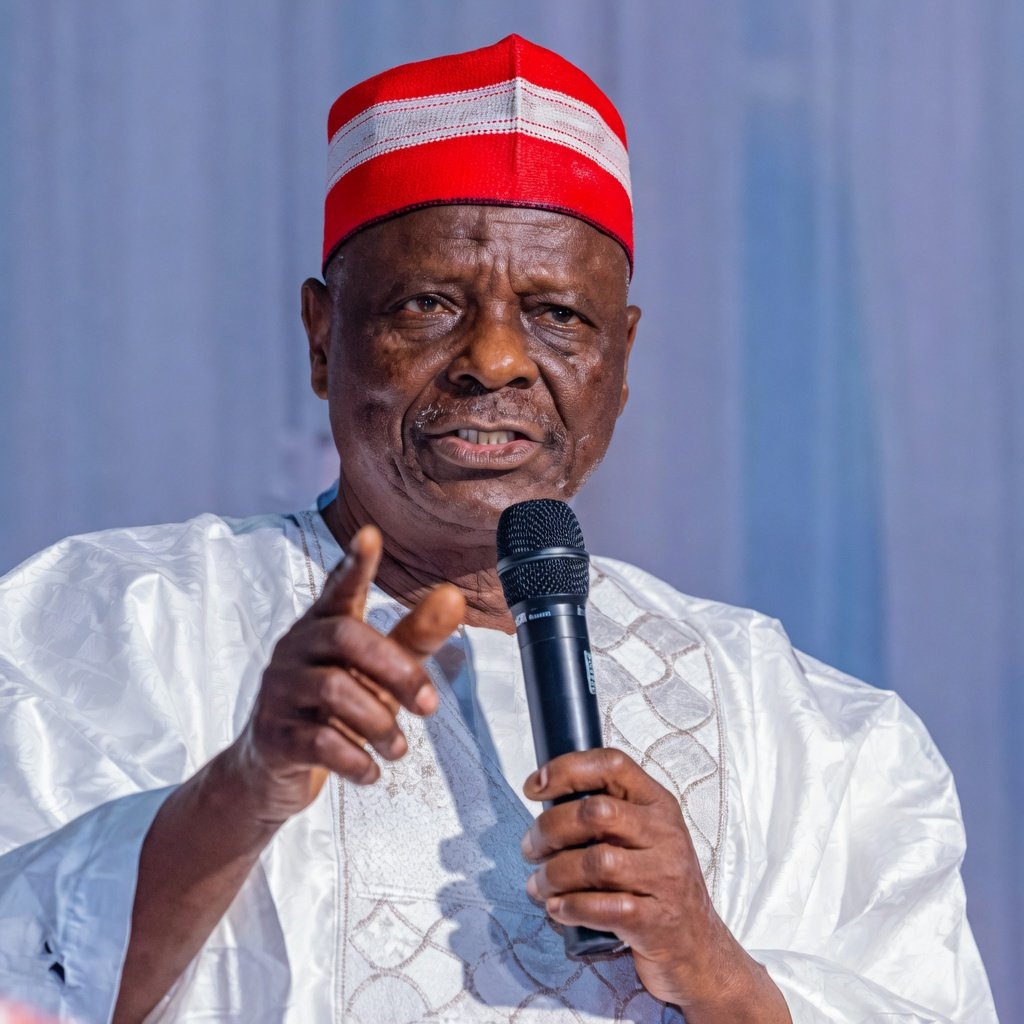
2027 BOMBSHELL: Dismantling The Myth Around Kwankwaso’s So-Called Electoral Dominance In Kano

Politics
I am fully ready for the 2027 general elections”- ADP, presidential aspirant, Prof. Omolaja, declares
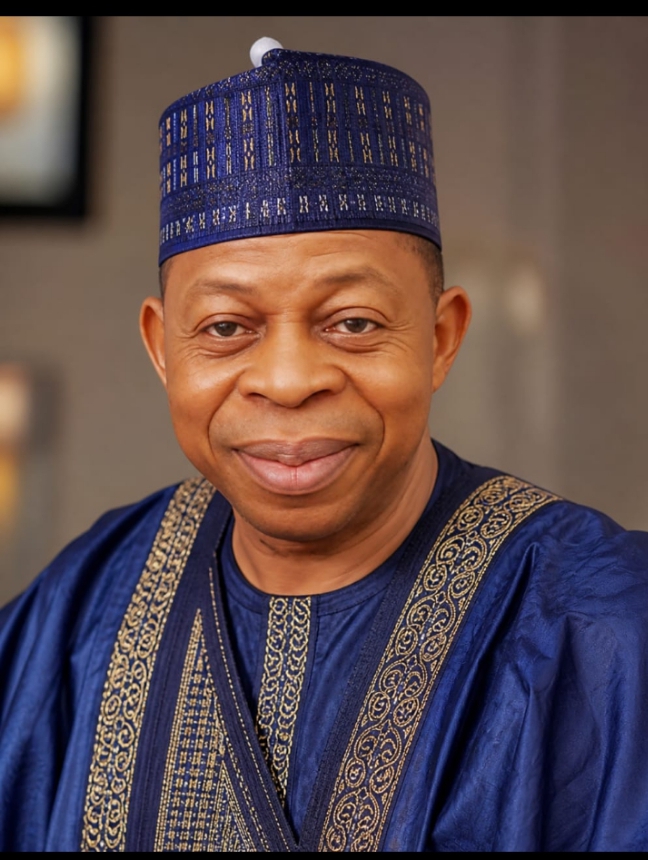
“I am fully ready for the 2027 general elections”- ADP, presidential aspirant, Prof. Omolaja, declares.
By Comrade Samson Ajibade Alabi, NLP Media Director
A presidential aspirant under the Action Democratic Party (ADP), Prof Muhammad Omolaja, has said that he is fully ready for the 2027 general elections especially the presidential contest.
Prof. Omolaja who disclosed this in an exclusive interview with pressmen in Abuja on Tuesday, May 12, 2026, said he has done his consultations with leaders of the Party, boasting that he is the next president of Nigeria by the grace of God.
He submitted that he has won the heart of the people at the grassroots across all the States and geopolitical zones including the federal capital territory (FCT); and convinced them about his clear vision and mission for Nigeria.
According to him, Nigerians are tired of the APC government and ready to vote them out in favour of his Party; the ADP!
Prof. Omolaja added that ADP is the only Party that can liberate Nigeria and rescue the citizens from the prevailing insecurity and other challenges facing the country.

The presidential aspirant said “you are asking me if I am ready for the 2027 general elections or not, I hereby inform you categorically that I am fully ready for the election; we have done what to be done, we have systematically carried Nigerians along in our preparations especially the people at the grassroots; and we have let them know that ADP is the only credible alternative Party that can liberate them from all the challenges the country is facing under the prevailing APC government. I am confident that I will get the ticket of our great Party being the leading contestant, and win the upcoming 2027 presidential election by the special grace of the Almighty God”
He therefore urged Nigerians to rally support for him and his Party (ADP) at the polls in the spirit of peace, love, unity, and patriotism in Nigeria.


- Why Your Communications Strategy is Undermining Your Decisions (By Bas Wijne) May 13, 2026
- Liquid Intelligent Technologies revitalises access to cloud and cyber security services in support of improved national digital resilience May 13, 2026
- Transformative African Leadership (TAL) Redefines Leadership Across the Continent May 13, 2026
- World Mining Investment Chief Executive Officer (CEO) Didier Rault Joins African Mining Week (AMW) Advisory Board May 13, 2026
- Verdant IMAP Act as Financial Advisor and Arranger to Metro Africa Xpress (MAX) on its USD 8 Million in Debt Capital Raise May 13, 2026
- African Energy Week (AEW) 2026 Renegade Intel Platform to Position Oil & Gas at the Center of the Global Artificial Intelligence (AI) Data Center Drive May 12, 2026
- 95th Periodic Meeting of Heads of Operations Arab Coordination Group: Advancing Progress and Enhancing Development Impact Virtual Meeting, 11–12 May 2026 May 12, 2026
- Africa Centres for Disease Control and Prevention (Africa CDC) Launches the African Strategic Advisory Group on Genomics May 12, 2026
- Updates on the 2026 Islamic Development Bank (IsDB) Prize for Impactful Achievement in Islamic Economics May 12, 2026
- Angola Oil & Gas (AOG) Pre-Conference to Set the Stage for $70B Investment Drive May 12, 2026
- Why Your Communications Strategy is Undermining Your Decisions (By Bas Wijne) May 13, 2026
- Liquid Intelligent Technologies revitalises access to cloud and cyber security services in support of improved national digital resilience May 13, 2026
- Transformative African Leadership (TAL) Redefines Leadership Across the Continent May 13, 2026
- World Mining Investment Chief Executive Officer (CEO) Didier Rault Joins African Mining Week (AMW) Advisory Board May 13, 2026
- Verdant IMAP Act as Financial Advisor and Arranger to Metro Africa Xpress (MAX) on its USD 8 Million in Debt Capital Raise May 13, 2026
- African Energy Week (AEW) 2026 Renegade Intel Platform to Position Oil & Gas at the Center of the Global Artificial Intelligence (AI) Data Center Drive May 12, 2026
- 95th Periodic Meeting of Heads of Operations Arab Coordination Group: Advancing Progress and Enhancing Development Impact Virtual Meeting, 11–12 May 2026 May 12, 2026
-

 news5 months ago
WHO REALLY OWNS MONIEPOINT? The $290 Million Deal That Sold Nigeria’s Top Fintech to Foreign Interests
-

 society1 week ago
SOCIAL MEDIA IS NOT A BATTLEFIELD COMMAND – WHY THE NIGERIAN ARMY’S ACTION AGAINST JUSTICE CRACK IS A NATIONAL SECURITY IMPERATIVE
-

 celebrity radar - gossips4 months ago
Dr. Chris Okafor Returns with Power and Fire of the Spirit -Mounts Grace Nation Altar with Fresh Anointing and Restoration Grace on February 1, 2026
-

 celebrity radar - gossips5 months ago
Prophet Kingsley Aitafo Releases 2026 Prophecy: ‘Nigeria Will Rise, but the World Must Prepare for Turbulence’