
Business
THE MAN BARRISTER D.I KEKEMEKE; AN INSIDER ACCOUNT OF HIS STEWARDSHIP AS APC CHAIRMAN IN ONDO STATE

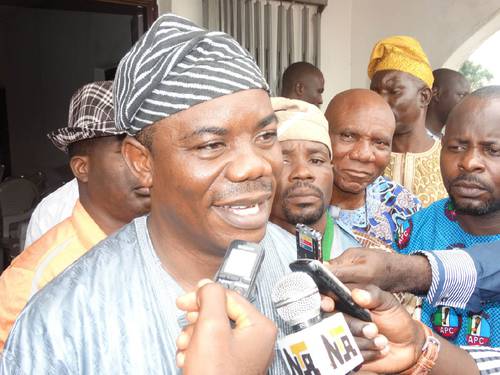

Dear, DI Kekemeke, if it is true that what is contained here actually emanated from you, it is highly unbecoming of a man in your position. Permit me to react to a few of your submissions.
- The determination of who is the authentic Chairman now is out of your hand and would have to be interpreted or decided by an impartial entity. As a lawyer, it is your responsibility now to approach the court. The Nigerian Constitution guarantees you this right.
- On the issue of the election, you have always displayed serious apathy to our party. It is on record that aside from the ritual of moving round the state and overseeing election money ALONE during the Presidential, State and National Assembly elections, you did not do anything more than the average party man. It is a notorious fact that you never voted in any of the elections as you holed yourself up in your house in Akure. Your reason was that you do not have guns to confront your kinsman “Shoot at Sight”. Pray, if every member of APC decided to chicken- out like you did, would there be a Buhari government, members of National and State Assemblies today? The people that made it happen are the people you are accusing of sundry offences or trying to destroy the party. Remember, your alliance of evil with the opposition against our party during the Tribunal. You instructed the Counsel handling our cases to concede grounds to the opposition, while this failed, you embarked on blackmail, intimidation and made efforts to frustrate the Counsel on the matter. As a party Chairman and a lawyer, how many times did you come to the Court like your counterpart in PDP to solidarise with your colleagues, how many times did you call any of them or sent SMS to them as a mark of encouragement? How many meetings did you have with them on strategy at winning in the Courts either during the Tribunal stage or during the various appeals? What was the party’s financial commitment to the Counsel who handled the cases. How much did you pay them. If you did not pay them after the cases how many times did you call them or have meetings with them to appreciate them for their services to the party? During the period did you not attempt to withdraw a file for one of the House of Assembly to favour PDP. Was it not the insistence of some of the lawyers and their threat to expose you and your anchor person that made you back down. If you deny it, we have documents and exchange of letters in this regard.
- If you say some people wants to share money or wants the party property, I won’t deny that because I have no knowledge of your discussion and your internal workings. But I know, that the party’s Constitution is very explicit as to how the resources of the party should be used. It does not confer the power of sole administrator on the Chairman. APC Secretariat is not Atimati House or D.I Kekemeke Chambers where you are the lord or the god. It is a fact that you have the penchant of seeing yourself as a clean man and others as thieves. Evidence on ground does not support it. It is a known fact that you are the biggest land grabber in Akure. These you shamefully did as a super Commissioner overseeing the Ministry of Lands, Housing and Works. Currently, all the vehicles donated to the party by aspirants are either in your Chamber or in your house to run errands for you and your plethora of easy women across the state, for workers working on your land beside Jojein Hotel at Oba-Ile road or to service your business interest particularly your hotel at Oke-Aro road. None of the vehicles is being used for the service of the party even three months to a major election. It is evil to quickly accuse people of malfeasance when you are actually a man with a penchant for filthy lucre. You are just a first among equal and your lack of capacity to galvanise your exco, new decampees and other members of the party to a winning team is the basis of your current problem and not your irrelevant accusations. The main problem is for you to use your office to personal advantage by the way you harangued some aspirants to provide money for the provision of certain materials for your hotel at Oke Aro, payment of your children school fees. Also, your romance with an aspirant, Dr Ayorinde and attempting to use party structure to install him. You personally confessed this to many people and this was the product which you took to Bourdilon and you were outsmarted and Abraham was given to you. Some of us have worked for this party and have been in opposition sincen1998. It is you that betrayed everyone that made you. You betrayed Agagu who made you politically as pioneer NECO Chairman, Commissioner for Works, Land and Housing, Secretary to Government and Attorney General of the State. You betrayed, the people that worked to make you the party Chairman within 3 weeks of joining the party.




Business
Adron Homes Unveils Sallah Mega Promo with 30% Discount and Exciting Gift Rewards for Subscribers

Adron Homes Unveils Sallah Mega Promo with 30% Discount and Exciting Gift Rewards for Subscribers
As the festive spirit of Eid al-Adha (Sallah) approaches, Adron Homes & Properties, Nigeria’s leading real estate company, has announced a nationwide Sallah Mega Promo designed to reward subscribers with unbeatable discounts, flexible payment plans, and exciting gift items.
The limited-time promotional campaign aims to empower Nigerians to celebrate the season of sacrifice with both joy and long-term investment security by making property ownership more accessible and rewarding. Subscribers can enjoy a 30% discount on all plots across Adron estates nationwide, alongside a flexible payment plan of up to 36 months. In addition, clients can spread their initial deposit over four months, easing financial pressure while securing valuable real estate assets.
According to the company, the Sallah promo reflects its continued commitment to providing affordable housing solutions while rewarding both new and existing clients during key festive periods.
“Sallah is a time of giving, sacrifice, and celebration. At Adron Homes, we believe there is no better time to empower families and investors with the opportunity to own land while also receiving valuable gifts that enhance their celebration,” the company stated.
As part of the promo, subscribers will enjoy a wide range of gift rewards tied to their payment milestones. Platinum plot subscribers stand to receive items such as bags of rice ranging from 10kg to 50kg, food packs with chicken and seasoning, goats and rams for Sallah celebrations, and even a cow or a double-door refrigerator for high-value subscribers. Compact plot subscribers will also benefit from gift items including bags of rice, vegetable oil, cartons of noodles, goats, and other household essentials designed to support festive celebrations.
Over the years, Adron Homes & Properties has remained at the forefront of real estate development in Nigeria, consistently delivering affordable luxury and flexible payment structures tailored to a wide range of investors. The Sallah Mega Promo further reinforces the company’s mission to democratize property ownership while strengthening its relationship with clients through value-driven initiatives.
Prospective subscribers are encouraged to take advantage of this limited-time offer by contacting Adron Homes through its official channels.
📲 WhatsApp: +234 805 101 1951
🌐 Website: Adron Homes Official Website
With the Sallah season fast approaching, this promo presents a unique opportunity for Nigerians to celebrate meaningfully by securing their future through real estate investment while enjoying generous festive rewards.
*Please be careful, there’s a WhatsApp scam going around
Scammers are currently impersonating Aigboje Aig-Imoukhuede, the Chairman of Access Holdings Plc, to trick people into fake investment schemes.
They’ve created a WhatsApp group called *“Value Focus Club 60”* using this number: *+234 915 708 8290*, and even used his picture to make it look real.
*Important things to know*:
• The Chairman is NOT on WhatsApp running any investment group
• Access Holdings does NOT offer investment advice via WhatsApp
• Any message claiming otherwise is 100% fake
A whistleblower actually spotted this and raised the alarm, so please don’t ignore this.
*What you should do*:
• Don’t join the group or engage them
• Don’t share your personal or banking details
• Block and report the number on WhatsApp
• Let others know so they don’t fall victim
The company is already working to shut it down, but awareness is key.
Please share this with your contacts, someone you know could be targeted.

HOUSE OF BIMPE FIT GAINS ATTENTION WITH TRENDY UNISEX FASHION LINE
LAGOS — A fast-rising fashion brand, House of Bimpe Fit, is making waves in the style scene with its collection of modern, elegant outfits designed for both men and women.
The brand, which showcases a blend of contemporary and classic designs, is quickly attracting attention for its attention to detail and quality finishing. From sharply tailored men’s native wears and suits to chic, figure-flattering outfits for women, House of Bimpe Fit is positioning itself as a go-to destination for fashion lovers seeking both style and comfort.

Speaking on the brand’s vision, the management emphasized its commitment to delivering “quality outfits for both men and women,” ensuring customers step out with confidence and class regardless of the occasion.
Fashion enthusiasts have particularly praised the brand’s versatility, as it caters to a wide range of tastes—from corporate elegance to casual sophistication.

With an active presence on social media, especially on TikTok via @house_of_bimpefit, the brand is leveraging digital platforms to reach a broader audience and showcase its latest collections.
Industry watchers say House of Bimpe Fit is one to watch, as it continues to carve a niche for itself in Nigeria’s competitive fashion industry.
For inquiries, customers can contact the brand via phone at 0802 686 6277.


- President receives Bishop of Port Victoria, reinforces State–Church collaboration on social priorities April 15, 2026
- World Bank Group’s International Finance Corporation (IFC) and Citi Sign Borrowing Facility to Expand Local Currency Financing in South Africa April 15, 2026
- Uganda: Manufacturers, traders ask gov’t to stay tax increases April 15, 2026
- Eritrea: Sports and educational week in Assab sub-zone April 15, 2026
- Cabo Verde Shapes Africa’s Health Future at High-Level World Health Organization (WHO) Regional Consultation April 15, 2026
- Critical Minerals Africa Group to Speak at Invest in African Energy Forum in Paris April 14, 2026
- Talentz MEDIA Announces Strategic Partnership with Ghanaian Artist Kwaku Cenima to Launch “Emotional Scene” April 14, 2026
- South African Local Government Association (SALGA) and The Global Trust Project announce municipal pilot under new three-year Memorandum of Understanding (MoU) April 14, 2026
- TotalEnergies Strikes New Oil Discovery Offshore Congo Amid National Drive Toward 500,000 barrels per day (BPD) April 14, 2026
- Africa Finance Corporation (AFC) Delivers Côte d’Ivoire’s First Project Finance Green Bond for Landmark Solar Plant April 14, 2026
- President receives Bishop of Port Victoria, reinforces State–Church collaboration on social priorities April 15, 2026
- World Bank Group’s International Finance Corporation (IFC) and Citi Sign Borrowing Facility to Expand Local Currency Financing in South Africa April 15, 2026
- Uganda: Manufacturers, traders ask gov’t to stay tax increases April 15, 2026
- Eritrea: Sports and educational week in Assab sub-zone April 15, 2026
- Cabo Verde Shapes Africa’s Health Future at High-Level World Health Organization (WHO) Regional Consultation April 15, 2026
- Critical Minerals Africa Group to Speak at Invest in African Energy Forum in Paris April 14, 2026
- Talentz MEDIA Announces Strategic Partnership with Ghanaian Artist Kwaku Cenima to Launch “Emotional Scene” April 14, 2026
-

 news4 months ago
WHO REALLY OWNS MONIEPOINT? The $290 Million Deal That Sold Nigeria’s Top Fintech to Foreign Interests
-

 celebrity radar - gossips3 months ago
Dr. Chris Okafor Returns with Power and Fire of the Spirit -Mounts Grace Nation Altar with Fresh Anointing and Restoration Grace on February 1, 2026
-

 celebrity radar - gossips4 months ago
Prophet Kingsley Aitafo Releases 2026 Prophecy: ‘Nigeria Will Rise, but the World Must Prepare for Turbulence’
-

 celebrity radar - gossips6 months ago
End of an Era: Nigeria Mourns Evangelist Dr. Uma Ukpai, 80
You must be logged in to post a comment Login
You must log in to post a comment.